Car battle
Kia Sorento vs. Škoda Kodiaq: Complete comparison 2026
Detailed comparison of Kia Sorento vs. Škoda Kodiaq. Find out which family SUV offers better engines, real-world fuel consumption, and equipment in our final verdict.
May 10, 2026
Hyundai Santa Fe review: real owner feedback, hybrid engine picks, towing capacity, running costs and our verdict on the bold 7-seat SUV.
October 26, 2026
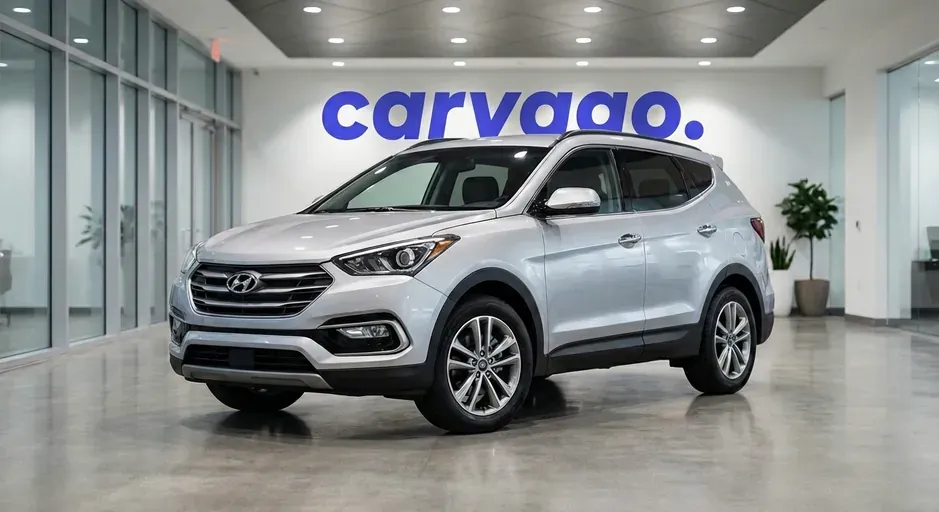
The fifth-generation Hyundai Santa Fe SUV, known internally as the MX5, represents a departure in design and packaging for the brand’s flagship European family car. Following its global reveal in August 2023, orders opened in the UK in April 2024, with continental European sales and initial customer deliveries commencing in July 2024. Available exclusively as an SUV, it targets large families and lifestyle buyers who need configurable passenger capacity across five-, six-, or seven-seat layouts.
This review focuses entirely on the fifth-generation model. Rather than undergoing a mid-cycle cosmetic facelift, the lineup received targeted technical updates: revised hybrid powertrain ratings arrived in September 2025, followed by upgraded plug-in hybrid specifications in November 2025, and an equipment package restructuring in July 2026. The Santa Fe competes in the upper mid-size crossover segment against three-row rivals, offering electrified powertrains that appeal to drivers balancing everyday family utility with long-distance travel.
Because customer deliveries of the fifth-generation Hyundai Santa Fe only began across Europe in summer 2024, long-term mechanical reliability, high-mileage hybrid battery degradation, and chassis bushing wear are not yet established. Early owner experiences and workshop reports centre primarily on modern electronic modules and low-voltage electrical management rather than core mechanical failures.
The most frequent complaint recorded by owners concerns parasitic 12-volt auxiliary battery drain on both the hybrid and plug-in hybrid variants. Owners report returning to their vehicles after standing parked for one to three days to find the 12-volt system completely discharged, leaving the car unable to power on. Because this generation omits a physical dashboard reset button for the 12-volt battery, starting the car requires external assistance. Dealers have addressed the dark-current spikes with software updates for the body control module and keyless receiver, though in some instances replacement of biometric fingerprint authentication sensors or gateway modules was needed to stop intermittent wake-up signals.
Three official safety recalls affect fifth-generation European models and require verification via official dealer records:
| Safety Recall Subject | Affected Production Window | Geographic Scope | Workshop Remedy |
|---|---|---|---|
| Second-row seat hinge wiring harness | March 2024 – July 2024 | Worldwide (incl. Germany, UK, Ireland) | Inspection, rerouting, and securing of the main floor harness; replacement if damaged |
| Instrument cluster sporadic reboot | June 2025 – November 2025 | Europe (multi-model campaign) | Instrument cluster software logic update via over-the-air update or workshop visit |
| Front seat belt snap-on anchor detachment | March 2023 – March 2026 | European Union and United Kingdom | Inspection and fitment of a structural reinforcement kit; replacement of defective anchors |
The initial recall addresses a risk where the main floor wiring harness could become damaged through contact with the folding second-row bench seat hinge, potentially compromising curtain airbag and supplemental restraint system operation. A subsequent campaign addressed sporadic instrument cluster reboots during driving, which temporarily left the driver without speed and warning readouts until an updated software logic was applied. In September 2026, safety authorities issued a recall regarding improperly secured front seat belt snap-on lower anchor points that could come loose in a collision, requiring dealers to install a retention reinforcement kit.
Independent tests also point out that the combination of wide exterior dimensions and alloy wheels fitted on higher trims leaves the wheel faces exposed to kerbing during tight parking manoeuvres. Furthermore, the substantial vehicle mass causes uneven shoulder wear and tyre scrubbing if tracking is knocked out of alignment.
In Europe, the fifth-generation Hyundai Santa Fe is offered exclusively with electrified petrol powertrains based around a turbocharged four-cylinder engine. Buyers choose between a self-charging full hybrid (HEV) and a plug-in hybrid (PHEV), both mated to a six-speed torque-converter automatic transmission.
| Engine | Fuel | Power | Gearbox | Drivetrain | Model years |
|---|---|---|---|---|---|
| 1.6 T-GDI HEV | Petrol hybrid | 158 kW / 215 hp | 6-speed automatic | Front-wheel drive | 2024–2025 |
| 1.6 T-GDI HEV | Petrol hybrid | 158 kW / 215 hp | 6-speed automatic | All-wheel drive | 2024–2025 |
| 1.6 T-GDI HEV | Petrol hybrid | 176 kW / 239 hp | 6-speed automatic | Front-wheel drive | 2025–present |
| 1.6 T-GDI HEV | Petrol hybrid | 176 kW / 239 hp | 6-speed automatic | All-wheel drive | 2025–present |
| 1.6 T-GDI PHEV | Petrol plug-in hybrid | 186 kW / 253 hp | 6-speed automatic | All-wheel drive | 2024–2025 |
| 1.6 T-GDI PHEV | Petrol plug-in hybrid | 212 kW / 288 hp | 6-speed automatic | All-wheel drive | 2025–present |
For city driving, mixed commuting, and occasional long trips, the full hybrid is the sensible choice. The front-wheel-drive version suits urban environments, while the all-wheel-drive variant offers added traction on slippery roads. Because it charges its traction battery entirely on the move via regenerative braking and engine generation, it requires no home charging infrastructure.
The plug-in hybrid suits drivers who have dedicated home or workplace charging and cover short daily commutes, where it can complete typical urban trips purely on electricity. However, the PHEV relies on a modest on-board AC charger that makes battery replenishment comparatively slow, and its electric cabin heating requires the petrol engine to run during cold winter starts.
Frequent motorway drivers and long-distance travellers are best served by the full hybrid, as the plug-in variant loses its efficiency advantage once the high-voltage battery depletes. Drivers planning to haul horseboxes, large caravans, or equipment trailers should look specifically for updated models produced from late 2025 onwards, as earlier production runs were homologated with restrictive braked towing capacities. If you need maximum traction in all weather, consider a hybrid Hyundai Santa Fe 4x4, while a standard front-wheel-drive hybrid Hyundai Santa Fe easily manages typical family duties.
For verified reliability findings, recall details, and known electrical quirks concerning these electrified powertrains, refer to the owner experiences section.
The fifth-generation Hyundai Santa Fe SUV adopts a boxy, upright silhouette that translates directly into functional cabin space. Available in five-, six-, or seven-seat configurations, the passenger layout emphasizes modular flexibility. Six-seat models feature two independent second-row captain’s chairs with armrests and power-folding functions, while seven-seat versions utilize a 60:40 split-folding and sliding second-row bench. The third row splits 50:50 and folds entirely flat into the floor, providing usable headroom and kneeroom for adult passengers on journeys rather than merely serving as occasional seating for children. Wide-opening rear doors ease child seat access, though everyday practicality has a minor limitation: the retractable cargo blind lacks a dedicated underfloor storage recess when all three rows are in place.
| Exterior Dimensions & Boot Volume | 1.6 T-GDI HEV (5-seater) | 1.6 T-GDI HEV (6/7-seater) | 1.6 T-GDI PHEV (5-seater) | 1.6 T-GDI PHEV (6/7-seater) |
|---|---|---|---|---|
| Length (mm) | 4,830 | 4,830 | 4,830 | 4,830 |
| Width excl. mirrors (mm) | 1,900 | 1,900 | 1,900 | 1,900 |
| Height without / with rails (mm) | 1,720 / 1,770 | 1,720 / 1,770 | 1,720 / 1,770 | 1,720 / 1,770 |
| Wheelbase (mm) | 2,815 | 2,815 | 2,815 | 2,815 |
| Boot volume, seats up (l) | 711 | 628 | 704 | 621 |
| Boot volume, seats folded (l) | 2,032 | 1,949 | 2,025 | 1,942 |
Luggage capacities for six- and seven-seat variants reflect volume measured with the third row folded flat into the floor.
Professional testers characterize the Hyundai Santa Fe SUV as a relaxed, long-distance cruiser. On open roads and motorways, the suspension absorbs undulations softly and keeps secondary vertical motions well checked. However, low-speed urban ride quality draws criticism for feeling unsettled over sharp transverse ridges. When cornered hard, the chassis exhibits pronounced body lean, though it remains docile and tracks stably with unobtrusive electronic stability control. The steering offers dependable straight-line tracking, but road testers note a numb, relaxed feel around the centre with minimal feedback. Cruising refinement impresses on highways, but rapid acceleration exposes harsh petrol engine noise when the automatic transmission hesitates and kicks down.
The interior receives broad praise for material fit and finish. Reviewers highlight the neat panel gaps, solid door closures, and tactile physical controls for climate settings alongside the curved dual displays. Front seats offer wide adjustment and supportive cushioning. The primary cabin grievance involves the assistance electronics: testers universally single out persistent overspeed warnings and driver attention chimes as irritating and overly intrusive during daily driving.
Tester verdicts converge on the cabin ambiance, seating comfort, and directional motorway stability. Opinions diverge mainly on suspension refinement at lower speeds, where some testers find the setup clunky over broken asphalt while others focus on its plush highway manners. Across European markets, the chassis dynamics and underlying interior layout remain focused on composure over corner-carving agility.
All market charts in this section draw from advertised listings across the broader Hyundai Santa Fe model family on Carvago, combining multiple generations rather than isolating the newest model alone. Consequently, this aggregated dataset does not establish a distinct price baseline exclusively for the latest generation. Across the wider model line, asking prices span from a median of €13,800 for 2019 builds to €55,000 for 2026 examples. The steepest percentage jump occurs between 2023 at €25,600 and 2024 at €37,100, reflecting how newer model years command higher values as updated technology and fresher hardware reach the secondary market.
Active advertised listings for the Hyundai Santa Fe numbered 11,759 in April 2026 and peaked at 11,875 in July before dropping to 10,603 by September 2026. The chart below tracks this month-by-month availability across the six-month period.
Active listings over time
| Month | Hyundai Santa Fe |
|---|---|
| 2026-04 | 11 759 |
| 2026-05 | 11 674 |
| 2026-06 | 11 818 |
| 2026-07 | 11 875 |
| 2026-08 | 11 170 |
| 2026-09 | 10 603 |
Source Carvago
Buyers can expect an extensive selection on the market with more than 10,000 vehicles listed each month, although the volume of available inventory has tapered off in the late summer months.
Across used listings advertised today, the median asking price ranges from €13,800 for cars built in 2019 to €55,000 for those built in 2026. The progression across build years is not entirely uniform, as the median asking price of cars advertised today is €25,600 for 2023 models compared to €28,200 for 2022 models.
Median advertised price by year of manufacture
| Model year | Hyundai Santa Fe |
|---|---|
| 2019 | 13 800 |
| 2020 | 17 400 |
| 2021 | 24 800 |
| 2022 | 28 200 |
| 2023 | 25 600 |
| 2024 | 37 100 |
| 2025 | 49 800 |
| 2026 | 55 000 |
Source Carvago
Buyers considering 2020 or 2021 models encounter a median asking price of €17,400 and €24,800 among cars advertised today. Looking instead at 2024 or 2025 build years corresponds to a median asking price of €37,100 and €49,800 among current listings.
This depreciation curve illustrates how the Hyundai Santa Fe loses value over time, shedding roughly 15% of its residual value in the first year and 39% by age three. The data below outlines this progression across vehicle age.
Residual value by vehicle age
| Vehicle age | Hyundai Santa Fe |
|---|---|
| New | 56 100 |
| 1 yr | 47 700 |
| 2 yrs | 42 200 |
| 3 yrs | 34 000 |
| 4 yrs | 31 500 |
| 5 yrs | 29 300 |
| 6 yrs | 25 800 |
| 7 yrs | 22 900 |
Source Carvago
Across the seven years shown, the model sheds 59% of its residual value, with the sharpest declines concentrated in the first three years before annual losses moderate considerably from age four.
Across the six months shown, diesel listings consistently formed the largest share of the Hyundai Santa Fe market, beginning with 6,049 advertised diesels in April 2026 alongside 3,559 hybrids and 2,149 petrol models. The chart below tracks how these advertised numbers developed month by month across each fuel type.
Supply composition by fuel type
Petrol
Diesel
Hybrid
LPG
| Month | Petrol | Diesel | Hybrid | LPG |
|---|---|---|---|---|
| 2026-04 | 2 149 | 6 049 | 3 559 | 0 |
| 2026-05 | 2 059 | 6 279 | 3 332 | 0 |
| 2026-06 | 1 980 | 6 674 | 3 161 | 0 |
| 2026-07 | 1 934 | 6 903 | 3 035 | 0 |
| 2026-08 | 1 824 | 6 512 | 2 830 | 1 |
| 2026-09 | 1 619 | 6 179 | 2 802 | 1 |
Source Carvago
In September 2026, diesel remained the dominant option with 6,179 listings, followed by 2,802 hybrids and 1,619 petrol vehicles. Anyone shopping for a Santa Fe will find the widest selection among diesel and hybrid versions, whereas pure petrol models are fewer and alternative fuels are virtually absent.
Between April 2026 and September 2026, the average asking price for the Hyundai Santa Fe moved from €20,400 down to €18,700, as shown in the monthly figures below.
Average price development over time
| Month | Hyundai Santa Fe |
|---|---|
| 2026-04 | 20 400 |
| 2026-05 | 19 500 |
| 2026-06 | 18 900 |
| 2026-07 | 18 300 |
| 2026-08 | 18 300 |
| 2026-09 | 18 700 |
Source Carvago
Across the six months, the average price declined overall by about 8%, reaching a low of €18,300 in July and August 2026 before edging up to €18,700 in September.
Spacious cabin with adult-usable third-row seating across versatile modular layouts
Composed, comfortable motorway ride and refined cruising manners on open roads
Practical physical dashboard controls retained alongside the dual-screen interface
Early production models suffer from parasitic 12-volt battery drain when parked
Firm, unsettled suspension reaction over sharp transverse ridges at urban speeds
Restrictive factory towing ratings on versions built before the late 2025 technical update
Long-term mechanical reliability is not yet established because European deliveries only began in summer 2024. Most reported issues centre on the electrical system, specifically 12-volt auxiliary battery drain that leaves the vehicle unable to power on after parked for several days.
The self-charging hybrid Hyundai Santa Fe is the sensible choice for most buyers, offering balanced efficiency on long trips without requiring home charging. The plug-in hybrid suits drivers with dedicated charging points for short commutes, though its petrol engine must run to provide cabin heat in cold weather.
Models produced from late 2025 onwards are preferable if you tow, as technical updates significantly increased the braked towing capacity over earlier cars. For earlier examples, verify through official records that all safety campaigns have been carried out.
Check official dealer records by VIN to confirm completion of recalls for the front seat belt anchors and second-row seat wiring harness. It is also important to test 12-volt battery health and inspect the large alloy wheels for kerb damage or tyre scrubbing.
Sources: hyundai.news, adac.de, europa.eu, autocar.co.uk, autobild.de
This article was prepared using artificial intelligence tools. The section guarantor is Petr Dušek.
Detailed comparison of Kia Sorento vs. Škoda Kodiaq. Find out which family SUV offers better engines, real-world fuel consumption, and equipment in our final verdict.
May 10, 2026
Second-generation Lexus NX review: real owner experience, hybrid efficiency, common faults and buying advice for the 2022+ luxury SUV.
Oct 17, 2026
Detailed comparison of Hyundai Santa Fe vs. Seat Tarraco. Real-world experience, evaluation of spaciousness and driving characteristics. Find out which family SUV is better!
Oct 16, 2026