Car battle
Alfa Romeo Stelvio vs. Lexus NX: Complete comparison 2026
Alfa Romeo Stelvio vs. Lexus NX Comparison: Which used premium SUV to choose? We bring you a detailed look at reliability, equipment and a clear final verdict.
Apr 17, 2026
Škoda Kodiaq vs. Toyota Highlander: A Detailed Comparison. Compare the equipment, space, and fuel consumption of these 7-seater SUVs. Find out in our verdict which one to choose.
May 19, 2026
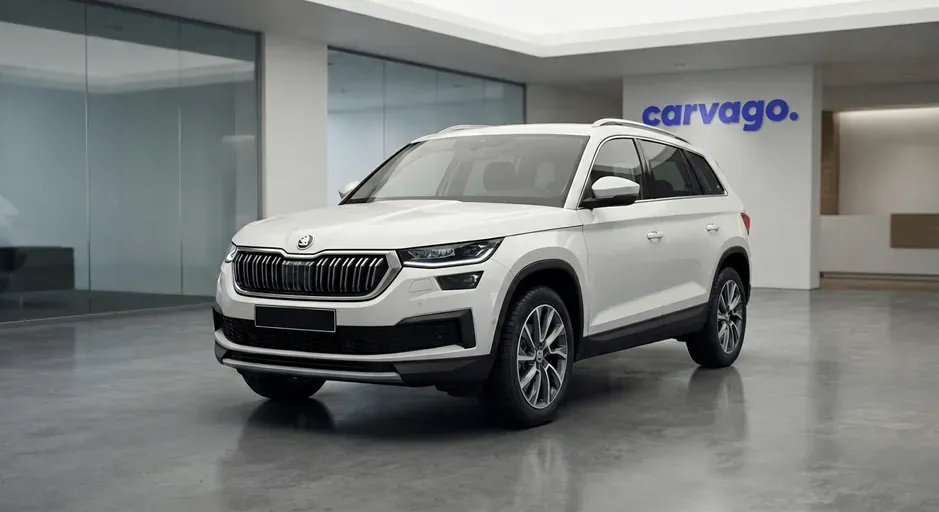
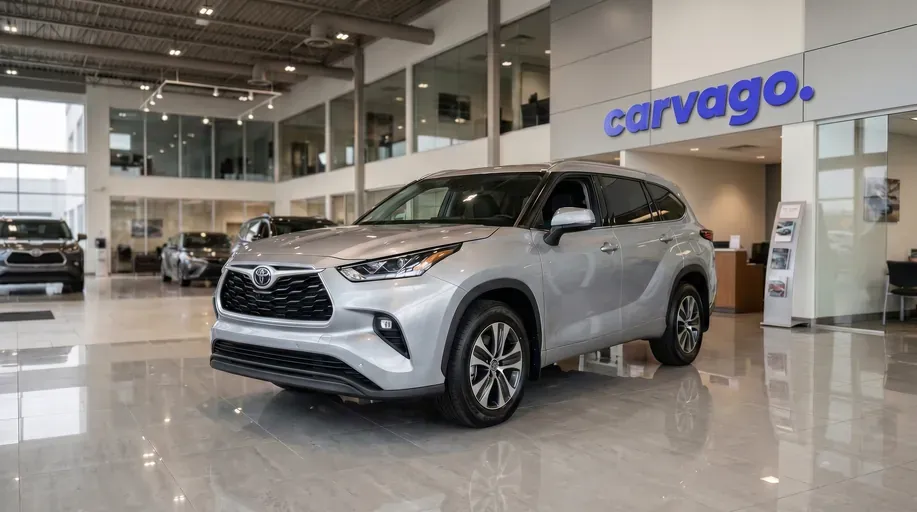
The Škoda Kodiaq is an immensely popular European family SUV that has earned a solid market position thanks to its generous interior space, thoughtful practicality, and excellent value for money. Standing against it is the Toyota Highlander, also known as the Toyota Kluger in some global markets, a robust Japanese giant betting on an efficient hybrid powertrain, maximum comfort, and legendary long-term reliability. Let's take a closer look at which of these two impressive seven-seater vehicles stands up in our comparison and better meets your daily family needs on the used car market.
When looking at the external dimensions of roughly four-year-old used cars, it is clear at first glance that the Toyota Highlander plays in a higher league, which fully corresponds to its primary focus on the American market. With a total length of 4966 mm, it exceeds the popular first generation of the Škoda Kodiaq (4697–4705 mm depending on the exterior trim) by a very significant 261 to 269 millimetres. The Japanese SUV is also a noticeable 48 mm wider (1930 mm compared to 1882 mm for the Kodiaq). This significant increase in proportions guarantees the Toyota a more majestic appearance on the road and a more generous interior width for passengers in the shoulder area. In practice, however, this means that manoeuvring in the narrow streets of European cities or parking in cramped underground garages will require more practice with the Highlander. For regular urban and suburban driving, the more compact Kodiaq remains a clearly more user-friendly and agile choice.
A significant difference manifesting directly in the cabin can also be found in the height and wheelbase, which define the overall longitudinal space and airiness of the interior. The Toyota Highlander stands 1755 mm tall, while the Kodiaq measures 1660 to 1688 mm. A crucial parameter for travel comfort, however, is the wheelbase, which reaches 2850 mm for the Highlander, roughly 60 mm more than its competitor from Mladá Boleslav (2788–2791 mm). Thanks to these more generous dimensions, the Toyota can offer not only more comfortable seating in the second row but, above all, a much more full-fledged space in the third row of seats. If you are looking for a car on the used market for your family where you will often use the full seven-seat layout for longer journeys, the larger dimensions of the Highlander will meet this need much better. The Kodiaq, on the other hand, excels as an exceptionally spacious five-seater car, where the third row serves more as an emergency solution for shorter trips.
| Parameter | Škoda Kodiaq SUV | Toyota Highlander SUV |
|---|---|---|
| Length (mm) | 4697 - 4705 | 4966 |
| Width (mm) | 1882 | 1930 |
| Height (mm) | 1660 - 1688 | 1755 |
| Wheelbase (mm) | 2788 - 2791 | 2850 |
For families and active drivers, luggage capacity plays an absolutely key role when choosing a large SUV. Whether you plan on daily stroller transport, need to stack bags from a big weekend shopping trip, or are heading on a long vacation full of sports equipment, both of these vehicles have plenty to offer in this regard. However, they approach interior layout and overall concept differently, which significantly impacts the spec sheet values.
If we look at models available on the used car market around four years old (the first generation Škoda Kodiaq from 2021–2023 and the Toyota Highlander XU70 generation), we encounter noticeable differences. The Škoda Kodiaq is famous for its interior spaciousness and, in the classic five-seat configuration, offers a massive base volume of 835 liters. After fully folding the second row of seats, you get an impressive 2,065 liters. The Toyota Highlander, on the other hand, is supplied exclusively with a hybrid powertrain on the European market and as a seven-seater as standard. Its base volume of 241 liters is therefore measured behind the upright third row of seats. When you fold all the rear rows, the Japanese SUV offers a maximum transport capacity of 1,909 liters.
In practice, these values mean that the Kodiaq is the clear choice for those looking for the absolute maximum for their luggage – it guarantees safe space for several extra suitcases and maximum utility for moving bulkier items. Due to the integration of the hybrid battery and the presence of a standard third row of seats, the Highlander sacrificed part of its absolute volume in favor of unrivaled passenger transport flexibility. Nevertheless, if you don't use the third row and fold it into the floor, the Toyota's trunk is fully sufficient for weekend shopping and longer vacations. From the perspective of total luggage capacity and net volume, however, the SUV from Mladá Boleslav emerges as the winner of this comparison.
| Parameter | Škoda Kodiaq SUV | Toyota Highlander SUV |
|---|---|---|
| Base volume (liters) | 835 | 241 |
| Maximum volume with seats folded (liters) | 2065 | 1909 |
Thanks to its giant trunk, the Škoda Kodiaq will please those who need to transport large amounts of cargo, while the Toyota Highlander prioritizes maximum variability for seven passengers.
Towing capacity, or the maximum weight of a braked trailer, is a key parameter for drivers who plan to actively use their car for towing a family caravan, boat, or horse trailer. There are interesting differences between the Škoda Kodiaq and Toyota Highlander in this discipline, stemming primarily from different drive concepts and the technology used.
In the category of roughly four-year-old used cars, the Škoda Kodiaq (1st generation) offers an exceptionally wide range of values. For the basic 1.5 TSI petrol engines, the standard braked trailer weight usually ranges between 1800 and 2000 kg. However, the situation is much more interesting for the 2.0 TDI diesel versions. Depending on power output and all-wheel drive, these provide a capacity of 1950 to 2300 kg, with the absolute maximum of 2300 kg reserved for the more powerful diesel variants and the sporty Kodiaq RS models. To compare the impact of electrification – for the newer plug-in hybrid version Kodiaq iV (2nd generation), the maximum value drops to 1800 kg, showing the limits associated with the additional weight of the traction battery.
In contrast, the Toyota Highlander, which is commonly available on the used car market from 2021 and newer, relies exclusively on the advanced 2.5 Hybrid system. For this Japanese model, the maximum braked trailer weight is fixed at 2000 kg. Although diesel versions of the Czech SUV offer a slightly higher capacity at the extreme, for a large full-hybrid SUV, the Highlander's two-tonne limit is an above-standard result.
What does this mean in practice? The two-tonne limit for both cars is perfectly sufficient for a typical summer holiday with a spacious caravan, safe transport of a smaller boat, or hauling heavier materials for home projects. The advantage of the more powerful diesel versions of the Škoda Kodiaq with a capacity of 2300 kg only fully manifests when you need to hitch up heavy twin-axle trailers, large animal transporters, or professional construction equipment.
If maximum raw power and regular towing of the heaviest loads are your absolute priority, the diesel Kodiaq represents a more certain choice with a larger weight reserve. However, for the vast majority of regular users and caravanners, the Highlander offers an excellent compromise – it provides a fully sufficient 2000 kg while retaining a major advantage in the form of an exceptionally economical and reliable hybrid powertrain for daily driving.
| Model and engine | Braked trailer weight (kg) | Unbraked trailer weight (kg) |
|---|---|---|
| Škoda Kodiaq 1.5 TSI (110 kW) | 1800 - 2000 | 750 |
| Škoda Kodiaq 2.0 TDI (110 kW) | 1950 - 2300 | 750 |
| Škoda Kodiaq 2.0 TDI (140/147 kW) | 2000 - 2300 | 750 |
| Škoda Kodiaq 2.0 TSI (132/140 kW) | 2000 - 2200 | 750 |
| Škoda Kodiaq RS (TDI / TSI) | 2300 | 750 |
| Škoda Kodiaq 1.5 TSI iV PHEV | 1800 | 750 |
| Toyota Highlander 2.5 Hybrid | 2000 | 750 |
When choosing a roughly four-year-old used car, you will encounter two completely different approaches to powertrains with these two family SUVs, which has a fundamental impact on operating costs and the overall driving experience. While the Škoda Kodiaq relies on a proven and wide range of traditional group engines including turbocharged petrol (TSI) and diesel (TDI) variants, the Toyota Highlander on the European market paves the way with a single but highly efficient full-hybrid powertrain. For the buyer, this means a clear choice: if you are looking for variety, the option of a manual gearbox, or a diesel engine for frequent and long motorway journeys, the Kodiaq offers an almost tailor-made solution. On the other hand, the Highlander attracts with the legendary reliability of a Japanese naturally aspirated engine in combination with electric motors. This solution brings excellent fuel consumption in urban and suburban traffic, despite the much larger dimensions and overall weight of the vehicle.
The first-generation Škoda Kodiaq (an ideal target for a four-year-old used car from the facelift period around 2021) offers a very diverse selection. The standard engine for regular family trips is the 1.5 TSI four-cylinder petrol engine with cylinder deactivation technology (ACT) producing 110 kW, which was the only one available with a six-speed manual gearbox or a seven-speed DSG automatic. For more demanding users and those who more frequently use the car's full capacity, there is the more powerful 2.0 TSI engine (140 kW), supplied exclusively as an all-wheel drive with an automatic. At the top of the range stands the sportily-styled RS version, which in facelifted models features a 2.0 TSI petrol engine with 180 kW (interestingly, older RS models until 2020 were powered by a twin-turbocharged bi-turbo TDI). However, long-distance drivers will most often reach for the popular 2.0 TDI SCR diesel in 110 kW or 147 kW power versions. The older 1.4 TSI unit (production ended in 2018) has already disappeared from the original range and you will no longer come across it in this monitored age category. Although the latest second-generation Kodiaq (from 2024) adds plug-in and mild-hybrids to the portfolio, these are currently only appearing exceptionally on the more affordable used car market.
| Engine type | Fuel type | Power (kW) | Torque (Nm) | Transmission |
|---|---|---|---|---|
| 1.5 TSI ACT | Petrol | 110 | 250 | 6MT / 7DSG |
| 2.0 TSI | Petrol | 140 | 320 | 7DSG |
| 2.0 TSI RS | Petrol | 180 | 370 | 7DSG |
| 2.0 TDI SCR | Diesel | 110 / 147 | 360 / 400 | 7DSG |
In contrast, the engine range for the Toyota Highlander (XU70 generation, sold in selected European markets since 2021) is completely minimalist, yet technologically extremely sophisticated. All vehicles rely exclusively on an advanced fourth-generation hybrid system. This combines a naturally aspirated 2.5-litre four-cylinder engine operating on the efficient Atkinson cycle with two electric motors (front and rear), creating an intelligent AWD-i all-wheel drive without a mechanical connection between the axles. The total system output of this setup reaches a more than sufficient 182 kW, ensuring surprisingly smooth and effortless acceleration for this SUV weighing over two tonnes. An electronically controlled continuously variable transmission (e-CVT) handles the power transfer of this jewel of Japanese reliability. The absence of diesel or pure petrol versions is not a handicap here at all, as the self-charging system works so perfectly that it can very often glide purely on electricity in traffic jams or when driving through towns. Consumption thus stays at figures that even significantly smaller traditional SUVs cannot offer.
| Engine type | Fuel type | Power (kW) | Torque (Nm) | Transmission |
|---|---|---|---|---|
| 2.5 Hybrid AWD-i | Hybrid (Petrol/Electric) | 182 | 239 (combustion eng.) / 270 (elec. mot.) | e-CVT |
While the Škoda Kodiaq will delight drivers looking for traditional economical diesel engines for long routes or a variety of petrol versions, the Toyota Highlander clearly scores with its smooth and incredibly efficient hybrid, which excels in both reliability and fuel savings in urban and suburban cycles.
Choosing the right engine is absolutely crucial for long-term satisfaction with a car, which is why our recommendations are based on real-world performance, fuel consumption in normal traffic, user experience, and overall mechanical reliability. While the Škoda Kodiaq offers a relatively diverse range of petrol and diesel engines for used cars around four years old (from the popular first generation supplied until 2023), the Toyota Highlander generation XU70 (on sale from 2021 to 2024) arrived on our market with a single, yet exceptionally efficient full-hybrid powertrain. This dramatic contrast in the approach of both manufacturers is interesting – the Kodiaq maintains a strong reputation thanks to its massive diesel torque for towing heavy loads, while the massive two-ton Highlander excels in smoothness and can drive in congested cities with values otherwise seen more in small city hatchbacks.
For a family SUV of the size and weight of the first-generation Kodiaq, the robust 2.0 TDI SCR turbodiesel (EA288 evo generation) makes the most sense from a long-term and practical perspective. It is by far the best choice in the entire used car price list because it offers the ideal balance between necessary towing power, everyday usability, and great efficiency. Technically, the engine scores with an excellent torque curve (360 to 400 Nm depending on the version) and will please in real-world operation with fuel consumption that, even in combination with all-wheel drive, can easily be kept around 6 to 6.5 liters per 100 kilometers. The main risk of these diesel units is the gradual clogging of the diesel particulate filter (DPF) or carbon buildup in the EGR valve, which unfailingly occurs during constant short trips with a cold engine. When inspecting a used car, you can easily recognize this risk with a finger in the exhaust tip – the inside must be clean without greasy black soot; if it is full of carbon, the filter is no longer functioning correctly. This diesel engine is therefore by far the most suitable choice for long-distance drivers, families who often go on highway trips, or owners who intend to regularly tow a heavy caravan, while you should rather avoid it for short commutes to the next neighborhood.
With the Toyota Highlander from roughly four-year-old models (generation code XU70), your choice will be very easy, as it relies on the only possible version in Europe – the 2.5 Hybrid with AWD-i drive and a total output of 182 kW (248 hp). Although there is nothing to choose from, the hybrid heart represents the absolute top for family travel. A huge technical advantage here is the combination of a naturally aspirated four-cylinder and an e-CVT planetary gearbox. This system is incredibly reliable because it completely eliminates problematic components such as a conventional starter, clutches, or alternator. In practice, such a huge seven-seater colossus can drive under 7.5 liters of petrol, especially in the city, where it also brilliantly masks its dimensions. One of the few reported weaknesses of this model is the susceptibility to rapid discharge of the classic 12V starter battery if you leave the car standing for a longer period (several weeks) without activation. You can easily prevent the problem by more frequent use or by preventively connecting an intelligent charger during a planned longer shutdown. When buying, pay attention to the authorized service stamp – regular visits to the Toyota network mean eligibility for an extended warranty on the expensive traction battery. Who is it best for? The hybrid Highlander is unrivaled for calmer, balanced drivers who drive mainly in cities or on country roads and are looking for exceptionally smooth and acoustically quiet gliding through traffic without ambitions for tearing up the asphalt.
Official fuel consumption figures often differ significantly from reality, especially in the family SUV category, where vehicle weight and aerodynamics have a major impact on the results. For an objective comparison of real-world operating costs, it is much more reliable to use actual user data, such as that collected by the Spritmonitor.de portal. Looking at the most popular used cars around four years old on the market, we have aggregated data on the most common engine versions from this period (for both vehicles, these are predominantly models from 2021–2023).
The data below shows average real-world values based on long-term testing and the daily driving of actual owners.
| Model and engine | Average consumption (l/100 km) |
|---|---|
| Škoda Kodiaq 2.0 TDI SCR (110–147 kW) | 6.0 |
| Škoda Kodiaq 1.5 TSI ACT (110 kW) | 6.8 |
| Toyota Highlander 2.5 Hybrid (182 kW) | 6.9 |
| Škoda Kodiaq 2.0 TSI (140 kW) | 8.0 |
| Škoda Kodiaq RS 2.0 TSI (180 kW) | 8.6 |
A detailed examination of these figures reveals very interesting trends. A huge surprise is the efficiency of the powertrain in the Japanese representative. Although the Toyota Highlander is a significantly larger and heavier vehicle, its clever hybrid system with a 2.5-liter engine manages to bring consumption down to 6.9 l/100 km. This is practically the same value achieved in the real world by the substantially smaller Škoda Kodiaq with its entry-level and relatively small 1.5 TSI turbocharged petrol engine. This clearly shows that a small engine in a large car is not always a guarantee of lower fuel consumption, as it "works harder" under higher loads. However, the Kodiaq absolutely excels with the 2.0 TDI diesel engine, which is the only one in this comparison to easily bring the average down to the six-liter mark, and without the assistance of electric motors. Conversely, the more powerful petrol versions of the Kodiaq, such as the 2.0 TSI or the top-of-the-line RS version, make their performance known through a higher appetite that easily exceeds the eight-liter threshold.
What do these findings mean for everyday drivers when choosing a used car? For families who primarily use their vehicle for long highway journeys, regular holiday trips, or frequent towing, the diesel Škoda Kodiaq 2.0 TDI is an unbeatable choice. As a "highway cruiser," it offers excellent operating economy. However, if you are looking for a vehicle that will spend most of its time on shorter routes, in city traffic, or driving children to school and activities, the Toyota Highlander excels. Its hybrid system recovers energy specifically in cities and can push the consumption of a huge SUV down to the level of smaller station wagons, where a diesel would suffer.
In conclusion, it can be clearly confirmed that the nature of the routes on which the vehicle will most often travel should be the deciding factor when choosing between these two cars. The Kodiaq's fuel efficiency lies in its time-tested diesel engine for long distances, while the Highlander represents the absolute pinnacle of how economically a heavy SUV can be powered in urban and suburban environments.
When looking at the used car market for vehicles approximately four years old (2021 and 2022 models), we encounter two different worlds. While the Škoda Kodiaq is a mass-market staple in the Czech market with a huge selection, the fourth-generation Toyota Highlander (which officially entered the European market in 2021) acts more as an exclusive item with a more confident price tag.
The Škoda Kodiaq offers immense variability on the used market. You can choose from many engine options (from the base 1.5 TSI to the popular 2.0 TDI and the powerful 2.0 TSI) and various trim levels. The wide selection logically pushes prices down, especially for cars from corporate fleets, which tend to have higher mileage.
The Kodiaq from these years is sought after for its excellent price-to-utility ratio, with the highest interest traditionally being in diesel versions with all-wheel drive and the DSG automatic transmission.
The Highlander is very specific on the European used car market. This massive vehicle was sold exclusively as a seven-seater model with a 2.5 Hybrid AWD-i full-hybrid powertrain and in high-end trims (Prestige or Executive). You will find virtually no "base" versions, which, combined with the brand's legendary reliability, means it holds its value exceptionally well as a used car.
The supply of used Highlanders in Central Europe is significantly lower. While you can find hundreds of Kodiaqs in the listings, you will need a bit more luck for a Highlander, or you will be choosing from dozens of available units.
| Model | Prices from (high mileage) | Average price (well-maintained cars) | Prices up to (top condition / full spec) |
|---|---|---|---|
| Škoda Kodiaq | ~ €21,000 | €30,000 | ~ €39,000 |
| Toyota Highlander | ~ €31,000 | €41,000 | ~ €56,000 |
If your main criterion is the lowest possible initial investment, the Škoda Kodiaq is the clear winner. Thanks to the huge volume of used cars from operating leases, very interesting deals can be found, and maintenance is absolute routine for local service centers. The disadvantage of mass production is a slightly faster loss of value over the years.
Conversely, the Toyota Highlander represents a safe bet in terms of residual value retention. You will pay significantly more for a four-year-old unit, but you will be rewarded with a technologically advanced hybrid with a bulletproof reputation. When it comes to a potential resale in a few years, you will lose disproportionately less money, as large family SUVs with hybrid powertrains and such spaciousness are a scarce and highly desirable commodity on the secondary market.
While the Škoda Kodiaq offers a great price-to-value ratio and an affordable entry into the world of large SUVs due to its mass presence on the used market, the Toyota Highlander requires a higher initial investment, which it compensates for with top-tier equipment and minimal depreciation of residual value.
When choosing a family SUV, the level of safety plays an absolutely crucial role. Both compared vehicles boast a maximum five-star rating in independent crash tests; however, it is essential to consider the exact year of their testing and the context of the evaluation. The methodology of Euro NCAP and its global equivalents is constantly evolving and becoming significantly stricter over time. For this reason, percentage scores from different years cannot be directly and objectively compared, as newer testing standards place substantially higher emphasis on active assistance systems, accident prevention, and complex scenarios involving pedestrians or cyclists.
The first-generation Škoda Kodiaq, which is most relevant for the market of roughly four-year-old nearly new cars, underwent Euro NCAP safety tests in 2017. According to the criteria at the time, the vehicle easily achieved the maximum five-star rating. In the tests, the model scored an excellent 92% for adult occupant protection and 77% for child occupant protection. Protection of vulnerable road users was rated at 71%, and safety assistance systems earned a solid 54% for that time. From the perspective of today's buyer, however, it must be added that these results reflect older testing standards without the latest tests for autonomous emergency braking at intersections, and that the validity of the original five-star certificate has already officially expired due to the passage of time.
The fourth-generation Toyota Highlander, which has been available on the European market since 2021, was never officially tested by Euro NCAP during its production. However, the missing European data in the tables is not a cause for concern in this case. The vehicle is globally considered a safety benchmark, confirmed by its maximum five-star rating in the methodologically very similar tests of the Australian agency ANCAP and the prestigious Top Safety Pick+ title in the exceptionally strict American IIHS tests. Furthermore, the Highlander features the very modern Toyota Safety Sense active assistant package as standard, which meets the highest current demands, although exact percentage results for direct comparison with European competitors are missing.
In conclusion, while the Škoda Kodiaq relies on demonstrable but now outdated results from official European tests with expired certification, the Toyota Highlander offers a structurally newer safety architecture. Even without the European stamp of approval, the Highlander provides a more advanced standard array of modern assistants that protect the occupants much more comprehensively than the standards prescribed in 2017.
| Parameter | Škoda Kodiaq | Toyota Highlander |
|---|---|---|
| Year of testing | 2017 | - |
| Adult protection | 92 % | - |
| Child protection | 77 % | - |
| Vulnerable road users protection | 71 % | - |
| Safety assistance systems | 54 % | - |
Although the Škoda Kodiaq has a full five-star rating from Euro NCAP from 2017, the newer Toyota Highlander scores with more advanced architecture and more sophisticated assistants, even without a European test.
In addition to standard equipment, each of the models offers several unique features and technological solutions that exceed basic expectations and can be the main deciding factor for the buyer. Each automaker approaches added value differently – while one bets on family practicality and smart variability, the other scores with maximum comfort and advanced electrification.
Excellent value for money and overall utility
Wide range of proven petrol and diesel engines (especially the economical 2.0 TDI)
"Simply Clever" solutions and a huge luggage compartment for its class
More affordable servicing, a denser network of repair shops, and cheaper spare parts
Great driver's cockpit ergonomics with intuitive controls
The third row of seats is very cramped and realistically usable only for smaller children
Absence of an economical full hybrid powertrain in this generation
Occasional jerking of the DSG automatic transmission during slow crawling in traffic jams
Slightly worse chassis soundproofing on rough roads compared to the Japanese competitor
The Škoda Kodiaq represents an ideal choice for pragmatic families looking for maximum interior space, great ergonomics, and affordable operating and servicing costs. Thanks to the traditional range of economical diesel engines, it will be appreciated especially by those who often drive long motorway routes or regularly carry heavy loads.
Exceptionally economical and famously reliable full hybrid system (2.5 Hybrid AWD-i)
Significantly more space in the third row of seats and an overall airier interior
High travel comfort and excellent acoustic soundproofing of the cabin
Very rich standard equipment including assistance systems even in the base model
Excellent brand reputation ensuring very slow depreciation of residual value
Significantly higher purchase price on the used car market compared to the Kodiaq
Limited range of engines (only one hybrid available in Europe)
Outdated-looking and slower multimedia system with poorer graphics
Monotonous noise of the revved engine during sharp acceleration due to the specifics of the e-CVT transmission
The Toyota Highlander is a perfect family cruiser for drivers who demand absolute reliability, premium comfort, and will more frequently use the full seven seats. Its hybrid system excels especially in urban and suburban traffic, where for such a huge SUV it offers fuel consumption from the realm of much smaller cars.
Based on reliability statistics, service reports, and findings from our Independent technical inspection of the car via the certified CarAudit service, we have compiled an overview of the most common problems of these roughly four-year-old family SUVs.
Škoda Kodiaq (first generation after facelift, from 2021) is perceived as a robust car, which, however, suffers from specific ailments associated with the maintenance of more complex mechanisms and modern electronics.
The Škoda Kodiaq is a mechanically solid car, but it requires strict adherence to service intervals for the DSG and avoiding short trips in the case of the diesel. Infotainment software issues won't jeopardize the drive, but they can disrupt travel comfort.
Toyota Highlander of the fourth generation (from 2020) is considered one of the most durable cars in its class, yet even this sophisticated Japanese hybrid has not escaped several chronic problems.
The Toyota Highlander offers an exceptionally tough internal combustion engine and an efficient hybrid system built for huge mileages. The only real design weakness is the susceptibility of the high-voltage connector to corrosion, which is a detail worth checking thoroughly on a used car under inspection.
When buying a used car, a thorough inspection is key, and although these are reliable family SUVs, there are specific areas for both models that you should focus on. Before the purchase itself, the best step is always an independent and comprehensive car inspection that will reveal any hidden defects.
Toyota Highlander is a few centimeters larger, which translates into a more spacious third row of seats for passengers. However, if you use both cars exclusively in a five-seat configuration, the Škoda Kodiaq offers a slightly more voluminous and better-usable luggage space. On the other hand, the Highlander scores with a significantly larger trunk when fully occupied by seven people, offering a generous 332 liters compared to 270 liters for the Škoda.
In the nearly-new used car market, the Highlander appears exclusively as a full hybrid (HEV) with all-wheel drive, which excels in excellent efficiency in and around the city. In contrast, the Kodiaq offers a wide range of classic internal combustion engines, including the popular and economical 2.0 TDI diesel units with high torque. The Czech model is thus a more suitable choice for regular highway travel or towing heavy trailers, while the Japanese representative excels in a calm suburban environment.
The Škoda Kodiaq uses a traditional mechanical all-wheel drive with an electronically controlled multi-plate clutch, which can more effectively transfer power during complex axle articulation. Toyota relies on the AWD-i system, where the rear wheels are driven exclusively by an independent electric motor, which is great for instant traction but less durable under long-term load in mud. For regular commuting to snowy mountain resorts, both cars will serve excellently, but for more frequent off-roading, Škoda's classic solution takes the lead.
Thanks to its time-tested hybrid powertrain, Toyota can achieve a combined fuel consumption of around 6.5 to 7 l/100 km despite its two-ton weight. The Kodiaq can only match these figures with diesel engines, while the TSI gasoline variants tend to have significantly higher consumption in a heavy SUV. In terms of servicing, Toyota benefits from the immense reliability of hybrid components without a clutch or starter; however, body parts and specific servicing may be more expensive than for the mass-market Škoda.
The Kodiaq boasts top-tier European ergonomics and popular "Simply Clever" features, such as door edge protectors, smart trunk organizers, or umbrellas. The Highlander's interior, on the other hand, is designed in an American style with a huge center storage compartment, wide seats, and an emphasis on absolute ride smoothness. Thus, the Kodiaq will be appreciated by families looking for maximum variability and easier city parking, while the Highlander will be loved by those seeking a cruiser for comfortably covering vast distances.
Sources: ADAC, mdcr.cz, lidovky.cz, fdrive.cz, smartmania.cz, autoperiskop.cz
This article was prepared using artificial intelligence tools. The section guarantor is Petr Dušek.
Alfa Romeo Stelvio vs. Lexus NX Comparison: Which used premium SUV to choose? We bring you a detailed look at reliability, equipment and a clear final verdict.
Apr 17, 2026
Detailed comparison: Kia Sorento vs. Seat Tarraco. Discover the differences in driving characteristics, space, and reliability. Which used family SUV is the better choice?
Oct 16, 2026
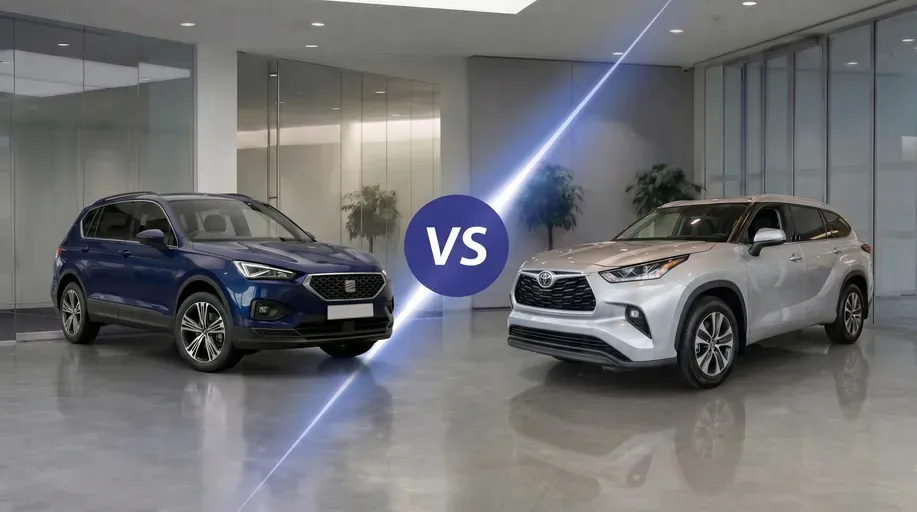
Detailed comparison of Seat Tarraco vs Toyota Highlander. Find out which 7-seater SUV offers better space, equipment, and driving characteristics. Make the right choice!
Oct 16, 2026