Car battle
Opel Corsa vs. Škoda Fabia: Complete comparison 2026
Detailed comparison: Opel Corsa vs. Škoda Fabia. Discover the differences in equipment, engines, and reliability. Real-world experiences to help you choose your used car.
Apr 24, 2026
Articles
Car battle
Detailed comparison of the Opel Corsa vs. Suzuki Swift. Discover real-world experiences, comparisons of equipment and driving characteristics, as well as our final verdict. Which model should you choose?
April 27, 2026
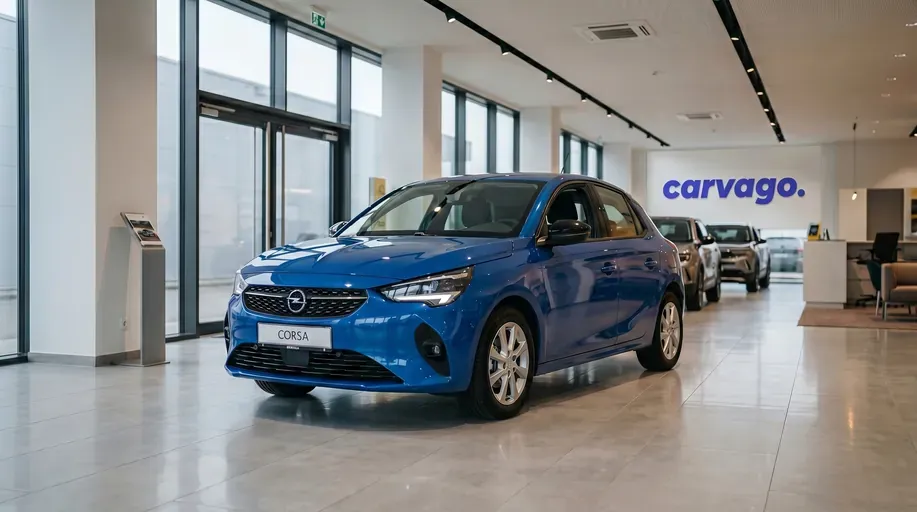
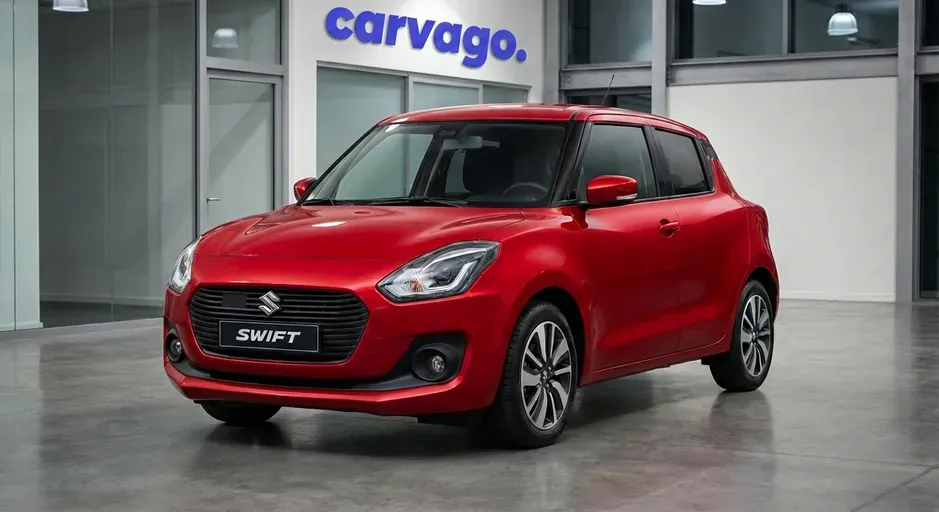
Opel Corsa, also known as the Vauxhall Corsa on the British market, is an exceptionally popular European hatchback that wins drivers over primarily with its elegant design and modern technologies. Its rival today is the Suzuki Swift (also sold as the Maruti Suzuki Swift in some regions), a compact and remarkably lightweight car that has built a strong reputation thanks to its agile driving dynamics and legendary Japanese reliability. Let's take a detailed look together at which of these two city favorites represents a better choice on the used car market and will better suit your daily needs.
When choosing a used car around four years old (approximately 2020–2022 models), we encounter an interesting generational difference in philosophy between these two models. While the Opel Corsa in its current F generation has grown and moved its dimensions to the very upper limit of the small car segment, the Suzuki Swift in its 6th generation has remained faithful to the traditional concept of a very compact and maximally agile city car.
The main and immediately obvious difference lies in their overall length and stance. Depending on the specific version, the Opel Corsa is roughly 220 mm longer, making it a more mature-looking vehicle that doesn't feel out of place even on longer highway journeys. In contrast, the shorter Suzuki Swift excels in heavy city traffic, where its shortened overhangs and overall length of under 3.9 metres make parking in even the tightest parallel spaces enormously easy.
However, the height of both vehicles is very interesting. Despite its overall smaller footprint, the Suzuki Swift is 45 to 70 mm taller than its German competitor. In practice, this parameter means that the Japanese representative offers a more airy interior with very good headroom and an overall more upright driving position. The Corsa, on the other hand, bets on a lower silhouette, which gives the car a more dynamic look and significantly lowers the center of gravity, which drivers will appreciate with a more confident and sportier performance in corners.
| Parameter | Opel Corsa Hatchback | Suzuki Swift Hatchback |
|---|---|---|
| Length (mm) | 4060 - 4061 | 3840 - 3890 |
| Width (mm) | 1765 | 1735 |
| Height (mm) | 1433 - 1435 | 1480 - 1505 |
| Wheelbase (mm) | 2538 | 2450 |
In the end, the external dimensions clearly profile the character of both cars. If you are looking for a full-fledged small car that can hold its own as a primary car for longer distances and provide confidence on the highway, the longer, wider, and lower Corsa is the ideal candidate. However, if your journeys are primarily in the city, you struggle with parking spaces, and you value maximum agility and easy entry, the Swift's taller and shorter body will suit you significantly better.
When choosing a used city car, trunk capacity plays a surprisingly important role, especially if the car is to serve not only for commuting to work but also for daily family tasks. Both the Opel Corsa (F generation, produced since 2019) and the Suzuki Swift (6th generation, 2017–2024) target the same category of drivers and are highly sought-after choices in the four-year-old used car market. However, their approach to interior space utilization differs quite a bit. While one car emphasizes solid transport capacity within its class, the other prioritizes more compact exterior dimensions and overall agility at the expense of the rear section.
The basic trunk capacity of the Opel Corsa in the internal combustion engine version is a very solid 309 liters, while folding the rear seatbacks increases the storage space to a generous 1,081 liters. However, it is important to note that if you opt for the popular fully electric version of the Opel Corsa, the capacity drops to 267 liters in the base and 1,042 liters with the seats folded due to the placement of the traction batteries in the floor. On the other hand, the Suzuki Swift offers a slightly more modest basic trunk of 265 liters in its standard configuration and in the widely available version with a mild-hybrid system (SHVS). By folding the rear seats in the Swift, you get a maximum usable space of 947 liters.
In practice, these differences have a quite significant impact on daily usability. The Opel Corsa offers space for a few extra suitcases and can serve without much trouble as a car sufficient for weekend shopping or a longer holiday for two. In contrast, the Suzuki Swift, although its trunk can easily accommodate regular grocery bags or sports equipment for the afternoon, will struggle for every centimeter with bulkier cargo. For city driving and occasional errands, the Swift's trunk is perfectly adequate; however, for regular transport of larger items or a folding stroller, the German representative represents a noticeably more practical solution.
| Parameter | Opel Corsa Hatchback | Suzuki Swift Hatchback |
|---|---|---|
| Basic capacity (liters) | 309 | 265 |
| Maximum capacity with seats folded (liters) | 1081 | 947 |
While the Suzuki Swift scores primarily with its agility and compactness with 265 liters, the Opel Corsa, with a basic capacity of 309 liters, is a much more practical choice for drivers who require their city car to also be able to hold luggage for weekend trips.
Trailer weight, or towing capacity, is a key factor for many buyers, especially if you plan to regularly transport construction materials, bicycles on a tow-bar-mounted rack, or hitch a small caravan or utility trailer to your car. While small city cars are not primarily designed as heavy-duty workhorses, differences between models can significantly affect their practicality for everyday use. In this regard, the Opel Corsa and Suzuki Swift offer different options that could decide your final choice.
When looking at roughly four-year-old used cars on the market (primarily Corsa generation F and Swift 6th generation), the Opel Corsa proves to be a noticeably stronger player. Most turbocharged internal combustion versions of the Corsa, such as the popular 1.2 DI Turbo or 1.5 Diesel engines, offer a maximum braked trailer weight of up to 1,200 kg. A standard unbraked trailer for these more powerful engines has a capacity of around 580 kg. In contrast, the Suzuki Swift maintains a standard maximum braked towing capacity of exactly 1,000 kg across most of its common specifications (such as the 1.2 Dualjet or 1.0 Boosterjet), while the permitted weight for an unbraked trailer is legally and technically limited to a more modest 400 kg.
However, it is extremely important to choose the specific engine carefully, as capacities for both cars can vary significantly depending on the powertrain. For the Opel Corsa, the maximum braked weight for the base naturally aspirated 1.2 (55 kW) version drops to just 500 kg, which is a very significant decrease compared to the turbocharged versions. Fully electric variants of the Opel Corsa do not officially allow trailer towing at all, and the manufacturer has not established relevant towing data for them. A similar limitation can be found with the Suzuki Swift – its top-of-the-line Swift Sport version, equipped with the 1.4 Boosterjet engine, is not homologated for trailer towing, and no data is available for it.
What does this mean in practice? If you opt for a more powerful turbocharged Corsa, you get the certainty and the ability to hitch a slightly heavier braked trailer. This towing bonus is useful not only as welcome space for a few extra suitcases but is perfectly sufficient for weekend shopping or a longer holiday with a small family caravan. The Suzuki Swift, on the other hand, with its towing capacity, is ideal for attaching a bike rack to the tow bar or for a light garden trailer. The lower value for an unbraked trailer (400 kg) represents a more noticeable limit, for example, when transporting heavier materials from a DIY store.
Final verdict on towing capabilities:
In terms of overall towing capacity, the Opel Corsa emerges as the winner of this comparison. If you choose the turbocharged petrol or diesel units, the car offers a very solid reserve for more demanding users. The Suzuki Swift will serve perfectly for completely undemanding tasks, but its absolute limits firmly reflect the model's primary focus on low weight and exceptional agility in city traffic.
| Model and engine | Braked trailer weight (kg) | Unbraked trailer weight (kg) |
|---|---|---|
| Opel Corsa 1.2 (55 kW) | 500 | 500 |
| Opel Corsa 1.2 DI Turbo / Hybrid (74 - 100 kW) | 1200 | 580 |
| Opel Corsa 1.5 Diesel (75 kW) | 1200 | 580 |
| Suzuki Swift 1.0 Boosterjet (82 kW) | 1000 | 400 |
| Suzuki Swift 1.2 Dualjet / Hybrid (61 - 66 kW) | 1000 | 400 |
The range of engines for both models shows completely different approaches to powering small city cars and represents a crucial factor for buyers of used cars around four years old. While the Opel Corsa benefits from being part of the Stellantis group and offers a wide range of turbocharged three-cylinder engines, an economical diesel, or even a fully electric drive, the Suzuki Swift follows the classic Japanese path. Instead of complex turbo engines in standard versions, it relies on reliable, high-revving naturally aspirated four-cylinder engines, which are standardly supported by mild-hybrid technology (SHVS) in used cars from 2020 to 2024 to minimize consumption. A completely unique and unrivaled trump card of the Swift in this segment is the option of all-wheel drive (AllGrip), which makes it ideal for users in hillier areas.
The Opel Corsa (generation F) covers almost all conceivable needs with its range. For quiet city driving, the basic naturally aspirated 1.2 engine (55 kW) is sufficient. However, most buyers will appreciate the turbocharged 1.2 DI Turbo variants (74 kW and 96 kW), which give the car excellent dynamics and can be combined with a very smooth eight-speed automatic transmission. Drivers who cover high highway mileages can opt for the excellent 1.5 Diesel four-cylinder. You can still find it relatively easily on the 4-year-old used car market; however, data clearly shows that its production for the Corsa was definitively ended in May 2023. Environmentally conscious buyers then have the option to choose the electric version of the Opel Corsa, which represents an interesting alternative for suburban traffic.
| Engine type | Fuel type | Power (kW) | Torque (Nm) | Transmission |
|---|---|---|---|---|
| 1.2 | Petrol | 55 | 118 | 5MT |
| 1.2 DI Turbo | Petrol | 74 | 205 | 6MT / 8AT |
| 1.2 DI Turbo | Petrol | 96 | 230 | 8AT |
| 1.5 Diesel | Diesel | 75 | 250 | 6MT |
| Corsa-e (Electric) | Electric | 100 | 260 | 1AT |
The Suzuki Swift (6th generation) underwent an engine revision in 2020, which in roughly four-year-old used cars manifests as a widespread transition to mild-hybrid systems and the removal of the more powerful petrol one-liter from the standard range. Most of the market consists of the durable naturally aspirated 1.2 Dualjet Hybrid four-cylinder. Its power was tuned to 61 kW in newer models (it had 66 kW in older units until 2020), but thanks to the car's very low weight, it feels extremely agile and excels in fuel consumption, typically oscillating around 4.5 liters. It can be paired with a manual, a CVT, and all-wheel drive. The brisk turbocharged 1.0 Boosterjet three-cylinder (82 kW) appeared in the range only until mid-2020. If you are looking for a sharper drive, focus your attention on the legendary Swift Sport hot-hatch with the 1.4 Boosterjet Hybrid engine. Although its power slightly decreased to 95 kW after the introduction of mild-hybrid technology in 2020, it still guarantees an unforgettable driving experience thanks to a weight of just over 1 ton.
| Engine type | Fuel type | Power (kW) | Torque (Nm) | Transmission |
|---|---|---|---|---|
| 1.2 Dualjet Hybrid | Petrol/HEV | 61/66 | 107 / 120 | 5MT / CVT |
| 1.2 Dualjet Hybrid AllGrip | Petrol/HEV | 61/66 | 107 / 120 | 5MT |
| 1.0 Boosterjet | Petrol | 82 | 170 | 5MT / 6AT |
| 1.4 Boosterjet Hybrid | Petrol/HEV | 95 | 235 | 6MT |
The Opel Corsa scores with its diversity and the option of powerful turbo engines or diesel, while the Suzuki Swift is a bullseye for lovers of above-average reliability, flyweight, and the 4x4 drive, which is rare in small cars.
Choosing the right engine is crucial for long-term satisfaction, which is why our recommendations for roughly four-year-old used cars are based on real-world performance, actual fuel consumption, owner feedback, and mechanical reliability. When comparing these two models, we encounter two completely different philosophies: while Opel, with the Corsa generation F, bets on the French turbocharged three-cylinder school of thought with high torque, Suzuki sticks with the traditional naturally aspirated Japanese four-cylinder for the 6th generation Swift, enhanced by mild-hybrid technology aimed at maximum longevity and efficiency.
This turbocharged three-cylinder (originally from the PSA Group, known as PureTech) represents the best compromise in the Opel Corsa generation F lineup. While the base naturally aspirated 1.2-liter (55 kW) is only suitable for city driving due to its parameters, and the more powerful turbo version (96 kW) is unnecessarily expensive on the used market, the 74 kW variant offers excellent flexibility and balanced performance for everyday use. Technically, the engine pleases with strong pull from low revs thanks to a favorable torque curve and real-world consumption that consistently stays around 5.5 to 6 liters per 100 km.
However, there is one major catch in the form of the timing belt, which is immersed directly in engine oil. If proper maintenance is not followed or if the car is frequently driven on short trips, the belt material can begin to crumble, clogging the oil pickup strainer and leading to fatal engine damage. How to prevent this risk:
After considering the service specifics, this engine is ideal for drivers who drive mixed routes (city, country roads, highways), seek refinement in a small car, and appreciate a more dynamic performance with reasonable consumption.
For roughly four-year-old used 6th generation Suzuki Swifts, the choice is simplified. Although a more dynamic turbocharged 1.0-liter three-cylinder (1.0 Boosterjet) was previously available, it disappeared from the lineup in mid-2020. The main choice for newer used cars thus becomes the naturally aspirated 1.2 Dualjet four-cylinder, which was standardly paired with a simple 12V mild-hybrid system (SHVS). This engine is an absolute star in terms of long-term reliability and minimal operating costs.
Thanks to the absence of a turbocharger and the use of indirect injection (Dualjet), the engine warms up very quickly and does not suffer from carbon buildup on the valves, making it an expert at short city hops. Furthermore, thanks to the vehicle's low weight and the assistance of the mild-hybrid starter-generator, its real-world consumption commonly drops below 5 liters per 100 km. Mechanically, the unit is almost bulletproof. What to watch out for:
This engine is absolutely ideal for calmer and defensive drivers, users with a predominance of city and suburban kilometers, and for anyone looking for a mechanically simple car they plan to keep for another 10 years without expensive repairs.
When choosing a used car, it is important to remember that official fuel consumption figures provided by manufacturers often differ diametrically from everyday reality. In daily operation, not only the route profile and vehicle load come into play, but above all, the driving style itself. To get the most accurate picture of actual fuel costs, we looked at real-world data from thousands of drivers on the popular independent portal Spritmonitor.de. We focused on models around four years old, which in the used car market ideally corresponds to the Opel Corsa generation F (from 2019) and the sixth generation Suzuki Swift (2017–2024).
| Model and engine | Average consumption (l/100 km) |
|---|---|
| Opel Corsa 1.5 Diesel (75 kW) | 4.5 |
| Suzuki Swift 1.2 Dualjet Hybrid (61 kW) | 4.8 |
| Opel Corsa 1.2 (55 kW) | 5.5 |
| Suzuki Swift 1.0 Boosterjet (82 kW) | 5.3 |
| Opel Corsa 1.2 DI Turbo (74 kW) | 6.0 |
| Suzuki Swift Sport 1.4 Boosterjet (103 kW) | 6.5 |
When interpreting the real-world data, it is clear at first glance that the Asian representative has a slight edge in the overall efficiency of petrol engines. The main role here is played by the Suzuki Swift's featherweight (often well below the one-tonne mark) and the excellent efficiency of naturally aspirated engines supported by mild-hybrid technology. The 1.2 Dualjet Hybrid model can achieve less than five liters per hundred kilometers with a light foot. Conversely, the Opel Corsa exhibits a typical drawback of small petrol turbo engines – as soon as you demand highway speeds or more dynamic driving from the 1.2 DI Turbo three-cylinder, consumption skyrockets and realistically settles around six liters. Surprisingly, the most economical choice of the entire comparison remains the 1.5 Diesel engine under the Corsa's hood, but finding such a used car in the small car segment today is a task for the patient and only makes sense with very high highway mileage.
For a typical user primarily looking for a city car for shopping and shorter suburban commutes, the naturally aspirated Suzuki Swift 1.2 Dualjet makes the most sense from a budget perspective. It can handle the challenges of short trips without technical complications and with minimal fuel costs. On the other hand, drivers covering longer distances and highways should take note. While the Opel Corsa 1.2 DI Turbo consumes about a liter more fuel, it rewards with a more mature driving experience, better sound insulation, and a more significant power reserve. Also worth mentioning is the Suzuki Swift Sport, which shows that even a highly entertaining hot-hatch with a turbocharged 1.4-liter engine can be operated daily at a very pleasant 6.5 l/100 km.
Fuel consumption and total operating costs can thus be a fairly clear deciding factor in this duel. If your absolute priority is the cheapest possible operation on shorter routes, the economical petrol engines of the Suzuki Swift are a bullseye. However, if you plan to put a larger number of kilometers on the car outside the city, you can easily justify the slightly higher fuel bill of the turbocharged Opel Corsa with better driving comfort.
When looking for a roughly four-year-old used car (around model year 2022), both cars are in a similar price range, but with different value depreciation dynamics on the secondary market. The current generation Opel Corsa (F) shares modern technology with its group siblings and offers a very wide selection of cars – from basic naturally aspirated engines to purely electric versions. The previous generation Suzuki Swift (A2L, facelifted version), on the other hand, relies on proven mild-hybrid technology, exceptionally low weight, and a unique all-wheel-drive offering in this segment.
The selection of used Opel Corsa cars in dealerships is exceptionally rich. The range covers everything from simple city cars to more dynamic or eco-friendly variants.
There are significantly fewer Swifts in European used car markets. Owners often hold onto them for a long time due to their reputation for high reliability and low operating costs. A more limited supply and stable demand mean a slower decline in prices on the used car market.
| Model Variant | Opel Corsa (F) | Suzuki Swift (A2L) |
|---|---|---|
| Basic version (FWD, manual) | €11,500 – €13,100 | €11,900 – €13,500 |
| Better equipped models / 4x4 / Automatic | €13,500 – €15,600 | €14,000 – €15,600 |
| Sport derivative / Electric vehicle | €16,400 – €19,700 (EV) | €17,200 – €18,900 (Sport) |
While the used Opel Corsa scores with easy availability and a wide selection of specifications tailored to your taste, the Swift benefits more from its reputation as a scarce commodity. With the Suzuki, there is no risk of such a rapid drop in residual value in the following years of use – especially if you manage to find the AllGrip variant, which practically no other brand offers in the small city hatchback segment. The Corsa, on the other hand, is an excellent opportunity for anyone interested in a technologically modern used electric car at a rational price.
While the used Opel Corsa scores with a rich selection, more modern equipment, and represents an affordable path to a used electric car, the Suzuki Swift benefits on the market from slower value depreciation, legendary reliability, and highly desirable all-wheel drive.
While in the past, previous generations of both models could boast five-star Euro NCAP ratings, for newer used cars, it is essential to consider the context and the year of testing. Test methodology constantly evolves and becomes significantly stricter over time. For this reason, percentage results and star ratings from different years are not directly comparable. Increasing demands for active safety and the detection of vulnerable road users meant that the Opel Corsa and Suzuki Swift models tested did not achieve five stars in their base equipment. In reality, however, they offer much more advanced protection than their older, "five-star" predecessors.
Opel Corsa underwent crash tests in 2019 according to very strict protocols and took home a strong four-star rating. The car lost its fifth star mainly in the safety assist category. The standard autonomous emergency braking (AEB) system relied only on a camera, which was sufficient for pedestrian detection, but the system could not reliably react to fast-moving cyclists (advanced radar was only available at an extra cost). Despite this, the Corsa earned very high scores for adult protection (84%) and child protection (86%).
Suzuki Swift was tested earlier, in 2017. In its standard specification, it received only three stars. The reason was a dismal rating for assistance systems (25%), as the base trims lacked automatic braking. Cars equipped with the optional Radar Brake Support package improved their rating to four stars, and the assistance score rose to 44%. However, it is important to keep in mind that under today's Euro NCAP rules, this certification has already expired, as the car does not cover the most modern safety scenarios – such as protection when crossing an intersection.
| Parameter | Opel Corsa | Suzuki Swift |
|---|---|---|
| Year of testing | 2019 | 2017 |
| Adult occupant protection | 84% | 83% |
| Child protection | 86% | 75% |
| Vulnerable road user protection | 66% | 69% |
| Safety assist systems | 69% | 25%* |
*Note: The values shown for the Suzuki Swift apply to the standard version without optional assistance packages.
In terms of current standards, the Opel Corsa offers a noticeably more modern and comprehensive safety package. Its construction underwent more demanding tests, and the basic level of active safety significantly exceeds the standards of its Japanese competitor. The Suzuki Swift is not an unsafe car, but if safety is a priority for you, it is worth looking exclusively for units equipped with the optional radar assistant on the used car market.
Thanks to newer tests from 2019, more stable occupant protection, and better standard equipment of active assistants, the Opel Corsa represents a safer and more modern choice for everyday driving.
In addition to standard equipment, each of the models offers several unique features that can be decisive for the customer, and each manufacturer approaches added value in a completely different way. While the German representative bets on modern technologies and equipment from higher classes, the Japanese model counters with featherweight and absolute unique features in the field of drive.
Elegant and sporty design with the option of advanced Matrix LED headlights
Comfort-tuned chassis that absorbs bumps well during daily commuting
Wide range of powertrains, including the fully electric Corsa-e version
Modern infotainment and high-quality materials in the front of the cabin
Very good interior soundproofing even at highway speeds
Noticeably cramped legroom and headroom in the rear seats
Narrow rear door opening makes handling a child car seat difficult
Only average luggage capacity (309 liters)
Higher purchase price for used cars in better-equipped versions and electric variants
The Opel Corsa represents a mature and comfortable city car that scores points primarily with its range of modern technologies and the option of a purely electric drive. It is an ideal choice for couples or individuals looking for a stylish car for daily trips who do not require excessive space in the second row of seats.
Extremely low curb weight ensuring agile and very fun driving characteristics
Reliable and exceptionally fuel-efficient naturally aspirated engines with mild-hybrid technology
A unique option in this segment to choose all-wheel drive (AllGrip)
Great visibility from the car and easy maneuvering in narrow city streets
Generally lower purchase price and very reasonable long-term service costs
Below-average luggage space with a volume of only 265 liters
Noticeably weaker cabin soundproofing, which reduces comfort on the highway
More outdated infotainment graphics and the use of harder, less attractive plastics in the interior
Limited range of more powerful engines (excluding the specific Sport version)
The Suzuki Swift is tailor-made for drivers who want to enjoy the thrill of driving and appreciate agility supported by the car's very low weight. Thanks to fuel-efficient mild-hybrids and a unique all-wheel-drive system, it is a rational choice, although it requires compromises in terms of trunk size and interior finish.
Based on long-term user feedback, service reports, and our own experience, which includes detailed Independent car technical inspection, we have compiled an overview of the most common problems that buyers should watch out for with both models.
In the Franco-German Opel Corsa model, whose F generation began production in 2019, most issues are concentrated around the powertrains and minor electronics.
The Opel Corsa can be a reliable partner, but the petrol engines require meticulous maintenance and timely oil changes using the correct type of oil. When buying a used car, always look for a vehicle with a completely transparent service history.
The third generation of the Suzuki Swift (2017–2023) is considered one of the most reliable cars in its class; therefore, only minor ailments resulting from the pressure on low weight and production costs tend to appear.
The Suzuki Swift is a mechanically very durable and low-maintenance car that is unlikely to let you down. However, you need to turn a blind eye to the more sensitive paint and lower acoustic comfort in the interior.
When buying a used car, a thorough inspection is key, and every Physical inspection of a used car should focus on the specific characteristics and design weaknesses of both models. Here are some specific points to watch out for with these popular city hatchbacks.
Opel Corsa offers a significantly larger luggage space of 309 liters, which is a very solid average in the small car segment. Suzuki Swift, on the other hand, has a smaller trunk with a capacity of only 265 liters, which can be limiting when packing for a vacation. For more frequent transport of bulky shopping and strollers, the German car is a significantly more practical choice.
The Japanese representative is famous for its extremely low weight and well-tuned mild-hybrid system, thanks to which fuel consumption easily stays around 4.5 to 5 l/100 km. While Opel offers relatively efficient three-cylinder gasoline engines, its real-world city consumption tends to be about half a liter higher due to its overall higher weight. In terms of minimal fuel costs in heavy traffic, the Suzuki is the clear winner.
Thanks to its weight of under one ton, the Swift is incredibly nimble, agile, and feels almost like a playful go-kart to the driver in tight corners. In contrast, the Corsa uses a more maturely tuned chassis that filters broken roads much better and provides better cabin soundproofing. It therefore depends entirely on your preferences whether you are looking for fun handling on backroads or quiet comfort for longer highway trips.
Yes, the Suzuki is one of the very few cars in its class that you can commonly find on the used car market with functional ALLGRIP all-wheel drive. Opel, on the other hand, relies exclusively on front-wheel drive and does not produce a 4x4 version at all. However, the German brand partially compensates for this handicap by offering an electric version of the Opel Corsa, which its Japanese competitor lacks.
Naturally aspirated engines without complex turbocharging technologies make the Suzuki one of the most reliable small cars ever, with a minimal risk of expensive breakdowns. With a used Corsa featuring 1.2 PureTech engines, on the other hand, it is necessary to strictly monitor timely oil changes and the condition of the timing belt, which gradually degrades as it is immersed in oil. If you are looking for maximum mechanical durability and low-cost servicing, the Japanese model is the safer route.
Sources: ADAC, aktualne.cz, lidovky.cz, mobilmania.cz, autoservis.cz, racinglife.cz
This article was prepared using artificial intelligence tools. The section guarantor is Petr Dušek.
Detailed comparison: Opel Corsa vs. Škoda Fabia. Discover the differences in equipment, engines, and reliability. Real-world experiences to help you choose your used car.
Apr 24, 2026
Big Comparison: Renault Clio vs. Suzuki Swift: Which used hatchback to choose? We reveal the differences in fuel consumption, equipment, and reliability. Read our verdict!
Oct 16, 2026
Detailed comparison of the Hyundai i20 vs. Peugeot 208. Which city hatchback to choose? Discover the differences in equipment, fuel consumption, and read our final verdict.
Apr 26, 2026