Articles

Car battle

Mercedes-Benz Citan Tourer vs. Renault Kangoo: Complete comparison 2026

Mercedes-Benz Citan Tourer vs Renault Kangoo comparison. Which passenger van is more worth it? Discover the differences in price and equipment, and read the final verdict.

April 21, 2026

VS
Mercedes-Benz Citan Tourer

Mercedes-Benz Citan Tourer

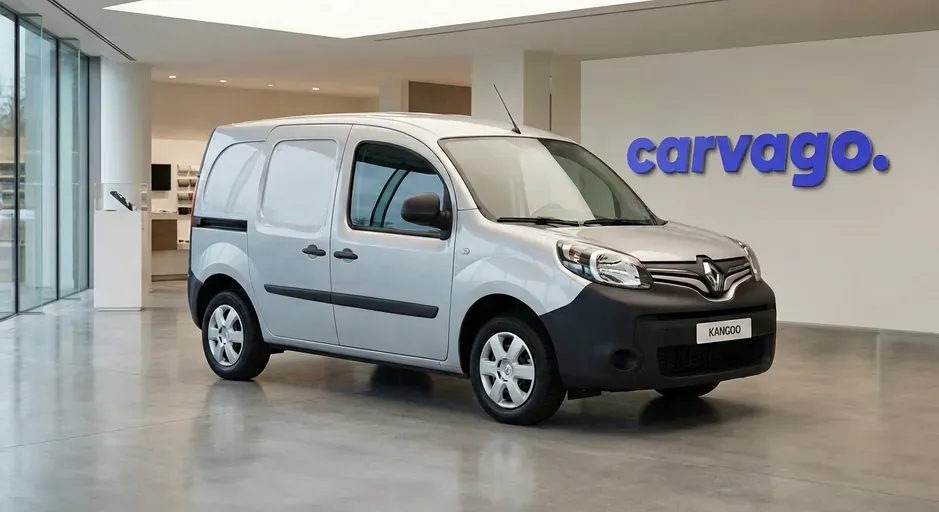
Renault Kangoo

Renault Kangoo

Introduction

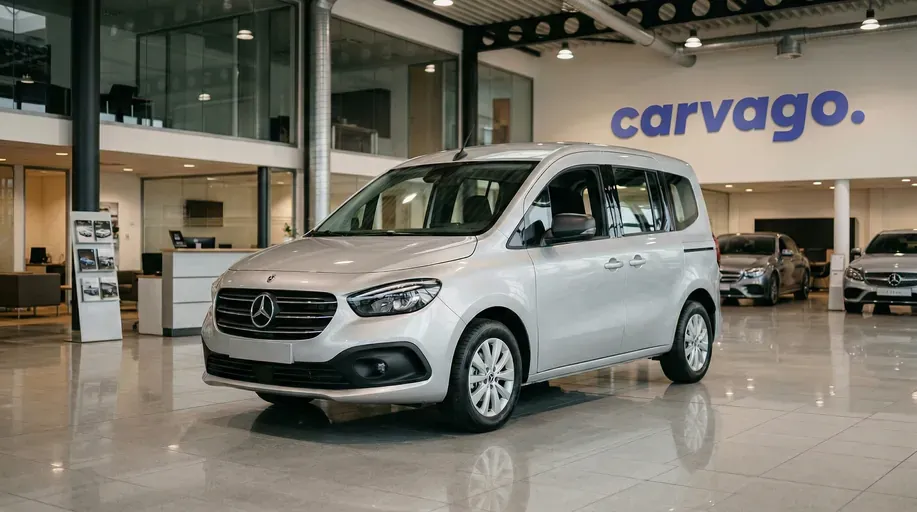
Mercedes-Benz Citan Tourer, whose more luxuriously appointed passenger version is also known as the T-Class, brings premium materials and the typical comfort of the German brand to the compact family van segment. Its French technological sibling, the Renault Kangoo, which can also be found on the market as the closely related Nissan Townstar due to the alliance cooperation, is considered a long-standing pioneer of this category with a maximum emphasis on unrivaled practicality and a cleverly designed interior space. The following comparison will show you in detail how these two technical relatives actually differ from each other and which one will better suit your family or business needs.

Comparison of External Dimensions

The current generation of the Mercedes-Benz Citan Tourer and Renault Kangoo (on the market since 2021, making them an ideal choice for the four-year-old used car market) share a common technological platform, which is logically reflected in their nearly identical external dimensions. Whether you opt for the German star or the French diamond, you get a vehicle that is perfectly optimized to maximize interior space while maintaining a reasonable footprint. In both cases, this footprint is perfectly suited for maneuvering through narrow city streets and for convenient parking at shopping centers.

In the basic standard version, both models offer an identical wheelbase of 2,716 mm, ensuring stable driving characteristics and generous space for the occupants. Differences in overall length are minimal and stem primarily from the different designs of the front grilles and bumpers – at 4,498 mm, the Mercedes-Benz is only 12 mm longer than the Renault Kangoo (4,486 mm). In terms of width, the vehicles are also very similar; in standard internal combustion versions, they usually differ by a negligible one millimeter. In the real world, you will practically not notice the differences in footprint, and overall length or width will not play a decisive role when choosing between these two vehicles.

Both models are also available in more practical extended versions (referred to as Lang, Grand Kangoo, or L2 for commercial variants), which stretch the wheelbase to a generous 3,100 mm and push the overall length beyond the 4.9-meter mark. This means significantly more legroom for passengers in the third row of seats or for transporting bulkier items in commercial use. In these variants, the Renault Kangoo has a slightly taller body (reaching a height of up to 1,869 mm, which is nearly 40 mm more than the comparable Citan), slightly improving the overall sense of airiness in the interior and increasing the vertical capacity of the cargo area. Despite this difference, both cars fit without problems into the vast majority of underground garages with a standard height limit of 1.9 meters.

ParameterMercedes-Benz Citan Tourer EstateRenault Kangoo EstateMercedes-Benz Citan VanRenault Kangoo Van
Width (mm)18591860–191918591860
Length (mm)4498–49224486–49114498–49224486–4910
Height (mm)1811–18301838–18691819–18301854–1864
Wheelbase (mm)2716–31002716–31002716–31002716–3100

Trunk Volume

The luggage compartment is often the most important argument for buying family and multi-purpose passenger vans. It is this space that determines how well the car will serve during daily duties, large family shopping trips, and weekend adventures. Both the Mercedes-Benz Citan Tourer (W420 generation) and the Renault Kangoo (III generation) in their modern versions – ideal representatives on the market for roughly four-year-old used cars – offer a giant transport capacity that easily outperforms most common SUVs and station wagons. Thanks to the boxy body shape and a very low loading sill, loading heavy loads, strollers, or bicycles is exceptionally comfortable.

Although both models are closely related technical siblings coming off the same production line, the official paper data on the stated volume differ mainly due to different measurement methodologies. Mercedes-Benz states a basic trunk volume of 517 liters for the passenger version Citan Tourer (in the Estate body variant). This value is measured relatively conservatively using the precise VDA methodology only up to the retractable parcel shelf. Renault, on the other hand, relies on a more generous overall declaration of usable space for the Kangoo model and states 775 liters as the base. After folding the rear seats, the space in the Citan increases to an impressive 2900 liters, while for the Kangoo model in a five-seat configuration, a comparable maximum value of 2800 liters is commonly stated. Also worth mentioning is the fully electric Renault Kangoo E-Tech variant (similar to the eCitan), which, thanks to the clever placement of traction batteries in the floor, boasts a slightly modified basic volume of 850 liters and 2500 liters after folding the seats. If you need to move truly bulky loads, you can also find the extended Grand Kangoo version on the secondary market, where the maximum capacity grows to a staggering 3500 liters.

In practice, the physical spatial differences between the two vehicles are almost indistinguishable, and both cars represent the absolute top of what a compact family van can offer. The geometrically perfect shape of the trunks means space for several extra suitcases and is perfectly sufficient for weekend shopping, transporting building materials, or a longer vacation, all without the need to install a roof box. With both vehicles, customers get maximum van practicality, which is cleverly wrapped in a comfortable passenger design for everyday use.

ParameterMercedes-Benz Citan Tourer EstateRenault Kangoo Estate
Basic volume (liters)517775
Max. volume with seats folded (liters)29002800

📦 Transport King for Families

Both models offer a gigantic and easily accessible trunk in their modern generations, where paper differences in liters are more a result of different measurement methodologies than an actual lack of space in one or the other.

Trailer Weights

Trailer weight, or towing capacity, is a key parameter for everyone who plans to tow heavier loads behind their car, whether for work or hobbies. Since the Mercedes-Benz Citan Tourer and Renault Kangoo (in current generations available as roughly four-year-old used cars from 2021/2022) share the same technical platform, their capabilities in this area are perfectly matched. Both vehicles identically offer a maximum braked trailer weight of up to 1,500 kg, while a standard unbraked trailer can reach the legal limit of 750 kg. These values apply across practically all common internal combustion engine options in both model ranges.

An interesting feature of these models is the approach to electric powertrains. While towing capacity often drops significantly for battery variants in other competing vehicles, the fully electric passenger versions, Mercedes-Benz eCitan Tourer and Renault Kangoo E-Tech Electric, confidently maintain a maximum towing capacity of 1,500 kg (only in some purely commercial panel van versions of the eCitan Kastenwagen can this value drop slightly to 1,400 to 1,450 kg).

In practice, this capacity means huge added value and flexibility. The mentioned capacity is quite sufficient for hitching a medium-sized caravan for a long family holiday, as well as for safely towing a heavier cargo trailer with construction materials or a spacious trailer for a weekend purchase of bulky furniture.

If how much load a car can handle on the tow bar is crucial for you when choosing a used car, you won't go wrong with either of these competitors. Both models behave like identical twins and represent a great choice in the compact passenger van class with above-standard and highly practical parameters.

Model and engineBraked trailer weight (kg)Unbraked trailer weight (kg)
Mercedes-Benz Citan Tourer 110 CDI (70 kW)1500750
Mercedes-Benz Citan Tourer 112 CDI (85 kW)1500750
Mercedes-Benz Citan Tourer 113 (96 kW)1500750
Mercedes-Benz eCitan Tourer1500750
Renault Kangoo BLUE dCi 95 (70 kW)1500750
Renault Kangoo BLUE dCi 115 (85 kW)1500750
Renault Kangoo TCe 130 FAP (96 kW)1500750
Renault Kangoo E-Tech Electric1500750

Overview of Most Common Motorizations

Although the Mercedes-Benz Citan Tourer and Renault Kangoo appear to be competitors at first glance, under the bodywork they share the identical modern CMF-CD platform from the Renault-Nissan-Mitsubishi alliance. This means that regardless of whether you choose the German or French vehicle from the current generation, you essentially get the same range of top-tier powertrains. The differences lie primarily in the subtle software tuning of the control units – Mercedes focused on smoother operation and better sound insulation, while Renault relies on proven functionality and a slightly more affordable price tag. The base of the range is always a refined 1.3-liter four-cylinder petrol engine, complemented by a reliable 1.5-liter diesel engine. For the more powerful variants, customers can choose between a classic six-speed manual and a smooth-shifting seven-speed dual-clutch transmission. For families with children looking for a spacious vehicle for city and suburban use, the quiet petrol engine makes sense; conversely, for highway travel and high mileage, the highly efficient diesel still clearly excels. Both brands recently expanded their engine families with an all-electric version, which is currently a great rarity on the used car market for vehicles around four years old.

Engines: Mercedes-Benz Citan Tourer

Under the hood of the current generation Mercedes-Benz Citan Tourer are turbocharged units that benefit from a close partnership with Renault, yet feature specific company tuning of the control unit. The petrol range consists of a very successful 1.3-liter four-cylinder, available in the standard 110 version and the more powerful 113. Diesel fans will be pleased with the proven and economical 1.5-liter engine labeled 110 CDI and 112 CDI. From mid-2023, the range was also supplemented by the purely electric eCitan Tourer variant with an output of 90 kW (122 hp). While the weaker petrol engine is only found on the used market with a six-speed manual, an excellent seven-speed dual-clutch automatic transmission (7DCT) has been available for the more powerful 113, 110 CDI, and 112 CDI versions since late 2021. Given the age of the vehicles on the market (especially those around 4 years old), you may rarely encounter Worker Plus specifications, which were only available from the factory in a very short window between October 2021 and July 2022.

Engine typeFuelPower (kW)Torque (Nm)Transmission
110Petrol752006MT
113Petrol962406MT / 7DCT
110 CDIDiesel702606MT / 7DCT
112 CDIDiesel852706MT / 7DCT
eCitan TourerElectricity902451AT

Engines: Renault Kangoo

The passenger version of the third-generation Renault Kangoo offers practically identical power levels on the used market as the Citan Tourer. The petrol standard is the reliable 1.3 TCe four-cylinder, delivered with 75 kW (labeled TCe 100 FAP) and 96 kW (TCe 130 FAP). Diesel engines from the economical 1.5 Blue dCi family are available for passenger versions tuned to 70 kW (Blue dCi 95) and 85 kW (Blue dCi 115). The all-electric passenger Kangoo E-Tech Electric with a 45 kWh battery and smooth pull thanks to 245 Nm of torque was added to sales at the end of 2022. The dual-clutch automatic transmission, referred to as EDC by Renault, is optionally available for the more powerful petrol (TCe 130 FAP) and diesel (Blue dCi 115) variants. An interesting fact for used car buyers is that, unlike Mercedes, the passenger Kangoo could not combine the automatic transmission with the weaker Blue dCi 95 diesel. So, if you desire a diesel without the need for shifting in the French sibling, you must look exclusively for the top-of-the-line Blue dCi 115 version on the market. Models equipped with this transmission began appearing at dealerships in the spring of 2022.

Engine typeFuelPower (kW)Torque (Nm)Transmission
TCe 100 FAPPetrol752006MT
TCe 130 FAPPetrol962406MT / 7EDC
Blue dCi 95Diesel702606MT
Blue dCi 115Diesel852706MT / 7EDC
E-Tech ElectricElectricity902451AT

Family Ideal or Workhorse? 👨‍👩‍👧‍👦

Both models offer reliable petrol and highly efficient diesel engines. For city and shorter suburban use, go for the quiet 1.3 petrol; conversely, for frequent and long trips with a full trunk, the economical diesel with a dual-clutch automatic is clearly worth it.

Choosing the right engine is crucial for long-term satisfaction. Both the Mercedes-Benz Citan Tourer and the Renault Kangoo share the same technical foundation resulting from the close cooperation between the Renault-Nissan alliance and the Daimler group. Under the hood of these vans, you will find mechanically identical power units that differ only in their commercial designation and minor software tuning. Our recommendation is based on real-world experience, fuel consumption, and mechanical reliability on the used car market for vehicles approximately four years old—specifically the current generations of both models launched in 2021.

For the Mercedes-Benz Citan Tourer, we recommend: 112 CDI (85 kW / 116 hp)

The Mercedes-Benz Citan Tourer in the 112 CDI version is the ideal choice for those who plan to use the vehicle for longer distances or frequently carry heavy loads and passengers. Under the hood is a proven 1.5-liter diesel four-cylinder (based on the famous Renault K9K family, designated as OM608 by Mercedes), which excels in exemplary reliability and real-world fuel consumption easily oscillating around 5 to 5.5 liters per 100 km. The 85 kW output and generous torque ensure solid dynamics even when fully loaded, which is key for a family van.

Mechanically, this engine is exceptionally durable; however, like any modern diesel, it carries certain risks if used inappropriately. If you were to use the vehicle exclusively for short city trips, there is a risk of diesel particulate filter (DPF) clogging and engine oil dilution with diesel from incomplete regenerations. When buying a used car, focus on the trip history and AdBlue fluid refills. Before purchasing, also check the smoothness of the engine and any vibrations that could indicate worn injectors. This diesel workhorse makes the most sense for long family vacations or for drivers with higher annual mileage.

For the Renault Kangoo, we recommend: TCe 130 (96 kW / 130 hp)

For the more family-oriented third-generation Renault Kangoo, it makes a lot of sense for everyday use to opt for the TCe 130 gasoline engine. This is a very successful 1.33-liter turbocharged four-cylinder. With an output of 96 kW (130 hp), it is the most dynamic choice in the range, giving the car unexpected agility and excellent flexibility. The engine is exceptionally refined, quiet, and in real-world driving, it consumes about 6.5 to 7 liters of gasoline, which is a very good value for a spacious and tall vehicle.

The main advantage of this unit is the absolute absence of concerns regarding DPF filters typical of diesel engines. This makes the Kangoo TCe 130 perfectly suited for shorter commutes, school runs, and suburban driving. For a roughly four-year-old used car, check primarily whether the previous owner adhered to regular oil changes. It is ideal to shorten the service interval from the factory values to 15,000 km or one year. Fresh oil is absolutely crucial here for the trouble-free operation of the timing chain and the long life of the turbocharger. If the car has a clear and timely service history, this engine represents a safe bet.
Real Fuel Consumption

Official fuel consumption figures provided by manufacturers often differ in real-world driving, especially for vehicles with taller and wider bodies like these popular passenger vans. To obtain an objective comparison, we focused on data from drivers themselves, specifically for generations that are currently sought-after as nearly-new used cars around four years old (Mercedes-Benz Citan internal generation 420 and Renault Kangoo 3rd generation). The following values are based on the extensive database of the independent community server Spritmonitor.de, where thousands of owners record their daily refueling over the long term.

Model and engineAverage consumption (l/100 km)
Renault Kangoo BLUE dCi 955.5
Mercedes-Benz Citan Tourer 110 CDI5.7
Renault Kangoo BLUE dCi 1155.8
Mercedes-Benz Citan Tourer 112 CDI5.8
Renault Kangoo TCe 1307.2
Mercedes-Benz Citan Tourer 1137.7

Looking at the real-world data obtained, the dominant position of diesel engines in terms of overall operating economy is evident at first glance. Despite both vehicles sharing the same technical foundation (the Citan is powered by units originally from Renault), the proven 1.5-liter four-cylinder diesel engines easily keep their appetite within the economical range of 5.5 to 5.8 liters per 100 kilometers.

Conversely, small-displacement petrol engines (TCe 130 and Citan 113) clearly demonstrate how strongly they react to the poor aerodynamics of a boxy body. The real-world consumption of petrol versions approaches or exceeds the seven-liter mark, causing the theoretical on-paper savings of a small turbocharged unit to vanish very quickly at higher speeds.

What does this mean for typical users?

  • Highway drivers and weekenders: If you plan to use the vehicle for longer trips with the family or frequent highway journeys with a full trunk, a diesel engine is the logical and, in the long run, much more economical choice. At highway speeds, the difference in consumption between diesel and petrol widens even further.
  • City commuting: For families and drivers who spend most of their time on shorter routes in the city or on suburban roads, the petrol variant may make more sense despite the higher average consumption. This way, you avoid potentially expensive problems with a clogged diesel particulate filter (DPF), which does not have time to regenerate on short trips.

In conclusion, it can be clearly stated that fuel consumption itself will not be the main deciding factor in the battle between these two models. Given that the Citan Tourer and Kangoo are technical siblings, they offer virtually identical operating efficiency with comparable engines. The scales will ultimately tip more towards your affinity for a specific brand, a possible preference for the more premium interior of the Mercedes, or conversely, the more playful and affordable approach of the Renault.

Price Range and Used Car Offerings

Although both models roll off the same production line and share the vast majority of their technology, their price tags on the used car market differ quite significantly. The market for approximately four-year-old vehicles (in this case, the third generation of the Renault Kangoo and the second generation of the Mercedes-Benz Citan, both introduced in 2021) clearly demonstrates the role a premium badge and differently configured equipment can play.

Current Market Situation (2021–2022 Models)

The difference in the purchase prices of brand-new vehicles naturally carries over to the used car market, where the Mercedes-Benz is perceived as a more premium and generally better-insulated and equipped alternative to the more utility-oriented Renault.

  • Renault Kangoo: On the secondary market, it represents an extremely rational and affordable choice. Basic passenger versions with less powerful diesel engines from 2021 can be purchased starting just above €14,000. Very popular family petrol engines (e.g., 1.3 TCe) in mid-range trims most often range between €16,000 and €19,000.
  • Mercedes-Benz Citan Tourer: A typical first owner of a Citan reached significantly deeper into the options list, which keeps average used prices higher today. The cheapest Citan Tourer from 2021 starts at approximately €18,000, which is four thousand more than a comparable Kangoo. Well-maintained examples (e.g., the 112 CDI version in the sought-after PRO or PRO S trim) commonly fluctuate between €21,000 and €27,000, while for specific versions, the price can climb over twenty-nine thousand.

Comparison of Estimated Used Car Prices

The table below reflects the actual supply of approximately four-year-old used cars with corresponding mileage in Central Europe and Western markets.

Model (2021/2022 years)Entry-level models (from)Mid-range choicePremium and very well-equipped units
Renault Kangoo€14,000€16,000 – €19,000€21,000 and more
Mercedes-Benz Citan Tourer€18,000€21,000 – €27,000€29,000 and more

What to Consider Before Buying?

A difference of four to eight thousand euros for comparably old cars doesn't just mean paying extra for the "star on the hood." It is important to be aware of several market specifics:

  • Residual Value: Mercedes-Benz vehicles traditionally hold their value slightly better on the market. You can thus partially recover the higher initial investment when subsequently selling the car in later years.
  • VAT Deduction Possibility: A huge advantage of the market for three- and four-year-old vans is the fact that most of them come from corporate fleets. For the vast majority of advertisements for both brands in this age category, a VAT deduction can be applied, making the purchase significantly more attractive for businesses.
  • Maintenance Costs: While the engines and basic mechanical parts are identical, potential care within the authorized service network differs in price – standard authorized servicing and specific bodywork or interior parts will be slightly more expensive for the Mercedes.

Is it the budget or the desire for premium that decides? 💸

While the Renault Kangoo represents a highly pragmatic and more affordable choice for average families and small business owners, the Mercedes-Benz Citan Tourer confidently justifies its premium surcharge on the used market with slightly better interior craftsmanship and a demonstrably higher future residual value.

Safety and Euro NCAP Rating

When evaluating the safety of family vans, reviews often start with the general statement that both compared vehicles automatically earn five-star Euro NCAP ratings. However, it is always extremely important to take into account the overall context and the year of testing. The testing protocols of the independent organization are constantly evolving and becoming stricter (e.g., the introduction of new frontal collision simulations with a moving barrier or advanced intersection scenarios), so percentage scores from different years cannot be directly compared without reservation. Moreover, with this specific pair, we encounter an interesting exception, as only one of them reached the coveted five-star peak.

The current generation Renault Kangoo underwent Euro NCAP tests in 2021. Although the car demonstrated robust cabin stability and possesses all important active safety features, it received an overall four-star rating from the test. The main reason for the slightly lower numbers in adult protection was that the vehicle lacked a center airbag in its standard equipment. This feature is crucial for preventing collisions between the driver and passenger during a severe side impact, which was negatively reflected in the partial scoring.

The Mercedes-Benz Citan Tourer (whose 2022 results are technically based on the crash tests of its sister passenger T-Class) showed the role that additional development care plays. The German automaker equipped its model with a richer safety package as standard, including the aforementioned center airbag and more advanced attention monitoring and steering assistance systems. This intervention was immediately reflected in the achievement of a full five stars. The vehicle showed excellent results both in side impacts and in the evaluation of automatic emergency braking systems for cyclists and pedestrians.

ParameterMercedes-Benz Citan TourerRenault Kangoo
Year of testing20222021
Adult occupant protection91 %78 %
Child occupant protection93 %87 %
Vulnerable road user protection69 %67 %
Safety assist systems90 %72 %

These detailed figures clearly show that although both models share the same floor platform and body structure, Mercedes engineers delivered a safer package to the market. The eighteen percentage point difference in safety assistants and thirteen in adult protection proves that the Citan Tourer better meets stricter modern standards. Based on the Euro NCAP results, the representative of the German brand emerges as the winner of this duel, providing the occupants with a more secure and comprehensive level of protection.

🛡️ Mercedes offers more modern protection

Although both vehicles share the same technical basis, the Mercedes-Benz Citan Tourer provides significantly more comprehensive occupant protection than the Renault Kangoo, thanks to more extensive standard equipment and the implementation of a center airbag.

Comparison of Interesting Equipment Features

In addition to standard equipment, each of the models offers several unique features that can be decisive for the customer, and each approaches added value in its own way.

Mercedes-Benz Citan Tourer: Premium feel and advanced connectivity

Although the Citan Tourer shares its basic design and chassis platform with its French sibling, the Stuttgart-based automaker has taken care to ensure the vehicle offers a typical "Mercedes" experience with an emphasis on premium quality and innovative technology.

  • Infotainment and telematics: The main attraction of the interior is the free-standing MBUX (Mercedes-Benz User Experience) multimedia system on the dashboard with a seven-inch touchscreen. It stands out with its sophisticated "Hey Mercedes" voice control, which can learn the driver's habits. Advanced smartphone integration and the possibility of remote access to the vehicle via the Mercedes me app are a matter of course.
  • Comfort and interior: The cabin is characterized by above-standard workmanship and materials for a passenger van. You will find iconic circular air vents with a turbine look and an elegant multifunction steering wheel with touch surfaces, just like in the brand's more expensive passenger cars. The seats use specific foam fillings and custom profiling, ensuring better lateral support and high comfort on long journeys.
  • Chassis and driving characteristics: Mercedes was not satisfied with the shared base and tuned the chassis purely according to its own standards. The Citan Tourer received different spring settings, modified shock absorbers, and stiffer stabilizers. The result is a more confident performance on the road, suppression of typical van-like body roll in corners, and smooth driving comfort more akin to a compact hatchback.
  • Safety electronics: The Citan Tourer boasts extensive assistance equipment even in basic versions. Among the most interesting smart features are the unique Crosswind Assist, which helps stabilize the high body on the highway through targeted braking interventions on individual wheels, and the ATTENTION ASSIST driver drowsiness monitoring system.

Renault Kangoo: A family practicalist with ingenious details

The new generation of the Kangoo has moved closer to conventional family cars in terms of design, yet it has retained its unmatched versatility and adds innovative solutions that significantly facilitate daily logistics and cargo transport.

  • Infotainment and onboard technology: The eight-inch EASY LINK system with a clear, very user-friendly interface dominates here. For maximum convenience, it is complemented by wireless phone mirroring and a practically designed smartphone holder that can be attached right next to the instrument cluster. In higher trim levels, the advanced digital interior rearview mirror connected to a camera is also impressive.
  • Smart solutions and storage spaces: The Kangoo absolutely excels in efficient use of space. A revolutionary detail is the Easy Life drawer – a massive pull-out box in front of the passenger with a volume of several liters, which replaces the classic flip-down compartment and provides unrivaled and deep storage space with easy access even from the driver's seat. In total, the cabin offers an incredible 49 liters in small internal storage compartments alone.
  • Unique roof racks: One of the most practical family accessories is the patented innovative Easy Inside Rack roof rails with integrated crossbars. These can be unclipped and rotated 90 degrees across the width of the vehicle simply by unlocking them. You don't need any tools at all to create a roof rack, and you carry the crossbars elegantly with you at all times.
  • Design and everyday use: The front grille with distinctive C-Shape LED headlights visually places the Kangoo into the current Renault passenger car family. Great access to the second row is ensured by wide sliding doors with a massive 615 mm entry opening. Furthermore, the rear asymmetrically split bench, consisting of three full-sized seats, can be folded flat, creating a giant and perfectly level floor for transporting even very bulky cargo.

Key Advantages and Disadvantages

Mercedes-Benz Citan Tourer

Pros

Higher-quality interior finish with a Mercedes-Benz-specific dashboard

Availability of the advanced and very fast MBUX multimedia system

Better-insulated cabin and overall higher acoustic comfort at higher speeds

Custom chassis tuning providing a smoother and more composed ride

More prestigious appearance and higher status thanks to the premium brand

Cons

Significantly higher purchase price on the used car market compared to its French sibling

More expensive authorized service, hourly rates, and some spare parts

Despite the premium brand, it still shares the same technical basis with a mainstream model

Mercedes-Benz Citan Tourer is an ideal choice for customers who need the maximum utility of a family van but do not want to make major compromises in terms of premium finish and comfort. It primarily targets more demanding drivers and entrepreneurs who don't mind paying extra for more sophisticated infotainment, better noise insulation, and a prestigious badge on the hood.

Renault Kangoo

Pros

Significantly better price-to-utility ratio when buying a used car

Exceptionally clever practical solutions in the interior (e.g., the giant slide-out drawer in front of the passenger)

Lower operating costs, more accessible service network, and cheaper spare parts

Innovative roof racks (on selected versions) with integrated crossbars that can be easily flipped

Great visibility from the car and a huge interior space ready for tougher use

Cons

Greater presence of cheaper and harder plastics in the cabin

The Easy Link multimedia system lags behind German competitors in smoothness and graphics

Slightly worse insulation of aerodynamic noise and chassis impacts during highway travel

Renault Kangoo represents a rational and highly practical choice for active families looking for huge interior space and clever storage solutions for reasonable money. This model scores primarily with its excellent value for money, making it a tireless workhorse and a carefree companion for long weekend trips.

Common Problems and Owner Complaints

Based on our own inspections through the CarAudit service, breakdown statistics from service reports, and long-term user experience, we have compiled an overview of the most common problems that typically affect four-year-old vehicles of these models.

The second-generation Mercedes-Benz Citan Tourer shares key technology with Renault but offers specific tuning, its own onboard system, and materials, which also come with characteristic service points.

  • Electronics and infotainment: The MBUX system is generally more reliable than competitors' solutions; however, owners occasionally report screen freezing or slower responses after startup. Most of these issues are successfully resolved by software updates.
  • Engine (diesel versions): The popular 1.5-liter four-cylinder diesel (originally from Renault) is mechanically very durable. However, with exclusively city driving and frequent short trips, problems with a clogged diesel particulate filter (DPF) and EGR valve may occur.
  • Engine (petrol versions): In direct-injection petrol engines, there is a risk of oil dilution with petrol and increased carbon buildup on the valves when lugging the engine or during stop-and-go city driving.
  • Chassis and bodywork: In some used cars, creaking of harder interior plastics starts to be heard after a few years (especially during significant temperature changes), or play develops in the mechanisms of the rear sliding doors, which require thorough lubrication and adjustment.

Mercedes-Benz Citan Tourer: A solid foundation with minor flaws

The Citan benefits from proven shared technology, with the most attention for used cars needing to be paid to the condition of the DPF in diesels and regular software updates for the onboard system.

The third-generation Renault Kangoo is the structural twin of the Citan but uses its own Easy Link infotainment and differs in several details of workmanship and body construction.

  • Electronics and infotainment: With the Easy Link system, users quite often encounter dropouts in wireless connection via Apple CarPlay or Android Auto and occasional freezing of the parking camera.
  • Engines: As with the Citan, the diesel engines (1.5 Blue dCi) are durable but require regular longer drives at highway speeds for the long-term survival of the DPF. In the 1.3 TCe petrol versions, slightly increased oil consumption may appear in some units.
  • Transmission: In EDC dual-clutch automatic transmissions, unsmooth shifting and jerking may occur at higher mileages or with neglected maintenance (unchanged oil), especially when crawling in traffic jams and starting off.
  • Workmanship and interior: Wear on interior surfaces tends to be visible a bit earlier in the more work-oriented Kangoo. For specific versions without a B-pillar on the right side, we recommend performing an independent technical inspection of the car before purchase, focusing on the perfect fit and tightness of the giant sliding and front doors.

Renault Kangoo: A practical workhorse that requires care

The third-generation Kangoo is an extremely versatile vehicle where it pays to monitor especially the smoothness of the dual-clutch transmission and the condition of the more complex door mechanisms.

Tips for Buying a Used Car

When buying a used car, a thorough inspection is key. Here are some specific points to focus on for these two models, which is why we always highly recommend an independent comprehensive car inspection before any hasty purchase.

When choosing a Mercedes-Benz Citan Tourer:

  • MBUX Infotainment and its speed: The Citan Tourer relies on its own MBUX multimedia system instead of Renault's solution. During testing, check the loading speed after starting the car, the smoothness of the user interface, and the response of the parking camera. Most potential system "freezing" and stuttering is resolved by an additional update, so check which software version is currently installed in the car.
  • Dual-clutch automatic transmission behavior (7G-DCT): During the test drive, pay close attention to pulling away and slow maneuvering in a car park. The gearbox must not hesitate excessively or jerk. Any jerky or noisy shifting often indicates worn clutches or neglected transmission oil changes.
  • Cooling system and thermostat housing (1.3 petrol engines): For models equipped with petrol four-cylinder engines (most commonly labelled 110 and 113), look into the engine compartment. In these originally alliance-developed units, microscopic cracks or leaks in the plastic thermostat housing could appear in the early production years, resulting in coolant leaks.
  • Pull and emission systems (1.5 CDI diesel engines): Verify that the engine runs smoothly during acceleration. A drop in power can sometimes stem from clogged injectors. The AdBlue system dosing module is also very sensitive in diesel variants – if its electronics fail, the car will display a warning message and, in extreme cases, may restrict starting.
  • Chassis and front axle condition: Although Mercedes adjusted the geometry and damping to its own liking, as these are often hard-worked utility-family vehicles, play in the front axle silentblocks can occur prematurely. Drive over speed bumps or a series of small bumps and listen for any knocking. Even the slightest doubts will be safely revealed by a physical inspection of the car by a professional mechanic.

When choosing a Renault Kangoo:

  • Carbon buildup in 1.3 TCe engines: The direct-injection petrol engine reacts sensitively to load and trip types. If the car was driven mainly on short city trips, there is a risk of carbon deposits on the intake valves. During the test drive, watch for idle fluctuations, jerking during acceleration, or a sudden loss of pull (which could also indicate a loose turbocharger hose clip).
  • Sliding doors and rail wear: The heavily used mechanics of the sliding doors are a key weakness in a used family "van-like" vehicle. Test the locking and closing from both sides. The rollers and bottom guide rails must not be dry or excessively worn, otherwise the doors will catch during operation.
  • Easy Link system and electrical faults: Thoroughly test the Easy Link onboard system, especially the stable Bluetooth phone connection or screen mirroring. In early third-generation vehicles, there were reports from owners about software glitches in the instrument cluster, occasional speedometer needle drops caused by a faulty sensor, or problems with the sensitivity of the rear door lock module.
  • DPF Regeneration (1.5 Blue dCi): This popular diesel engine is excellent for fuel consumption and longer trips, but constant city driving leads to clogging of the Diesel Particulate Filter (DPF) because the system cannot successfully complete regeneration. If a warning light is on or you suspect problems, it is necessary to have a professional diagnostic scan performed, which is standardly included in a technical car inspection.
  • Clutch and grinding in the manual transmission: For variants with a six-speed manual, feel the clutch engagement point and the lightness of the pedal. Stiffer operation can warn of an approaching clutch kit replacement. Gears should engage without the need for brute force – if you feel significant resistance from the gear lever or hear rattling, worn synchronizers may be to blame.

FAQ: Most Frequently Asked Questions

Yes, both models share the same technological platform and engines, as they were created through close cooperation between the two automakers. However, the Mercedes stands out with its distinctive front-end design, a specifically designed interior, and slightly different chassis tuning for better comfort.

The Mercedes-Benz Citan Tourer feels more premium thanks to more luxurious materials on the dashboard and the premium MBUX infotainment system with advanced voice control. The Renault Kangoo, on the other hand, scores points with a huge number of cleverly designed storage spaces and focuses primarily on family utility.

The engine range is identical for both cars; you can choose from proven 1.3-liter petrol engines and reliable 1.5-liter diesel engines (1.5 dCi). However, there is a noticeable difference in driving dynamics, as Mercedes developed its own tuning for the springs, dampers, and power steering, making the ride more composed and quieter.

The basic body dimensions and luggage compartment size are absolutely identical for both passenger versions. Both family vans offer a boot capacity of 775 liters in the standard configuration and above-standard spaciousness in all directions for all five passengers.

The Renault Kangoo represents a more rational choice in terms of price; it is usually significantly cheaper to buy and has slightly more affordable routine maintenance. The Citan Tourer requires a higher budget at purchase but holds its residual value better and is ideal for those who demand more modern technology and the prestige of the three-pointed star brand.

Conclusion: Which Model to Choose?

Sources: ADAC, mdcr.cz, denik.cz, autoservis.cz, emobility.cz, autosystem.cz

This article was prepared using artificial intelligence tools. The section guarantor is Petr Dušek.

Related articles

Car battle

Ford Tourneo Connect vs. Volkswagen Caddy: Complete comparison 2026

Detailed comparison of Ford Tourneo Connect vs. Volkswagen Caddy. Discover the differences in space, equipment, and reliability and read our clear final verdict!

Apr 13, 2026

Car battle

Mercedes-Benz Citan Tourer vs. Volkswagen Caddy: Complete comparison 2026

Detailed comparison of Mercedes-Benz Citan Tourer vs. Volkswagen Caddy. We reveal the differences in space, equipment, and reliability to help you choose the ideal family van.

Apr 13, 2026

Car battle

Renault Kangoo vs. Volkswagen Caddy: Complete comparison 2026

Renault Kangoo or Volkswagen Caddy? Our detailed comparison reveals the key differences and helps you decide which car is right for you.

Apr 13, 2026

We accept online card payments as well as wire transfers.

visa payment provider logovisa-electron payment provider logomastercard payment provider logomaestro payment provider logodiners-club payment provider logodiscover payment provider logo