Car battle
Ford Kuga vs. Renault Austral: Complete comparison 2026
Used SUV comparison: Ford Kuga vs. Renault Austral. Find out which model offers better engines, equipment, and real value. Read our final verdict!
Apr 18, 2026
Articles
Car battle
Detailed comparison of the Mazda CX-5 vs. Toyota RAV4. Find out which used SUV to choose. We provide real-world experiences, a comparison of running costs, and a clear verdict.
May 8, 2026
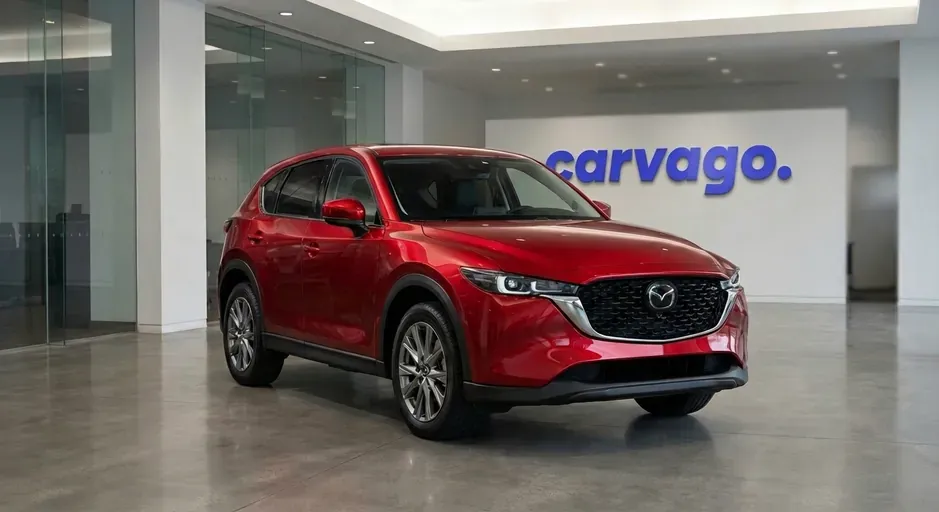
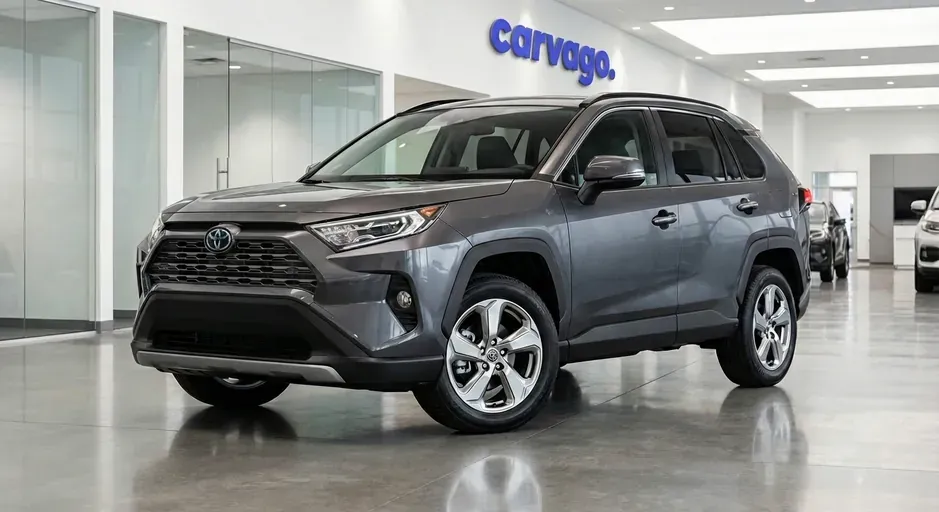
The Mazda CX-5 is a popular compact SUV that has long been winning the hearts of drivers with its dynamic driving characteristics, premium interior, and elegant sporty design. Standing against it is the Toyota RAV4, a global bestseller and an absolute pioneer of this class (sold in some markets also as the Toyota Wildlander or, as part of a collaboration, as the sister model Suzuki Across), which relies primarily on its legendary reliability, generous interior space, and exceptionally efficient hybrid powertrains. Let's take a detailed look at which of these two extremely popular Japanese family cars offers a better price-performance ratio on the used car market and will better suit your daily needs.
When choosing a used mid-size SUV, roughly four years old, the Mazda CX-5 (KF generation) and Toyota RAV4 (XA5 generation) models represent two exceptionally attractive choices with very similar physical proportions. Looking closely at the exterior dimensions, it is the Toyota RAV4 that takes up slightly more space on the road. It measures exactly 4600 mm in length, surpassing the Mazda CX-5 by 25 to 50 mm depending on the specific bumper version. The RAV4 is also 10 to 15 mm wider and an imperceptible 5 mm taller. In practice, these slightly larger dimensions mean that the Toyota offers a visually more robust impression, while the Mazda, with its shorter and narrower body, provides slightly better maneuverability when parking in tight urban spaces.
An interesting contrast is provided by the comparison of the wheelbase, which is crucial for both interior space and driving characteristics. Although the Mazda CX-5 is shorter overall, it boasts a wheelbase of 2700 mm, which is 10 mm more than the Toyota RAV4 (2690 mm). This means that Mazda's engineers pushed the wheels further to the corners of the body. The result is shorter overhangs, which give the car a more dynamic silhouette and primarily benefit driving stability and interior space for the crew. In contrast, Toyota works with longer overhangs, which slightly limits knee room in the cabin relative to its overall length, but provides a more voluminous rear for carrying cargo. This technical difference shows that for a driver who prefers sportier handling and a sense of more space for the crew, the Mazda will be the better choice, while the Toyota will satisfy those looking for generous cargo space.
Generally speaking, both Japanese SUVs fit European standards and can easily fit into standard parking spaces or underground garages. The differences in dimensions are evolutionary rather than revolutionary, yet they can play a role in daily life. While the Mazda CX-5, with its more compact body dimensions and long wheelbase, appeals to more active drivers spending a lot of time in the city, the slightly bulkier dimensions of the Toyota RAV4 will be appreciated primarily by those looking for a family car with the distinct character of a classic off-roader.
| Parameter | Mazda CX-5 SUV | Toyota RAV4 SUV |
|---|---|---|
| Width (mm) | 1840 - 1845 | 1855 |
| Length (mm) | 4550 - 4575 | 4600 |
| Height (mm) | 1680 | 1685 |
| Wheelbase (mm) | 2700 | 2690 |
When choosing a family SUV, the luggage compartment volume often plays a decisive role, as it determines how easily you can handle daily logistics and packing for vacations. For those interested in roughly four-year-old cars on the used car market, a fairly clear difference in approach between the two Japanese automakers emerges. While one model bets on absolute maximization of interior space and everyday family practicality, the other offers more average values, which it balances with a more attractive exterior design and a dynamic body profile.
If we look at the specific numbers for the popular generations from around 2022 (Mazda CX-5 generation KF and Toyota RAV4 generation XA5), the winner in total volume is clearly Toyota. The standard internal combustion version of the RAV4 and its popular full-hybrid variant both offer an excellent 580 liters of base volume, which can be expanded to a generous 1690 liters by folding the rear seats. The Mazda CX-5 in a comparable generation provides a base trunk volume of 494 to 522 liters (depending on the specific engine and equipment), reaching a maximum of 1608 to 1638 liters after folding the seats. However, it is important to mention the pitfalls of electrification: if you opt for the plug-in hybrid version of the Toyota RAV4, its base trunk shrinks to 520 liters (maximum 1604 liters) due to the more space-demanding battery. In this specific case, both cars are practically equal in their transport capabilities.
In practice, these volume differences mean that the standard Toyota RAV4 easily provides space for a few extra suitcases or significantly easier loading of a bulky stroller without the need for complex disassembly. Its trunk is perfect for longer vacations, where families will appreciate every extra liter. The capacity of the Mazda CX-5 is perfectly sufficient for weekend shopping and standard travel for a smaller family; however, when packing for a two-week trip or a ski trip to the mountains, you might need to reach for a roof box. The higher liter capacity and overall boxier shape of the trunk simply make the Toyota RAV4 the objectively more pragmatic choice.
| Parameter | Mazda CX-5 SUV | Toyota RAV4 SUV | Toyota RAV4 Plug-in Hybrid SUV |
|---|---|---|---|
| Base volume (liters) | 494 - 522 | 580 | 520 |
| Maximum volume with seats folded (liters) | 1608 - 1638 | 1690 | 1604 |
Thanks to its significantly larger and better-shaped trunk, the Toyota RAV4 is the clear favorite for families and practically-minded drivers, while the Mazda CX-5 will suffice for daily needs without extreme demands for transporting large amounts of luggage.
When choosing a family SUV, the trailer weight often plays a decisive role. Although both vehicles, the Mazda CX-5 and Toyota RAV4, are considered practical companions, there are vast differences in their towing capacity. If you are considering towing a family caravan or a boat trailer, this parameter will almost certainly decide the winner.
When focusing on cars approximately four years old (KF generation for Mazda and XA5 for Toyota), we find that the Mazda CX-5 is significantly better built for towing trailers. Its values are high and consistent across the range:
On the other hand, the Toyota RAV4 (XA5 generation) requires a much more careful choice of engine, as the fuel-efficient hybrid system takes its toll on towing capacity:
In practice, this represents a huge difference. The limited 800 kg capacity of the front-wheel-drive Toyota is more or less sufficient only for a small unbraked trailer for garden waste or weekend shopping at a DIY store. In contrast, the more than two-ton limit of the Mazda CX-5 easily provides space for a heavy multi-berth caravan even for a longer family holiday.
Conclusion: If a tow bar is your daily bread and you plan to transport heavier loads, the Mazda CX-5 is clearly the more flexible and reliable choice. The Toyota RAV4 only makes sense for towing in the all-wheel-drive version, but generally excels more in low city fuel consumption than in the role of a workhorse.
| Model and engine | Braked trailer (kg) | Unbraked trailer (kg) |
|---|---|---|
| Mazda CX-5 2.0 SKYACTIV-G / e-SKYACTIV-G (KF) | 1800 - 2000 | 750 |
| Mazda CX-5 2.5 SKYACTIV-G / e-SKYACTIV-G (KF) | 2000 | 750 |
| Mazda CX-5 2.2 SKYACTIV-D (KF) | 2000 - 2100 | 750 |
| Toyota RAV4 2.0 (XA5) | 2000 | 750 |
| Toyota RAV4 2.5 Hybrid (XA5) | 800 - 1650 | 750 |
| Toyota RAV4 2.5 Plug-in Hybrid (XA5) | 1500 | 750 |
The approach of both carmakers to their engine lineups couldn't be more different, making this comparison a fascinating battle between two distinct engineering philosophies. While Mazda, with its CX-5, persistently (and very appealingly for many drivers) rejects the trend of extreme downsizing and relies on proper naturally aspirated petrol engines with large displacements or traditional powerful diesels, the Toyota RAV4 is the absolute synonym for electrification and top-tier hybrid efficiency. For those interested in a roughly four-year-old used SUV (i.e., vehicles manufactured around 2022), this means a fundamental decision. The Mazda CX-5 offers power outputs ranging from 110 to 143 kW and will appeal to purists or highway travelers longing for diesel pull or the linear operation of a petrol four-cylinder paired with a classic torque converter automatic. In contrast, the Toyota RAV4 clearly dominates with its smoothness and unbeatable efficiency in suburban traffic thanks to the help of electric motors, while also being able to offer an extraordinary system output of up to 225 kW in the top-of-the-line plug-in hybrid version.
From a used market perspective, with a roughly four-year-old Mazda CX-5 (KF generation), you will encounter a traditional approach to internal combustion engines, which the automaker enriched at the turn of 2022 and 2023 with an unobtrusive mild-hybrid system (labeled as e-SKYACTIV-G) to reduce emissions and refine the start-stop function. The base engine is a proper naturally aspirated two-liter 2.0 SKYACTIV-G (121 kW), which will suit calmer drivers as its torque peaks at higher RPMs. A more powerful and confident choice is the large-displacement four-cylinder 2.5 SKYACTIV-G (143 kW), which is very often paired with a smooth and comfortably shifting six-speed torque converter automatic and AWD. A major competitive advantage for Mazda over Toyota is the retention of the diesel unit. The twin-turbocharged 2.2 SKYACTIV-D diesel engine (available with 110 kW or 135 kW) is exceptionally well-insulated, offers massive pull, and represents the clear choice for drivers who regularly cover long highway distances.
| Engine Type | Fuel | Power (kW) | Torque (Nm) | Transmission |
|---|---|---|---|---|
| 2.0 (e-)SKYACTIV-G 165 | Petrol / Mild-hybrid | 121 | 213 | 6MT / 6AT |
| 2.5 (e-)SKYACTIV-G 194 | Petrol / Mild-hybrid | 143 | 258 | 6AT |
| 2.2 SKYACTIV-D 150 | Diesel | 110 | 380 | 6MT / 6AT |
| 2.2 SKYACTIV-D 184 | Diesel | 135 | 445 | 6MT / 6AT |
The fifth-generation Toyota RAV4 (XA5 generation, which dominated the new car market around 2022) is represented among used cars almost exclusively with hybrid powertrains. Although a purely petrol version, the 2.0 VVT-iE with 129 kW, was available in the early years of this generation (around 2019–2020), you will only rarely come across it in listings for four-year-old cars, as it gradually disappeared from most markets due to strict emissions regulations. The alpha and omega is thus the 2.5 Hybrid system with an engine operating in the efficient Atkinson cycle. In the front-wheel-drive version, it offers a combined system output of 160 kW, while the all-wheel-drive version (labeled as AWD-i with an extra electric motor on the rear axle) has 163 kW. For maximum performance-oriented drivers, Toyota has an absolute ace up its sleeve: the 2.5 Plug-in Hybrid version. This provides a massive combined output of 225 kW (306 hp), giving this spacious family SUV acceleration on par with hot hatches and the possibility of a pure electric range of up to 75 km. All hybrid variants use a reliable e-CVT planetary gearbox.
| Engine Type | Fuel | Power (kW) | Torque (Nm) | Transmission |
|---|---|---|---|---|
| 2.0 VVT-iE (older models) | Petrol | 129 | 208 | 6MT / CVT |
| 2.5 Hybrid (2WD) | Petrol + Electric | 160 | 221 (engine) | e-CVT |
| 2.5 Hybrid (AWD-i) | Petrol + Electric | 163 | 221 (engine) | e-CVT |
| 2.5 Plug-in Hybrid (AWD-i) | Petrol + Electric | 225 | 227 (engine) | e-CVT |
If you often cover long highway distances, the robust and efficient diesel engine of the Mazda CX-5 will be a reliable companion, while for any suburban and urban driving, the sophisticated hybrid system of the Toyota RAV4 has no equal among used SUVs.
Choosing the right powertrain is absolutely crucial for long-term satisfaction, reliability, and sustainable operating costs. Both automakers approach engines quite differently – while Mazda, with the monitored KF generation (typically around four years old on the used car market), bets on honest naturally aspirated four-cylinders with larger displacements, Toyota, with its XA5 generation, focuses fully and with great success on its sophisticated full hybrid system. A look at the history of available engines shows interesting trends: the pure petrol two-liter (2.0) in the Toyota RAV4 disappeared from the market as early as mid-2020, and today you will encounter practically only hybrids. Mazda, on the other hand, resisted for a long time and offered pure internal combustion SKYACTIV-G versions, but from the end of 2022, it replaced them with e-SKYACTIV-G mild-hybrid variants, while the SKYACTIV-D diesel versions finally fell silent at the end of 2024.
Níže uvádíme rychlé srovnání námi doporučených motorizací pro obě vozidla z hlediska dostupnosti na trhu 4letých ojetin:
| Parameter | Mazda CX-5 (2.5 G 194 / e-G 194) | Toyota RAV4 (2.5 Hybrid AWD-i) |
|---|---|---|
| Drive type | Naturally aspirated petrol / Mild-hybrid | Full hybrid (HEV) |
| Power | 143 kW (194 hp) | 163 kW (222 hp) |
| Real consumption | 7.5 – 8.5 l/100 km | 5.5 – 6.5 l/100 km |
| Used market availability | Common (pure ICE until 2022, then mild-hybrid) | Dominant choice |
This large-displacement naturally aspirated four-cylinder is a complete rarity in today's world full of small turbocharged engines and represents by far the best choice in the range of used CX-5 KF generation models. It provides an excellent balance between refinement, sufficient power reserve for a heavier SUV, and absolutely exemplary mechanical reliability. The absence of a turbocharger means far fewer potential service risks in the future. Power comes on smoothly with a very pleasant and linear torque curve, while real consumption for the AWD version stays around a very respectable 7.5 to 8.5 liters per 100 km. Furthermore, the classic six-speed torque converter automatic transmission shifts imperceptibly and does not suffer from the expensive faults that often plague complex dual-clutch gearboxes. The engine is generally "bulletproof," but as a precaution against carbon buildup on the intake valves (a trade-off for direct injection), we recommend using fuel with additives and occasionally warming up the engine and holding it at higher RPMs. Change the oil strictly every 10 to a maximum of 15 thousand kilometers. It is an ideal powertrain for families, highway travelers, and drivers with a more dynamic style who want a car without hidden traps. We strongly recommend avoiding the 2.2 SKYACTIV-D diesel versions in used cars – although they were sold until 2024, with frequent short city trips, there is a real risk of oil dilution with diesel and expensive problems with a prematurely clogged diesel particulate filter (DPF).
The hybrid powertrain with a 2.5-liter petrol engine operating on the Atkinson cycle is, without exaggeration, the main argument for buying the RAV4 XA5 generation. It is a generationally refined and currently the best-tuned hybrid on the market. The AWD-i version adds a second independent electric motor to the rear axle, bringing the combined power to 222 hp. In practice, this means lightning-fast throttle response and absolutely fascinating fuel consumption – even with such a large SUV, you can effortlessly drive in the city and suburban areas for 5.5 to 6.5 liters per 100 km. But its strongest point is durability. The patented e-CVT transmission uses no friction clutches, and the car has no conventional starter, mechanical alternator, or V-belts. Service requirements are thus reduced to an absolute minimum. When choosing a roughly 4-year-old used car, pay close attention to whether the car has a documented regular service history in the authorized network, as this is the only way to extend the traction battery warranty for free. As a preventive measure, have the condition of the high-voltage cable to the rear electric motor checked on a lifted vehicle; on early XA5 models, it occasionally suffered from corrosion due to aggressive road salt in winter. This hybrid model is the perfect choice for rationally thinking families, people commuting daily to the city, and calmer drivers who appreciate silence, smoothness, and minimal bills at gas stations and service centers.
When choosing a roughly four-year-old used family SUV, fuel consumption is often one of the key arguments. As is often the case in the automotive world, official laboratory values provided by manufacturers can differ significantly from everyday reality on the road. To get a more accurate picture of how much the Mazda CX-5 (KF generation) and Toyota RAV4 (XA5 generation) actually consume on the road, we looked at user data from the independent portal Spritmonitor.de, where thousands of ordinary drivers enter their refueling records.
Data source:
| Model and engine | Average consumption (l/100 km) |
|---|---|
| Mazda CX-5 2.0 SKYACTIV-G 121 kW (Petrol) | 7,2 |
| Toyota RAV4 2.0 VVT-i 129 kW (Petrol) | 7,0 |
| Mazda CX-5 2.5 SKYACTIV-G 143 kW (Petrol) | 7,9 |
| Mazda CX-5 2.2 SKYACTIV-D 110 kW (Diesel) | 6,5 |
| Toyota RAV4 2.5 Hybrid 160 kW (Hybrid) | 5,7 |
| Toyota RAV4 2.5 Plug-in Hybrid 225 kW (PHEV) | 2,5 |
Looking at the real-world data, the completely different technological approaches of the two Japanese carmakers are clearly visible. With the KF generation, Mazda still stuck to honest naturally aspirated petrol engines and large-displacement diesels. While the SKYACTIV-G petrol four-cylinders are mechanically very durable and reliable, they cannot cheat the physics and aerodynamics of an SUV – consumption here typically hovers slightly above the 7-liter mark. Even the 2.2 SKYACTIV-D diesel engine, with an average of 6,5 l/100 km, is not an outright record-breaker in today's competition. On the other hand, an interesting and perhaps surprising finding for many is the fact that the large 2.5-liter engine in the Toyota RAV4 is by far the most economical. Thanks to sophisticated hybrid assistance, it can reduce consumption to an impressive 5,7 l/100 km. The Plug-in Hybrid variant shows extremely low values (around 2,5 l/100 km), but here the overall result depends entirely on how consistently the owner recharges the battery from the grid.
For the average user, clear recommendations emerge from these figures. If you are looking for a spacious car primarily for the city and suburban commuting (where you spend most of your time in traffic jams or slow-moving traffic), the hybrid Toyota RAV4 will be the clear winner. This is precisely where it can effectively recuperate energy and often move purely on electricity. The aforementioned plug-in version (PHEV) is then exclusively worthwhile for those who have a home wallbox or can charge at work. Conversely, the Mazda CX-5 will much better suit more traditionally-minded drivers who spend a substantial part of their mileage on motorways or open country roads. Naturally aspirated engines work with high efficiency and stable consumption here, rewarding the driver with linear power delivery regardless of whether there is any "juice" in the battery.
In conclusion, fuel consumption is a pivotal decision-making factor in this specific duel, sharply dividing the two vehicles. While the Mazda CX-5 bets on a traditional driving experience at the cost of slightly higher fuel demands, the Toyota RAV4 absolutely dominates in terms of operating costs with its sophisticated hybrids. From the perspective of overall economy, the Toyota is thus the clear choice for most families.
Both Japanese SUVs are staples in the used car market, with values depreciating significantly slower than many European competitors. However, when looking for a roughly four-year-old model (2021–2022 vintages), you will encounter quite fundamental differences in exactly what you are paying for and the powertrain technology you get.
The fifth-generation Toyota RAV4 (produced since 2019) holds its value in an exemplary fashion. A major reason is the immense popularity of its hybrid powertrain, which is considered bulletproof on the used car market and represents a safe bet for many families.
The second-generation Mazda CX-5 (produced since 2017 and regularly updated) represents a slightly more affordable path to a premium-feeling SUV with excellent driving characteristics. Unlike the Toyota, a driver's classic reigns here without massive electrification.
From the perspective of a buyer of a four-year-old used car, both models offer an excellent choice, but with a different philosophy. Mazda appeals to drivers looking for traditional technology, a more refined interior design, and a slightly lower initial investment. Toyota, on the other hand, scores as a tireless saver whose electrified powertrain keeps consumption to a minimum and guarantees an exceptionally easy future resale without significant financial loss.
| Model (2021–2022) | Approximate Price Range | Most Common Drivetrain in Ads | Value Retention |
|---|---|---|---|
| Mazda CX-5 (KF) | €23,000 – €31,000 | Traditional petrol engine | Slightly above average |
| Toyota RAV4 (XA50) | €25,000 – €35,000 | Self-charging hybrid (HEV) | Extremely slow |
While the Mazda CX-5 attracts with a slightly more affordable purchase price and the premium feel of classic engines, the Toyota RAV4 holds its value like no other thanks to its legendary hybrid system, promising minimal depreciation in the long run.
Both compared models, the Mazda CX-5 and the Toyota RAV4, boast a maximum five-star safety rating from the independent organization Euro NCAP. For buyers of roughly four-year-old used cars, however, it is absolutely crucial to perceive these results in the context of when the tests were conducted. Euro NCAP's methodology and protocols are constantly evolving and becoming more stringent. While the greatest emphasis was previously placed on the structural resistance of the body during the impact itself, newer tests uncompromisingly require advanced active assistance systems (such as cyclist detection or the behavior of pre-collision assistants at intersections). Percentage results from different years of testing therefore cannot be directly compared.
The generation of the Mazda CX-5 that is a typical representative on the used car market today underwent Euro NCAP crash tests in 2017. The car demonstrated extraordinary structural strength and top-tier protection for adult occupants, for which it received an excellent 95%. However, the certification took place according to older, less demanding protocols. Lower scores for safety assistants (59%) and the protection of vulnerable road users (78%) reflect the absence of systems that were not yet so strictly required by the organization in 2017. The Mazda CX-5 thus offers excellent passive safety, but lags slightly behind modern standards in the area of active accident prevention.
The fifth generation of the Toyota RAV4 underwent testing in 2019, when significantly stricter safety standards focused on assistance systems and pedestrian protection were already in place. The results are very strong in all measured aspects: 93% for adult protection and 87% for child protection. A fundamental shift is evident in the rating of assistance systems (77%) and the protection of vulnerable road users (85%). The standard Toyota Safety Sense package confidently handled pedestrian detection at night and cyclist detection during the day in demanding tests, thanks to which the Toyota RAV4 much better meets current expectations for the safety of a family SUV.
| Parameter | Mazda CX-5 | Toyota RAV4 |
|---|---|---|
| Year of testing | 2017 | 2019 |
| Adult occupant protection | 95 % | 93 % |
| Child occupant protection | 80 % | 87 % |
| Vulnerable road user protection | 78 % | 85 % |
| Safety assistance systems | 59 % | 77 % |
From the perspective of current safety requirements, the Toyota RAV4 offers overall more comprehensive and modern protection. Although the Mazda CX-5 remains a structurally very safe car during an actual impact, the Toyota, thanks to its more recent testing date and more advanced arsenal of active safety features, helps to actively and more effectively prevent critical situations.
Although both family SUVs protect their occupants excellently, the Toyota RAV4 underwent stricter testing and offers a much more advanced active safety package on the used car market, representing a slightly more secure choice.
In addition to standard equipment, each of these models offers more than just basic functions and approaches added value from a completely different perspective, which can ultimately be the deciding factor when choosing the ideal SUV.
Near-premium interior craftsmanship and high-quality materials
Excellent driving characteristics and above-standard steering feedback
Reliable naturally aspirated SKYACTIV-G petrol engines without complex technology
Excellent cabin soundproofing and driving refinement
Elegant and timeless exterior design
Smaller luggage compartment volume compared to direct competitors (506 liters)
Less legroom for rear-seat passengers
Outdated graphics and overall infotainment concept
Higher fuel consumption for pure petrol versions without hybrid assistance
Mazda CX-5 is an ideal choice for drivers who expect more fun driving characteristics and a sense of luxury on board from an SUV. It perfectly suits those who prefer classic, reliable naturally aspirated engines over complex hybrid systems and don't mind sacrificing a bit of interior space for the sake of design and driving experience.
Extremely fuel-efficient and time-tested hybrid powertrain with high efficiency
Very spacious interior and a practically designed large trunk (580 liters)
Excellent residual value on the used car market
Robust overall construction and legendary mechanical reliability
Low operating costs, including slower brake wear thanks to recuperation
Noisier engine noise and "vacuum cleaner" effect during sharp acceleration (due to e-CVT)
Less premium interior materials with a higher proportion of hard plastics
Significantly uncommunicative steering focused more on safety and a calm ride
The infotainment system in pre-facelift models feels outdated and responds more slowly
Toyota RAV4 represents a pragmatic and exceptionally sensible choice for families looking for a maximally reliable, spacious, and fuel-efficient car for every day. Its hybrid system excels particularly in urban and suburban traffic, where it can drive fuel bills down to a minimum, making it perfect for drivers who prefer operating economy over sporty dynamics.
Based on long-term user experience, service bulletins, and results from our CarAudit inspection, which ensures a thorough independent technical inspection of the car is carried out before purchase, we have compiled an overview of the most common problems that buyers of roughly four-year-old used cars should watch out for.
The second-generation Mazda CX-5 (KF) is considered mechanically very reliable, yet it has several specific weaknesses to focus on when choosing a used car.
Petrol versions of the Mazda CX-5 are among the most reliable cars in their class, but when buying a used one, attention should be paid primarily to the condition of the paint and the functionality of the mirror electronics or infotainment.
The fifth-generation Toyota RAV4 (XA50) is renowned for its longevity and trouble-free hybrid drive, but even it has known ailments associated mainly with the first years of production.
The RAV4 offers a bulletproof powertrain, but for peace of mind with four-year-old used cars, it is crucial to check the condition of the high-voltage cabling on the chassis and avoid earlier model years with teething issues.
When buying a used car, a thorough inspection is key. Here are some specific points to focus on for these two models, while a comprehensive car inspection will help you gain complete confidence in the technical condition before making a final decision.
Toyota RAV4 offers a significantly larger and more practical luggage space with a basic volume of 580 liters. Mazda CX-5 provides a rather average 522 liters, which is enough for everyday needs, but you might feel slight limitations when packing for a longer family vacation. Additionally, the Toyota pleases with a lower loading sill and a wider opening.
In terms of fuel consumption, Toyota clearly dominates thanks to its highly efficient hybrid powertrain, which realistically drives even under 6 liters per 100 km. Mazda relies primarily on classic naturally aspirated gasoline engines, whose real combined consumption ranges between 7 and 8 liters. If you spend a lot of time in city traffic, Toyota's hybrid system will bring you significant financial savings.
The Mazda CX-5 is much more attractive for drivers thanks to very precise steering and a stiffer chassis that excellently limits body roll in corners. Toyota, on the other hand, is tuned primarily for a calm, comfortable, and smooth ride without any sporty ambitions. For enthusiastic drivers looking for a connection with the car, Mazda is the clear favorite.
Mazda offers a more premium cabin finish with a high proportion of soft-touch materials, great soundproofing, and ergonomics approaching much more expensive German cars. Toyota's interior focuses more on utility, massive buttons, and highly durable plastics that can withstand rougher family handling. If you value elegant design and a luxurious feel on board, the CX-5 will definitely appeal to you more.
Both brands have long held positions at the absolute top of reliability statistics and represent a very safe choice for used car buyers. A four-year-old RAV4 benefits from a bulletproof hybrid system without complex and failure-prone transmissions. Mazda, in turn, scores with its structurally honest and robust SKYACTIV-G engines, which, with regular oil changes, promise huge mileage without major investments.
Sources: ADAC, mdcr.cz, garaz.cz, emobility.cz, autojournal.cz, autosystem.cz
This article was prepared using artificial intelligence tools. The section guarantor is Petr Dušek.
Used SUV comparison: Ford Kuga vs. Renault Austral. Find out which model offers better engines, equipment, and real value. Read our final verdict!
Apr 18, 2026
Detailed comparison: Seat Arona vs. Suzuki Vitara. Discover the differences in engines, equipment, and reliability. Our verdict will help you choose the ideal used SUV.
May 5, 2026
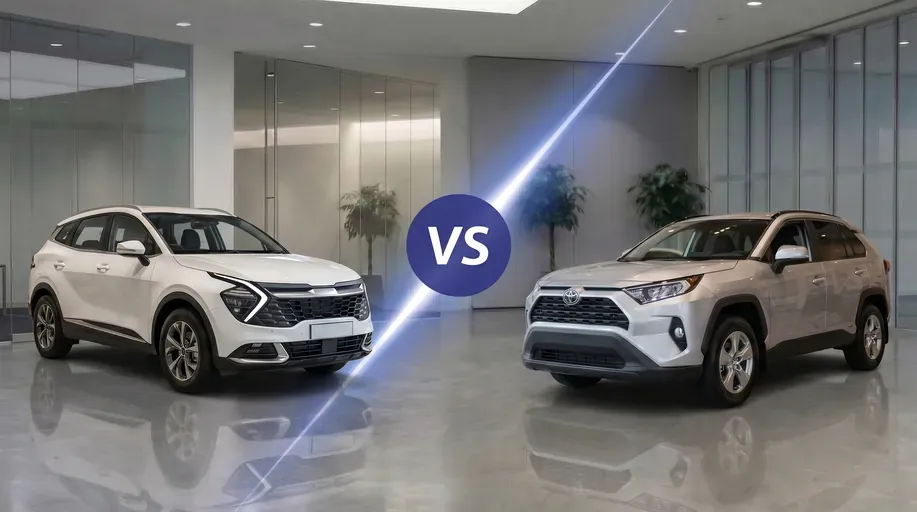
Comparison of the Kia Sportage and Toyota RAV4 SUVs. Find out how they perform in real-world tests of fuel consumption, reliability, and equipment. Choose the best used car!
Apr 28, 2026