Alfa Romeo Tonale vs. Volvo XC40: Complete comparison 2026
Alfa Romeo Tonale vs. Volvo XC40 comparison. Which compact SUV is the better choice? Discover the differences in equipment, driving characteristics, and read our verdict.
Oct 16, 2026
Detailed comparison of Citroën C5 Aircross vs. Mazda CX-5. We compared equipment, engines, driving characteristics, and comfort. Read our verdict and make the right choice!
October 16, 2026


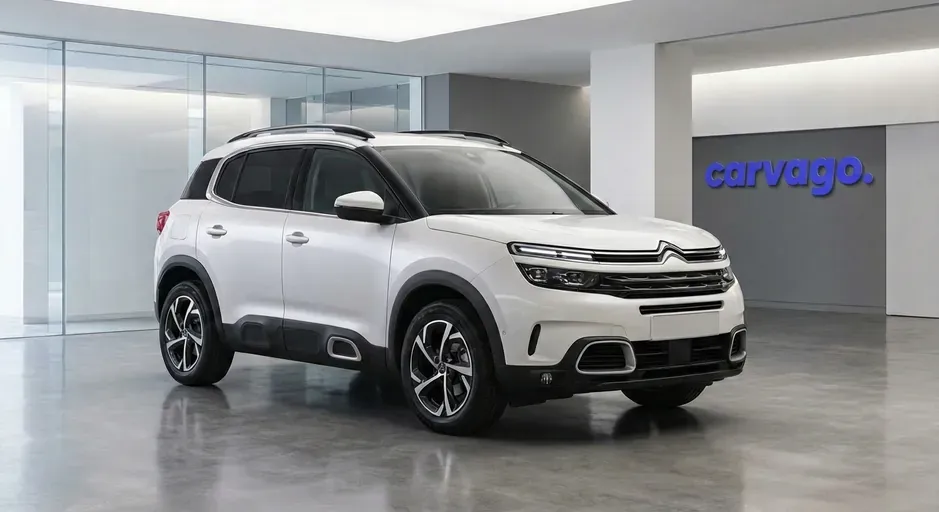
The French Citroën C5 Aircross, also known as the Dongfeng Citroën Tianyi C5 Aircross or Tianyi Beyond in selected Asian markets, attracts those interested in a family compact SUV primarily with its uncompromising ride comfort and original design. Its challenger today is the Mazda CX-5, a globally popular Japanese model that, by contrast, bets on sportier driving characteristics, precise steering, and a premium interior finish. Let's take a detailed look at how these two very different representatives of their class stand in a head-to-head battle and which of them represents a better choice when selecting a roughly four-year-old used car.
When comparing the exterior dimensions of these two popular family representatives, we will focus on models typical for the market of roughly four-year-old used cars, namely the first generation of the Citroën C5 Aircross and the generation designated KF for the Mazda CX-5. Although both cars belong to the same compact SUV segment, their manufacturers have chosen quite different approaches to the overall body proportions, which has a direct impact on daily life with the vehicle.
The Japanese Mazda CX-5 is overall 50 to 75 mm longer (depending on the specific year of manufacture), which gives it a more dynamic, rather sporty silhouette from the outside. Citroën, on the other hand, bets on a stockier and more robust appearance, underlined by a width that is nearly two centimeters greater (1859 mm compared to 1840–1845 mm for the Mazda) and a slightly higher roofline. In practice, this means that the shorter body of the French SUV will make parallel parking in cramped city streets a bit easier, while the Mazda will require a little more space.
The most fundamental difference, which affects both interior spaciousness and driving characteristics, can be found in the wheelbase. The Citroën C5 Aircross has a wheelbase of 2730 mm, which is 30 mm more than its Japanese competitor. This technical parameter gives the Citroën a significant advantage – the longer wheelbase translates directly into more generous longitudinal knee room for rear-seat passengers and contributes to a smoother and more relaxed ride on the highway. Conversely, the shorter wheelbase of the Mazda (2700 mm) aids its renowned agility and willingness to change direction on winding country roads.
| Parameter | Citroën C5 Aircross SUV | Mazda CX-5 SUV |
|---|---|---|
| Width (mm) | 1859 | 1840-1845 |
| Length (mm) | 4500 | 4550-4575 |
| Height (mm) | 1688 | 1680 |
| Wheelbase (mm) | 2730 | 2700 |
When choosing a practical family car, the luggage compartment volume plays one of the most important roles. Whether you are planning daily logistics, transporting sports equipment, or preparing for summer trips, every liter of capacity counts. Both compared models, which enjoy great popularity on the market for roughly four-year-old used cars, belong to the category of popular SUVs, but their approach to interior space differs slightly. These differences directly affect family usability and overall practicality for various lifestyles.
The first-generation Citroën C5 Aircross is designed with maximum emphasis on utility value. Standard versions with traditional internal combustion engines offer a generous basic volume of 580 liters, which in practice means easy transport of a stroller and generous space for several extra suitcases. Furthermore, after folding down the rear seats, the transport capacity increases to a very solid 1630 liters. Those interested in nearly new cars should remember that if they choose the popular plug-in hybrid engines on the market, the luggage space will decrease significantly due to the installation of traction batteries. In hybrid versions, the basic volume drops to 460 liters, and after folding the seats, the car can hold a maximum of 1510 liters.
The Japanese Mazda CX-5 KF generation (focusing on versions around the 2021 model year and newer) approaches the interior layout more sportily, yet it does not forget the essentials. Standard gasoline versions provide a standard trunk size of 522 liters (diesel models have a slightly smaller 510 liters). This volume remains sufficient for weekend shopping and longer vacations without any problems, although it slightly lags behind its French rival in the base configuration. However, the surprise comes after folding the seats, when the Mazda offers an excellent 1638 liters of space, paradoxically surpassing the Citroën in maximum transport capacity. As a result, the Citroën will please families who prefer a huge trunk for daily transport with a full number of passengers, while the Mazda will suit drivers who need to transport bulky items more often with the backrests folded down.
| Parameter | Citroën C5 Aircross SUV | Mazda CX-5 SUV |
|---|---|---|
| Base volume (liters) | 580 | 522 |
| Max volume with seats folded down (liters) | 1630 | 1638 |
While Citroën C5 Aircross reigns supreme in basic trunk volume and is thus an ideal choice for families looking for maximum space without compromises, the Mazda CX-5 closes this gap after folding down the rear seats. However, if you opt for the hybrid Citroën, you must expect a certain tax for ecology in the form of a shallower trunk.
Towing capacity is often a decisive factor for families and active drivers who need to tow a caravan, a horse trailer, or occasionally transport heavier building materials. When comparing roughly four-year-old used cars (generations available around 2021 and 2022), we encounter a significant gap between the Citroën C5 Aircross and Mazda CX-5 models, from which the Japanese SUV clearly benefits. The Mazda CX-5 is a robust and capable workhorse that, depending on the engine, can standardly tow 1,800 to 2,000 kg on a braked trailer in the case of petrol units. However, its absolute maximum reaches up to 2,100 kg for the more powerful SKYACTIV-D diesel versions.
In contrast, the French Citroën C5 Aircross (1st generation) was built from the start more for lighter loads and typical family use. Its standard models with the PureTech petrol engine or BlueHDi diesel can handle a braked trailer weighing only 1,250 to 1,350 kg. Interestingly, however, the popular plug-in hybrid versions of the Citroën, with an average towing capacity of 1,300 kg, perform no worse than many purely internal combustion engine options in the range. The chosen electrification for this vehicle therefore does not mean any additional practical limitations for the user.
If we look at unbraked trailers, both cars are essentially identical. The capacity ranges at the technical limit of 740 to 750 kg. Such a load easily handles a standard DIY trailer and offers practical space for several extra suitcases – a solution that is sufficient for weekend shopping and longer camping holidays with the family.
The differences in the figures clearly profile the target group of both vehicles. If regular towing of heavy loads or large caravans for summer holidays is a key priority for you, the Mazda CX-5 represents a safe bet. Conversely, the Citroën will suit those drivers who use the tow bar mainly for attaching a bike rack or only occasionally for a light garden trailer.
| Model and engine | Braked trailer weight (kg) | Unbraked trailer weight (kg) |
|---|---|---|
| Citroën C5 Aircross 1.2 PureTech 130 | 1300–1350 | 740 |
| Citroën C5 Aircross 1.5 BlueHDi 130 | 1250 | 740–750 |
| Citroën C5 Aircross Plug-In-Hybrid 225 | 1300 | 750 |
| Mazda CX-5 2.0 SKYACTIV-G 165 | 1800–2000 | 750 |
| Mazda CX-5 2.5 SKYACTIV-G 194 | 2000 | 750 |
| Mazda CX-5 2.2 SKYACTIV-D 150 / 184 | 2000–2100 | 750 |
When choosing a used SUV around four years old, the available engine options play a crucial role, as they directly affect fuel consumption, reliability, and the overall driving experience. The range of powertrains for the Citroën C5 Aircross and Mazda CX-5 represents two completely different technical approaches. The French model relies exclusively on downsized turbocharged engines, such as the entry-level 1.2 PureTech three-cylinder (96 kW) or the very efficient 1.5 BlueHDi diesel (96 kW). With emissions and fuel savings in mind, sophisticated plug-in hybrids (PHEV) also play a major role here, forming the top of the range with an attractive system output of up to 165 kW. In contrast, the Japanese automaker essentially ignores the trend of aggressive downsizing. The Mazda CX-5 offers honest and larger-displacement naturally aspirated four-cylinder engines, the 2.0 SKYACTIV-G (121 kW) and 2.5 SKYACTIV-G (143 kW), complemented by powerful 2.2 SKYACTIV-D diesel units (up to 135 kW). While Citroën relies exclusively on front-wheel drive for the model years examined and scores points with favorable fuel consumption and the availability of emission-free city driving, Mazda impresses with the lightning-fast response of its naturally aspirated engines, traditional torque-converter automatics, and the option of an excellent all-wheel drive (AWD) system, making it an ideal all-rounder for more demanding drivers and harsher weather conditions.
The engine range for the first-generation Citroën C5 Aircross has changed significantly over the years, which needs to be carefully monitored when buying a four-year-old used car. The standard engines from 2021 and 2022 are the proven 1.2 PureTech 130 petrol three-cylinder and the 1.5 BlueHDi 130 diesel four-cylinder. Both units provide the same output of 96 kW (130 hp) and were available on the market with both a six-speed manual and the very popular EAT8 eight-speed automatic transmission. If you prefer more powerful pure internal combustion engines when buying a used car, such as the 1.6 PureTech 180 or 2.0 BlueHDi 180 four-cylinders (both with 130 kW), you have to look for older cars from the early production years. According to model availability data, these units permanently disappeared from the range in 2020 and 2021, and their sale was discontinued. The space at the top of the range was taken over by powerful plug-in hybrid versions, which deliver a system output of 132 kW, or even a respectable 165 kW. At the end of the period under review (in 2023), a new mild-hybrid unit, the Hybrid 136 paired with an e-DSC6 dual-clutch automatic, was also added to the price lists, representing a bridge between pure petrol and complex plug-in hybrids. All the listed engines for the C5 Aircross transfer power exclusively to the front wheels.
| Engine Type | Fuel | Power (kW) | Torque (Nm) | Transmission |
|---|---|---|---|---|
| 1.2 PureTech 130 | Petrol | 96 | 230 | 6MT / 8AT |
| 1.6 PureTech 180 | Petrol | 130 | 250 | 8AT |
| 1.5 BlueHDi 130 | Diesel | 96 | 300 | 6MT / 8AT |
| 2.0 BlueHDi 180 | Diesel | 130 | 400 | 8AT |
| 1.2 Hybrid 136 | Petrol (MHEV) | 100 | 230 | 6AT (e-DSC6) |
| 1.6 Plug-In Hybrid 180 | PHEV | 132 | 360 | 8AT (e-EAT8) |
| 1.6 Plug-In Hybrid 225 | PHEV | 165 | 360 | 8AT (e-EAT8) |
For many traditionally-minded drivers, the range of powertrains for the Mazda CX-5 (KF generation) is literally a phenomenon, as the Japanese stubbornly stick to larger displacements. The petrol units do not need a turbocharger at all for great performance and smooth pull. The sweet spot of the range is the exceptionally reliable 2.0 SKYACTIV-G petrol engine with 121 kW (165 hp). If you plan on more frequent motorway trips or driving in the hills with a fully loaded car, the larger 2.5 SKYACTIV-G engine producing a confident 143 kW (194 hp) is the ideal choice. Furthermore, both petrol units underwent modernization at the end of 2022, so you will find them on the younger used car market with the "e-SKYACTIV-G" suffix, indicating the application of a 24V mild-hybrid system that helps slightly reduce urban fuel consumption. For drivers with an annual mileage of over 30,000 kilometers, Mazda offers the exceptionally refined and dynamic 2.2 SKYACTIV-D diesel unit. Unlike its petrol siblings, it relies on twin-turbocharging, thanks to which it achieves a high torque of 380 Nm for the 110 kW version, and as much as 445 Nm for the top 135 kW (184 hp) version. Mazda's most significant competitive advantage over Citroën is the fact that, with the exception of a handful of selected specifications, you can easily pair most of these units with a cleverly functioning all-wheel drive (AWD) system.
| Engine Type | Fuel | Power (kW) | Torque (Nm) | Transmission |
|---|---|---|---|---|
| 2.0 (e-)SKYACTIV-G 165 | Petrol / MHEV | 121 | 213 | 6MT / 6AT |
| 2.5 (e-)SKYACTIV-G 194 | Petrol / MHEV | 143 | 258 | 6AT |
| 2.2 SKYACTIV-D 150 | Diesel | 110 | 380 | 6MT / 6AT |
| 2.2 SKYACTIV-D 184 | Diesel | 135 | 445 | 6MT / 6AT |
While the Citroën C5 Aircross makes sense for drivers looking for a comfortable and economical car with a range of modern hybrids for worry-free city commuting, the Mazda CX-5 is a safe bet for those who require reliable naturally aspirated engines, excellent driving characteristics, and full-fledged all-wheel drive.
Choosing the right engine is crucial for long-term satisfaction with a car, which is why our recommendations are based on real-world performance experience, actual fuel consumption, owner feedback, and mechanical reliability. While both Citroën and Mazda approach the design of their power units quite differently – the French representative relies primarily on economical small-displacement diesels or plug-in hybrids, while the Japanese manufacturer, on the other hand, very successfully refines traditional large-displacement naturally aspirated petrol engines. This technological difference is reflected in the overall character of the cars and predestines them for different types of use.
For the comfort-oriented Citroën C5 Aircross, from the perspective of a four-year-old used car, the 1.5 BlueHDi 130 (96 kW) diesel four-cylinder in combination with the smooth-shifting eight-speed EAT8 automatic transmission makes the most sense. This engine offers a solid torque of 300 Nm, which fully suits family loads, and in real-world operation, it pleases with consumption safely staying around 5.5 to 6 liters per 100 km. It is an ideal choice for highway drivers and longer family trips, where the crew will appreciate the excellent soundproofing and quiet operation. It should be noted that although a very reliable and more powerful 2.0 BlueHDi 180 was available in 2019 and 2020, it was phased out from 2021, and the 1.5-liter displacement thus represents the most rational diesel choice for newer used cars today.
What to watch out for and who the engine is suitable for:
While most of the competition has already completely switched to turbocharged small-displacement units, the Mazda CX-5 scores with its proven naturally aspirated 2.5 SKYACTIV-G four-cylinder with 143 kW (194 hp) in combination with all-wheel drive. This engine represents the absolute top in terms of long-term mechanical reliability and user-friendliness. The power reserve is absolutely ideal for a heavier and spacious SUV. The absence of a turbocharger ensures a linear and beautifully smooth pull from the lowest revs, and the classic torque-converter automatic responds precisely to the pressure on the gas pedal.
What to watch out for and who the engine is suitable for:
Paper fuel consumption figures provided by manufacturers often differ significantly from real-world operation. For used car buyers, it is therefore much more useful to follow real-life data. In this comparison, we focused on the most sought-after generations of both models typical for the market of roughly four-year-old used cars (model years 2021 to 2022) and used information from the popular user portal Spritmonitor.de, where thousands of drivers carefully record every refueling. This gives us an objective and very accurate picture of how much the operation of diesel and petrol versions will actually cost you in everyday life.
| Model and engine | Average consumption (l/100 km) |
|---|---|
| Citroën C5 Aircross BlueHDi 130 | 5.8 |
| Mazda CX-5 2.2 SKYACTIV-D 150 | 6.4 |
| Citroën C5 Aircross PureTech 130 | 6.8 |
| Mazda CX-5 2.0 SKYACTIV-G 165 | 7.1 |
| Mazda CX-5 2.5 SKYACTIV-G 194 | 7.8 |
| Citroën C5 Aircross Plug-In-Hybrid 225 | 4.2 |
Interesting trends emerge from the measured data, reflecting the completely different engineering approaches of the two automakers:
For a typical user, these findings bring a clear recommendation. If you commute long distances daily or your car mostly swallows highway kilometers, it makes sense to reach for diesel engines in both models, where the French representative will be slightly more considerate of your wallet. Drivers who spend most of their time on shorter routes and driving around town should consider petrol versions. It is here that Mazda's naturally aspirated units represent an excellent and exceptionally reliable choice, where you won't be surprised by a sudden increase in consumption when the car is fully loaded for a family vacation. For modern technology enthusiasts with the possibility of charging the car at work or at home, the hybrid Citroën is the ideal choice.
In conclusion, it can be summarized that although the Citroën C5 Aircross overall offers a more economical range of powertrains both on paper and in reality, the differences in consumption are not so vast as to serve as the only deciding factor. Much more depends on what character of the car you prefer. While the Frenchman aims for maximum efficiency and hybrid comfort for a smooth ride, Mazda will appeal to those interested parties who, in a four-year-old used car, prefer robust and traditional mechanics with stable consumption under all conceivable circumstances.
When choosing a used SUV approximately four years old (typically 2021–2022 models), you will encounter a different reality of the automotive market with these two models. The Citroën C5 Aircross represents a significantly more budget-friendly choice that attracts with a great price-to-family-utility ratio. The Mazda CX-5, on the other hand, holds its value very firmly thanks to excellent Japanese reliability, superior driving characteristics, and a more premium approach, which in practice means a substantially higher initial investment.
| Model | Estimated starting price | Common price for a well-maintained model | Most expensive version (Top trim / PHEV / 4x4) |
|---|---|---|---|
| Citroën C5 Aircross | €14,000 | €18,000 | €25,000+ |
| Mazda CX-5 | €20,000 | €24,000 | €31,000+ |
Note: The amounts above are indicative and depend on specific mileage, service history, and chosen engine.
Final summary
If you are guided by a strict budget when buying, appreciate soft comfort, and are not looking for 4x4 drive, the Citroën C5 Aircross is an excellent rational choice that will not put too much strain on your wallet. However, if you prefer a more precise driving experience and the feeling of honest Japanese engineering with high reliability, the extra cost for the Mazda CX-5 will pay off significantly in the long run.
The Citroën C5 Aircross is the perfect choice for a tighter family budget thanks to attractive used car prices, while for the Mazda CX-5, you will have to prepare a substantially higher amount for excellent value retention, better driving characteristics, and reliable technology.
Both evaluated vehicles boast a maximum five-star rating from the independent Euro NCAP organization (though for the Citroën, an optional safety package was required). However, it is crucial to put their percentage results into the correct context. Crash test methodology and requirements evolve and tighten constantly over the years, so scores from different years cannot be simply and directly compared. Newer testing protocols place much greater emphasis on sophisticated active assistance systems, pedestrian or cyclist detection, and collision simulations at complex intersections, while older tests focused more on the body's structural rigidity itself.
The second generation of the Mazda CX-5 underwent Euro NCAP testing in 2017 and took home the maximum five-star rating. The Japanese SUV excelled primarily in adult occupant protection, where it earned a nearly flawless 95%. The car also performed very well in the passive protection of vulnerable road users (78%). However, a result of 59% in the safety assist category shows that at the time of testing, assistance electronics were not yet at such an advanced level. From today's perspective, the formal validity of the 2017 certificate has already expired; nevertheless, for a buyer of a four-year-old used car, this result still represents indisputable proof of an exceptionally strong body and a safe cabin.
Citroën C5 Aircross underwent crash tests in 2019, following a slightly stricter methodology. In standard equipment, it earned a solid four stars, achieving very good results in both adult (87%) and child (86%) protection. The lower score in pedestrian and cyclist protection (58%) stemmed from the fact that the basic autonomous emergency braking system relied solely on an optical camera. However, if a specific car was equipped with the optional Safety+ Pack, which enhanced the system with a radar sensor for more accurate cyclist detection, the Citroën earned a full five stars. For a used car, it is therefore always worth checking which safety features the specific unit is actually equipped with.
In the final comparison, both cars represent a safe choice for family travel. The Mazda CX-5 stands out with its brilliant and massive adult protection and excellent results in frontal and side impacts. The Citroën C5 Aircross, on the other hand, was tested in a newer format and, in versions equipped with the Safety+ Pack, offers overall more comprehensive and modern functionality of assistance systems, which more closely corresponds to current road safety standards.
| Parameter | Citroën C5 Aircross | Mazda CX-5 |
|---|---|---|
| Year of testing | 2019 | 2017 |
| Adult protection | 87 % | 95 % |
| Child protection | 86 % | 80 % |
| Vulnerable road users protection | 58 % | 78 % |
| Safety assistance systems | 75 % | 59 % |
While the Mazda scores with its exceptionally strong construction and excellent passive crew protection, better-equipped versions of the Citroën win with more modern active assistants that can prevent accidents more effectively.
Both models offer much more than just basic equipment, with each taking its own, completely different approach to delivering maximum added value to customers. While the French representative bets on unrivaled comfort and family practicality, the Japanese model targets the driving experience and a premium feel in every detail.
Extraordinary ride comfort thanks to shock absorbers with progressive hydraulic cushions
Highly versatile interior with three independent and sliding rear seats
Exceptionally large luggage compartment with a capacity of 580 to 720 liters
Soft and wide Advanced Comfort seats that reduce fatigue on long journeys
More favorable purchase price on the used car market with very good standard equipment
Uninspiring driving dynamics and noticeable body roll during faster cornering
Absence of all-wheel drive in standard internal combustion versions (only available on the expensive PHEV)
Slower infotainment response and unpopular touch-based climate control via the screen
Use of harder and cheaper-feeling plastics in some parts of the interior
The Citroën C5 Aircross is an ideal choice for families who prioritize uncompromising comfort, exceptional spaciousness, and clever versatility. Thanks to three individual rear seats and a massive trunk, it handles demanding daily tasks and long vacations excellently, provided the driver can forgo a sporty drive and doesn't plan frequent trips into challenging terrain.
Excellent driving characteristics, precise steering, and minimal body roll in corners
Interior craftsmanship and materials that easily compete with the premium segment
Reliable and linear naturally aspirated Skyactiv-G gasoline engines without the need for downsizing
Availability of a very capable AWD system and excellent automatic and manual transmissions
Great cabin soundproofing, especially in models from later production years (post-facelift)
Smaller base luggage capacity (506 liters) compared to more family-oriented rivals
The infotainment has older graphics, and for safety reasons, touch control cannot be used while driving
Significantly less legroom for rear-seat passengers
Higher purchase price for used cars, which on the other hand reflects very good residual value
The Mazda CX-5 primarily targets drivers who demand a top-tier experience behind the wheel, a sense of luxury on board, and traditional reliable technology under the hood. It is the perfect car for those who enjoy driving and prefer dynamics and build quality over the need to transport maximum cargo volumes.
Based on our own inspections using the CarAudit service, long-term breakdown statistics, and service reports, we have compiled an overview of the most common problems that used car buyers should watch out for.
Citroën C5 Aircross is generally a comfortable and solid family car, but its technology requires vigilance, especially regarding specific engine versions.
For the French SUV, careful selection of the powertrain and strict adherence to shortened service intervals play a key role, especially for gasoline versions. With timely and honest maintenance, however, it is a robust vehicle.
Mazda CX-5 has long been at the top of reliability and technical inspection rankings, yet it also has its specific weak points that you should know about before buying a used one.
The Japanese SUV excels in overall mechanical reliability, especially if you choose a naturally aspirated gasoline engine. The biggest headaches for owners are the susceptible exterior paint and occasionally malfunctioning mirror folding.
When buying a used car, a thorough inspection is key. Whether you opt for a comfort-oriented Citroën or a driver-focused Mazda, both models have their specifics that are worth focusing on.
Citroën C5 Aircross is renowned for its extraordinary comfort thanks to its suspension with progressive hydraulic cushions, which softly iron out bumps. The Mazda CX-5, on the other hand, is tuned more sportily, offering a stiffer chassis, precise steering, and an overall much better driving experience. The choice therefore depends on whether you prefer a maximally smooth ride or the joy of driving on winding roads.
The French representative is significantly more practical, especially thanks to three individually sliding rear seats, which allow the trunk to be expanded from the basic 580 liters up to 720 liters. The Japanese model, by contrast, offers a classic rear bench and a smaller luggage space with a volume of approximately 506 liters. If you are looking for maximum variability for family trips, the Citroën will serve you better.
In the area of gasoline engines, Mazda clearly stands out, as its naturally aspirated Skyactiv-G four-cylinders are among the most robust and reliable on the used car market. Citroën uses smaller turbocharged PureTech units, where it is necessary to monitor the condition of the timing belt immersed in oil and adhere to shortened service intervals. In terms of long-term maintenance-free operation, the Japanese SUV is thus the safer choice.
The Citroën is one of the few compact SUVs that features three full-sized and individually shaped seats in the back. Thanks to this configuration, three child car seats can be placed side by side without much trouble. The Mazda has a standard rear bench shaped more for two passengers, so installing three child seats in it is practically impossible.
Mazda sticks to a traditional approach and, in addition to reliable gasoline engines, also offers diesels, with many used cars on the market available with intelligent all-wheel drive (AWD). Citroën relies exclusively on front-wheel drive and smaller engines, however, as a modern alternative for fuel saving in the city, it also offers a very successful plug-in hybrid version.
Sources: ADAC, garaz.cz, e15.cz, autotechnik.cz, automagazin.cz, automotodrom.cz
This article was prepared using artificial intelligence tools. The section guarantor is Petr Dušek.

Alfa Romeo Tonale vs. Volvo XC40 comparison. Which compact SUV is the better choice? Discover the differences in equipment, driving characteristics, and read our verdict.
Oct 16, 2026

Detailed comparison of Hyundai Tucson vs. Toyota RAV4. Read real-world experiences, a comparison of reliability, fuel consumption, and equipment, and find out our final verdict.
Apr 17, 2026

Deciding between the Nissan Qashqai and the Seat Ateca? Our detailed comparison of engines, equipment, and prices will help you choose the right SUV for you.
Oct 16, 2026