Car battle
Nissan Juke vs. Renault Captur: Complete comparison 2026
Detailed comparison of Nissan Juke vs. Renault Captur. Find out which used city crossover has better fuel consumption, space, and equipment. Read our verdict!
Oct 16, 2026
Detailed comparison of the Audi Q3 and Volvo XC40. Find out which premium SUV offers better engines, equipment, and space. Read our test and final verdict.
October 16, 2026
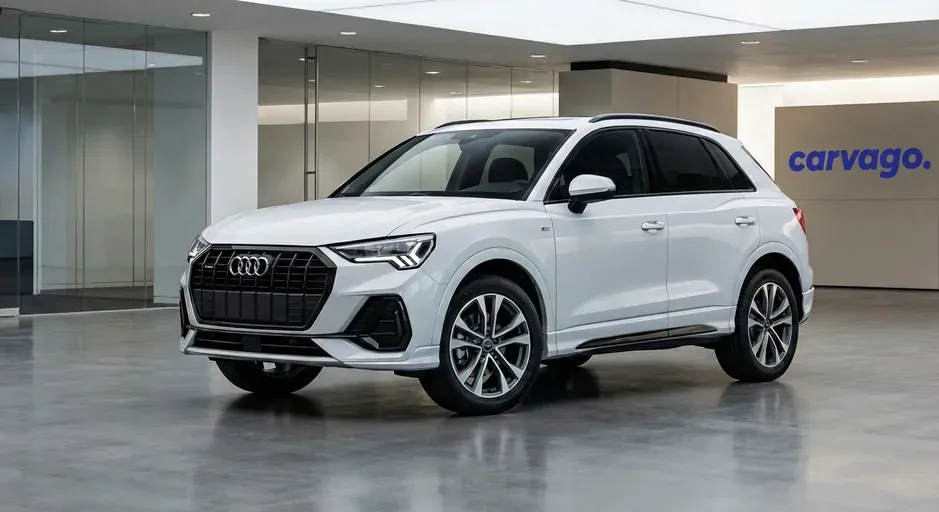
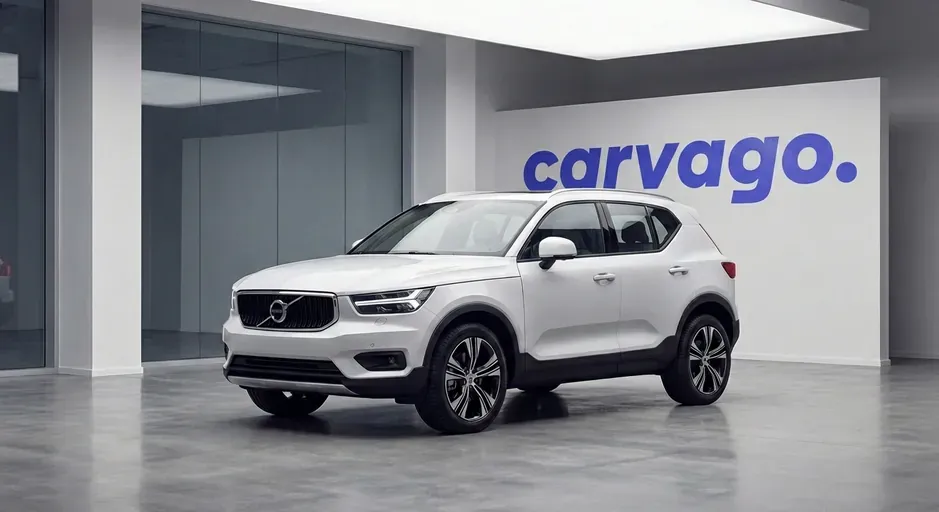
The Audi Q3, also offered in the more stylish Q3 Sportback body style, is a popular premium compact SUV that attracts with its sophisticated design, modern technology, and top-tier German craftsmanship. Standing against it is the Volvo XC40, also available in a purely electric variant formerly known as the XC40 Recharge, which scores points with its iconic Nordic minimalism, uncompromising emphasis on safety, and cleverly designed interior space. Let's take a detailed look at which of these two luxury city SUVs offers a better price-to-performance ratio, higher comfort, and an overall more pleasant daily driving experience.
In a direct comparison of the exterior dimensions of these two premium representatives of the compact SUV segment, the different approach of both brands to overall proportions is immediately apparent. While the Audi Q3 bets on a more elongated and dynamic silhouette, the Volvo XC40 is characterized by a more traditional, boxier, and overall more robust stance that evokes classic off-roaders in a scaled-down package. This difference is not just aesthetic, but brings with it completely different advantages for everyday use.
Looking at the specific values for the generations relevant to the market for roughly four-year-old used cars (the F3 generation for Audi and the 1st generation for Volvo), we find that the Audi Q3, with a length of up to 4,500 mm (in the more stylish Sportback version), is 44 to 75 mm longer than the Volvo XC40. However, the Swedish representative convincingly compensates for this difference in other directions. With a width of 1,863 mm, the Volvo is slightly wider and, above all, measures up to 1,652 mm in height, making it significantly taller by 62 to 85 mm. In addition, the XC40 has a 22 mm longer wheelbase (2,702 mm compared to 2,680 mm for the Audi), which pushes the wheels further into the corners of the bodywork.
This different construction directly influences which car will be more suitable for whom. The greater overall length and lower build give the Audi Q3 a sportier look and a slightly more "car-like" driving experience, while the longer body contributes to better trunk usability in terms of depth. Conversely, the more compact length makes the Volvo XC40 a slightly more agile car for maneuvering in tight city parking lots. Its tall body and wider stance then provide the very popular elevated driving position for a commanding view in all directions and more generous headroom for passengers.
| Parameter | Audi Q3 SUV | Volvo XC40 SUV |
|---|---|---|
| Width (mm) | 1843 - 1849 | 1863 |
| Length (mm) | 4484 - 4500 | 4425 - 4440 |
| Height (mm) | 1567 - 1585 | 1647 - 1652 |
| Wheelbase (mm) | 2680 | 2702 |
When choosing a family or practically oriented premium compact SUV, trunk capacity plays a key role. In terms of total cargo capacity, the clear favorite is the Audi Q3 in its second generation (internally designated F3, produced since 2018), which holds a strong position in the used car market at around 4 years of age. The German representative offers significantly more generous space than its Swedish competitor, the Volvo XC40 (1st generation). For everyday use, this means the Audi provides valuable space for several extra suitcases, which is more than enough for a large weekend grocery run or packing for a family vacation without compromise.
The standard body style of the Audi Q3 boasts an excellent base trunk volume of 530 liters, while the traditionally shaped Volvo XC40 offers a noticeably more modest 452 liters for standard internal combustion and mild-hybrid engines (e.g., B3 or B4 from 2022–2024). The practical difference becomes fully apparent when transporting larger items. Once the rear seats are folded down, the Audi Q3 can accommodate up to 1525 liters of cargo, compared to 1328 liters for the Volvo. Also worth mentioning is the more stylish Audi Q3 Sportback (SUV-coupe), which surprisingly retains the base 530 liters, but due to its elegantly sloping roofline, its maximum available volume is reduced to 1400 liters.
An important factor for used car buyers is also the plug-in hybrid variants, where cargo capacity is noticeably reduced due to battery placement. If you opt for the plug-in hybrid Audi Q3 in the 45 TFSI e version, the trunk shrinks by a substantial 150 liters to a final 380 liters. The Volvo XC40 also loses space in its popular plug-in hybrids (T4 and T5 Recharge versions) and pure electric variants, but the drop is not as drastic – it offers a base value between 405 and 419 liters. Paradoxically, the hybrid Volvo remains more spacious in its base configuration than the hybrid Audi.
| Parameter | Audi Q3 SUV | Audi Q3 Sportback | Volvo XC40 SUV |
|---|---|---|---|
| Base volume (l) | 530 | 530 | 452 |
| Maximum volume with seats folded (l) | 1525 | 1400 | 1328 |
For family use with a standard engine, the Audi Q3 is the undisputed winner with a significantly larger and more usable trunk. However, if you are aiming for a plug-in hybrid, the Volvo XC40 has retained its trunk utility slightly better and loses fewer liters to the battery.
The ability to tow a trailer is a decisive parameter for many owners of premium compact SUVs, whether it's for hitching up a caravan or hauling heavier materials. When comparing the current generations of the Audi Q3 (F3) and Volvo XC40, which currently make up the selection of roughly four-year-old used cars, clear differences in maximum towing capacity emerge, which can fundamentally affect the vehicle's utility.
Common engine options for both models represent a decent standard, but the absolute numbers clearly play in favor of the German car. While the Volvo XC40's towing capacity starts at 1,600 kg (for basic petrol and mild-hybrid engines like the T2 and B3) and reaches its maximum of 2,100 kg for the most powerful versions (B5, D4), the Audi Q3 offers 1,800 kg as standard (35 TFSI version) and its top diesel versions (40 TDI) can easily handle loads of up to 2,200 kg.
Interesting differences also exist in the case of electrified variants, where the tables turn somewhat. The plug-in hybrid Audi Q3 45 TFSI e offers a significantly reduced capacity of just 1,400 kg. In contrast, the Volvo XC40 in Recharge versions (T4 and T5) maintains a respectable 1,800 kg. If you are considering a purely electric Volvo, the Single Motor variant can tow 1,500 kg, while the more powerful Twin Motor can handle 1,800 kg.
In practice, these numbers represent significant differences. The 1,600 kg value for the base Volvo is fully sufficient for weekend shopping of oversized materials or transporting lighter motorcycles. However, if you need to transport horses or plan to take a large family caravan with you, the more powerful diesel Audi Q3 offers much more reserve and is incomparably more suitable for longer holidays with a massive trailer.
Summary: Overall, the diesel Audi Q3 is the ideal choice for more demanding drivers who regularly need maximum towing capacity. The Volvo XC40, on the other hand, is a great compromise for recreational users, scoring points especially with its plug-in hybrid versions, which, unlike the Audi, have not suffered in their ability to tow medium-heavy trailers.
| Model and engine | Braked trailer (kg) | Unbraked trailer (kg) |
|---|---|---|
| Audi Q3 35 TFSI (110 kW) | 1800 | 750 |
| Audi Q3 40 TDI (140 - 147 kW) | 2200 | 750 |
| Audi Q3 45 TFSI e (110 kW) | 1400 | 750 |
| Volvo XC40 B3 (120 kW) | 1600 | 750 |
| Volvo XC40 B5 (184 kW) | 2100 | 750 |
| Volvo XC40 T4 Recharge (95 kW) | 1800 | 750 |
| Volvo XC40 Single Motor (EV) | 1500 | 750 |
| Volvo XC40 Twin Motor (EV) | 1800 | 750 |
Both models approach their engine lineups from slightly different angles, which plays a key role for those interested in a roughly four-year-old used car. While the Audi Q3 relies on the proven and wide range of traditional internal combustion engines from the VW Group, Volvo fully launched its transition to electrification with the XC40 during this period. If you are looking for a classic diesel engine for long highway trips with low fuel consumption, you will find the popular 2.0 TDI units in the Audi. In contrast, for roughly four-year-old vehicles, the Volvo XC40 primarily offers advanced mild-hybrid units, sophisticated plug-in hybrids, and powerful pure electric variants, as classic diesels were gradually phased out of the lineup around 2020. Audi counters with the legendary quattro all-wheel drive and the lightning-fast S tronic dual-clutch transmission. Simply put – more conservative drivers with high mileage will prefer the German engineering, while fans of quiet operation, alternative powertrains, and technological innovation will head towards the Swedish brand.
The range of engines for the Audi Q3 (F3) generation is very straightforward and perfectly covers the needs of the vast majority of used car buyers. The standard is the 1.5 TFSI petrol engine (commercially designated as 35 TFSI) with 110 kW, which is perfectly adequate for regular daily driving and boasts very reasonable fuel consumption. For more demanding and dynamically minded drivers, there are the more powerful 2.0-liter units: the 40 TFSI (140 kW) and the top-of-the-line 45 TFSI (up to 180 kW). These more powerful models are typically paired with the advanced quattro all-wheel drive and a seven-speed S tronic automatic transmission. The diesel portfolio is built on the exceptionally popular 2.0 TDI – available in 35 TDI (110 kW) and 40 TDI (147 kW) versions, it represents the ideal long-term choice for drivers covering tens of thousands of kilometers per year. On the used market, you will also come across the successful 45 TFSI e plug-in hybrid version, which combines a 1.4 TFSI petrol engine with an electric motor for a very brisk system output of 180 kW.
| Engine Type | Fuel | Power (kW) | Torque (Nm) | Transmission |
|---|---|---|---|---|
| 35 TFSI (1.5) | Petrol | 110 | 250 | 6-speed manual / 7-speed S tronic |
| 40 TFSI (2.0) | Petrol | 140 | 320 | 7-speed S tronic (AWD) |
| 45 TFSI (2.0) | Petrol | 169 - 180 | 350 - 370 | 7-speed S tronic (AWD) |
| 35 TDI (2.0) | Diesel | 110 | 340 - 360 | 6-speed manual / 7-speed S tronic |
| 40 TDI (2.0) | Diesel | 147 | 400 | 7-speed S tronic (AWD) |
| 45 TFSI e (PHEV) | Plug-in Hybrid | 180 | 400 | 6-speed S tronic |
The Volvo XC40 underwent a significant revision of its engine range around 2020, which is strongly reflected in the current offering of four-year-old used cars. If you are looking for a classic diesel engine like the D3 (110 kW) or D4 (140 kW), you will mostly have to search for older model years, as the automaker ended sales of diesel versions relatively early. Instead, the market for younger used cars is clearly dominated by very refined mild-hybrid petrol engines labeled B (B3, B4, and B5). These units combine a reliable 2.0-liter four-cylinder with a small electric motor for smoother starts and more efficient operation in city traffic. For those with the possibility of home or office charging, the Recharge T4 and T5 plug-in hybrids are a fantastic choice. These use a 1.5-liter three-cylinder petrol engine and achieve a dynamic system output of up to 192 kW. The XC40 is also one of the few compact premium SUVs that can be quite commonly found as a powerful pure electric vehicle – with the sharper Recharge Twin Motor version boasting an impressive 300 kW.
| Engine Type | Fuel | Power (kW) | Torque (Nm) | Transmission |
|---|---|---|---|---|
| T3 (1.5) | Petrol | 120 | 265 | 6-speed manual / 8-speed automatic |
| B3 (2.0 MHEV) | Petrol | 120 | 265 | 7-speed automatic / 8-speed automatic |
| B4 (2.0 MHEV) | Petrol | 145 | 300 | 7-speed automatic / 8-speed automatic |
| B5 (2.0 MHEV) | Petrol | 184 | 350 | 8-speed automatic (AWD) |
| D3 (2.0)* | Diesel | 110 | 320 | 6-speed manual / 8-speed automatic |
| D4 (2.0)* | Diesel | 140 | 400 | 8-speed automatic (AWD) |
| Recharge T4 (PHEV) | Plug-in Hybrid | 155 | 405 | 7-speed dual-clutch |
| Recharge T5 (PHEV) | Plug-in Hybrid | 192 | 425 | 7-speed dual-clutch |
| Recharge Single Motor | Electricity | 170 | 330 | 1-speed reduction gear |
| Recharge Twin Motor | Electricity | 300 | 660 | 1-speed reduction gear (AWD) |
* Diesel engines (D3, D4) were gradually phased out during 2020 and will not be found in newer used cars.
While the Audi Q3 clearly leads for conservative drivers thanks to its wide range of economical and reliable diesels for long distances, the Volvo XC40 is an unrivaled choice for city and suburban driving thanks to its well-tuned plug-in hybrids and uncompromising pure electric versions.
Choosing the right engine is a key factor for long-term satisfaction, reliability, and reasonable operating costs. While the Audi Q3 generation F3 (ideal for the market of roughly four-year-old used cars) still relies on a wide and proven range of traditional group engines – from economical diesels to sharp petrol versions – Volvo chose a more radical path for its XC40 model. The Swedish carmaker completely phased out the previously popular diesel versions (D3 and D4) from its range around 2020. For four-year-old XC40 cars, you will encounter almost exclusively petrol mild-hybrids (marked with the letter B) or plug-in hybrids. So while you can still hunt for a classic highway diesel cruiser with Audi, Volvo brings a more electrified and city-friendly performance with an emphasis on absolute smoothness.
For a roughly four-year-old Audi Q3, the proven 35 TDI diesel two-liter with 110 kW (150 hp) makes the most sense in terms of operating efficiency. This engine represents an ideal compromise between purchase price, decent dynamics, and excellent operating costs.
Given the absence of modern diesel engines, the B4 petrol mild-hybrid version with 145 kW (197 hp) makes the most sense for a four-year-old Volvo XC40 (1st generation), which is widely represented on the used car market from the years 2020 to 2024.
Official paper fuel consumption figures provided by car manufacturers often differ significantly from reality in the real world, especially for taller and heavier compact SUVs where physics and aerodynamics simply cannot be cheated. To get an objective picture, we have therefore avoided on-paper promises and used real data directly from owners on the Spritmonitor.de community portal. We focused exclusively on the generations that currently dominate the market for roughly four-year-old used cars – namely the Audi Q3 (internal generation designation F3) and the first generation of the Volvo XC40. For easier orientation and direct comparison, the following overview of the most popular engines is sorted by fuel type.
| Model and engine | Average consumption (l/100 km) |
|---|---|
| Petrol engines | |
| Audi Q3 35 TFSI (110 kW) | 7.2 |
| Volvo XC40 T3 / B3 (120 kW) | 7.5 |
| Volvo XC40 B4 (145 kW) | 8.2 |
| Audi Q3 40 TFSI (140 kW) | 8.6 |
| Diesel engines | |
| Volvo XC40 D3 (110 kW) | 6.4 |
| Audi Q3 35 TDI (110 kW) | 6.5 |
| Audi Q3 40 TDI (147 kW) | 7.0 |
| Volvo XC40 D4 (140 kW) | 7.5 |
Two important trends clearly emerge from the collected data. The first is the finding that smaller turbo engines and modern mild-hybrid technology (for example, the B designation in Volvos) may bring some savings, but they cannot work miracles in heavy SUV bodies. In reality, the base petrol variants of both models reliably stay above the 7-liter mark. The 1.5 TFSI four-cylinder in the Audi Q3 is slightly more efficient than Volvo's turbocharged units. However, once you choose a more powerful petrol engine with all-wheel drive (such as the B4 in the XC40 or the 40 TFSI in the Q3), expect consumption that easily exceeds the 8-liter mark. The second trend is the unquestionable dominance of diesels in terms of efficiency. The base diesel engines, 35 TDI and D3, show a rare consensus, and with consumption around 6.5 l/100 km, they represent by far the most economical choice in both brands' lineups.
For average users, these figures lead to a clear recommendation. If you are looking for a car primarily for shorter commutes or city driving and have a tighter maintenance budget, petrol engines (despite higher consumption) remain the more sensible choice. This is because they do not carry the risk of expensive problems with particulate filters or oil dilution by diesel. However, if you are among the drivers who spend most of their time on motorways or regularly commute long distances, the more economical diesel variants will pay off very quickly in fuel savings. In the final analysis, however, fuel consumption itself will likely not be the main deciding factor between these two premium rivals. The real-world differences between comparable engines are so minimal that your final choice will be influenced more by personal preference for design, driving comfort, or the specific equipment of the used car on offer.
Looking at the market for roughly four-year-old used cars (model years 2021 to 2023), it is clear that both models hold their value quite well, but their pricing policies and depreciation curves differ slightly. Generally speaking, the Audi Q3 requires a higher initial investment, even on the secondary market, while the Volvo XC40 offers a slightly better price-to-equipment ratio.
Prices for used Audi Q3 models from 2021 and 2022 usually start around €24,000 for cars with base engines (e.g., 35 TFSI) and mileage approaching 150,000 km.
The Volvo XC40 is often a significantly more affordable choice in the premium used car category. For a vehicle of similar age, you will pay on average 10 to 15% less than for its German competitor.
| Parameter / Model | Audi Q3 (2nd generation) | Volvo XC40 (1st generation) |
|---|---|---|
| Base price (higher mileage) | from approx. €24,000 | from approx. €21,000 |
| Average price (approx. 50k km mileage) | €31,000 – €35,000 | €25,000 – €29,000 |
| Top-tier / Electric versions | €39,000 and more | €27,000 – €33,000 (Recharge) |
| Depreciation rate | Very slow | Average (faster for EVs) |
If you are looking for long-term residual value stability and high-prestige craftsmanship, a used Audi Q3 fulfills these requirements perfectly, albeit at the cost of a higher initial budget. The Volvo XC40, on the other hand, will please more rational buyers who prefer a high level of modern safety features for more reasonable money, or those hunting for great deals in the modern electric vehicle segment.
While the Audi Q3 holds its value excellently and offers a better-crafted interior for a higher price, the Volvo XC40 overall wins as a used car in terms of the purchase price-to-equipment ratio, especially with the discounted electric versions.
Both models, the Audi Q3 and Volvo XC40, earned a full five-star rating in the rigorous tests of the independent Euro NCAP organization. However, when evaluating the safety of used cars, it is always crucial to perceive the results in the context of the testing year. Euro NCAP methodology is constantly evolving, becoming stricter and introducing entirely new requirements – for example, more demanding frontal crash simulations, crisis scenarios at intersections, or better cyclist detection. For this reason, percentage scores from different years cannot be directly compared. In our case, however, it is an absolutely ideal situation for used car buyers: the currently sold generations of these vehicles were tested in the same year (2018), which means their percentage gains can be compared quite objectively, including the tests of the then newly introduced autonomous braking for cyclists.
Audi Q3: Convincing safety assistants
The second generation of the Audi Q3 demonstrated an excellent level of passive and active safety in tests. In adult occupant protection, the car took home a great rating of 95%, and for child occupants, a very solid 86%. Audi then scored significantly in the category of assistance systems (85%) and protection of vulnerable road users (76%). It owes this result, among other things, to the standard Audi pre sense front system, which reliably detects pedestrians and cyclists. Although time has passed since the year of testing and the validity of the official certification from the perspective of the latest and strictest standards has expired (certificates normally last 6 years), the structural strength and assistant settings represent a highly above-average choice for a four-year-old used car.
Volvo XC40: The benchmark for passive protection
The Volvo XC40 traditionally builds on the Swedish brand's reputation as a leader in safety. In tests, it protected adult occupants at an extraordinary 97%, narrowly outperforming its direct competitors in that year. It is also very strong in child protection (87%). Conversely, Volvo received a slightly lower score in pedestrian and cyclist protection (71%) and in the category of safety assistants (76%). The point losses were influenced by the specific calibration of the City Safety system at the time for selected Euro NCAP test scenarios. However, well-thought-out crumple zones and a robust cabin skeleton guarantee that the family inside the car is protected without compromise.
Final safety evaluation
Both compact SUVs represent an exceptionally safe choice on the used car market. The Volvo XC40 offers slightly better passive protection for the occupants inside the car and overall sturdiness in an impact. Conversely, the Audi Q3, according to the exact same methodology, proved to be more advanced in the functionality of active safety assistants and consideration for its surroundings, especially pedestrians and cyclists. From the perspective of modern standards, in both cases, you are buying a modernly equipped car that will support you in a critical situation.
| Parameter | Audi Q3 | Volvo XC40 |
|---|---|---|
| Year of testing | 2018 | 2018 |
| Adult occupant protection | 95 % | 97 % |
| Child occupant protection | 86 % | 87 % |
| Vulnerable road user protection | 76 % | 71 % |
| Safety assistance systems | 85 % | 76 % |
While the Volvo XC40 excels in passive protection of the occupants and cabin rigidity, the Audi Q3 scores slightly better in active assistant settings and pedestrian protection – in both cases, however, you are buying an exceptionally safe family car.
In addition to standard equipment, each of the models offers several unique features and clever solutions designed to impress and provide specific added value for everyday use.
The German SUV relies on a top-tier digital environment, precise craftsmanship, and surprising practicality that meets the needs of smaller families and active individuals alike.
The Swedish representative takes the path of innovative interior space utilization, sustainability, and advanced software equipment that feels more like a smartphone than a traditional car.
High-quality interior workmanship with carefully fitted premium materials
Excellent practicality thanks to standard sliding rear seats and adjustable backrest angle
Larger luggage compartment, offering 530 liters in the basic configuration
Wide range of refined powertrains, including fuel-efficient TDI diesels
Intuitive MMI multimedia system with fast response and logical menus
Higher purchase price and traditionally expensive optional extras, which increase the price even for used cars
Occasional hesitation and jerking of the S tronic dual-clutch transmission when crawling in traffic jams
Rather conservative exterior design, which doesn't stand out as much in the flood of compact SUVs
Audi Q3 is an ideal choice for buyers looking for traditional German premium quality, precise ergonomics, and excellent interior variability. Thanks to its confident driving characteristics and excellent sound insulation, this model is perfectly suited for devouring highway miles as well as serving as a full-fledged family car.
Fresh and very stylish Scandinavian exterior and interior design
Top-tier level of active and passive safety with rich assistance equipment as standard
Exceptionally clever storage solutions (removable bin, integrated bag hooks)
Very comfortably tuned chassis that filters out city bumps excellently
Wide and very popular range of advanced plug-in hybrid and pure electric Recharge versions
Smaller luggage compartment volume (452 liters) compared to its German rival
Controlling the climate and most functions exclusively via the central display can be distracting
Higher real-world fuel consumption for standard gasoline mild-hybrid engines
Not suitable for dynamic driving; the chassis has more noticeable body roll in corners
The Volvo XC40 will appeal to customers who prioritize distinctive style, maximum comfort, and top-tier safety technologies over sporting ambitions. Its cozy interior full of practical details is especially appreciated during daily city commutes, where its overall calming character shines.
Based on long-term user experience, service reports, and data from our own certified CarAudit inspection, we have compiled an overview of the most common problems that a detailed physical inspection should focus on before purchasing these roughly four-year-old used cars.
The second-generation Audi Q3 (F3) is a structurally robust and mechanically quite reliable SUV, which, however, especially in the first years of production, showed several recurring, mostly software-related ailments.
The Audi Q3 generation F3 is a mechanically above-average reliable SUV, whose biggest weakness is a moody infotainment system and faster-wearing brakes. After performing the relevant software updates, however, it represents a very reliable companion.
Despite using a completely new platform, the Volvo XC40 maintains a reputation as a robust and safe car; however, it also suffers from teething problems, mainly affecting electronic and comfort equipment.
The basic technology and engines of the Volvo XC40 are very durable, but owners must accept occasional quirks of the assistance systems and onboard electronics. The key to reliable operation is checking the service history and installing all updates issued by the manufacturer.
When buying a used car, a thorough inspection is key. Here are some specific points to focus on for these two models, and for both, a thorough independent technical inspection should be an integral part of your decision-making before the actual purchase.
In its standard configuration, the German car provides a spacious trunk with a capacity of 530 liters, which is significantly more than the 452 liters of its Nordic competitor. Furthermore, the model from Ingolstadt scores points with its practical sliding rear bench, which allows the luggage space to be continuously adjusted according to current needs. On the other hand, the Swedish SUV successfully counters with a sophisticated folding double floor system and integrated hooks for securely holding shopping bags.
Both models rank very high in reliability charts and show no fatal design flaws in their engines or chassis. In some model years of the Volvo, occasional slower responses or software glitches in the infotainment system may occur, while with the Audi, it is necessary to pay attention to the smoothness of the dual-clutch transmission's shifting at higher mileages. Maintenance and spare parts naturally correspond to the premium segment, so slightly higher service costs must be expected.
The Swedish automaker relies mainly on mild-hybrid and plug-in hybrid systems for this model, which excel in urban and suburban traffic with their smoothness. In contrast, Audi offers a wider range of traditional power units, including proven fuel-efficient TDI diesel engines ideal for long highway trips. Real-world combined fuel consumption for comparable gasoline engines in both cars is consistently around 7 to 8 liters per 100 kilometers.
Thanks to its taller and boxier body, the Nordic representative offers slightly more headroom, giving the interior an exceptionally airy feel. Conversely, the cabin of the German model is more driver-oriented, surrounding them and featuring precise ergonomics with a slightly sportier touch. For the comfortable travel of four adults, both cars provide ample space and first-class chassis insulation from road imperfections.
Both compact SUVs received the maximum five-star rating in the rigorous Euro NCAP crash tests and are among the absolute top of their class in terms of safety. Volvo traditionally features a rich array of advanced assistance systems and sophisticated run-off road protection even in its basic trim levels. The competitor with the four rings in its emblem, on the other hand, often appears on the used car market with optional Matrix LED headlights, which fantastically illuminate night roads without dazzling other drivers.
Sources: ADAC, aktualne.cz, mdcr.cz, autojournal.cz, emobility.cz, autickar.cz
This article was prepared using artificial intelligence tools. The section guarantor is Petr Dušek.
Detailed comparison of Nissan Juke vs. Renault Captur. Find out which used city crossover has better fuel consumption, space, and equipment. Read our verdict!
Oct 16, 2026
Detailed comparison of Nissan Qashqai vs. Škoda Karoq. Find out everything about reliability, equipment, and driving characteristics. Which used SUV is the better choice?
Apr 14, 2026
Kia Stonic vs. Škoda Kamiq: Which used city SUV is better? Discover the differences in equipment, fuel consumption, and space. Read our detailed verdict.
Oct 16, 2026