Car battle
Opel Corsa vs. Škoda Fabia: Complete comparison 2026
Detailed comparison: Opel Corsa vs. Škoda Fabia. Discover the differences in equipment, engines, and reliability. Real-world experiences to help you choose your used car.
Apr 24, 2026
Articles
Car battle
Looking for the ideal used hatchback? A detailed comparison of the Hyundai i20 vs Opel Corsa. Find out the differences in equipment, reliability, and price. Read our verdict!
May 12, 2026
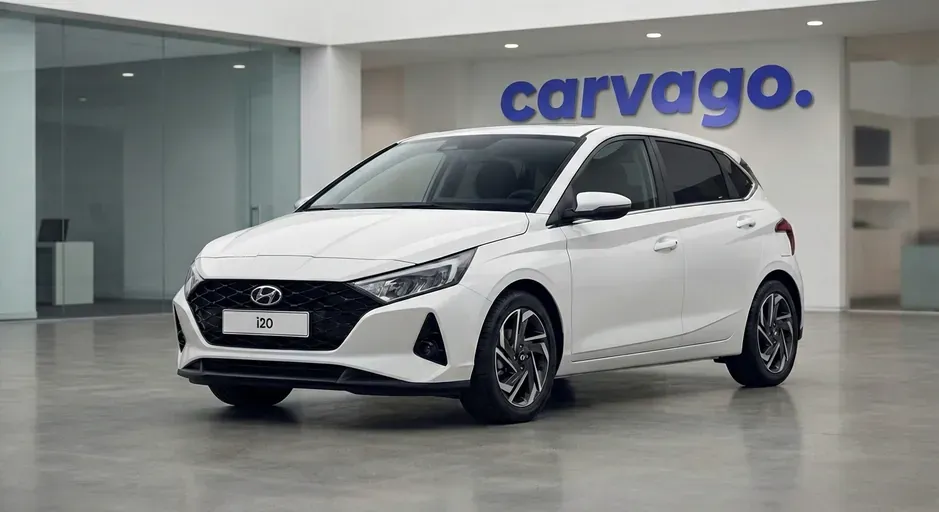
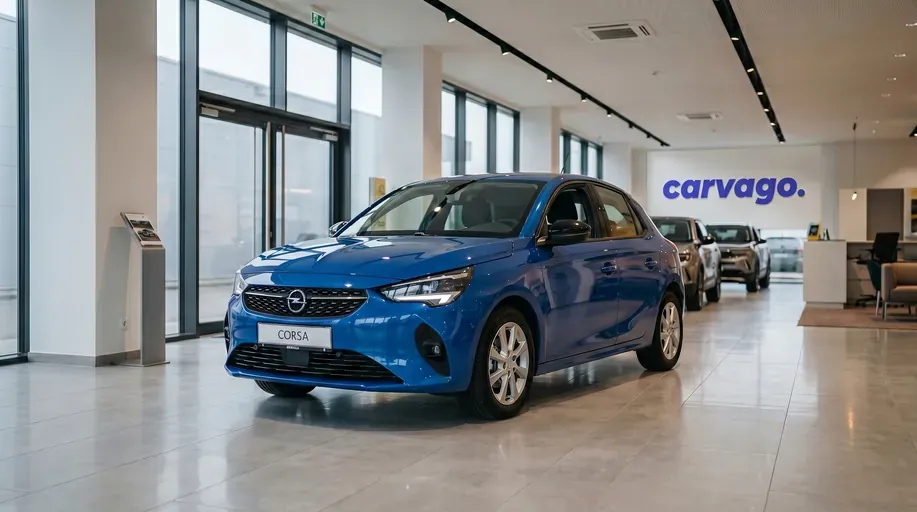
The Hyundai i20, also known as the Hyundai Elite i20 in some global markets, is a dynamic hatchback that has gained popularity thanks to its bold design and modern technologies. Standing against it is the traditional European bestseller, the Opel Corsa, sold for example in the United Kingdom under the Vauxhall Corsa brand, which scores points with its proven technology and excellent operational efficiency. Let's take a look together at how these two seasoned competitors in the small city car category fare in a direct comparison and which of them represents the smarter choice for your daily journeys.
When choosing a compact car roughly four years old (generations launched around 2020), external dimensions play a key role, especially for city agility. Both cars clearly respect the rules of the B-segment and are just above the four-meter mark. The Opel Corsa (in the current F generation) is, at 4060 mm, 20 mm longer than the standard version of the Hyundai i20 (3rd generation), which measures 4040 mm (while the sporty i20 N version can reach up to 4075 mm). In terms of width, on the other hand, the Hyundai i20 leads by 10 mm (1775 mm compared to 1765 mm for the Opel). In practice, these differences are almost negligible when parking in narrow streets or at shopping centers, and both cars maneuver excellently. However, the slightly wider stance of the i20 adds to the car's visual robustness and brings slightly better directional stability, while the Opel Corsa benefits from being a hair better at squeezing through narrow gaps.
A more significant difference can be found in the body height, which defines the car's overall stance. The Opel Corsa bets on a sportier and more dynamic silhouette with a height of only 1433 to 1435 mm. In contrast, the Hyundai i20 is about 15 to 22 mm taller (1440–1455 mm, depending on the version). This lower build of the Opel not only benefits aerodynamics and can slightly reduce fuel consumption during highway travel, but also gives the car a more aggressive flair. On the other hand, the taller body of the Hyundai makes daily entry slightly easier and promises a bit more headroom for taller individuals. The decision here depends on whether you prefer the Corsa's more crouched look or appreciate the slightly more practical build of the South Korean hatchback.
However, the most fundamental parameter you will feel immediately after sitting in the cabin is the wheelbase. The Hyundai i20 dominates in this discipline with a value of 2580 mm, while the Opel Corsa offers 2538 mm. This means the Hyundai has a wheelbase that is a full 42 mm longer. For the occupants, this brings a fundamental benefit in the form of more knee room in the rear seats, making the i20 a much more capable car even for transporting adult passengers. While the Corsa's shorter wheelbase contributes to a subjectively more nimble and agile behavior in tight city corners, if you are looking for a car that can more comfortably transport more people over longer distances, the longer platform of the Hyundai will be the clear choice for you.
| Parameter | Hyundai i20 Hatchback | Opel Corsa Hatchback |
|---|---|---|
| Width (mm) | 1775 | 1765 |
| Length (mm) | 4040-4075 | 4060-4061 |
| Height (mm) | 1440-1455 | 1433-1435 |
| Wheelbase (mm) | 2580 | 2538 |
When choosing a used car in the small city car segment, trunk capacity is often one of the key factors that can decide the final purchase. Although these are compact models primarily intended for city traffic, many users also require family usability and a high degree of practicality. In this regard, every liter counts, and the total trunk capacity significantly affects daily comfort. Between the Hyundai i20 and Opel Corsa models, there are quite noticeable differences in this area that are worth considering before purchasing a car.
When comparing generations current for the used car market at around four years old (third generation Hyundai i20 and generation F for the Opel Corsa), the South Korean representative offers significantly more space. The standard combustion version of the Hyundai i20 has a basic trunk volume of 352 liters, which is a highly above-average value in its class. The competing Opel Corsa offers 309 liters in its standard version. The difference of 43 liters in practice means valuable space for several smaller bags or one extra compact suitcase, which is more than enough for weekend shopping or a longer holiday for two. When there is a need to transport bulkier cargo, the i20's lead increases even slightly after folding down the rear seats – it provides an impressive 1165 liters compared to 1081 liters for the Opel Corsa.
However, it is important to carefully monitor the chosen engine, as the placement of batteries in electrified versions takes away a substantial part of the cargo space from both cars. If you go for a Hyundai i20 with mild-hybrid technology, the basic volume shrinks drastically to a below-average 262 liters (maximum 1075 liters). Opel Corsa offers a fully electric variant, the Corsa Electric, whose trunk holds a fairly similar 267 liters, or 1042 liters after folding the seats. The mild-hybrid version of the Opel, on the other hand, kept the standard 309 liters at the base, but its maximum usable volume dropped to 1004 liters. The total trunk volume thus largely shows that the Hyundai i20 is a significantly better choice for those looking for maximum transport capacity, while the Corsa will satisfy somewhat more modest requirements.
| Parameter | Hyundai i20 Hatchback | Opel Corsa Hatchback |
|---|---|---|
| Basic volume (liters) | 352 | 309 |
| Maximum volume after folding seats (liters) | 1165 | 1081 |
In terms of practicality and total luggage space, the Hyundai i20 is the clear favorite in the market for roughly four-year-old used cars, offering a significantly larger trunk in its standard version. However, for both cars, it is necessary to account for a noticeable loss of liters in purely electric and some hybrid engine versions.
The ability to tow a trailer is not always the most discussed feature of city hatchbacks, yet it fundamentally influences their overall utility value. Looking at the market for roughly four-year-old used cars (the third-generation Hyundai i20 and the generation F Opel Corsa), we find significant differences in the towing capacity of both models. With the right engine, these cars give you not only the possibility to haul garden waste but also space for several extra suitcases in the form of a smaller trailer, providing a capacity that is easily sufficient for weekend shopping or longer holidays.
For the third-generation Hyundai i20, the standard braked towing capacity ranges from 610 to 910 kg if you choose the base 1.2 naturally aspirated engine. Much more interesting values are then provided by the 1.0 T-GDI turbocharged three-cylinder. It is worth noting that in this model, the installation of a mild-hybrid (48V) system does not reduce the towing capacity in any way – both versions (purely internal combustion and hybrid) can handle a solid maximum braked trailer weight of 1110 kg. The sporty i20 N version with 150 kW can also safely tow exactly the same weight.
The competing Opel Corsa generation F starts at a very modest 500 kg for the base 1.2 naturally aspirated engine, which is only enough for safely towing the lightest utility trailers. However, if you opt for the turbocharged units, the Corsa transforms into a surprisingly capable hauler. The 1.2 DI Turbo version, the newer 48V hybrid version, and also the 1.5 Diesel variant all offer an impressive maximum braked capacity of 1200 kg. Unlike the hybrid, however, the fully electric Corsa Electric variant offers no official towing capacities, as the manufacturer does not allow this option for the electric car. Data on the maximum weight for unbraked trailers for these model series are not fully available in the database and are therefore omitted from the table.
Short summary:
In terms of maximum possibilities, the slight winner is the Opel Corsa, which with its turbocharged engines can tow a braked trailer weighing up to 1200 kg, an excellent value for this class. However, the Hyundai i20 offers more balanced parameters and becomes a much more useful car when considering the purchase of a base naturally aspirated engine, where the Corsa lags significantly behind with its 500 kg limit.
| Model and motorization | Braked weight of trailer (kg) | Unbraked weight of trailer (kg) |
|---|---|---|
| Hyundai i20 1.2 (58 - 62 kW) | 610 - 910 | - |
| Hyundai i20 1.0 T-GDI / 48V-Hybrid (66 - 88 kW) | 910 - 1110 | - |
| Hyundai i20 N / N Performance (150 kW) | 1110 | - |
| Opel Corsa 1.2 (55 kW) | 500 | - |
| Opel Corsa 1.2 DI Turbo / Hybrid 48V (74 - 100 kW) | 1200 | - |
| Opel Corsa 1.5 Diesel (75 kW) | 1200 | - |
The engine range for both models reveals completely different approaches by the manufacturers to modern mobility, which is crucial for those interested in a roughly four-year-old used car (i.e., model years around 2020 to 2022). While the third-generation Hyundai i20 has bet exclusively on petrol engines and wide integration of 48V mild-hybrid technology, the Opel Corsa F benefits from the advanced Stellantis platform and maintains an unusually diverse range of engines. Both cars offer a proven naturally aspirated petrol engine as an affordable base, ideal for undemanding city driving, but their paths diverge dramatically at higher power outputs. With the Corsa, you can still get a now very rare and extremely economical diesel for a small car, or even a fully electric version with a large battery pack. Hyundai, on the other hand, bets on emotion and will please driving enthusiasts not only with the renowned N sports version but also with innovations like the "intelligent" manual transmission (iMT), which can coast with the engine off thanks to an electronic clutch to reduce consumption. Overall, Opel's strength lies in its immense versatility, while Hyundai excels in sporty feel and sophisticated electrification of its internal combustion engines. The decision thus depends purely on your driving style – whether you are a motorway mile-muncher or looking for weekend fun, you will find a suitable car in this duo.
With the arrival of the third generation in 2020, Hyundai said a definitive goodbye to the diesel engines known as CRDi from previous years. For budget-conscious drivers, the base of the used car market today is the reliable naturally aspirated 1.2 four-cylinder with 62 kW. However, the turbocharged 1.0 T-GDI three-cylinder clearly plays the main role on the market. In cars from 2020 to 2024, it was widely offered as an advanced 48V mild-hybrid (labeled MHEV), which helps smooth out the slower turbo onset and reduces consumption. As the database shows, after 2024, the range of these mild-hybrid variants for the i20 was significantly cut back, making used models a very valuable compromise. A real gem for purists is the uncompromising i20 N hot hatch with a turbocharged 1.6-liter engine producing 150 kW, whose production ended in late 2024 according to data, making it a huge attraction on the secondary market with growing value.
| Engine type | Fuel type | Power (kW) | Torque (Nm) | Transmission |
|---|---|---|---|---|
| 1.2 | Petrol | 62 | 118 | 5MT |
| 1.0 T-GDI | Petrol | 74 | 172 | 6MT / 7DCT |
| 1.0 T-GDI 48V | Petrol (MHEV) | 74 / 88 | 172 / 200 | 6iMT / 7DCT |
| 1.6 T-GDI (i20 N) | Petrol | 150 | 275 | 6MT |
The Opel Corsa F offers one of the most flexible engine ranges in its segment on the nearly-new used car market. The base is the naturally aspirated 1.2 unit (55 kW), but for smoother and motorway driving, the turbocharged 1.2 DI Turbo unit is a much more confident choice. It reaches outputs of 74 kW or 96 kW in the top version, with the more powerful one usually paired with an excellent 8-speed torque-converter automatic, which is a great asset for the small car class. If you commute dozens of kilometers daily, the Corsa hides a strong trump card – the 1.5 Diesel unit with 250 Nm of torque. This remained in the new car range only until roughly mid-2023 and offers fantastic fuel economy on the used market that petrol engines cannot match. The range for innovative drivers is rounded off by the purely electric Corsa-e with 100 kW. You will appreciate its quiet operation and instant pull especially in the city, and it is also among the most pleasant-driving electric cars in this price category.
| Engine type | Fuel type | Power (kW) | Torque (Nm) | Transmission |
|---|---|---|---|---|
| 1.2 | Petrol | 55 | 118 | 5MT |
| 1.2 DI Turbo | Petrol | 74 / 96 | 205 / 230 | 6MT / 8AT |
| 1.5 Diesel | Diesel | 75 | 250 | 6MT |
| Corsa-e (50 kWh) | Electric (BEV) | 100 | 260 | 1AT |
If you are looking for a car with a sporty spirit or a technically advanced mild-hybrid with a manual, the Hyundai i20 will absolutely thrill you. But if you munch motorway miles and need an efficient diesel, or conversely, long for a quiet electric car, the Opel Corsa offers a clear answer.
Choosing the right engine is key to long-term satisfaction with a used car. Our recommendations are based on real-world experience, a balanced ratio of dynamics, actual fuel consumption, owner feedback, and overall mechanical reliability. While the market for roughly four-year-old used cars for both models is dominated by turbocharged three-cylinder gasoline engines, the technical approach of the two automakers differs significantly, which also brings completely different demands for service and maintenance.
This turbocharged three-cylinder, which has been available under the hood of the 3rd generation continuously from its launch in 2020 to the present, represents the best compromise from a used car purchase perspective. Compared to the weaker naturally aspirated 1.2 MPi engine, it offers significantly better flexibility, while at the same time avoiding the more complex and expensive technology brought by the more powerful mild-hybrid (48V) variants.
In the F generation (produced since the turn of 2019 and 2020), the Corsa uses Stellantis Group technology. The turbocharged three-cylinder with the commercial designation 1.2 DI Turbo (technically the 1.2 PureTech engine) has been a stable part of the lineup throughout this generation's existence. The 100 hp version is the clear favorite. The basic naturally aspirated versions are dynamically lackluster, while the more powerful variants unnecessarily increase the purchase price on the used market.
Official fuel consumption figures provided by manufacturers in brochures are often a laboratory ideal that is difficult to achieve in practice. If you are considering buying a roughly four-year-old used car, it is much more sensible to rely on real-world experience. In our comparison of direct competitors from segment B – the third-generation Hyundai i20 (since 2020) and the Opel Corsa generation F (since 2019) – we relied on extensive community data from the independent portal Spritmonitor.de. Thousands of European drivers enter their actual refueling receipts here. This gives us a much more realistic and objective idea of the actual consumption for the most common engines of both cars.
| Model and engine | Average consumption (l/100 km) |
|---|---|
| Opel Corsa 1.5 Diesel | 4,1 |
| Opel Corsa 1.2 (naturally aspirated) | 5,3 |
| Hyundai i20 1.2 (naturally aspirated) | 5,6 |
| Opel Corsa 1.2 DI Turbo | 5,3 |
| Hyundai i20 1.0 T-GDI | 5,6 |
| Hyundai i20 1.0 T-GDI 48V-Hybrid | 5,5 |
| Hyundai i20 N (sports version) | 7,0 |
From the perspective of overall trends, several surprising findings can be traced in the data. The clear winner in overall efficiency is, as expected, the diesel Opel Corsa, which in practice settles for an average of just 4,1 l/100 km. Its South Korean competitor, in its current third generation, does not offer a diesel engine under the hood at all. Regarding the dominant petrol versions, the Opel is slightly more frugal overall. Both its modern turbocharged three-cylinder 1.2 DI Turbo and the basic naturally aspirated 1.2 version stay at a very favorable average of 5,3 l/100 km. The competing Hyundai i20 shows an identical average of 5,6 l/100 km for both its main variants (1.2 and 1.0 T-GDI). It is particularly interesting to find that the more complex 48V mild-hybrid technology in the i20 model reduces long-term real-world consumption only minimally – to an average of 5,5 l/100 km. It also clearly confirms a common modern ailment: small turbocharged engines (T-GDI and DI Turbo) do not save fuel on their own compared to a simple "naturally aspirated" engine, although they logically offer significantly better and more flexible dynamics. The exception that proves the rule is the track-tuned purist hot hatch Hyundai i20 N, which asks for exactly 7 liters for its excellent performance.
For typical users, a very clear recommendation follows from this data. If you are among the drivers who commute long distances daily or frequently cross motorways, the diesel Opel Corsa is by far the best solution for your family budget in terms of fuel costs. Conversely, for those looking for a car primarily for urban and suburban driving, the difference of approximately three-tenths of a liter between the petrol engines of both brands will not play a major role. In such a case, the decision should be made based on the required dynamics – for economy-minded buyers, it also holds that any extra charge for a more complex mild-hybrid system in a used car is very difficult to recoup purely through fuel savings from an economic standpoint.
In conclusion, although the German Opel Corsa can demonstrably be somewhat more economical and is the only one to please fans of efficient diesel units, the differences are not abysmal for the majority of petrol engines in demand. Therefore, fuel consumption should definitely not be the main, and certainly not the only, deciding factor when making a final choice between a roughly four-year-old Hyundai i20 and an Opel Corsa. When buying a used car, it pays to place much more emphasis on a verifiable service history, the specific equipment of the vehicle, interior ergonomics, and the overall technical condition.
When choosing a roughly four-year-old used car from the small hatchback category (typically model years 2021–2022), the third-generation Hyundai i20 (BC3) and the sixth-generation Opel Corsa (F) are very attractive and sensible choices. Both cars offer a mature design for their class, modern safety levels, and reasonable running costs. Furthermore, in used car dealerships, both brands represent a more affordable alternative to the domestic, usually slightly more expensive Škoda Fabia.
The Hyundai i20 holds its value quite well on the used car market. A major draw for buyers of four-year-old cars is the long factory warranty (5 years with no mileage limit), which may still be reliably in effect for these vehicles.
The sixth generation of the Opel Corsa shares much of its technology within the Stellantis group (for example, with the Peugeot 208) and offers a similarly wide selection in used car dealerships. Used car prices remain at very similar, almost identical levels to its South Korean competitor.
If we focus on comparably equipped four-year-old cars with conventional petrol engines, the price gap between the two models is practically non-existent. From a buyer's perspective, the Hyundai i20 often scores points with its five-year warranty and more robust naturally aspirated four-cylinder engine, while the Opel Corsa may appeal with its slightly more sophisticated automatic transmissions and the extremely attractive price tag of its used electric variants.
Both models represent a great and price-comparable choice at around four years of age, starting at approximately €9,000. The Hyundai scores in the used car market with its potential remaining warranty, while the Opel Corsa can surprise with a significant price drop, making its fully electric versions highly accessible.
Although many used car buyers automatically associate modern family hatchbacks with a five-star Euro NCAP rating – which both model series have demonstrably boasted throughout their long history – it is crucial to view safety results for late-model used cars in the correct context. The test protocols of the independent Euro NCAP organization become stricter every year, and percentage scores from different years cannot be directly compared. While a sufficiently rigid body was once enough to earn a full star rating, today's methodologies place enormous emphasis on complex accident simulations, rescue assistance systems, and smart prevention. In their current generations, which are now found on the four-year-old used car market, both models underwent much stricter scrutiny and achieved a very convincing, yet realistically four-star rating.
The current generation of the Hyundai i20 underwent testing in 2021 (the results were partially certified through shared tests of the structurally related Bayon crossover and supplemented by additional tests of the hatchback itself). Because the car faced much stricter modern protocols, its results have extraordinary informative value regarding current safety. The model achieved a very good score, particularly in the protection of vulnerable road users. The main reason is the advanced Autonomous Emergency Braking (AEB) system, which reliably detects not only vehicles but also cyclists and pedestrians, even in more complicated scenarios such as turning at intersections. The certification of this car thus represents a highly up-to-date standard of both active and passive safety.
The sixth-generation Opel Corsa underwent crash tests slightly earlier, specifically in 2019. Under the methodologies of the time, the car absolutely excelled in areas of passive safety – an exceptionally strong cabin structure and well-tuned crumple zones earned it above-standard percentage results for the protection of both adult passengers and children. A certain weakness, which caused the car to lose its fifth star, appeared in the basic assistance systems. The standard automatic braking relied exclusively on a camera system at the time of testing, which could not always react in time and adequately to fast-moving objects such as cyclists. This inevitably resulted in a significantly lower percentage gain for the protection of vulnerable road users.
If we evaluate purely the mechanical resistance of the structure in an accident, both cars provide excellent protection and are top-tier protected family cars with the presence of ISOFIX mounts and a complete set of airbags. However, if you are looking for a car that will act as an active shield while constantly weaving through a busy city, the Hyundai i20, thanks to its slightly more recent development, offers a more comprehensive and vigilant set of pre-collision systems. It can thus prevent the hazards of today's traffic in a somewhat more modern way.
| Parameter | Hyundai i20 | Opel Corsa |
|---|---|---|
| Year of testing | 2021 | 2019 |
| Adult occupant protection | 76 % | 84 % |
| Child occupant protection | 82 % | 86 % |
| Vulnerable road user protection | 76 % | 66 % |
| Safety assist systems | 67 % | 69 % |
While the Corsa impresses with an exceptionally robust structure that provides exemplary protection for the crew in the event of an impact, the Hyundai i20 has a slight edge in active collision prevention with pedestrians and cyclists thanks to its younger pedigree.
In addition to standard equipment, each of the models offers several unique features and technologies that make them stand out from the class average. While one bets on digital innovation and interior space, the other brings technologies from much more expensive cars to the small car segment, with each choosing a completely different approach to added value.
One of the most spacious interiors in the small car class, offering plenty of room even in the rear seats
Above-standard luggage space with a volume of 352 liters
Modern and smooth multimedia system with large displays and great connectivity
Five-year factory warranty with no mileage limit, which often transfers to the next owner on the used car market
Distinctive and original design that easily stands out in traffic
Higher proportion of hard plastics in the interior, which slightly reduces the overall impression of the cabin
Stiffer suspension tuning is less comfortable on broken roads when combined with larger wheels
More noticeable aerodynamic noise and tire rolling noise at highway speeds
Exclusive focus on gasoline and mild-hybrid engines without a diesel option for high-mileage drivers
The Hyundai i20 is an ideal choice for buyers looking for maximum interior space, reliability, and modern onboard technology in a small city car package. Thanks to its generous warranty and above-average trunk size, it can easily serve as a full-fledged car for a small family.
Choice between fuel-efficient internal combustion engines and a purely electric version (Corsa-e)
Great driving characteristics and a confident chassis thanks to the proven platform shared with the Peugeot 208
Availability of a very successful and smooth-shifting eight-speed automatic transmission
High-quality dashboard craftsmanship with a better selection of soft-touch materials
Elegant, sporty look and comfortable front seats suitable even for longer journeys
More cramped space in the rear seats, especially in the legroom and headroom areas
Smaller luggage space with a volume of only 309 liters
Older and sometimes slower-responding infotainment system compared to Korean competitors
Poorer rear-diagonal visibility due to wider rear body pillars
The Opel Corsa is a great choice for those who prefer a more dynamic look, excellent driving characteristics, and comfort behind the wheel, or are considering a transition to electromobility. It will primarily appeal to individuals or couples who spend a lot of time in the car and don't mind the smaller trunk or more cramped rear seats.
Based on long-term user experience, service reports, breakdown statistics, and our own inspections through the CarAudit service, we have compiled an overview of the most common problems that buyers of roughly four-year-old used cars should watch out for.
The third generation of the Hyundai i20 (produced since 2020) is considered an overall very reliable car, but even it has typical ailments, especially with more advanced engines and modern electronics.
The South Korean hatchback pleases with excellent mechanical durability, however, the dual-clutch automatic and mild-hybrid technology require more careful handling and regular servicing.
The Opel Corsa generation F (produced since 2019), sharing technology with the Stellantis group, brings some specific service challenges, for which a thorough physical inspection of the used car before purchase is always useful.
The Corsa benefits from a reliable chassis and decent workmanship, but a documented and shortened oil change history for the 1.2 PureTech petrol engines is absolutely essential.
When buying a used car, a thorough inspection is key. Here are some specific points to focus on for these two models.
The Hyundai i20 offers an above-average luggage space in its class with a basic volume of 352 litres. The Opel Corsa lags slightly behind with a volume of 309 litres, which can play a role when packing for longer trips or transporting a stroller. In the purely electric Corsa-e version, the boot is further reduced to just 267 litres due to the batteries.
The South Korean model is significantly more spacious overall, and you can comfortably carry two adult passengers in the rear seats with plenty of knee room. The German competitor pays the price for its more dynamic design and roof profile, which makes the space in the rear seats more cramped, especially in the head and leg areas.
While Opel offers a choice of a purely electric version with a range of over 300 kilometres in addition to classic internal combustion engines for this model, Hyundai takes a different path. The i20 model focuses fully on petrol engines, which it combines with advanced 48V mild-hybrid technology to reduce fuel consumption and emissions. If you are looking for a diesel engine in a used car, you will only find it in the Corsa model.
Hyundai provides a five-year warranty on its cars with no mileage limit, which means that a roughly four-year-old used car can still be under factory warranty. Opel, on the other hand, only provides a two-year warranty as standard, so for an older car, any guarantees depend more on the dealer or additional insurance. However, both cars are considered reliable overall and do not suffer from serious chronic defects.
For the most popular turbocharged 1.0 and 1.2-litre three-cylinder engines, the real-world fuel consumption of both cars remains very low, most often between 5 and 6 litres per 100 kilometres. The Corsa can offer lower daily running costs in the city thanks to the available electric version, if you have the option of cheap home charging. The i20, on the other hand, reduces fuel bills outside the city with a clever manual transmission that can effectively shift into neutral and coast.
Choosing between a roughly four-year-old Hyundai i20 and an Opel Corsa depends primarily on your daily priorities, as both cars take a completely different approach in the small hatchback segment. The South Korean Hyundai i20 represents an exceptionally practical choice that, thanks to its generous interior space, larger boot, and often still-active five-year factory warranty, can reliably serve as the main car for a small family. In contrast, the Opel Corsa appeals with its sportier design, more confident handling, and unrivaled versatility of powertrains, including a highly economical diesel for long distances and a purely electric version for the city available on the used car market. While the i20 is ideal for those seeking maximum utility and space, the Corsa will more likely thrill individuals and couples who prefer a more dynamic drive and technological innovation, and who value excellent agility over a larger boot.
Sources: ADAC, svetmotoru.cz, denik.cz, autotechnik.cz, emobility.cz, autobox.cz
This article was prepared using artificial intelligence tools. The section guarantor is Petr Dušek.
Detailed comparison: Opel Corsa vs. Škoda Fabia. Discover the differences in equipment, engines, and reliability. Real-world experiences to help you choose your used car.
Apr 24, 2026
Renault Clio vs. Seat Ibiza: A detailed comparison of popular hatchbacks. Discover the differences in engines, equipment, and reliability, and read our final verdict.
May 2, 2026
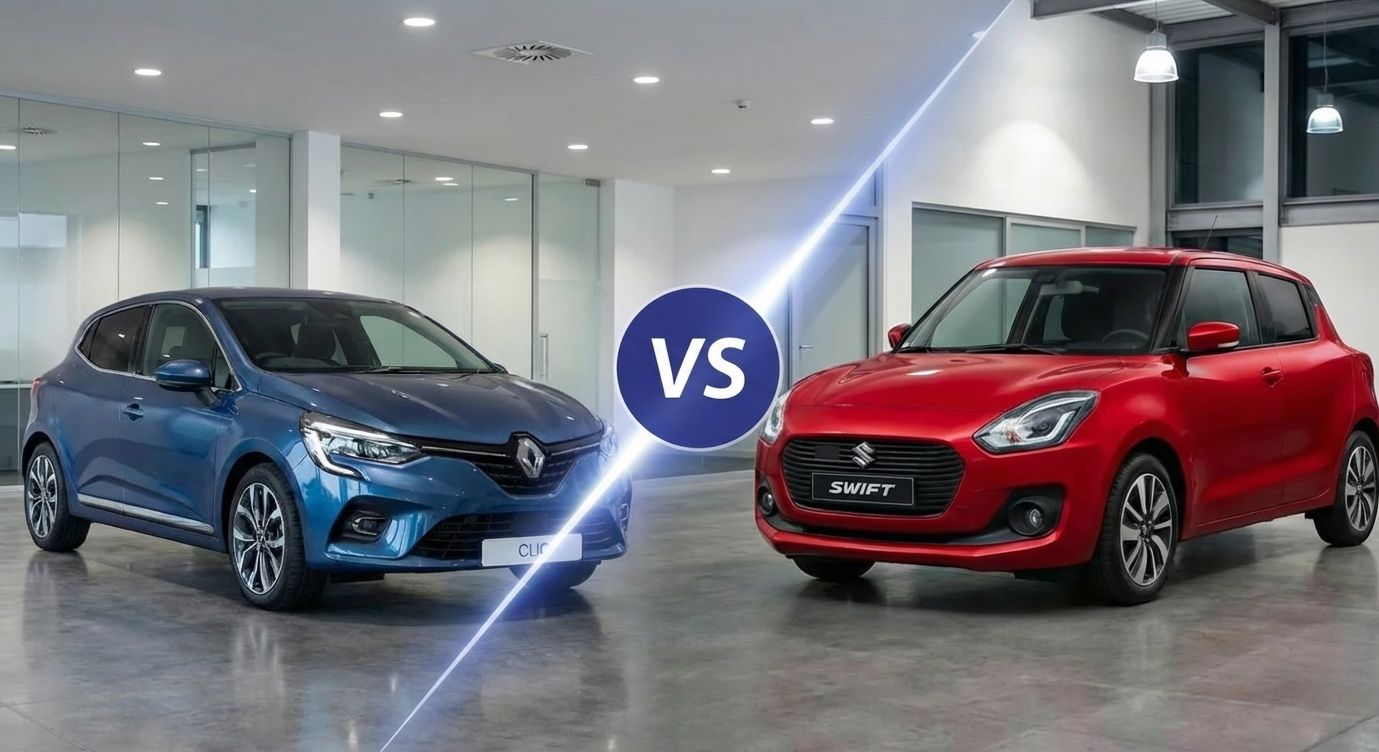
Big Comparison: Renault Clio vs. Suzuki Swift: Which used hatchback to choose? We reveal the differences in fuel consumption, equipment, and reliability. Read our verdict!
Apr 13, 2026