Renault Clio vs. Volkswagen Polo: Complete comparison 2026
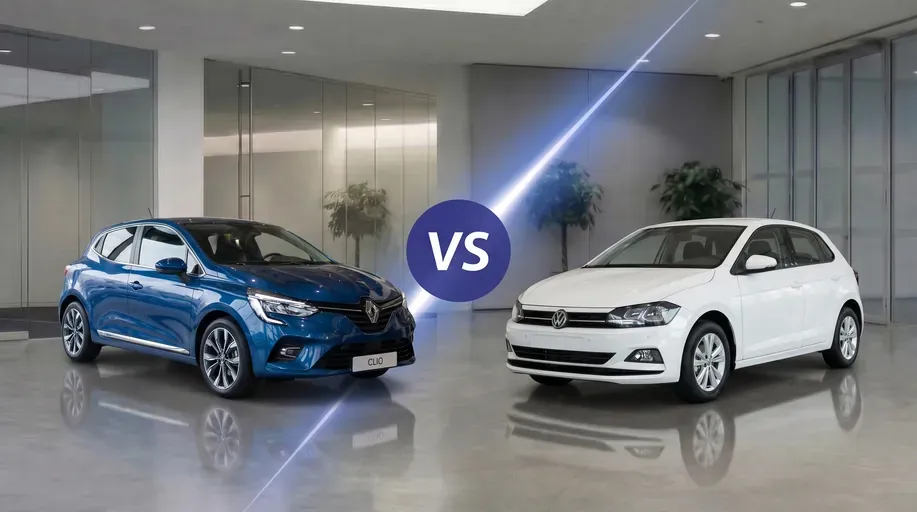
Renault Clio vs. Volkswagen (VW) Polo: Which hatchback to choose? A detailed comparison of equipment, driving characteristics, and a real verdict for your right choice.
Apr 17, 2026
Articles
Car battle
Renault Clio vs. Seat Ibiza: A detailed comparison of popular hatchbacks. Discover the differences in engines, equipment, and reliability, and read our final verdict.
May 2, 2026


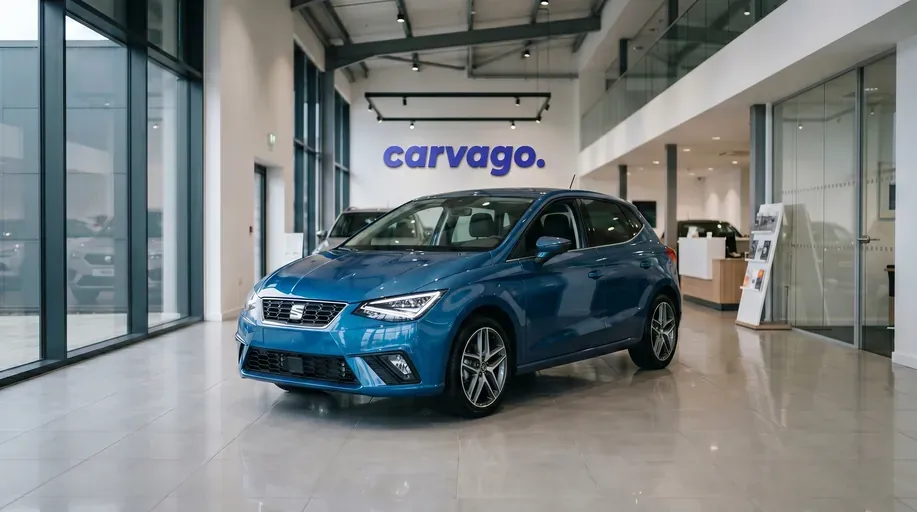
Renault Clio, also sold as the Renault Lutecia in selected markets and previously known as the Thalia or Symbol in its three-box derivatives, embodies French charm and a very comfortable approach to urban motoring. Its traditional rival, SEAT Ibiza, on the other hand, bets on a sharper Spanish design backed by advanced Volkswagen Group technology, while in the past, this model also served as the basis for the popular sedan body variant known as the SEAT Córdoba. Let's take a detailed look at how these two popular hatchbacks stand in a head-to-head battle for drivers' favor and which of them offers a better balance of price, driving characteristics, and everyday practicality.
Both cars, the fifth-generation Renault Clio and the Seat Ibiza (KJ generation), belong to the highly competitive small car segment, where every millimeter literally counts when designing the bodywork. If we focus on models roughly four years old, which is a very desirable age on the used car market, we find that both automakers approached external dimensions with a slightly different philosophy. Although both cars are very similar in their basic proportions and can easily handle both daily city traffic and weekend trips, we find interesting differences in their numbers. These minor deviations in proportions ultimately suggest what priorities the designers had when shaping the utility value of both cars.
The Seat Ibiza is, with a length of 4059 mm, a slight 6 to 9 mm longer than the Renault Clio, which measures 4050 to 4053 mm in length depending on the specific equipment or engine. In the real world – for example, when parallel parking in crowded city streets – you won't notice this difference and you will park both cars with the same ease. Where the French representative gains a tangible advantage, however, is the overall width of the body. With a value of 1798 mm, the Clio is a full 18 mm wider than its Spanish competitor (1780 mm). In practice, this means that the Renault offers a slightly airier interior with better shoulder room for front passengers and at the same time gives a slightly more muscular and confident impression on the road.
A very important indicator of interior spaciousness is the wheelbase, and here too, Renault holds the trump cards. The 2583 mm wheelbase of the Clio is 19 mm longer than that of the Ibiza (2564 mm). Although it may not seem like a huge difference on paper, every centimeter counts in this car class and a longer wheelbase often brings a bit more comfort for the knees of rear-seat passengers. The height of both models, on the other hand, is practically identical, ranging from 1440 to 1447 mm, which guarantees both cars a relatively low center of gravity and solid driving characteristics without compromising on headroom. Overall, the comparison of external dimensions suggests that while the Ibiza bets on a slightly longer but narrower body, the Clio tries to extract maximum interior space from a slightly shorter footprint precisely thanks to its wider stance and more extended wheelbase.
| Parameter | Renault Clio Hatchback | Seat Ibiza Hatchback |
|---|---|---|
| Length (mm) | 4050 - 4053 | 4059 |
| Width (mm) | 1798 | 1780 |
| Height (mm) | 1440 | 1444 - 1447 |
| Wheelbase (mm) | 2583 | 2564 |
When choosing a compact city car, the trunk capacity is often one of the deciding factors, especially if the car is to serve as the family's only vehicle. Both the fifth-generation Renault Clio and the Seat Ibiza (KJ generation), which currently dominate the market for roughly four-year-old used cars, prove that even in the small car segment (B-segment), a high level of practicality can be offered. The trunk in both models easily accommodates a typical weekly grocery shop, sports bags, or equipment for a long weekend, making them surprisingly versatile companions for everyday life.
In a direct comparison of standard petrol versions, the Seat Ibiza offers a slightly more generous base space. Its trunk holds an excellent 355 liters, while the Renault Clio counters with 340 liters. In practice, the 15-liter difference represents roughly the space for one extra small backpack. After folding the rear seatbacks, the gap widens even further in favor of the Spanish representative, which reaches a maximum volume of 1165 liters compared to 1069 liters for its French competitor. In their current generations, both manufacturers have dropped their practical estate body styles (the historical Clio Grandtour and Ibiza ST versions previously offered over 430 liters, but you can no longer buy them as nearly-new four-year-old used cars), so buyers must logically choose exclusively from classic five-door hatchbacks.
An important aspect when choosing is the specific engine, as the use of alternative powertrains significantly limits the total trunk volume. If you opt for the Renault Clio with the E-Tech full hybrid powertrain, the base capacity is reduced to between 246 and 254 liters (depending on the model year) due to the battery placement. In the case of the Seat Ibiza, the eco-friendly version running on compressed natural gas (TGI) reduces the available space to 262 liters. Conversely, the exception that proves the rule is the Eco-G variant of the Clio (factory LPG conversion), which, thanks to the integration of the tank in place of the spare wheel, offers an above-standard 391 liters. Ultimately, however, it can be stated that if you are looking for a conventional powertrain and the largest possible transport capacity for longer trips, the Seat Ibiza will serve you slightly better.
| Parameter | Renault Clio Hatchback | Seat Ibiza Hatchback |
|---|---|---|
| Base volume (liters) | 340 l | 355 l |
| Maximum volume with seats folded (liters) | 1069 l | 1165 l |
Although both cars offer very good practicality for their class, the Seat Ibiza provides a slightly more airy space in both base and maximum configurations, which you will appreciate especially on family trips.
Towing capacity is an often overlooked but key parameter if you occasionally need to transport bulky cargo or enjoy going on holiday with a caravan. Focusing on cars currently most common on the market for roughly four-year-old used vehicles (i.e., the fifth-generation Renault Clio and the Seat Ibiza with the KJ code name), we find quite different approaches by the two manufacturers to total towing capacity.
While the Renault Clio maintains a standard and maximum braked trailer weight of 900 kg across practically its entire model range, the Seat Ibiza offers a much wider range from 800 to 1200 kg. The French hatchback scores points primarily because it retains its stable towing capacity even in more eco-friendly variants. Contrary to common market practice, where hybrids often have limited capacity due to the added weight of batteries, the Renault Clio in the E-Tech Hybrid version offers the same 900 kg as the classic internal combustion engines. This is perfectly sufficient for everyday use, from weekend shopping to longer holidays with a smaller trailer.
In contrast, the Seat Ibiza significantly adjusts its capacity according to the engine used. If you choose the base version with the naturally aspirated 1.0 MPI engine, you can only tow a below-average 800 kg. However, the more common and sought-after turbocharged 1.0 TSI three-cylinder engines already allow for towing 1000 to 1100 kg. The top-of-the-line four-cylinder 1.5 TSI version or the more powerful 1.6 TDI diesel even reach a maximum of 1200 kg. In real life, this difference compared to the Clio means valuable space for a few extra suitcases or the ability to easily hitch and tow a medium-sized family caravan. Official data regarding exact limits for unbraked trailers are not fully listed in central databases for most specifications, which is why they are omitted from the table; in practice, however, they range around the 550 to 600 kg mark for hatchbacks of this class.
Overall, if a tow bar is only an occasional helper for transporting light waste, the Renault Clio will provide very good and consistent service, even as an economical hybrid. From the perspective of maximum utility, however, the Seat Ibiza in its more powerful variants is the clear winner, as it offers greater versatility for more demanding drivers.
| Model and motorization | Braked weight of trailer (kg) | Unbraked weight of trailer (kg) |
|---|---|---|
| Renault Clio V 1.0 SCe (48 - 53 kW) | 900 | - |
| Renault Clio V 1.0 TCe / ECO-G (67 - 74 kW) | 900 | - |
| Renault Clio V E-Tech Hybrid (67 - 69 kW) | 900 | - |
| Renault Clio V 1.5 BLUE dCi (63 - 85 kW) | 900 | - |
| Seat Ibiza KJ 1.0 MPI (48 - 59 kW) | 800 | - |
| Seat Ibiza KJ 1.0 TSI (70 kW) | 1000 | - |
| Seat Ibiza KJ 1.0 TSI (81 - 85 kW) | 1100 | - |
| Seat Ibiza KJ 1.6 TDI (59 - 85 kW) | 1000 - 1200 | - |
| Seat Ibiza KJ 1.5 TSI (110 kW) | 1200 | - |
The engine lineups of the Renault Clio and Seat Ibiza offer different approaches to the small hatchback segment, perfectly reflecting the priorities of different types of drivers. Due to emission standards, both models rely heavily on turbocharged one-liter three-cylinder engines, which represent an ideal compromise between fuel consumption and everyday dynamics. However, Renault stands out significantly in the used car market (focusing on models approximately 4 years old) by offering a sophisticated E-Tech full hybrid powertrain and an exceptionally popular factory LPG conversion (Eco-G). This makes it a very attractive choice for high-mileage drivers looking for the lowest possible operating costs. Seat, on the other hand, bets on the proven EA211 engine family from the VW Group, focusing on agility and driving dynamics, and even has a more powerful 1.5 TSI four-cylinder in reserve for more demanding drivers. It also includes a rarer alternative running on compressed natural gas (TGI). Although both manufacturers initially offered economical diesel engines, due to tightening standards, they are now relatively rare among approximately four-year-old used cars.
For the fifth generation of the Renault Clio, the engine range is designed primarily with everyday usability and low operating costs in mind. The base naturally aspirated 1.0 SCe three-cylinder is suitable mainly for the city due to its lower power and lack of a turbo, while the turbocharged 1.0 TCe (with 66 kW or 74 kW) represents a versatile and agile choice. A major trump card that you will look for in vain among competitors is the 1.0 TCe 100 Eco-G version; it is factory-designed to run on LPG, significantly reducing fuel expenses. Modern technology is represented by the E-Tech Hybrid version, combining a 1.6-liter gasoline engine, two electric motors, and a unique clutchless multi-mode automatic transmission. In the market for nearly new used cars, you may occasionally come across the more powerful 1.3 TCe four-cylinder, developed in cooperation with Mercedes, or the rare 1.5 Blue dCi diesels.
| Engine type | Fuel | Power (kW) | Torque (Nm) | Transmission |
|---|---|---|---|---|
| 1.0 SCe | Gasoline | 48 | 95 | 5MT |
| 1.0 TCe 90 | Gasoline | 66 | 160 | 6MT / CVT |
| 1.0 TCe 100 Eco-G | Gasoline / LPG | 74 | 160 / 170 | 6MT |
| 1.3 TCe 130 / 140 | Gasoline | 96 / 103 | 240 / 260 | 6MT / 7EDC |
| 1.6 E-Tech Hybrid 140/145 | Hybrid | 103 / 107 | 144 + 205 (electric) | Multi-mode automatic |
| 1.5 Blue dCi | Diesel | 63 / 74 / 85 | 220 / 260 | 6MT |
The current KJ generation of the Seat Ibiza relies on proven Volkswagen Group technology and guarantees a more precise and spirited driving experience. The base of the range is the 1.0 MPI engine with 59 kW, which performs well in undemanding city traffic but lacks zest for longer trips. The core of the used car market consists of reliable turbocharged 1.0 TSI units, with the more powerful 81 kW variant (or the newer 85 kW version) being ideal for its above-average flexibility and availability with a responsive seven-speed DSG automatic transmission. Those looking for more power should seek out the refined 1.5 TSI four-cylinder with 110 kW, equipped with Active Cylinder Technology (ACT) to optimize fuel consumption. The range is complemented by the less common eco-friendly 1.0 TGI version burning compressed natural gas (CNG). Diesels are represented by the popular 1.6 TDI engine; however, it is important to know that its production ended in 2020, and in the four-year-old car segment, you will only find remaining stock from older inventories.
| Engine type | Fuel | Power (kW) | Torque (Nm) | Transmission |
|---|---|---|---|---|
| 1.0 MPI | Gasoline | 59 | 93 | 5MT |
| 1.0 TSI | Gasoline | 70 | 175 | 5MT |
| 1.0 TSI | Gasoline | 81 / 85 | 200 | 6MT / 7DSG |
| 1.5 TSI | Gasoline | 110 | 250 | 6MT / 7DSG |
| 1.0 TGI | Gasoline / CNG | 66 | 160 | 6MT |
| 1.6 TDI* | Diesel | 59 / 70 / 85 | 250 | 5MT / 7DSG |
*Note: Production and availability of 1.6 TDI diesel units for the Seat Ibiza ended around 2020.
While the Renault Clio is unrivaled for budget-conscious drivers thanks to the factory Eco-G LPG version and the smooth E-Tech city hybrid, the Seat Ibiza will especially please lovers of more dynamic driving, who can look forward to the excellently tuned 1.0 TSI engine and the powerful 1.5 TSI four-cylinder.
Choosing the right engine is crucial for long-term satisfaction with a used car, which is why our recommendations are based on real-world experience, proven mechanical reliability, actual fuel consumption, and overall owner ratings. Both manufacturers fully rely on downsizing in the form of one-liter turbocharged three-cylinder engines for their current generation models (Clio V and Ibiza KJ, which most frequently appear on the four-year-old used car market). While Seat relies on the technically advanced 1.0 TSI direct-injection unit, which is considered the benchmark for flexibility and efficiency within the VW Group, Renault has equipped its Clio with the 1.0 TCe engine, featuring a more robust design using multi-point indirect injection (MPI). Interestingly, diesel engines have almost disappeared from this category, but both brands are successfully scoring points with factory-installed alternative fuel systems – Seat offers economical TGI (CNG) versions, and Renault is seeing huge success with its extremely popular and reliable Eco-G (LPG) modification.
This one-liter turbocharged three-cylinder represents the absolute ideal in the fifth-generation Clio range, perfectly balancing sufficient power, everyday practicality, and very friendly operating costs. Its greatest technical advantage is the retention of indirect fuel injection (MPI). In practice, this is a major plus for long-term reliability – unlike direct-injection units, there is no risk of carbon buildup on the intake valves, making this engine perfect even for frequent short city trips. The torque curve is pleasantly flat, and real-world fuel consumption consistently stays between 5.5 and 6 l/100 km. You will also frequently come across the aforementioned dual-fuel Eco-G 100 version, which reduces driving costs to an absolute minimum. The engine mechanics themselves are above-average in durability. When choosing a used car, focus more on the functioning of the onboard electronics and assistance systems. Any potential issues can be easily detected by checking the smooth operation of the infotainment system during a test drive and ensuring the trip computer does not report unjustified radar or sensor faults; prevention and solutions often involve installing the latest software updates at an authorized service center. We recommend this engine to both calmer drivers and anyone needing an undemanding car for their daily routine.
Under the hood of the Seat Ibiza, the Volkswagen Group's 1.0 TSI turbocharged three-cylinder is a safe bet, impressing with exemplary soundproofing, a lively character, and excellent efficiency. Thanks to direct fuel injection, it offers a noticeably sharper throttle response and brisker overall dynamics than its French rival. Real-world fuel consumption often drops below 5.5 l/100 km at a steady pace. However, this technical sophistication requires adequate care – the engine is more sensitive to fuel quality, so it pays for owners to use premium gasoline with cleaning additives to prevent deposits in the engine. At the same time, we recommend shortening oil change intervals to 15,000 km for used cars, which significantly extends the life of the turbocharger and prevents premature wear of the timing components. During the test drive, pay close attention to the engine's behavior when cold. If you notice jerking, rough idling, or a perceived loss of power, it may signal clogged injectors or a beginning fault in the turbocharger regulation (wastegate). Unusually loud whistling during acceleration is also a warning sign for the turbo. This unit will particularly suit slightly more dynamically minded drivers with a varied route profile who, in addition to the city, often drive on the highway and will fully appreciate its agility and efficiency.
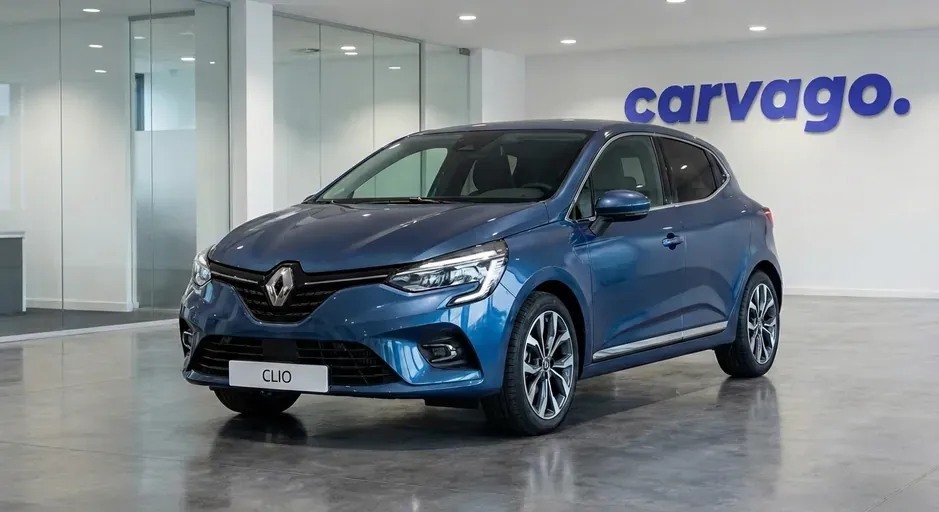
When choosing a used car, it is crucial not to rely solely on paper data from manufacturers, which are often created in laboratory conditions and tend to be somewhat optimistic in real-world traffic. Actual fuel consumption depends significantly on driving style, route profile, and overall vehicle load. For the most accurate comparison, we have used real data from drivers themselves from the independent community portal Spritmonitor.de. We focused on cars roughly four years old, which on the used car market corresponds to the mature fifth generation of the Renault Clio (produced since 2019) and the fifth generation of the Seat Ibiza with the designation KJ (on the market since 2017).
Data source: Spritmonitor.de
| Model and engine | Average consumption (l/100 km) |
|---|---|
| Diesel engines | |
| Renault Clio Blue dCi 100 | 4.3 |
| Seat Ibiza 1.6 TDI | 4.7 |
| Hybrid engines | |
| Renault Clio E-Tech Hybrid 140 | 4.5 |
| Petrol engines | |
| Seat Ibiza 1.0 MPI | 5.5 |
| Seat Ibiza 1.0 TSI (70 kW) | 5.6 |
| Renault Clio 1.0 TCe 90 | 5.8 |
| Seat Ibiza 1.0 TSI (81 kW) | 5.8 |
| Seat Ibiza 1.5 TSI | 6.1 |
Interesting trends clearly emerge from the table above. If you are looking for an absolute champion in efficiency, diesel engines still dominate despite their gradual decline in popularity. The French Blue dCi unit is even slightly more economical in practice than Seat's 1.6 TDI. However, the biggest surprise is the sophisticated hybrid Clio E-Tech. In the real world, it achieves consumption that easily competes with diesels without suffering from the typical disadvantages of diesel engines during short city trips. For the very popular small petrol turbo engines (1.0 TSI and 1.0 TCe), average consumption stays confidently below the 6 liters per 100 km mark. An interesting finding is that the basic naturally aspirated 1.0 MPI engine in the Ibiza does not bring any miraculous savings in terms of consumption. Due to the lack of a turbo, drivers have to rev it more often, so in the end, it consumes very similarly to the much more agile turbocharged one-liter units.
For the average user, this means that if you use the car primarily for shorter routes, daily commuting to work, or weekend trips, the turbocharged one-liter three-cylinder (1.0 TCe or 1.0 TSI) makes the most sense for both models. These engines offer an excellent compromise between decent dynamics, reliability, and favorable operating costs. Those who move mostly through congested cities and don't mind a slightly higher purchase price for a used car will find a great partner in the hybrid Clio, which can reduce consumption in traffic jams to an absolute minimum. Conversely, for drivers who eat up hundreds of highway kilometers every week, it is still worth searching the listings for the slowly disappearing diesel engines.
In conclusion, fuel consumption will likely not be the main and only argument when deciding between the Renault Clio and the Seat Ibiza. Both cars represent an extremely economical choice within their category, and the differences between comparable petrol engines are negligible in practice. The final word will therefore be more about sympathy for a specific brand, driving characteristics, or the availability of the required equipment. However, Renault scores extra points here for being able to offer customers a highly efficient full hybrid powertrain, to which Seat was unable to respond with the Ibiza model.
When looking for a used car approximately four years old (focusing on the 2021–2022 model years), the fifth generations of both the Renault Clio and the SEAT Ibiza are among the most popular and affordable choices in the B-segment. In terms of price, both models overlap closely, with the final amount on the used market depending primarily on the chosen engine and trim level.
A used Renault Clio from 2021 and 2022 attracts buyers with very favorable starting prices. On the market, it maintains a reputation as a comfortable, stylish car that is easy to run.
Compared to its French rival, the SEAT Ibiza maintains a slightly higher price level, especially for better-equipped versions. This is due to reliable Volkswagen Group technology and the great popularity of dynamically tuned variants.
| Used Car Category | Renault Clio V | SEAT Ibiza V |
|---|---|---|
| Entry-level versions and engines | €8,600 – €9,800 | €9,000 – €10,300 |
| Standard equipment (mid-range offer) | €10,300 – €11,500 | €10,700 – €12,700 |
| Top condition, sporty or hybrid versions | €11,900 – €13,500 | €13,100 – €15,600 |
While the Renault Clio attracts used car buyers with an overall lower price tag and an affordable, efficient E-Tech hybrid, the SEAT Ibiza is more likely to please drivers looking for a sportier character in the FR trim, which holds its value very well on the market.
When choosing a used car, safety is one of the key factors. Both the Renault Clio and the Seat Ibiza boast a maximum five-star rating in independent Euro NCAP crash tests. However, when evaluating these results for roughly four-year-old cars, it is essential to consider the context and the year of the testing itself. Euro NCAP methodology and protocols are constantly becoming stricter over the years, with increasing emphasis placed on active assistance systems, collision prevention, and cyclist detection at intersections. For this reason, the percentage results of cars tested in different years cannot be directly compared, as newer tests represent an incomparably more demanding hurdle for vehicles.
The fifth-generation Renault Clio underwent crash tests in 2019, at the time of its market launch. It achieved results that were at the absolute top of the entire small car segment. It particularly shone in adult occupant protection, where it earned an excellent 96%, and in child protection with a rating of 89%. The 2019 results mean that the car met the highest standards for passive safety of that time by a huge margin, even though it did not yet have to face the latest and most complex intersection simulations.
Although the fifth-generation Seat Ibiza was first tested back in 2017, its re-testing after an extensive facelift in 2022 is much more relevant. Even under these much more demanding modern test conditions, the Ibiza confidently defended its full five stars. Although its percentage scores may seem slightly lower at first glance (83% for adult protection and 82% for child protection), in practice, this reflects the fact that the car was assessed according to stricter criteria. These included, for example, testing of more advanced autonomous emergency braking (AEB) with improved response to pedestrians and cyclists.
| Parameter | Renault Clio | Seat Ibiza |
|---|---|---|
| Year of testing | 2019 | 2022 |
| Adult occupant protection | 96 % | 83 % |
| Child protection | 89 % | 82 % |
| Vulnerable road users protection | 72 % | 66 % |
| Safety assist systems | 75 % | 70 % |
In terms of overall safety, both models represent an exceptionally smart choice on the four-year-old used car market. The Renault Clio benefits from its extremely rigid body, which earned it some of the highest marks ever at the time. Conversely, the 2022 Seat Ibiza clearly demonstrates that thanks to the modernized calibration of its active safety assistants, it can easily hold its own and keep pace even in the strictest conditions of today's methodology.
Both cars offer top-tier protection, with the Ibiza boasting a newer and stricter 2022 certificate, while the Clio benefits from stunning basic passive safety proven in 2019.
In addition to standard equipment, each of the models offers several unique features and innovations that prove even B-segment cars can bring advanced technologies and a specific approach to everyday travel.
Significant leap in material quality and interior craftsmanship compared to the previous generation
Above-average luggage capacity in its class (up to 391 liters for petrol versions)
Comfortably tuned chassis that filters out city bumps excellently
Top-tier passive safety (5 Euro NCAP stars)
Availability of a very efficient E-Tech full hybrid powertrain
More cramped legroom and headroom for adult passengers in the rear seats
Slower response and occasional freezes of the multimedia system in older model years
Less communicative steering and an overall less engaging driving experience
The fifth-generation Renault Clio is an ideal choice for those looking for a comfortable, safe, and more premium-feeling small car for daily city driving. Thanks to its well-crafted interior and efficient engines, it will appeal to rational buyers who don't mind a slight compromise in rear-seat spaciousness.
Excellent driving characteristics with agile and precise steering thanks to the MQB-A0 platform
Very airy interior with above-average space for rear passengers
Intuitive and fast-responding infotainment with excellent control ergonomics
More dynamic and sportier exterior design
Wide range of reliable VW Group TSI engines with good dynamics
Higher proportion of hard and cheaper-feeling plastics in the interior, especially in lower trim levels
Poorer cabin insulation from chassis noise and wind noise at highway speeds
Complete lack of a full hybrid powertrain option
The SEAT Ibiza perfectly suits drivers who enjoy driving on winding backroads and are looking for a car with a youthful, sportier character. Furthermore, thanks to its excellent interior packaging, it can easily serve as a versatile car for a small family, provided you can accept simpler materials in the cabin.
Based on long-term user feedback, service reports, breakdown statistics, and data from our used car physical inspection, we have compiled an overview of the most common problems you should watch out for with both cars.
The fifth generation of the Renault Clio has made a significant leap in build quality and mechanical reliability, yet it still has some specific ailments mainly related to electronics and the first years of production.
The fifth Clio has made a big leap forward in quality, and its engines are mechanically very reliable. Any problems are usually limited to glitchy infotainment software or minor interior noises.
The fifth generation of the Seat Ibiza benefits from proven Volkswagen Group technology, but even that has its weak spots that require increased attention when buying a used unit.
The Seat Ibiza scores with highly efficient TSI engines and excellent driving characteristics. The main risks of expensive repairs for used cars are the DSG automatic transmissions and potential coolant leaks.
When buying a used car, a thorough inspection is key. Both vehicles are a good choice as four-year-old used cars; however, before making a final decision, it is good to know where their weak points lie. Here are several specific points to focus on for these two models. For maximum peace of mind and to avoid future expensive repairs, an independent technical inspection of the car before the purchase is always worth it.
The fifth-generation Renault Clio offers a luggage compartment volume of 391 liters in its basic gasoline version, which is top of its class. The Seat Ibiza lags only slightly behind with a very respectable 355 liters. However, in the hybrid and diesel versions of the Clio, the trunk shrinks below the level of the Ibiza due to the stored technology.
The Seat Ibiza, built on the group's MQB A0 platform, is known for its stiffer chassis and more precise steering, making it a more fun car to drive. The Renault Clio on the other hand, focuses more on supple driving comfort, smoothness, and excellent cabin soundproofing. So, if you're looking for a sportier feel, the Ibiza is the better choice.
In their modern generations, both manufacturers offer very durable one-liter three-cylinder engines that do not suffer from any fatal defects. The 1.0 TSI engine in the Ibiza stands out for its great dynamics, while the 1.0 TCe unit in the Clio uses indirect injection, which makes it better at handling cold starts and short city trips. In terms of long-term reliability of used cars, both variants represent a very safe choice.
The fifth-generation Renault Clio took a huge step forward, and its interior, with a high proportion of soft-touch plastics, feels very premium. The Seat Ibiza, especially in versions before the 2021 facelift, uses more hard plastics and its dashboard is somewhat more austere. If a sense of coziness and luxury on board is key for you, the Clio has a clear advantage in this regard.
The basic gasoline engines of both cars achieve very similar fuel consumption of around 5.5 l/100 km in real-world combined driving. However, the Renault Clio also offers an advanced full-hybrid E-Tech version, which can drive purely on electricity for a large part of the time in the city, significantly reducing fuel consumption. The Seat Ibiza relies exclusively on classic internal combustion engines and does not have a similar electrified variant in its range.
The duel between Renault Clio and Seat Ibiza shows that although both models belong to the absolute top of the small used car segment, each targets a completely different group of drivers. The French Clio is an ideal choice for those looking for a more premium interior finish, exceptional driving comfort, and innovative fuel-efficient powertrains, led by factory LPG or the full-hybrid E-Tech system, which is perfect for the city. The Spanish Ibiza, on the other hand, will thrill more sport-oriented motorists thanks to its precise handling, airier rear cabin, and excellently tuned TSI petrol engines from the Volkswagen Group. While the Renault serves as an elegant, very comfortable, and economical companion for daily city driving, the Seat will perfectly please anyone who values more agile responses and a more dynamic driving experience even outside urban areas.
Sources: ADAC, novinky.cz, aktualne.cz, autotechnik.cz, autorevue.cz, classiccars.cz
This article was prepared using artificial intelligence tools. The section guarantor is Petr Dušek.

Renault Clio vs. Volkswagen (VW) Polo: Which hatchback to choose? A detailed comparison of equipment, driving characteristics, and a real verdict for your right choice.
Apr 17, 2026

Detailed comparison of the Opel Corsa vs. Suzuki Swift. Discover real-world experiences, comparisons of equipment and driving characteristics, as well as our final verdict. Which model should you choose?
Apr 27, 2026

Detailed comparison of the Suzuki Ignis and Volkswagen up! (VW up!). Find out which used city car offers better reliability, real-world fuel consumption, and a clear verdict.
Apr 17, 2026