Car battle
Peugeot 208 vs. Renault Clio: Complete comparison 2026
Detailed comparison of Peugeot 208 vs Renault Clio. Find out which French hatchback has better equipment, fuel consumption, and reliability. Read our verdict!
Apr 8, 2026
Articles
Car battle
Detailed comparison of the Suzuki Ignis and Volkswagen up! (VW up!). Find out which used city car offers better reliability, real-world fuel consumption, and a clear verdict.
April 17, 2026
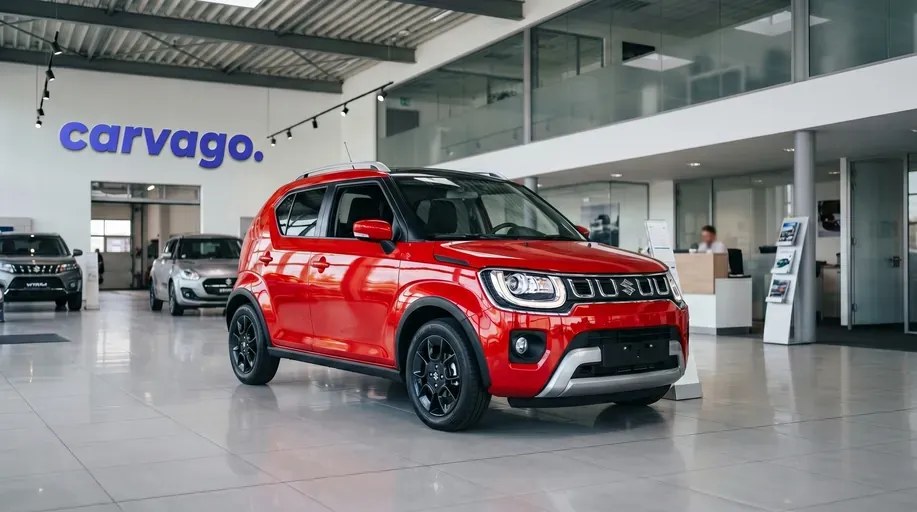
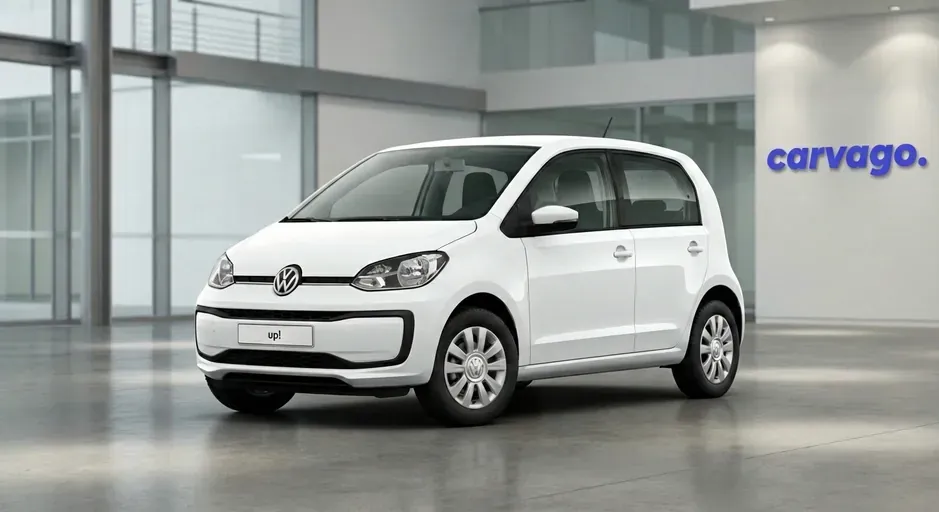
The Suzuki Ignis is a distinctive city crossover with higher ground clearance that brings a touch of adventure to everyday driving and is also known as the Maruti Suzuki Ignis in some markets. Standing against it is the exceptionally practical Volkswagen up!, an efficient and agile hatchback that you will commonly encounter on the used car market under the names of its identical group siblings, the Škoda Citigo or SEAT Mii. Let's take a detailed look at how this battle of two completely different recipes for the ideal city car turns out and which one you should prioritize when making your choice.
Although the Suzuki Ignis and Volkswagen up! both fall into the category of the smallest city cars, their approach to exterior dimensions and proportions differs fundamentally. While the Volkswagen up! represents a classic purist city hatchback with an emphasis on maximizing the footprint, the third-generation Suzuki Ignis (relevant for the used car market at around four years of age) styles itself as a so-called micro-SUV. This difference in concept is naturally reflected in the numbers and proportions on the road.
The Suzuki Ignis is slightly larger in all key dimensions than its German competitor. With a length of exactly 3700 mm, it exceeds the Volkswagen up! by roughly 70 to 160 mm depending on the specific version (the up! measures from 3540 to 3628 mm for variants like the cross up!). The Ignis is also approximately 45 mm wider and, above all, offers a significantly taller body structure. The height of the Japanese crossover ranges from 1595 to 1605 mm, which is approximately 100 mm more than what the hatchback from Wolfsburg offers. The wheelbase of both cars, on the other hand, is surprisingly similar – the Ignis has a value of 2435 mm, while the up! follows closely with a range of 2407 to 2421 mm. This means that both manufacturers have effectively placed the wheels at the very corners of the body.
The larger proportions and styling of the Suzuki model bring undeniable advantages in everyday life. The taller build means more comfortable entry and exit, a better view of traffic, and an overall slightly more robust feel behind the wheel. You will also greatly appreciate it when placing children into car seats. Conversely, the Volkswagen up! benefits from its absolute compactness. With a shorter and narrower body, complemented by a vertically cut-off rear, it is even easier to maneuver in the tightest streets, and parking in narrow parallel spots is a total breeze. The choice therefore depends on whether you prefer the visibility of a taller vehicle or need to park literally on every centimeter.
| Parameter | Suzuki Ignis SUV | Volkswagen up! Hatchback |
|---|---|---|
| Length (mm) | 3700 | 3540 - 3628 |
| Width (mm) | 1690 | 1641 - 1649 |
| Height (mm) | 1595 - 1605 | 1483 - 1516 |
| Wheelbase (mm) | 2435 | 2407 - 2421 |
When choosing a compact city car on today's used car market – typically betting on models around four years old – luggage compartment volume might seem like a secondary parameter. But the opposite is true. Especially with the smallest vehicles, every litre determines whether the car will serve purely as a nimble shopping bag or handle a weekend trip for two without trouble. Both the third-generation Suzuki Ignis and the first-generation Volkswagen up! from around 2020 to 2022 clearly prove that even on an absolutely minimal footprint, a surprisingly practical and usable boot can be conjured up.
The Suzuki Ignis, which falls into the small SUV category thanks to its ground clearance and design, has a 260-litre boot in its basic configuration. However, a huge weapon of this Japanese model is the independently sliding rear bench. This gives you freedom of choice – either you provide maximum legroom for rear passengers, or you slide the seats forward to gain space for a few extra suitcases. After folding the seats completely, the total usable volume climbs to an excellent 1,100 litres (measured to the roof). However, those interested in the 4x4 version should take note; in the all-wheel-drive version (AllGrip), the installation of the rear differential takes up quite a bit of space, and the basic volume shrinks to a more modest 204 litres.
The Volkswagen up!, on the other hand, represents a classic and maximally efficient hatchback. German engineers managed to package the space so cleverly here that the car offers 251 litres as standard. The regularly shaped boot with a double floor is ideal for everyday city shopping and neatly stacking luggage without dead spots. After folding the backrests, you get an almost flat surface and a maximum volume reaching 959 litres. The electric e-up! version deserves special praise in this discipline, where the traction battery was integrated so masterfully that the boot capacity dropped to an almost imperceptible 250 litres in the base (and 923 litres when folded). In practice, both cars represent reliable partners sufficient for weekend shopping and smaller holidays, but the Ignis has the upper hand in terms of overall variability thanks to its sliding seats.
| Parameter | Suzuki Ignis SUV | Volkswagen up! Hatchback |
|---|---|---|
| Basic volume (litres) | 260 | 251 |
| Maximum volume with seats folded (litres) | 1100 | 959 |
Despite their miniature dimensions, both cars confidently handle daily shopping, with the Suzuki Ignis scoring points for the variability of its sliding seats and the Volkswagen up! for its cleverly packaged and very regular boot.
The ability to tow a trailer is often overlooked in small city cars, even though for many buyers it is a key parameter affecting everyday practicality. Whether you need to transport building materials or attach a small trailer for weekend adventures, the differences in this compact class can be surprisingly vast. Looking at used cars about four years old (generations produced around 2018–2022), the Suzuki Ignis and Volkswagen up! approach this challenge quite differently.
The Suzuki Ignis (3rd generation) is a clear favorite in this discipline. As one of the few cars this small, it is fully homologated for towing a trailer. The car can easily handle a braked trailer with a standard and maximum permitted weight of exactly 1000 kg. For an unbraked trailer, a solid limit of 400 kg applies. A big advantage is that these values do not differ depending on the chosen engine. Whether you choose the classic 1.2 Dualjet four-cylinder or go for the mild-hybrid variant with reduced power (1.2 Dualjet Hybrid or SHVS), the towing capacity always remains uncompromisingly preserved.
Conversely, the first generation of the Volkswagen up! completely fails in terms of towing cargo. From both a technical and legislative standpoint, this model has a standard and maximum permitted weight for both braked and unbraked trailers of exactly 0 kg. This zero limit applies to the entire model range. It doesn't matter at all whether you get the regular naturally aspirated three-cylinder, the sharper GTI version, or prefer the purely electric e-up! variant – towing a trailer is prohibited. The only consolation for owners is the possibility of installing a special "towing" device. However, this cannot be used for a trailer, but serves exclusively as a vertical support for a bicycle carrier with a maximum vertical load of around 50 kg.
The space and transport possibilities of both cars thus differ fundamentally. The Suzuki Ignis gives you freedom – it can easily tow a small trailer that is sufficient for a weekend purchase of oversized furniture, playfully handles the removal of garden waste, or offers you space for several extra suitcases when traveling on a longer holiday. With the Volkswagen up!, any towing of cargo is impossible, and all transport requirements must therefore be fitted exclusively into the interior or onto roof racks.
In conclusion, if towing a trailer is a necessity for your lifestyle, the choice between this pair is very easy. While the Suzuki Ignis can reliably fulfill the role of an unexpected small workhorse, the Volkswagen up! remains exclusively a city specialist, for which towing any cargo is a strict taboo.
(Note: For the Volkswagen up!, no data is intentionally listed in the table, as the manufacturer did not homologate this model for towing a trailer and the weight capacities are zero.)
| Model and motorization | Braked weight of trailer (kg) | Unbraked weight of trailer (kg) |
|---|---|---|
| Suzuki Ignis 1.2 Dualjet (66 kW) | 1000 | 400 |
| Suzuki Ignis 1.2 Dualjet Hybrid (61-66 kW) | 1000 | 400 |
| Suzuki Ignis 1.2 Dualjet SHVS (66 kW) | 1000 | 400 |
When choosing a roughly four-year-old used car, the Suzuki Ignis and Volkswagen up! offer completely different approaches to propulsion. The Japanese Ignis relies on structural simplicity and a naturally aspirated four-cylinder engine, whose main trump card in this class is the unique availability of all-wheel drive (ALLGRIP) and a focus on fuel-efficient mild-hybrid technology. Conversely, the Volkswagen up! has assembled a much more diverse range over its long career. It serves used car customers everything from undemanding naturally aspirated three-cylinder engines to spirited 1.0 TSI turbocharged petrol units and a fully electric version with a surprising range. From a driver's perspective, this pits a fuel-efficient 4x4 for suburban adventures against a sophisticated urban chameleon, where almost every type of buyer can find their ideal engine.
Under the hood of the third-generation Suzuki Ignis, you will exclusively find a robust and reliable 1.2-liter petrol four-cylinder engine. In models from the first years of production, the 1.2 Dualjet unit delivered 66 kW (90 hp). Around 2020, however, it was replaced by a modified version due to stricter emission standards. In this version, the maximum power dropped slightly to 61 kW (83 hp), but the cars began to be equipped with mild-hybrid technology as standard. You can recognize this by the "Hybrid" or, in older models, "SHVS" badge. The mild-hybrid system with its 12V architecture actively assists with torque during acceleration, significantly reducing already low fuel consumption.
A huge advantage and a complete rarity in this segment is the ALLGRIP all-wheel-drive system. Five-speed manuals are available, but automated AGS transmissions also appear, which were later replaced by a smoother-operating CVT. Classic non-hybrid versions (without electric assistance) completely disappeared from the new car lineup around 2020, so when choosing popular four-year-old used cars, you will encounter the more advanced hybrid derivative almost exclusively.
| Engine Type | Fuel | Power (kW) | Torque (Nm) | Transmission |
|---|---|---|---|---|
| 1.2 Dualjet | Petrol | 66 | 120 | 5MT / 5AGS |
| 1.2 Dualjet Hybrid / SHVS | Petrol (Mild-hybrid) | 61 - 66 | 107 - 120 | 5MT / 5AGS / CVT |
Engine options for the Volkswagen up! are significantly more diverse, even though they rely exclusively on one-liter three-cylinder engines or pure electricity. The absolute base is the naturally aspirated 1.0 MPI unit, whose newer tuning provided 48 kW (65 hp); in older versions on the used market, you will often find variants with 44 or 55 kW. Although these models dominate cramped cities, they naturally lack dynamics on longer highway routes. For more demanding drivers, the manufacturer offered the powerful 1.0 TSI turbo engine (66 kW), but this quietly disappeared from the standard price list around 2019, and today you must specifically look for it in advertisements. The pinnacle of the internal combustion range remains the prized up! GTI sports model with a reinforced turbo engine producing 85 kW (115 hp) and a precise six-speed manual transmission.
Environmentally conscious drivers swear by the factory-modified eco up! running on compressed natural gas (CNG). However, the absolute hit on the market for roughly four-year-old used cars is the battery-powered e-up!. At the end of 2019, it underwent a major upgrade, receiving a battery with a usable capacity of 32.3 kWh. Combined with 61 kW of power and a responsive 212 Nm of torque, it suddenly offered a great real-world range of around 260 km, transforming the car into a perfectly smooth and quiet companion for suburban traffic.
| Engine Type | Fuel | Power (kW) | Torque (Nm) | Transmission |
|---|---|---|---|---|
| 1.0 MPI / BMT | Petrol | 44 - 55 | 91 - 95 | 5MT / 5ASG |
| 1.0 TSI (until 2019) | Petrol | 66 | 160 | 5MT |
| 1.0 TSI (GTI) | Petrol | 85 | 200 | 6MT |
| 1.0 EcoFuel | Petrol / CNG | 50 | 90 | 5MT |
| e-up! | Electricity | 61 | 212 | 1-speed automatic |
While the Suzuki Ignis wins the hearts of cottage owners with its unmatched all-wheel drive and reliable four-cylinder engine, the Volkswagen up! reigns supreme in the city car market for its versatility and brilliant all-electric and sporty versions.
Choosing the right powertrain is crucial for long-term satisfaction with small city cars. While for used cars around four years old, Suzuki relies on a proven naturally aspirated concept supported by mild-hybrid technology for maximum fuel economy, Volkswagen offers a minimalist yet exceptionally durable three-cylinder engine, as turbocharged variants from the standard range had already disappeared in these more recent years. Our recommendation is based on real-world performance, measured fuel consumption, owner feedback, and documented mechanical reliability.
For used third-generation Ignis models from around 2021 to 2022 (i.e., after the mid-cycle facelift), the version with the engine code K12D is by far the best choice. This unit works excellently as a comprehensive and modern powertrain for long-term ownership.
When looking for a four-year-old used first-generation model, you will discover an interesting fact stemming from database availability: although the dynamic and turbocharged 1.0 TSI used to be extremely popular in the past, its production in standard versions ended in early 2019. For more modern used cars, sellers offer either the feisty GTI variant, the uncompromising e-up! electric car, or the standard naturally aspirated three-cylinder. For flawless and inexpensive daily driving, we recommend choosing the classic 1.0 MPI three-cylinder (often listed simply as "up! 1.0").
When choosing a used city car, fuel consumption is one of the most important criteria, but official values given by manufacturers often differ from reality. Especially with small cars that move mainly in heavy city traffic and on short routes, real consumption can be surprising. To get the most accurate picture of the actual requirements of both models, we rely on real user data from the independent portal Spritmonitor.de, where thousands of drivers share their daily experiences. We focused primarily on the generations and engines that are most relevant on the market for roughly four-year-old used cars – i.e., around the 2022 model year – and make the most sense for buyers.
| Model and engine | Average consumption (l/100 km) |
|---|---|
| Suzuki Ignis 1.2 Dualjet 66 kW | 5.4 |
| Suzuki Ignis 1.2 Dualjet Hybrid 61 kW | 5.2 |
| Volkswagen up! 1.0 MPI 48 kW | 5.3 |
| Volkswagen up! 1.0 TSI 66 kW | 5.5 |
| Volkswagen up! GTI 85 kW | 5.8 |
| Volkswagen eco up! 1.0 CNG 50 kW | 3.8 kg |
| Volkswagen e-up! 61 kW | 14.5 kWh |
The third-generation Suzuki Ignis relies exclusively on the naturally aspirated 1.2 Dualjet four-cylinder, which received mild-hybrid technology as standard in newer model years. Although this system promises significant savings on paper, in the real world, it saves on average only about two-tenths of a liter of fuel per hundred kilometers. Even so, with a value of around 5.2 l/100 km, it is exceptionally economical. The Volkswagen up!, on the other hand, offers a wider range of powertrains. The basic one-liter three-cylinder (1.0 MPI) is a direct petrol competitor to the Ignis with an average of 5.3 l/100 km, while the turbocharged 1.0 TSI version asks for only a negligible two-tenths of a liter more fuel for significantly better dynamics. Real data thus reveals a surprising finding: the small turbocharged engine does not dramatically increase the car's appetite in practice, and even the sporty up! GTI barely exceeds the six-liter mark in reality. Unlike much older used cars (where, for example, the 1.3 DDiS diesel featured in earlier Ignis generations), diesel engines are completely absent here, which is a logical and inevitable trend in the smallest city car category. For absolute savings maximalists, however, Volkswagen has two strong aces up its sleeve: the electric e-up! with a real consumption of 14.5 kWh/100 km and the eco up! version burning compressed natural gas (CNG), whose consumption of 3.8 kg/100 km means unbeatably low operating costs per kilometer.
For a typical user looking for a car for daily commuting and moving primarily in city or suburban traffic, the basic petrol versions of both cars will represent a very economical choice that won't break the household budget. The Suzuki Ignis with mild-hybrid slightly benefits from energy recuperation in stop-and-go traffic, while the turbocharged Volkswagen up! 1.0 TSI makes sense for those who occasionally head out for longer distances or highways and appreciate the power reserve without a drastic increase in fuel costs. The eco up! and e-up! versions are then ideal for drivers with regular access to a CNG filling station or home charging, where they can reduce long-term expenses to an absolute minimum.
In conclusion, if you are deciding purely between standard petrol engines, fuel consumption should probably not be the main deciding factor between the Suzuki Ignis and the Volkswagen up!. Both cars are among the most economical models on the market, and differences in the order of tenths of a liter will hardly show up financially in a typical annual mileage. However, thanks to the availability of fully electric and gas variants, the Volkswagen up! offers much greater flexibility for buyers who want to strictly tailor their operating costs to their specific needs and infrastructure.
When looking for a roughly four-year-old used car (vehicles manufactured around 2021–2022), both models fall into the territory of cars that hold their value surprisingly well in today's market. The main reason is the gradual disappearance of the smallest city car segment from most manufacturers, which increases buyer interest in high-quality and reliable compact used cars.
The Suzuki Ignis from 2021 and 2022 is highly valued on the used car market, primarily due to its unique micro-SUV concept. In these model years, you will almost exclusively encounter it with the reliable 1.2 Dualjet engine complemented by mild-hybrid technology.
The Volkswagen up! from this period represents a technologically and mechanically refined car. The selection of used cars is quite broad; however, the price range is fundamentally dependent on the specific engine and equipment.
| Model (2021–2022 years) | Common versions (estimated price) | Specific/Top versions | Key factor holding used value |
|---|---|---|---|
| Suzuki Ignis | €11,000 – €13,000 | €14,000 – €16,000 (AllGrip 4x4) | Unique micro-SUV concept and optional all-wheel drive |
| Volkswagen up! | €9,000 – €12,000 | €14,000 – €18,000 (GTI, e-up!) | Durable mechanics and lack of a new successor from the VW brand |
In terms of pure purchase price for basic internal combustion versions, the used Volkswagen up! comes out slightly more favorably, mainly due to the absence of more complex mild-hybrid systems in the base engine. The Suzuki Ignis, on the other hand, can safely justify its higher market price with richer standard equipment, a higher seating position, and the exceptional option of a 4x4 system, which catapults it into the role of the smallest universal workhorse on the market.
While a basic used Volkswagen up! can be purchased for roughly €2,000 less than a Suzuki Ignis, the Japanese competitor easily justifies its higher price with a unique combination of higher ground clearance and often all-wheel drive.
At first glance, it might seem that both models are doing great in terms of safety – both cars have achieved the prestigious five-star Euro NCAP rating in their history. For the Volkswagen up!, it was immediately after its market launch in 2011, while the Suzuki Ignis received five stars in 2016 for versions equipped with the optional safety package. However, it is extremely important to see these results in the context of the time and understand how the rating system works.
Euro NCAP test methodologies and protocols in Europe are constantly evolving and becoming significantly stricter over the years. This means that ratings and percentage results from different years cannot be directly compared. What once sufficed for a full score now leads to a much worse score due to the absence of advanced technologies, better frontal impact simulations, or detection of cyclists and pedestrians at intersections.
The Suzuki Ignis went through the Euro NCAP laboratories in 2016. In its base version, it earned only 3 stars, receiving the full count only with the optional safety package, which many used cars on the market lack. The Volkswagen up! (including its group and electric siblings) was last retested under significantly stricter protocols in 2019. In this more modern test, the car lost its original top spot and also received 3 stars, mainly due to the lack of a standard autonomous emergency braking (AEB) system. The validity of the certifications for both of these cars for new vehicles has already expired today; however, for roughly four-year-old used cars, these tests still represent a benchmark.
The table below reflects data from the basic standard version of the Suzuki Ignis without the optional assistance package and data for the Volkswagen up! from its newer, stricter test.
| Parameter | Suzuki Ignis | Volkswagen up! |
|---|---|---|
| Year of testing | 2016 | 2019 |
| Adult occupant protection | 79 % | 81 % |
| Child occupant protection | 79 % | 83 % |
| Vulnerable road user protection | 67 % | 46 % |
| Safety assistance systems | 25 % | 55 % |
From the perspective of today's standards, it is clear where both city cars have their weaknesses and strengths. Despite the much more demanding 2019 rules, the Volkswagen up! demonstrates more robust structural protection for the occupants within the cabin itself (81% for adults and 83% for children). However, due to its more dated body design, it failed the vulnerable road user protection test (only 46% for pedestrians).
The basic equipment of the Suzuki Ignis falls dramatically behind in the safety assistance category. When buying this Japanese model, it is therefore always worth it for buyers to look for units with the optional Dual Camera Brake Support system, which adds collision warning and autonomous braking to the car. Without it, the Ignis's electronic safety is well below average.
In conclusion, although neither car shines in active accident prevention according to the latest and strictest standards, the Volkswagen up! offers a slightly more recently tested and more robust foundation in terms of overall passive occupant protection. If you are considering an Ignis, definitely take the time to find a version with the safety package, which partially balances the scales.
While the basic Suzuki Ignis offers only minimal assistance features and requires careful selection of a version with the safety package, the Volkswagen up! demonstrates slightly more reliable passive protection for all occupants, even in its stricter 2019 test.
While both models belong to the segment of the smallest city cars, each approaches added value and equipment in its own way, offering customers much more than just the bare essentials for getting from point A to point B.
The Japanese model combines ultra-compact dimensions with design and capabilities more commonly found in higher classes or off-road vehicles. The Ignis bets on functional minimalism enriched with surprising technologies.
In contrast, the German representative stands out with the feel of a mature vehicle, which, in terms of driving characteristics and craftsmanship, approaches cars from a class above. Its strength lies in the thoughtful integration of everyday technologies and the diversity of its versions.
Availability of all-wheel drive (AllGrip), which is unique in the smallest car segment
Higher ground clearance making it easier to get in and out and to overcome city curbs and dirt roads
Very economical 1.2 Dualjet mild-hybrid engine with low operating costs
Sliding rear seats (in higher trim levels), which significantly increase luggage space variability
Distinctive and bold "micro-SUV" design that stands out from the crowd
Narrow cabin lacking shoulder room for larger passengers
Poorer sound insulation and slight chassis nervousness at highway speeds
Outdated graphics and slower response of the multimedia system
Extensive use of hard and cheap-looking plastics in the interior
The Suzuki Ignis is an exceptionally practical and agile micro-crossover that, thanks to optional all-wheel drive and higher ground clearance, confidently handles city challenges and light terrain. It is ideal for drivers from mountainous areas or urban adventurers looking for a functional, economical, and space-variable car.
Unrivaled refinement and driving comfort, making it feel like a car from a class above behind the wheel
Top-notch build quality and high-quality materials in the interior
Very confident and stable driving characteristics that hold up even on the highway
A wide range of versions on the used car market, including the economical electric e-up! or the fun-to-drive GTI
Surprisingly generous space for the driver and front passenger in the front of the cabin
Rear windows on five-door variants can only be popped out sideways, they cannot be rolled down normally
Poorer standard equipment on lower specifications and expensive options on better-equipped used cars
Limited interior variability due to the lack of a sliding rear bench
More conservative and understated design without significant emotion
The Volkswagen up! represents the benchmark of the city car class, primarily thanks to its maturity, perfect sound insulation, and solid build quality. It best serves those who spend most of their time in city traffic but do not want to compromise on driving comfort and quality typical of much larger cars.
Based on our long-term experience from physical inspections of used cars, breakdown statistics, and service reports, we have compiled an overview of the most common problems of both models that potential used car buyers should watch out for.
The current generation Suzuki Ignis (including post-2020 facelift models) is considered mechanically above-average in reliability, yet it has several typical ailments mainly related to material quality and surface finish.
The Ignis excels with a very reliable engine and robust technology, but buyers should expect thinner paint, susceptibility to surface chassis corrosion, and cheaper interior finishes.
The Volkswagen up! (especially facelift models produced until roughly 2023) is a mature-feeling city car with solid engineering, yet it also has its weak spots that require increased attention when buying a used car.
The basic engines of the VW up! are exceptionally reliable and durable, but when buying, you should steer clear of the problematic ASG automated transmission and rather check if the car is leaking water.
When buying a used car, a thorough inspection is key, and an independent technical inspection of the car should be a matter of course. The CarAudit service will help you with a professional inspection before purchasing a used car. Here are some specific points to focus on for these two models if you are choosing from the category of roughly four-year-old vehicles:
The Suzuki Ignis has a slightly larger boot with a base volume of 260 litres, while the Volkswagen up! offers 251 litres. Furthermore, the Ignis has a huge advantage in the form of sliding rear seats, which allow the luggage space to be significantly increased even without folding the backrests. However, both cars are surprisingly practical and spacious considering their minimal external dimensions.
Yes, the Suzuki Ignis is one of the few cars in this size category that you can purchase with an all-wheel-drive system (AllGrip). The Volkswagen up! does not offer this option at all and relies exclusively on front-wheel drive. With its higher ground clearance, the Ignis is a much better choice for residents of mountainous areas or for frequent trips to a country cottage.
Despite its small dimensions, the Volkswagen up! feels very mature, offering better sound insulation and high stability at higher speeds. Due to its taller and narrower body structure, the Suzuki Ignis is more susceptible to crosswinds and is noisier in the cabin at motorway speeds. For more frequent trips out of town and smooth motorway driving, the German representative is therefore the better candidate.
In newer model years, the Suzuki Ignis relies on a single naturally aspirated 1.2 Dualjet four-cylinder engine with mild-hybrid technology, which excels in high reliability and very low fuel consumption. The Volkswagen up! is dominated by three-cylinder one-litre petrol engines, which in the TSI version offer significantly better dynamics. A fundamental difference is also the existence of the fully electric Volkswagen e-up! version, while the Ignis is not produced as a pure electric vehicle.
Both models are considered above-average reliable cars on the used car market with a minimal number of serious faults. Suzuki benefits from exceptionally simple Japanese technology without a turbocharger, which guarantees a long service life with minimal maintenance costs. In the Volkswagen up!, the naturally aspirated MPI versions are also very durable; only with the more powerful turbocharged TSI engines might maintenance require a bit more care.
The decision between a used Suzuki Ignis and Volkswagen up! depends primarily on your lifestyle and specific requirements for everyday practicality. If you are looking for a versatile workhorse that, thanks to its higher ground clearance, the variability of sliding rear seats, and an all-wheel-drive system unique in this class, can easily handle the challenges of hilly terrain or towing a small trailer, the Japanese micro-crossover is the clear choice. Conversely, the Volkswagen up! represents the benchmark for primarily urban and suburban use, where it scores with surprisingly mature driving characteristics, precise soundproofing, and a diverse range of reliable powertrains, including an excellent purely electric variant. While the Ignis will thus thrill active drivers and cottage owners requiring durability, the up! remains the ideal companion for those who prefer maximum refinement and confidence behind the wheel in an absolutely compact package.
Sources: ADAC, forbes.cz, novinky.cz, mobilmania.cz, automagazin.cz, automotodrom.cz
This article was prepared using artificial intelligence tools. The section guarantor is Petr Dušek.
Detailed comparison of Peugeot 208 vs Renault Clio. Find out which French hatchback has better equipment, fuel consumption, and reliability. Read our verdict!
Apr 8, 2026
Detailed comparison of Mazda 2 vs Suzuki Swift. Are you looking for the ideal city hatchback? Find out the differences in driving characteristics, fuel consumption, and read our verdict.
Apr 8, 2026
Dacia Sandero vs. Škoda Fabia: Which car is better? We compare engines, equipment, and price. Our detailed verdict will help you choose.
Apr 14, 2026