Car battle
Dacia Sandero vs. Toyota Yaris: Complete comparison 2026
Detailed comparison: Dacia Sandero vs. Toyota Yaris. We reveal real-world experiences, fuel consumption, and equipment. Read our verdict and choose the ideal used car.
Apr 18, 2026
Articles
Car battle
Detailed comparison: Opel Corsa vs. Škoda Fabia. Discover the differences in equipment, engines, and reliability. Real-world experiences to help you choose your used car.
April 24, 2026
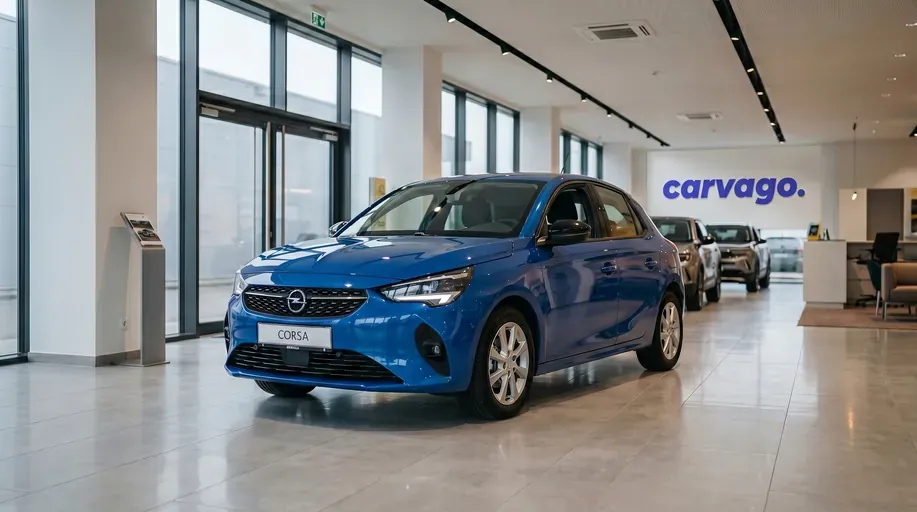
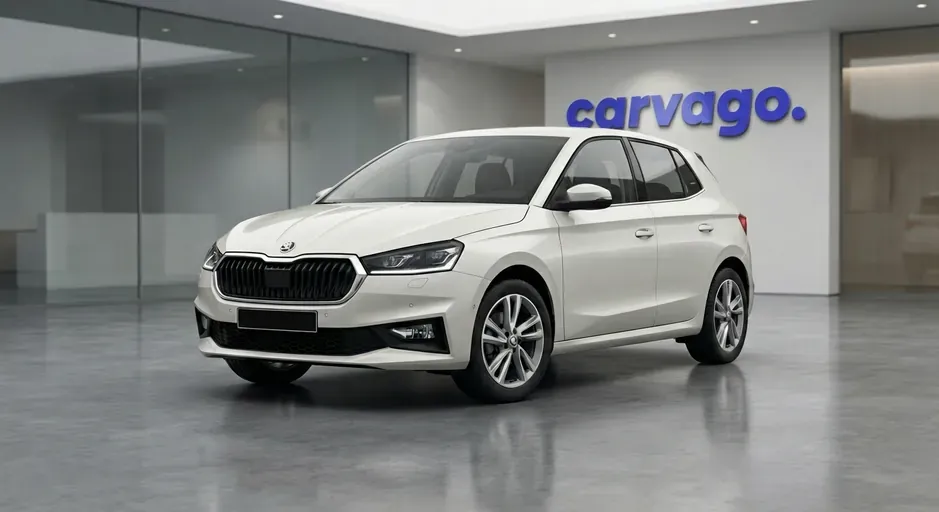
The Opel Corsa, also known as the Vauxhall Corsa in some markets, is a stylish and dynamic hatchback that attracts European drivers with its modern technology, agile chassis, and distinctive design. Its main challenger is the popular Škoda Fabia, which has long been considered the benchmark for spaciousness, reliability, and practicality thanks to its famous "Simply Clever" solutions. Let's take a detailed look at which of these popular B-segment representatives offers a better combination of driving characteristics, comfort, and overall utility on the used car market for your daily commutes.
When comparing the external dimensions of these two popular models, considering cars approximately four years old (Opel Corsa generation F and Škoda Fabia 4th generation), we encounter the differing philosophies of the two carmakers. While the Opel Corsa sticks to the more traditional proportions of an agile city hatchback with a length of 4060–4061 mm, the fourth-generation Škoda Fabia has grown significantly and is pushing the boundaries of a higher class. With a length of 4108 to 4137 mm, the Fabia is a significant 50 to 76 mm longer than its German competitor. The Mladá Boleslav model also has the upper hand in body width, where its 1780 mm surpasses the Corsa by 15 mm. In practice, this means the Škoda offers a slightly airier interior and more shoulder room, while the more compact Opel Corsa scores with slightly better maneuverability in tight city streets and when parking.
Differences also exist in height and wheelbase, which define the car's overall stance. The Corsa impresses with a sportier, lower profile with a height of 1433–1435 mm, which benefits aerodynamics and visual dynamics. The Fabia, at 1458–1461 mm, is slightly taller, making entry easier and providing passengers with more headroom. A key parameter for longitudinal space in the cabin is the wheelbase. Here, the fourth-generation Fabia excels with a value of up to 2564 mm, which is a 26-millimeter advantage over the Corsa (2538 mm). Rear-seat passengers in the Škoda will thus feel significantly more knee room. For individuals or couples looking for a compact car for daily commuting, the size of the Corsa will be perfectly sufficient; however, for family use, the overall external and internal dimensions clearly favor the Fabia.
A major competitive advantage in the used car market for the Škoda Fabia is the availability of the practical Estate (Combi) body style. In the market for four-year-old cars, the third generation of this estate is widely represented; with a length exceeding 4.25 meters, it has become an ideal choice for those who need to transport larger loads, strollers, or sports equipment without having to opt for a larger C-segment vehicle. The Opel Corsa, on the other hand, relies exclusively on the hatchback body and focuses purely on the role of a stylish everyday companion.
| Parameter | Opel Corsa Hatchback | Škoda Fabia Hatchback | Škoda Fabia Estate |
|---|---|---|---|
| Width (mm) | 1765 | 1780 | 1732 |
| Length (mm) | 4060–4061 | 4108–4137 | 4257–4262 |
| Height (mm) | 1433–1435 | 1458–1461 | 1467–1488 |
| Wheelbase (mm) | 2538 | 2549–2564 | 2470 |
When choosing a roughly four-year-old used car in the small car category, luggage compartment volume often plays a decisive role, especially if the car is to serve as the family's only vehicle. While some models rely primarily on emotional style and dynamics, others focus on maximum everyday practicality. This is exactly the case in the comparison of spaciousness between the Opel Corsa (current generation F) and the Škoda Fabia (fourth-generation hatchback and third-generation estate). For families with children, enthusiastic cottagers, or simply anyone who regularly transports bulkier cargo, the difference in transport capacity between these two competitors is absolutely fundamental.
Škoda Fabia has long been a benchmark for spaciousness, and in its fourth-generation hatchback form, it clearly confirms this with a value of 380 litres in the basic configuration. Furthermore, if you opt for the third generation in the Estate variant (known locally as Combi), which was produced until 2022 and is still widely available on the young used car market, you get a massive 530 litres. In contrast, the Opel Corsa offers a significantly more modest 309 litres in its five-door hatchback. This difference of over 70 litres in the standard short version means, in practice, welcome space for several extra suitcases, which in the Czech representative represents a capacity quite sufficient for a weekend shop or a longer family holiday. Also, be careful when choosing the fully electric Opel Corsa Electric – the placement of the massive traction battery eats up valuable litres and reduces the standard boot volume to a below-average 267 litres.
These significant differences become fully apparent when you need to transport larger items and take advantage of the option to fold down the rear backrests. The Škoda Fabia hatchback boasts a maximum volume of 1,190 litres, while the unbeatable extended Estate version can hold up to 1,395 litres of cargo. The Opel Corsa lags significantly behind these values – with a maximum transport capacity of 1,081 litres for internal combustion engines (and 1,042 litres for the electric vehicle), the car's utility for moving larger items is rather average. The smaller opening and generally more cramped boot proportions of the Corsa thus favour individuals or couples, while the Fabia represents a clear choice for those looking for uncompromising utility from a small car.
| Parameter | Opel Corsa Hatchback | Škoda Fabia Hatchback | Škoda Fabia Estate |
|---|---|---|---|
| Basic volume (litres) | 309 | 380 | 530 |
| Max. volume with seats folded (litres) | 1081 | 1190 | 1395 |
Škoda Fabia offers a significantly larger luggage compartment in both the hatchback version and the superior estate body style, making it an ideal choice for practically-minded buyers.
Although small hatchbacks are not primarily intended for towing heavy loads, differences in trailer weight can be decisive for many buyers. The ability to attach a trailer significantly expands the overall utility value of the car. When comparing models on the used car market—specifically four-year-old vehicles like the 4th generation Škoda Fabia and the Opel Corsa generation F—we immediately encounter some quite fundamental differences worth noting.
The standard braked trailer weight for the base engine of the Škoda Fabia (1.0 MPI) starts at a very solid 800 kg. This capacity is perfectly sufficient for a weekend purchase of heavier building materials or gardening work. In contrast, the base Opel Corsa with the naturally aspirated 1.2 engine can handle only 500 kg on a braked trailer. However, if you opt for more powerful variants, the capabilities of both cars level out. The maximum trailer weight for both competitors is an identical 1200 kg. In the Škoda Fabia, you reach this limit with the top-of-the-line 1.5 TSI four-cylinder, while in the Corsa, the 1.2 DI Turbo turbocharged petrol versions, the 1.5 Diesel engine, and the newer mild-hybrid variants can all handle 1200 kg.
However, it is necessary to pay attention to versions that differ from the standard, especially regarding electrification. While the Škoda Fabia relies on internal combustion engines and its capacities grow steadily, the Opel Corsa completely excludes the possibility of a tow bar for its fully electric version (Corsa Electric) and offers no towing capacity. Conversely, with the standard models of both cars, you get exactly that desirable extra space for a few more suitcases on a trailer, or a transport capacity that is easily sufficient for a weekend shop or a longer holiday.
Final Verdict: If the ability to tow a trailer is important to you, the Škoda Fabia represents a more consistent and reliable choice across its entire engine range. While the Opel Corsa can fully compete with its maximum capacity, it requires careful selection under the hood—with the base engine, you can tow significantly less, and with the electric vehicle, nothing at all.
| Model and engine | Braked trailer weight (kg) | Unbraked trailer weight (kg) |
|---|---|---|
| Škoda Fabia 4th gen 1.0 MPI | 800 | Not specified |
| Škoda Fabia 4th gen 1.0 TSI | 1000 - 1100 | Not specified |
| Škoda Fabia 4th gen 1.5 TSI | 1200 | Not specified |
| Opel Corsa F 1.2 (55 kW) | 500 | Not specified |
| Opel Corsa F 1.2 DI Turbo | 1200 | Not specified |
| Opel Corsa F 1.5 Diesel | 1200 | Not specified |
| Opel Corsa F 1.2 DI Turbo Hybrid 48V | 1200 | Not specified |
| Opel Corsa F Electric | Cannot tow | Cannot tow |
When comparing engine options for ideal candidates for roughly four-year-old used cars – the Opel Corsa (generation F, produced since 2019) and the Škoda Fabia (4th generation, produced since 2021) – we encounter diametrically different approaches that fundamentally define the target group for both models. While Škoda relies exclusively on time-tested and low-maintenance petrol engines without any electrification for the Fabia (1.0 MPI, 1.0 TSI, and the powerful four-cylinder 1.5 TSI), Opel covers a significantly wider spectrum of technologies with the Corsa. Standard naturally aspirated front-wheel drive (FWD) engines in both cars (petrol 1.2 for Opel and 1.0 MPI for Škoda) represent an affordable and reliable choice primarily for calm city driving, albeit at the cost of very sluggish performance. Conversely, if you are looking for agility, the Fabia deploys the excellent 110 kW 1.5 TSI four-cylinder, while Opel counters with dynamic 1.2 DI Turbo three-cylinders and modern 1.2 DI Turbo Hybrid 48V mild-hybrids. A huge asset for the Corsa, and simultaneously a weakness for the Fabia in terms of economical highway travel and clean mobility, is the option to purchase the Opel with a 1.5 Diesel engine, or to go straight for the fully electric version. In conclusion, the Fabia can be recommended to all drivers who aim for maximum simplicity or prefer powerful four-cylinder petrol engines with a sophisticated automatic transmission. In contrast, the Corsa will better suit highway drivers thanks to its economical diesel, as well as tech enthusiasts who will fully utilize the benefits of city hybrids or an electric vehicle.
The range of power units for the Opel Corsa F benefits from the advanced technology of the parent Stellantis group. The cornerstone of the entire portfolio is the naturally aspirated 1.2 three-cylinder with 55 kW, combined with a five-speed manual transmission. However, the turbocharged 1.2 DI Turbo petrol variants (74 kW and 96 kW) are much more popular and dynamic. These can be found on the used car market with a classic six-speed manual or an excellent eight-speed automatic. As part of its innovations, the brand also expanded the range with 1.2 DI Turbo Hybrid 48V mild-hybrid variants equipped with a six-speed eDCT dual-clutch transmission, which can seamlessly recuperate energy and reduce city fuel consumption. Excellent news for those interested in long-distance routes is the 1.5 Diesel four-cylinder; however, it is important to mention that this popular and economical variant was only offered in the early stages of the generation's sale and definitively disappeared from the range in 2023. Completely zero-emission operation is then covered by Opel's fully electric version (initially labeled as Corsa-e, later Corsa Electric), which provides lightning-fast response and a stable torque of 260 Nm.
| Engine Type | Fuel | Power (kW) | Torque (Nm) | Transmission |
|---|---|---|---|---|
| 1.2 | Petrol | 55 | 118 | 5-speed manual |
| 1.2 DI Turbo | Petrol | 74 / 96 | 205 / 230 | 6-speed manual / 8-speed automatic |
| 1.2 DI Turbo Hybrid 48V | Mild-hybrid (Petrol) | 74 / 100 | 205 / 230 | 6-speed automatic eDCT |
| 1.5 Diesel* | Diesel | 75 | 250 | 6-speed manual |
| Corsa Electric / Corsa-e | Electricity | 100 / 115 | 260 | 1-speed reduction gear |
*Note: The 1.5 Diesel engine was available for the Opel Corsa model exclusively for vehicles produced between 2019 and 2023.
The fourth generation of the Škoda Fabia has opted for a completely different, almost purist strategy – it relies fully on petrol engines from the Volkswagen Group stable, thereby saying goodbye to any diesel or electrified powertrains. The starting point for calm and undemanding users is the highly reliable naturally aspirated 1.0 MPI three-cylinder with up to 59 kW, standardly paired with a five-speed manual. However, the core of the local used car market offer is the turbocharged 1.0 TSI three-cylinder, which forms the ideal compromise. Here, a weaker version (70 kW) with a five-speed manual and a stronger one (81 kW, or 85 kW in newer models) are offered, for which both a precise six-speed manual transmission and a comfortable seven-speed DSG dual-clutch transmission can be purchased. For the most demanding buyers seeking the assurance of highway performance, Škoda has prepared the 1.5 TSI four-cylinder with an impressive 110 kW. This top-of-the-range model works only with the DSG transmission and, as a bonus, adds active cylinder deactivation (ACT) technology, which maintains reasonable fuel consumption for the vehicle despite the strong 250 Nm pull.
| Engine Type | Fuel | Power (kW) | Torque (Nm) | Transmission |
|---|---|---|---|---|
| 1.0 MPI | Petrol | 48 / 59 | 93 | 5-speed manual |
| 1.0 TSI | Petrol | 70 / 81 (85) | 175 / 200 | 5-speed manual / 6-speed manual / 7-speed DSG |
| 1.5 TSI | Petrol | 110 | 250 | 7-speed DSG |
While the Škoda Fabia scores with proven and reliable petrol TSI engines, including a powerful four-cylinder, the Opel Corsa appeals to buyers targeting economical mild-hybrids, pure electricity, or a reliable highway diesel.
Both models offer very different approaches to powertrains in their modern generations. While the Opel Corsa (generation F) now relies fully on the French technology of the Stellantis group and is one of the few in the segment to offer a purely electric version, the Škoda Fabia (on the cusp of the 3rd and 4th generation) sticks to proven petrol units from the Volkswagen Group and has completely removed diesel engines from its range in its latest iteration. Choosing the right engine is key to long-term satisfaction, and our recommendations are based on real-world experience, fuel consumption in traffic, and the mechanical reliability of roughly four-year-old used cars.
This turbocharged three-cylinder petrol engine (from the PureTech engine family) represents the ideal compromise between dynamics, everyday practicality, and fuel consumption in the current F generation (produced since late 2019). Compared to the weaker naturally aspirated versions, it offers very decent torque available from low revs, making the Corsa a surprisingly nimble car not only in city traffic but also during highway overtaking maneuvers. Real-world fuel consumption with a manual gearbox easily stays between 5 and 5.5 liters per 100 km. This engine is a versatile choice and will please both drivers with a more dynamic style and those who use the car for longer daily commutes.
Risks and what to watch out for:
This engine uses a timing belt that is immersed directly in engine oil. If the wrong oil was used in the past or service intervals were exceeded, the belt tends to crumble. The loose particles then clog the oil pump pickup screen, which can lead to fatal engine seizure due to loss of oil pressure.
The turbocharged one-liter three-cylinder of the EA211 series is the best you can choose under the hood of a Fabia among roughly four-year-old used cars (end of the 3rd generation and start of the 4th generation from 2021). In the more powerful 81 kW version (or 70 kW), it is characterized by highly refined and quiet operation, great flexibility, and excellent efficiency – real-world consumption often hovers below 5 liters per 100 km. Furthermore, the 81 kW version in the Fabia is standardly paired with a precise six-speed manual transmission (or a fast DSG automatic), which significantly reduces noise and consumption on the highway. From a user's perspective, it is a perfect engine for family commuting and regular highway miles.
Risks and what to watch out for:
Since this is a modern direct-injection unit, its main enemy is carbon buildup on the intake valves. This happens primarily when the vehicle is used exclusively for very short city trips where the engine does not have time to warm up to operating temperature.
Official fuel consumption figures, which car manufacturers confidently print in promotional materials, very often diverge from the reality of everyday operation. Although modern homologation cycles (such as today's WLTP standard) have brought some refinement, a car's actual appetite is largely dictated by the route profile, load, and the driver's driving style. For an objective comparison, we have therefore analyzed user data from the Spritmonitor.de server, which captures the real experiences of owners from long-term operation. Our goal was to evaluate ideal used cars around four years old, which means a direct clash of current generations – the 4th generation Škoda Fabia and the Opel Corsa designated F.
Below are the average real-world values for the most sought-after engines of both cars, sorted by fuel type and engine displacement.
| Model and engine | Average consumption (l/100 km) |
|---|---|
| Opel Corsa 1.5 Diesel 75 kW | 4.1 |
| Škoda Fabia 1.0 MPI 59 kW | 5.2 |
| Opel Corsa 1.2 55 kW | 5.3 |
| Škoda Fabia 1.0 TSI 81 kW | 5.3 |
| Opel Corsa 1.2 DI Turbo 74 kW | 5.4 |
| Škoda Fabia 1.5 TSI 110 kW | 5.5 |
Several important trends emerge when interpreting real-world data. The strongest contrast between the two models is the approach to diesel engines. While Škoda completely abandoned diesel for the fourth-generation Fabia, the Opel Corsa with the 1.5 Diesel engine still counts as an excellent highway choice, which, with a value slightly above 4 liters per 100 km, is hard to beat. In the world of petrol units, however, there is an extremely close battle. The comparison clearly shows that weaker naturally aspirated three-cylinder engines (1.0 MPI in the Fabia and 1.2 in the Corsa) generate almost no fuel savings in real conditions compared to turbo engines, because they require revving to higher RPMs to keep up the pace. Surprisingly, modern turbocharged units 1.0 TSI and 1.2 DI Turbo keep their consumption closely behind, between 5.3 and 5.4 l/100 km, while offering significantly better flexibility. The top-of-the-line Škoda Fabia 1.5 TSI then shone with an excellent ratio of dynamics and efficiency, which, despite noticeably higher power and one extra cylinder, maintains long-term consumption at a reasonable 5.5 liters.
For the average motorist, these results represent a great guide when choosing a suitable four-year-old used car. If you are looking for a simple and low-maintenance car purely for urban or suburban traffic, the naturally aspirated base models will serve you well. However, as soon as first-class roads or highways appear more frequently on your routes, or you plan to load the car more, there is absolutely no rational reason to fear small-displacement turbo engines. In terms of fuel, you will pay practically nothing extra for them, but you will get a safer and quieter car with enough power for overtaking. The diesel Opel Corsa will then please exclusively high-mileage travelers who value minimal operating costs on long journeys.
In conclusion, it can be stated with a clear conscience that for most buyers choosing between these two rivals in petrol versions, fuel consumption itself will not be a major breaking factor. Real-world figures show absolutely minimal differences between Fabias and Corsas, on the order of mere tenths of a liter. Your final verdict will thus most likely depend on much more important details, such as interior spaciousness, the popularity of the user interface, or which design and driving behavior simply fits your hand better. The decisive argument in favor of consumption can only be a clear requirement for diesel, where the Opel Corsa wins hands down.
When searching for a reliable four-year-old hatchback (model years 2021 to 2022), two different worlds meet on the used car market. While the Skoda Fabia benefits from its home-turf advantage and a reputation for durability, the Opel Corsa Generation F comes with technology from the Stellantis Group and a very attractive price-to-value ratio. For the purposes of this comparison, we are focusing on models approximately four years old, which represents the ideal tipping point for used cars between still-excellent technical condition and a declining purchase price.
The Skoda Fabia, whether late third-generation models or the succeeding fourth generation (introduced in late 2021), is an absolute staple on the Czech secondary market. Its greatest advantage—but also a hurdle for those seeking a cheap used car—is its extremely slow depreciation.
The Opel Corsa F represents a significant technological leap over its predecessors, as it shares a modern chassis platform and engines with the Peugeot 208. While it doesn't reach the popularity of its competitor from Mladá Boleslav on the Czech used car market, this is reflected very positively in its more favorable price tag.
| Feature | Skoda Fabia (2022) | Opel Corsa (2022) |
|---|---|---|
| Generation | Fabia IV (or late III) | Corsa F |
| Average market price | approx. €11,500 | approx. €10,800 |
| Common engine | 1.0 TSI (70/81 kW) | 1.2 / 1.2 Turbo (55/74 kW) |
| Depreciation | Very slow | Moderately fast |
| Selection on the CZ market | Huge | More limited |
While a used Skoda Fabia represents a safe bet with excellent value retention for eventual resale, a roughly four-year-old Opel Corsa allows you to acquire a similarly modern car with a significantly lower initial investment, thanks to its faster initial depreciation.
When choosing a used car, it is natural to expect a maximum five-star safety rating for modern hatchbacks. Although the Škoda Fabia did indeed achieve the prestigious five stars in Euro NCAP tests and the Opel Corsa came very close with four stars, it is most important to put these ratings into the correct context. Euro NCAP testing protocols are constantly becoming stricter over time. This means that percentage scores from different years cannot be fairly compared directly. Tests in recent years place significantly more emphasis on sophisticated active safety systems, emergency braking at intersections, and advanced detection of vulnerable road users.
The current generation of the Opel Corsa (F) underwent testing in 2019, when older and slightly more lenient criteria were in place. The car received a very good four-star rating, missing the fifth star by only one percent in the safety assist category. This was because the standard camera system at the time was less effective at detecting fast-moving cyclists. However, passive safety and the rigidity of the body itself are at an excellent level in the Corsa. Adult occupant protection reached a respectable 84%, and in child occupant protection, the Corsa even outperforms its Czech rival with a result of 86%.
The fourth-generation Škoda Fabia went through the testing laboratory only in 2021, under a significantly tougher methodology. Nevertheless, it achieved a full five stars, and the independent organization Euro NCAP even declared it the safest car in its class at the time ("Best in Class 2021"). The Fabia benefits significantly from the modern MQB-A0 chassis platform, which allowed the car to deploy advanced assistance systems capable of handling more complex intersection scenarios and more effective prevention of collisions with pedestrians or cyclists.
| Parameter | Opel Corsa | Škoda Fabia |
|---|---|---|
| Year of testing | 2019 | 2021 |
| Adult occupant protection | 84 % | 85 % |
| Child occupant protection | 86 % | 81 % |
| Vulnerable road user protection | 66 % | 70 % |
| Safety assist systems | 69 % | 71 % |
In the final comparison, it is clear that in terms of overall safety, the Škoda Fabia offers a more up-to-date and comprehensive package. Although both cars guarantee robust passenger protection during the physical impact itself, the full five-star Fabia from the 2021 tests demonstrates significantly better preparedness in the area of active accident prevention. In the age category of approximately four-year-old used cars, the Fabia thus represents a more modern technological standard with the latest assistance systems, while the Corsa's certification corresponds to the capabilities of the end of the last decade.
Although both vehicles offer a rigid body, the Škoda Fabia, thanks to its newer platform and full five-star rating from the stricter year of 2021, provides used car buyers with more comprehensive active protection for the occupants and the surroundings.
In addition to standard equipment, each model offers several unique features that can be decisive for the customer, and both cars take a completely different approach to increasing everyday comfort.
Attractive and sporty exterior design
Very good driving characteristics and agility in city traffic
Availability of a successful fully electric version (Corsa-e) for locally emission-free driving
Reliable and smooth-shifting eight-speed automatic transmission for more powerful engines
Peppy and economical 1.2 Turbo engines developed by the Stellantis group
Cramped space in the rear seats, especially in the head and leg area
Noticeably smaller luggage compartment (309 liters) compared to its Czech rival
The infotainment user interface is slower and graphically outdated
Poorer rear-quarter visibility due to the thicker C-pillars
Opel Corsa will appeal primarily to drivers looking for a stylish, dynamically styled hatchback with excellent driving characteristics for daily use in and out of the city. Thanks to the available pure electric version, it represents an attractive entry into the world of electromobility, although buyers must be prepared for certain compromises in terms of interior spaciousness.
Unrivaled luggage compartment volume in its class (380 liters for the fourth generation)
Generous interior space that easily accommodates adult passengers in the rear seats
Excellent sound insulation and a comfortable chassis providing a driving feel of a car from a class above
Presence of popular "Simply Clever" details, such as an umbrella in the door or an ice scraper
Excellent control ergonomics thanks to the retention of physical buttons for the climate control panel
Complete absence of any electrified (hybrid or fully electric) variants
Noticeably weak dynamics of the base naturally aspirated 1.0 MPI engines
Higher purchase price on the used car market; the car holds its value very well
Occasional issues with the infotainment system freezing in early models of the fourth generation
Škoda Fabia is an ideal choice for pragmatically minded buyers and smaller families who require maximum utility, high comfort, and daily practicality from a car. On the road, it feels very mature and can easily fulfill the role of a primary car for longer trips, although its range of power units targets more conservative drivers.
Based on long-term user experience, breakdown statistics, service reports, and data from our independent CarAudit service, which provides a comprehensive car inspection before sale, we have compiled an overview of the most common problems for both compared models.
The Opel Corsa F generation (produced since 2019) moved under the wings of the Stellantis group and shares technology with the Peugeot 208, which brought a range of modern technologies, but also several well-known group ailments.
The key to the reliability of petrol engines is timely oil changes (ideally every 10,000 km) and regular inspection of the timing belt condition. Otherwise, it is a mechanically durable car that mostly suffers only from infotainment software quirks.
A Škoda Fabia roughly four years old (including late third-generation facelift models and the incoming fourth generation) is considered one of the most reliable small cars on the market, yet it is not immune to some recurring faults.
The turbocharged one-liter three-cylinder with a manual transmission represents a highly reliable choice with a long service life. For versions with an automatic, it is necessary to carefully check the smoothness of shifting, and for newer models, arm yourself with patience for occasional on-board software outages.
When buying a used car, a thorough inspection is key. Although both brands are reliable and popular cars, both models have their specifics that are worth paying attention to.
The fourth-generation Škoda Fabia clearly dominates its class with a trunk capacity of 380 liters, a figure more common for larger family cars. The Opel Corsa offers a significantly smaller luggage compartment of 309 liters. For larger shopping trips or weekend family travel, the Czech model is a much more practical choice.
Thanks to its longer wheelbase and smarter interior layout, the Škoda Fabia has significantly more legroom and headroom in the rear seats. The Opel Corsa has more cramped conditions in the second row, which primarily suit children or smaller passengers. In terms of spaciousness for four adults, the Fabia is substantially better.
The Škoda Fabia relies on proven and very reliable one-liter TSI engines, which in current generations do not suffer from any serious design flaws. The Opel Corsa uses the group's 1.2 PureTech engines, where it is necessary to carefully monitor the condition of the oil-immersed timing belt in used cars. From a long-term operating cost perspective, the Fabia's gasoline engines represent a safer bet.
The Opel Corsa is also available in a fully electric version called the Corsa-e, which offers locally emission-free operation and a very decent range on a single charge. In contrast, the Škoda Fabia sticks exclusively to traditional internal combustion engines and does not even offer mild-hybrid technology in the current generation. So, if you are looking for a quiet electric car for the city, the Corsa is the only option of the two.
The Opel Corsa is characterized by a slightly lower seating position and more agile cornering behavior, which will be appreciated by drivers looking for a sportier feel. On the other hand, the Škoda Fabia is tuned more for comfort, filters out bumps excellently, and, thanks to superior soundproofing, makes a very calm and mature impression on the road. The choice should therefore depend on whether you prefer sharper vehicle responses or maximum comfort for daily commuting.
While the Opel Corsa scores on the used car market with an attractive price tag, agile driving characteristics, and a wide range of powertrains including an economical diesel or a pure electric vehicle, the Škoda Fabia bets on proven petrol classics and unrivaled interior spaciousness. The German representative with French technology is an ideal choice for individuals and couples looking for a stylish and fun-to-drive hatchback for city commuting with a more favorable initial investment. In contrast, the Mladá Boleslav model is a clear favorite for smaller families and pragmatic buyers requiring maximum practicality, a generous luggage compartment, and excellent value retention for resale. Although both roughly four-year-old cars will serve you well, your decision will come down to a choice between the sportier style and technological variability of the Corsa and the uncompromising everyday utility of the mature-feeling Fabia.
Sources: ADAC, denik.cz, mdcr.cz, techfocus.cz, autorevue.cz, racinglife.cz
This article was prepared using artificial intelligence tools. The section guarantor is Petr Dušek.
Detailed comparison: Dacia Sandero vs. Toyota Yaris. We reveal real-world experiences, fuel consumption, and equipment. Read our verdict and choose the ideal used car.
Apr 18, 2026
Detailed comparison of Seat Ibiza vs. Škoda Fabia. Discover real-world experiences, equipment comparisons, fuel consumption, and the final verdict to help you with your choice.
Apr 22, 2026
Hyundai i10 vs. Toyota Aygo X: A detailed comparison, real-world insights, and a verdict to help you choose the right small city car.
Apr 2, 2026