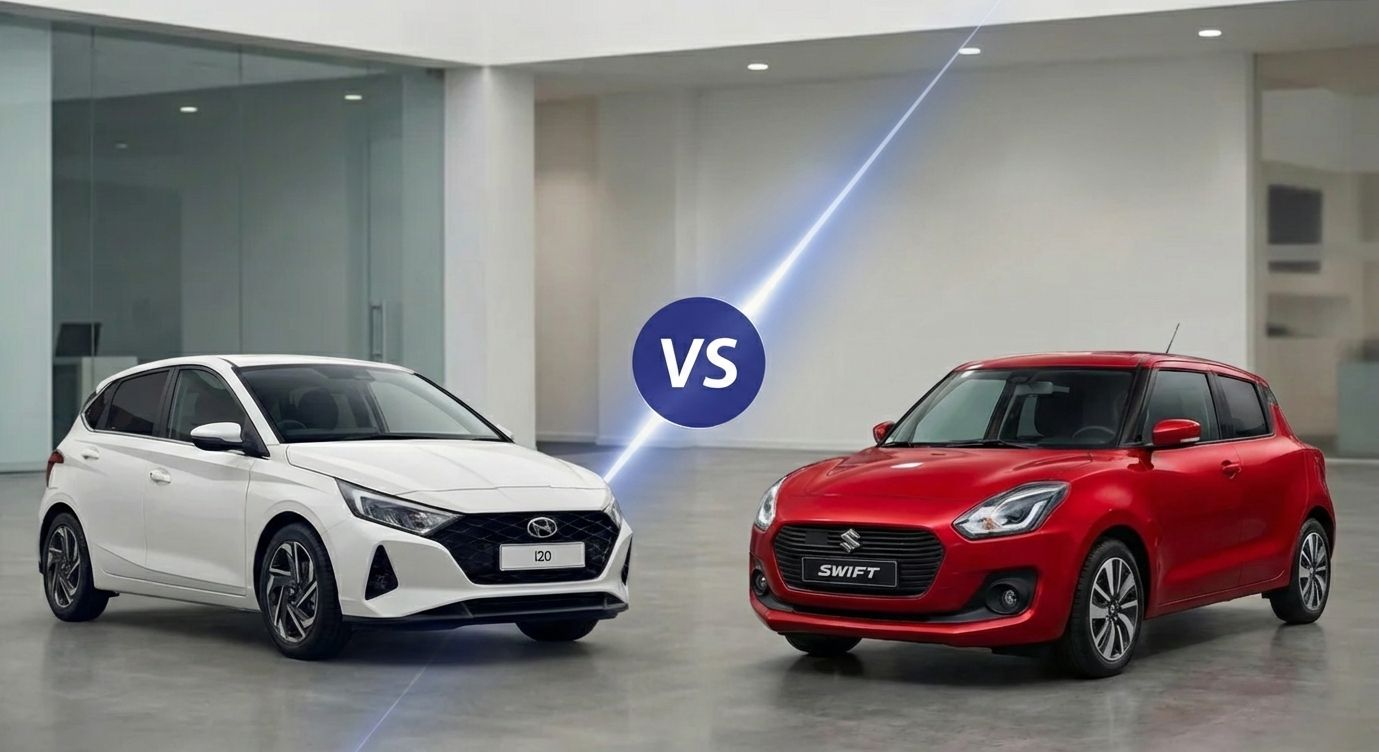
Car battle
Hyundai i20 vs. Suzuki Swift: Complete Comparison 2025
Hyundai i20 vs Suzuki Swift: Which hatchback is better? Our detailed comparison of equipment, ride, and price will help you choose. Read the verdict.
Apr 13, 2026
Articles
Car battle
Detailed comparison of Seat Ibiza vs. Škoda Fabia. Discover real-world experiences, equipment comparisons, fuel consumption, and the final verdict to help you with your choice.
April 22, 2026
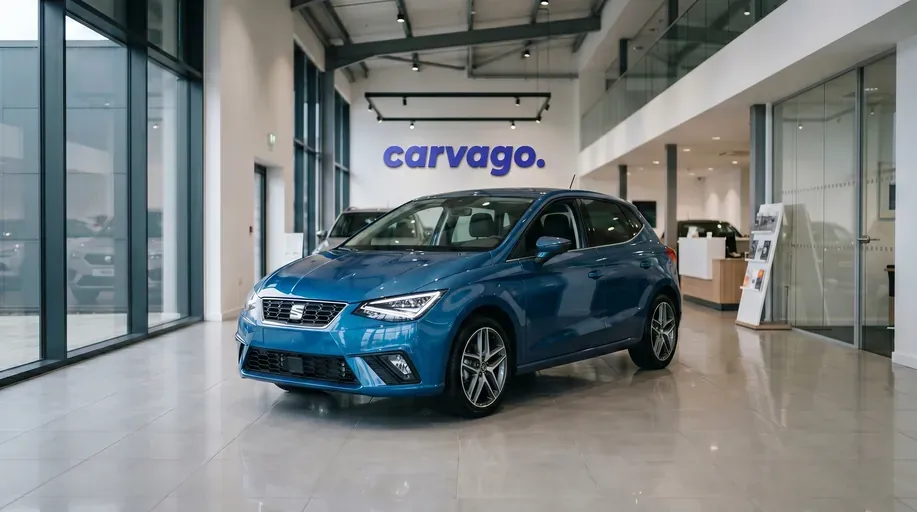
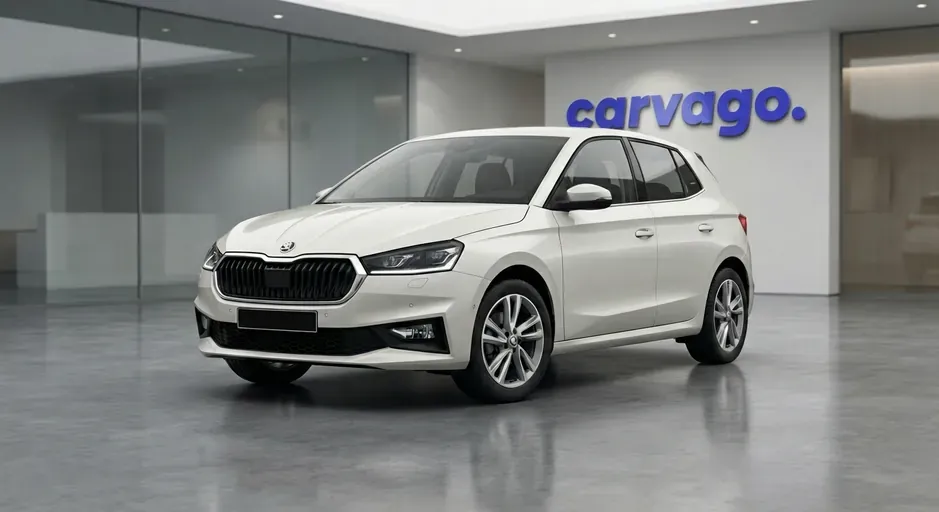
Seat Ibiza is a spirited Spanish hatchback that stands out on the road with its sharper sporty design and dynamic driving performance. In contrast, the Škoda Fabia represents the benchmark for everyday practicality, clever solutions, and generous interior space for its category in the small car class. Let's take a detailed look at which of these two technically related group siblings will be the smarter choice for your needs when choosing a used car.
When focusing on external dimensions, we find that both the Seat Ibiza and the Škoda Fabia benefit in their latest iterations from the shared MQB-A0 group platform. If you are looking for a roughly four-year-old used car, you will be choosing from the fifth generation of the Ibiza (designated as KJ), while with the Fabia, you will primarily encounter the modern fourth generation, which entered the market in 2021. The shared technology is reflected in an identical width of 1780 mm and a very similar wheelbase, which reaches up to 2564 mm for both models. In terms of footprint and directional stability, both cars offer an excellent and comparable foundation.
Nevertheless, minor differences can be found between the hatchbacks, from which the Czech representative practically benefits. The fourth-generation Škoda Fabia, at 4108 to 4125 mm, is roughly 50 to 66 mm longer than the Seat Ibiza (4059 mm). From this slight body extension, the Fabia traditionally gains valuable extra liters for the luggage compartment. The Ibiza, on the other hand, maintains slightly more compact proportions, which are enhanced by a slightly lower silhouette (1444–1447 mm compared to 1458–1461 mm for the Fabia). The Spanish model thus appears somewhat more dynamic, and thanks to shorter overhangs, it is a bit easier to park in cramped city streets, while the Fabia prioritizes maximum everyday usability.
A specific advantage of Škoda on the market for younger used cars is also the earlier availability of the spacious estate version. Although the fourth-generation Fabia no longer received this body variant, roughly four-year-old cars (manufactured until 2022) can still be purchased in the third generation as the Škoda Fabia Estate. With its extended length of 4262 mm, it will satisfy even smaller families with greater transport needs. The Seat Ibiza, by contrast, ended its ST (estate) variant a generation earlier and is found exclusively as a five-door hatchback on the market for younger used cars. This difference in the offering can thus fundamentally influence the choice if trunk volume is your main priority.
| Parameter | Seat Ibiza Hatchback | Škoda Fabia Hatchback | Škoda Fabia Estate |
|---|---|---|---|
| Width (mm) | 1780 | 1780 | 1732 |
| Length (mm) | 4059 | 4108 - 4125 | 4262 |
| Height (mm) | 1444 - 1447 | 1458 - 1461 | 1482 |
| Wheelbase (mm) | 2564 | 2549 - 2564 | 2470 |
When choosing a used car approximately four years old, the luggage compartment volume often plays a key role, especially if the car is to serve as a versatile family vehicle. A spacious and easily accessible boot is decisive for overall practicality, whether you need to transport sports equipment, a stroller, or simply a larger shopping load. In this regard, both compared models have plenty to offer, although their approach to body style variability diverged fundamentally in the relevant years.
In the category of traditional five-door hatchbacks, the current generation Seat Ibiza (KJ) offers a very solid basic volume of 355 liters, which is a value safely sufficient for weekend shopping and longer holidays for two. After folding the rear seats, the space increases to 1,165 liters. However, the fourth-generation Škoda Fabia pushes the boundaries in its class and counters with a top-tier volume of 380 liters, which in practice means valuable space for a few extra suitcases. By folding the rear backrests in the Fabia, you get up to 1,190 liters. However, attention should be paid to versions with alternative drivetrains – in the Seat Ibiza 1.0 TGI (eco-friendly version running on compressed natural gas, CNG), the basic boot volume drops to a below-average 262 liters due to the added gas tanks.
A fundamental difference for those interested in a family car, however, is the availability of an estate body style. While Seat completely discontinued production of the extended Seat Ibiza estate version for the latest generations, the third-generation Škoda Fabia Combi remained on the market alongside newer models until 2022. In the market for four-year-old used cars, this represents a huge advantage. Its boot holds a massive 530 liters in its basic configuration and transforms into an exceptionally practical space with a maximum volume of 1,395 liters after folding the backrests. So, if maximum transport capacity is your absolute priority, the Škoda Fabia Combi simply has no rival in its class.
| Parameter | Seat Ibiza Hatchback | Škoda Fabia Hatchback | Škoda Fabia Combi |
|---|---|---|---|
| Basic volume (liters) | 355 | 380 | 530 |
| Maximum volume with seats folded (liters) | 1165 | 1190 | 1395 |
Although the Seat Ibiza offers a very practical boot for everyday use as a hatchback, the Škoda Fabia slightly surpasses it in volume and, thanks to the exceptionally spacious estate version, remains the unrivaled choice for families looking for maximum utility value.
When it comes to towing capacity, the shared group technology on the MQB-A0 platform means that both the Seat Ibiza and Škoda Fabia offer almost identical parameters in the case of four-year-old used cars (KJ generation for Seat and 4th generation for Škoda). This is a very important figure for buyers, whether they regularly haul garden waste or enjoy camping with the family.
Depending on the engine, both cars can reliably tow a braked trailer with a standard weight ranging from 800 kg (when choosing the basic naturally aspirated 1.0 MPI engines) up to a maximum of 1,200 kg in combination with the top-of-the-line turbocharged 1.5 TSI four-cylinder. The weight of an unbraked trailer for both vehicles usually ranges between 540 and 620 kg, depending on the specific equipment, gearbox, and the kerb weight of the car itself. Significant limitations are only encountered with some eco-friendly variants – a typical example is the Seat Ibiza with the 1.0 TGI engine running on compressed natural gas (CNG), where the specific installation of pressure tanks completely rules out towing a trailer due to structural modifications.
In practice, these capabilities mean that a light unbraked trailer is perfectly sufficient for a weekend trip to buy building materials or supplies for the cottage, while the possibility of hitching a heavier braked caravan behind a more powerful engine reliably compensates for the limited boot space and provides generous room for several extra suitcases even for a longer summer holiday. From an overall perspective on towing options, there is practically no difference between the two models, and both cars will serve occasional and avid travelers equally well.
| Model and engine | Braked trailer weight (kg) | Unbraked trailer weight (kg) |
|---|---|---|
| Seat Ibiza 1.0 MPI (59 kW) | 800 | 540 - 560 |
| Seat Ibiza 1.0 TSI (70 - 81 kW) | 1000 - 1100 | 570 - 590 |
| Seat Ibiza 1.5 TSI (110 kW) | 1200 | 610 |
| Seat Ibiza 1.0 TGI (66 kW) | - | - |
| Škoda Fabia 1.0 MPI (59 kW) | 800 | 540 - 560 |
| Škoda Fabia 1.0 TSI (70 - 81 kW) | 1000 - 1100 | 570 - 590 |
| Škoda Fabia 1.5 TSI (110 kW) | 1200 | 620 |
When choosing a used car around four years old, you will encounter a very similar range of engines for the Seat Ibiza (5th generation, designation KJ) and the Škoda Fabia (4th generation, from 2021). Both cars are built on the same group platform, MQB-A0, and share petrol engines from the modern Volkswagen EVO family. For the buyer, this means that in both models, you will find very refined and reliable one-liter three-cylinder engines (whether naturally aspirated MPI or turbocharged TSI) and the top-of-the-line 1.5 TSI four-cylinder, with neither model using any complex mild-hybrid systems. The main difference lies in the variety of the range within the generation cycle: while the 4th generation Fabia relied exclusively on petrol units, the Seat Ibiza also offered an economical 1.6 TDI diesel unit and an eco-friendly version running on compressed natural gas, the 1.0 TGI, during the period under review. In terms of recommendations, the naturally aspirated base makes sense for undemanding city hopping, but for universal use and more frequent trips outside the city, the ideal middle ground is the 1.0 TSI, which scores with an excellent combination of dynamics and real-world fuel consumption of around five liters.
The fifth generation of the Seat Ibiza (sold from 2017 to the present) is found on the used car market with an interesting range of power units. The base is the naturally aspirated 1.0 MPI three-cylinder, which excels in mechanical simplicity but is primarily suited for the city due to its parameters. The highlight of sales are the turbocharged 1.0 TSI versions, which, depending on the year, were offered with outputs of 70 kW and 81 kW (previously also 85 kW in limited numbers). These engines can be found with five-speed or six-speed manual transmissions, or with a fast seven-speed DSG automatic. For lovers of more spirited driving, Seat prepared the 1.5 TSI four-cylinder with 110 kW (150 hp) featuring active cylinder deactivation (ACT) technology to save fuel during steady driving. An interesting feature of the Ibiza from 2017 to 2020 is the availability of alternatives – specifically the economical 1.6 TDI diesel (in three power variants) and the 1.0 TGI model for driving on compressed natural gas (CNG), although you will only rarely come across these engines in four-year-old used cars.
| Engine Type | Fuel | Power (kW) | Torque (Nm) | Transmission |
|---|---|---|---|---|
| 1.0 MPI | Petrol | 48 / 59 | 93 / 95 | 5MT |
| 1.0 TSI | Petrol | 70 / 81 / 85 | 175 / 200 | 5MT / 6MT / 7DSG |
| 1.5 TSI | Petrol | 110 | 250 | 7DSG |
| 1.0 TGI | Petrol / CNG | 66 | 160 | 6MT |
| 1.6 TDI | Diesel | 59 / 70 / 85 | 230 / 250 / 250 | 5MT / 7DSG |
(Note: Diesel and CNG versions were gradually phased out of the range during the generation's life cycle in 2020).
The fourth-generation Škoda Fabia arrived on the market in 2021, and its price list fully shifted towards economical Evo petrol units. As with its Spanish sibling, the entry point is the naturally aspirated 1.0 MPI three-cylinder, available in two variants with 48 kW and 59 kW. These will be especially appreciated by conservative motorists looking for an "eternal" engine for the city. However, the 1.0 TSI turbo version absolutely dominates the used car listings, offering 70 kW or a more powerful 81 kW. It should be mentioned that the weaker variant only has a five-speed manual gearbox, while the more powerful one already shifts with six speeds and can also be paired with a DSG automatic. The role of the imaginary peak here – just like in the Ibiza – is held by the powerful 1.5 TSI (110 kW), whose combination with the standard DSG automatic makes the Fabia, with a bit of exaggeration, a pocket gran turismo with a top speed of 225 km/h. The Fabia IV has permanently lost all diesels from its range; therefore, if you strictly insist on diesel or CNG power, you must look for older years of the sister Ibiza or the 3rd generation Fabia.
| Engine Type | Fuel | Power (kW) | Torque (Nm) | Transmission |
|---|---|---|---|---|
| 1.0 MPI | Petrol | 48 / 59 | 93 | 5MT |
| 1.0 TSI | Petrol | 70 / 81 | 175 / 200 | 5MT / 6MT / 7DSG |
| 1.5 TSI | Petrol | 110 | 250 | 7DSG |
While an older Seat Ibiza gives you a theoretical chance to buy a diesel engine or a gas version, an approximately four-year-old Škoda Fabia relies entirely on petrol units; however, given the exemplary fuel consumption of the 1.0 TSI engines and their long-term reliability, this direction represents an ideal choice for the average driver with low service costs.
Choosing the right engine is absolutely crucial for long-term satisfaction, reliability, and maintaining reasonable operating costs. An interesting fact is that although we are examining cars that look different at first glance (Seat Ibiza generation KJ and Škoda Fabia 4th generation) among approximately four-year-old used cars, under the hood of both models we find an identical and technically very advanced range of group engines from the EA211 family. However, while Seat often tunes these units for a slightly sharper throttle response and sportier performance, Škoda prefers maximum smoothness, linearity, and comfortable everyday use for the Fabia. The recommendations below are therefore based not only on service experience and real-world fuel consumption but also take into account which engine best fits the distinct character of each car.
The Ibiza (KJ generation) is built for more agile and dynamic driving, and the more powerful version of the turbocharged three-cylinder 1.0 TSI with 81 kW (110 hp) fits its Spanish temperament perfectly. This engine represents the ideal peak of the standard range – it offers excellent flexibility, smooth pull in the mid-range, and surprisingly refined operation, which feels better than many competing three-cylinders. The greatest technical advantage is the very fast warm-up to operating temperature thanks to the integrated exhaust manifold and the presence of a reliable timing belt. A big benefit is also the fact that this more powerful version was standardly paired with a precise six-speed manual gearbox, which keeps the RPMs pleasantly low on the highway (real combined fuel consumption easily stays around 5.5 l/100 km). The main risk with this engine lies in direct fuel injection: if the car is driven exclusively in city traffic jams on short trips, there is a risk of carbon deposits on the intake valves and oil dilution with petrol. How to recognize and solve it: During a test drive, the engine should idle smoothly without fluctuating RPMs. You can easily prevent problems by refueling with high-quality additivated petrol and occasionally taking the engine for a longer run on the highway to "burn it off." It is an ideal choice for drivers with a more dynamic style who want an economical city car but enjoy a brisk drive on country roads or the highway on weekends.
For the fourth generation of the Škoda Fabia (on the used car market from 2021 and newer), the most rational and affordable choice is the lower-output variant of the 1.0 TSI turbo engine with 70 kW (95 hp). The Fabia has always prided itself on a top-tier price-to-value ratio, and this engine fits that equation best. Unlike the weaker naturally aspirated 1.0 MPI base, it offers significantly safer overtaking dynamics thanks to the turbocharger and high torque, while being just as economical in reality (consumption often falls below 5 liters per 100 km). Mechanically, it is an incredibly reliable unit, which is also paired with a simpler but absolutely "bulletproof" five-speed manual gearbox. A potential weakness here is primarily neglected maintenance by previous owners, specifically excessively long oil change intervals, which can shorten the life of the turbocharger. What to watch out for: Check the service history. The sound of a whistling turbo under acceleration can indicate excessive wear due to overdue oil changes. If you buy the car, immediately shorten the oil change interval to a fixed 15,000 km / 1 year. This version is absolutely ideal for calmer, pragmatically minded drivers, families, and users who use the car for daily commutes in suburban conditions and seek maximum reliability with minimum operating costs.
Official fuel consumption figures provided by manufacturers often differ slightly in real-world daily use, which is why an objective comparison must be based on data from drivers themselves. For the purposes of this comparison, we analyzed real-world user values from the Spritmonitor.de platform and available technical databases, focusing on approximately four-year-old used cars. In this context, we are looking at the fourth-generation Škoda Fabia and the fifth-generation Seat Ibiza (code name KJ) from around 2022.
| Model and engine | Average consumption (l/100 km) |
|---|---|
| Škoda Fabia 1.0 MPI | 5.1 |
| Seat Ibiza 1.0 MPI | 5.3 |
| Škoda Fabia 1.0 TSI | 5.2 |
| Seat Ibiza 1.0 TSI | 5.3 |
| Škoda Fabia 1.5 TSI | 5.4 |
| Seat Ibiza 1.5 TSI | 5.7 |
Looking closely at the table, we can observe several interesting trends typical for VW Group vehicles. While the basic naturally aspirated 1.0 MPI three-cylinder engines seem like the most economical choice, in practice, their consumption often matches or even slightly exceeds that of the turbocharged variants. This is because small non-turbo engines need to be revved higher for more spirited driving. Conversely, the popular one-liter turbo engines (1.0 TSI) benefit from a better torque curve, meaning they don't work as hard during normal driving, and their consumption remains steadily just above the five-liter mark. The top-of-the-line 1.5 TSI four-cylinder engines also achieve surprisingly great results. Thanks to the sophisticated Active Cylinder Technology (ACT), which deactivates two cylinders under partial load, they can drive with an average only a few tenths of a liter higher than the basic one-liter three-cylinders, despite offering significantly higher power. You would look for TDI diesel engines in vain among roughly four-year-old models; the Volkswagen Group has definitively phased them out in this segment.
For typical users, a clear recommendation emerges from this data. If you drive mainly in the city and on short routes, the low-maintenance 1.0 MPI engine in both cars will serve its purpose and keep fuel costs in check. However, if you regularly commute longer distances, combine city driving with country roads, or frequently use highways, the 1.0 TSI is clearly the most sensible choice in terms of both dynamics and operating economy. For drivers who mostly cover long distances and demand confident performance, the 1.5 TSI engine proves to be a surprisingly fuel-efficient option.
Overall, it can be stated that fuel consumption will likely not be the main factor deciding the duel between the Seat Ibiza and the Škoda Fabia. Since both cars are built on the identical platform (MQB-A0) and share the same range of engines, deviations in real-world appetite are only in the range of tenths of a liter. This negligible difference is more likely due to slightly different aerodynamics, the weight of specific equipment, and, above all, the driving style of each individual driver. The choice of a specific car should therefore be based primarily on design preference, suspension tuning preferences, or interior space requirements.
When choosing a roughly four-year-old car from 2021 or 2022, you will encounter an interesting market shift for both models. For the Škoda Fabia, this period sees the overlap of the end of the extremely popular third generation (which is still widely available as a practical estate) with the arrival of the more modern fourth generation (offered exclusively as a hatchback). The fifth-generation Seat Ibiza underwent a significant facelift in 2021, which brought substantially higher-quality interior materials and more modern on-board technology.
While the Ibiza is often perceived as a slightly more expensive alternative when new due to its richer standard equipment, the situation is reversed in the used car market in favor of the Spanish car buyer. The Škoda Fabia holds its value exceptionally well on the market.
| Parameter | Škoda Fabia (Mk3 / Mk4) | Seat Ibiza (Mk5 / facelift) |
|---|---|---|
| Average used car price | ~ €9,900 | ~ €9,300 |
| Starting price (from) | ~ €6,600 | ~ €6,200 |
| Top versions (TSI, high spec) | €12,300 - €15,600 | €11,500 - €14,400 |
| Residual value | Excellent (slow depreciation) | Average (faster depreciation) |
| Body styles | Hatchback, Estate (only until 2022) | Hatchback only |
The Škoda Fabia represents a perfect safe bet for customers. Its residual value is one of the best in the segment thanks to constant demand, a very accessible service network, and easy resale in the future. With a car bearing the winged arrow, you are guaranteed to sell it easily and for a good price even after several more years of operation.
On the other hand, the Seat Ibiza represents an excellent price-to-value ratio on the used market. A used Ibiza depreciates slightly faster than the Czech bestseller. For a savvy buyer, this means one thing: for the same amount of money, you generally get an Ibiza with significantly better equipment (such as advanced infotainment, full-LED headlights, or a handsome aerodynamic package) than you would with a Fabia. Both cars are built on the same MQB-A0 group platform and share the vast majority of their very reliable mechanical components.
While a used Fabia holds its value like few other cars and is a safe financial bet, the Seat Ibiza depreciates slightly faster, making it a "hidden gem" on the used market for those who want more equipment and a more distinctive design for their money.
Both compared models boast a maximum five-star rating in independent Euro NCAP safety tests. However, when evaluating the safety of nearly new used cars, it is always crucial to consider the context and the year of the testing itself. Euro NCAP methodology and protocols have become increasingly stringent over the years, with a particular emphasis on active assistance systems and collision prevention. For this reason, one cannot simply and directly compare the percentage results of cars tested several years apart, as more modern tests include, for example, more demanding frontal impact simulations with a moving barrier, improved cyclist detection, or autonomous braking tests at intersections.
The current generation Seat Ibiza underwent primary testing as early as 2017; however, as part of a facelift, it was subjected to new, much stricter tests in 2022. In this updated assessment, the car confidently confirmed its five stars, proving its timeless design. Adult occupant protection was rated at a very good 83%, while child safety reached 82%. In the area of vulnerable road user protection (pedestrians and cyclists), the Ibiza scored 66%. Safety assistance systems received a solid rating of 70%. The 2022 results show that thanks to an improved autonomous emergency braking (AEB) system reacting to both pedestrians and cyclists, the car still keeps pace with current active safety standards.
The fourth-generation Škoda Fabia underwent crash tests in 2021 according to a comparably strict methodology. The car also received the full five stars and was among the best-rated in its class that year. For adult occupant protection, the Fabia scored a great 85%, and child protection was rated at 81%. The car slightly outperformed its Spanish competitor in vulnerable road user protection with a result of 70%, supported by a very reliably tuned predictive detection system. The score for safety assistance systems was 71%. The results confirm that the Škoda Fabia benefits maximally from the advantages of the modern MQB-A0 platform, which allows for the integration of the most advanced assistance functions.
Overall, it can be stated that both cars represent an exceptionally safe choice on the nearly new used car market, fully meeting demanding modern standards. While the Škoda Fabia benefits from its overall generational novelty and offers slightly higher point gains in adult and vulnerable road user protection, the Seat Ibiza, thanks to its successful defense in the strict 2022 retests, clearly proves that it does not lag behind its group sibling in terms of passive and active safety.
| Parameter | Seat Ibiza | Škoda Fabia |
|---|---|---|
| Year of testing | 2022 | 2021 |
| Adult occupant protection | 83 % | 85 % |
| Child protection | 82 % | 81 % |
| Vulnerable road user protection | 66 % | 70 % |
| Safety assistance systems | 70 % | 71 % |
Whether you choose the Fabia or the Ibiza, in both cases you get a maximally safe car that has successfully passed modern and very strict Euro NCAP tests with a full five-star result.
In addition to standard equipment, each model offers several unique features and a specific approach to added value, which can be key to the customer's final decision.
Sportier driving characteristics and more agile cornering behavior
Attractive and dynamic exterior design full of emotion
Very good cabin spaciousness thanks to the MQB A0 platform
Reliable and economical petrol engines (especially the popular 1.0 TSI)
Significantly better interior materials in models after the 2021 facelift
Stiffer suspension tuning, which reduces comfort on broken roads
Smaller base luggage capacity (355 liters) compared to the Fabia
Occasionally unnecessarily complex touchscreen infotainment controls with occasional software glitches
Higher road and tire noise at highway speeds
The Seat Ibiza is made for drivers looking for more emotion and a sportier driving experience in the small car segment. Thanks to its aggressive looks and playful chassis, it is a great fit for younger drivers or couples who value driving fun and style over absolute practicality in a used car.
Completely unrivaled luggage space in its class with a volume of 380 liters
Excellent driving comfort and very good cabin soundproofing
Traditional and highly functional "Simply Clever" features that make everyday life easier
Top-tier body aerodynamics resulting in excellent fuel economy on longer trips
High-quality interior workmanship with logical and user-friendly ergonomics
More conservative and sedate exterior design without significant emotion
More detached and less fun driving character during dynamic driving
Significantly higher purchase price on the used car market due to huge domestic demand
Larger dimensions may make maneuvering in narrow city streets slightly more difficult
The fourth generation of the Škoda Fabia represents the benchmark for practicality and reason in the compact hatchback category. It is an absolutely ideal choice for smaller families and pragmatically-minded buyers who require maximum utility, comfort on long journeys, and well-thought-out storage spaces in a nearly new car.
Based on long-term user experience, service reports, and our own inspections, such as the independent technical inspection of the car, we have compiled an overview of the most common problems that potential buyers of these used cars should watch out for.
The fifth-generation Seat Ibiza is generally a very reliable car, but it is not immune to some typical ailments shared across the group's technology.
The Seat Ibiza scores with reliable and economical engines, but when buying a used car, it requires attention especially to the condition of the DSG transmission and the smoothness of the onboard software.
The fourth generation of the Škoda Fabia brought a big leap in modern technology, which, however, is associated with typical teething troubles, especially in the first production years.
The fourth-generation Škoda Fabia is mainly troubled by the whims of the onboard software and assistance systems, but mechanically and engine-wise, it is an exceptionally durable car.
When buying a used car, a thorough inspection is key. Here are some specific points to focus on for these two models at around four years of age:
When choosing a Seat Ibiza:
When choosing a Škoda Fabia:
The fourth-generation Škoda Fabia offers a trunk capacity of 380 liters, which is at the absolute top of the small car segment. The Seat Ibiza provides a slightly smaller trunk with a capacity of 355 liters. However, for everyday use and typical family shopping, the proportions of both models are more than sufficient.
The Seat Ibiza has an overall stiffer suspension setup and more communicative steering, making it feel significantly more agile on the road. The Škoda Fabia is, on the other hand, designed with a primary focus on maximum driving comfort and excellent bump absorption. If you enjoy dynamic driving, choose the Spanish model; for a calm and smooth ride, the Czech representative is ideal.
Yes, as both cars share the MQB A0 platform, they use identical power units from the Volkswagen Group, primarily the proven 1.0 TSI three-cylinder engines. Thanks to this shared technology, the mechanical reliability and durability of both cars are at exactly the same, very good level. In most cases, the expected costs for routine service and maintenance are also identical.
The Škoda Fabia is a more suitable choice for family purposes thanks to more space in the rear seat area and a larger trunk. Furthermore, everyday family life is made easier by a range of traditional "Simply Clever" details, such as well-thought-out storage spaces or an umbrella in the door. In contrast, the Seat is more of an emotional style statement, primarily targeting individuals or childless couples.
Both cars offer highly modern onboard systems and, in the case of younger used cars, the option of a digital instrument cluster. The Czech model scores with flawless ergonomics, elegant craftsmanship, and a very clear onboard infotainment environment. The Seat, on the other hand, impresses with a much more playful interior design, led by prominent circular air vents that can even be backlit in higher trim levels.
Although the Škoda Fabia and Seat Ibiza share identical and highly reliable group technology, their character on the market for roughly four-year-old used cars is clearly different. The Škoda Fabia represents a pragmatic choice that, thanks to its top-tier interior space, comfortable chassis, and stable residual value, ideally serves smaller families and drivers looking for maximum utility. In contrast, the Seat Ibiza attracts with a more dynamic design, sportier driving characteristics, and a faster depreciation, thanks to which you can get a used car with significantly richer equipment for the same money. If everyday practicality and the certainty of a profitable future resale are key for you, go for the Czech representative, while for more stylish travel and greater driving pleasure, the Spanish hatchback will be the smarter choice.
Sources: ADAC, idnes.cz, aktualne.cz, automagazin.cz, autojournal.cz, autoemotion.cz
This article was prepared using artificial intelligence tools. The section guarantor is Petr Dušek.
Hyundai i20 vs Suzuki Swift: Which hatchback is better? Our detailed comparison of equipment, ride, and price will help you choose. Read the verdict.
Apr 13, 2026
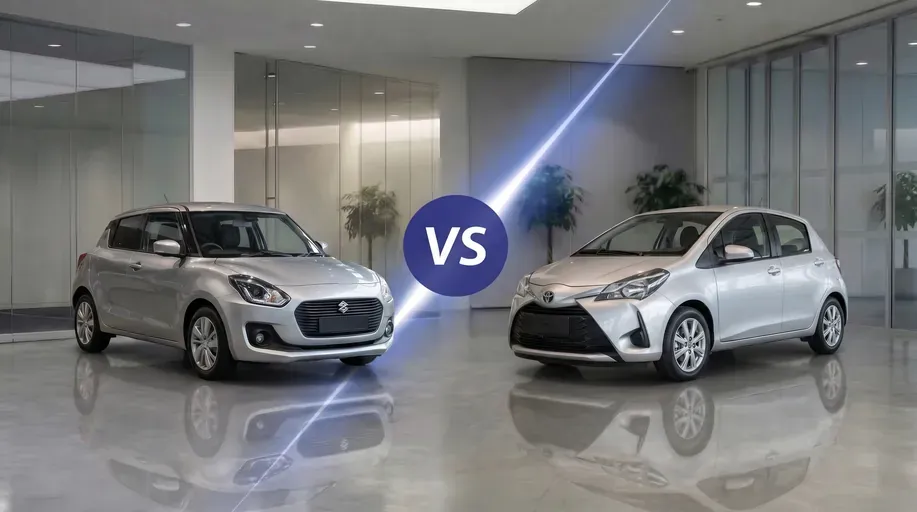
Detailed comparison of the Suzuki Swift and Toyota Yaris. Which city hatchback should you choose? Discover the differences in fuel consumption, equipment, and reliability. Read our verdict.
Apr 16, 2026
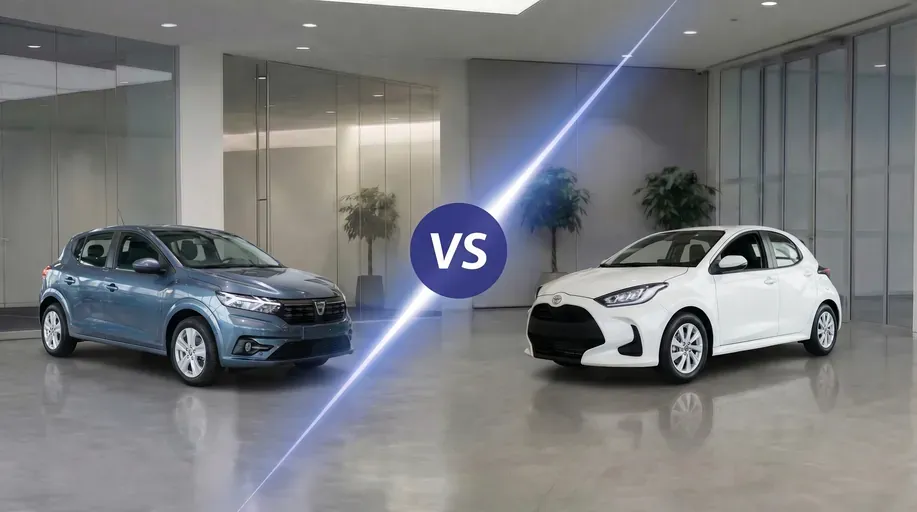
Detailed comparison: Dacia Sandero vs. Toyota Yaris. We reveal real-world experiences, fuel consumption, and equipment. Read our verdict and choose the ideal used car.
Apr 18, 2026