Mazda 2 vs. Suzuki Swift: Complete comparison 2026
Detailed comparison of Mazda 2 vs Suzuki Swift. Are you looking for the ideal city hatchback? Find out the differences in driving characteristics, fuel consumption, and read our verdict.
Apr 8, 2026
Articles
Car battle
Detailed comparison of the Suzuki Swift and Toyota Yaris. Which city hatchback should you choose? Discover the differences in fuel consumption, equipment, and reliability. Read our verdict.
April 16, 2026


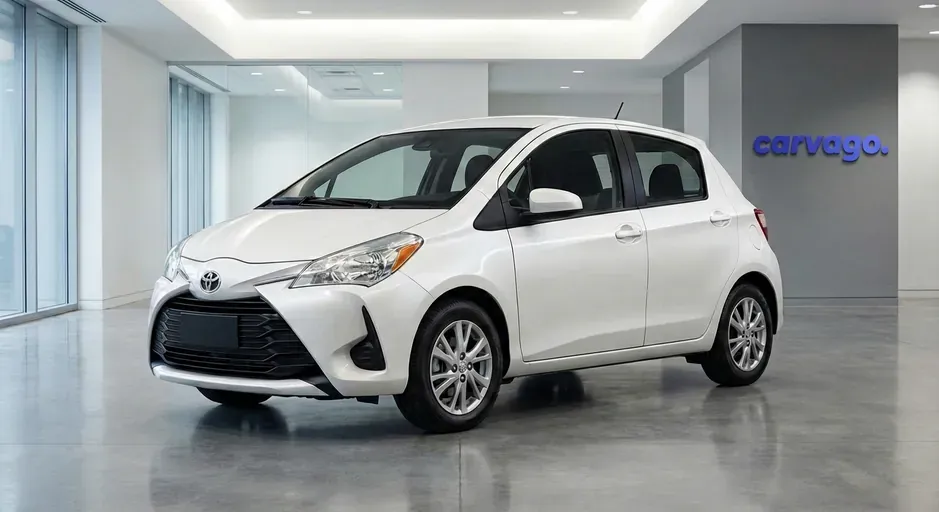
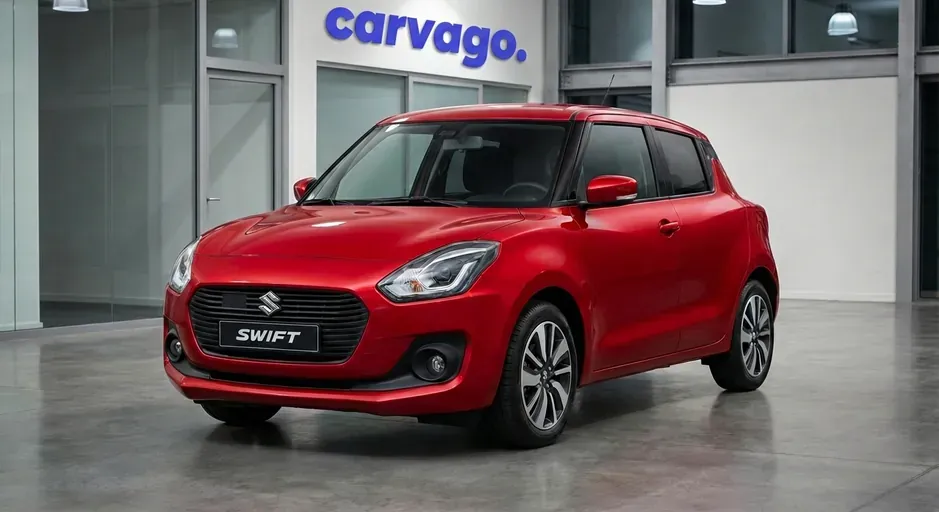
The Suzuki Swift is an agile and lightweight Japanese hatchback that wins drivers over with its playful driving characteristics and excellent maneuverability in heavy city traffic. Its rival is the popular Toyota Yaris, a technologically advanced leader in the field of fuel-efficient full-hybrid powertrains, which you can also find on the European used car market under the alternative name Mazda2 Hybrid. Let's take a detailed look at how these two direct competitors stack up against each other and which one makes more sense when choosing a reliable used car.
When comparing the exterior dimensions of roughly four-year-old used cars (6th generation Suzuki Swift and XP21 generation Toyota Yaris), you will quickly find that even in the small city hatchback segment, there are noticeable differences. Toyota Yaris with its base length of 3940 mm is a full 100 mm longer than the standard Suzuki Swift, which measures 3840 mm. This difference gives the Yaris slightly more mature proportions and helps with a better distribution of exterior crumple zones. The Suzuki Swift, on the other hand, benefits from its more compact dimensions when searching for a parking space every day. In terms of agility in narrow streets and maneuverability, the Swift is clearly a more advantageous choice for drivers who primarily move in crowded city centers.
The wheelbase has a fundamental influence on interior space and driving characteristics, where the Toyota Yaris dominates its competitor quite significantly. Its wheelbase is 2560 mm, while the Suzuki Swift offers only 2450 mm. This above-standard difference of 110 mm has a very positive effect, especially on the legroom for rear passengers, and ensures more stable and calmer vehicle behavior at higher speeds. As a result, the Toyota's longer wheelbase means that if you often travel long distances or regularly carry adult passengers in the back seats, the Yaris will provide you with noticeably more comfort and confidence behind the wheel.
With its base 1745 mm, the Yaris is about a centimeter wider and at the same time has a slightly lower silhouette (height from 1455 mm), which gives the car a sportier and more "crouched" stance. The Swift, on the other hand, maintains a more traditional, slightly taller body shape (up to 1505 mm), which makes getting in a bit easier and helps with a better view out of the cabin. In the end, the width and height suggest that the Yaris is designed with a greater emphasis on dynamics and the driving experience, while the Swift focuses more on uncomplicated and accessible urban practicality.
| Parameter | Suzuki Swift Hatchback | Toyota Yaris Hatchback |
|---|---|---|
| Width (mm) | 1735 | 1745 - 1805 |
| Length (mm) | 3840 - 3890 | 3940 - 3995 |
| Height (mm) | 1480 - 1505 | 1455 - 1500 |
| Wheelbase (mm) | 2450 | 2560 |
When choosing a city car, trunk capacity plays a crucial role, as even in the compact class, buyers expect reasonable practicality for everyday family needs. Focusing on used cars around four years old, we are comparing the sixth-generation Suzuki Swift and the current XP21 generation Toyota Yaris. Both cars rely on a five-door hatchback body style, and the differences in their trunks clearly indicate how well they can handle bulkier loads.
Toyota Yaris has a base trunk capacity of 286 liters, slightly outperforming the Suzuki Swift, which offers 265 liters. Although the twenty-one-liter difference may not seem vast on paper, in practice, it can represent the desired space for a few extra suitcases or an additional travel bag. In both cars, however, this basic space is fully sufficient for weekend shopping or a longer holiday for two people. After folding down the rear seats, the Toyota Yaris can accommodate an impressive 768 liters of cargo. The Suzuki Swift reaches approximately 579 liters after folding the backrests (measured to the lower edge of the windows), which is acceptable for standard transport of larger boxes but overall less practical for more demanding users.
If you are looking for a more economical used car, fortunately, the capacity of the standard hybrid and mild-hybrid variants of both brands does not decrease, as the manufacturers have cleverly hidden the batteries under the rear seats. On the other hand, more significant deviations are shown only by highly specific variants – for example, the sporty Toyota GR Yaris has its trunk capacity drastically reduced to just 174 liters due to the installation of all-wheel drive. For the average driver, however, the standard Yaris emerges as the winner in this regard and will please those who require a bit more transport capability from their vehicle.
| Parameter | Suzuki Swift Hatchback | Toyota Yaris Hatchback |
|---|---|---|
| Base capacity (liters) | 265 | 286 |
| Max. capacity with seats folded (liters) | 579 | 768 |
The Toyota Yaris offers a larger and more usable luggage space overall than the Suzuki Swift, which owners will appreciate not only during big shopping trips but also when folding the seats to transport longer items.
When choosing a small city car, towing capacity is often overlooked. Yet, the permitted trailer weight can play a crucial role – whether you're planning to move small pieces of furniture, haul garden waste, or transport e-bikes on a carrier. In this regard, we find surprisingly significant differences between the Suzuki Swift (6th generation) and Toyota Yaris (XP21 generation) models, which you'll most often encounter on the four-year-old used car market, that can quickly guide your decision.
Reliable workhorse vs. cautious hybrid
The Suzuki Swift, even in its 6th generation, maintains a very generous maximum braked trailer weight of 1000 kg. This capacity is available across the board – from standard 1.2 Dualjet and 1.0 Boosterjet petrol engines to more economical hybrid versions. With such towing power, you can easily hitch a smaller caravan or a fully loaded cargo trailer to the Swift. In practice, this means a huge reserve and space for extra heavier items.
The Toyota Yaris from the XP21 generation represents a noticeably more modest choice. Its conventional internal combustion versions, such as the 1.0-liter engine or the more powerful naturally aspirated 1.5-liter, can tow a braked trailer weighing 750 to 850 kg. However, a major limitation comes with the extremely popular 1.5 Hybrid 116 powertrain. Here, the permitted braked trailer weight drops to just 450 kg. This capacity is just enough for light weekend shopping or mounting a bike rack. You'll have to forget about heavier construction materials with the hybrid Yaris. For unbraked trailers, both cars are in a comparable range, mostly around 400 kg for the Swift and 450 kg for the Yaris.
Practical use in the real world
Conclusion
If you know you'll only use the tow bar for transporting bikes or occasional light loads, either car will suit you safely. However, if you expect a small car to step in for heavier work or pull a real trailer with construction materials, the Suzuki Swift becomes the clear winner thanks to its generous 1000 kg capacity. The difference in utility is particularly evident when compared to the highly efficient but very limited-for-towing hybrid Yaris.
| Model and engine | Braked trailer weight (kg) | Unbraked trailer weight (kg) |
|---|---|---|
| Suzuki Swift 1.0 Boosterjet (6th generation) | 1000 | 400 |
| Suzuki Swift 1.2 Dualjet (6th generation) | 1000 | 400 |
| Suzuki Swift 1.2 Dualjet Hybrid (6th generation) | 1000 | 400 |
| Toyota Yaris 1.0 (XP21) | 750 | 450 |
| Toyota Yaris 1.5 (XP21) | 850 | 450 |
| Toyota Yaris 1.5 Hybrid 116 (XP21) | 450 | 450 |
The engine range of both Japanese models perfectly illustrates their different technological approaches, which is crucial for used car buyers in terms of fuel consumption and reliability. While the Suzuki Swift relies on extremely low curb weight (often under 1,000 kg) and reliable naturally aspirated engines complemented by a simple 12V mild-hybrid system, the Toyota Yaris reigns supreme in the class thanks to its exceptionally advanced full hybrid powertrain. For those interested in a car roughly four years old, this practically means choosing between the mechanical simplicity of the Swift, represented by the economical 1.2 Dualjet Hybrid (61 kW) four-cylinder, and the unrivaled efficiency of the Toyota in city traffic with the 1.5 Hybrid (85 kW) powertrain. However, both brands also cater to driving enthusiasts. Suzuki offers the affordable and playful Swift Sport model with an electrified 1.4 Boosterjet Hybrid (95 kW) engine, while Toyota targets purists with the ultimate performance model, the GR Yaris, which hides a 1.6 Turbo three-cylinder with a staggering 192 kW and sophisticated all-wheel drive.
In the market for four-year-old used cars (sixth generation after the 2020 updates), mild-hybrid units make up the vast majority of the offer. The older, purely petrol 1.2 Dualjet and the turbocharged 1.0 Boosterjet three-cylinder gradually disappeared from the range around 2020 due to emission standards. The naturally aspirated 1.2 Dualjet Hybrid (61 kW) four-cylinder became the standard, where electric motor support smooths out pull-aways and helps bring real-world consumption reliably down to the 5 l/100 km mark. A huge advantage for some drivers is the fact that this engine can be purchased with the AllGrip all-wheel drive system in addition to the five-speed manual and CVT continuously variable transmission, which is a great rarity in this segment. The top-of-the-line Swift Sport version has been available since 2020 with the 1.4 Boosterjet Hybrid (95 kW) engine. Although it has slightly lower power on paper than the original, it makes up for it with a more robust pull (235 Nm) in the mid-range and a perfectly geared six-speed manual.
| Engine type | Fuel | Power (kW) | Torque (Nm) | Transmission |
|---|---|---|---|---|
| 1.2 Dualjet Hybrid | Petrol / Mild-hybrid | 61 | 107 | 5MT / CVT |
| 1.4 Boosterjet Hybrid | Petrol / Mild-hybrid | 95 | 235 | 6MT |
The fourth generation of the Toyota Yaris (codenamed XP21, produced since 2020) is famous for its reliability and efficiency, from which it primarily benefits in cities. The core of sales on the used car market is the 1.5 Hybrid 116 (85 kW) powertrain. The combination of a naturally aspirated three-cylinder with an electric motor and an e-CVT planetary gearbox allows the car to cover a significant portion of city routes purely on electricity, without the need for plug-in charging. If the driver does not plan to use the advantages of the hybrid, classic internal combustion engines are also available. The entry-level model is the 1.0 VVT-i (53 kW) three-cylinder, which is an ideal choice for calm and undemanding drivers, but it gradually disappeared from price lists at the beginning of 2023. On the other hand, the purely petrol 1.5 VVT-i (92 kW) version, supplied with a precise six-speed manual or CVT, offers better dynamics outside the city. A special chapter is the extreme GR Yaris with its 1.6 Turbo (192 kW) three-cylinder, which serves as a rally homologation special and provides unprecedented driving performance.
| Engine type | Fuel | Power (kW) | Torque (Nm) | Transmission |
|---|---|---|---|---|
| 1.0 VVT-i | Petrol | 53 | 93 | 5MT |
| 1.5 VVT-i | Petrol | 92 | 153 | 6MT / CVT |
| 1.5 Hybrid 116 | Petrol / Full hybrid | 85 | 120 | e-CVT |
| 1.6 Turbo (GR Yaris) | Petrol | 192 | 360 | 6MT |
While the Suzuki Swift scores with the simplicity of naturally aspirated engines with indirect injection and available all-wheel drive, the Toyota Yaris represents the absolute top for thrifty drivers who appreciate its refined full hybrid system for unrivaled fuel consumption in the city.
Choosing the right engine is absolutely crucial for long-term satisfaction with a used car. Our recommendations for roughly four-year-old models are based on performance ratings, real-world fuel consumption, owner feedback, and documented mechanical reliability. While the Suzuki Swift scores points primarily for its mechanical simplicity, low weight, and affordable mild-hybrid technology, the Toyota Yaris represents the absolute pinnacle in the field of full hybrid powertrains, which excel completely in urban and suburban traffic.
Within the sixth generation (suitable for choosing a roughly four-year-old car from 2020–2024), the 1.2 Dualjet naturally aspirated petrol engine complemented by a mild-hybrid system represents the best you can choose on the used car market.
If you are looking for a roughly four-year-old Yaris, we recommend focusing on the current generation designated XP21 (from 2020), where the absolute king is the 1.5 Hybrid full hybrid system with a total output of 116 hp (85 kW).
The difference between official and real-world fuel consumption is a well-known fact in the automotive world, and this also applies to the small city car segment. While modern measurement methodologies have brought more realistic values, actual operating consumption is always influenced by driving style, route profile, and weather. To get the most accurate picture of real-world costs, we rely on long-term data from thousands of users on the popular crowdsourcing portal Spritmonitor.de. We focused on roughly four-year-old used cars, which in terms of availability ideally corresponds to the fourth-generation Toyota Yaris (XP21) and the sixth-generation Suzuki Swift.
| Model and engine | Average consumption (l/100 km) |
|---|---|
| Toyota Yaris 1.5 Hybrid 116 (Full hybrid, 85 kW) | 4.0 |
| Suzuki Swift 1.2 Dualjet Hybrid (Mild-hybrid, 61 kW) | 5.0 |
| Suzuki Swift 1.4 Boosterjet Hybrid Sport (Mild-hybrid turbo, 95 kW) | 6.1 |
| Toyota Yaris 1.0 (Naturally aspirated petrol, 53 kW) | 5.2 |
| Toyota Yaris 1.5 (Naturally aspirated petrol, 92 kW) | 5.5 |
Looking at the data, one fundamental trend is clear. While years ago, economical diesel engines (e.g., 1.4 D-4D or 1.3 DDiS) scored points in this category, diesels have completely disappeared from young used cars today. Petrol units, in combination with electrification, have managed to replace them without any problem in terms of efficiency. A surprising finding is that small naturally aspirated three-cylinder engines (like the 1.0 in the Yaris) do not save fuel as effectively as one might expect from their small displacement. It is often necessary to rev them more, and therefore, in normal traffic, they consume more fuel than more complex but efficient hybrid technology. The absolute most economical choice is Toyota's advanced full hybrid system, which excels in the real world with consumption around 4.0 liters per hundred kilometers. Conversely, the simpler mild-hybrid system in the Suzuki (1.2 Dualjet) helps with smoothness and official emissions, but in practice, the car requires about a liter more than the Yaris. With the dynamically tuned Swift Sport model, you logically have to accept that the 1.4 Boosterjet turbocharged petrol engine demands a tax for driving pleasure in the form of consumption starting above six liters.
What do these values mean for different driver profiles? If you are a typical city dweller or commute daily in heavy traffic, the full hybrid Toyota Yaris is the unrivaled top performer, handling a large part of stop-and-go driving purely on electricity. On the other hand, for budget-conscious buyers and commuters who have a smoother profile of extra-urban routes without frequent traffic jams, the simpler Suzuki Swift will make excellent sense. Its slightly higher appetite is more than compensated for by high mechanical reliability and an overall very low vehicle weight.
Can consumption therefore be considered a decisive factor when choosing between these two used cars? Definitely yes. For a driver whose absolute priority is the lowest possible amounts left at gas stations, the full hybrid Yaris is the clear winner. The Suzuki Swift, on the other hand, represents a rational alternative for pragmatists who don't mind an average consumption about one liter higher if they get a more affordable used car and a more spirited, direct driving experience in exchange.
The market for used vehicles approximately four years old (2021 and 2022 model years) clearly shows the different positions of both cars. While both Japanese superminis excel in exemplary reliability, their purchase prices in used car dealerships reflect the different technology used and the overall popularity of individual versions.
The four-year-old sixth-generation Suzuki Swift represents an exceptionally attractive choice on the used car market in terms of price. The car is valued for low operating costs, and the absence of complex technologies favors a very long lifespan.
The fourth-generation Toyota Yaris is considered the benchmark for value retention in its class. The car depreciates much more slowly than its competitors, which on one hand means a higher initial investment at the dealership, but on the other hand, greater stability for your money in the future. Used cars are dominated primarily by fuel-efficient hybrids.
| Model and common engine | Lowest average price | Highest average price |
|---|---|---|
| Suzuki Swift 1.2 (incl. MHEV) | €10,000 | €14,000 |
| Suzuki Swift 1.4 Sport | €14,000 | €16,000 |
| Toyota Yaris 1.5 (pure petrol) | €12,000 | €16,000 |
| Toyota Yaris 1.5 Hybrid | €14,000 | €18,000 |
While the Suzuki Swift represents a more affordable used car with an excellent price-to-utility ratio, the Toyota Yaris, thanks to its full hybrid powertrain, holds its value significantly better on the market and requires a higher initial investment from the buyer.
Although both of these model names have a history of five-star Euro NCAP ratings, it is essential to consider the broader context and the specific year of testing when comparing the safety of used cars. The methodology and testing protocols of the independent Euro NCAP association are constantly evolving and becoming stricter year by year. For this reason, percentage results achieved in different years cannot be simply and directly compared.
Toyota Yaris
The fourth-generation Toyota Yaris underwent crash tests in 2020. At the time, it became the very first car to be tested according to completely new, significantly more demanding safety protocols. These introduced, for example, a frontal impact simulation with a moving deformable barrier, evaluation of center airbags to prevent head-to-head contact between occupants, or testing of cyclist detection systems and automatic braking when turning at intersections. In these challenging conditions, the Yaris earned a full five stars and excelled particularly in the area of active safety and overall occupant protection.
Suzuki Swift
The generation of the Suzuki Swift that is most common on the market for roughly four-year-old used cars was, by contrast, tested back in 2017 according to an older, more lenient methodology. In its standard equipment, the car received three stars, while with an optional safety pack containing autonomous emergency braking, it achieved four stars. The results in the table below reflect this better-equipped version. Even so, the Swift falls short of today's standards – in the area of assistance systems, it simply did not offer as many advanced features as those found in the Toyota. At the same time, it is important to mention that the certification for this tested Swift model officially expired in early 2024 due to its age and is no longer considered valid by Euro NCAP.
The percentage results of both cars clearly demonstrate how misleading a simple comparison of numbers can be. Although the Swift has a slightly higher score for adult occupant protection in the table, the Yaris earned its rating during much tougher and more comprehensive crash testing. Overall, the clear winner in safety is Toyota, which offers families and individuals a disproportionately more modern and comprehensive level of protection that prevents critical situations.
| Parameter | Suzuki Swift | Toyota Yaris |
|---|---|---|
| Year of testing | 2017 | 2020 |
| Adult occupant protection | 88 % | 86 % |
| Child occupant protection | 75 % | 81 % |
| Vulnerable road user protection | 69 % | 78 % |
| Safety assist systems | 44 % | 85 % |
Thanks to its newer architecture and advanced assistance systems, the Toyota Yaris offers a significantly more sophisticated level of passive and active safety and emerges from this comparison as the absolute winner.
In addition to standard equipment, each model offers several unique features that can be decisive for the customer, and both cars demonstrate their own distinct approach to added value.
Very low weight ensuring agile and fun driving characteristics
Availability of all-wheel drive (AllGrip), which is unique in this segment
More affordable purchase price on the used car market
Economical mild-hybrid engines with very low fuel consumption
Traditionally high reliability of the powertrains
Below-average luggage space with a volume of only 265 liters
Higher proportion of hard and cheap-looking plastics in the interior
Poorer cabin soundproofing, which is especially noticeable at highway speeds
Outdated and slower multimedia system
The Suzuki Swift is a perfect choice for drivers looking for an affordable, lightweight, and fun-to-drive car primarily for the city and back roads. Thanks to the optional 4x4 drive, it also makes extraordinary sense for residents of mountainous areas who are looking for a reliable car but do not need a large SUV.
Top-tier and exceptionally economical full hybrid powertrain that is unrivaled in city traffic
Rich standard safety equipment including advanced assistants (Toyota Safety Sense)
Excellent residual value retention and top-tier long-term reliability
Confident driving characteristics thanks to the very rigid TNGA chassis platform
Distinctive and modern sporty design
Cramped space in the rear seats, especially in terms of legroom and headroom
Higher purchase price of used models compared to the competition
Specific sound profile of the e-CVT hybrid transmission during rapid acceleration
Poorer rear-quarter visibility caused by massive rear pillars
The Toyota Yaris represents an ideal solution for daily commuting in heavy city traffic, where its efficient hybrid system truly shines. The car perfectly suits those who are willing to pay extra for top-tier safety, modern technology, and slow depreciation, while not needing to carry adult passengers in the rear seats.
Based on long-term user feedback, service bulletins, and data provided by our physical inspection of used cars using the CarAudit service, we have compiled an overview of the most common problems that buyers of approximately four-year-old used cars should watch out for.
The sixth-generation Suzuki Swift is a mechanically very durable car, but due to the pressure for low weight and production cost, some specific ailments and compromises in workmanship appear.
The Swift is a mechanically robust car that suffers most from thin paint, creaking plastics, and minor chassis wear; however, fatal engine failures are completely exceptional.
The fourth-generation Toyota Yaris is among the most reliable cars in its class, but its modern and sophisticated technology brings with it several typical complaints, mostly related to the style of vehicle use.
The Yaris offers top-tier hybrid technology and extraordinary reliability of the entire powertrain; the only major concern for owners tends to be the quickly draining 12V battery during irregular and short vehicle use.
When buying a used car, a thorough inspection is key. Even though both of these Japanese models are considered above-average in reliability on the market for roughly four-year-old used cars, they have their specifics and weak points worth watching out for. A thorough independent technical inspection of the car will reliably help you uncover hidden defects before the purchase itself.
Toyota Yaris is the leader in fuel consumption thanks to its advanced full-hybrid powertrain, which allows for city driving even under 4 l/100 km. The Suzuki Swift, on the other hand, uses simpler mild-hybrid technology, which is also efficient but slightly lags behind the Yaris in real-world traffic. However, both cars are exceptionally economical choices for daily commuting.
The Toyota Yaris offers plenty of space in the front, but it can feel more cramped in the rear seats, especially in terms of legroom and headroom. Thanks to its boxier shape, the Suzuki Swift provides rear passengers with a slightly airier feel and more headroom. Overall, however, both cars are typical representatives of the small car class and are not very suitable for frequently carrying adults in the rear seats.
Both Japanese brands enjoy an excellent reputation and have long been among the most reliable used cars on the market. Toyota scores primarily with the high durability of its hybrid system and overall exceptionally low failure rate. Suzuki relies on proven naturally aspirated engines with simpler technology, which also guarantees a minimal risk of expensive defects and low service costs.
Thanks to its very low weight (often under 1,000 kg) and prompt reactions, the Suzuki Swift is considered one of the most fun and agile cars in its class. The Toyota Yaris, on the other hand, offers a much stiffer body and more mature driving characteristics, which you will appreciate even at higher speeds outside the city. While the Swift is more of a playful and nimble "shopping bag," the Yaris feels more stable and mature behind the wheel.
The fourth-generation Toyota Yaris has a luggage compartment with a volume of 286 liters, which is a rather average value in the small car segment. The Suzuki Swift is even slightly worse off, as its trunk offers a more modest 265 liters. For regular city shopping or smaller bags, both cars are sufficient, but they are not designed for family holidays with a larger amount of luggage.
While both Japanese competitors represent an above-average reliable choice on the four-year-old used car market, each appeals to a different target group with its distinct technological approach. With its top-tier full hybrid powertrain and advanced safety equipment, the Toyota Yaris is the uncompromising king of city traffic, perfectly suited for those seeking maximum fuel savings and modern assistance systems. On the other hand, the Suzuki Swift scores with a lower purchase price, mechanical simplicity, and very low weight, making it an exceptionally agile and driver-engaging car with the added bonus of an optional all-wheel drive. If you commute daily to a congested city center and value technology, the Yaris will easily justify your higher initial investment, while for more pragmatic drivers looking for an affordable, lightweight, and playful car, the Swift will represent a much more rational choice.
Sources: ADAC, aktualne.cz, e15.cz, motorvize.cz, fdrive.cz, podnikatel.cz
This article was prepared using artificial intelligence tools. The section guarantor is Petr Dušek.

Detailed comparison of Mazda 2 vs Suzuki Swift. Are you looking for the ideal city hatchback? Find out the differences in driving characteristics, fuel consumption, and read our verdict.
Apr 8, 2026

Škoda Fabia vs. Toyota Yaris. A detailed comparison of engines, features, and prices. Find out which of these popular small cars is the right one for you.
Apr 13, 2026

Fiat 500 or Kia Picanto? Our detailed comparison will help you choose the right city car. Detailed tests, features, and verdict.
Apr 14, 2026