Car battle
Hyundai i20 vs. Suzuki Swift: Complete Comparison 2025
Hyundai i20 vs Suzuki Swift: Which hatchback is better? Our detailed comparison of equipment, ride, and price will help you choose. Read the verdict.
Apr 13, 2026
Articles
Car battle
Big Comparison: Renault Clio vs. Suzuki Swift: Which used hatchback to choose? We reveal the differences in fuel consumption, equipment, and reliability. Read our verdict!
April 13, 2026
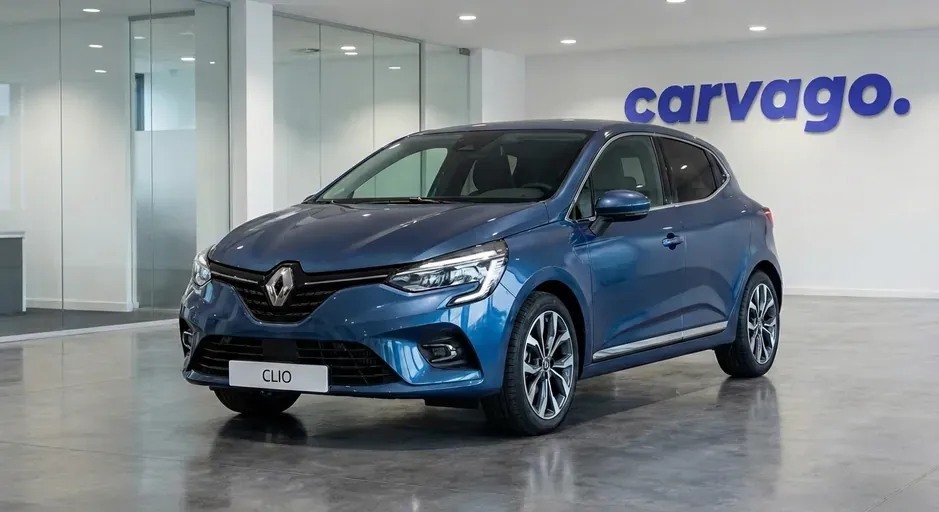
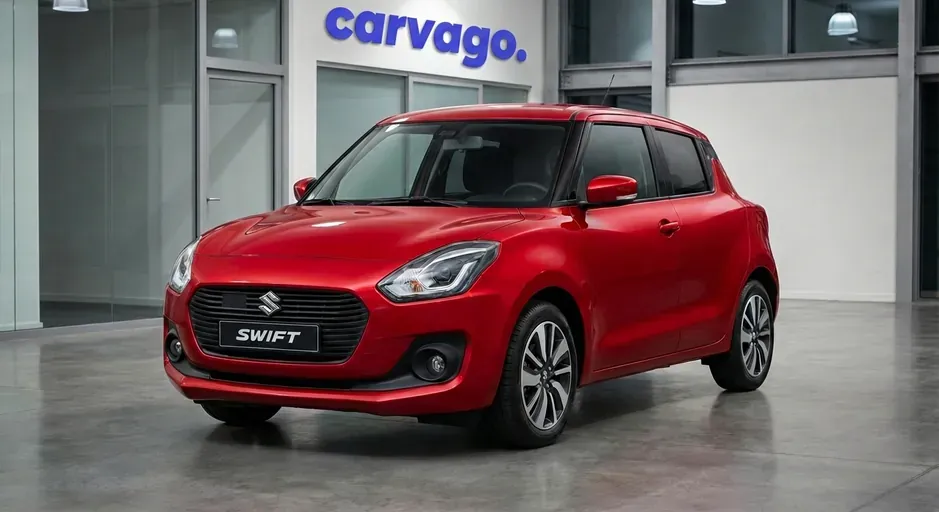
The Renault Clio, also sold in some markets as the Renault Lutecia, is a popular mainstay of the European small car segment, long scoring points for its elegant French design and refined driving experience. Its challenger is the Japanese Suzuki Swift, currently also known as the Maruti Suzuki Swift and historically sold under many names such as the Suzuki Cultus or Geo Metro, which instead bets on exceptionally low weight, remarkably playful handling, and legendary reliability. Let's take a detailed look at how these two very popular models – ideal representatives of the approximately four-year-old used car market – stand in direct comparison and which one will better suit your daily needs.
Looking at the external dimensions, two different approaches to modern city car design emerge. If we focus on models approximately four years old (representatives of the fifth-generation Renault Clio and sixth-generation Suzuki Swift), the differences in the footprint of both cars are quite significant. The Renault Clio measures 4050 mm in length and 1798 mm in width, making it one of the most mature-looking cars in the B-segment. In contrast, the Suzuki Swift remains faithful to the philosophy of ultra-compact cars with a length of just 3840 mm and a width of 1735 mm. The Swift is thus a noticeable 210 mm shorter and 63 mm narrower. In the urban jungle, the Japanese representative has an unquestionable advantage when looking for a parking space and maneuvering in narrow streets thanks to these modest dimensions, while the Clio will appeal to drivers looking for a physically more robust and confident car.
This difference in external proportions is directly reflected in the wheelbase length, which is key for interior space and driving stability. The Renault Clio has a wheelbase of 2583 mm, while the Suzuki Swift has to make do with a value of 2450 mm. The 133 mm difference in favour of the French car means a huge advantage in terms of longitudinal legroom for rear-seat passengers. However, the Swift tries to compensate for this spatial handicap to some extent with its height – at up to 1505 mm, it is a significant 65 mm taller than the sportier and lower-slung Clio (1440 mm). The longer wheelbase gives the Clio a noticeably calmer ride and higher comfort on longer motorway journeys, but the Swift's taller build will please those who prefer a more airy feeling overhead and slightly easier entry into the vehicle.
On the used car market, it is also worth noting that while Suzuki has long offered the Suzuki Swift exclusively as a classic hatchback, Renault until recently had a more practical alternative in its portfolio. Although you will exclusively find the shorter fifth-generation models among four-year-old cars, the slightly older fourth-generation Clio was also offered in an estate version (Grandtour), which measured a generous 4267 mm in length. Overall, the interpretation of external dimensions for both current hatchbacks is clear: if you are looking for a maximally nimble, agile car that makes parking easy, primarily for the city, the Swift will be an unrivalled partner, while the wider and longer Clio with its generous wheelbase is much better suited to the role of a versatile primary car for daily commuting and weekend trips.
| Parameter | Renault Clio Hatchback | Suzuki Swift Hatchback | Renault Clio Estate |
|---|---|---|---|
| Length (mm) | 4050 - 4053 | 3840 - 3890 | 4267 - 4277 |
| Width (mm) | 1798 | 1735 | 1732 |
| Height (mm) | 1440 | 1480 - 1505 | 1445 - 1475 |
| Wheelbase (mm) | 2583 | 2450 | 2589 |
Luggage capacity is a key factor for many buyers even in the small city car category. Whether you are looking for a car for everyday family duties or just a companion for commuting to work, the size of the boot often determines the overall practicality of the vehicle. When comparing these two popular models, especially if we focus on roughly four-year-old used cars corresponding to the fifth generation for Renault and the sixth generation for Suzuki, we encounter a vast difference in the philosophy of both manufacturers, which is reflected precisely in the transport capabilities.
The Renault Clio offers a generous basic boot capacity of 391 litres in its standard petrol version, placing it at the absolute top of its class. After folding the rear seats, the space increases to an impressive 1069 litres. However, it should be noted that in the full-hybrid E-Tech versions, the capacity is reduced to 301 litres due to the placement of the traction battery, and in the dCi diesel variants, you lose about 25 litres due to the AdBlue tank. In contrast, the Suzuki Swift bets more on compact external dimensions and overall lightness, which takes its toll precisely in the rear of the car. Its boot holds only 265 litres as standard and offers a maximum usable space of 947 litres after folding the split backrests.
In practice, these figures mean quite fundamental differences in daily use. The Renault Clio will serve without major problems as a full-fledged car for a weekend family shop or a longer holiday for two, offering secure space for several extra suitcases. The Suzuki Swift, with its proportions, is built primarily as a nimble vehicle for city streets; its luggage compartment is sufficient for a regular shop or sports equipment, but it will struggle for every centimetre with a larger load. Therefore, if transport capacity is a priority for you, the Renault Clio emerges as the clear winner from this comparison.
| Parameter | Renault Clio Hatchback | Suzuki Swift Hatchback |
|---|---|---|
| Basic capacity (litres) | 391 | 265 |
| Max. capacity with seats folded (litres) | 1069 | 947 |
While towing capacity might not be the most important parameter for small city hatchbacks, it plays a crucial role in terms of practicality for buyers who plan to occasionally transport larger loads. When comparing approximately four-year-old used cars (model years around 2022), the Suzuki Swift (6th generation) comes out slightly ahead. In its standard and maximum specifications, such as the 1.2 Dualjet or 1.0 Boosterjet engines, it offers a braked trailer weight of exactly 1,000 kg. In contrast, the rival Renault Clio (5th generation) can handle a slightly lighter braked trailer with a standard and maximum weight of 900 kg across practically its entire engine range.
Interestingly, neither model sees the usual reduction in towing capacity for more eco-friendly variants. Both the full-hybrid Renault Clio E-Tech and the mild-hybrid versions of the Suzuki Swift easily maintain their standard limits from the conventional versions. Unfortunately, data for unbraked trailer towing is not fully specified for these modern generations. Similarly, there is a complete lack of data regarding towing options for the hot Suzuki Swift Sport (1.4 Boosterjet), as the manufacturer likely did not anticipate the installation of a tow bar.
In practice, the slightly higher limit of the Japanese car means room for a few extra suitcases on a trailer, while the capacities of both cars are easily sufficient for weekend shopping or a longer holiday with a small cargo trailer. In summary, while both vehicles can handle routine towing without issue, if hitching a trailer is a frequent necessity and you transport heavier materials, the 6th generation Suzuki Swift provides a significant weight margin of 100 kg.
| Model and engine | Braked trailer weight (kg) | Unbraked trailer weight (kg) |
|---|---|---|
| Renault Clio V SCe 65 (48-49 kW) | 900 | - |
| Renault Clio V TCe 90 (67 kW) | 900 | - |
| Renault Clio V BLUE dCi 100/115 (74-85 kW) | 900 | - |
| Renault Clio V E-Tech Hybrid 140/145 (67-69 kW) | 900 | - |
| Suzuki Swift 6th gen. 1.0 Boosterjet (82 kW) | 1000 | - |
| Suzuki Swift 6th gen. 1.2 Dualjet (66 kW) | 1000 | - |
| Suzuki Swift 6th gen. 1.2 Dualjet Hybrid (61-66 kW) | 1000 | - |
The Renault Clio and Suzuki Swift offer completely different approaches to engine lineups, which is one of the most critical factors for those interested in an approximately four-year-old used car. While Renault relies on a wide range of modern turbocharged three-cylinders (1.0 TCe), economical diesels (1.5 Blue dCi), and a very sophisticated full-hybrid system (E-Tech) for the fifth-generation Clio, Suzuki sticks to a more traditional and mechanically simpler path for the sixth-generation Swift. Most of the Swift's range is covered by naturally aspirated four-cylinders (1.2 Dualjet) with light mild-hybrid technology, which will be appreciated by drivers looking for reliability and low maintenance. For buyers, this means a choice between highway composure, stronger turbocharger punch, and potentially LPG operation with the Clio on one hand, and a high-revving naturally aspirated character, low weight, and the rare option of all-wheel drive with the Swift on the other.
The fifth-generation Renault Clio (produced since 2019) features a very diverse range of power units. The base city engine is the naturally aspirated 1.0 SCe three-cylinder with 48 kW. By far the most popular, however, is the turbocharged 1.0 TCe three-cylinder (66 kW or 74 kW), which is also available in a highly sought-after factory LPG version, significantly reducing operating costs. For more spirited driving, there are the powerful 1.3 TCe four-cylinders (the TCe 130 with 96 kW was sold only until the end of 2020, subsequently replaced by the TCe 140 with 103 kW supplied between 2021–2023). High-mileage buyers may come across the proven 1.5 Blue dCi diesel engines in roughly four-year-old used cars, although the 85 and 115 hp variants were withdrawn from the market as early as 2021 (followed by the dCi 100 version until 2023). The technological pinnacle is the E-Tech full-hybrid, which drives largely on pure electricity in the city.
| Engine type | Fuel type | Power (kW) | Torque (Nm) | Transmission |
|---|---|---|---|---|
| 1.0 SCe 65 | Petrol | 48 | 95 | 5MT |
| 1.0 TCe 90 | Petrol | 66 | 160 | 6MT / CVT |
| 1.0 TCe 100 | Petrol | 74 | 160 | 5MT / 6MT |
| 1.0 TCe 100 LPG | Petrol / LPG | 74 | 170 | 5MT / 6MT |
| 1.3 TCe 130 / 140 | Petrol | 96 / 103 | 240 / 260 | 6MT / 7EDC |
| 1.5 Blue dCi 85 / 100 / 115 | Diesel | 63 / 74 / 85 | 220 - 260 | 6MT |
| E-Tech Hybrid 140 / 145 | Hybrid | 103 / 105 | 144 + 205 (electric) | Multi-Mode (Aut.) |
The sixth-generation Suzuki Swift (2017–2024), which you will most often encounter on the four-year-old used car market, builds its success on extremely low weight and naturally aspirated engines, which began to be standardly paired with a mild-hybrid system (SHVS) from 2019/2020 due to emission standards. The basic and most common engine is the 1.2 Dualjet, whose power slightly dropped from 66 kW to 61 kW after the transition to mild-hybrid, but in return offers excellent fuel consumption. A major advantage of this engine is the possibility of purchasing the Swift with AllGrip all-wheel drive, which few others offer in this category. If you are looking for more pull from low revs in a used car, you can look for the turbocharged 1.0 Boosterjet three-cylinder (82 kW), though its sales ended in our market in 2020. The icing on the cake is the Swift Sport version with the excellent 1.4 Boosterjet four-cylinder. Until 2020, it was sold as a pure petrol version with 103 kW, but in roughly four-year-old and newer models, you will already encounter the 1.4 Boosterjet Hybrid mild-hybrid version with 95 kW, which compensates for the slight loss of horsepower with higher torque and assistance from the electric motor at low revs.
| 1.2 Dualjet | Petrol | 66 | 120 | 5MT / CVT |
|---|---|---|---|---|
| 1.2 Dualjet Hybrid | Mild-Hybrid | 61 | 107 | 5MT / CVT |
| 1.0 Boosterjet / Hybrid | Petrol / Mild-Hybrid | 82 | 170 | 5MT / 6AT |
| 1.4 Boosterjet Sport | Petrol | 103 | 230 | 6MT / 6AT |
| 1.4 Boosterjet Sport Hybrid | Mild-Hybrid | 95 | 235 | 6MT |
In the final decision, the choice depends on the driver's preferences. The strength of the Renault Clio is its broader highway usability, the choice of an economical diesel for high-mileage drivers, and excellent factory LPG installation, which significantly reduces operating costs. Weaknesses may include slightly more complex power units and EDC dual-clutch transmissions. The Suzuki Swift clearly scores points with more conservative drivers and those who primarily drive in and around the city, where they will appreciate the immortal naturally aspirated 1.2 Dualjet engine, excellent handling, and potential added traction with 4x4 drive. Those looking for pure driving pleasure won't go wrong with the Suzuki Swift Sport, which is very hard to beat in the used car market in terms of price, performance, and playfulness.
Choosing the right engine is absolutely crucial for long-term satisfaction with the car, and our following recommendations are based on real-world experience from mechanics, actual fuel consumption, and the overall reliability of both cars. Looking at roughly four-year-old used cars, one can observe completely different philosophies of both brands – while the fifth-generation Renault Clio relies on modern small-displacement turbocharged engines providing massive low-end torque, the sixth-generation Suzuki Swift sticks to the classic Japanese school of lightweight construction and extremely durable naturally aspirated four-cylinder engines.
This one-liter turbocharged three-cylinder represents the absolute ideal for the fifth-generation Clio (widely represented in the four-year-old used car market), perfectly balancing performance, practicality, and favorable operating costs. From a technical standpoint, it pleases with a flat torque curve (160 Nm) and a real combined fuel consumption safely staying around 5,5 l/100 km. Its greatest design advantage is the use of indirect fuel injection (MPI). Thanks to this, unlike most direct-injection competitors, this engine does not suffer from carbon buildup on the intake valves during frequent short trips and does not need a sensitive particulate filter (GPF/DPF) to meet emission standards. Possible weaknesses include only a less precise manual gearbox action, which you can easily feel out before buying; it is also important to shorten the unnecessarily optimistic factory service intervals and change the oil every 15 000 km at most. The unit is thus perfectly versatile – thanks to the turbocharger, you won't get lost during highway overtaking maneuvers, but the mechanical simplicity of the injection makes it a great companion even for everyday city hopping.
For the sixth-generation Swift (typically model years 2020 to 2024), this naturally aspirated four-cylinder K12D series is an absolutely phenomenal choice in terms of long-term durability and low operating costs. Since the car has a curb weight of about 900 kilograms, even the nominally modest 61 kW output is very brisk in the real world, while the twelve-volt mild-hybrid system (SHVS) helps push actual consumption easily below the amazing 5 liters per 100 km mark. The four-cylinder has a velvety linear pull, the timing is driven by a reliable chain, and the engine as a whole is mechanically almost "bulletproof". You will find an absolute minimum of risks here; during a test drive of a used unit, focus primarily on whether the start-stop system works smoothly and without jerking (which verifies the condition of the mild-hybrid battery located under the passenger seat) and check the clutch engagement point, which tends to be excessively worn in typical city runabouts. This engine is tailor-made for city and suburban drivers or defensive users looking for maximum mechanical reliability over short distances, where any modern diesel or complex turbo engine would soon suffer.
Official fuel consumption figures provided by manufacturers often diverge from the reality of daily operation in laboratories. For an objective comparison of roughly four-year-old used cars, we have therefore used real data from drivers themselves from the independent portal Spritmonitor.de. In our overview, we focus on the generations that currently make the most sense in the used car market and correspond to the actual supply of roughly four-year-old cars – namely the fifth-generation Renault Clio (produced since 2019) and the sixth-generation Suzuki Swift (from 2017–2024).
| Model and engine | Average consumption (l/100 km) | Source |
|---|---|---|
| Renault Clio 1.5 Blue dCi 100 (Diesel) | 4,2 | Spritmonitor.de |
| Renault Clio E-Tech Hybrid 140 (Full-hybrid) | 4,8 | Spritmonitor.de |
| Suzuki Swift 1.2 Dualjet Hybrid (Mild-hybrid) | 5,0 | Spritmonitor.de |
| Renault Clio 1.0 SCe 65 (Petrol) | 5,3 | Spritmonitor.de |
| Suzuki Swift 1.0 Boosterjet (Petrol) | 5,5 | Spritmonitor.de |
| Renault Clio 1.0 TCe 90 (Petrol) | 5,8 | Spritmonitor.de |
| Suzuki Swift Sport 1.4 Boosterjet (Petrol) | 6,2 | Spritmonitor.de |
| Renault Clio 1.0 TCe 100 LPG (LPG) | 6,8 | Spritmonitor.de |
Looking at the table, the different technological approaches of both manufacturers are clearly visible. Suzuki traditionally benefits from the extremely low curb weight of the Swift model, which for basic versions is well below the one-tonne mark. Thanks to this, the naturally aspirated 1.2 Dualjet four-cylinder, further supported by simple mild-hybrid technology, is exceptionally efficient and in the real world can commonly be driven at 5 litres per 100 km. The turbocharged 1.0 Boosterjet three-cylinder increases consumption slightly, but still stays within very favorable limits. Conversely, Renault opts for a somewhat more robust build and a more complex range of power units for its Clio model. The full-hybrid E-Tech version can push consumption below the 5-litre mark, especially in city traffic, while the traditional small-displacement 1.0 TCe turbo engine does not save fuel as drastically in practice as paper assumptions might suggest, hovering closer to the six-litre mark.
What does this mean for typical users? With its naturally aspirated 1.2-litre engine, the Suzuki Swift is an absolutely ideal choice for drivers who mostly drive in the city and on country roads, where they will fully appreciate the car's lightness and naturally low fuel consumption combined with high reliability. The Renault Clio, on the other hand, can serve much more specific needs. If you commute long distances on motorways, the economical 1.5 Blue dCi diesel is a clear motorway all-rounder. For lovers of modern technology and crawling in traffic jams, there is the top-tier E-Tech system. If you are primarily looking at finances, the factory LPG version represents an unbeatable choice – while the volumetric consumption of gas is physically higher, the real costs per kilometre drop to an absolute minimum.
In conclusion, fuel consumption itself is unlikely to be the main reason to exclude one of these cars from your shortlist. Both cars are among the above-average fuel-efficient models in their class. The deciding factor should therefore be your typical daily mileage and personal preference. The Swift impresses with purist efficiency and minimal maintenance requirements, while the more mature-feeling Clio offers a wider range of alternative powertrains tailored exactly to your specific lifestyle.
When looking for a roughly four-year-old used car (vehicles with a production date around 2021 to 2022), both cars are in a very popular price range. Nevertheless, each has a completely different value depreciation and availability dynamic on the used car market.
The fifth-generation Renault Clio has long been one of the best-selling small cars in Europe. Thanks to its massive market presence, including in corporate fleets, the selection of used cars is huge. Greater competition among sellers pushes prices slightly down, benefiting buyers looking for the best price-to-value ratio.
The Suzuki Swift from these years is considered a highly valued commodity among used cars. The Japanese reputation for long-term reliability and the fact that the vast majority of cars were sold directly to private hands mean that the Swift holds its value significantly better than the Clio. Furthermore, there aren't as many of them on the market, so the best units disappear from listings very quickly.
| Model and engine | Approximate price on the used market | Value depreciation characteristics |
|---|---|---|
| Renault Clio 1.0 SCe | 9,000 – 10,000 € | Faster initial depreciation, huge selection |
| Renault Clio 1.0 TCe | 11,000 – 12,000 € | Average depreciation, good price/performance ratio |
| Suzuki Swift 1.2 Dualjet | 11,000 – 12,000 € | Below-average depreciation, solid value retention |
| Suzuki Swift 1.2 AllGrip (4x4) | 12,000 – 14,000 € | Extremely low depreciation, highly sought-after |
Final tip: If you have a more limited budget and are looking for a car where you can comfortably choose from dozens of colours and various equipment levels, the Renault Clio will be the easier choice for you. Conversely, the Suzuki Swift will please those buyers who appreciate mechanical durability and specific features (such as all-wheel drive) and don't mind paying extra for the knowledge that their car won't lose too much value when eventually resold.
When comparing the safety of used cars, it is crucial not to look only at the number of stars themselves, but to focus primarily on the year the cars underwent Euro NCAP testing. The testing methodology is constantly becoming stricter over the years and requires more advanced collision avoidance systems. For this reason, percentage scores from different years cannot be directly compared. Newer protocols place significantly more emphasis on sophisticated automatic braking systems or on the protection of pedestrians and cyclists.
Renault Clio
The fifth generation of the Renault Clio underwent Euro NCAP testing in 2019 and earned a maximum five-star rating. This result represents an exceptionally strong standard even among roughly four-year-old cars on the current used car market. The Clio excelled in adult (96%) and child occupant protection (89%). It also scored significantly with its very rich standard equipment, which already included advanced driver assistance systems (AEB) for autonomous emergency braking with pedestrian and cyclist detection in the base version. As a result, it offers a top-tier level of active and passive safety.
Suzuki Swift
The sixth generation of the Suzuki Swift (often referred to as the third in Europe), which is most commonly found on the used car market in this age category, underwent Euro NCAP testing back in 2017. Under the methodology of that time, the standard version received three stars. Models equipped with the optional Radar Brake Support pack subsequently achieved four stars. Although structural occupant protection is solid (83% for the standard version and 88% with the pack), the Swift lags significantly in the safety assist category in its base trim, scoring only 25%. The rating reflects the car's older design and the fact that state-of-the-art assistance features were typically optional extras at the time.
Conclusion
In terms of the overall level of protection, the Renault Clio is the clear winner. The French car benefits from the stricter requirements of the 2019 tests and offers an incomparably more comprehensive and modern assistance package compared to the Suzuki Swift. While with the Clio you can rely on a high standard of modern active safety even in the base trim, with its Japanese competitor, you are buying a generationally older solution and must hope that the first owner invested in the optional safety pack.
| Parameter | Renault Clio | Suzuki Swift |
|---|---|---|
| Year of testing | 2019 | 2017 |
| Adult occupant protection | 96 % | 83 % (88 % with pack) |
| Child occupant protection | 89 % | 75 % |
| Vulnerable road user protection | 72 % | 69 % |
| Safety assist systems | 75 % | 25 % (44 % with pack) |
Beyond standard equipment, both models offer much more than just basic functions, each with its own distinct approach to value-added features and technological innovation.
The fifth-generation Clio in this age category focuses on a premium interior feel and advanced digitalization that often exceeds the standards of typical city cars.
Unlike the Clio, the Suzuki Swift takes a much more purist and mechanically focused path. Instead of large displays, it focuses on lightness, agility, and hardware solutions unique to this segment.
Advantages:
Disadvantages:
Advantages:
Disadvantages:
Based on our statistics, service reports, and long-term user experiences, we have compiled an overview of the most common problems used car buyers should watch out for. A crucial role before the purchase itself is played by a thorough Independent technical inspection of the car, which reliably reveals the actual condition of a specific unit. In the following comparison, we focused primarily on cars around four years old, which are currently the most in-demand on the used car market.
Electronics and Infotainment
Engines and Gearboxes
Steering and Air Conditioning
Summary for Renault Clio
Most of the chronic issues of the fifth-generation Clio fall into the category of teething troubles with electronics and software. Mechanically, on the other hand, it is a very durable car with no risk of fatal engine failure. It is important to check the service history, software status, and, in city use, check the battery condition more frequently.
Gearbox and Clutch
Chassis, Brakes, and Engine Mounts
Interior and material quality
Summary for Suzuki Swift
Mechanically, it is a bulletproof and exceptionally reliable car. The problems a potential used car buyer might encounter stem, in the vast majority of cases, from a city driving style (brakes, clutch) or from production cost-cutting, which is reflected in a cheaper-feeling interior and weaker sound insulation.
When buying a used car, a thorough inspection is key, and both of these popular city cars have their specifics to watch out for. Since second-hand vehicles can hide unexpected defects from previous use, it always pays to get a Comprehensive car audit before purchasing. Here are some specific points to focus on during a test drive and inspection of these models:
The Renault Clio offers an above-standard luggage space for its class, with a volume of 391 liters for standard gasoline versions. The Suzuki Swift has a significantly smaller trunk due to its more compact external dimensions, holding only 265 liters. Therefore, if you plan to carry more luggage more often, the Clio is a much more practical choice.
Thanks to its shorter body (approximately 3.84 meters) and very low weight, the Suzuki Swift is exceptionally agile and easier to park in tight spaces. The Renault Clio is slightly longer and wider, which makes maneuvering in narrow streets a bit more difficult, but conversely provides better stability and comfort on the highway. For narrow city centers, the Swift is overall a more nimble and suitable choice.
The fifth-generation Renault Clio stands out with its top-notch dashboard craftsmanship, use of soft-touch materials, and modern, fast infotainment. The Suzuki Swift, on the other hand, relies on harder plastics and an overall simpler, yet functional and very durable cabin layout. If you are looking for a more luxurious interior feel and advanced digital features, the Clio is the clear favorite.
Suzuki has long scored well in reliability rankings thanks to its mechanically simpler technology and highly durable naturally aspirated or mild-hybrid engines. The Renault Clio with 1.0 TCe engines is proving to be a very reliable car without major chronic issues, but it contains more advanced electronics. Overall, the Swift is perceived as a mechanically undemanding "workhorse" that promises cheap and trouble-free servicing.
Both cars are exceptionally efficient, but the Suzuki Swift, with its lightweight construction and mild-hybrid technology, can easily achieve under 5 litres per 100 km in real-world driving. The Renault Clio offers both economical petrol three-cylinders and a very efficient full-hybrid E-Tech system, which excels particularly in stop-and-go traffic. However, the Swift's base engine is slightly more economical in terms of running costs without the need to pay extra for a complex hybrid.
Deciding between Renault Clio and Suzuki Swift depends on individual needs and lifestyle. Suzuki Swift is an ideal choice for those who primarily navigate city streets, frequently park, or need all-wheel drive for snowy hills, thanks to its agility, playfulness, and low maintenance. Conversely, Renault Clio better serves users who drive longer distances, cover many highway kilometers, and require maximum safety and space for larger purchases. While the Clio focuses on maturity, elegance, and modern technology, the Swift adheres to a recipe of lightness and mechanical simplicity. Both vehicles represent the top in their used car class, so the choice depends on the preferred use case.
Sources: ADAC, aktualne.cz, lidovky.cz, techfocus.cz, automix.cz, e-auto.cz
This article was prepared using artificial intelligence tools. The section guarantor is Petr Dušek.
Hyundai i20 vs Suzuki Swift: Which hatchback is better? Our detailed comparison of equipment, ride, and price will help you choose. Read the verdict.
Apr 13, 2026
Škoda Fabia vs. Toyota Yaris. A detailed comparison of engines, features, and prices. Find out which of these popular small cars is the right one for you.
Apr 13, 2026
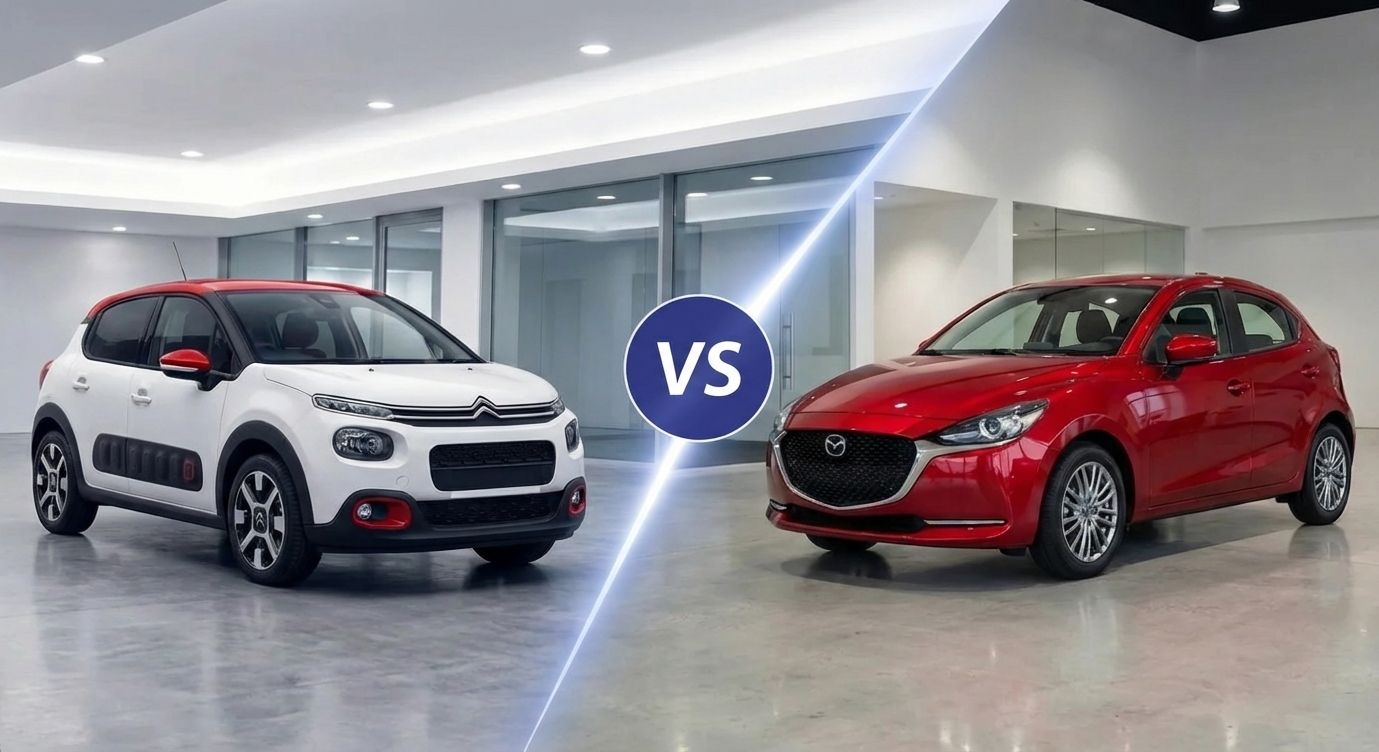
Detailed comparison of Citroën C3 vs. Mazda 2 (Mazda2). We offer real-world driving experiences, an equipment overview, engine comparison, and a clear verdict for the right choice.
Apr 13, 2026