Car battle
Mazda CX-5 vs. Volkswagen Tiguan: Complete comparison 2026
Detailed comparison of Mazda CX-5 vs Volkswagen Tiguan. Find out which used SUV has better engines, equipment, and driving characteristics. Read our clear verdict!
Apr 2, 2026
Articles
Car battle
Detailed comparison: Seat Arona vs. Škoda Kamiq. Which used city SUV is better? Discover the differences in space, features, and reliability in our review.
May 21, 2026
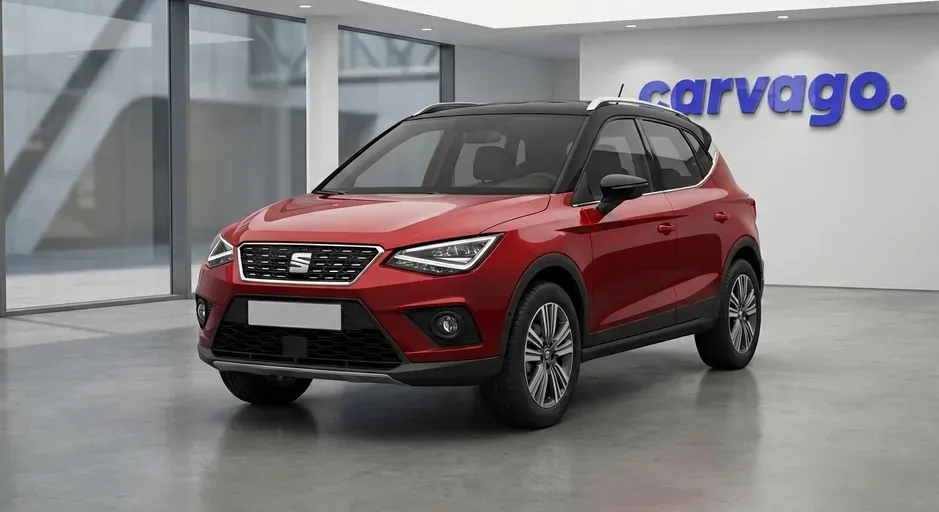
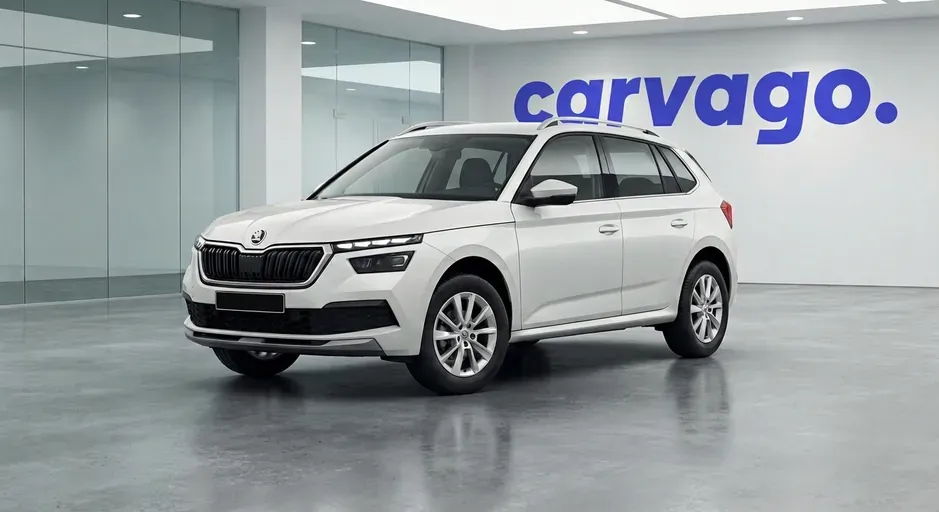
The Seat Arona is a stylish and agile city SUV that the Spanish carmaker built on the shared Volkswagen Group platform, focusing primarily on dynamic design and a sportier driving experience. Standing against it is the Škoda Kamiq, a practically-minded crossover from Mladá Boleslav, which offers above-average interior space, clever ergonomics, and a maximum emphasis on everyday utility on the same technological foundations. In this comparison, we will focus in detail on the key differences between these popular models to help you make a decision when choosing your ideal used car.
Both the Škoda Kamiq and the Seat Arona are technically based on the same foundation, which is the group's flexible MQB-A0 platform designed for smaller vehicles. However, a closer look at their exterior proportions quickly reveals that both automakers have chosen a somewhat different approach. While the Spanish model sticks more strictly to the boundaries of subcompact city crossovers and bets on overall compactness, the Czech representative has significantly stretched its body both visually and physically. This physical difference predestines each of the cars for a slightly different target group and a different way of daily use.
Fundamental differences exist in overall length and wheelbase. With a fixed length of 4241 mm, the Škoda Kamiq is approximately 88 to 103 mm longer than the Seat Arona, whose length on the four-year-old used car market ranges between 4138 and 4153 mm, depending on the specific version and the shaping of the bumpers before and after the facelift. Even more important for the overall concept of the car, however, is the wheelbase, which reaches 2651 mm for the Škoda Kamiq. Compared to the 2566 mm of the Arona, this is a significant lead of 85 mm. In practice, this means that the Škoda provides substantially more airy legroom for rear passengers and feels more stable at higher highway speeds, while the Seat Arona, thanks to its shorter overhangs, can bring a smile to your face when searching for a parking spot in narrow city centers.
In terms of width and height, the forces are much more balanced. The 1793 mm width of the Škoda Kamiq surpasses its Spanish rival's 1780 mm by a negligible 13 mm, a value you won't even notice in everyday use. The height of both cars across various trims and engines ranges within a very similar span, roughly from 1530 to 1560 mm. So, if you are looking for an agile city car with a more sporty, planted stance, the dimensions of the Seat Arona will suit you better. The Škoda Kamiq, on the other hand, cleverly masks the fact that it is a small crossover with its stretched silhouette, and its proportions will excellently serve buyers who need a more full-fledged replacement for a traditional family hatchback.
| Parameter | Seat Arona SUV | Škoda Kamiq SUV |
|---|---|---|
| Length (mm) | 4138 - 4153 | 4241 |
| Width (mm) | 1780 | 1793 |
| Height (mm) | 1537 - 1552 | 1527 - 1562 |
| Wheelbase (mm) | 2566 | 2651 |
When choosing a compact city crossover, luggage capacity plays a key role, especially if the car is to serve as the main family vehicle. Although the Seat Arona and Škoda Kamiq share a common group platform and fall into the popular small SUV category, their interior layout and overall body design differ slightly. For those interested in a roughly four-year-old used car, the good news is that both models are among the leaders in their class in terms of transport capacity and offer highly competitive values for everyday practical use.
In the basic configuration, both SUVs provide exactly the same luggage space of 400 liters, which applies to all conventional petrol (TSI) and diesel (TDI) engines. This value is perfectly sufficient for weekend shopping or a longer holiday for a smaller family. However, special attention should be paid to alternative powertrains. If you choose the more eco-friendly versions burning compressed natural gas (CNG), you must expect significantly less space due to the installation of pressure tanks under the trunk floor. For the Seat Arona 1.0 TGI, the basic capacity drops to 282 liters, while the Škoda Kamiq in the 1.0 TGI G-TEC version offers a slightly different 278 liters.
A more noticeable difference between the two cars becomes apparent when you need to transport oversized cargo and fold down the rear seats. In such a situation, the Seat Arona offers a maximum volume of 1,280 liters (or 1,162 liters for the aforementioned TGI version). The Škoda Kamiq, on the other hand, benefits from its overall longer body and can conjure up a significantly more generous 1,395 liters (1,273 liters for the gas versions) after folding the backrests. This difference of more than one hundred liters in favor of the Škoda means, in practice, useful space for several extra suitcases, or much more comfortable handling when transporting longer sports equipment or bulkier boxes.
| Parameter | Seat Arona SUV | Škoda Kamiq SUV |
|---|---|---|
| Basic volume (liters) | 400 (282 for CNG) | 400 (278 for CNG) |
| Max. volume with seats folded (liters) | 1,280 (1,162 for CNG) | 1,395 (1,273 for CNG) |
Although both models carry an identical 400 liters in the basic five-seat configuration, the Škoda Kamiq, thanks to its more spacious body, serves much better after folding the seats for those who more frequently move larger loads.
The ability to tow a trailer is an important criterion for many urban crossover owners, whether it's for transporting bikes on the weekend, hauling garden waste, or hitching up a small caravan. Although the SEAT Arona and Škoda Kamiq share similar group technology and belong to the same segment, there are small but practically very useful differences in their maximum permitted load values.
While the SEAT Arona can tow a braked trailer with a standard weight starting from 1000 kg and its absolute maximum reaches 1200 kg (especially with the 1.5 TSI engine), the Škoda Kamiq offers slightly higher limits overall. For the Mladá Boleslav crossover, braked trailer values range from 1000 kg to a more generous 1250 kg for the more powerful four-cylinder variants and diesel engines. The unbraked trailer weight for both cars stays within the standard limits for the class, mostly ranging between 590 and 640 kg.
However, a major limitation awaits those interested in the eco-friendly compressed natural gas (CNG) variants. The SEAT Arona 1.0 TGI and Škoda Kamiq 1.0 TGI G-TEC models are completely prohibited from towing trailers due to the specific installation and placement of the pressure cylinders in the rear of the vehicle. They lack homologation for a tow bar, which is why you won't find them in the attached comparison table.
In practice, these small weight differences mean that the slightly higher towing capacity of the petrol Kamiq offers safe room for a few extra suitcases or the transport of heavier building materials. It thus represents a sufficient choice even for longer family holidays combined with light caravanning. The Arona, on the other hand, easily handles light weekend shopping from DIY stores or towing smaller trailers, but has a slightly smaller margin for more demanding loads.
Conclusion: If regularly hitching up a heavier trailer is key for you, the Škoda Kamiq proves to be a more versatile workhorse thanks to its slightly higher weight limit. The SEAT Arona, on the other hand, is an excellent and agile choice for common, less demanding recreational use.
| Model and engine | Braked trailer (kg) | Unbraked trailer (kg) |
|---|---|---|
| SEAT Arona 1.0 TSI (70 kW) | 1000 | 590 - 600 |
| SEAT Arona 1.0 TSI (81 / 85 kW) | 1100 | 600 - 610 |
| SEAT Arona 1.5 TSI (110 kW) | 1200 | 630 |
| SEAT Arona 1.6 TDI (70 / 85 kW) | 1100 - 1200 | 630 |
| Škoda Kamiq 1.0 TSI (70 kW) | 1000 - 1150 | 600 |
| Škoda Kamiq 1.0 TSI (81 / 85 kW) | 1200 | 610 - 620 |
| Škoda Kamiq 1.5 TSI ACT (110 kW) | 1250 | 630 - 640 |
| Škoda Kamiq 1.6 TDI SCR (85 kW) | 1250 | 640 |
Since both the Seat Arona and Škoda Kamiq share the same MQB A0 platform from the Volkswagen Group, their range of powertrains is practically identical. For those interested in a used car, this represents a huge advantage, as both models rely on proven and efficient petrol engines that have established themselves well on the market and guarantee reasonable service costs. Most of the range consists of turbocharged 1.0 TSI three-cylinder engines, which are perfectly sufficient for everyday driving, while more demanding drivers and fans of smoother motorway cruising will appreciate the more refined 1.5 TSI four-cylinder. A key fact for those looking at roughly four-year-old used cars (around the 2022 model year) is that both manufacturers definitively ended the sale of diesel engines (1.6 TDI) during 2020. In used car dealerships, you will therefore find exclusively petrol versions for newer model years, or marginal and now discontinued variants burning compressed natural gas (CNG). Both vehicles rely exclusively on front-wheel drive and do not offer all-wheel drive (4x4) or plug-in hybrid systems.
Seat Arona positions itself as a car with a slightly sportier character, which is reflected in the logic of the gearbox offerings for individual engines. If you are looking for 2022 models, the absolute base is the 1.0 TSI three-cylinder with 70 kW (95 hp), which is always paired with a five-speed manual transmission. A more versatile and more sought-after version on the used market is the 1.0 TSI with 81 kW (110 hp), where you can already choose between a six-speed manual and a smooth-shifting seven-speed DSG automatic. At the top of the range is the powerful 1.5 TSI four-cylinder with 110 kW (150 hp). A peculiarity of the Arona is that Seat combined this most powerful engine for the given model years almost exclusively with the DSG automatic transmission, which perfectly complements the dynamically styled FR trim. An ecological alternative was the 1.0 TGI engine burning CNG, but this ceased production at the beginning of 2023. As already mentioned, the 1.6 TDI diesel engine completely disappeared from the range in 2020, so you won't encounter it at all in four-year-old used cars – nevertheless, we include it in the table for historical context.
| Engine type | Fuel | Power (kW) | Torque (Nm) | Transmission |
|---|---|---|---|---|
| 1.0 TSI | Petrol | 70 | 175 | 5MT |
| 1.0 TSI | Petrol | 81 | 200 | 6MT / 7DSG |
| 1.5 TSI | Petrol | 110 | 250 | 7DSG |
| 1.0 TGI | CNG / Petrol | 66 | 160 | 6MT |
| 1.6 TDI (until 2020) | Diesel | 70 / 85 | 250 | 5MT / 6MT / 7DSG |
The Škoda Kamiq benefits from the same technical basis but focuses more on everyday family practicality and wider choice for the driver. The petrol range for model years around 2022 starts with the identical 1.0 TSI engine (70 kW) and continues with the more popular 1.0 TSI version (81 kW), which is an ideal compromise between fuel consumption and dynamics for a compact SUV. The main difference compared to its Spanish sibling is the fact that Škoda offered a six-speed manual transmission alongside the seven-speed DSG for its top-of-the-range 1.5 TSI ACT (110 kW) with intelligent cylinder deactivation technology. This makes the Kamiq a great choice for more demanding drivers who want a more powerful engine but like to shift gears themselves. For fans of alternative fuels, the 1.0 TGI G-TEC model was available until roughly mid-2022. As with the Arona, the efficient 1.6 TDI SCR diesel engine was removed from the portfolio at the end of 2020 and can no longer be purchased in 4-year-old cars.
| Engine type | Fuel | Power (kW) | Torque (Nm) | Transmission |
|---|---|---|---|---|
| 1.0 TSI | Petrol | 70 | 175 | 5MT |
| 1.0 TSI | Petrol | 81 | 200 | 6MT / 7DSG |
| 1.5 TSI ACT | Petrol | 110 | 250 | 6MT / 7DSG |
| 1.0 TGI G-TEC | CNG / Petrol | 66 | 160 | 6MT |
| 1.6 TDI SCR (until 2020) | Diesel | 85 | 250 | 6MT / 7DSG |
Shared Group technology means that both cars offer exceptionally reliable petrol engines; however, for drivers desiring 150 hp with a manual transmission, the Škoda Kamiq is the clear winner, while the Seat Arona will better satisfy those looking for a comfortable combination of an automatic with a sporty look.
Choosing the right engine is key to long-term satisfaction with a car, which is why our recommendations are based on performance, real-world fuel consumption, owner feedback, and mechanical reliability. Both the Seat Arona and the Škoda Kamiq share the MQB A0 platform and the group's engine family, meaning they have similar basic technology. However, given the different dimensions and target audiences of the two cars, it makes sense to choose different powertrains. A significant characteristic of the 4-year-old used car market in this segment is the overwhelming dominance of petrol engines – as production data shows, the 1.6 TDI diesel units were phased out for both models at the end of 2020 due to strict emission standards. Therefore, looking for a diesel in used car lots today makes little sense, and attention should be focused exclusively on TSI units.
This turbocharged one-liter three-cylinder is an absolutely ideal choice for the light and compact Arona. It offers a great compromise between purchase price, running costs, and dynamics that are more than sufficient for both city driving and country roads.
Compared to the Arona, the Škoda Kamiq is noticeably more spacious, has a longer wheelbase, and serves as a full-fledged primary family car for many owners. For this reason, it makes a lot of sense to go for the more powerful 1.5 TSI four-cylinder petrol engine with 110 kW.
Official fuel consumption figures often differ significantly from real-world driving. Laboratory measurements and official cycles cannot always accurately simulate daily crawling in city traffic jams, highway speeds, or driving with a loaded boot. To get a true picture of the operating costs of approximately four-year-old used cars (mainly model years 2020 to 2022, which make the most sense on the used car market), we focused on real data provided by the owners themselves. For this, we used the long-term database of the verified community portal Spritmonitor.de, where drivers record their actual refuelling and mileage.
| Model and engine | Average consumption (l/100 km) |
|---|---|
| Seat Arona 1.0 TSI | 5.6 |
| Škoda Kamiq 1.0 TSI | 5.4 |
| Seat Arona 1.5 TSI | 6.0 |
| Škoda Kamiq 1.5 TSI ACT | 5.6 |
| Seat Arona 1.6 TDI | 5.0 |
| Škoda Kamiq 1.6 TDI SCR | 4.2 |
| Seat Arona 1.0 TGI | 4.0 (kg) |
| Škoda Kamiq 1.0 TGI G-TEC | 3.7 (kg) |
When analysing the data collected for this generation of roughly four-year-old cars, several surprising findings and trends emerge:
From the perspective of a typical owner, the choice of engine is primarily determined by how the vehicle is used. City drivers and people with shorter daily commutes will be well-served by the basic one-litre units, which offer solid economy even in heavy traffic. Conversely, for drivers who regularly hit the highway or drive with a fuller load, the 1.5 TSI engine makes the most sense. It doesn't suffer from such an increase in consumption under load and gives the car a more confident performance. You will only appreciate the diesel versions if you spend most of your time on motorways. However, they are becoming increasingly difficult to find in used car dealerships, as manufacturers quickly phased them out in this segment.
In conclusion, although the Škoda Kamiq comes out as the more economical choice both on paper and in reality, fuel consumption alone should not be the primary factor in the decision. The differences between the most popular petrol versions fluctuate in the range of tenths of a litre, which does not represent a significant burden on a monthly budget. When choosing a used car, the primary factors should be its technical condition, the transparency of its service history, and how well its ergonomics or design suit you.
Looking at the market for used cars around four years old (2021 and 2022 models), a very interesting difference emerges. Although both models share identical Group technology, including the MQB-A0 platform and engine range, their price levels on the Czech secondary market differ. This difference naturally reflects the strong domestic position and unrelenting popularity of the Škoda brand.
While the Seat Arona can be a great opportunity for bargain hunters, the Škoda Kamiq holds its residual value much more firmly due to enormous demand.
| Model | Starting price (base trim, 1.0 TSI) | Price for higher trim (FR / Monte Carlo, 1.5 TSI) |
|---|---|---|
| Seat Arona | from approx. €12,000 | €17,000 – €20,000 |
| Škoda Kamiq | from approx. €14,000 | €20,000 – €23,000 |
The Škoda Kamiq naturally dominates the Czech market in terms of total supply. The selection of used cars is huge, meaning a buyer can relatively easily find exactly the color, equipment, and engine they dreamed of. But there is another side to the coin – used cars depreciate more slowly, and therefore require a higher initial investment.
The Seat Arona is represented in Czech used car dealerships on a significantly smaller scale. For a rational buyer, however, it represents an excellent chance to get a technically almost identical car for substantially more affordable money, or perhaps treat themselves to a newer model year for the same budget.
While the Seat Arona represents a smart choice on the used market with a more attractive purchase price, the Škoda Kamiq will reward its future owner with a slower decline in value and an unrivaled selection of specifications in used car dealerships.
Both models, the Seat Arona and the Škoda Kamiq, boast a maximum five-star rating in independent Euro NCAP safety tests. However, when comparing these results, it is crucial to take into account the context and the year the vehicles were tested. Euro NCAP's methodology and requirements are constantly evolving and becoming significantly stricter over time. This means that percentage ratings from different years cannot be directly and simply compared. Newer tests introduce much tougher criteria for the protection of occupants and vulnerable road users, as well as higher demands on modern active safety assistants.
While the Seat Arona originally underwent crash tests in 2017, in 2022 the safety of this model was re-evaluated according to much stricter rules. This newer testing protocol already included, for example, a simulation of a moving car hitting a moving deformable barrier or advanced detection of cyclists and pedestrians. Although these methodologies are incomparably more demanding, the Arona defended its five-star rating with ease. It received 83% for both adult occupant protection and child protection. In the case of vulnerable road user protection, it reached 65%, and it scored 70% for assistance systems. These figures reflect the Spanish crossover's ability to stand up even to the most modern and very strict demands for occupant protection.
The Škoda Kamiq, on the other hand, underwent Euro NCAP tests in 2019, where it also comfortably earned the maximum five stars at its premiere. From the perspective of the methodology at the time, it recorded an absolutely phenomenal result in the adult occupant protection category, reaching an impressive 96%. It also performed excellently in child protection (85%) and vulnerable road user protection (80%). Its active safety and assistance systems were rated at 76%. Although these percentages are higher in absolute terms than those of the Arona, it is essential to remember that they were achieved according to slightly older (and milder) testing standards. From the perspective of today's market for four-year-old used cars, the Kamiq's certification is formally marked as expired due to the passage of time, which, however, from a realistic point of view, changes nothing about the fact that it is an exceptionally robust and safe vehicle.
In terms of overall safety, you won't go wrong with either of these models. While the Škoda Kamiq dazzles with fantastic results from its 2019 testing year and exemplary body rigidity, the Seat Arona offers the tangible assurance that its protection and assistance systems met the more modern and noticeably stricter testing standards of 2022.
| Parameter | Seat Arona | Škoda Kamiq |
|---|---|---|
| Year of testing | 2022 | 2019 |
| Adult occupant protection | 83 % | 96 % |
| Child occupant protection | 83 % | 85 % |
| Vulnerable road user protection | 65 % | 80 % |
| Safety assistance systems | 70 % | 76 % |
Both cars earned five stars. While the Kamiq attracts with higher percentage scores under the older methodology, the Arona successfully passed the more demanding test in 2022 – so you can feel maximum safety on the road in both vehicles.
In addition to standard equipment, each model offers several unique features that can be decisive for the customer, and both cars approach added value in their own, completely different way. While the Spanish crossover focuses more on emotion, style, and a more agile driving concept, the Czech representative excels with its renowned practicality and clever equipment that makes everyday life more pleasant.
More agile driving characteristics and a sportier feel behind the wheel thanks to a shorter wheelbase
Usually a lower purchase price on the used car market compared to its group sibling
More intuitive climate control using classic physical buttons and rotary knobs
A wide selection of attractive trim levels, especially the sought-after sporty FR version
Noticeably less legroom for rear-seat passengers
Stiffer suspension tuning, which can reduce comfort on broken city roads
Cheaper-looking hard plastics in the interior on models before the 2021 facelift
The Seat Arona is a great choice for drivers looking for a compact and agile city SUV with a sportier spirit who don't want to spend unnecessarily much money. Thanks to its shorter dimensions and more direct steering, it will primarily appeal to younger couples or individuals who move mainly in the city and do not need to maximize space in the second row of seats.
Completely unrivaled rear-seat space, which rivals even cars from a higher class
Higher quality soft-touch materials in the interior and an overall more mature and premium finish
Very comfortably tuned suspension that filters out bumps excellently and is suitable for longer journeys
A number of practical "Simply Clever" solutions (retractable door edge protection, umbrella, ice scraper)
Higher purchase price for used cars, reflecting the model's huge popularity on the domestic market
Less engaging, softer, and rather detached driving performance in corners
Unnecessarily complex adjustment of climate control fan speed and direction via the touchscreen
The Škoda Kamiq perfectly suits rational buyers and small families for whom maximum interior space, high comfort, and everyday practicality are priorities. It feels like a more mature and refined car, but you will have to pay slightly more for its utility value on the used market compared to the Seat.
Based on data from authorized and independent service centers, owner feedback from long-term tests, and results from the CarAudit service, which provides a detailed independent inspection of a car's technical condition before sale, we have compiled an overview of the most common problems you should focus on for roughly four-year-old used cars.
The Seat Arona is generally considered a very reliable and mechanically durable city crossover; however, models manufactured between 2018 and 2022 exhibit specific issues related more to user comfort and the materials used.
Although the Arona is a durable car in terms of engines and chassis, used units can plague owners with creaking interior plastics and occasional software glitches in the onboard system. Pay close attention to the smoothness of shifting if you are choosing a version with the DSG automatic.
The Škoda Kamiq shares the MQB-A0 platform and most power units with the Arona, but thanks to its later market launch (in 2019), it has already ironed out some of the initial technical teething troubles. However, it has not completely avoided temperamental electronics.
The Kamiq excels with a higher-quality interior featuring soft-touch plastics and mechanical sturdiness. The main source of frustration for owners is thus primarily oversensitive assistance systems and infotainment quirks that require regular system updates.
When buying a used car, a thorough inspection is key, and although both models share reliable group technology, they have their specifics and weak points to watch out for. For complete peace of mind and certainty of a good investment, an independent comprehensive car inspection is always worth it.
If you are not sure whether all these components are working flawlessly, the ideal solution is a professional physical inspection of the car, during which the mechanic will also use diagnostics to detect errors stored in the control units.
The Škoda Kamiq is noticeably better in terms of overall spaciousness because it has a significantly longer wheelbase. Thanks to this, it offers rear-seat passengers generous legroom and headroom that can be compared even to cars in higher classes. The Seat, on the other hand, is overall shorter and more compact, which reduces space in the back but makes maneuvering in narrow city streets easier.
The basic trunk volume is exactly the same for both cars, at a solid 400 liters. The difference only becomes apparent after completely folding down the rear seats, where the Czech model offers 1,395 liters compared to 1,280 liters for its Spanish sibling. Additionally, the Škoda model traditionally scores points with practical “Simply Clever” features for smarter securing and organization of transported cargo.
The Škoda Kamiq boasts an exceptionally comfortable suspension that smoothly filters out potholes and bumps on typical roads. The Seat Arona, on the other hand, was given a stiffer and sportier damper tuning by the engineers. While you will appreciate the former for a calm commute, the latter will please drivers looking for a more confident and dynamic experience in corners.
Since both cars share the same technical platform, you will find identical and field-proven power units under the hood. For normal mixed driving, the ideal choice is the economical 1.0 TSI three-cylinder, which scores with reliability and low operating costs. However, those who more frequently drive with a fully loaded car on longer routes should opt for the more powerful 1.5 TSI four-cylinder.
For the role of the main family car, the Škoda Kamiq is clearly more suitable thanks to its more generous interior space in the second row of seats. It can accommodate even older children in car seats or adult passengers without any problems. The Seat Arona makes much more sense as a stylish second car for the family or as an agile companion for couples living in the city.
Although the Seat Arona and Škoda Kamiq share identical group technology, they appeal to completely different target groups in the market for roughly four-year-old used cars. The Spanish Arona represents a more affordable and agile choice, which, thanks to its more compact dimensions and sportier-tuned chassis, is perfect for individuals or couples looking for a nimble SUV for city driving. The Škoda Kamiq, on the other hand, benefits maximally from an extended wheelbase and more comfortable suspension, making it a more mature and highly practical car ideal for small families or long-distance travel. The final choice thus depends purely on your daily needs: whether you prefer a more engaging driving character with a more favorable purchase price, or whether you would rather pay slightly more for unrivaled interior spaciousness, clever features, and the high residual value of the Czech bestseller.
Sources: ADAC, svetmotoru.cz, e15.cz, dopravniinfo.cz, autojournal.cz, cistadoprava.cz
This article was prepared using artificial intelligence tools. The section guarantor is Petr Dušek.
Detailed comparison of Mazda CX-5 vs Volkswagen Tiguan. Find out which used SUV has better engines, equipment, and driving characteristics. Read our clear verdict!
Apr 2, 2026
Used SUV comparison: Ford Kuga vs. Renault Austral. Find out which model offers better engines, equipment, and real value. Read our final verdict!
Apr 18, 2026
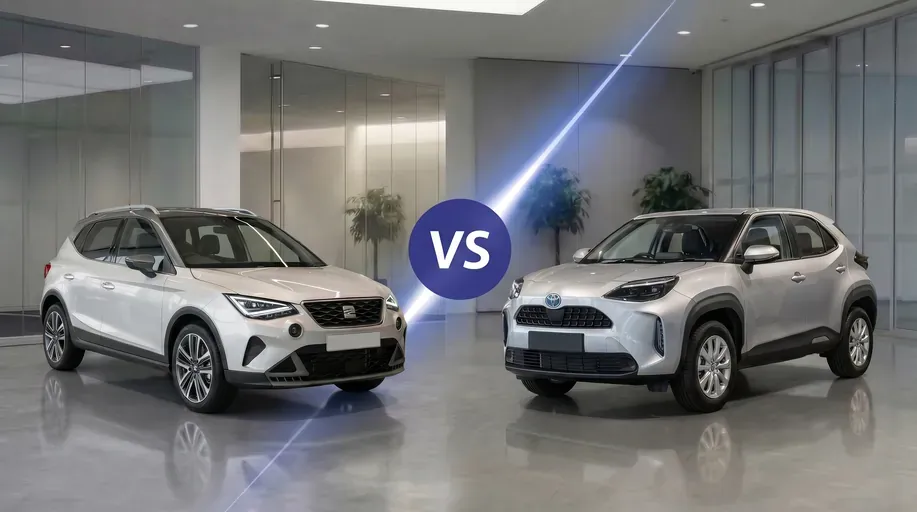
Seat Arona vs Toyota Yaris Cross: Small SUV comparison. Discover the differences in driving dynamics, features, and fuel economy, and find out our verdict for an easy choice.
May 10, 2026