Car battle
Audi Q3 vs. BMW X1: A Complete 2025 Comparison
Audi Q3 vs BMW X1: Detailed comparison of design, performance, and practicality. Find out which premium SUV is the right choice for you in our verdict.
Apr 14, 2026
Articles
Car battle
Detailed comparison of Mazda CX-5 vs Volkswagen Tiguan. Find out which used SUV has better engines, equipment, and driving characteristics. Read our clear verdict!
April 2, 2026
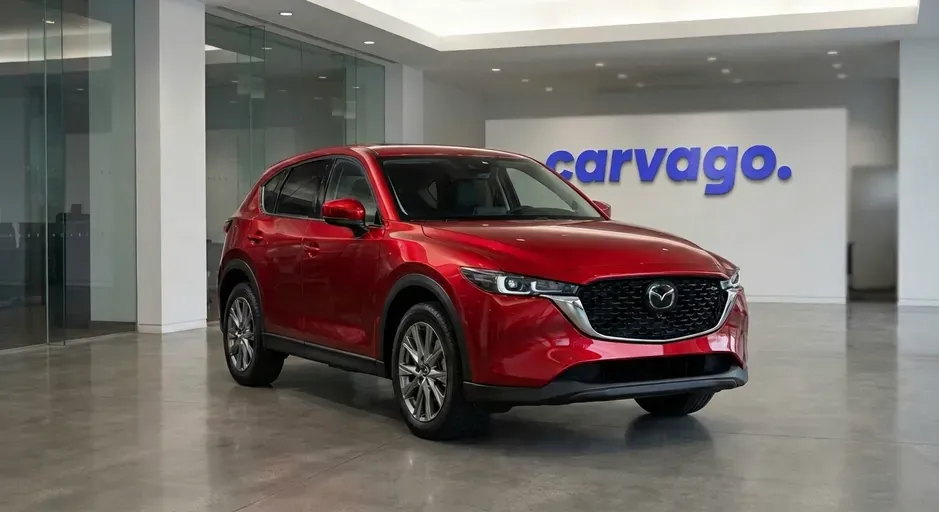
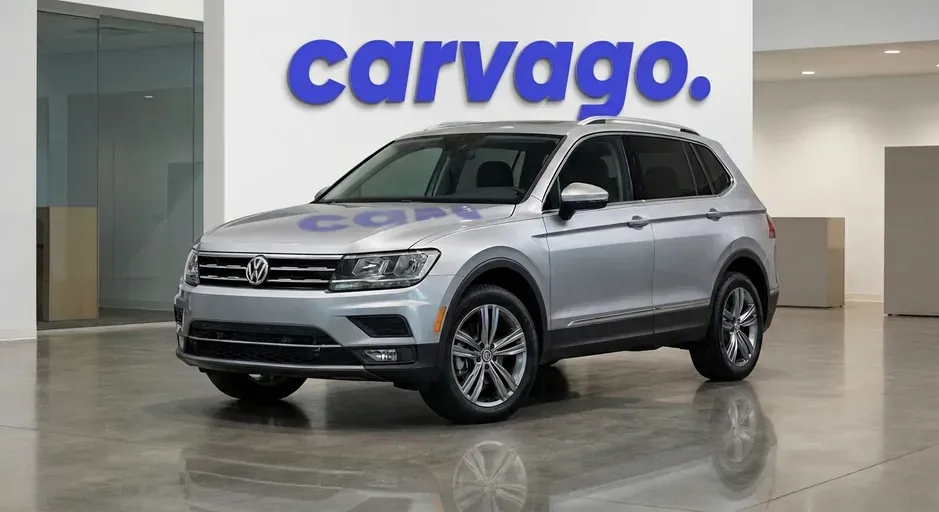
The Mazda CX-5 is a popular Japanese SUV that has gained a reputation on the market as a highly reliable car with an attractive design and above-standard driving characteristics. On the other hand stands the Volkswagen Tiguan, which in its more practical extended version is also known as the Tiguan Allspace, and which represents the traditional benchmark of German ergonomics, spaciousness, and advanced technologies. Let's take a detailed look at how these two exceptionally strong competitors from the nearly-new used car market stand in a direct comparison and which of them will better suit your everyday needs.
When choosing a family SUV, exterior dimensions play a key role, as they directly affect not only the interior space but also everyday maneuverability in the city. Although both the Mazda CX-5 and the Volkswagen Tiguan fall into the same category of compact SUVs and are among the most sought-after on the market of roughly four-year-old used cars, their approach to the bodywork differs slightly. Mazda bets on elegant and dynamic lines, while Volkswagen sticks to a strictly rational and boxier shape aimed at maximizing interior volume. This fundamental philosophical difference in the conception of proportions means that the very shaping of the bodywork in these cars clearly determines what overall compromise between style and interior space you will make in everyday life.
Looking at the overall length of the car and the wheelbase, the Japanese representative has the upper hand. The Mazda CX-5 measures 4550 to 4575 mm in length, making it roughly 66 mm longer than the usual versions of the Volkswagen Tiguan, whose length for most variants hovers around 4509 mm. The wheelbase keeps pace with this – Mazda offers a generous 2700 mm, while the Tiguan a slightly more modest 2677 to 2680 mm. These values give the Mazda a visually more mature stance and theoretically a smoother and more confident ride. The greater length and longer wheelbase thus make the Mazda a more stable candidate for fast highway transfers, but the overall more compact Tiguan will offer you an undeniable advantage and better agility when parking in crowded city streets or underground garages.
In terms of width and height, both models are surprisingly very close, but they differ in how they practically utilize these dimensions. The width of both cars hovers just around the 1840 mm mark, although the Tiguan can reach up to 1859 mm in some sportier trims (for example, with R-Line accessories) thanks to specific body cladding. The height of the Mazda CX-5 is a stable 1680 mm, to which the Tiguan, with its value reaching 1675 mm, loses only very slightly. The real difference thus lies not in the millimeters themselves, but in the sloping of the roof and the overall angle of the rear window. The rational conception of width and height plays into the hands of the German car, which can extract much more usable space for the crew and luggage from its footprint, while Mazda noticeably sacrifices absolute practicality in favor of a sporty look for its dynamic silhouette.
| Parameter | Mazda CX-5 SUV | Volkswagen Tiguan SUV |
|---|---|---|
| Length (mm) | 4550 - 4575 | 4486 - 4514 |
| Width (mm) | 1840 - 1845 | 1839 - 1859 |
| Height (mm) | 1680 | 1632 - 1675 |
| Wheelbase (mm) | 2700 | 2677 - 2680 |
The trunk space is a key parameter for many buyers of mid-size SUVs, especially if the car serves as the main family vehicle for everyday duties and weekend trips. The difference between the Mazda CX-5 and Volkswagen Tiguan models in this area clearly shows the different approach of both automakers to the interior layout. While Mazda focuses more on a dynamic profile and elegant design at the expense of absolute volume, Volkswagen bets on maximum utility value, variability, and generous interior space, which you will fully appreciate when packing for a family vacation.
Looking at the specific numbers for the generations that are currently most in demand on the market of roughly four-year-old used cars (i.e., the Mazda CX-5 generation KF and the VW Tiguan generation II), the German representative is the favorite in terms of volume. The Mazda CX-5 offers a trunk volume of 506 to 522 liters in the standard layout, depending on the specific engine. After folding down the rear seats, this space increases to 1620 liters. The Volkswagen Tiguan, on the other hand, is a champion in its class thanks to its sliding rear seats, and its basic volume reaches an excellent 615 liters. If you fold the seats down completely, you get up to 1655 liters of space. A significant exception for the Tiguan, however, is the plug-in hybrid eHybrid version, where the capacity is noticeably reduced to 476 liters due to the placement of the traction batteries under the floor.
In practice, these differences mean that the conventional Tiguan will offer space for a few extra suitcases and overall will cope noticeably better with bulky sports equipment or a large stroller. Although the Mazda CX-5 lags slightly behind its rival in absolute numbers, its trunk is nevertheless fully sufficient for weekend shopping and longer vacations, while pleasing with a flat loading surface and very high-quality workmanship. The conclusion is therefore clear: if space and maximum flexibility for a larger family are your absolute priorities, the Tiguan will be the more practical choice. But if a solid standard is enough for you and you appreciate the sportier character of the car more, the Mazda's trunk will definitely not limit you.
| Parameter | Mazda CX-5 SUV | Volkswagen Tiguan SUV |
|---|---|---|
| Basic volume (l) | 506 – 522 l | 615 l (476 l eHybrid) |
| Maximum volume after folding seats (l) | 1620 l | 1655 l |
The ability to tow a heavy trailer is a key parameter for many buyers of mid-size SUVs, whether they plan to tow a family caravan, a boat, or work trailers. Both the Volkswagen Tiguan and the Mazda CX-5 are very capable representatives in this discipline, but with different maximum limits that can decide the final choice.
The Mazda CX-5 (in its still highly sought-after KF generation) offers stable towing capacity across its entire range. Its petrol engines, such as the 2.0 e-SKYACTIV-G, can handle a braked trailer weighing 1800 to 2000 kg. If you reach for the more powerful 2.2 SKYACTIV-D diesel engine, the limit shifts to a very respectable 2100 kg. Conversely, the Volkswagen Tiguan (the popular 2nd generation) shows a significantly wider variance depending on the chosen engine and drivetrain. While the smaller 1.5 TSI petrol variants can tow a standard 1600 to 1800 kg, the more powerful 2.0 TDI and 2.0 TSI two-liter engines (often paired with 4Motion all-wheel drive) are absolute champions in this class and can handle an impressive 2500 kg. In the case of the plug-in hybrid Tiguan (1.4 eHybrid), however, it is necessary to expect a reduced capacity of 1800 kg due to the higher curb weight of the vehicle itself and the specifics of the battery system.
In practice, these differences mean that 2000 to 2100 kg for the Mazda will easily suffice for a weekend purchase of heavy building materials as well as a longer holiday with a standard twin-axle family caravan or a cabin cruiser. The Tiguan, with its 2500 kg, however, opens up space for much more demanding uses – it becomes an ideal helper for heavy horse trailers, large car transporters, or professional construction equipment. The unbraked trailer limit for both vehicles, regardless of equipment, is the legislative maximum of 750 kg.
From an overall perspective, the Volkswagen Tiguan is the clear winner for those users looking for an uncompromising workhorse for towing the heaviest trailers. The Mazda CX-5, on the other hand, offers reliable and versatile values that will be fully sufficient for the vast majority of typical recreational and family needs.
| Model and engine | Braked trailer (kg) | Unbraked trailer (kg) |
|---|---|---|
| Mazda CX-5 2.0 e-SKYACTIV-G (121 kW) | 1800 - 2000 | 750 |
| Mazda CX-5 2.2 SKYACTIV-D (135 kW) | 2000 - 2100 | 750 |
| VW Tiguan 1.5 TSI OPF (110 kW) | 1800 | 750 |
| VW Tiguan 1.4 eHybrid (110 kW) | 1800 | 750 |
| VW Tiguan 2.0 TDI SCR (110 kW) | 2000 - 2500 | 750 |
| VW Tiguan 2.0 TSI OPF (140 kW) | 2500 | 750 |
The engine options of both SUVs represent completely different philosophies, which is a key factor for buyers looking for a specific driving experience and reliability. While the Volkswagen Tiguan relies exclusively on turbocharged engines and modern technologies like plug-in hybrid drive, the Mazda CX-5 stubbornly sticks to classic naturally aspirated petrol engines with a larger displacement, to which it only later added mild-hybrid assistance. The standard powertrain for the Mazda is the 2.0 SKYACTIV-G four-cylinder petrol engine, which stands against the advanced turbocharged 1.5 TSI in the Volkswagen. Both of these base engines will please more relaxed drivers with a focus on everyday usability. However, if you are looking for higher performance, Mazda offers a strong naturally aspirated 2.5 SKYACTIV-G engine or the 2.2 SKYACTIV-D diesel, unconventionally with two turbochargers, while the Tiguan counters with punchy 2.0 TSI petrol engines (including the top-of-the-line Tiguan R version) and the extremely popular 2.0 TDI SCR diesel. Mazda's strong point is the smooth linear pull and long-term reliability of large-displacement engines paired with a classic six-speed torque-converter automatic transmission, but it may lag behind turbo engines in absolute dynamics. The Tiguan, on the other hand, relies on instant torque from low revs and lightning-fast shifting of the seven-speed DSG dual-clutch transmission. For high-mileage highway drivers, the favorite will be the TDI diesel in the VW or the SKYACTIV-D in the Mazda, while the petrol TSI or plug-in hybrid are much more suitable for the city in the Tiguan, and the robust two-liter petrol in the Mazda.
Under the hood of the Mazda CX-5 (in the relevant KF generation, approximately 4 years old), the primary role is played by innovative engines from the SKYACTIV family, which go against the current trend of downsizing. Petrol variants are represented by naturally aspirated 2.0 SKYACTIV-G four-cylinders with an output of 121 kW (165 hp) and the more powerful 2.5 SKYACTIV-G tuned to 143 kW (194 hp). For long highway journeys, there is an excellent twin-turbocharged 2.2 SKYACTIV-D four-cylinder diesel, available in versions with 110 kW (150 hp) and 135 kW (184 hp). For most engines, Mazda allows you to choose between an excellent, precise six-speed manual transmission and the proven SKYACTIV-Drive torque-converter automatic; the sophisticated i-ACTIV AWD all-wheel drive is also available for more powerful versions. From the perspective of vehicle age, a crucial fact is that at the turn of 2022 and 2023, purely internal combustion petrol engines were replaced by electrified e-SKYACTIV-G variants with mild-hybrid technology, which contributed to lower fuel consumption and smoother operation of the start-stop system. Older versions without electrification are therefore slowly disappearing from the secondary market.
| Engine type | Fuel | Power (kW) | Torque (Nm) | Transmission |
|---|---|---|---|---|
| 2.0 SKYACTIV-G / e-SKYACTIV-G | Petrol | 121 | 213 | 6MT / 6AT |
| 2.5 SKYACTIV-G / e-SKYACTIV-G | Petrol | 143 | 258 | 6AT |
| 2.2 SKYACTIV-D | Diesel | 110 | 380 | 6MT / 6AT |
| 2.2 SKYACTIV-D | Diesel | 135 | 445 | 6MT / 6AT |
The second-generation Volkswagen Tiguan after the facelift (2020–2023), which currently dominates the mid-age used car market, offers interested buyers a much more traditional European range of turbocharged engines. The gasoline base consists of the proven four-cylinder 1.5 TSI OPF, which is available in 96 kW (130 hp) and 110 kW (150 hp) versions, often supplemented by active cylinder technology (ACT) for higher efficiency. More demanding and sport-oriented drivers can reach for the supreme 2.0 TSI OPF, which delivers 140 kW (190 hp), 180 kW (245 hp), or up to an impressive 235 kW (320 hp) in the top-of-the-line Tiguan R version. However, a large portion of used cars on the Czech market hides the ageless 2.0 TDI SCR diesel engine under the hood, which in this generation received "Twin Dosing" technology with two catalytic converters, thereby radically reducing emissions. The vast majority of models are paired with a seven-speed DSG dual-clutch transmission and an optionally capable 4Motion all-wheel drive. The used car market also shows that the 1.4 eHybrid OPF plug-in hybrid version with an output of 180 kW was available mainly in 2021 and 2022, so you will encounter it rather exceptionally among used examples of this generation.
| Engine type | Fuel | Power (kW) | Torque (Nm) | Transmission |
|---|---|---|---|---|
| 1.5 TSI OPF | Gasoline | 96 / 110 | 220 / 250 | 6MT / 7DSG |
| 2.0 TSI OPF | Gasoline | 140 / 180 / 235 | 320 / 370 / 420 | 7DSG |
| 1.4 eHybrid OPF | Plug-in hybrid | 180 | 400 | 6DSG |
| 2.0 TDI SCR | Diesel | 90 / 110 / 147 | 320 / 360 / 400 | 6MT / 7DSG |
The Japanese and German approaches to powertrain development represent two completely different worlds in this comparison. While Mazda stubbornly – and very successfully from a lifespan perspective – sticks to the path of large-displacement naturally aspirated gasoline engines with excellent linear pull and without complex turbochargers, Volkswagen has long relied on precisely optimized turbocharging with a massive onset of torque right from the lowest revs. Choosing the right engine is absolutely crucial for your long-term satisfaction. Our recommendations for roughly four-year-old used cars are therefore based on a careful evaluation of performance under load, real-world fuel consumption, long-term owner feedback, and above all, proven mechanical reliability from the practice of service technicians.
In the case of a used Mazda CX-5, the larger 2.5-liter naturally aspirated four-cylinder represents the absolute pinnacle in terms of durability and user comfort. Why is it the best choice? Compared to the weaker two-liter, this engine offers a crucial power reserve for safely overtaking with a fully loaded SUV, while real-world consumption, thanks to aerodynamics and a smart two-cylinder deactivation system (under low load), stays at very pleasant values between 7.5 and 8.5 l/100 km. It is an exceptionally robust unit equipped with a reliable chain-driven timing system, which does not bother owners with expensive repairs typical of modern turbocharged units. From the perspective of data and market availability, it is important to mention that this purely internal combustion engine appeared on the market in the KF generation roughly until the end of 2022. After that, it was replaced in the lineup by the electrified e-SKYACTIV-G version. The classic 2.5 SKYACTIV-G model up to 2022 thus represents the most reliable solution for those interested in a four-year-old used car, without the added complexity of a mild-hybrid system.
When buying a used car and during subsequent care, however, focus on these service findings:
This unit is an ideal choice for drivers who prefer a smooth and effortless driving style, long-term owners looking for "peace of mind," and those who regularly alternate longer trips with suburban traffic.
For the Volkswagen Tiguan, especially if you are considering family use of an SUV category vehicle, the two-liter turbodiesel (EA288 evo) remains by far the best and most sought-after engine. Its massive 360 Nm of torque from the lowest revs perfectly suits the character of a heavier car that deals with higher air resistance. It will ensure effortless highway driving, very calm trailer towing, and crucially – in real-world traffic, it consumes a mere 5.5 to 6.5 l/100 km. For second-generation models, this engine was the backbone of sales, with safely proven versions in this specification sold between 2016 and 2023, which perfectly covers the segment of our recommended four-year-old used cars before the arrival of the recent third generation.
To ensure the TDI serves you as long as possible, pay attention to the following details from mechanics' practice when inspecting a used car:
The 2.0 TDI SCR engine is the clear king for highway mileage eaters, cottage owners towing trailers, and large families who fill the car to the brim for vacations and need to rely on a strong and extremely economical powertrain.
When choosing a roughly four-year-old family SUV – typically used cars from generations produced around 2021 – it is crucial not to rely solely on the paper fuel consumption figures provided by manufacturers. Although the modern WLTP measurement methodology has brought somewhat more accurate numbers, the reality of everyday driving with a fully loaded car often differs from the laboratory. To get the most objective picture of actual fuel costs, we used extensive user data from the independent portal Spritmonitor.de, where tens of thousands of European drivers have been recording their refueling over the long term. Below you will find a comparison of the most sought-after engines for the Mazda CX-5 (KF generation) and Volkswagen Tiguan (generation II post-facelift) models, which perfectly reflect everyday use.
| Model and engine | Average consumption (l/100 km) |
|---|---|
| Volkswagen Tiguan 2.0 TDI SCR (Diesel, 110 kW) | 6.2 |
| Mazda CX-5 2.2 SKYACTIV-D (Diesel, 110 kW) | 6.4 |
| Volkswagen Tiguan 2.0 TDI SCR (Diesel, 147 kW) | 6.6 |
| Mazda CX-5 2.2 SKYACTIV-D (Diesel, 135 kW) | 6.6 |
| Mazda CX-5 2.0 e-SKYACTIV-G (Petrol, 121 kW) | 7.2 |
| Volkswagen Tiguan 1.5 TSI OPF (Petrol, 110 kW) | 7.5 |
| Mazda CX-5 2.5 e-SKYACTIV-G (Petrol, 143 kW) | 8.0 |
| Volkswagen Tiguan 2.0 TSI OPF (Petrol, 140 kW) | 8.8 |
The measured values reveal very interesting and, for many, perhaps surprising trends. The most significant finding is the behavior of petrol engines, which shows that downsizing may not automatically be a salvation for the family budget. Mazda's conventional, naturally aspirated two-liter SKYACTIV-G can in practice run with lower fuel consumption than Volkswagen's smaller turbocharged 1.5 TSI unit. We observe exactly the same trend with the more powerful versions – the larger naturally aspirated 2.5 SKYACTIV-G engine outperforms Volkswagen's turbo-boosted two-liter TSI by a fairly noticeable margin. With diesel engines, on the other hand, the tables turn in favor of German engineering. The 2.0 TDI units from the Volkswagen Group represent the long-term pinnacle of efficiency, and the weaker Tiguan is the absolute king of economy in this comparison with an average of 6.2 liters. The Japanese 2.2 SKYACTIV-D diesel is nevertheless a very worthy rival, and in the more powerful versions, the differences between the two cars are practically erased.
For the typical driver, these hard data bring several absolutely crucial insights:
Can real-world fuel consumption therefore be seen as the main deciding factor between the two cars? Most likely not. The differences in directly comparable specifications often amount to mere tenths of a liter, which does not represent a dramatic amount in the monthly bill. The choice should thus primarily depend on your routes and driving style – betting on Mazda's robust petrol engines is the optimal hit for the city and for calmer commutes, while Volkswagen's proven diesel school will perfectly serve all highway travelers.
When looking for a roughly four-year-old used car (production years 2021–2022), we are dealing with generations of both models that have undergone important modernization and offer an attractive price-to-utility ratio. While Volkswagen benefits from huge popularity on the Czech market and massive imports from abroad (often from corporate fleets), Mazda is considered more of a choice for private owners. This is reflected in the market by a smaller, but often very well-cared-for selection of cars with lower mileage.
For approximately four-year-old Mazda CX-5 models, prices start at around €20,000, making it a relatively affordable entry ticket into the world of mid-size SUVs. The golden middle way in the form of a reliable two-liter petrol engine (2.0 Skyactiv-G) with a manual or automatic transmission, solid equipment, and below-average mileage ranges around €23,000 to €25,000.
The Tiguan has long maintained a very confident price on the used car market. A four-year-old car typically starts just below the €23,000 mark, but these will mostly be cars with the basic 1.5 TSI engine, poorer equipment, and higher mileage from fleet use.
| Model and specification | Average used car price (€) | Typical mileage |
|---|---|---|
| Mazda CX-5 2.0 Skyactiv-G (121 kW, 2WD) | €21,000 – €24,000 | 60,000 – 90,000 km |
| Mazda CX-5 2.5 Skyactiv-G (143 kW, AWD) | €25,000 – €29,000 | 50,000 – 80,000 km |
| VW Tiguan 1.5 TSI (110 kW, 2WD, DSG) | €24,000 – €27,000 | 80,000 – 110,000 km |
| VW Tiguan 2.0 TDI (110/147 kW, 4Motion, DSG) | €28,000 – €33,000 | 90,000 – 140,000 km |
Both of these models received the maximum five-star rating from independent Euro NCAP crash tests. However, it is important to perceive this result in the context of the year the tests were last conducted. Euro NCAP methodology and protocols are constantly evolving and becoming stricter over time, which means that percentage scores from earlier years cannot be directly compared with the results of the newest cars tested according to current standards. Both the Mazda CX-5 and the Volkswagen Tiguan underwent their main tests at the beginning of their generational cycles, i.e., at a time when such extreme demands were not yet placed on complex intersection scenarios or highly advanced cyclist detection.
The second-generation Mazda CX-5 passed the Euro NCAP tests in 2017. In the area of adult occupant protection, it achieved an excellent result of 95%, which confirms the solid and stable construction of its body. Child protection was rated at a solid 80%, and the protection of vulnerable road users, such as pedestrians, scored 78%. From today's perspective, the score of 59% in the safety assist systems category is somewhat weaker. Although the car was equipped as standard with an automatic emergency braking system in the city (Smart City Brake Support), the methodology at the time strictly penalized the absence of some more advanced active features in the basic equipment. Although the validity of this certificate expired in 2024, it is still a very authoritative figure for comparison within the used car market.
The second-generation Volkswagen Tiguan was tested by the Euro NCAP organization in 2016, and the validity of these tests was later methodologically confirmed for newer plug-in hybrid versions as well. The Tiguan excelled at the time with a result of 96% for adult protection and a very strong 84% for child occupant protection. Pedestrian protection was rated at 72%, which was contributed to in particular by the active hood, which demonstrably reduces the risk of head injuries. In the safety assist category, Volkswagen scored 68%, reflecting good standard equipment, which already included the Front Assist system with emergency braking and lane keeping assist (Lane Assist).
| Parameter | Mazda CX-5 | Volkswagen Tiguan |
|---|---|---|
| Year of testing | 2017 | 2016 |
| Adult occupant protection | 95% | 96% |
| Child occupant protection | 80% | 84% |
| Vulnerable road users protection | 78% | 72% |
| Safety assist systems | 59% | 68% |
In conclusion, both compact SUVs offer a very rigid and safe construction that will reliably protect the crew in real-world traffic. The Volkswagen Tiguan has a slight edge in child protection and the standard range of active safety assistants, while the Mazda CX-5 handled pedestrian protection slightly better. In the context of the market for roughly four-year-old used cars, both models represent a highly above-average choice and provide a comprehensive level of passive and active safety, even though they understandably no longer meet the strictest parameters of the current tests from recent months.
In addition to standard equipment, both models offer much more than just basic functions, with each taking its own distinctive approach to added value and user experience.
Advantages:
Disadvantages:
Advantages:
Disadvantages:
Based on long-term user experiences, service reports, recall notices, and our own data from comprehensive car inspections, we have compiled an overview of the most common problems that used car buyers should watch out for with these models.
The current generation Mazda CX-5 (often in post-facelift versions) maintains a reputation as one of the most reliable SUVs on the market, yet it is not immune to certain specific problems. However, most of these are of a cosmetic or electronic nature.
The naturally aspirated 2.0 and 2.5 Skyactiv-G petrol engines are exceptionally reliable. If the car is driven exclusively on short city routes, carbon buildup can occur on the intake valves. Regular oil changes and occasionally revving the engine at higher RPMs help. With the 2.2 Skyactiv-D diesel engines, the situation has significantly improved compared to the previous generation, but incomplete diesel particulate filter (DPF) regenerations still pose a risk of engine oil dilution with diesel fuel. Therefore, the diesel is suitable exclusively for drivers who regularly drive longer distances.
A very common and chronic pain point of this model is the motors of the electrically folding mirrors. The plastic gears inside the mechanism can wear out or the motor can burn out, causing the mirrors to get stuck halfway. The solution is usually replacing the entire mirror module. In some model years with the original MZD Connect system, a so-called "ghost touch" occurred (the display spontaneously reacts to touches due to the delamination of screen layers), but this problem was eliminated in newer versions of the infotainment system with a larger screen.
The Japanese automaker uses very eco-friendly, but unfortunately also relatively thin and fragile paints. In particular, the popular and premium Soul Red Crystal metallic paint is extremely susceptible to stone chips on the highway. During every physical car inspection, our inspectors also focus on the condition of the brakes, as the rear brake pads and discs on the CX-5 are subject to excessive wear and often require premature replacement.
Summary: The Mazda CX-5 is a mechanically exceptionally robust car. From a reliability perspective, it is a very safe choice, where the main risks are minor delays due to folding mirror failures or the need to accept faster wear of the paint and rear brakes.
A four-year-old Volkswagen Tiguan falls into the period around a significant facelift that brought modernized technologies. As a representative of the VW Group, it benefits from a massive service base, but it requires a more precise approach to maintenance and struggles primarily with software gremlins.
With the popular 1.5 TSI (Evo) petrol engine, early owners complained about jerking and loss of power when pulling away with a cold engine. In most cases, this problem was successfully resolved during service inspections by updating the control unit software. The popular 2.0 TDI diesels (Evo generation) are mechanically durable; however, in used cars with higher mileage, coolant leaks from the water pump area can occur. The AdBlue injection system also requires increased attention, as its pumps or sensors can occasionally fail.
DSG dual-clutch automatic transmissions are standard on the Tiguan. It is crucial to distinguish between the types: the seven-speed with wet clutches (DQ381, in more powerful engines and 4Motion) is highly reliable, provided strict oil changes are performed every 60,000 km. The dry-clutch version (DQ200), supplied with the base 1.5 TSI front-wheel-drive engines, suffers from faster wear of the clutch lining during frequent stop-and-go city driving, which manifests as jerking when pulling away.
The biggest weakness of the modernized Tiguan is the onboard entertainment system and comfort electronics. The newer MIB3 infotainment is often criticized for slow loading after startup, screen freezing, or random disconnections of the Apple CarPlay / Android Auto interface. A very common, and relatively expensive to repair, issue is the failure of the capacitive sensor in the steering wheel. If the car is equipped with the Travel Assist system, a faulty sensor causes constant pop-ups of error messages and acoustic warnings. The only permanent solution is usually replacing the entire steering wheel rim with a new hardware revision.
Cars equipped with the optional panoramic roof require regular cleaning of the drainage channels. If they become clogged with debris, water can start leaking into the interior, risking damage to the headliner and sensitive electronics. The DCC adaptive chassis works great, but at mileages approaching 150,000 km, you need to account for the risk of a more expensive replacement of "leaking" adaptive shock absorbers.
Summary: The Volkswagen Tiguan is a sophisticated and overall sturdy car. Mechanical faults mostly avoid it with proper servicing, but potential buyers should prepare for the quirks of the onboard software and check the flawless operation of electronic assistants during the test drive.
When buying a used car, a thorough inspection is crucial. Both models have their specifics and weak points that are good to focus on in detail before signing the contract. To prevent expensive surprises in the future, a thorough independent technical inspection of the car is essential. During the test drive and visual inspection, you should watch out for the following details.
The Volkswagen Tiguan has the upper hand in this area thanks to a basic trunk volume of 615 liters and practical sliding rear seats. The Mazda CX-5 offers a slightly more modest 522 liters, and its rear bench is not sliding. For families with a large amount of luggage, the German car is thus a more versatile and spacious choice.
The Mazda CX-5 is generally considered one of the best-driving SUVs in its class thanks to a superbly tuned chassis and communicative steering. Its naturally aspirated petrol engines require higher revs but reward you with a smooth pull and natural response. Although the Tiguan features strong turbocharged engines and confident driving characteristics, it focuses primarily on maximum comfort and sound insulation.
Mazda's naturally aspirated Skyactiv-G petrol engines are considered exceptionally reliable workhorses that are mechanically simpler and very low-maintenance. Volkswagen relies on turbocharged TSI units and economical TDI diesels, which are also durable with regular servicing but have more complex technology in the form of turbochargers. For roughly four-year-old used cars, the Japanese car may therefore represent a slightly lower risk of potentially expensive faults.
Mazda sticks to a traditional ergonomic approach with classic buttons and a very intuitive rotary infotainment controller on the center console. The facelifted Tiguan, on the other hand, has transitioned to touch surfaces for many functions, including the climate control panel and steering wheel, which can distract from driving. If you prefer modern digital displays, Volkswagen leads; for safety and ease of use while driving, Mazda is better.
Volkswagen is a slightly more suitable choice for families thanks to an overall airier cabin, more generous space in the rear seats, and better interior variability. The Japanese model, on the other hand, scores with premium materials in the cabin, but offers less legroom in the rear seats and less space for handling bulkier child car seats. The choice thus depends on whether uncompromising spaciousness wins out for you, or rather elegant design and driving pleasure.
The choice between Mazda CX-5 and Volkswagen Tiguan represents a battle of emotion and driving pleasure against cold rationality and utility. Mazda CX-5 is ideal for drivers who appreciate a premium feel, communicative steering, and the exceptional mechanical reliability of naturally aspirated engines with traditional ergonomics. In contrast, Volkswagen Tiguan excels in maximum interior space, variability, modern technologies, and is perfect for long highway journeys or towing heavy trailers. If you long for an elegant, driver-engaging, and mechanically robust car, choose Mazda CX-5. However, if you prefer cold logic, practicality for a larger family, and a versatile tool, Volkswagen Tiguan is objectively the more rational choice.
Sources: ADAC, forbes.cz, e15.cz, elektromobil.cz, hybrid.cz, automotorsport.cz
This article was prepared using artificial intelligence tools. The section guarantor is Petr Dušek.
Audi Q3 vs BMW X1: Detailed comparison of design, performance, and practicality. Find out which premium SUV is the right choice for you in our verdict.
Apr 14, 2026
Opel Mokka vs. VW T-Cross. A detailed comparison of engines, equipment, and price. Find out which compact SUV is right for you in our big test.
Apr 14, 2026
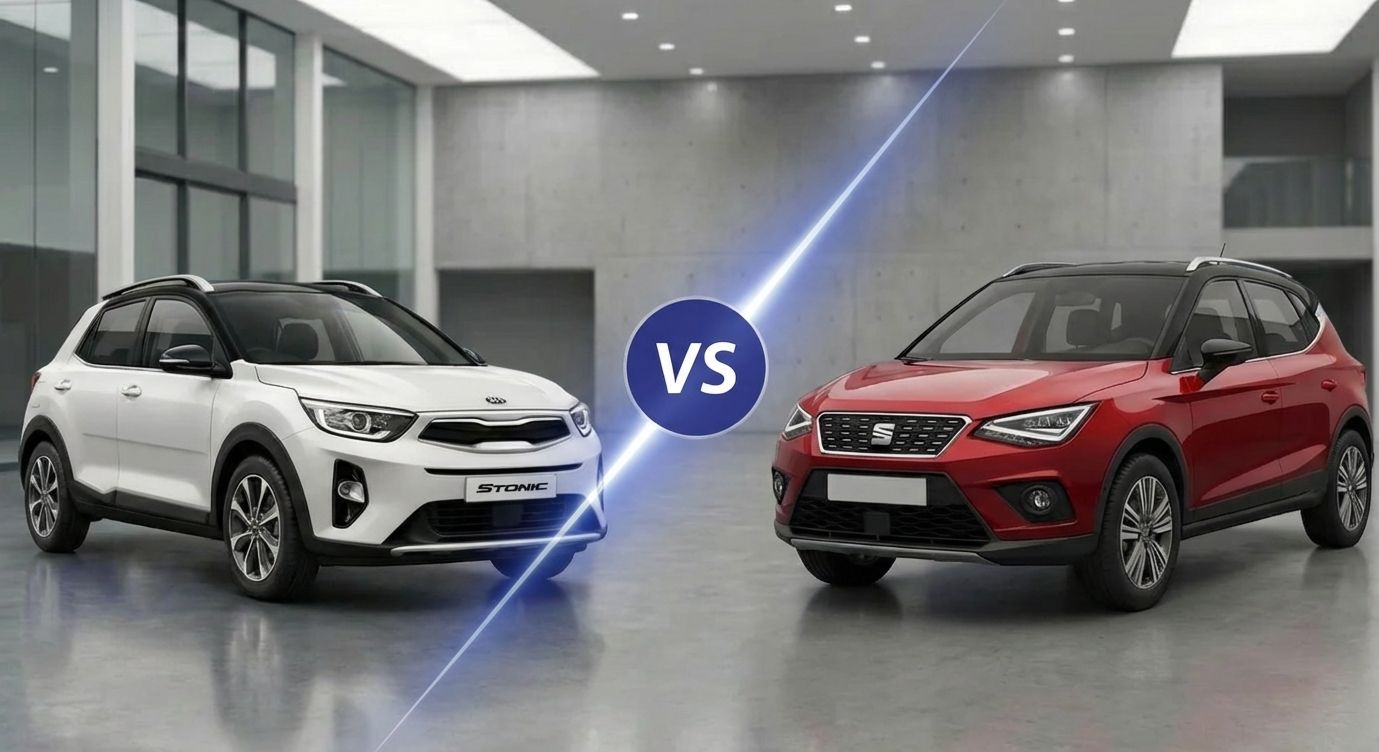
Kia Stonic or Seat Arona? We compare their engines, reliability, and practicality. Find out which used SUV is a better fit for you.
Apr 8, 2026