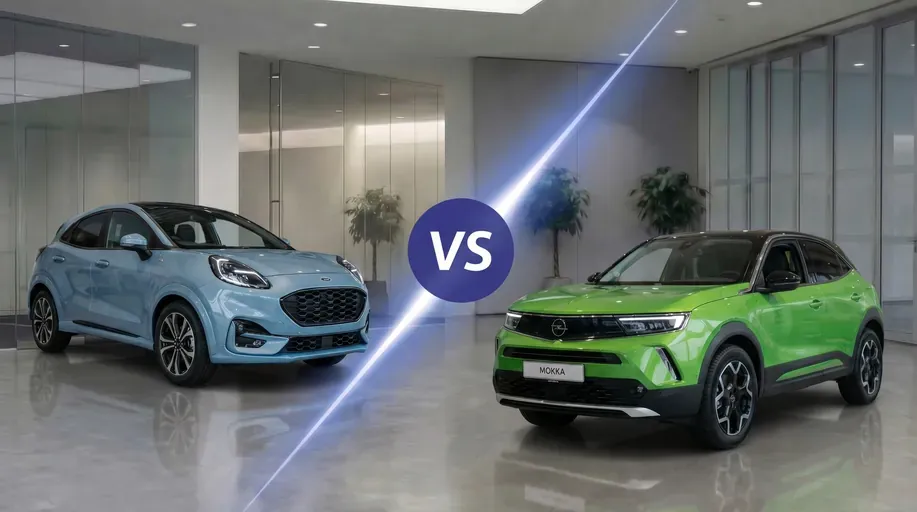
Car battle
Ford Puma vs. Opel Mokka: Complete comparison 2026
Ford Puma vs Opel Mokka: City SUV comparison. Read a detailed evaluation of engines, space, and driving characteristics and choose your ideal used car.
Apr 14, 2026
Articles
Car battle
Used SUV comparison: Ford Kuga vs. Renault Austral. Find out which model offers better engines, equipment, and real value. Read our final verdict!
April 18, 2026

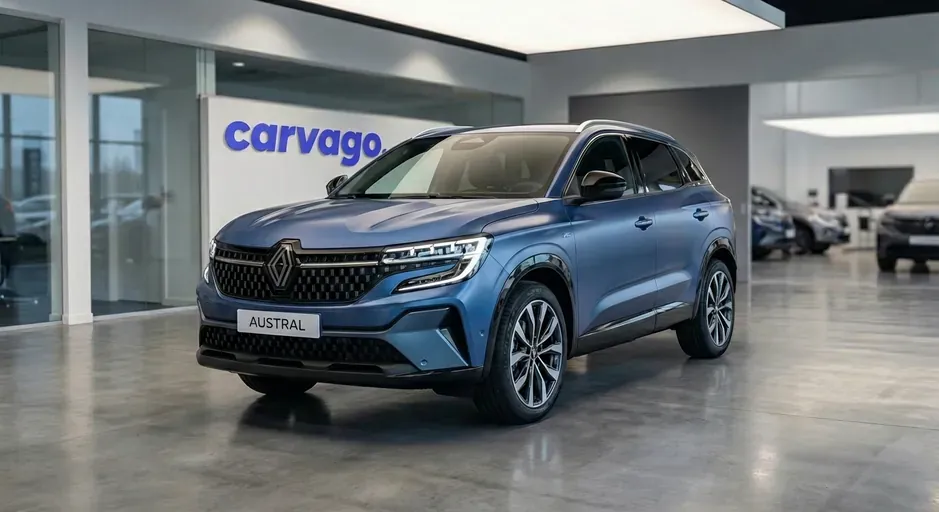
Ford Kuga, also sold as the Ford Escape in some markets, is an established compact SUV that wins drivers over primarily with its excellent driving characteristics and a wide range of practical engine options. Its direct competitor is the Renault Austral, the modern successor to the Kadjar model, which brings elegant French design, innovative onboard technologies, and highly efficient hybrid systems to the segment. In our detailed comparison, we will look at the strengths and weaknesses of both cars to find out which of these family crossovers represents the smarter choice for your daily travels.
Ford Kuga and Renault Austral may compete in the immensely popular compact SUV segment, but a look at their exterior dimensions reveals that they approach body proportions differently. The third generation of the Ford Kuga, with a length of 4604 to 4645 mm, is a significant 94 to 135 mm longer than the first generation of the Renault Austral, which measures 4510 to 4533 mm. The Kuga benefits from this difference primarily with a more robust appearance, which gives it a slightly more confident presence on the road. Conversely, a disadvantage of the Ford can be tighter maneuvers in narrow underground garages, where the French competitor scores with better agility thanks to its overall more compact dimensions. Therefore, if you spend most of your time in city centers and fight for every centimeter when parking, the shorter Renault Austral will be a more user-friendly and safer choice for you.
When examining the width and wheelbase, the Ford's advantage in the discipline of absolute interior space is again evident. With a width of 1882 to 1883 mm, the Kuga is 58 mm wider than the Austral (1825 mm) and offers a more generous wheelbase of 2710 to 2711 mm, while the Renault has a value of 2667 mm. This difference of approximately 44 mm in favor of the American brand means, in practice, more knee room for passengers in the rear seats and a sense of greater airiness in the shoulder area. The Renault Austral, on the other hand, thanks to its narrower and slightly lower build (height starts at 1618 mm compared to 1650 mm for the Ford), offers lower frontal drag, better aerodynamics, and leans slightly less in corners. However, for families who often travel long distances with older children or adults in the back seats, the overall interior spaciousness of the Ford Kuga represents a more logical and compelling argument for purchase.
| Parameter | Ford Kuga SUV | Renault Austral SUV |
|---|---|---|
| Width (mm) | 1882 - 1883 | 1825 |
| Length (mm) | 4604 - 4645 | 4510 - 4533 |
| Height (mm) | 1650 - 1681 | 1618 - 1645 |
| Wheelbase (mm) | 2710 - 2711 | 2667 |
When focusing on the luggage compartment, both family SUVs offer smart variability that is essential for used car buyers. The practicality of the trunk in vehicles of this type directly determines their daily usability and family potential. Both compared generations relevant to the current used car market, namely the third generation Ford Kuga and the first generation Renault Austral, feature the excellent function of sliding rear seats. These represent a huge advantage – if you don't need as much legroom for rear passengers, you simply slide the seats forward and instantly gain space for several extra suitcases.
In its conventional versions with an internal combustion engine, the Ford Kuga offers a basic luggage capacity of 475 liters. However, thanks to the sliding rear bench, this value can be increased to an excellent 645 liters, and after fully folding the seats, you get a generous 1534 liters. When choosing a used car, it is necessary to take into account that the popular plug-in hybrid (PHEV) variants have a slightly limited capacity due to the placement of the traction battery. In their case, the basic volume is 411 liters and reaches 1481 liters after folding the backrests. Despite this reduction, the luggage compartment is beautifully flat and easily accessible thanks to the low loading sill.
The Renault Austral counters with a slightly more generous basic space in its mild-hybrid variants, where it offers exactly 500 liters. By sliding the seats forward, this volume increases to 575 liters, and after fully folding the second row, a cargo space capable of holding 1525 liters is created. As with the Ford, it also applies to the Renault that the more advanced full hybrid system (E-Tech Full Hybrid) takes a toll on spaciousness. The trunk volume for this engine option drops to a basic 430 liters (or 555 liters with the bench slid forward). In everyday life, however, even this value is easily sufficient for weekend shopping and longer vacations, especially thanks to its regular shape and cleverly designed storage compartments in the cabin.
| Parameter | Ford Kuga SUV | Renault Austral SUV |
|---|---|---|
| Basic volume (liters) | 475 | 500 |
| Max. volume with seats folded (liters) | 1534 | 1525 |
When deciding between these two rivals, it primarily depends on the type of powertrain you plan to drive. While the Renault Austral has a slight edge in the liter capacity of the five-seat layout in its base engines, the Ford Kuga can offer a few more liters for transporting truly bulky items after folding the rear seats.
The Renault Austral pleases with a slightly larger trunk in its standard versions, while the Ford Kuga serves a bit better as a hauler with the seats folded; however, both models earn positive points for excellent variability thanks to their sliding rear benches.
When it comes to trailer weight, both models offer somewhat different options, which can be a crucial decision factor for many used car buyers. Towing capacity is closely linked to the overall practicality of the car, whether you plan to occasionally transport garden waste or regularly set off on long trips with a heavy caravan.
The standard braked trailer weight for both roughly four-year-old used cars is at a very decent and similar level. Common petrol engines, such as the Ford Kuga 1.5 EcoBoost (110 kW) or the Renault Austral Mild Hybrid 160 (116 kW), can both tow a braked trailer weighing up to 1800 kg. However, a major difference arises when looking for the maximum possible values. The 3rd generation Ford Kuga completely dominates in its powerful 2.0 EcoBlue diesel versions, as its maximum towing capacity reaches an excellent 2100 kg. In contrast, the Renault Austral does not offer any pure diesel engines in its 1st generation, so its absolute maximum across the range remains at 1800 kg.
An interesting and very important situation for the used car market occurs with electrified versions, where you must expect significantly reduced capacity for both brands. The full hybrid Renault Austral E-Tech Full Hybrid 200 has its maximum braked trailer weight limited to 1500 kg. The Ford Kuga with plug-in hybrid (PHEV) and standard hybrid (FHEV) powertrains from 2020–2024 is in a very similar position. Its capacity is mostly reduced to 1500 kg, while the very first units from 2020 even had only 1200 kg recorded in the registration certificate. In the case of unbraked trailer weight, legislation allows a standard maximum of 750 kg for both vehicles.
From a practical standpoint, these numbers affect your travel comfort. The higher weight limit of the diesel Kuga doesn't just provide the ability to legally tow a heavy boat or an extra-large caravan, but also brings much higher stability to the vehicle-trailer combination and valuable space for a few extra suitcases without exceeding the permitted load. However, the Renault's towing capacity is perfectly sufficient for weekend shopping of bulkier materials or longer holidays with a standard family trailer.
Conclusion
In the end, it clearly shows that if regular towing of heavy loads is a priority for you, the diesel Ford Kuga represents an uncompromising and more durable workhorse. But if you plan to use the tow bar only occasionally for lighter trailers or bike racks, the stylish French Renault Austral will be perfectly adequate.
| Model and motorization | Braked weight of trailer (kg) | Unbraked weight of trailer (kg) |
|---|---|---|
| Ford Kuga 1.5 EcoBoost (110 kW) | 1800 | 750 |
| Ford Kuga 2.0 EcoBlue (110–140 kW) | 2100 | 750 |
| Ford Kuga 2.5 PHEV / Hybrid (112 kW) | 1200 - 1500 | 750 |
| Renault Austral Mild Hybrid 140 (103 kW) | 1350 - 1800 | 750 |
| Renault Austral Mild Hybrid 160 (116 kW) | 1800 | 750 |
| Renault Austral E-Tech Full Hybrid 200 (96 kW) | 1500 | 750 |
When it comes to choosing an engine, both manufacturers approach the offering with a different philosophy, which is key for those interested in an approximately four-year-old used car. While the Ford Kuga (3rd generation produced since 2020) maintains an exceptionally wide range extending from classic petrol units through traditional powerful diesels to very successful plug-in hybrids, the Renault Austral (1st generation since 2022) has chosen a more radical path. The Austral has completely abandoned diesel engines and relies exclusively on electrified petrol units, ranging from 12V mild-hybrids to a complex full-hybrid system.
The difference in these concepts is fundamental. While Ford's two-litre diesels will appeal to drivers with high motorway mileage who require maximum torque for towing trailers, Renault's purely hybrid offering is ideal for those who spend most of their time in urban or suburban traffic, where electric motors contribute most to reducing consumption and driving smoothness. Customers with a budget oriented towards low acquisition costs will welcome standard petrol variants like the 1.5 EcoBoost in the Ford or the Mild Hybrid 140 in the Renault, which offer a great compromise between price and utility value.
The third-generation Ford Kuga delights customers on the used car market with a wide range of engines. The base of the range is the reliable turbocharged three-cylinder 1.5 EcoBoost in 88 kW (120 hp) and 110 kW (150 hp) versions, which is often represented on the market in combination with a manual transmission. Motorway drivers will most appreciate the 2.0 EcoBlue diesel units, especially the most powerful variant with 140 kW (190 hp), which has a high torque of 400 Nm and is standardly paired with all-wheel drive (AWD) and an eight-speed automatic. If you are looking for electrification, the Kuga offers a full-hybrid (FHEV) and also the extremely popular 2.5 Plug-in Hybrid, which provides 165 kW (225 hp) and a practical range of around 50 km purely on electricity.
| Engine type | Fuel | Power (kW) | Torque (Nm) | Transmission |
|---|---|---|---|---|
| 1.5 EcoBoost | Petrol | 88 / 110 | 240 | 6MT |
| 1.5 EcoBlue | Diesel | 88 | 300 | 6MT / 8AT |
| 2.0 EcoBlue MHEV | Diesel + electricity | 110 | 370 | 6MT |
| 2.0 EcoBlue | Diesel | 140 | 400 | 8AT |
| 2.5 Hybrid (FHEV) | Petrol + electricity | 140 | 200* | eCVT |
| 2.5 Plug-in Hybrid | Petrol + electricity | 165 | 200* | eCVT |
Note to the table: If you are considering more economical versions of the diesel engines, remember that the base 1.5 EcoBlue (88 kW) engine and the mild-hybrid 2.0 EcoBlue MHEV (110 kW) version ceased to be installed in the car at the turn of 2021 and 2022. You will therefore encounter them mainly in the oldest examples of this generation. *For the FHEV and PHEV hybrid versions, the separate torque of the internal combustion engine is listed.
The Renault Austral model entered the market with a clear goal – to bring a modern, clean powertrain without compromises, which is why you won't find a diesel engine in it at all. Most used cars on the secondary market consist of the popular and proven 1.3-litre four-cylinder TCe units with twelve-volt mild-hybrid assistance. These engines are tuned to either 103 kW (Mild Hybrid 140), where a manual transmission can also be chosen, or 116 kW (Mild Hybrid 160) available exclusively with an automatic (CVT). For more technologically demanding drivers, the French carmaker has prepared the E-Tech Full Hybrid 200 full-hybrid system. This unit combines a brand new 1.2-litre turbocharged three-cylinder with two electric motors, delivering an impressive system output of 146 kW and ensuring lightning-fast, quiet acceleration.
| Engine type | Fuel | Power (kW) | Torque (Nm) | Transmission |
|---|---|---|---|---|
| Mild Hybrid 140 | Petrol + electricity | 103 | 260 | 6MT / CVT |
| Mild Hybrid 160 | Petrol + electricity | 116 | 270 | CVT |
| E-Tech Full Hybrid 200 | Petrol + electricity | 146 | 205 + 205 (E)* | Multi-mode auto. |
Note to the table: The top-of-the-range E-Tech 200 full-hybrid variant uses a unique multi-mode automatic transmission without a classic clutch, where an electric motor synchronises the rotation speed. *The torque here is divided into the value from the internal combustion engine and the primary electric motor.
Choosing the right engine is absolutely critical for long-term satisfaction with a used car. The following recommendations are based on real-world experience, actual fuel consumption, user feedback, and long-term mechanical reliability for vehicles approximately four years old. While the third-generation Ford Kuga gradually moved away from traditional diesel engines (for example, the very popular and long-distance-friendly 2.0 EcoBlue was only offered until 2024 and is no longer in the price list), the Renault Austral, as the completely new successor to the Kadjar, entered the market exclusively with electrified petrol engines. Both vehicles thus require a very different approach to selection on the used car market today.
This powertrain has made the Kuga the long-term best-selling plug-in hybrid in Europe and represents the absolute ideal for the used car market. It replaces the missing diesel variants but, unlike them, does not suffer from expensive problems associated with turbocharging or the constant clogging of the diesel particulate filter (DPF) during short city trips.
Although Renault heavily promotes its technologically advanced flagship E-Tech Full Hybrid 200 system, from the perspective of a sensible and trouble-free used car purchase, the more moderate Mild Hybrid 160 version paired with an automatic transmission makes the most sense.
Official fuel consumption figures provided by manufacturers often represent a laboratory ideal that may differ slightly from everyday reality. For an objective comparison, we therefore base our findings on real user data shared on crowdsourcing platforms such as Spritmonitor.de, and on historical statistics of the monitored generations. We have considered models typical for the used car market around four years old – namely the third-generation Ford Kuga (from 2020) and the first-generation Renault Austral (from 2022). Below you will find average consumption values for the most common engines of both vehicles, organized by powertrain type.
Source: / Spritmonitor.de
| Model and engine | Average consumption (l/100 km) |
|---|---|
| Petrol and mild-hybrid engines | |
| Renault Austral Mild Hybrid 140 (103 kW) | 6.2 |
| Renault Austral Mild Hybrid 160 (116 kW) | 6.2 |
| Ford Kuga 1.5 EcoBoost (110 kW) | 6.6 |
| Full hybrid engines (FHEV) | |
| Renault Austral E-Tech Full Hybrid 200 (146 kW) | 4.7 |
| Ford Kuga 2.5 Hybrid (140 kW) | 5.5 |
| Diesel engines | |
| Ford Kuga 2.0 EcoBlue (110/140 kW) | 5.8 |
Note: The values for the plug-in hybrid version of the Ford Kuga (2.5 PHEV) reach roughly 1.0 to 3.0 l/100 km, depending exclusively on the regularity of charging. For the purpose of direct comparison of average values without the need for external charging, we therefore do not include it in the basic table.
Looking at the real-world values, the different technological approaches of both brands to efficiency are clearly visible. While Ford did not neglect the classic diesel engine for the third-generation Kuga, Renault completely phased out diesel units for the Austral model and replaced them with a sophisticated full hybrid system. The Austral E-Tech Full Hybrid 200 thus shows an excellent average consumption of 4.7 l/100 km, easily outperforming even the otherwise economical two-liter diesel from Ford. For the basic petrol engines, the expected trend is confirmed – smaller turbo engines under the hood of relatively heavy family SUVs save fuel on paper, but in reality, they operate above the six-liter mark and miraculous values cannot be expected from them.
For the typical user, this means a clear profiling of both vehicles. If you are looking for an SUV primarily for daily city driving or for crawling in suburban traffic jams, the full hybrid Renault Austral will be an absolutely unbeatable choice for you, where you can fully utilize recuperation and electric driving. The full-hybrid Ford Kuga (2.5 Hybrid) is also very economical in these conditions, although it falls slightly behind the Austral's top efficiency. On the other hand, for drivers devouring thousands of kilometers on motorways, the proven 2.0 EcoBlue diesel engine in the Ford remains a safe bet. Motorway speeds do not suit smaller turbocharged petrol engines or hybrids from Renault as well as a classic diesel.
In summary, fuel consumption should play an absolutely crucial role when choosing between these cars. While the Renault Austral targets economically-minded drivers in urban environments, offering them fantastic operational efficiency without the need to find a plug, the Ford Kuga appeals with a wider choice of powertrains and will serve families with long motorway journeys perfectly.
When comparing the prices of used Ford Kuga and Renault Austral models, it is important to consider how long these specific generations have been on the market. While the third-generation Ford Kuga went on sale as early as 2020 and is now a staple of used car lots, the Renault Austral entered the market as the successor to the Kadjar only at the end of 2022. For four-year-old used cars from the 2022 model year, the Austral represents only the early units of its generation, whereas the Kuga already offered a wide and established price portfolio by that time.
The range of used Ford Kugas on the market is very diverse. Thanks to a wide array of diesel, petrol, and various electrified powertrains, there is something for almost every family SUV buyer.
Since production of the Austral only started at the end of 2022, you can find models around three to four years old on the secondary market, but their average purchase prices remain relatively high and the selection itself is much more limited.
| Criterion | Ford Kuga (3rd generation) | Renault Austral (1st generation) |
|---|---|---|
| Base market price | from approx. €16,000 | from approx. €24,000 |
| Average price of better-equipped version | €20,000 | €28,000 |
| Hybrid and top-tier engines | €23,000 - €27,000 | €31,000 - €37,000 |
| Used market presence | Wide selection, hundreds of units | Limited selection, mostly nearly-new cars |
From a used market perspective, the Ford Kuga represents a significantly more affordable choice for a family budget. Its longer presence on the market means a wide selection across engines and price levels. The Renault Austral, on the other hand, attracts with its more exclusive status, timeless French design, and modern interior technologies, but due to its relative youth, it requires a much higher initial investment.
While the older generation of the Ford Kuga attracts with a rich selection and very affordable prices starting from €16,000, the nearly-new Renault Austral represents a technologically advanced used car for which you will pay at least an additional €8,000 on the market.
Both vehicles, the Ford Kuga and Renault Austral, achieved the maximum five-star rating in independent Euro NCAP crash tests. However, it is essential to put these results into the correct context. Testing methodology and protocols are constantly evolving and becoming stricter, meaning that percentage scores from different years cannot be directly compared. Newer tests place much greater emphasis on advanced assistance systems, detection of vulnerable road users, behavior at intersections, and overall active safety.
The third-generation Ford Kuga underwent Euro NCAP testing in 2019. The car demonstrated a very solid construction and earned an excellent 92% for adult protection and 86% for child protection. However, its certification dates back to before the introduction of the strictest standards. Given that Euro NCAP ratings expire after several years, from today's perspective, this safety certificate is considered older. The score of 73% in the safety assist category reflects the level of active safety at that time, which may already lag behind in direct comparison with the latest models.
The Renault Austral underwent evaluation in 2022, according to a significantly stricter testing methodology. It earned 88% for adult occupant protection and 83% for child protection. Slightly lower percentage values compared to the Ford do not mean worse passive safety, but rather reflect more demanding test criteria, including the implementation of a center airbag that protects occupants from head-to-head collisions. The biggest intergenerational leap is seen in safety assistants, where the Austral excelled with a score of 87%. This result confirms the presence of top-tier active systems that can better predict and prevent collisions.
Although both family SUVs offer a very high standard of safety, the Renault Austral benefits from its structural novelty. Thanks to testing under the stricter 2022 rules and a significantly better score in the area of active safety assistants, it represents a more comprehensive and modern choice that meets the most current safety requirements.
| Parameter | Ford Kuga | Renault Austral |
|---|---|---|
| Year of testing | 2019 | 2022 |
| Adult protection | 92 % | 88 % |
| Child protection | 86 % | 83 % |
| Vulnerable road users protection | 82 % | 69 % |
| Safety assist | 73 % | 87 % |
Although both cars are exceptionally safe, the Renault Austral benefits from newer and stricter certification as well as more advanced active assistants, making it a better choice in terms of current requirements.
In addition to standard equipment, both models offer something extra, with each approaching added value in its own distinctive way.
Great driving dynamics and precise steering, which are among the best in the SUV class
Very efficient plug-in hybrid (PHEV) version with a real-world electric range of over 50 km
Greater practicality thanks to the sliding rear bench, which allows for adjusting the ratio between legroom and luggage space
More affordable purchase price and a wider selection on the used car market
Ergonomic controls with user-friendly physical buttons for the air conditioning
The interior feels more ordinary and contains more hard plastics compared to more modern rivals
The older SYNC 3 infotainment system lags in both speed and graphics (applies to pre-facelift models)
The batteries in the popular PHEV version reduce the total luggage compartment volume
The Ford Kuga is an ideal choice for active drivers who want to enjoy confident driving dynamics behind the wheel and appreciate a flexible interior with sliding seats. Thanks to the very successful plug-in hybrid, it makes great sense for users who have the opportunity to charge regularly at home or at work and want to maximize electric driving.
Top-tier OpenR Link infotainment with integrated Google services, which is exceptionally fast and intuitive
High-quality interior with modern design and premium materials
Optional 4Control four-wheel steering system, which ensures excellent maneuverability in the city
Economical full-hybrid powertrains (E-Tech) that effectively reduce consumption without the need for external charging
Stiffer chassis tuning results in less comfort on bumps, especially with larger wheels
Absence of diesel engines and plug-in hybrid variants in the range
The multi-mode automatic transmission in the hybrid can occasionally jerk during slow crawling
As a newer model (introduced in late 2022), it maintains a higher purchase price on the used car market
The Renault Austral is a perfect choice for tech-oriented buyers who demand an unrivaled on-board system and a premium cabin feel. It is an excellent SUV for daily city and suburban commutes, especially if you prefer a worry-free full-hybrid over the need for constant cable plugging.
Based on long-term user experience, service bulletins, recall data, and expert inspections, during which a comprehensive car audit is regularly performed, we have compiled an overview of the most common problems for both of these models.
The third-generation Ford Kuga is a mechanically reliable and robust vehicle overall, but it has faced several specific issues, particularly in its early years of production.
The mechanical foundation of the Kuga is very solid; however, for the early model years, it pays to carefully check the recall history of plug-in hybrids and focus on the condition of the 12V battery, which degrades quite quickly under the strain of the onboard electronics.
Since the Renault Austral has been on the market for a shorter time and ranks among younger used cars, it does not yet suffer from any fatal mechanical defects, but its initial production struggled primarily with immature software and electronic teething problems.
As a modern crossover, the Austral functions reliably mechanically. Its greatest weakness is the initial software glitches in the hybrid drive management and infotainment, which, fortunately, can be easily eliminated with available updates.
When buying a used car, a thorough inspection is crucial. Here are some specific points to focus on for these two models to avoid unexpected investments. It is always true that the best step to uncovering hidden defects and verifying history is a comprehensive car inspection by professionals.
Whether you decide on either of these models, remember that a careful physical inspection of the car will give you peace of mind and confidence before signing the purchase agreement.
Both SUVs feature practical sliding rear seats, allowing the boot volume to be flexibly changed and adapted to current needs. The Renault Austral offers up to 500 litres as standard (or 430 litres for the hybrid), while the Ford Kuga provides 475 litres, or 411 litres for the popular plug-in hybrid version. The Austral thus has a slight edge in the basic configuration, although the differences almost disappear once the seats are moved fully forward.
The Ford Kuga benefits from its longer presence on the market and offers a much wider range of powertrains, including petrol, diesel, and plug-in hybrid (PHEV) variants. As a newer model, the Renault Austral relies exclusively on electrified petrol units (mild-hybrids) and the efficient E-Tech full hybrid system. The choice therefore depends on whether you will use the pure electric range with the charging option of the Ford, or prefer a modern hybrid without the need to look for sockets with the Renault.
The Renault Austral clearly stands out with its advanced OpenR Link system with integrated Google services, which is exceptionally fast and offers great native navigation from Google Maps. The Ford Kuga uses the reliable but older SYNC 3 system (SYNC 4 in newer post-facelift versions), which is user-friendly but lags behind the Renault in terms of graphics and functionality. If a state-of-the-art digital and fluid experience is your priority, the Austral is the clear winner.
The Ford Kuga has long been considered by automotive journalists and drivers alike to be one of the best and sportiest-driving SUVs in its class, thanks to its precise steering and excellently tuned chassis. The Renault Austral, on the other hand, emphasizes soundproofing, comfort, and overall ride smoothness, although its optional all-wheel steering system (4Control) gives it excellent manoeuvrability. For a more dynamic feel behind the wheel and driving pleasure, the Ford is a much better choice.
In urban environments, the E-Tech full-hybrid powertrain from the Renault Austral works brilliantly, allowing for surprisingly frequent pure electric driving and keeping fuel consumption very low. However, the Ford Kuga counters with its popular plug-in hybrid version, which allows you to cover a daily route of around 40 to 50 kilometres entirely without burning petrol if charged regularly at home. So, if you have the possibility to charge regularly at home or at work, the Kuga will be more economical; otherwise, the Austral is more worthwhile.
The decision between these two family SUVs depends primarily on your driving profile and technological preferences. Ford Kuga represents an ideal choice for drivers who appreciate great driving characteristics, variable spaciousness, and a wide selection of powertrains, led by the extremely popular plug-in hybrid or powerful highway diesels capable of towing heavy trailers. In contrast, the newer Renault Austral targets customers requiring a more premium interior, unrivaled infotainment with integrated Google services, and an efficient full hybrid system that is absolutely perfect for daily city travel without the need for constant charging from the grid. While the Kuga thus serves as a versatile, driver-appealing, and more affordable family workhorse, the Austral will charm you with its timeless technological sophistication, extraordinary agility, and modern style.
Sources: ADAC, garaz.cz, auto.cz, automix.cz, auto-mania.cz, nabijecka.cz
This article was prepared using artificial intelligence tools. The section guarantor is Petr Dušek.
Ford Puma vs Opel Mokka: City SUV comparison. Read a detailed evaluation of engines, space, and driving characteristics and choose your ideal used car.
Apr 14, 2026
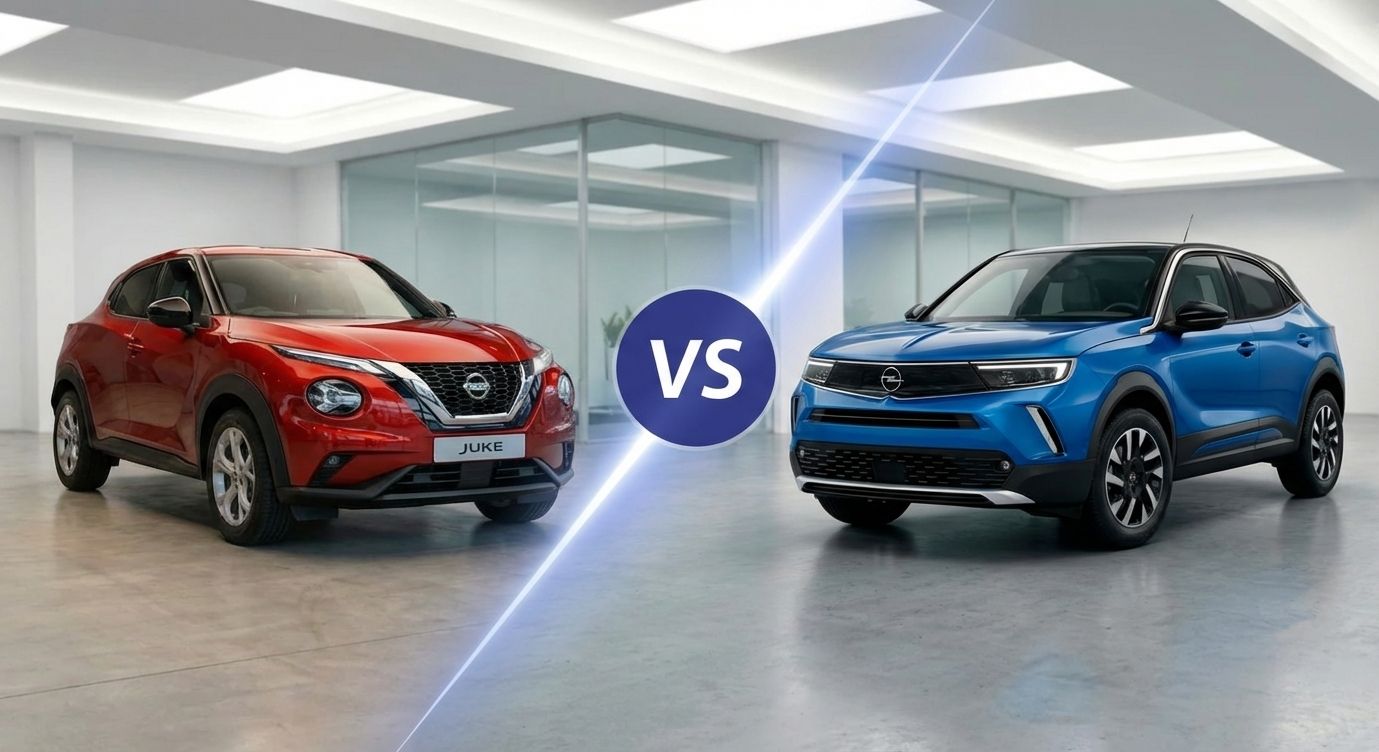
Nissan Juke vs Opel Mokka: A detailed comparison of design, ride, and features. Our verdict will help you choose the right compact crossover.
Apr 14, 2026
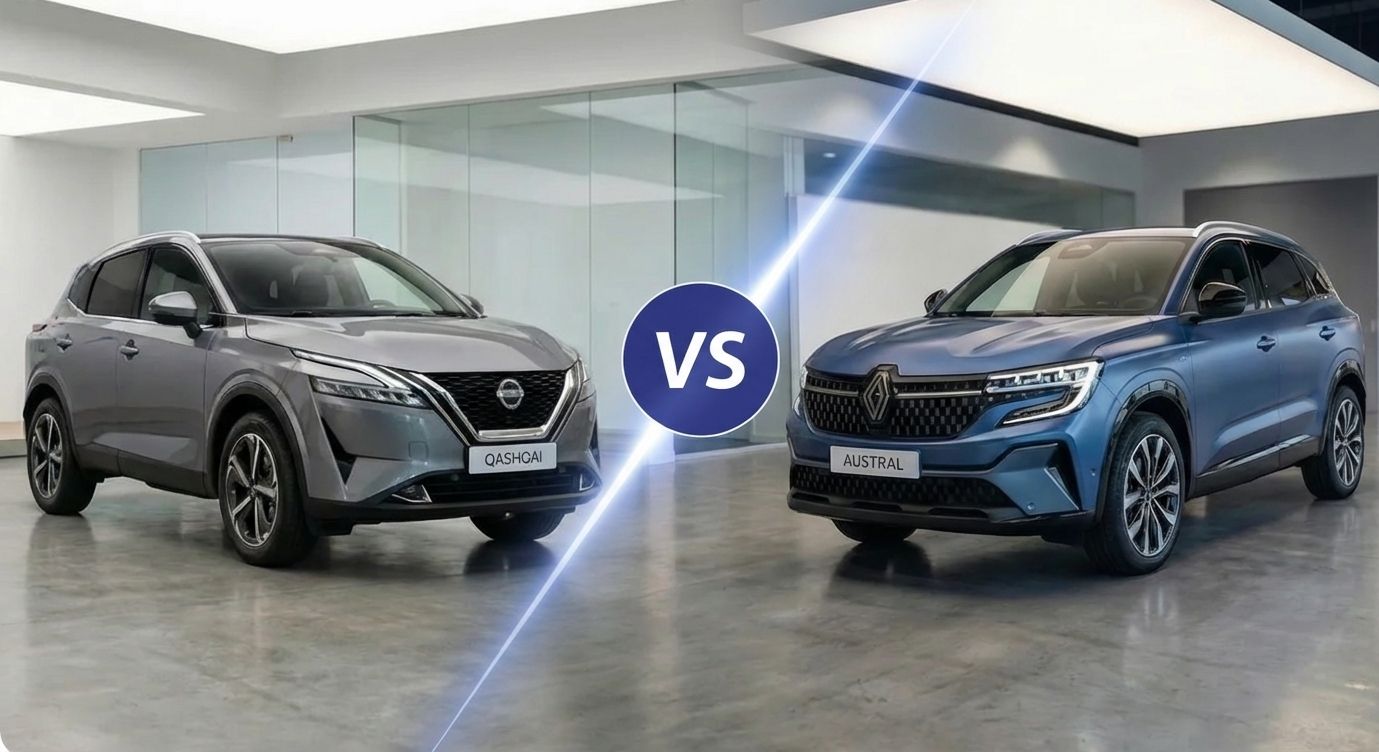
Nissan Qashqai vs. Renault Austral: A detailed comparison to help you choose. We compare design, engines, prices, and deliver a clear verdict.
Apr 14, 2026