Car battle
Ford Kuga vs. Peugeot 3008: Complete Comparison 2025
Ford Kuga vs Peugeot 3008: Which family SUV is better? A detailed comparison, real-world insights, and a clear verdict to help you choose.
Apr 13, 2026
Articles
Car battle
Nissan Qashqai vs. Renault Austral: A detailed comparison to help you choose. We compare design, engines, prices, and deliver a clear verdict.
April 14, 2026
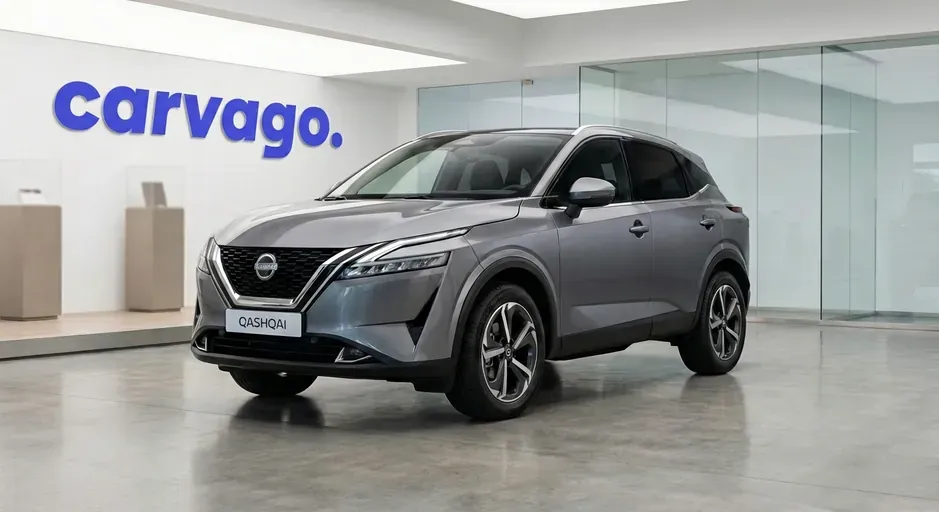
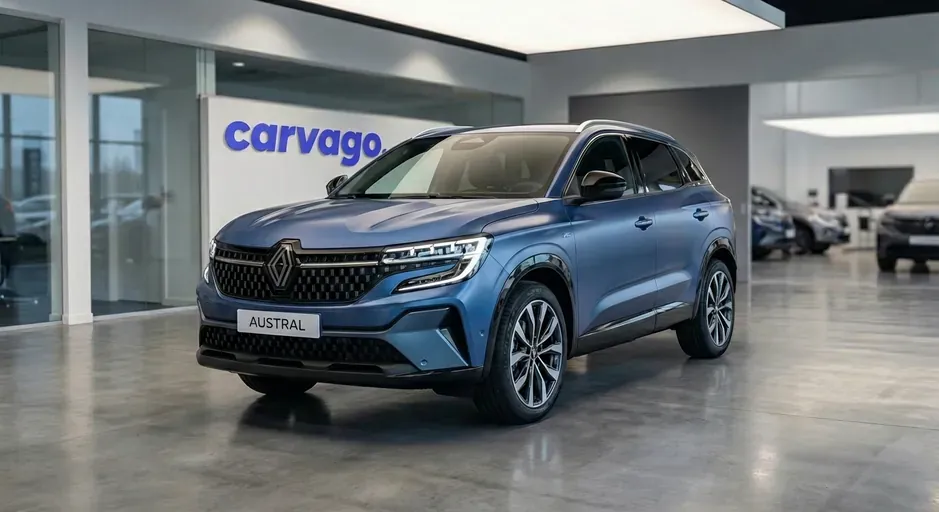
The Nissan Qashqai has long been the king and one of the best-selling cars in the compact SUV segment, having practically defined its own class. It now faces the Renault Austral, a modern and technologically advanced French competitor that has replaced the Kadjar model and shares the same alliance platform with the Qashqai. Let's take a detailed look at how these two close relatives fare in a head-to-head battle and which one represents the smarter choice.
Looking at the dimensions table, it is clear that although both cars fall into the same compact SUV category, their approach to space differs. The most significant difference is in length, where the Renault Austral outgrows the Nissan Qashqai by a noticeable 85 millimetres. This difference primarily translates into interior space and boot size, giving the French model an advantage for families who often travel with a lot of luggage.
The Nissan Qashqai, on the other hand, is slightly more agile with its shorter body and easier to manoeuvre in narrow city streets or crowded car parks. For drivers who spend most of their time in the city, this compactness could be the deciding factor.
Other dimensions are very similar. The Qashqai is a negligible 10 mm wider and 7 mm taller, differences that are almost unnoticeable in practice. The wheelbase is practically identical, differing by only 2 mm in favour of the Austral. This suggests that the basic platforms of both cars provide comparable stability and space for occupants between the axles. The key difference in spaciousness thus stems mainly from the Austral's longer rear overhang.
| Parameter | Nissan Qashqai (J12) | Renault Austral |
|---|---|---|
| Length (mm) | 4425 | 4510 |
| Width (mm) | 1835 | 1825 |
| Height (mm) | 1625 | 1618 |
| Wheelbase (mm) | 2665 | 2667 |
Practicality is key in the family SUV segment, and boot size plays a crucial role in choosing a car. Both the Nissan Qashqai and the Renault Austral offer generous boots, but their volume and usability vary depending on the chosen engine. This is where one of the main differences lies, which can determine which car will better suit your family's needs.
The Renault Austral often wins this battle, mainly due to its variability. The mild-hybrid versions offer a basic boot volume of 500 litres. However, a major advantage is the sliding rear bench, which allows the volume to be increased to 575 litres at the expense of legroom for rear passengers. But if you opt for the full-hybrid E-Tech variant, you have to expect less space – the batteries reduce the volume to 430 litres, causing the Austral to lose one of its main advantages.
The third-generation Nissan Qashqai (from 2021) takes a slightly different approach. Its mild-hybrid versions offer up to 504 litres depending on the trim, slightly surpassing the Austral in its basic configuration. With the unique e-POWER hybrid drive, where the combustion engine acts as a generator, the volume drops to a still-solid 479 litres. This is significantly more than the full-hybrid Austral. However, when the seats are folded down, the tables turn and the Renault shows its strength in total maximum volume.
| Parameter | Nissan Qashqai (J12) SUV | Renault Austral SUV |
|---|---|---|
| Basic Volume (Mild-Hybrid) | 504 l | 500 l |
| Basic Volume (Full-Hybrid) | 479 l (e-POWER) | 430 l (E-Tech) |
| Max. Volume with Seats Folded (Mild-Hybrid) | 1447 l | 1525 l |
| Max. Volume with Seats Folded (Full-Hybrid) | 1415 l (e-POWER) | 1455 l (E-Tech) |
Towing capacity is a key factor for many drivers when choosing an SUV, and it is in this discipline that the Qashqai and Austral differ significantly depending on the chosen engine. If you need to tow heavier loads, such as a caravan or a boat trailer, it is worth paying close attention to selecting the right version.
The biggest differences are seen in the hybrid variants. While the Renault Austral in the E-Tech Full Hybrid version can handle a respectable 1500 kg, the Nissan Qashqai with its innovative e-POWER drive is significantly limited and can only tow 750 kg. This makes it more of a car for occasionally attaching a light trailer, not for serious towing.
The situation is more balanced with mild-hybrid petrol engines. The more powerful versions of both models, specifically the Qashqai 1.3 DIG-T MHEV (116 kW) and the Austral Mild Hybrid 160, both offer an excellent towing capacity of up to 1800 kg. For the weaker variants, the Austral has a slight edge, towing between 1350 and 1800 kg depending on the model year and specification, while the weaker Qashqai 1.3 DIG-T MHEV (103 kW) can handle 1400 kg. For those interested in a used car with maximum towing power, the older Qashqai (J11 generation) with the 1.7 dCi diesel engine, which boasted a capacity of up to 2000 kg, could be an interesting option.
Overall, the more powerful mild-hybrid versions of both cars are the ideal choice for towing heavier trailers. However, if you prefer a full-hybrid drive and a tow bar is a necessity for you, the Renault Austral is clearly the more practical choice.
| Model and Engine | Braked Towing Capacity (kg) | Unbraked Towing Capacity (kg) |
|---|---|---|
| Nissan Qashqai 1.3 DIG-T MHEV (116 kW) | 1650 - 1800 | 750 |
| Nissan Qashqai 1.5 e-POWER (116 kW) | 750 | 750 |
| Renault Austral Mild Hybrid 160 (116 kW) | 1800 | 750 |
| Renault Austral E-Tech Full Hybrid 200 | 1500 | 750 |
A look under the bonnet of the Nissan Qashqai and Renault Austral reveals a clear trend – the end of diesel engines and a full transition to electrified petrol power units. Both models have opted for hybrid technologies, but each with a completely different approach. While Renault offers a classic range from mild-hybrid to full-hybrid, Nissan introduces its unique e-POWER system, which offers a driving experience similar to an electric vehicle. The choice of engine is therefore a key factor that determines not only performance and fuel consumption, but also the overall character and driving experience.
In its third generation (J12), the Nissan Qashqai has radically changed its lineup, opting exclusively for petrol engines with electric assistance. The foundation is the mild-hybrid turbocharged 1.3 DIG-T four-cylinder engine, available in two power variants. This engine, developed in collaboration with Mercedes-Benz, is a proven and reliable choice. The real innovation, however, is the e-POWER drive system. This is a series hybrid where the petrol engine does not drive the wheels but only generates electricity for the electric motor that powers the car. The result is a driving experience similar to an electric vehicle – quiet, smooth, and with instant response. On the used car market, you can still find diesel engines from the previous J11 generation, but they are no longer available in the current model.
| Engine Type | Fuel | Power (kW) | Torque (Nm) | Transmission |
|---|---|---|---|---|
| 1.3 DIG-T MHEV | Petrol | 103 | 240 | 6-speed manual |
| 1.3 DIG-T MHEV | Petrol | 116 | 260 / 270 | 6-speed manual / Xtronic |
| 1.5 VC-T e-POWER | Petrol/Hybrid | 140 | 330 | Automatic (e-powertrain) |
The Renault Austral was developed from the outset with an emphasis on hybrid propulsion. Its range is therefore straightforward and focused on modern technologies. In the first years of production (2022-2023), a basic 140 hp 1.3 TCe mild-hybrid was available, but it was later removed from the lineup. The main role is now played by the more powerful Mild Hybrid 160 version, which is always paired with an automatic transmission. The top of the range is the E-Tech Full Hybrid 200 system, which combines a new turbocharged 1.2 TCe three-cylinder engine with two electric motors and a smart multi-mode gearbox. This system promises low fuel consumption, especially in the city, where it can run on electricity up to 80% of the time.
| Engine Type | Fuel | Power (kW) | Torque (Nm) | Transmission |
|---|---|---|---|---|
| Mild Hybrid 140 | Petrol | 103 | 260 | 6-speed manual |
| Mild Hybrid 160 | Petrol | 116 | 270 | Automatic |
| E-Tech Full Hybrid 200 | Petrol/Hybrid | 146 | 205 + 205 (el.) | Multi-mode automatic |
Choosing the right engine is crucial for long-term satisfaction with the car. Our recommendations are based on real owner experiences, mechanical reliability, stated performance, and actual fuel consumption. For both models, we focus on the modern, electrified power units that define their character on the used car market.
For the third generation of the Nissan Qashqai (designated J12, produced from 2021), the best choice is the more powerful version of the proven 1.3 DIG-T petrol four-cylinder engine with mild-hybrid technology. This engine, developed in collaboration with Mercedes-Benz, represents the ideal compromise between performance, consumption, and reliability.
The Renault Austral has committed to full electrification, and its top-of-the-line E-Tech Full Hybrid 200 engine is the most interesting and efficient choice. This is not a mild-hybrid like in the Qashqai, but a full-fledged hybrid system capable of running on pure electricity.
The official consumption figures, measured under laboratory conditions of the WLTP cycle, are one thing, but the reality on the road is often different. That's why we looked at data from drivers themselves, primarily from the German portal Spritmonitor.de, which collects real-world consumption data from thousands of cars. These values much better reflect the running costs that future owners can expect. This showdown pits modern hybrid technologies—mild-hybrid and full-hybrid—against each other, both promising economical operation.
A direct comparison of the relevant engine options for the used car market shows how both models stack up. The Renault Austral, being the newer model, relies exclusively on hybrid powertrains. The latest generation Nissan Qashqai J12 (from 2021) counters with a mild-hybrid and the unique e-POWER system. For context, we also include the popular petrol-only engine from the end of the previous J11 generation.
| Model and Engine | Average Real-World Consumption (l/100 km) |
|---|---|
| Nissan Qashqai 1.3 DIG-T (103 kW, J11) | 6.5 - 7.3 |
| Nissan Qashqai 1.3 DIG-T MHEV (116 kW, J12) | 6.8 - 7.5 |
| Nissan Qashqai 1.5 e-POWER (140 kW, J12) | 5.2 - 5.8 |
| Renault Austral Mild Hybrid 160 (116 kW) | 6.5 - 7.4 |
| Renault Austral E-Tech Full Hybrid 200 (146 kW) | 5.0 - 6.0 |
The table shows that the battle of the mild-hybrid versions essentially ends in a draw. Both the Qashqai 1.3 DIG-T MHEV and the Austral Mild Hybrid 160 have real-world consumption figures between 6.5 and 7.5 l/100 km. The mild-hybrid system here serves more to smooth out the engine's operation and provide a slight boost during acceleration, but it doesn't deliver dramatic fuel savings. Compared to the petrol-only predecessor in the Qashqai J11, the difference in consumption is not significant.
The main battle takes place between the full-hybrid powertrains. Here, the Renault Austral E-Tech Full Hybrid has a slight edge, with its real-world consumption often ranging between 5.0 and 6.0 l/100 km. This system can efficiently use electrical energy, especially in the city and on country roads, where it can run on electricity up to 80% of the time. The unique Nissan Qashqai e-POWER system, where the petrol engine serves only as a generator for electricity, averages just a few tenths of a litre higher, typically between 5.2 and 5.8 l/100 km. It shows its strength mainly in the smoothness of the ride and the quietness of the electric drive.
For drivers, this means that if they predominantly travel longer distances on the motorway, the differences between mild-hybrids and full-hybrids will diminish. Conversely, for those who spend most of their time in the city or in suburban traffic, the full-hybrid versions of both models offer significant savings. The Renault is slightly more economical in this regard, while the Qashqai e-POWER offers an experience closer to that of an electric vehicle. Fuel consumption is therefore a key factor that should influence the choice of a specific engine, with both cars offering highly competitive and economical full-hybrid variants.
When comparing prices on the used car market, the slight age difference between the two models becomes apparent. The third-generation Nissan Qashqai, introduced in 2021, has a small head start on the used market, which positively affects its availability and price. The Renault Austral, which arrived a year later, is still a hot new item, and its prices remain higher.
As an established name in the SUV segment, the Qashqai holds its value well, but thanks to its one-year head start on the market, the first used units are already appearing at attractive prices. Nearly new cars with low mileage, two to three years old, can be purchased in the price range of from €20,000 to €27,000.
The price, of course, depends on the trim level (Acenta, N-Connecta, Tekna), engine, and overall condition. Thanks to a larger number of units sold, the selection on the market is somewhat wider, giving buyers a better negotiating position.
| Model | Approximate Price (2-3 year old car) |
|---|---|
| Nissan Qashqai (J12) | €20,000 - €27,000 |
| Renault Austral | €23,000 - €31,000 |
The Renault Austral is a rarer sight on the used car market. Its higher purchase price as a new car is logically reflected in the prices of used models. Expect to pay more for a comparably old and equipped Austral than for a Qashqai.
The prices of the oldest models from 2022 tend to be above €23,000. Cars with the attractive and economical E-Tech full-hybrid technology hold their value even better, and their price often exceeds €29,000. A smaller selection and high demand for its modern design and technology keep the Austral's prices at a higher level.
Price Showdown Verdict:
In terms of safety, the Nissan Qashqai and Renault Austral appear to be evenly matched rivals at first glance, as both boast the highest five-star rating from the independent Euro NCAP organization. However, it is important to look at the details and context, as testing protocols are constantly becoming stricter. This means that percentage results from different years are not directly comparable.
The third-generation Nissan Qashqai underwent Euro NCAP crash tests in 2021 and came away with a full five stars. The car achieved excellent results in the protection of adult and child occupants, scoring 91% in both categories. These ratings are underscored by the inclusion of a central airbag, which prevents head contact between the driver and front passenger in a side impact. In the vulnerable road users category (pedestrians and cyclists), the Qashqai scored 70% and absolutely excelled in the assessment of its assistance systems, where it achieved 95%. This result demonstrates an exceptionally rich and functional safety equipment package right from its market launch.
The Renault Austral was tested by Euro NCAP a year later, in 2022, and also received a five-star rating. It scored a very good 88% for adult occupant protection and 83% for child protection. The protection of vulnerable road users was rated at 69%, a comparable figure to the Qashqai. In the assistance systems category, the Austral achieved 87%. This is also an excellent result, confirming that Renault has equipped its model with modern technologies, including an advanced emergency braking system that responds well to pedestrians and cyclists.
Although both models are at the absolute top of their class in terms of safety, a slight advantage can be attributed to the Nissan Qashqai. Its results from 2021, especially in the assistance systems category, were extraordinary for their time and still represent a very high standard today. The Renault Austral is a close second, also offering first-class protection, confirmed by a test that is a year newer but still very stringent. For a used car buyer, both models are a safe bet, but the Qashqai had a slight edge in electronic aids at the time of its launch.
| Parameter | Nissan Qashqai (2021) | Renault Austral (2022) |
|---|---|---|
| Year of testing | 2021 | 2022 |
| Adult Occupant Protection | 91% | 88% |
| Child Occupant Protection | 91% | 83% |
| Vulnerable Road User Protection | 70% | 69% |
| Safety Assist | 95% | 87% |
In addition to standard equipment, each model offers several unique features that can be decisive for a customer, as each takes a slightly different approach to what it considers added value.
With the Qashqai, Nissan focuses on smart solutions that make everyday life easier and on advanced assistance systems that increase comfort and safety on long journeys.
The Renault Austral focuses on modern technology, an impressive interior, and equipment features previously reserved for higher-class vehicles, such as rear-axle steering.
Advantages:
Disadvantages:
Advantages:
Disadvantages:
Based on user feedback, service records, and breakdown statistics, we have compiled an overview of the most common problems that buyers of used cars should look out for. Neither model suffers from major mechanical faults, but their increasingly complex electronic equipment can be a source of occasional trouble.
The third generation of the Nissan Qashqai has improved in many ways, but like any modern car, it has not avoided a few teething problems, mostly of a software nature.
The problems of the third-generation Qashqai are rather minor and often software-related. These are not major mechanical shortcomings that should deter owners. Before buying, it is recommended to check the software update history and the condition of the battery.
The Renault Austral is a technologically advanced car, which also brings a higher risk of minor electronic faults typical for brand-new models.
The Renault Austral is mechanically robust at its core, but its advanced technologies have gone through a phase of "teething problems." Most reported issues are software-related and can often be resolved at an authorized service center by reprogramming the control units. However, a thorough, comprehensive vehicle inspection is crucial before buying a used model, with a particular focus on the functionality of the hybrid system and all electronics.
When buying a used car, a thorough inspection is key, and neither of these modern crossovers is an exception. Here are a few specific points to focus on for both models to avoid potential problems.
The Renault Austral generally offers a slightly larger basic boot volume, up to 575 liters in the mild-hybrid versions, while the E-Tech hybrid version has 430 liters. The Nissan Qashqai provides around 504 liters for all engine versions. However, when the rear seats are folded down, the difference is almost negligible, with the Austral offering a maximum of 1525 liters and the Qashqai 1447 liters.
The fundamental difference is in the drive method. In the Nissan Qashqai with e-Power technology, the wheels are always driven by the electric motor, while the combustion engine serves only as a generator for electricity. In contrast, the Renault Austral with the E-Tech hybrid combines the power of the combustion engine and electric motors, which can drive the wheels together or independently, following the principle of a classic parallel hybrid.
Both models are excellent choices for families, but each has different strengths. The Renault Austral scores points for variability with its sliding rear bench, which allows you to adjust the ratio of space for passengers and luggage. The Nissan Qashqai, on the other hand, offers a practical solution with rear doors that open to an almost 90-degree angle, making it much easier to install a child car seat.
The Renault Austral's interior feels more modern, opting for a digital environment with large displays and the OpenR Link system built on Google Automotive, which is intuitive and graphically sophisticated. The Nissan Qashqai has a more conservatively designed dashboard with a larger number of physical buttons, which some drivers may prefer for easier control while driving.
The Nissan Qashqai is perceived as a car with a more agile and engaging chassis that responds well to changes in direction. The Renault Austral, on the other hand, focuses more on comfort and a smooth ride, filtering out bumps better and offering the optional 4Control all-wheel steering system for improved manoeuvrability.
The battle between Nissan Qashqai and Renault Austral is a choice between two top-tier, yet characteristically different SUVs. Nissan Qashqai is ideal for those who prefer a reliable, comfortable, and practical family car with a smooth e-POWER drive and proven technology. In contrast, Renault Austral will appeal to enthusiasts of modern technology and design, offering a premium interior with a Google system, agility thanks to 4CONTROL steering, and maximum boot variability. Both vehicles are at the top of their class, so the final decision depends purely on the driver's individual priorities and preferences.
Sources: ADAC, e15.cz, novinky.cz, mobilmania.cz, motorvize.cz, mesec.cz
This article was prepared using artificial intelligence tools. The section guarantor is Petr Dušek.
Ford Kuga vs Peugeot 3008: Which family SUV is better? A detailed comparison, real-world insights, and a clear verdict to help you choose.
Apr 13, 2026
Opel Mokka vs. VW T-Cross. A detailed comparison of engines, equipment, and price. Find out which compact SUV is right for you in our big test.
Apr 14, 2026
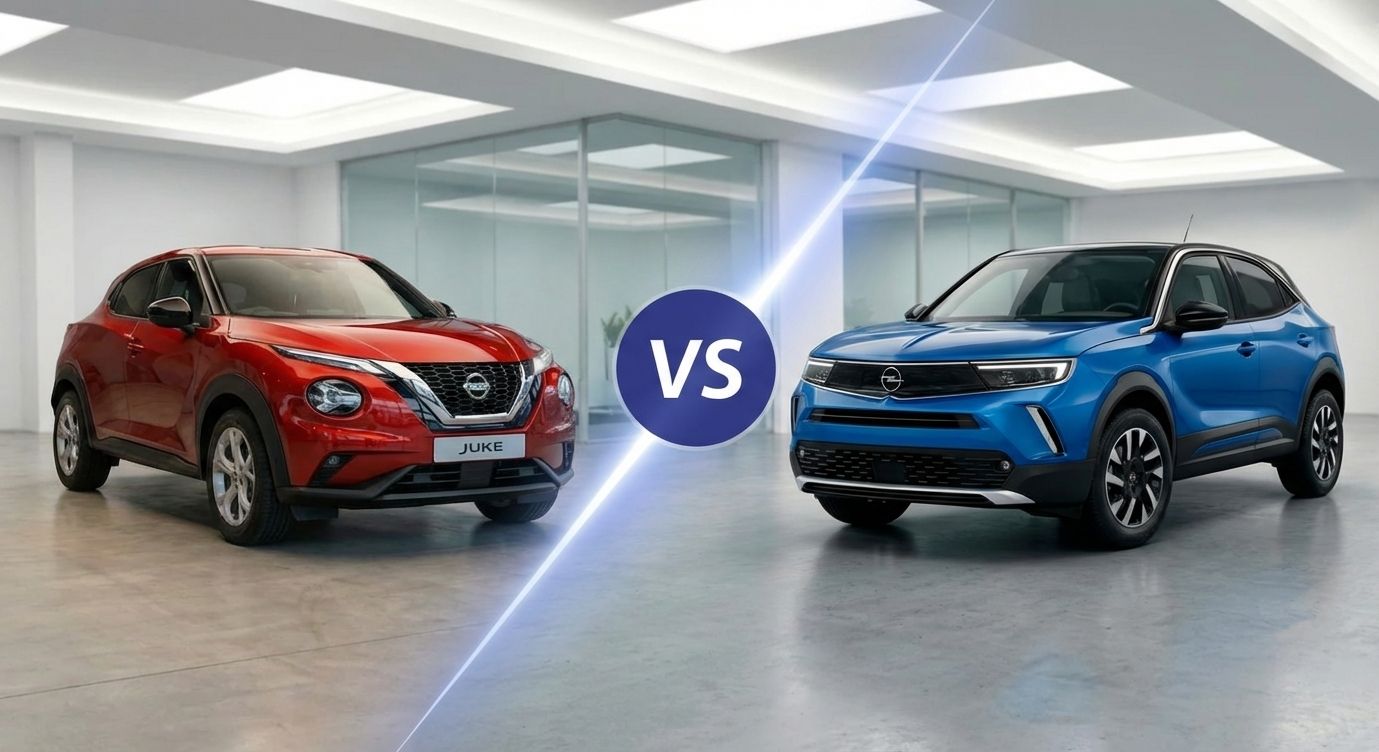
Nissan Juke vs Opel Mokka: A detailed comparison of design, ride, and features. Our verdict will help you choose the right compact crossover.
Apr 14, 2026