Car battle
BMW i4 vs. Volkswagen ID.7: Complete comparison 2026
Comparison of the BMW i4 and Volkswagen ID.7. Find out which electric car has better real-world range, equipment, and driving comfort. Read our final verdict.
Apr 14, 2026
Articles
Car battle
Detailed comparison of Renault Mégane E-Tech vs Volkswagen ID.3. Discover real-world range, differences in equipment, and driving characteristics. Read our final verdict.
May 7, 2026
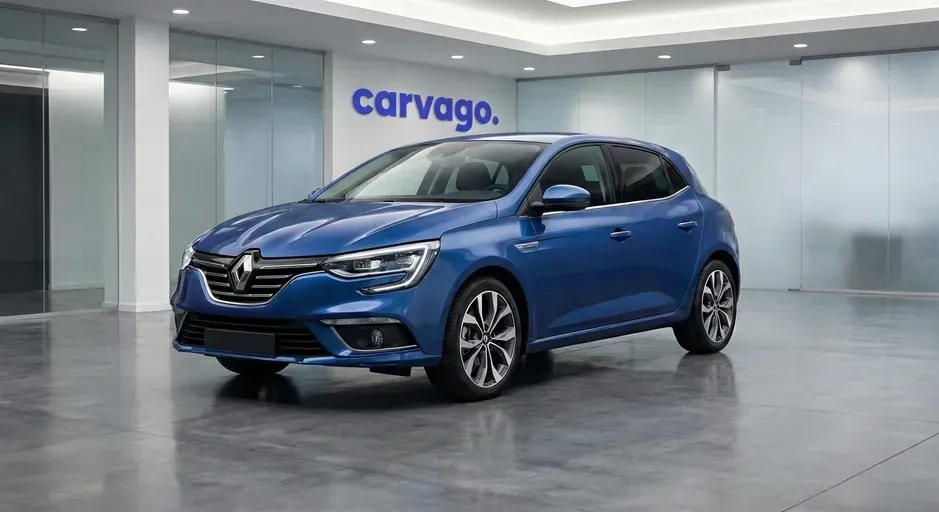
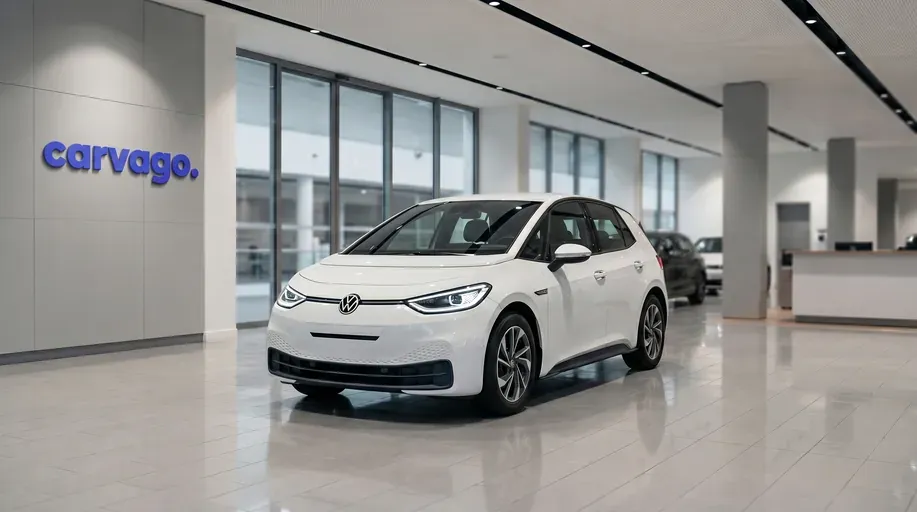
Renault Mégane E-Tech, also known in some markets by the longer name Mégane E-Tech Electric, brings attractive French design with a slight crossover touch and an innovative Google-based onboard system to the compact electric vehicle segment. Standing against it is the Volkswagen ID.3, a pioneering hatchback designed from the ground up as a pure electric vehicle with the ambition of becoming the spiritual battery-powered successor to the legendary Golf and defining a new era for the German automaker. Let's take a detailed look at how these two direct European competitors compare and which of them represents a smarter choice on the used car market.
When comparing the exterior dimensions of these two models – which represent some of the most interesting alternatives on the market for roughly four-year-old used cars – we encounter completely different approaches to space utilization. While the purely electric Renault Mégane E-Tech (fifth generation) maintains a very compact footprint with a length of exactly 4200 mm, the Volkswagen ID.3 is more than 60 mm longer at 4261–4265 mm. The German representative is also wider (1809 mm compared to 1783 mm for the electric Mégane) and noticeably taller (up to 1568 mm vs. 1505 mm). In practice, this means the ID.3 feels more robust from the outside and provides a slightly airier feel in the cabin. On the other hand, the lower build and narrower body give the Mégane the advantage of excellent maneuverability in narrow city streets and easier parking, making it the ultimate choice for heavy traffic.
The wheelbase has a fundamental impact on overall interior spaciousness, where Volkswagen's purely electric concept is fully evident. The ID.3 model takes full advantage of the dedicated MEB platform and offers a generous wheelbase of up to 2771 mm. The electric Renault Mégane counters with a slightly more modest value of 2685 mm. This significant difference of 86 mm clearly plays in favor of the German car, which can provide noticeably more legroom for rear-seat passengers. If you were also considering older plug-in hybrid versions of the Mégane (fourth generation), although the practical Estate variant reaches a length of over 4.6 meters, it still slightly lags behind the ID.3 in terms of spaciousness with its 2712 mm wheelbase. This parameter thus positions the Volkswagen ID.3 as a more capable car for family trips, while the shorter wheelbase of the purely electric Mégane brings noticeably more agile and engaging driving responses.
In everyday life, these physical dimensions will play a key role in your satisfaction. The advantage of the Volkswagen ID.3 is undoubtedly its clever packaging and maximization of the interior; however, its slightly larger overall width and height can feel a bit cumbersome in narrow older garages or at shopping centers. In contrast, the Renault Mégane E-Tech, with its subtler width of 1783 mm, represents a very stylish and dynamically cut car ideal for fast urban mobility. It can therefore be said that if you frequently transport adult passengers in the rear seats and emphasize overall cabin volume, the ID.3 will satisfy your needs better. If you prefer completely hassle-free parking, easy weaving through the city, and sportier proportions with a lower center of gravity, the more compact Mégane will win you over much more easily.
| Parameter | Renault Mégane E-Tech Hatchback | Renault Mégane E-Tech SUV | Renault Mégane E-Tech Estate | Volkswagen ID.3 Hatchback |
|---|---|---|---|---|
| Width (mm) | 1814 | 1783 | 1814 | 1809 |
| Length (mm) | 4359 | 4200 | 4626 | 4261–4265 |
| Height (mm) | 1438 | 1505 | 1449 | 1561–1568 |
| Wheelbase (mm) | 2669 | 2685 | 2712 | 2769–2771 |
When choosing a used car around four years old, luggage capacity plays a key role, especially if you are looking for an everyday family car. The Volkswagen ID.3 and Renault Mégane E-Tech represent two different approaches to modern mobility. While the ID.3 was designed from the ground up as a purely electric hatchback with an emphasis on maximizing interior space within a compact footprint, Renault offers several body variants under the Mégane E-Tech name. Both a modern fully electric model in an SUV/crossover body and plug-in hybrid (PHEV) variants in the form of a classic hatchback and a practical estate (Estate) are available. This variability gives buyers a wider range of choices depending on whether they need a car for regular commuting or are looking for a vehicle sufficient for weekend shopping and longer holidays.
Regarding specific figures for the purely electric versions, the Volkswagen ID.3 Hatchback offers a standard boot capacity of 385 liters, which is a very solid value that increases to 1,267 liters after folding the rear seats. The fully electric Renault Mégane E-Tech SUV slightly outperforms its German rival with a base volume of 389 liters and a maximum capacity of 1,332 liters. This difference becomes more pronounced only after folding the seats, where Renault provides an extra 65 liters – in practice, this means space for several smaller extra bags, which you will appreciate when transporting bulkier cargo or sports equipment. Otherwise, both electric cars offer very comparable and highly practical utility in a five-seat configuration.
However, the situation changes if you are considering older plug-in hybrid versions of the Renault from 2021 and 2022. The battery packaging in the PHEV hatchback took its toll, reducing the boot to a more modest 308 liters (1,202 liters when folded), which may already feel limiting for larger families. On the other hand, for those who require maximum spaciousness, the plug-in hybrid Renault Mégane E-Tech Estate is available. This model offers the most space of all the compared vehicles – 447 liters in the base and a generous 1,408 liters after fully folding the backrests. Since the Volkswagen ID.3 does not offer an estate version at all, the Renault is the clear choice for those looking for a classic family hauler with an electrified powertrain.
| Parameter | Renault Mégane E-Tech SUV | Volkswagen ID.3 Hatchback | Renault Mégane E-Tech Hatchback | Renault Mégane E-Tech Estate |
|---|---|---|---|---|
| Base volume (l) | 389 | 385 | 308 | 447 |
| Max. volume with seats folded (l) | 1332 | 1267 | 1202 | 1408 |
In conclusion, if you are looking for a modern electric car with a balanced ratio of external dimensions and internal space, both the Volkswagen ID.3 and the electric Mégane E-Tech SUV will serve very similarly and reliably. However, if you need unrivaled volume for family travel and long distances, the plug-in hybrid Renault Mégane in the estate version (Estate) represents a choice that the ID.3 model simply cannot match due to its body style.
While the electric Volkswagen ID.3 and the electric Mégane SUV offer almost identical and sufficiently practical boots, Renault gains significant extra points thanks to the availability of a plug-in hybrid estate version with unrivaled luggage space.
The ability to tow a trailer is a key factor for many drivers, whether it's for transporting garden waste, moving house, or carrying luggage for a long holiday. However, for modern electric and electrified cars, such as the roughly four-year-old Renault Mégane E-Tech and Volkswagen ID.3 models, overall practicality and towing capacities differ diametrically. Before buying a used car from this segment, it is therefore essential to consider what transport tasks the car will actually perform.
The fifth-generation Renault Mégane E-Tech (a purely electric model available since 2022) offers at least basic towing capabilities compared to many competitors. The standard EV40 and EV60 versions with 130 hp can tow a braked trailer with a maximum weight of 500 kg. The more powerful EV60 variant with 220 hp fares better and can handle a weight of up to 900 kg. If you are considering the slightly older plug-in hybrid version (Generation IV from 2020–2023), expect a rated capacity of 750 kg. In practice, these values mean solid space for a few extra suitcases in the form of a smaller utility trailer, which is perfectly sufficient for a weekend trip to a DIY store or transporting lighter materials to a cottage.
Conversely, the first-generation Volkswagen ID.3 (including popular used cars from 2020–2022) hits its structural limits in this regard. This model is not factory-homologated for towing any trailer at all and has no permitted weight – the towing capacity is zero. The only option for ID.3 owners is the installation of a special rear transport hitch. However, this is not used for towing a trailer, but exclusively for securely attaching a bicycle rack (the vertical load is usually limited to 55 to 75 kg).
The conclusion for buyers is quite clear. If your lifestyle involves even occasional towing of a light utility trailer, the Renault Mégane E-Tech is the only viable path in this comparison. The Volkswagen ID.3 will serve passionate cyclists at most, but any attempt to connect a conventional trailer is technically and legally impossible for it.
| Model and engine | Braked trailer weight (kg) | Unbraked trailer weight (kg) |
|---|---|---|
| Renault Mégane E-Tech EV40/EV60 130hp (Gen V) | 500 | 500 |
| Renault Mégane E-Tech EV60 220hp (Gen V) | 900 | 750 |
| Renault Mégane IV E-Tech Plug-in 160 | 750 | 750 |
The powertrain range highlights a fundamental difference in how both manufacturers approach modern propulsion, which is a key factor for those interested in a roughly four-year-old car, affecting range, dynamics, and charging options. While Volkswagen opted exclusively for pure electric rear-wheel drive for its Volkswagen ID.3 model, Renault, under the "Mégane E-Tech" banner, primarily offers its newer pure electric crossover (front-wheel drive). However, on the used car market from 2021 to 2023, you can also find plug-in hybrid versions in this line. This gives Renault a slight advantage in providing a flexible choice for drivers who are not yet fully ready to switch to pure electromobility, while Volkswagen scores points with fans of agile driving and efficient interior packaging thanks to a platform built exclusively for battery-powered vehicles. Nevertheless, both cars position themselves as ideal modern commuters where performance and efficiency play a primary role in the decision-making process.
For the Renault Mégane E-Tech, the pure electric powertrain plays the lead role, offered in two battery capacities for roughly four-year-old used cars (launched in 2022). The standard EV40 130hp electric powertrain provides 96 kW (130 hp) and 250 Nm of torque, paired with a smaller 40kWh battery, ideal for city and suburban driving. For longer ranges, the EV60 version is available, which can be combined with the same 96 kW output or the most powerful 160 kW (220 hp) variant with 300 Nm of torque. All these fully electric versions rely on front-wheel drive and a single-speed reduction gearbox. However, since 2021, the E-Tech family has also included an older vehicle concept, specifically the E-Tech Plug-in 160 version. This combines a naturally aspirated 1.6-liter four-cylinder petrol engine with an electric motor, offering a total system output of 118 kW (160 hp) and utilizing a specific multi-mode automatic transmission.
| Engine Type | Fuel Type | Power (kW) | Torque (Nm) | Transmission |
|---|---|---|---|---|
| E-Tech Plug-in 160 | Plug-in Hybrid (Petrol/Electric) | 118 | 144 / 205 (electric) | Multi-Mode (Automatic) |
| EV40 130hp | Electricity | 96 | 250 | 1AT |
| EV60 130hp | Electricity | 96 | 250 | 1AT |
| EV60 220hp | Electricity | 160 | 300 | 1AT |
The Volkswagen ID.3 was designed from the ground up as a pure electric vehicle on the MEB platform, with its primary rear-wheel drive being a major distinguishing feature. In the range of four-year-old used cars (from model years 2020 and 2021), the base is the Pure Performance version with a 45kWh battery and 110 kW (150 hp) of power. The most sought-after "middle ground" models are the Pro (107 kW / 145 hp) and the more dynamic Pro Performance (150 kW / 204 hp), both equipped with a sensible 58kWh battery. For drivers traveling longer distances, there is the Pro S variant, which combines a 150kW (204 hp) electric motor and a more generous 310 Nm of torque with a large 77 kWh battery. All power is delivered to the road through a smooth single-speed transmission. It should be noted that while the table below covers available and widely sold used powertrains from these years, in newer production cycles (roughly from 2024), sharper GTX sports models with outputs exceeding 200 kW can also be found in the model range.
| Engine Type | Fuel Type | Power (kW) | Torque (Nm) | Transmission |
|---|---|---|---|---|
| Pure Performance (45 kWh) | Electricity | 110 | 275 | 1AT |
| Pro (58 kWh) | Electricity | 107 | 275 | 1AT |
| Pro Performance (58 kWh) | Electricity | 150 | 310 | 1AT |
| Pro S (77 kWh) | Electricity | 150 | 310 | 1AT |
In terms of the strengths and weaknesses of both lines, the Volkswagen ID.3 scores with its classic electric concept – rear-wheel drive provides excellent traction during rapid acceleration, there is no torque steer, and the axle design offers an unrivaled turning circle, which is a huge advantage in cramped urban environments. Conversely, a weakness in early model years can be the occasionally conservative charging speed or the shorter real-world range of the most basic versions with the small battery. In contrast, Renault's fully electric models impress with significantly lower weight and a very brisk, agile feel behind the wheel. However, the front-wheel-drive architecture occasionally struggles with limited traction and wheel spin on wet surfaces in the more powerful 160kW version. The presence of an additional plug-in hybrid variant, however, gives the brand a certain safety net for undecided drivers. For those who prioritize motorway travel, the Volkswagen ID.3 Pro S with the largest 77kWh battery will be the most sensible choice. For drivers looking for a dynamic, light, and nimble car with impressive interior craftsmanship, the 220 hp Mégane EV60 is highly recommended. Those lacking access to a reliable home charger will surely find peace of mind in a used plug-in hybrid.
The Volkswagen ID.3 benefits from a purpose-built rear-wheel-drive platform and a wide range of batteries, while the Renault Mégane E-Tech attracts with its agile construction and the additional existence of a plug-in hybrid fallback for staunch opponents of charging cables.
Since the Renault Mégane E-Tech and Volkswagen ID.3 are pure electric vehicles, the traditional engine choice is replaced here by selecting the ideal battery capacity and electric motor power. The right configuration is key to long-term satisfaction, daily usability, and real-world range. It is interesting to observe the different design approaches – while the roughly four-year-old Volkswagen ID.3 relies on the MEB platform with rear-wheel drive, the Renault Mégane E-Tech uses front-wheel drive and boasts one of the thinnest traction batteries on the market (only 11 cm high). The following recommendations are based on performance, operational efficiency, charging speed, and reliability verified by owners of these used electric vehicles.
This top-tier electric powertrain, combining a larger 60kWh battery and a 160 kW (220 hp) electric motor, is clearly the best choice on the used car market in terms of residual value and daily practicality. The smaller 40kWh version is more suitable for strictly suburban use due to its limited range, while the EV60 can handle highway trips without issues, with a real-world combined range of around 350–380 km. The specification with the "Optimum Charge" suffix (available and very popular between 2022–2024) is absolutely essential for comfortable travel. It supports not only direct current (DC) fast charging at up to 130 kW but also features a powerful 22kW on-board alternating current (AC) charger, which is a very rare and extremely useful advantage in the compact car class, making charging at urban charging posts easier.
The unit's strength is its immediate and smooth torque curve combined with excellent efficiency, thanks to which real-world consumption typically hovers around a very favorable 16 kWh/100 km. For approximately four-year-old used cars, we recommend checking the speed and smoothness of the infotainment (Android Automotive system) – older software versions could occasionally freeze, so verify if the car has the latest OTA updates installed, which successfully address these teething problems. This motorization is an ideal choice for more dynamically minded drivers who want to use the car completely universally, from daily commuting to weekend trips.
The sweet spot in the form of the Pro Performance version with a usable battery capacity of 58 kWh and a 150 kW (204 hp) electric motor makes by far the most sense for used ID.3s from 2020 to 2022. The base 45kWh variant (Pure) limits the user with a very short highway range and slower charging, while the largest 77kWh version (Pro S) is less agile due to the heavier battery and – an important fact for used cars – in early model years, it was homologated exclusively as a four-seater. In contrast, the version with the 58kWh battery offers a great mix: agile rear-wheel drive, plenty of power for safe overtaking, and a real-world summer range safely approaching the 350 km mark. Mechanically, it is an exceptionally robust and trouble-free concept.
When buying older used cars, however, we strongly recommend checking the software update history and the condition of the 12V battery. Early model years suffered from a very slow on-board system full of bugs and excessive draining of the classic small battery. You should exclusively buy a car that has undergone a major service recall at an authorized dealer (installation of software version at least 2.4 or 3.0 and physical replacement of the 12V battery with a more reliable type). Once the system is up to date, the ID.3 is a great and sophisticated choice that, thanks to its fantastic turning radius and huge interior space, is perfect for families and individuals spending a lot of time in heavy city traffic.
Official consumption values stated by manufacturers according to the WLTP laboratory measurement cycle often differ in real-world operation. For electric vehicles, such as the Renault Mégane E-Tech and Volkswagen ID.3, outdoor temperature, heating usage, or the proportion of highway travel also play a crucial role, often making the catalog figures an unattainable goal. For the most accurate comparison, we looked at data from drivers themselves on the popular independent portal Spritmonitor.de. Since we analyze cars approximately four years old for the used car market, we are comparing the initial model years of the first-generation Volkswagen ID.3 and the fifth-generation Renault Mégane E-Tech (launched around 2022).
| Model and powertrain | Average consumption (kWh/100 km) |
|---|---|
| Renault Mégane E-Tech EV40 130hp | 16.5 |
| Renault Mégane E-Tech EV60 220hp | 17.5 |
| Volkswagen ID.3 Pro Performance | 17.8 |
| Volkswagen ID.3 Pro S | 18.2 |
When interpreting real-world data, it is clear at first glance that the French representative performs slightly better in terms of efficiency. The Renault Mégane E-Tech benefits from its optimized and exceptionally slim battery design, lower overall weight, and excellent aerodynamics, making it more economical even in its top-of-the-line EV60 powertrain. The Volkswagen ID.3, on the other hand, is a car with a rear-wheel-drive concept and a slightly taller body structure, which results in a bit more "thirst," especially at highway speeds. An interesting trend for both rivals is the fact that purchasing a more powerful electric motor with a larger battery does not bring any dramatic worsening of consumption. The difference is typically around a negligible 1 kWh per 100 kilometers, which is a very pleasant finding compared to earlier generations of internal combustion engine vehicles (where a large engine meant a significant increase in fuel consumption).
For the average user, there are clear recommendations. If you are a driver who commutes primarily in the city and suburban areas, the base versions of both cars with smaller batteries represent a phenomenally economical choice, with the Mégane offering slightly lower operating costs. However, if you are a highway mile-eater and use the car for long trips, the slightly higher average consumption of the versions with a large battery (such as the ID.3 Pro S with a 77kWh battery) is easily compensated for by a much more confident overall range and a more stable charging curve, which will save you valuable time at fast chargers.
Overall, it can be stated that although the Renault Mégane E-Tech emerges from this duel as a slightly more efficient and economical electric car, the differences between the two competitors are not that vast. Energy consumption should therefore certainly not be the most important parameter to tip the scales in this regard. When looking for the ideal approximately four-year-old used electric car, be guided more by your preferred design, onboard technologies, and interior space.
When looking at the used electric vehicle market for cars around three to four years old (roughly 2021–2022 models), an interesting difference in depreciation and availability between the two models emerges. While the Volkswagen ID.3 benefits from being launched slightly earlier, the Renault Mégane E-Tech, on the other hand, holds its value better thanks to slightly newer model years and a more premium feel.
The Volkswagen ID.3 is very well represented on the used car market. Since the first units rolled off the assembly lines as early as late 2020, four-year-old cars can be found today for attractive prices. A wider selection on the market pushes prices down pleasantly, making it a more affordable entry point into the world of full-fledged family electric cars.
The French competitor went on sale later (early 2022), so the used car market primarily features slightly younger vehicles. This is naturally reflected in their higher purchase price, which they can, however, reliably justify with a significantly more attractive interior design and often better standard equipment.
| Model and version (~4 years old) | Average price from | Typical price range |
|---|---|---|
| VW ID.3 (45/58 kWh) | €18,000 | €18,000 – €22,000 |
| VW ID.3 Pro S (77 kWh) | €21,000 | €21,000 – €27,000 |
| Mégane E-Tech (EV40) | €21,000 | €21,000 – €24,000 |
| Mégane E-Tech (EV60) | €23,000 | €23,000 – €30,000 |
When choosing, always remember that the real value of a four-year-old electric car depends heavily not only on its visual condition and mileage but primarily on the verifiable condition of the traction battery (the so-called State of Health). From a purely financial perspective, a used Volkswagen ID.3 currently makes much more sense, but if your budget is a bit more flexible, the Mégane feels like a more valuable and more refined car in practice.
The Volkswagen ID.3 attracts buyers with a significantly lower purchase price due to its longer presence on the market, while the Mégane E-Tech requires a premium that is fairly compensated by higher-quality craftsmanship and richer equipment.
Both electric vehicles earned a full five-star rating from independent Euro NCAP crash tests. However, it is crucial to view these results in the context of when the vehicles were tested. Euro NCAP methodology and protocols evolve and tighten over the years, meaning percentage ratings from different years cannot be directly compared. Newer protocols place much higher demands – including, for example, more sophisticated frontal crash simulations with a mobile barrier, stricter intersection scenarios, or advanced detection of cyclists and motorcyclists.
Renault Mégane E-Tech underwent Euro NCAP tests in 2022. During these tests, which already included strict requirements for side-impact protection and the behavior of assistance systems in critical situations, the car demonstrated an exceptionally strong body. It scored 85% for adult occupant protection and 88% for child protection. A slight weakness was the protection of vulnerable road users (65%), where the car lost points mainly due to harder areas at the edges of the hood and the windshield pillars, despite its autonomous braking systems reacting reliably to pedestrians and cyclists.
Volkswagen ID.3 was first tested at its market launch in 2020; however, it recently underwent a thorough re-evaluation according to the significantly stricter 2025 Euro NCAP methodology. In these latest and exceptionally demanding tests, it confidently defended its original five-star rating. It recorded very balanced results in adult protection (86%) and child protection (87%). It benefited significantly from its upgraded assistants, achieving an excellent 78% in the protection of vulnerable road users, even in complex scenarios involving motorcycle detection and cyclist dooring prevention. Safety assistance systems scored 76%, which is a great score by today's tough standards.
| Parameter | Renault Mégane E-Tech | Volkswagen ID.3 |
|---|---|---|
| Year of testing | 2022 | 2025 |
| Adult occupant protection | 85 % | 86 % |
| Child protection | 88 % | 87 % |
| Vulnerable road user protection | 65 % | 78 % |
| Safety assistance systems | 79 % | 76 % |
A detailed comparison shows that both vehicles offer an excellent level of passive safety and top-tier occupant protection. While the 2022 Renault Mégane E-Tech provides a slightly higher percentage rating for the safety assistants themselves according to the methodology of that time, the Volkswagen ID.3 offers a more comprehensive safety package overall from today's perspective. The fact that the ID.3 successfully passed certification and defended its full score even under the strictest 2025 standards clearly proves the timelessness of its design and the effectiveness of software and hardware updates. Its sensors handle current demands for the protection of vulnerable persons on the road better, and therefore it emerges from this comparison as a car that offers more modern safety equipment fully meeting the strictest current standards.
Both models boast five Euro NCAP stars; however, the Volkswagen ID.3, thanks to its successful test re-evaluation in 2025, proves that its safety systems and assistance functions better correspond to even the strictest current standards.
In addition to standard equipment, each model offers several unique features that can be decisive for the customer and bring specific added value to everyday life. Both cars approach electric mobility in their own way, and their strengths are reflected in different technologies.
The French representative relies primarily on a top-tier user interface, thoughtful design, and driving pleasure.
The German competitor is the first carrier of the dedicated MEB electric platform, from which it benefits most in terms of interior space and advanced assistance features.
Excellent and lightning-fast infotainment system with integrated Google Automotive services
High-quality interior craftsmanship using premium materials that are pleasant to the touch
Lower overall vehicle weight, providing excellent efficiency and agile handling
Great cabin soundproofing ensuring acoustic comfort even at highway speeds
Attractive, modern design with dynamic proportions
Cramped legroom and headroom for rear-seat passengers
Significantly worse rear visibility due to massive pillars and a small rear window
Front-wheel drive can occasionally have traction issues during sharp acceleration
Higher trunk loading sill making it difficult to handle heavier cargo
Renault Mégane E-Tech is an ideal choice for drivers looking for a stylish electric car with top-notch software and a sense of luxury on board. It will be most appreciated by individuals or couples for whom absolute rear spaciousness is not a top priority, but who instead demand top-tier infotainment and precise craftsmanship.
Extremely efficient use of interior space with plenty of legroom in the rear seats
Excellent maneuverability and a very small turning radius thanks to the rear-wheel-drive platform
Wide availability on the used car market with a large selection of different battery capacities
Very comfortable suspension tuning that filters out city bumps excellently
Rear-wheel drive ensures excellent traction in all conditions
Slow and occasionally buggy infotainment system in older models before software updates
Cheap-feeling hard plastics in the interior of models manufactured before 2023
Ergonomically unfortunate touch surfaces on the steering wheel and an unlit touch bar for volume and temperature control
Slightly higher electricity consumption at highway speeds compared to its French competitor
Volkswagen ID.3 represents a highly practical hatchback that fully benefits from its pure electric platform and can easily serve as a full-fledged family car. It will suit rational buyers who prioritize interior space, city agility, and comfort over luxury materials or a perfect display.
Based on our own data from comprehensive car inspections, reliability statistics, and long-term owner experiences, we have compiled an overview of the most common problems you should watch out for with these roughly four-year-old electric vehicles.
Renault Mégane E-Tech from the first years of production is considered a relatively reliable electric car; most reported faults concern software shortcomings rather than serious mechanical failures.
The French electric car scores with reliable drive technology. Potential problems are mostly limited to infotainment quirks and early software versions, which can largely be resolved via over-the-air (OTA) updates or during routine service.
The Volkswagen ID.3, especially from the first years of production (2020–2021), suffered from being launched with software that was not fully refined, which resulted in a series of initial problems that can still be encountered in used cars from this period.
Buying a used ID.3 from 2020 and 2021 makes sense primarily when the car has demonstrably resolved all recall actions (including battery modules) and has modern software installed. In well-maintained units, the reliability of the drive hardware itself is very good.
When buying a used car, a thorough inspection is key, and even though these are electric vehicles without traditional internal combustion engines, both models have their specifics to watch out for. The ideal solution is an independent technical inspection of the car, which reliably reveals hidden chassis defects, battery condition, and any accident history.
The Renault has a slightly larger basic luggage compartment, offering a volume of 440 liters. The Volkswagen has a trunk with a volume of 385 liters but excels in accessibility thanks to a significantly lower loading sill. However, after folding down the rear seats, the transport capabilities of both hatchbacks are very similar.
If you opt for the version with the largest battery (77 kWh), the Volkswagen representative offers a real-world range safely exceeding 400 kilometers. The French competitor has a maximum battery capacity of 60 kWh, which in practice means a slightly shorter range and the need for more frequent charging stops. For regular highway travel, the German model is thus a slightly more practical choice.
The French model clearly dominates here, as its system built on the Google Automotive platform is lightning fast, intuitive, and includes built-in maps directly from Google. In contrast, the German car struggled in its first years of production with slower screen responses and less ergonomic touch controls on the steering wheel. If smooth digital equipment is a priority for you, the Renault will clearly be a more pleasant companion.
Thanks to its pure electric platform with a long wheelbase, the Volkswagen offers much more legroom and headroom in the rear seats. The competitor from Renault, on the other hand, has a sportier seating position and a lower silhouette, which results in a more cramped feeling in the second row. For regular transport of adults or older children, the more spacious German hatchback is therefore a significantly better solution.
The Renault benefits from its significantly lower weight and front-wheel drive, which, combined with sharp steering, delivers very agile driving characteristics. The Volkswagen relies on rear-wheel drive, is excellently soundproofed, and very comfortable, but due to its higher weight, it feels a bit more cumbersome. If you are looking for a more dynamic drive full of driving enthusiasm, the more nimble Mégane E-Tech will bring you more joy.
Choosing between these roughly four-year-old electrified models depends primarily on your daily priorities and interior space requirements. While the Volkswagen ID.3 represents an ideal rational choice for families and highway travelers looking for maximum range, thanks to its airier cabin, excellent turning radius, and more attractive prices on the used car market, the French representative targets emotions and advanced technologies instead. The Renault Mégane E-Tech reliably justifies its slightly higher purchase price with more premium craftsmanship, agile driving characteristics, and lightning-fast infotainment with integrated Google, making it the perfect car for users desiring a dynamic and stylish experience. Furthermore, if your lifestyle includes occasional trailer towing or if you prefer the certainty of an older plug-in hybrid estate to maximize trunk space, Renault is the only way to go, as its German competitor opted exclusively for a pure battery hatchback without towing capacities.
Sources: ADAC, aktualne.cz, forbes.cz, mobilmania.cz, techfocus.cz, automotodrom.cz
This article was prepared using artificial intelligence tools. The section guarantor is Petr Dušek.
Comparison of the BMW i4 and Volkswagen ID.7. Find out which electric car has better real-world range, equipment, and driving comfort. Read our final verdict.
Apr 14, 2026
Detailed comparison of MG4 vs Nissan Leaf. Find out which of these electric vehicles offers better real-world range, equipment, and value for money. Read our verdict!
May 1, 2026
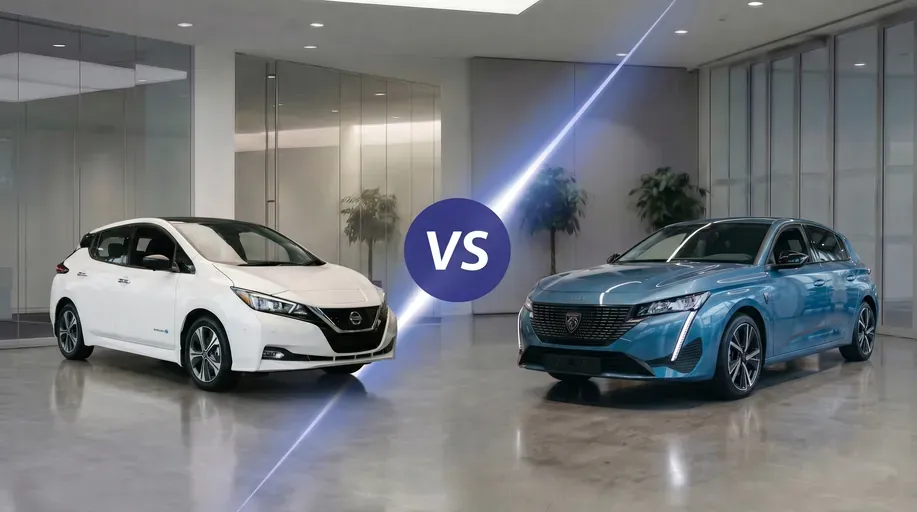
Nissan Leaf vs Peugeot e-308 Comparison: Which electric car to choose? We reveal the real range, equipment details, and the final verdict for an easy used car purchase.
Apr 26, 2026