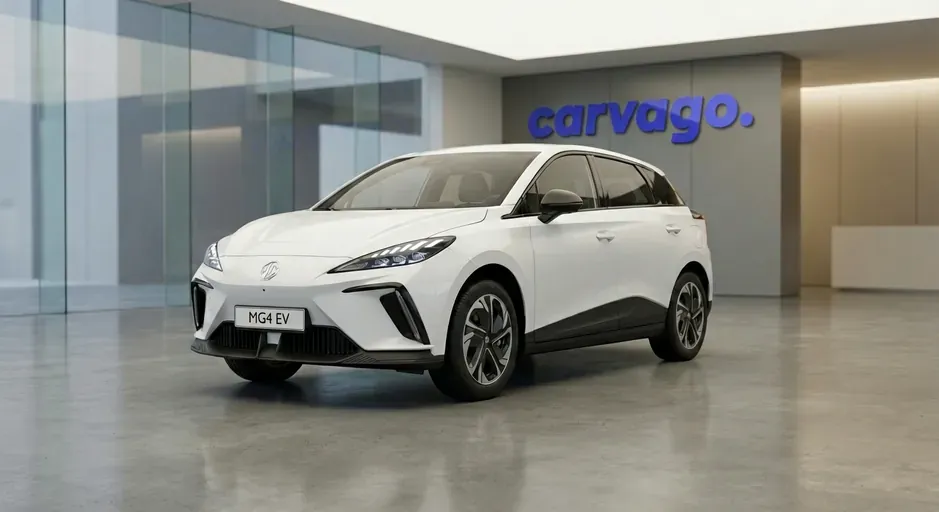
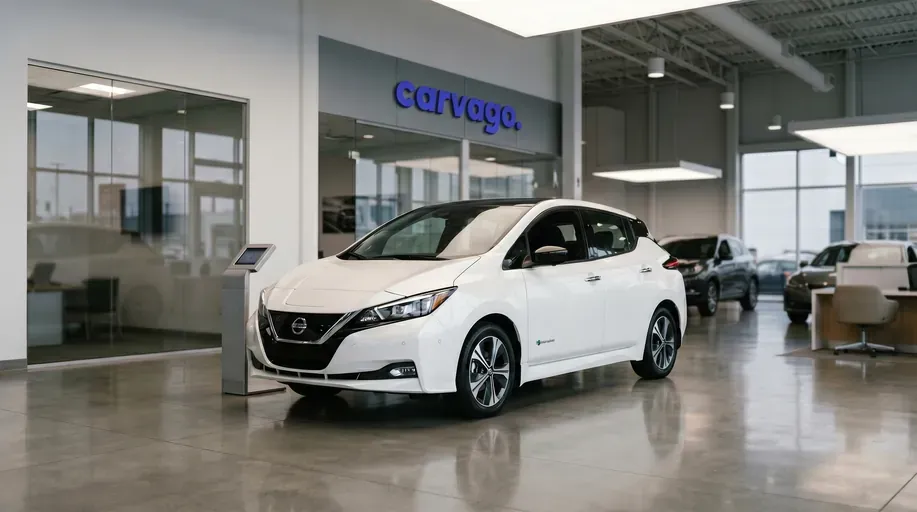
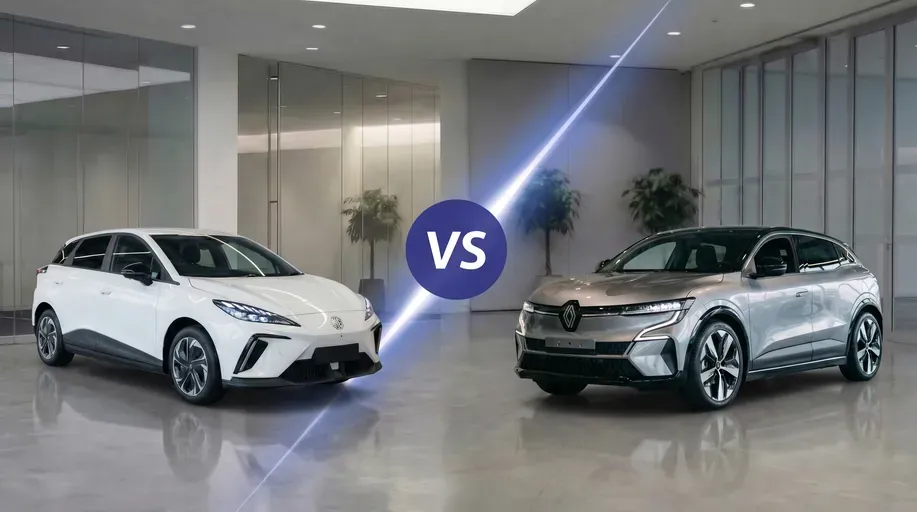
Choosing the right motorization and battery capacity is absolutely crucial for long-term satisfaction with used electric vehicles because, unlike internal combustion engine cars, it directly determines the car's daily usability. While the second-generation Nissan Leaf (ZE1) represents the traditional front-wheel-drive school and is built on an older architecture, the MG4 brought a modern dedicated electric platform (MSP) to the market with rear-wheel drive, a very low center of gravity, and a more sophisticated weight distribution. The following recommendations are based on real-world range, onboard system reliability, charging speed, and long-term experiences of owners of roughly four-year-old used cars.
For the MG4, we recommend: 64 kWh battery (150 kW / 204 hp)
For models from the first years of production (2022–2023), which are now filling the used car market, the best choice is the version with the larger 64 kWh battery (often associated with Comfort or Luxury trims). Unlike the base 51 kWh variant with LFP cells, this version uses NMC (nickel-manganese-cobalt) chemistry, which offers higher energy density and provides a real combined range safely around 350 to 380 km. Its greatest technical advantage is support for faster DC charging at up to 135 kW (compared to 117 kW for the base version), making it a much more versatile car capable of handling long-distance trips with acceptably short stops. Rear-wheel drive combined with 150 kW also guarantees excellent and fun driving dynamics.
However, with these early model years, you must watch out for teething troubles. The most common risk is unstable infotainment and assistance system software. Crucial check: Always verify in the onboard menu or at a dealer whether the car has the latest software updates installed, which resolve the vast majority of bugs (e.g., aggressive lane-keeping interventions). During the physical inspection of the car, also look under the rear axle – on the first series from 2022, minor oil leaks from the electric motor's reduction gear appeared. You will notice them as greasy spots on the motor housing, and if they are there, the car will require resealing. This model is ideal for drivers who enjoy a more dynamic drive, prefer modern technology, and occasionally need to set out on a longer highway route.
For the Nissan Leaf, we recommend: e+ version with 62 kWh battery (160 kW / 217 hp)
For the Nissan Leaf ZE1 generation, which you can find today as a very attractive four-year-old used car, the more powerful e+ version with a 62 kWh battery makes by far the most sense. The smaller 40 kWh battery loses steam very quickly outside the city. In contrast, the 62 kWh variant addresses the main range anxiety and reliably covers over 320 km in real-world traffic. The 160 kW electric motor has strong torque and linear pull, making the car a very confident and safe family vehicle for overtaking. The Leaf excels in high mechanical reliability of the chassis and a solidly built, albeit slightly more cramped, interior.
However, the Leaf has one major technical weakness – it lacks active liquid cooling for the battery (relying only on passive heat dissipation). During longer highway drives followed by fast charging, the battery overheats, after which the software sharply limits the charging power to protect it (the well-known "Rapidgate" phenomenon). The second obstacle is the use of the older CHAdeMO charging standard, which is on the decline at European public stations. Crucial check: Before buying, always have the battery's "State of Health" (SOH) read via the OBDII port (e.g., using the LeafSpy app). This will tell you its real remaining capacity. If the SOH for a four-year-old car is below 85%, the car has likely experienced a large number of fast-charging cycles, and you should look for another unit. Due to these specifics, the Leaf 62 kWh is ideal for more conservative drivers and families who want an exceptionally reliable car for suburban commuting, primarily charge at home in the garage (via AC alternating current, where the battery doesn't heat up), and only exceptionally undertake long highway journeys.