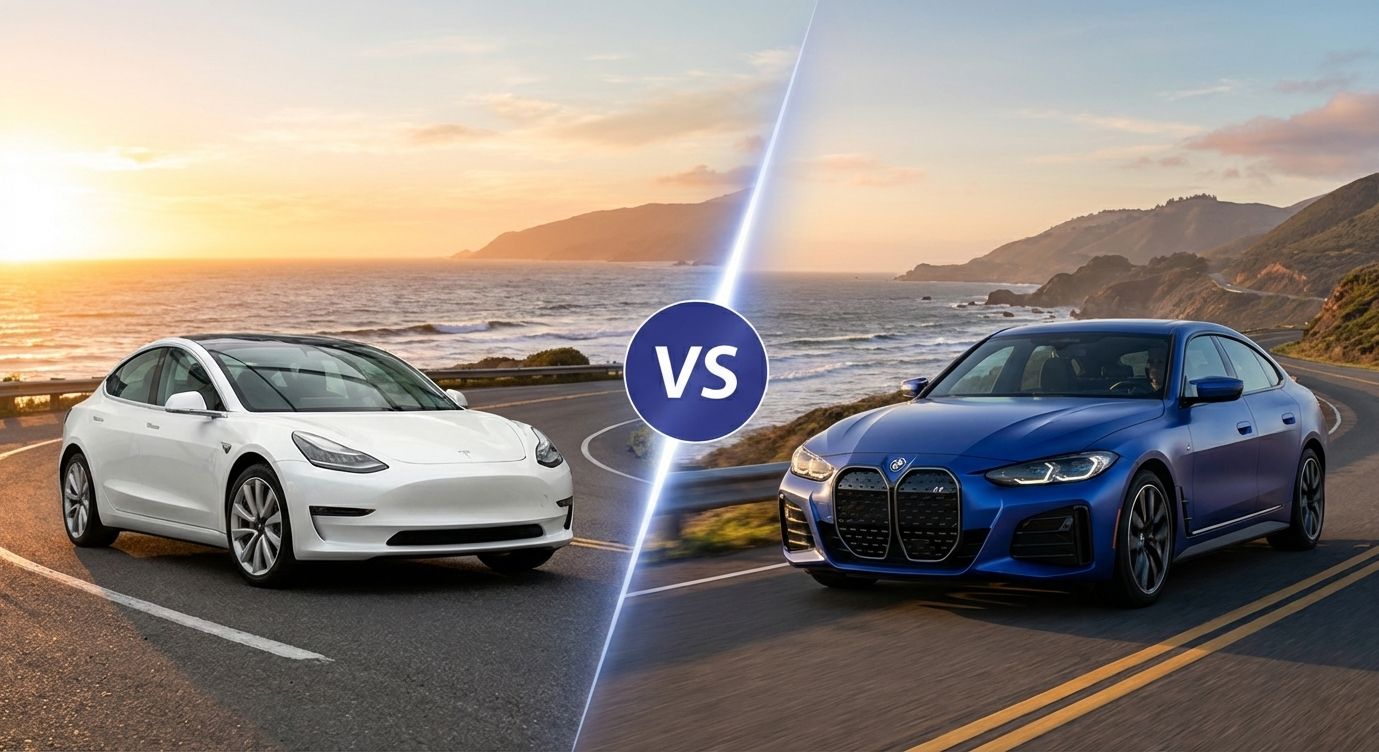
Car battle
Tesla Model 3 vs. BMW i4: A Complete Comparison for 2025
Tesla Model 3 vs. BMW i4: Which premium electric car is better? Our detailed comparison of range, performance, and price will help you choose.
Apr 14, 2026
Articles
Car battle
MG4 EV vs Renault Mégane E-Tech Electric comparison. A detailed look at range, equipment, and real-world experience. Read our verdict and make your choice easier!
April 13, 2026
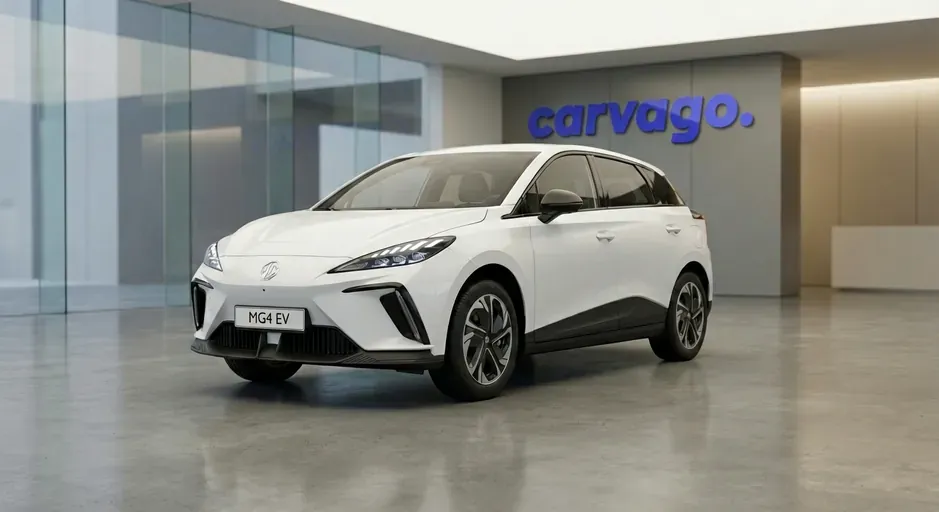
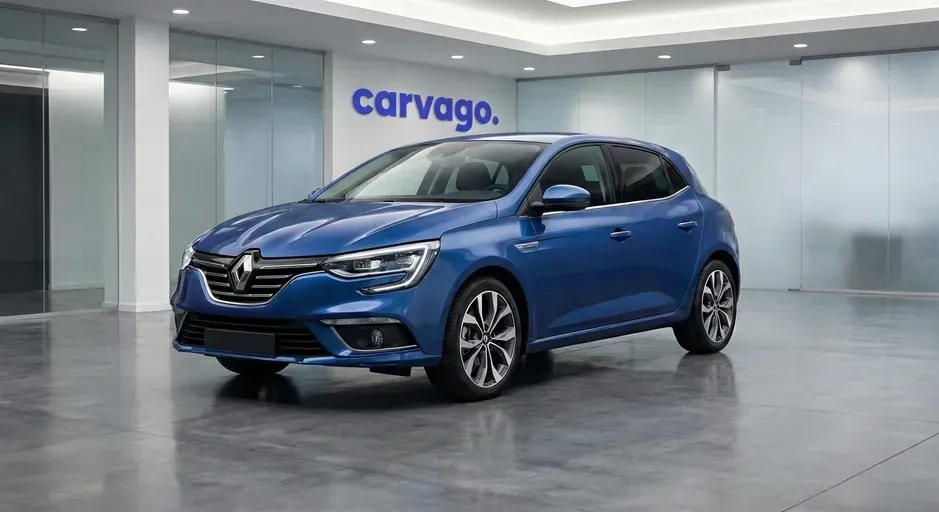
MG4, also known in some markets as the MG4 EV or MG Mulan, is a dynamic and affordable hatchback that confidently makes waves in the European electric vehicle market with its bold design and excellent price-to-performance ratio. Standing against it is the Renault Mégane E-Tech, also called the Mégane E-Tech Electric, an elegant and technology-packed French representative that successfully transitions the famous model name into a purely emission-free era. Let's take a closer look at how these two closely watched competitors stack up in a direct comparison and which one represents the better choice for your daily life behind the wheel.
When comparing the exterior dimensions of the MG4 and Renault Mégane E-Tech models (focusing on models approximately four years old), we encounter two quite different design and technical approaches. While the MG4 sticks to a platform designed exclusively for fully electric drive with the classic proportions of a slightly larger hatchback (length 4287 mm), Renault's offering in this period spans two generations. The fully electric 5th generation Mégane E-Tech (often classified as a crossover or SUV) surprisingly chooses a much more compact footprint with a length of just 4200 mm. In contrast, the older plug-in hybrid Mégane in the Estate (station wagon) version and the hatchback are significantly longer – the hatchback measures 4359 mm and the estate version a respectable 4626 mm.
The key dimension for interior spaciousness is the wheelbase. Here, the MG4 benefits from its dedicated electric platform and offers an above-standard 2705 mm, which translates directly into more generous legroom for rear-seat passengers. The electric Renault Mégane lags only slightly behind (2685 mm), which, given its overall shorter body, is an excellent value relying on shortened overhangs. However, a significant difference can be found in the width of the car. With its 1836 mm, the MG4 is 53 mm wider than the electric Mégane (1783 mm), which provides the occupants with noticeably more valuable centimeters in the shoulder area.
From the perspective of daily use, these parameters clearly define the strengths of both cars. The fully electric Renault Mégane benefits from its smaller exterior dimensions when moving through narrow city streets, and maneuvering in tight parking lots is somewhat easier with it. The MG4, on the other hand, offers a more "mature" and stable stance, which you will appreciate on longer highway trips and in terms of passenger comfort throughout the cabin. However, if your absolute priority is moving larger volumes, the older hybrid Estate version remains a logical and unbeatable choice.
| Parameter | MG4 Hatchback | Renault Mégane E-Tech Hatchback (Gen IV) | Renault Mégane E-Tech Estate (Gen IV) | Renault Mégane E-Tech SUV (Gen V) |
|---|---|---|---|---|
| Width (mm) | 1836 | 1814 | 1814 | 1783 |
| Length (mm) | 4287 | 4359 | 4626 | 4200 |
| Height (mm) | 1504 - 1516 | 1438 | 1449 | 1505 |
| Wheelbase (mm) | 2705 | 2669 | 2712 | 2685 |
When choosing a compact car on the four-year-old used car market, trunk volume is a key factor, especially if the car is to serve as the main family transport. The Chinese-British MG4, as a pure electric vehicle, relies on a practical five-door body with a single trunk variant, while its French competitor, the Renault Mégane E-Tech, offers a much wider range of options due to the overlap of two generations. In used car dealerships, you will come across the newer fully electric crossover (generation V, classified as SUV/Offroad), but also older fourth-generation plug-in hybrid models, which were sold as a classic hatchback or a practical estate (Estate).
The basic version of the MG4 Hatchback hides a 363-liter trunk under its visually split tailgate. While it doesn't belong at the absolute top of its class, it is more than enough for daily commuting and common family duties, with the space increasing to a useful 1177 liters after folding the rear backrests. However, the fully electric Renault Mégane E-Tech SUV/Offroad clearly scores compared to the MG4 – its trunk holds 440 liters, which in practice means space for several extra suitcases. The price for this generous volume is a deeper trunk shape and a slightly higher loading sill. With the rear seats folded, the pure electric French car offers a generous 1332 liters.
The installation of a heavy battery in older plug-in hybrid versions of the Renault has taken its toll. In the Mégane E-Tech plug-in hybrid hatchback, the standard volume has shrunk to a modest 308 liters (1200 liters when folded), which may already limit the car's family ambitions. So, if you need to transport bulkier loads or are looking for a car sufficient for weekend shopping and longer holidays, the estate version makes much more sense. The Renault Mégane E-Tech Estate offers a solid 389 liters in the base and 1372 liters with the seats folded, even with hybrid technology. Overall, this comparison shows that for families preferring generous space, the fully electric Mégane or its hybrid estate version is the ideal choice, while the MG4 represents a reliable middle ground for moderately demanding users.
| Parameter | MG4 Hatchback | Renault Mégane E-Tech Hatchback | Renault Mégane E-Tech Estate | Renault Mégane E-Tech SUV/Offroad |
|---|---|---|---|---|
| Base volume (liters) | 363 | 308 | 389 | 440 |
| Max volume with seats folded down (liters) | 1177 | 1200 | 1372 | 1332 |
For daily family use and transporting bulkier items, the fully electric Renault Mégane E-Tech SUV/Offroad or its older hybrid estate version makes the most sense, while the MG4 and the hybrid hatchback from Renault will satisfy standard needs.
Although compact hatchbacks with electric or hybrid powertrains are not exactly typical highway workhorses, the maximum permissible trailer weight still plays a crucial role for many buyers when choosing a car. The ability to hitch a trailer to the vehicle significantly increases everyday practicality. Looking at roughly four-year-old used examples of the popular MG4 and Renault Mégane E-Tech models, however, we discover substantial differences in how much these cars actually allow you to tow.
The first-generation MG4 model (produced since 2022) takes a rather conservative approach to the towing hitch. Regardless of whether you opt for the standard version with a 51kWh battery or the Extended Range variant, the manufacturer offers a strict limit of 500 kg for both braked and unbraked trailers. While this value is fully sufficient for a weekend trip to a DIY store or a typical run to the recycling center with garden waste, heavier loads or even caravans are completely off-limits for this model.
In contrast, the fifth generation of the Renault Mégane E-Tech Electric opens up significantly broader utility options, although these depend directly on the vehicle's specification. The less powerful EV40 variant (130 hp) mirrors the MG's limits and offers the same 500 kg. However, if you choose the more powerful and popular EV60 version (220 hp), the maximum braked trailer weight jumps to a solid 900 kg (while the unbraked trailer capacity is 750 kg). This roughly 400-kilogram shift is crucial in practice – you easily gain space for several extra suitcases in a heavier cargo trailer, or even the possibility of hitching a smaller recreational caravan for a longer holiday. For those interested in a used car, the previous fourth generation in the Mégane E-Tech Plug-in 160 version (2020–2023) is also worth mentioning, where both the braked and unbraked limits stopped at a compromise of 750 kg.
Final summary:
If you only expect the most basic utility value from your family car for local trips with a light trailer, both cars will serve you well, and the 500 kg limit of the MG4 won't bother you. However, if you suspect that you will occasionally put the towing hitch to heavier tests or plan to tow a smaller caravan, the fully electric Renault Mégane in the EV60 version will clearly be the more liberating and practical choice for you from this duo.
| Model and motorization | Braked weight of trailer (kg) | Unbraked weight of trailer (kg) |
|---|---|---|
| MG4 Electric / EV (1st generation, all versions) | 500 | 500 |
| Renault Mégane E-Tech EV40 / 130hp (5th generation) | 500 | 500 |
| Renault Mégane E-Tech Plug-in 160 (4th generation) | 750 | 750 |
| Renault Mégane E-Tech EV60 / 220hp (5th generation) | 900 | 750 |
Comparing the powertrains of the MG4 and Renault Mégane E-Tech models brings us into the world of modern, purely electric hatchbacks roughly four years old, which, however, approach propulsion with a different philosophy. While the MG4 primarily bets on rear-wheel drive (RWD) and benefits from a sportier weight distribution, the Mégane E-Tech remains faithful to traditional front-wheel drive (FWD), which guarantees predictable behavior and efficient interior space packaging. For buyers on the used car market, this presents an interesting dilemma: the MG4 attracts more enthusiastic drivers and offers a wider range of power outputs, including an extreme all-wheel-drive version, while Renault aims more for smoothness, comfort, and everyday efficiency without unnecessary excesses. Both automakers offer various battery capacities paired with adequately sized electric motors, ensuring that both the economical city driver and those looking for brisker highway travel will find what they need.
The range of powertrains for the first-generation MG4 (models available since 2022) is unexpectedly diverse and gives customers a wide range of choices. The base is the Standard version with a 51 kWh battery capacity and a single electric motor with an output of 125 kW (170 hp) driving the rear wheels. The golden middle ground, which you will encounter very often on the used car market, is the variant paired with a 64 kWh battery (Comfort or Luxury trims) and a more powerful motor with an output of 150 kW (204 hp). For drivers requiring maximum range, the Extended Range version with a 77 kWh battery and 180 kW (245 hp) output is available. A complete unique in this class is the top-of-the-line XPOWER version. It adds a second electric motor to the front axle, creating all-wheel drive (AWD) with a brutal combined output of 320 kW (435 hp) and a massive torque of 600 Nm. The family hatchback thus becomes a full-fledged electric "hot hatch." All versions use a single-speed reduction gearbox.
| Engine type | Fuel type | Power (kW) | Torque (Nm) | Transmission |
|---|---|---|---|---|
| Electric motor RWD (51 kWh) | Electric | 125 | 250 | 1AT |
| Electric motor RWD (64 kWh) | Electric | 150 | 250 | 1AT |
| Electric motor RWD (77 kWh) | Electric | 180 | 350 | 1AT |
| Electric motor AWD XPOWER (64 kWh) | Electric | 320 | 600 | 1AT |
The fifth generation of the Renault Mégane model, bearing the E-Tech Electric moniker since 2022, says goodbye to internal combustion engines and relies exclusively on fully electric front-wheel drive. The offering is somewhat clearer than with MG and focuses on a reasonable ratio of price, range, and performance for everyday users. The base variant is the EV40 version (with a 40 kWh battery), which provides an output of 96 kW (130 hp) and 250 Nm of torque. This powertrain is an ideal choice for smooth city and suburban traffic. An identical 96 kW output was previously also offered in conjunction with a larger 60 kWh battery (often referred to as ER 130 or Evolution ER) to maximize range, although these are rarer finds on the used car market. At the top of the range stands the most sought-after EV60 powertrain with an output of 160 kW (218 hp) and 300 Nm of torque. The more powerful version offers much more agile dynamics and a perceptibly more confident performance when overtaking on the highway. As with the competition, the electric motors here are paired with a smooth-shifting single-speed transmission.
| Engine type | Fuel type | Power (kW) | Torque (Nm) | Transmission |
|---|---|---|---|---|
| Electric motor FWD EV40 (40 kWh) | Electric | 96 | 250 | 1AT |
| Electric motor FWD EV60 (60 kWh) | Electric | 96 | 250 | 1AT |
| Electric motor FWD EV60 (60 kWh) | Electric | 160 | 300 | 1AT |
The MG4 scores points with drivers who appreciate the playful driving characteristics of a rear-wheel-drive car and a wide range of power outputs, including the extreme XPOWER all-wheel drive. The Renault Mégane E-Tech, on the other hand, will please more conservative types looking for smoothness, the certainty of front-wheel drive, and solid efficiency for everyday driving.
Choosing the right powertrain is crucial for long-term satisfaction with modern electric vehicles, as it affects not only range and dynamics but also charging speed and overall reliability. Both manufacturers opted for purely electric drive for these roughly four-year-old models, with MG favoring rear-wheel drive and a more spirited character, while Renault prefers front-wheel drive and exceptionally low weight. Our recommendation is based on real-world experience, consumption in normal traffic, owner feedback, and mechanical reliability after years of actual use.
In the range of used first-generation MG4s (produced since 2022), the 64 kWh battery represents the absolute ideal, most commonly found in advertisements under the Comfort or Luxury trim levels.
Why it's the best choice:
The smaller 51kWh version has slower charging and a noticeably shorter range for full utility. Conversely, the giant 77kWh variant suffers significantly from a faster drop in charging power at fast chargers, and the top-of-the-line XPower sports version with all-wheel drive tends to be too aggressive and unnecessarily "overpowered" for the basic chassis design. The 204 hp (150 kW) rear-wheel drive thus offers the best compromise between purchase price, brisk dynamics, and a real-world range of around 350 to 380 kilometers.
Technical strengths and risks:
Who it's for:
This motorization is tailor-made for daily users and suburban commuters looking for a very agile and fun hatchback with an unbeatable price-to-performance and interior space ratio.
For the fifth generation of the Renault Mégane E-Tech, available since 2022, the choice for the used car market is quite clear: the more powerful EV60 version with 220 hp and a larger 60kWh battery (which you will usually find with the useful "Optimum Charge" suffix).
Why it's the best choice:
While the basic EV40 (40 kWh) version is significantly limiting for the role of a primary family car due to its limited range, the EV60 variant offers an excellent balance. French engineers managed to build a car that has a very low curb weight (just over 1.6 tons) even with the larger battery. This gives the car agility in corners and eliminates the feeling of heaviness that many battery-powered competitors suffer from.
Technical strengths and risks:
Who it's for:
This specification is a fantastic choice for tech-savvy drivers who love smoothness and appreciate a top-tier infotainment system built on Android Automotive with Google Maps. Thanks to a reliable range and 130kW fast charging, the car can handle the role of the only vehicle in the family without hesitation.
As is often the case with official figures, the range and consumption values stated according to the strict WLTP laboratory methodology can be somewhat more optimistic in practice than everyday reality. Real-world energy consumption in electric vehicles depends heavily on weather conditions, the extent of heating use, and the proportion of high-speed highway driving. For an objective comparison of these modern representatives, which are beginning to enter the used car market in larger numbers as roughly four-year-old vehicles (manufactured around 2022), we rely on real-world owner experiences and aggregated results from independent tests. The data in the table comes from crowdsourcing platforms such as the popular Spritmonitor.de or independent testing by EV-Database.
| Model and powertrain | Average consumption (kWh/100 km) | Source (news_site) |
|---|---|---|
| Renault Mégane E-Tech EV40 130hp | 15.8 | Spritmonitor.de / EV-Database |
| Renault Mégane E-Tech EV60 220hp | 16.1 | Spritmonitor.de / EV-Database |
| MG4 Electric 51 kWh | 17.0 | Spritmonitor.de / EV-Database |
| MG4 EV 64 kWh | 17.6 | Spritmonitor.de / EV-Database |
From the perspective of the numbers, it is clear that the fifth-generation Renault Mégane (E-Tech) has a slight edge in terms of overall energy efficiency. Thanks to its exceptionally thin battery structure, excellent aerodynamics, and emphasis on lower weight, even the more powerful EV60 version (with 220 hp) shows excellent values, with its average consumption easily staying around 16.1 kWh/100 km. The Chinese-British MG4, despite its well-tuned pure electric platform, is slightly "hungrier" – its most popular version with a 64kWh battery requires about 1.5 kWh more in real-world driving. A surprising finding for both cars is that the weaker electric motors combined with smaller batteries (as in the EV40 or MG4 51 kWh variants) do not bring as significant energy savings as one might intuitively expect. In both cases, the decrease in consumption is only in the range of a few tenths of a kilowatt-hour.
For a typical user who uses the car mainly for quiet city driving or suburban commuting, these differences represent a minimal impact on the family budget. Both cars operate highly economically at city speeds, and their operation will be extremely cheap. However, if you are a long-distance driver who regularly covers dozens of kilometers on the highway or places great emphasis on range stability even during freezing winter days, the Renault will prove to be a more reliable and economical choice. Its finely optimized thermal management compensates even for the slightly smaller capacity of the top-tier battery compared to some higher-spec versions of the MG4.
In conclusion, while energy consumption alone is unlikely to be the absolute deciding factor for this pair, the Renault Mégane E-Tech emerges from our comparison as the more efficient electric car. For a pragmatic buyer looking for a roughly four-year-old and technologically advanced hatchback, the French representative appears to be a bet on slightly cleaner and more precise engineering.
Both models entered the market in 2022, which means that in the category of used cars approximately four years old, they offer a very attractive price-to-value ratio. Both the MG4 and the Renault Mégane E-Tech benefit from the expanding secondary market for electric vehicles. While the Chinese model attacks with an exceptionally aggressive price tag, the French representative holds its value slightly better thanks to more premium craftsmanship and a stronger European reputation.
| Model and specification | Typical price range (€) |
|---|---|
| MG4 (51 kWh, Standard Range) | 18,000 – 21,000 |
| MG4 (64 kWh, Luxury/Trophy) | 21,000 – 25,000 |
| Renault Mégane E-Tech (EV40, Equilibre) | 23,000 – 25,000 |
| Renault Mégane E-Tech (EV60, Techno) | 27,000 – 30,000 |
When assessing the value of a specific offer, the factory warranty plays a crucial role for used electric vehicles. For the MG4, the manufacturer provides a full 7-year or 150,000 km warranty, which means that even with a four-year-old car, the buyer still has up to three years of worry-free operation for the rest of the vehicle. Renault guarantees the capacity of the high-voltage battery itself for 8 years or 160,000 km, which is the market standard.
While the MG4 is the clear choice for bargain hunters as a four-year-old used car and offers an unbeatable price-to-performance ratio, the Mégane E-Tech can justify its roughly €6,000 surcharge with a more premium cabin and better value retention for the future.
Both models received the maximum five-star rating in independent Euro NCAP crash tests, which is always reassuring news for those interested in a used electric car. However, when comparing safety, it is necessary to take into account the context and the year of testing. Euro NCAP protocols are regularly tightened, so percentage scores from different years cannot be directly compared. In this case, however, we have an ideal situation – cars from the generations currently available on the four-year-old used car market underwent their main tests in the same year (2022). They were thus evaluated according to an absolutely identical methodology, which includes modern frontal collision simulations, side impact protection, and advanced cyclist detection, making their achieved scores objectively comparable.
The French hatchback demonstrated excellent structural body rigidity and reliable occupant protection during testing. It earned 85% for adult protection and an above-standard 88% for child protection, ranking it among the absolute top family electric cars. The evaluation of active safety assistants also ended satisfactorily with a score of 79%. However, protection of vulnerable road users (pedestrians and cyclists) proved to be a certain weakness, where the Mégane E-Tech reached only 65%. A practical detail of modern safety in the Renault is the special "Fireman Access" innovation with a QR code on the windshield, which allows firefighters to lightning-fast identify safe cutting points in the bodywork and speeds up the disconnection of the high-voltage battery in the event of a serious accident.
The electric MG4 underwent the same series of rigorous tests from the same year, 2022 (with the methodology additionally applied at the end of 2025 for the latest city specifications, confirming the same five-star result). This model clearly shows that the modern architecture from the Chinese SAIC group makes no compromises in European safety standards. Adult protection reached a very good 83% and child protection 80%. Although these figures inside the cabin are slightly lower than those of the Renault, the MG4 scored significantly higher in consideration for pedestrians with a result of 75%. The assistance systems grouped in the sophisticated MG Pilot package earned 78% and cover key functions even in the base version, including emergency braking and lane keeping.
Both cars offer highly modern and comprehensive safety standards by the standards of the used car market, but their focus differs slightly. The Renault Mégane E-Tech is a stronger player in protecting the occupants and children themselves, making it an ideal choice for smaller families. The MG4, on the other hand, is characterized by a more balanced approach with demonstrably higher consideration for the external environment, which you will appreciate especially when frequently navigating dense city traffic full of pedestrians and cyclists.
| Parameter | MG4 | Renault Mégane E-Tech |
|---|---|---|
| Year of testing | 2022 | 2022 |
| Adult occupant protection | 83% | 85% |
| Child protection | 80% | 88% |
| Vulnerable road user protection | 75% | 65% |
| Safety assistance systems | 78% | 79% |
Both electric cars received the maximum number of stars according to the same 2022 methodology. Renault narrowly wins in occupant and child protection, while the MG4 is significantly more considerate of its surroundings and pedestrians.
In addition to standard equipment, each model offers several unique features and technologies that highlight their different approaches to added value and can be decisive for customers in their daily lives.
Unbeatable value for money, which stands out especially on the used car market
Rear-wheel drive and a low center of gravity ensure very fun and agile handling
Long factory warranty (7 years / 150,000 km), which is transferable to the next owner
Decent real-world range for the version with the larger battery (Long Range with 64 kWh capacity)
Fast DC charging with up to 135 kW, saving time on long trips
Slow and software-unrefined infotainment system with less intuitive controls
Noticeably cheaper plastics and materials in the interior
Overly aggressive and sometimes confusing lane-keeping assistant
Smaller luggage compartment with a basic capacity of 363 liters
The MG4 is an ideal choice for pragmatic drivers looking for an affordable and driver-focused electric car with rear-wheel drive. Although compromises in material quality and operating software are evident, the long warranty and excellent powertrain efficiency make it a very tempting offer on the used car market.
Premium-finished interior with high-quality materials and excellent cabin soundproofing
Top-tier and fast OpenR Link infotainment with integrated Google services (including maps)
Low overall vehicle weight bringing lightness to the handling and high operational efficiency
Larger and deeper luggage compartment with a capacity of 440 liters
Elegant and modern design that skillfully combines elements of a hatchback and a crossover
Significantly cramped space in the rear seats, especially in the legroom area and under the front seats
Significantly worse rear-quarter visibility and a small rear window (often requiring reliance on cameras)
Higher purchase price of used models compared to Chinese competition
More powerful front-wheel-drive versions sometimes have traction issues in the wet
The Renault Mégane E-Tech targets more demanding buyers for whom a luxury onboard environment, top-tier digital technology, and a quiet, comfortable ride are priorities. The car will perfectly serve couples or smaller families who won't mind the compromise of less rear passenger space in exchange for French charm and style.
Based on our own CarAudit inspections, long-term reliability statistics, and expert articles, we have compiled an overview of the most common problems that used car buyers should watch out for.
The MG4 brings a great price-to-performance ratio to the used car market, but in independent reliability surveys, it often struggles with teething problems, primarily related to software and onboard electronics.
Although the MG4 scores with its driving characteristics and efficiency, frequent software quirks and slower infotainment can make daily life with the car unpleasant.
The electric Renault Mégane E-Tech is overall a well-built and reliable electric car, yet it did not escape some specific faults in early production that a future owner should know about.
The electric Mégane is a reliable car with a sophisticated interior and an excellent Google system, but it is troubled by an oversensitive car alarm and minor complications when communicating with smart home chargers.
When buying a used car, a thorough inspection is key. Here are some specific points to focus on for these two models, especially considering they are fully electric cars about 4 years old, where software and traction battery health play a major role.
MG4 with the largest battery (77 kWh) offers a theoretical range of up to 520 km according to WLTP, which is slightly more than its competitor. Renault Mégane E-Tech with a 60kWh battery can manage a maximum of around 450 to 470 km. In real-world driving, however, both cars reliably exceed the safe limit of 350 km on a single charge.
The Renault Mégane E-Tech offers a significantly larger luggage compartment with a volume of 440 litres compared to 363 litres for the MG4. Furthermore, the French car scores points with clever storage for charging cables hidden under the boot floor. With its dimensions, the Chinese-British MG4 is more suitable for everyday shopping than for moving bulky family luggage.
The fundamental difference is the drive concept, as the MG4 uses rear-wheel drive, which gives it a sportier and very agile driving character. The Mégane E-Tech, on the other hand, relies on classic front-wheel drive, which is more focused on smoothness, confidence, and first-class cabin soundproofing. For driving enthusiasts, the MG is more suitable, while the Renault excels in the field of everyday travel comfort.
The Renault Mégane E-Tech clearly dominates in this area with premium materials and a lightning-fast multimedia system built on the Google Automotive platform. The MG4 relies on a much more minimalist, functional interior full of harder plastics, and its touchscreen can sometimes have a slower response. If you prefer modern technology and a more luxurious feel on board when choosing, the French model is the better choice.
The MG4 represents an almost unbeatable price-to-value ratio on the used car market, appealing to customers with a tighter budget. A used Mégane E-Tech maintains a slightly higher purchase price, but easily justifies it with richer equipment and overall premium build quality. The final choice thus primarily depends on whether you are looking for the most affordable electric mobility or prefer to pay extra for a higher standard.
The final showdown between these two approximately four-year-old electric vehicles shows that both cars approach emission-free mobility differently and target different groups of drivers. MG4 represents an absolutely unrivaled choice for pragmatic buyers on a tighter budget, offering them not only a generous factory warranty at a very attractive price on the used car market but also exceptionally fun driving characteristics thanks to its rear-wheel-drive platform. Renault Mégane E-Tech, on the other hand, confidently justifies its slightly higher purchase price with top-tier premium interior craftsmanship, lightning-fast infotainment with integrated Google services, and a more practical, larger luggage compartment. While the Chinese-British hatchback is thus an ideal entry ticket into the world of electromobility for those looking for the maximum price-to-value ratio combined with driving pleasure, the French representative will perfectly serve tech enthusiasts and smaller families requiring top-notch daily comfort, absolute silence on board, and a sophisticated digital environment.
Sources: ADAC, lidovky.cz, e15.cz, automagazin.cz, auto-mania.cz, rallylife.cz
This article was prepared using artificial intelligence tools. The section guarantor is Petr Dušek.
Tesla Model 3 vs. BMW i4: Which premium electric car is better? Our detailed comparison of range, performance, and price will help you choose.
Apr 14, 2026
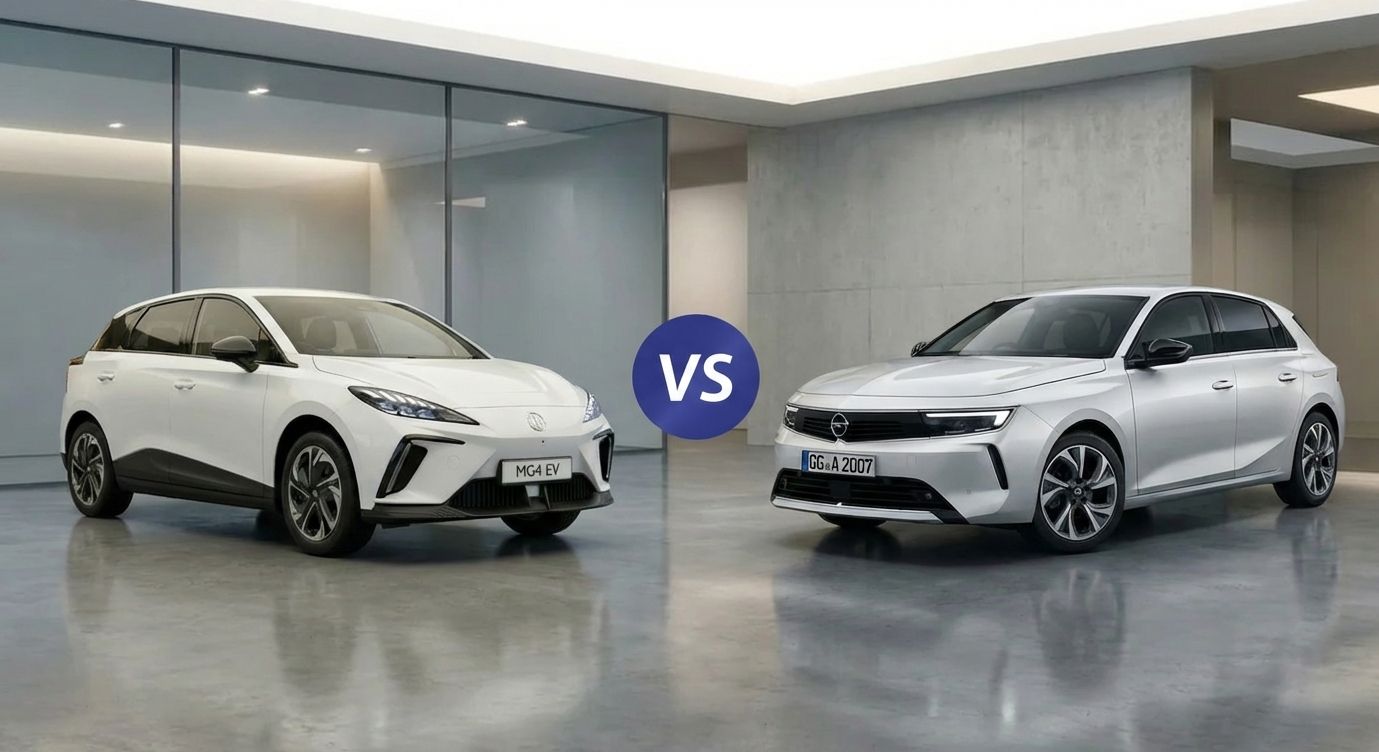
Deciding between the MG4 and the Opel Astra Electric? Our detailed comparison of range, price, and equipment will help you choose the right electric hatchback for you.
Apr 14, 2026
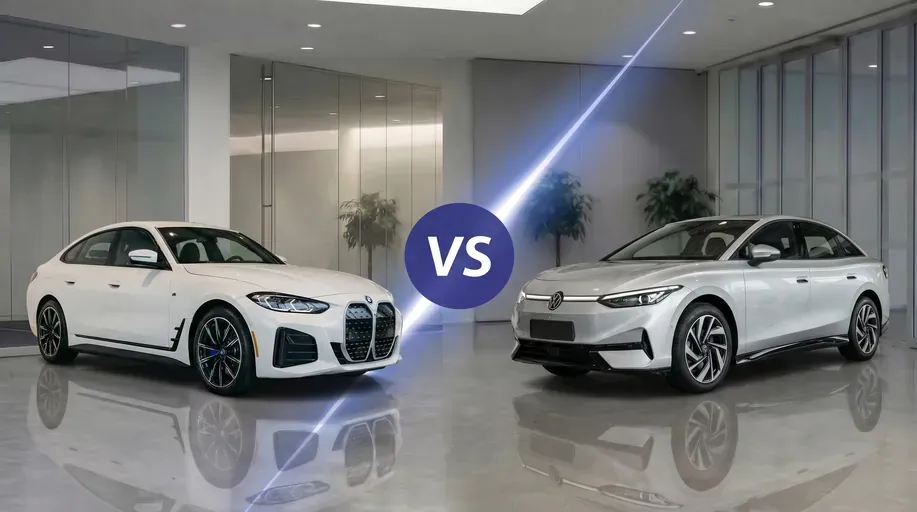
Comparison of the BMW i4 and Volkswagen ID.7. Find out which electric car has better real-world range, equipment, and driving comfort. Read our final verdict.
Apr 14, 2026