Articles

Car battle

Renault Kangoo vs. Volkswagen Caddy: Complete comparison 2026

Renault Kangoo or Volkswagen Caddy? Our detailed comparison reveals the key differences and helps you decide which car is right for you.

April 13, 2026

VS
Renault Kangoo

Renault Kangoo

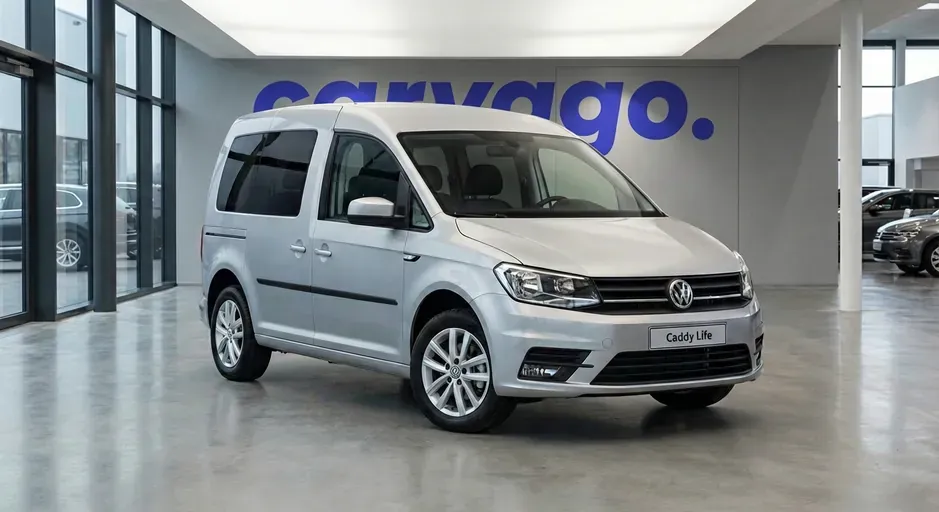
Volkswagen Caddy

Volkswagen Caddy

Introduction

For decades, the Renault Kangoo has been synonymous with French charm and practicality in the passenger van segment. It faces off against the German Volkswagen Caddy, which prides itself on precise workmanship, reliability, and versatility, earning it a solid position in the market. In this comparison, we will take a detailed look at the key features of both vehicles to determine which one better suits your needs.

Comparison of External Dimensions

At first glance, the Renault Kangoo and Volkswagen Caddy may seem very similar in size, but the devil is in the details. Both models are available in two body lengths – standard and extended (Grand Kangoo and Caddy Maxi) – allowing customers to choose the version that precisely fits their needs. The main difference is that the Caddy focuses on a longer wheelbase and overall length, while the Kangoo counters with greater width and height.

In the standard versions, the Volkswagen Caddy, at 4500 mm, is a negligible 14 mm longer than the Kangoo (4486 mm). More importantly, however, its wheelbase is a significant 39 mm longer (2755 mm compared to 2716 mm). In practice, this can result in better stability at higher speeds. With the extended versions, however, the tables are turned. The Grand Kangoo (4911 mm) surpasses the Caddy Maxi (4853 mm) by almost 6 centimetres, and its wheelbase is a massive 13 cm longer. So, if you are looking for maximum space for cargo or third-row passengers, the longer version of the Kangoo is the clear winner.

In terms of width and height, the Renault has the upper hand. With a width of 1860 mm (excluding mirrors), the Kangoo is one of the widest vehicles in its class, slightly surpassing the Caddy (1855 mm), which contributes to a more spacious-feeling interior. You will especially appreciate this difference when installing three child seats side by side. The Kangoo is also slightly taller at 1838 mm than the Caddy (up to 1833 mm), which contributes to better visibility from the vehicle and generous headroom. For families who prioritize comfort and cabin width, the Kangoo may be the right choice.

ParameterRenault Kangoo (standard)Volkswagen Caddy (standard)Renault Grand Kangoo (extended)Volkswagen Caddy Maxi (extended)
Length (mm)4486450049114853
Width (mm)1860185518601855
Height (mm)18381819 - 183318691835 - 1836
Wheelbase (mm)2716275531002970

Trunk Volume

Practicality is a key discipline in the passenger van segment, and the size of the boot often determines the winner. In this respect, the Renault Kangoo and the Volkswagen Caddy, although both targeting the same customer, differ more than it might seem at first glance. The battle is between the third-generation Kangoo (from 2021) and the fifth-generation Caddy (from 2020), which represent a modern take on a family and work vehicle.

The Volkswagen Caddy in its basic short-wheelbase version offers a staggering 1213 litres in a five-seat configuration if you load it up to the roof. This figure clearly indicates its utility origin and gives it an advantage when transporting large items. After removing the second row of seats (which is its great advantage over simply folding them), a space of 2556 litres is created. The Renault Kangoo counters with a standard volume of 519 litres up to the parcel shelf, a value comparable to large estate cars. However, after folding the seats, it also offers a very respectable 2031 litres. The difference in the basic volume is mainly due to the measurement methodology – the Caddy states the volume up to the roof, while the Kangoo sticks to the more conventional measurement up to the roller cover.

The differences are even more pronounced in the extended versions. The Volkswagen Caddy Maxi provides 1720 litres behind the second row of seats (again, up to the roof) and an incredible 3105 litres after their removal. If the vehicle is equipped with a third row of seats, there is still a solid 446 litres left for luggage. Renault responds with the Grand Kangoo model, which offers 513 litres in a seven-seat configuration. However, after folding and removing the seats, its capacity grows to a massive 3750 litres, surpassing its German competitor in maximum volume. For the buyer, this means a clear choice: the Caddy is the champion in basic volume with practical removable seats, while the Kangoo scores with slightly easier seat handling and, in the extended version, the absolute largest possible cargo space.

ParameterRenault Kangoo (Gen III)Volkswagen Caddy (Gen V)Renault Grand Kangoo (Gen III)Volkswagen Caddy Maxi (Gen V)
Basic volume (litres)5191213 (to the roof)513 (in 7-seat configuration)446 (in 7-seat configuration)
Max. volume with seats folded/removed (litres)2031255637503105

Leave it to Carvago CarAudit™

Order CarAudit™

Trailer Weights

The ability to tow a trailer is a key feature for vehicles like the Kangoo and Caddy, whether for tradespeople or active families. At first glance, both models may seem similar, but differences can be found mainly between generations and individual engine options.

The latest generation of the Renault Kangoo (from 2021) has made a big step forward in this regard, offering an almost uniform value. Most versions, whether with the BLUE dCi diesel engine or the TCe petrol engine, can handle a braked trailer weighing 1500 kg. A big surprise is that the all-electric E-Tech version also maintains the same value, which is exceptional in the electric van segment. The older generation (produced until around 2021) was much more modest, with values most often ranging between 1050 kg and 1350 kg.

The latest fifth-generation Volkswagen Caddy (from 2020) is a worthy competitor to its French rival. Here too, the most popular engine options, particularly the diesel 2.0 TDI and the more powerful petrol 1.5 TSI, have a maximum trailer weight of 1500 kg. Some less powerful variants or CNG versions may have this value reduced to 1400 kg. Similar to the Kangoo, the older fourth-generation Caddy (until 2020) had a wider range – from a lower 1100 kg for the 1.0 TSI engine to a robust 1500 kg for the two-litre diesels.

For a used car buyer, this means one thing: while the latest generations of both models are very evenly matched and capable partners with a 1500 kg capacity, with older model years, it is necessary to carefully check the specific engine version, as the differences can be significant.

Model and Engine VersionBraked Trailer Weight (kg)Unbraked Trailer Weight (kg)
Renault Kangoo (3rd gen, from 2021)
Kangoo BLUE dCi 95/1151500750
Kangoo TCe 100/1301500750
Kangoo E-Tech Electric1500750
Renault Kangoo (2nd gen, until 2021)
Kangoo dCi 90/1101350690-740
Kangoo ENERGY TCe 1151350720
Volkswagen Caddy (5th gen, from 2020)
Caddy 2.0 TDI SCR (75/90 kW)1500750
Caddy 1.5 TSI OPF (84 kW)1400 - 1500750
Volkswagen Caddy (4th gen, until 2020)
Caddy 2.0 TDI BMT (from 75 kW)1500720-750
Caddy 1.4 TSI BMT (92 kW)1400 - 1500710-740
Caddy 1.0 TSI BMT (75 kW)1100 - 1200700

Overview of Most Common Motorizations

When it comes to engine selection, the philosophies of the two brands differ significantly. The Volkswagen Caddy relies on a wide and proven range of 2.0 TDI diesel engines, offered in several power levels and, uniquely in the segment, with 4MOTION all-wheel drive. The Renault Kangoo, on the other hand, counters with modern, small-displacement turbocharged engines and, most notably, a fully electric E-Tech version, which is missing from the Caddy's lineup. The choice thus depends on priorities: the Caddy will satisfy drivers with high annual mileage and demands for performance or off-road driving, while the Kangoo will appeal to those looking for economical urban operation, whether with petrol, diesel, or electricity.

Renault Kangoo Engine Versions

The third generation of the Renault Kangoo (from 2021) has simplified its range, opting for modern and efficient power units. The core of the range consists of turbocharged 1.3 TCe petrol engines and economical 1.5 Blue dCi diesel units, both available in two power variants. For drivers who prefer quiet and locally emission-free operation, the all-electric E-Tech Electric version is a key choice. Most engines are paired with a six-speed manual transmission as standard, while more powerful variants also offer a seven-speed EDC dual-clutch automatic.

Engine TypeFuelPower (kW)Torque (Nm)Transmission
TCe 100Petrol752006MT
TCe 130Petrol962406MT / 7EDC
Blue dCi 95Diesel702606MT / 7EDC
Blue dCi 115Diesel852706MT / 7EDC
E-Tech ElectricElectric90245Automatic

Volkswagen Caddy Engine Versions

The fifth-generation Volkswagen Caddy (from 2020) bases its lineup primarily on the dominant 2.0 TDI diesel engine, which is available in three power versions. It is with this engine that Volkswagen offers its biggest competitive advantage – 4MOTION all-wheel drive. The petrol engine option is represented by the modern and refined 1.5 TSI unit. A specialty is the 1.5 TGI version running on compressed natural gas (CNG). Most engines are paired with either a six-speed manual or a seven-speed DSG dual-clutch transmission. While older generations of the Caddy (available as used cars) also offered 1.0 TSI or 1.4 TSI engines, these are no longer available in the current generation.

Engine TypeFuelPower (kW)Torque (Nm)Transmission
1.5 TSIPetrol842206MT / 7DSG
1.5 TGICNG/Petrol962006MT
2.0 TDIDiesel552506MT
2.0 TDIDiesel752806MT
2.0 TDIDiesel903206MT / 7DSG
2.0 TDI 4MOTIONDiesel903206MT / 7DSG

Choosing the right engine is crucial for long-term satisfaction with a vehicle, especially for commercial vehicles where reliability and low running costs are expected. Our recommendations are based on a combination of performance, real-world fuel consumption, owner feedback, and the mechanical reliability of the individual power units.

For the Renault Kangoo, we recommend: The 1.5 BLUE dCi diesel engine (70 kW/95 hp)

This engine is a modern evolution of the legendary and time-tested 1.5 dCi (K9K) unit, which has powered millions of Renault, Nissan, and Dacia vehicles. In its latest specification with AdBlue technology (designated BLUE dCi) to meet strict emission standards, it represents the golden mean in the lineup for the third-generation Kangoo (from 2021). With 95 hp and 260 Nm of torque, it offers perfectly adequate dynamics for both family and work use. It's no racer, but the engine's power is available at low revs, which makes driving with a full load or in city traffic easier. Its main advantage is excellent real-world fuel consumption, which easily hovers around 5 litres per 100 km during calm driving.

  • Why it's the best choice: It offers an ideal compromise between purchase price, running costs, and utility. It is more reliable and economical than the TCe petrol variants, which can suffer from higher consumption under heavy load. The more powerful 115 hp version does not offer significantly better dynamics to justify its higher price and consumption.
  • Technical advantages: The engine runs smoothly and quietly, especially compared to older generations. The urea injection system (AdBlue) is now reliable and trouble-free.
  • Known risks and weaknesses: Like any modern diesel with a diesel particulate filter (DPF), it is not ideal for exclusively short city trips where the DPF does not have time to regenerate. This can lead to clogging, which is indicated by a warning light on the dashboard. The solution is to regularly take a longer drive (at least 20-30 minutes) on the motorway or a main road. It is also important to use high-quality AdBlue additive and to refill it in a timely manner.
  • Who it's best for: For drivers looking for a versatile vehicle for mixed use – commuting to work, family trips, and transporting cargo. Ideal for sole traders or families who also frequently drive outside the city.

For the Volkswagen Caddy, we recommend: The 2.0 TDI SCR diesel engine (90 kW/122 hp)

In the case of the fifth-generation Volkswagen Caddy (from late 2020), the two-litre turbodiesel is a safe bet. We recommend the 90 kW (122 hp) power variant, which represents the optimal choice in terms of power and efficiency. This engine, known by the code EA288evo, is equipped with the innovative "Twindosing" system – dual AdBlue injection, which significantly reduces nitrogen oxide emissions while optimising fuel consumption. With 320 Nm of torque available from just 1600 rpm, the engine confidently pulls even a fully loaded vehicle and doesn't run out of breath on the motorway. Real-world fuel consumption can be kept below 6 litres per 100 km without much difficulty.

  • Why it's the best choice: It provides an excellent combination of power, refinement, and economy that is hard to match in its class. It is significantly more powerful and flexible than the basic 75 kW version and more economical than the 1.5 TSI petrol engine, especially under full load. Compared to the engine in the Kangoo, it feels more mature and powerful.
  • Technical advantages: Very refined running and low interior noise. The Twindosing system is effective and reliable. The engine is perfectly matched with both the six-speed manual gearbox and the seven-speed DSG automatic transmission.
  • Known risks and weaknesses: This is a more technically complex and expensive unit than the one in the Renault. Potential repairs (injectors, turbocharger) will be more costly. The warning against purely urban driving due to DPF filter regeneration also applies here, although the VW system is quite robust in this regard. It is necessary to monitor the AdBlue level, as the vehicle gives an early but very firm warning when it is low.
  • Who it's best for: For more demanding users who frequently drive long distances, carry heavy loads, or tow a trailer. It is the ideal engine for businesses and active families who need maximum performance and comfort on long journeys.

Real Fuel Consumption

Fuel consumption is a key factor in commercially oriented vehicles and often differs significantly from the figures presented by manufacturers. For the most objective comparison, we have therefore used data from drivers themselves, specifically from the German portal Spritmonitor.de, which collects real-world data from thousands of owners. We focused on the latest generations of both models that are relevant to the nearly new used car market – the Renault Kangoo III (from 2021) and the Volkswagen Caddy V (from 2020).

A direct comparison shows that both vehicles offer very competitive and economical engine options, with diesel units traditionally being the clear choice for long journeys and heavier loads.

Model and EngineAverage Real-World Consumption (l/100 km)
Renault Kangoo 1.3 TCe (96 kW)7.1
Volkswagen Caddy 1.5 TSI (84 kW)7.2
Renault Kangoo 1.5 Blue dCi (70 kW)5.5
Volkswagen Caddy 2.0 TDI (75 kW)5.8
Volkswagen Caddy 2.0 TDI (90 kW)6.1

Analysis and Recommendation

The table shows that there is almost complete agreement in the area of petrol engines. Both the Renault with its 1.3 TCe engine and the Volkswagen with its 1.5 TSI achieve just over seven litres per hundred kilometres in real-world driving. These engines are an ideal choice for those who drive shorter routes, often in the city, and do not use the vehicle's full load potential. Under heavier loads or on the motorway, their consumption logically increases.

Interesting differences emerge with the diesel engines. The Renault Kangoo with the 1.5 Blue dCi (70 kW) engine appears to be a slightly more economical choice, with an average of around 5.5 l/100 km. The Volkswagen Caddy with the 2.0 TDI engine is a few tenths of a litre thirstier, but it offers higher power variants that, even in the more powerful version (90 kW), maintain a reasonable consumption of around 6.1 l/100 km.

For the typical user looking for a family MPV for combined use, the diesel versions of both cars will be the best choice. They offer an excellent compromise between performance and running costs. For tradespeople and companies where vehicles cover tens of thousands of kilometres annually, the lower consumption of the diesel Kangoo is an interesting argument. Conversely, the Caddy counters with a more robust two-litre engine, which may promise greater durability under continuous heavy load. Ultimately, however, the differences in consumption are not so dramatic as to be the sole deciding factor. The choice will therefore depend more on individual preferences, purchase price, and other features of both vehicles.

Price Range and Used Car Offerings

When looking at the used car market, a fundamental difference in pricing policy between the Volkswagen Caddy and the Renault Kangoo is apparent. The German representative has long maintained a reputation as a more premium and expensive vehicle, which is also reflected in models that are about four years old. The Renault Kangoo, on the other hand, scores with a more aggressive price and often offers comparable utility for less money.

Volkswagen Caddy: A Higher Price for Quality and Image

For 2022 Volkswagen Caddy models, prices on the European used car market vary over a very wide range. Basic utility versions Caddy Cargo with higher mileage and more modest equipment can be purchased from around €16,000.

However, if we focus on the personal, family versions like the Caddy Life or the higher Style trim levels, prices rise quickly. Better-equipped units with reasonable mileage typically range from €23,000 to €32,000. The price is strongly influenced by the engine (TDI diesel engines are more sought after), the presence of a DSG automatic transmission, and the level of equipment, which can bring the Caddy closer to the comfort of MPV-category passenger cars.

Renault Kangoo: A Smart Choice for a Budget

The third-generation Renault Kangoo, introduced in 2021, is significantly more affordable on the used car market. Passenger versions from 2022 can be purchased for prices starting at around €16,000. These were, for example, models in the "EDITION One" trim with a TCe petrol engine.

Better-equipped and less-used passenger variants, for example with the more powerful 1.3 TCe engine or the Blue dCi diesel engine, typically fall in the price range of €19,000 to €23,000. Here too, the final price is influenced by equipment, engine, and mileage, but in a direct comparison with the Caddy, the Kangoo is noticeably cheaper for similar parameters.

Model (~2022 model year)Approximate price range (passenger version)Key factors influencing the price
Volkswagen Caddy€23,000 – €32,000Trim (Life, Style), engine (TDI), transmission (DSG), 4Motion drive
Renault Kangoo€19,000 – €23,000Trim (Equilibre, Techno), engine power, extended Grand version

Price Battle Verdict

While the Volkswagen Caddy holds its value better and represents a larger investment even as a used car, the Renault Kangoo offers a more attractive price-to-performance ratio. For the buyer, this means a clear choice: the Caddy is for those willing to pay extra for a feeling of robustness, more advanced technology, and brand prestige. The Kangoo, on the other hand, is ideal for pragmatic buyers looking for the most space and practicality at the most favorable price.
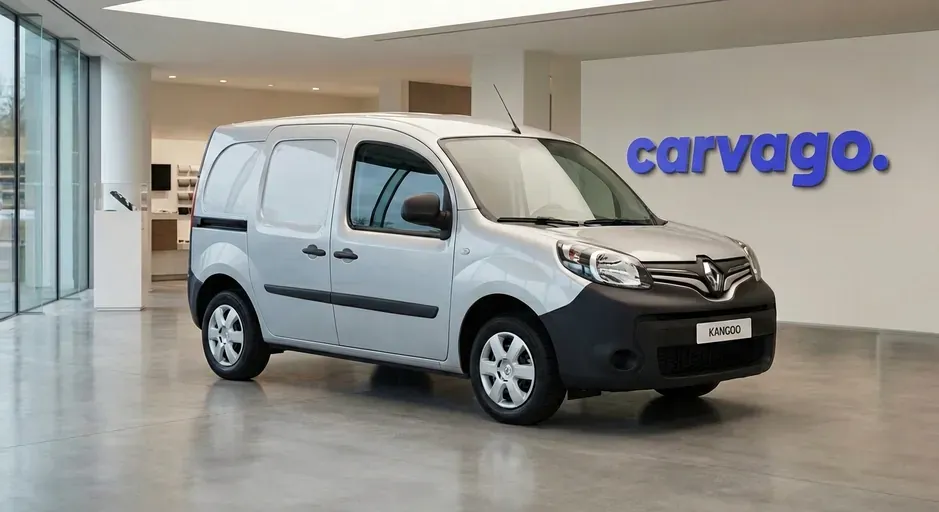
Safety and Euro NCAP Rating

Although both cars can boast high safety ratings, a direct comparison of the stars is not as simple as it might seem at first glance. The Euro NCAP test protocols are constantly being tightened, which means that ratings from different years are not entirely comparable. The new generation Volkswagen Caddy received a full five stars in 2021, while the Renault Kangoo took home four stars in the same year.

Renault Kangoo

The new generation of the Renault Kangoo, launched in 2021, underwent Euro NCAP crash tests and earned four stars. Although this is a good result, it fell short of a five-star rating mainly due to the absence of a center airbag, which protects occupants in a side impact, and also due to a slightly lower score in the area of vulnerable road user protection. Nevertheless, the Kangoo offers a solid level of passive and active safety, including emergency braking systems that recognize cars, pedestrians, and cyclists.

Volkswagen Caddy

The fifth generation of the Volkswagen Caddy, which went on sale in 2020, performed slightly better in the 2021 Euro NCAP tests, earning the maximum five stars. The Caddy achieved high scores in all monitored categories, especially in adult (84%) and child (82%) protection. A range of modern assistance systems contributed to the excellent result, including the aforementioned center airbag between the front seats, which prevents mutual injury to passengers in the event of a side collision.

Final Safety Assessment

Looking at the results, it is clear that the Volkswagen Caddy offers a slightly more comprehensive and modern safety equipment package, which is confirmed by its five-star rating in the stricter 2021 tests. The one-star difference in the Caddy's favor is mainly due to the presence of the center airbag and slightly better protection in some specific impact scenarios. However, even with its four stars and modern assistance systems, the Renault Kangoo is a very safe choice in its class. For a buyer who places maximum emphasis on the latest safety technologies, the Caddy will likely be the more attractive choice.

ParameterRenault KangooVolkswagen Caddy
Year of testing20212021
Adult Occupant Protection78 %84 %
Child Occupant Protection87 %82 %
Vulnerable Road User Protection67 %69 %
Safety Assist72 %79 %

Comparison of Interesting Equipment Features

In addition to standard equipment, each model offers several unique features that can be decisive for the customer, and each approaches added value in its own way.

Renault Kangoo: Emphasis on Practicality and Smart Solutions

With the third-generation Kangoo, Renault has focused on making daily life as easy as possible, whether for family trips or transporting cargo.

  • Innovative roof bars: One of the smartest features of the Kangoo. The longitudinal roof bars can be easily rotated without any tools and transformed into crossbars with a load capacity of up to 80 kg. This eliminates the need to store and install a separate roof rack.
  • Abundant storage compartments: The interior is dotted with practical compartments. Their total volume exceeds 49 liters. Among the most interesting is a large slide-out drawer in front of the passenger, called "Easy Life," which replaces the classic small glove box.
  • Spaciousness and variability: The passenger version offers three full-size seats in the second row and one of the largest luggage compartments in its class (775 liters in the basic configuration). Folding down the seats and the front passenger seat creates a flat loading area for transporting truly long items.
  • Modern technology and safety: The dashboard is dominated by an 8-inch touchscreen of the EASY LINK multimedia system with smartphone mirroring support. A range of modern assistance systems is also available, such as adaptive cruise control, blind-spot monitoring, or an emergency braking system.

Volkswagen Caddy: The Comfort and Technology of a Passenger Car

With the fifth-generation Caddy, Volkswagen has made a huge leap towards the comfort and technology known from passenger models like the Golf.

  • Chassis and driving characteristics: The Caddy is built on the modular MQB platform, which it shares with many of the group's passenger cars. This results in significantly better driving characteristics, greater comfort, and improved sound insulation compared to previous generations, which were closer to commercial vans.
  • Digitalised interior: Optionally, the Caddy could be equipped with a fully digital instrument panel, the "Digital Cockpit," and a large infotainment display, which together form the so-called "Innovision Cockpit." This gives the interior a modern and premium feel.
  • Advanced assistants: Thanks to the new platform, the Caddy could be equipped with top-of-the-line assistance systems. These include "Travel Assist" for partially autonomous driving, "Trailer Assist" to make reversing with a trailer easier, and advanced adaptive cruise control.
  • Powertrain and variability: The Caddy scores with a wide range of engines, including efficient TDI diesel and TSI petrol engines. Unlike many competitors, the Caddy could also be ordered with 4MOTION all-wheel drive and a DSG dual-clutch gearbox. The seats in the second and third rows are also easily removable, allowing the family MPV to be converted into a spacious van.

Key Advantages and Disadvantages

Renault Kangoo

Advantages:

  • Huge basic luggage capacity (775 litres), which is top in its class.
  • High level of comfort and interior soundproofing thanks to the CMF-C platform shared with Renault passenger cars.
  • Smart and practical features, such as integrated roof rails that can be converted into crossbars, and numerous storage compartments in the cabin.
  • Modern front-end design with standard Full LED headlights, giving the car a distinctive look.
  • Spacious interior that comfortably accommodates up to seven adults in the extended Grand Kangoo version.
  • Wide sliding side doors for easy entry and handling of items like child seats.

Disadvantages:

  • While the interior feels durable, the plastics used may seem bland and overly utilitarian to some.
  • Limited driver's seat adjustment options in some versions, which can make it difficult to find the ideal position.
  • Compared to the competition, the driving experience can be less agile and more comfort-focused.
  • Base versions may lack some comfort features that are more common in the competition.

Volkswagen Caddy

Advantages:

  • Excellent driving characteristics and handling, very close to passenger cars like the VW Golf, thanks to the MQB platform.
  • Higher quality interior workmanship and materials, which give a more premium impression.
  • Wide range of versions, including the extended Maxi variant, and the option of 4Motion all-wheel drive.
  • Reputation as a reliable vehicle and high residual value on the used car market.
  • Well-tuned and efficient TSI and TDI engines, offering decent performance.

Disadvantages:

  • Higher purchase price compared to its French competition.
  • The modern infotainment system with touch controls can be less intuitive and distracting while driving.
  • The chassis with coil springs (replacing leaf springs) can be less comfortable on uneven surfaces when driving without a load.
  • The passenger version has a smaller basic luggage capacity than the previous generation.
  • Some practical features, such as a second sliding door, may not have been standard on lower trim levels.

Common Problems and Owner Complaints

Based on our own CarAudit inspections, breakdown statistics, and owner feedback, we have compiled an overview of the most common problems that used car buyers should watch out for. Neither model suffers from major design flaws, but both have their specific issues that are good to know about.

Volkswagen Caddy (4th generation 2015–2020; 5th generation from 2020)

The Volkswagen Caddy is considered a robust and reliable vehicle, but its more complex technology requires careful and regular maintenance. Neglected servicing can become very expensive, especially for diesel engines and automatic gearboxes.

Engine and Powertrain

  • 2.0 TDI engines: These engines are generally reliable, but at higher mileages (over 150,000 km), problems with the injectors can occur, manifesting as rough running or poor starting. The diesel particulate filter (DPF) is also a risk factor, suffering from frequent short city trips where it doesn't have time to regenerate properly. On older units, it is crucial to check the timing belt replacement history.
  • TSI engines: Petrol engines, especially the older 1.4 TSI, can be prone to timing chain stretching, which is indicated by a characteristic rattle on a cold start. The newer 1.5 TSI engines with a belt are more reliable in this regard. All direct-injection engines are at risk of increased carbon build-up during urban driving.
  • DSG gearbox: Dual-clutch gearboxes require regular oil changes (every 60,000 km for wet-clutch types). The 7-speed dry-clutch version (DQ200) in particular can suffer from mechatronic failures at higher mileages, which manifests as jerky shifting or complete failure.

Chassis and Electronics

  • Chassis: Given that Caddy vehicles are often used for work, attention must be paid to the condition of the chassis. Especially in cars that have towed heavy trailers or been driven fully loaded, play in the pins and shock absorber wear can appear sooner. The rear axle with leaf springs (on the 4th generation) is durable but offers less comfort.
  • Electronics: It is mostly reliable, but minor problems with the infotainment system or parking sensors can occasionally occur. On the newer 5th generation, some users complain about the touch controls occasionally freezing.

Summary for the Caddy

Problems mainly concern wear and tear due to heavy use and neglected maintenance. A transparent service history is key, especially records of DSG oil changes and the condition of the timing belt. A thorough technical inspection of the car is recommended before purchase.

Renault Kangoo (2nd generation until 2021; 3rd generation from 2021)

The Renault Kangoo has built a reputation as a reliable and mechanically simple vehicle. Its problems are often less expensive to repair and relate more to minor shortcomings and wear than to serious design flaws.

Engine and Powertrain

  • 1.5 dCi engine: This engine has undergone a long development and in the versions produced in recent years (Euro 5 and Euro 6) it is considered very reliable. Earlier problems with seizing connecting rod bearings have been resolved. The key to a long service life is to shorten the oil change interval from the manufacturer's prescribed 30,000 km to 15,000 km. As with the Caddy, the diesel particulate filter can suffer from frequent short trips.
  • 1.3 TCe engine: The modern petrol engine developed in collaboration with Mercedes is currently rated as reliable and without typical major defects.
  • Gearboxes: Manual gearboxes are robust and reliable. The automatic dual-clutch EDC gearbox is not as common and does not have a reputation for being problematic, but it is necessary to check its smooth, jerk-free operation during a test drive.

Bodywork and Interior

  • Bodywork: Older second-generation units may be more prone to corrosion, especially on the sills and lower door sections. On all cars, it is a good idea to check the functionality of the sliding door mechanisms, which can wear out over time.
  • Electronics and interior: The electronics are generally simple and reliable. Minor faults such as non-functional window controls or central locking do occur occasionally. The interior is made of hard, durable plastics, but they are prone to scratching, which is common in commercial vehicles.

Summary for the Kangoo

Most problems with the Kangoo are minor faults and operational wear and tear. There are no systemic and expensive failures, as long as basic maintenance is not neglected, especially timely oil changes for the 1.5 dCi engine. Thanks to its simpler technology, any repairs are often cheaper than for the Caddy. A thorough physical inspection of a used car will reveal the condition of the chassis and any corrosion.

Tips for Buying a Used Car

What to Look Out for When Buying a Used Car

When buying a used car, a thorough inspection is key, and you shouldn't underestimate it even with these reliable workhorses. Both models have their specific areas that deserve your attention. A comprehensive check, such as CarAudit, can save you a lot of trouble.

When choosing a Renault Kangoo:

  • Electronics and infotainment: Carefully test all the functions of the R-Link/Easy Link multimedia system. Check that the system does not freeze, responds quickly to touch, and that the phone connects without problems via Bluetooth or mirroring. Repairs can be unexpectedly expensive.
  • Interior condition: The Kangoo often serves as a work tool, so the plastics in the interior and cargo area can be excessively worn. Look for deep gouges, cracks, or damaged fasteners, which may indicate rough handling.
  • Chassis and axles: During the test drive, focus on noises from the chassis, especially when driving over bumps. Play in the pins or worn-out silent blocks will manifest as a knocking sound. Also pay attention to the condition of the brakes, which can be under more strain in work versions.
  • 1.5 dCi engine: This engine is economical, but sensitive to the quality of diesel and regular oil changes. Listen to whether the engine runs smoothly and without suspicious noises, both when cold and warm. Check the service history to ensure that service intervals have been followed.

When choosing a Volkswagen Caddy:

  • DSG gearbox: On versions with the DSG automatic gearbox, check that it shifts smoothly and without jerking, both during calm driving and under harder acceleration. Any hesitation or jerking can signal an impending expensive repair. Regular oil changes in the gearbox are important.
  • Rear axle leaf springs: On the Caddy, which often carries heavy loads, the leaf springs can be tired or even cracked. Check their condition during a physical inspection of the car. While driving, tired springs can manifest as the rear end 'floating' over bumps.
  • Injectors on TDI engines: The 2.0 TDI engines are reliable, but can be sensitive to fuel quality. Irregular engine running, poor starting, or smokiness can indicate problems with the injectors. Refurbishing or replacing them is not a cheap affair.
  • Sliding doors: Thoroughly test the mechanism of the side sliding doors. They must move smoothly, without snagging, and close easily. Worn guide rollers or a damaged mechanism are a common fault, especially on vehicles from delivery services.

FAQ: Most Frequently Asked Questions

Both cars are very practical, but they differ slightly. The Volkswagen Caddy often offers a slightly larger luggage space in its basic configuration. The Renault Kangoo, on the other hand, can excel in maximum cargo volume with the seats folded down and offers clever solutions such as huge interior variability.

The Volkswagen Caddy has driving characteristics closer to passenger cars, which you will appreciate on longer journeys. It also offers a wider range of engines, including more powerful diesel and petrol variants. The Renault Kangoo focuses more on comfort and economical, reliable engines, especially the well-known 1.5 dCi.

Both models are considered reliable workhorses. For the Renault Kangoo, the 1.5 dCi diesel engines are highly praised for their durability and low fuel consumption. The Volkswagen Caddy has slightly higher prices for spare parts and service, which is typical for the brand, but owners appreciate the overall build quality.

Both cars are great for family use thanks to their sliding doors and spacious interiors. The Volkswagen Caddy can feel a bit more premium inside and closer to a passenger car. The Renault Kangoo, on the other hand, often scores points with its practical storage compartments and overall layout flexibility.

As a used car, the Renault Kangoo is generally cheaper than a comparably old and equipped Volkswagen Caddy. The Caddy holds its value better, which is due to the brand's reputation and solid build quality. The price difference can be an interesting factor when making a decision.

Conclusion: Which Model to Choose?

Our Verdict

Deciding between Renault Kangoo and Volkswagen Caddy involves choosing between two distinct approaches to family vans. Volkswagen Caddy is ideal for those seeking car-like driving characteristics, cutting-edge technology, safety, and a premium feel, who often travel long distances and appreciate the option of 4MOTION drive, while being willing to pay extra for it. In contrast, Renault Kangoo excels in maximum practicality, enormous interior space, variability, and smart solutions, with an emphasis on comfortable driving and low running costs. It is significantly more affordable as a used car and also offers a fully electric E-Tech version, making it an excellent choice for families and tradespeople with a tighter budget who prioritize utility and ecological operation.

Find your ideal car

Sources: ADAC, e15.cz, aktualne.cz, smartmania.cz, autoweb.cz, motoristickydenik.cz

This article was prepared using artificial intelligence tools. The section guarantor is Petr Dušek.

Related articles

Car battle

Ford Tourneo Connect vs. Mercedes-Benz Citan Tourer: Complete comparison 2026

Detailed comparison of Ford Tourneo Connect vs. Mercedes-Benz Citan Tourer. Discover the real differences in space, equipment, and reliability. Which car to choose?

Apr 13, 2026

Car battle

Ford Tourneo Connect vs. Renault Kangoo: Complete comparison 2026

Ford Tourneo Connect vs Renault Kangoo. A detailed comparison of popular family cars. We evaluated interior space, engines, and comfort. Find out our verdict!

Apr 13, 2026

Car battle

Ford Tourneo Connect vs. Volkswagen Caddy: Complete comparison 2026

Detailed comparison of Ford Tourneo Connect vs. Volkswagen Caddy. Discover the differences in space, equipment, and reliability and read our clear final verdict!

Apr 13, 2026

We accept online card payments as well as wire transfers.

visa payment provider logovisa-electron payment provider logomastercard payment provider logomaestro payment provider logodiners-club payment provider logodiscover payment provider logo