Alfa Romeo Giulia vs. Jaguar XE: Complete comparison 2026
Detailed comparison of Alfa Romeo Giulia vs Jaguar XE. Discover real-world experiences, differences in driving characteristics, and the verdict on which sedan to choose.
Apr 23, 2026
Articles
Car battle
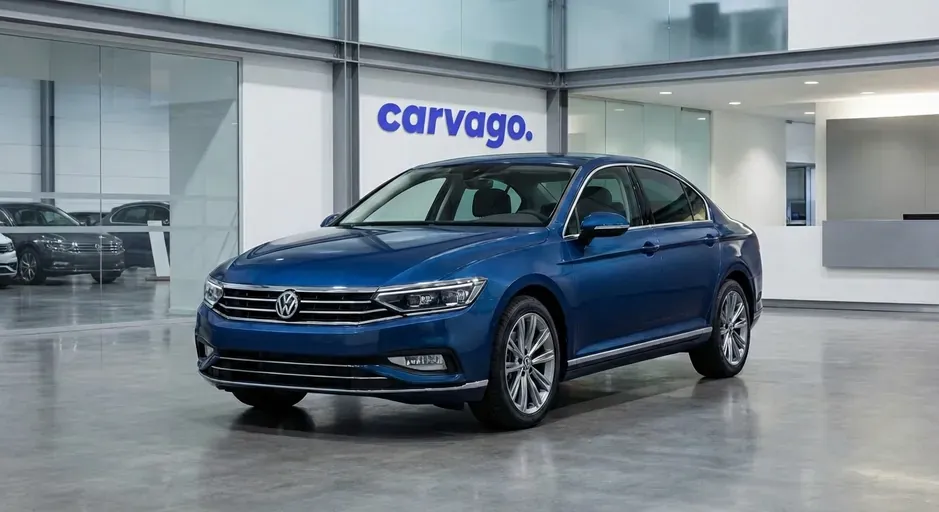
Detailed comparison of Peugeot 508 vs Volkswagen Passat. Discover the differences in engines, equipment, and driving characteristics. Read the verdict and make the right choice.
May 6, 2026


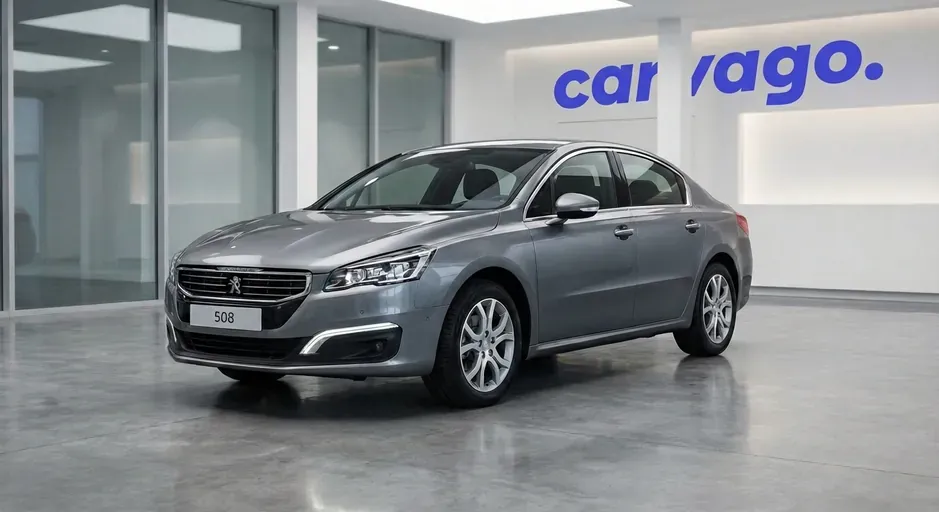
Volkswagen Passat, also known as the Magotan or NMS in some non-European markets, represents a long-standing benchmark of practicality and understated German elegance in the mid-size class of family and executive cars. Standing against it is the Peugeot 508, which is sold as the 508L in an extended version for the Asian market, and instead appeals to drivers' senses with its extravagant, aggressive design and more emotional French approach. Let's take a detailed look at how these popular roughly four-year-old used cars, representing two completely different approaches to the automotive world, fare in a direct comparison to find out which one will be the better choice for you.
When looking at the exterior dimensions, the different philosophies of the two carmakers are fully revealed. While the Volkswagen Passat (especially the B8 generation, which you will most often encounter on the market for roughly four-year-old used cars) relies on traditional, more majestic, and conservative proportions, the second generation of the Peugeot 508 brought a breath of fresh air to the mid-size segment in the form of a predatory and sporty design. The Passat is a car that tries to maximize interior space and utility within a given footprint, while Peugeot sacrificed some boxiness in favor of emotion and excellent aerodynamics. For the buyer, this means a choice between 100% everyday practicality and an unmistakable visual style.
In terms of overall length, both cars are surprisingly close. The Peugeot 508 in the estate version (referred to as SW) measures 4778 mm, slightly surpassing the Volkswagen Passat Estate, whose length ranges from 4767 to 4773 mm depending on the exact specification and body accessories. In practice, you will hardly notice a difference of just a few millimeters when parking, and both cars will fill a standard parking space almost completely.
However, the comparison of width is more interesting. The French representative, at 1859 mm, is a noticeable 27 mm wider than the German Passat (1832 mm). This wider stance gives the Peugeot a more confident and dynamic presence on the road and can feel like it provides a bit more shoulder room inside the cabin. On the other hand, you will have to be a bit more careful with it in narrow underground garage entrances or narrowed lanes on the highway.
The most radical difference can be found when comparing the overall height of both bodies. The Peugeot 508 is set extremely low – its base variant (often classified as a hatchback or rather a liftback with a tailgate) has a height of only 1403 mm. The traditional sedan from Volkswagen is significantly taller at 1456 to 1483 mm. This height difference, which in some places exceeds 70 mm, has a fundamental impact on the overall impression of the car. In the Peugeot, you sit more sportily closer to the road, but getting in and out is incomparably more comfortable in the Passat.
On paper, a slightly longer wheelbase (2793 mm compared to 2786–2791 mm for the Passat) contributes to the Peugeot's better directional stability. A longer wheelbase usually promises more longitudinal legroom for rear passengers. In the 508 model, however, this benefit is quite significantly limited by the sportily sloping roofline. Therefore, if you are looking for a more airy cabin with more headroom and easy access to the rear seats (for example, for easier handling of child car seats), the Passat will be the more sensible and accommodating choice from a user perspective.
Below is a comparison of key parameters for the generations most commonly found on the nearly new used car market (Peugeot 508 2nd generation and Volkswagen Passat B8 generation).
| Parameter | Peugeot 508 Hatchback | Volkswagen Passat Sedan | Peugeot 508 Estate | Volkswagen Passat Estate |
|---|---|---|---|---|
| Length (mm) | 4750 | 4767 - 4775 | 4778 | 4767 - 4773 |
| Width (mm) | 1859 | 1832 | 1859 | 1832 |
| Height (mm) | 1403 | 1456 - 1483 | 1420 | 1477 - 1521 |
| Wheelbase (mm) | 2793 | 2786 - 2791 | 2793 | 2786 - 2791 |
When choosing a family car or a long-distance cruiser, luggage capacity plays one of the key roles. Both the Volkswagen Passat and the Peugeot 508 approach practicality with different philosophies. While the German benchmark bets on maximizing usable volume and regular shapes that easily swallow weekend shopping and equipment for a longer holiday, its French competitor prefers dynamic curves and an elegant silhouette at the expense of absolute boot size. For typical four-year-old used cars from popular generations (Passat B8 and the second-generation 508), if every extra liter is decisive for you, the Passat offers a significantly airier solution.
The fundamental differences stand out especially in the most popular estate body styles. The eighth-generation Volkswagen Passat Variant impresses with a base capacity of 650 liters, which reliably provides space for several extra suitcases compared to most competitors. The Peugeot 508 SW, on the other hand, is limited by its sporty, sloping "shooting brake" style rear and holds a slightly more modest 530 liters in its base configuration. However, a surprise comes after fully folding down the rear backrests, when both family estates unusually match each other with a generous maximum capacity of 1,780 liters. In terms of overall access to the luggage compartment and the regularity of the loading opening, however, Volkswagen remains a noticeably more practical choice.
The comparison of shorter body variants is equally interesting. While the practically designed Peugeot 508 liftback has 487 liters of base volume, the Passat, as a traditional sedan, counters with 586 liters. With the Peugeot liftback, however, thanks to the opening of the entire tailgate, you get an excellently accessible 1,537 liters after folding the seats. In the Passat sedan, the total transport capacity is limited by the body construction to 1,152 liters. Also worth noting are the popular plug-in hybrid versions, where large batteries usually take away valuable centimeters. Thanks to a clever platform, the French automaker maintains exactly the same boot volume for its hybrids as for pure internal combustion engines. In contrast, the hybrid Passat GTE Variant sees a noticeable reduction in space, offering only 483 liters in its base configuration.
| Parameter | Peugeot 508 Liftback | Volkswagen Passat Sedan | Peugeot 508 Estate | Volkswagen Passat Estate |
|---|---|---|---|---|
| Base volume (liters) | 487 | 586 | 530 | 650 |
| Maximum volume with seats folded (liters) | 1537 | 1152 | 1780 | 1780 |
If you are looking for an uncompromising hauler, the Passat clearly dominates in base volume, while the Peugeot 508 scores with the excellent accessibility of its liftback body and cleverly packaged space in hybrid versions.
The ability to tow a trailer can be a decisive factor for many used car buyers, whether they are looking for extra space for a few suitcases, a trailer for weekend shopping at a DIY store, or need to regularly tow a heavy family caravan. In this discipline, the Volkswagen Passat and Peugeot 508 differ quite fundamentally, mainly due to the different approaches to the overall concept of both cars.
The eighth-generation Volkswagen Passat (B8) is traditionally considered a dominant workhorse in the mid-size class. Even with standard petrol engines like the 1.5 TSI, it offers a very respectable maximum braked towing capacity of 1,600 kg. However, the real strength comes with the popular 2.0 TDI diesel or the top-of-the-line 2.0 TSI petrol. These versions can handle an impressive 2,000 to 2,200 kg on the hitch. This capacity is more than enough to tow large caravans or horse trailers. The plug-in hybrid Passat GTE also performs very well, with a solid limit of 1,600 kg.
In contrast, the second-generation Peugeot 508 is built with a greater emphasis on design, low weight, and aerodynamics. This takes its toll on towing capacity. The most powerful variants, specifically the popular 2.0 BlueHDi diesel engine, can handle a maximum of 1,800 kg. For more common versions, such as the 1.2 PureTech three-cylinder petrol or the entry-level 1.5 BlueHDi diesel, the limits range only between 1,330 and 1,500 kg. The plug-in hybrid versions are a specific case. While the battery only slightly limits the Passat, the Peugeot 508 HYBRID offers a reduced capacity in the range of 1,300 to 1,340 kg. For the most powerful sports version, the PSE HYBRID4 with all-wheel drive, the value drops even further to 1,260 kg.
If a tow bar is a key criterion for your work or active holidays with heavy loads, the Volkswagen Passat will offer you significantly better options and a sense of confidence. While the Peugeot 508 can easily handle a small trailer with wood or a light folding caravan, it is not built for demanding work.
In the table below, you will find a comparison of relevant generations from the current used car market. The unbraked towing capacity for most cars in this category is legally and technically limited to the standard 750 kg.
| Model and engine | Braked towing capacity (kg) | Unbraked towing capacity (kg) |
|---|---|---|
| Škoda Octavia 2.0 TDI (85 kW) | 1800 | 750 |
| Volkswagen Passat B8 1.5 TSI OPF (110 kW) | 1600 | 750 |
| Volkswagen Passat B8 2.0 TDI SCR (110 kW) | 1800 - 2000 | 750 |
| Volkswagen Passat B8 2.0 TDI SCR 4MOTION (140/176 kW) | 2000 - 2200 | 750 |
| Volkswagen Passat B8 GTE (115 kW) | 1600 | 750 |
| Peugeot 508 2nd Gen 1.5 BlueHDi (96 kW) | 1450 - 1500 | 750 |
| Peugeot 508 2nd Gen 2.0 BlueHDi (120/130 kW) | 1800 | 750 |
| Peugeot 508 2nd Gen 1.6 PureTech 180 (133 kW) | 1600 | 750 |
| Peugeot 508 2nd Gen 1.6 HYBRID 225 (133 kW) | 1300 - 1340 | 750 |
| Peugeot 508 2nd Gen PSE HYBRID4 360 (147 kW) | 1260 - 1280 | 750 |
The Peugeot 508 and Volkswagen Passat represent two completely different approaches to powertrains in the executive car segment. While the Passat bets on proven tradition, a wide range of extremely efficient TDI diesels, and versatile TSI petrol engines, Peugeot has significantly focused on electrification and a distinctive driving character in its second generation. For those looking for a roughly four-year-old used car, this means a fundamental difference in choice: Volkswagen continues to reign in the used car market with robust two-litre diesels in several power versions, which are also often paired with 4MOTION all-wheel drive. Peugeot, on the other hand, phased out its larger two-litre diesels (2.0 BlueHDi) around 2020 and focused primarily on highly advanced plug-in hybrids. The Passat traditionally scores with lightning-fast DSG dual-clutch transmissions, while the attractive Frenchman relies almost exclusively on the comfortably and smoothly shifting EAT8 eight-speed automatic with a torque converter.
Under the hood of the second-generation Peugeot 508, downsizing and the gradual implementation of electrified technologies play the main role. The base of the petrol range is the lightweight 1.2 PureTech three-cylinder with 96 kW, which bravely fulfills the role of the entry-level engine. The more powerful 1.6 PureTech four-cylinders are somewhat more dynamic. Diesel fans looking at used cars manufactured after 2020 will encounter the efficient 1.5 BlueHDi (96 kW) almost exclusively. The more powerful 2.0 BlueHDi diesel units with 120 and 130 kW disappeared from the range relatively early, so you'll need a good deal of luck to find them on today's used car market. Today, the used Peugeot 508 is also sought after for its plug-in hybrids labeled HYBRID 180 and 225. At the absolute technological peak sits the rare PSE (Peugeot Sport Engineered) sports version, which cleverly combines an internal combustion engine with two electric motors for a fantastic total output of 265 kW (360 hp) and 0-100 km/h acceleration in just 5.2 seconds.
| Engine type | Fuel | Power (kW) | Torque (Nm) | Transmission |
|---|---|---|---|---|
| 1.2 PureTech 130 | Petrol | 96 | 230 | 8A |
| 1.6 PureTech 180/225 | Petrol | 133 / 165 | 250 / 300 | 8A |
| 1.5 BlueHDi 130 | Diesel | 96 | 300 | 6M / 8A |
| 2.0 BlueHDi 160/180 | Diesel | 120 / 130 | 400 | 8A |
| 1.6 HYBRID 180/225 | Plug-in Hybrid | 132 / 165 | 360 | 8A |
| PSE HYBRID4 360 | Plug-in Hybrid | 265 | 520 | 8A |
Following its extensive facelift, the Volkswagen Passat B8 confidently holds the flag for classic highway cruisers with extremely efficient and mechanically proven internal combustion engines. The petrol entry point is the 1.5 TSI four-cylinder with smart Active Cylinder Technology (ACT) producing 110 kW. A more confident drive with a large power reserve is provided by the 2.0 TSI engine (offered from 140 kW up to a massive 200 kW), where the top versions are always paired with all-wheel drive. However, the heart of the model for the typical buyer is undoubtedly the legendary 2.0 TDI diesel engine, available in many power outputs (110, 140, and 147 kW). The older 1.6 TDI base version disappeared from price lists in early 2020. The ecological yet dynamic answer is the Passat GTE – a reliable plug-in hybrid with a system output of 160 kW, which easily handles average daily city commutes on a single charge.
| Engine type | Fuel | Power (kW) | Torque (Nm) | Transmission |
|---|---|---|---|---|
| 1.5 TSI OPF | Petrol | 110 | 250 | 6M / 7DSG |
| 2.0 TSI OPF | Petrol | 140 / 200 | 320 / 350 | 7DSG |
| 1.6 TDI SCR | Diesel | 88 | 250 | 7DSG |
| 2.0 TDI SCR | Diesel | 110 / 140 / 147 | 340 / 400 | 6M / 7DSG |
| 1.4 TSI GTE | Plug-in Hybrid | 160 | 400 | 6DSG |
When making the final decision, it primarily depends on where and how often you use your car. For highway drivers and families spending weekends on long trips, the Passat with the 2.0 TDI engine is the perfect machine, guaranteeing a huge range and excellent operating economy. Drivers looking for style who spend most of their time commuting in suburban traffic should, on the other hand, consider the Peugeot 508. Its interesting plug-in hybrid units can offer quieter and cleaner operation, while the brutally fast PSE version adds a healthy dose of real emotion to the world of efficient estates and liftbacks.
Choosing the right engine is crucial for long-term satisfaction with a car, and our recommendations are based on real-world experience, fuel consumption in traffic, and mechanical reliability. Both cars are respected icons of the mid-size class (the so-called D-segment), but their development has diverged dramatically in recent years. While Volkswagen has continuously refined its renowned two-liter diesel in the popular Passat B8 generation, eventually equipping it with Twin Dosing technology to drastically reduce emissions (thereby maintaining its market position even among nearly new used cars), Peugeot opted for significant downsizing and electrification for the second generation of its elegant 508 model. Availability data reveals an interesting fact: due to strict fleet emission standards, Peugeot phased out its best two-liter diesel after 2020, replacing it mostly with plug-in hybrids. For those interested in a roughly four-year-old used car, this means that for the French car, they will either have to search for older stock or carefully consider alternatives, while the German competitor's range remains stable.
Although available data shows that this excellent engine was only available in the 508 generation between 2018 and 2020 (so for typically four-year-old cars, you will have to hunt among older model years or compromise with the weaker 1.5 BlueHDi), it remains the absolute best and most reliable choice for the heavy and stylish fastback or SW estate. Why it's the best choice: It offers a perfect balance between confident highway dynamics and reasonable operating costs, fitting the premium character of the car with frameless windows much better than the more strained 1.5-liter engine, while also not suffering from the teething problems of the very complex plug-in hybrid versions. Technical advantages: It excels with a massive torque of 400 Nm, which engineers perfectly matched with the smooth-shifting eight-speed EAT8 automatic transmission (from Japan's Aisin). Real-world fuel consumption easily stays around a fantastic 5.5 to 6 liters per 100 km, even with a loaded car. Known risks and weaknesses: The biggest concern is the sensitive urea injection system (AdBlue). When choosing a used car, check the dashboard carefully – if the UREA warning light is on, urea crystallization has most likely occurred, permanently destroying the pump integrated into the tank (repair often means replacing the entire part). As a preventive measure, we strongly recommend adding special anti-crystallization additives to the AdBlue and avoiding short city trips, which also quickly clog the DPF filter. Who it's ideal for: This unit is literally made for highway mile-munchers, commercial travelers, and calmer drivers looking for enormous range on a single tank and requiring a quiet, smooth ride in a beautiful package.
For the Passat B8 generation (which easily covers the market for typically four-year-old used cars thanks to the 2019 facelift), the choice is absolutely clear – the legendary 2.0 TDI engine of the EA288 family (and the newer EVO) represents an unsurpassed benchmark of reliability and utility in this class. Why it's the best choice: No other engine in Volkswagen's vast lineup provides such a brilliant mix of low maintenance requirements, mechanical durability, and long-term excellent residual value upon resale. Unlike the 1.5 TSI petrol versions, it doesn't feel breathless when fully loaded, and in terms of longevity, the 150-hp version (compared to the more powerful bi-turbo variants) is an absolute safe bet. Technical advantages: The unit scores with top-tier thermal efficiency and strong pull from low revs with 360 Nm of torque. Owner experiences confirm that real-world consumption commonly drops below 5 l/100 km, and in combination with the seven-speed dual-clutch DSG transmission, it forms a perfectly tuned package. Known risks and weaknesses: The first point of inspection must be listening to the engine upon startup. If you hear metallic rattling from the engine compartment at idle (especially with a cold car) or feel excessive vibrations, it indicates a worn dual-mass flywheel, which is often the expensive price paid for the automatic transmission lugging the engine in city traffic. Furthermore, always open the hood and check the coolant expansion tank – these engines have historically suffered from water pump leaks, and escaping coolant is a signal for immediate service. Who it's ideal for: It is the ultimate tool for families with high annual mileage, fleet managers, and pragmatic drivers looking for a maximally reliable car for daily commuting, towing trailers, or long trips for summer vacations with a fully loaded trunk.
The difference between officially stated fuel consumption and the values achieved by drivers in real-world conditions is often vast for most cars. Although the current WLTP measurement methodology provides somewhat more accurate figures than older standards, actual consumption always depends heavily on driving style, route profile, and the overall load of the vehicle. To get the most faithful picture of operating costs, our comparison is based on real data from the crowdsourced platform Spritmonitor.de, where thousands of actual owners enter their daily refueling results. We focused on generations relevant to the current used car market, approximately four years old – specifically the second generation of the Peugeot 508 and the popular Volkswagen Passat (B8 generation facelift).
Source: news_site
| Model and engine | Average consumption (l/100 km) |
|---|---|
| Volkswagen Passat 1.5 TSI 110 kW | 6.5 |
| Peugeot 508 1.2 PureTech 96 kW | 6.6 |
| Peugeot 508 1.6 PureTech 133 kW | 7.2 |
| Volkswagen Passat 2.0 TSI 140 kW | 7.5 |
| Peugeot 508 1.5 BlueHDi 96 kW | 5.5 |
| Volkswagen Passat 2.0 TDI 110 kW | 5.6 |
| Peugeot 508 2.0 BlueHDi 133 kW | 6.1 |
| Volkswagen Passat 2.0 TDI 140 kW | 6.2 |
When interpreting this data, several very interesting trends emerge from which used car buyers can benefit:
What does this mean for the average user?
If you are a highway mile-muncher or are choosing a reliable car for long daily commutes, the 2.0 TDI engine in the Passat is literally a brilliant choice for you, ensuring a huge range and minimal operating costs. The more powerful 2.0 BlueHDi version in the Peugeot will also serve very respectably in this regard, though it lags slightly behind the German benchmark in the overall average. Conversely, for families or drivers moving mostly on shorter routes, in suburban or urban traffic, the 1.5 TSI petrol four-cylinder from Volkswagen makes sense. It is efficient, highly refined, and does not require such rigorous care for emission systems. On the other hand, we do not particularly recommend the 1.2 PureTech three-cylinder from Peugeot for this body type, especially if your main goal is maximum fuel cost savings.
Overall summary
Even though fuel consumption may not be an absolutely decisive factor for everyone, it clearly shows the technological focus of both cars. If you are looking for uncompromising operational efficiency on longer routes, the Volkswagen Passat maintains a well-deserved lead over the more design-attractive Peugeot 508 thanks to advanced aerodynamics and a perfectly tuned 2.0 TDI engine. A similar trend can be seen in petrol engines, where VW's sophisticated four-cylinder easily beats French downsizing in the real world. However, the differences in daily costs are not so drastic as to decide the purchase entirely on their own – in the final selection, your personal requirements for emotion, interior space, and the driving dynamics of the chosen vehicle will ultimately be more important.
When choosing a roughly four-year-old vehicle (2021 and 2022 models), two completely different philosophies meet on the used car market. On one side stands the managerial and family benchmark, the Volkswagen Passat generation B8 (facelift), and on the other, the stylish and emotionally tuned second-generation Peugeot 508 (R8). The price dynamics and value depreciation of both models differ diametrically, opening up interesting possibilities for different types of buyers.
| Model (years ~2021–2022) | Typical price from | Typical price to | Depreciation rate |
|---|---|---|---|
| Peugeot 508 (R8) | €14,000 | €27,000 | Higher |
| VW Passat (B8.5) | €18,000 | €31,000+ | Very low |
The stylish Peugeot 508 suffers, like many other cars with more extravagant designs in this class, from a slightly faster decline in value. However, this is great news for used car buyers, who can get a highly modern car at a very favorable price.
Thanks to its unshakeable popularity in corporate fleets and its reputation as the mid-size segment benchmark, the Passat holds its value exceptionally well. The immense popularity of the practical Variant (estate) body style and the reliable 2.0 TDI engine means easy future resale on one hand, but also a significantly higher purchase price on the used market on the other.
If your main priority is residual value retention and the easiest possible future resale with minimal financial loss, the Volkswagen Passat represents an absolute safe bet, though you will pay a premium for it initially. However, if you want to get the most unique style, luxury equipment, and a premium feel on board for your money, the Peugeot 508 is a dark horse on the secondary market with an excellent price-to-value ratio, as the first owner has already paid for the steepest part of the depreciation for you.
While the Passat stubbornly maintains a high residual value and functions as a safe investment for the future, the Peugeot 508, thanks to its faster price decline, offers a more attractive ratio of equipment and age for significantly less money.
Both models, the Peugeot 508 and the Volkswagen Passat, received the maximum five-star rating in independent Euro NCAP tests, making them very safe vehicles for both individuals and families. However, it is essential to put these results into the correct context. Euro NCAP methodology and testing protocols evolve constantly over the years, becoming stricter and placing ever-increasing demands. Percentage results for cars tested in different years cannot be directly compared, as more modern tests require much more complex systems for active accident prevention and more advanced detection of pedestrians or cyclists.
Peugeot 508 (tested in 2018)
The second generation of the Peugeot 508 underwent crash tests in 2018 and recorded excellent results in adult occupant protection with a rating of 96%. Child protection reached a solid 86%. Given the newer and stricter rules of its time, the car also performed very well in the protection of vulnerable road users (71%) and in the safety assist category (79%). The excellent score reflects the presence of modern technologies such as advanced autonomous emergency braking (AEB) with night detection of pedestrians and cyclists. Although the official validity of this certificate formally expired in early 2025 (which is standard Euro NCAP procedure after 6–7 years for all cars), for those interested in a four-year-old used car, it remains a highly relevant indicator of its modern safety.
Volkswagen Passat (tested in 2014)
The rating for the B8 generation Passat is based on tests conducted back in 2014. At that time, the car demonstrated excellent structural strength and received 85% for adult protection and 87% for child protection. Pedestrian protection was rated at 66% at the time, and safety assist systems at 76%. It is important to note that if you are looking for an approximately four-year-old Passat on the used car market, it will be the version after the significant facelift in 2019. This refreshed version brought a whole range of new active safety features (such as predictive adaptive cruise control or improved lane keeping); however, the basic structural rating and Euro NCAP test label still refer to the milder standards of 2014.
Final Comparison
From the perspective of pure structural strength and passive safety, both cars protect their occupants at a top-tier level. However, the Peugeot 508 benefits from being tested according to significantly newer standards, which gives buyers greater assurance that its active assistance systems were calibrated and tested for more modern and complex crisis situations. The Volkswagen Passat counters with excellent child protection and, in later facelifted model years, above-standard additional equipment, but its original platform and crash tests are four years older.
| Parameter | Peugeot 508 | Volkswagen Passat |
|---|---|---|
| Year of testing | 2018 | 2014 |
| Adult occupant protection | 96 % | 85 % |
| Child protection | 86 % | 87 % |
| Vulnerable road user protection | 71 % | 66 % |
| Safety assist systems | 79 % | 76 % |
Although both cars offer top-tier passive safety and defended their five-star ratings, the Peugeot 508 underwent stricter tests four years later, which theoretically makes it a more modern choice in terms of verified assistance systems for accident prevention.
In addition to standard equipment, each of the models offers several unique features that can be decisive for the customer, and each has its own distinct approach to added value.
Attractive and aggressive design with frameless windows on both body styles
Unique and modern i-Cockpit interior with high-quality, premium-feeling materials
Very confident driving characteristics combining agility with pleasant comfort
Smooth and reliable eight-speed EAT8 automatic transmission
Wide and accessible range of efficient plug-in hybrid powertrains
Significantly limited space in the rear seats, especially in terms of headroom due to the sloping roofline
Smaller and shallower luggage compartment compared to the benchmarks of the class
The specific position behind the small steering wheel (i-Cockpit) does not allow for an ideal setup for every driver
Slower and less intuitive multimedia system with the need to control the air conditioning via the display
Peugeot 508 is an ideal choice for drivers looking for a stylish, emotional, and engaging mid-size car where attractive design triumphs over maximum practicality. It offers a very premium interior feel and great sound insulation, making it an excellent vehicle for daily commuting as well as representative corporate purposes.
Huge interior space for passengers with plenty of legroom and headroom in the rear seats
Unrivaled luggage capacity and usability (especially in the Variant version)
Excellent ergonomics with a clear infotainment system and physical buttons for important functions
Proven, highly efficient, and durable 2.0 TDI diesel engines
Great driving stability and comfortable highway performance suitable for long distances
Traditionally high residual value and a huge selection on the used car market
Very conservative exterior and interior design that lacks emotion and originality
Occasional hesitation and jerking of the DSG automatic transmission when crawling at low speeds
Stiffer tuning of the standard chassis on transverse bumps (if adaptive DCC dampers are missing)
The Volkswagen Passat represents the benchmark of versatility, excelling on long highway journeys and fulfilling the role of the perfect family hauler. It is a safe bet for rational buyers who demand maximum utility, spaciousness, and trouble-free resale, albeit at the cost of a plain appearance.
Based on long-term owner experience, service reports, recall records, and insights from our independent technical inspection of the car, we have compiled a detailed overview of the most common problems for both compared models.
In the second generation of the Peugeot 508, which is among the most attractive choices on the used car market, owners most often encounter electronic gremlins and specific issues with certain power units.
The Peugeot 508 is a mechanically solid car, where you should primarily watch out for the maintenance history of the 1.5 BlueHDi engines and ensure the correct functioning of the onboard software. Frameless windows require a bit of care in winter, but in terms of corrosion protection and overall durability, the car performs excellently.
The Volkswagen Passat generation B8 (after the 2019 facelift) is considered an exceptionally reliable workhorse; however, even it shows typical ailments associated with more modern technologies and wear of automatic transmissions as mileage increases.
The Passat maintains a reputation as a robust car, where the main complications usually stem from glitchy infotainment software and DSG wear in weaker engine versions. However, precise maintenance and checking the cooling system in diesel versions make it an extremely durable companion.
When buying a used car, a thorough inspection is key, and although a comprehensive car check is the greatest assurance, there are also several specific points worth focusing on right during the test drive and inspection of these two specific models.
The Volkswagen Passat offers a significantly larger luggage compartment, with the Variant version boasting a capacity of 650 litres compared to 530 litres for the Peugeot 508 SW. For sedan/liftback body styles, the difference is 586 litres for the Passat versus 487 litres for the more stylish Peugeot. The Volkswagen is therefore clearly the more practical choice for family purposes and carrying larger loads.
A four-year-old Volkswagen Passat is considered a very solid car, especially with the proven 2.0 TDI engines, which handle high mileage without issues. The Peugeot 508 with 1.5 and 2.0 BlueHDi diesel units is also reliable, however, with older PureTech petrol engines, the condition of the timing belt needs to be monitored. Overall, the Passat benefits from more robust group technology and a wider, more accessible network of spare parts.
Both cars are excellent for long motorway trips, but they approach them differently. The Passat with DCC adaptive suspension excels in smoothness and excellent sound insulation, making it the ultimate motorway cruiser. The Peugeot 508 is tuned more towards sportiness, you sit lower in it, and thanks to sharper steering, it feels more agile and engaging in corners.
The Peugeot 508 uses the specific i-Cockpit with a small, low-set steering wheel and raised dials, which some drivers have to get used to. In contrast, the Volkswagen Passat relies on a traditional, strictly ergonomic layout with excellent visibility and highly intuitive controls. While Peugeot impresses with its attractive and avant-garde design, the Passat wins in everyday user-friendliness.
Fuel consumption is very similar for both competitors, especially with the most popular diesel engines. The Passat 2.0 TDI and the Peugeot with BlueHDi engines can achieve a real average consumption of around 4.5 to 5.5 litres per 100 km outside the city. However, Volkswagen provides an overall wider range of economical engines, including very efficient plug-in hybrid and petrol versions.
The duel between the Peugeot 508 and the Volkswagen Passat represents a classic clash of French emotion and uncompromising German rationality in the market for approximately four-year-old used cars. The B8 generation Passat remains an unsurpassed benchmark of practicality, which, thanks to its massive luggage compartment, exceptionally fuel-efficient 2.0 TDI engines, and excellent value retention, makes the most sense for families and pragmatic drivers with high annual mileages. In contrast, the Peugeot 508 captivates with its aggressive sporty design featuring frameless windows and a premium-tuned interior, making it a more price-attractive choice for individualists who are happy to sacrifice absolute transport capacity in exchange for distinctive style and advanced technology. While the Volkswagen is thus a safe bet for maximum utility and tireless swallowing of highway miles, the Peugeot perfectly serves those buyers looking for a representative, fresh, and driver-attractive car for everyday driving pleasure.
Sources: ADAC, idnes.cz, forbes.cz, autoexpress.cz, autohome.cz, autoperiskop.cz
This article was prepared using artificial intelligence tools. The section guarantor is Petr Dušek.

Detailed comparison of Alfa Romeo Giulia vs Jaguar XE. Discover real-world experiences, differences in driving characteristics, and the verdict on which sedan to choose.
Apr 23, 2026

Detailed comparison of the Mazda 6 vs. the Peugeot 508. We compared real-world driving characteristics, engines, and equipment. Read the verdict that will make choosing a used car easier.
May 2, 2026

Peugeot 508 vs. Škoda Superb: Detailed comparison, real-world experiences, and the verdict to help you choose the best executive car.
Apr 13, 2026