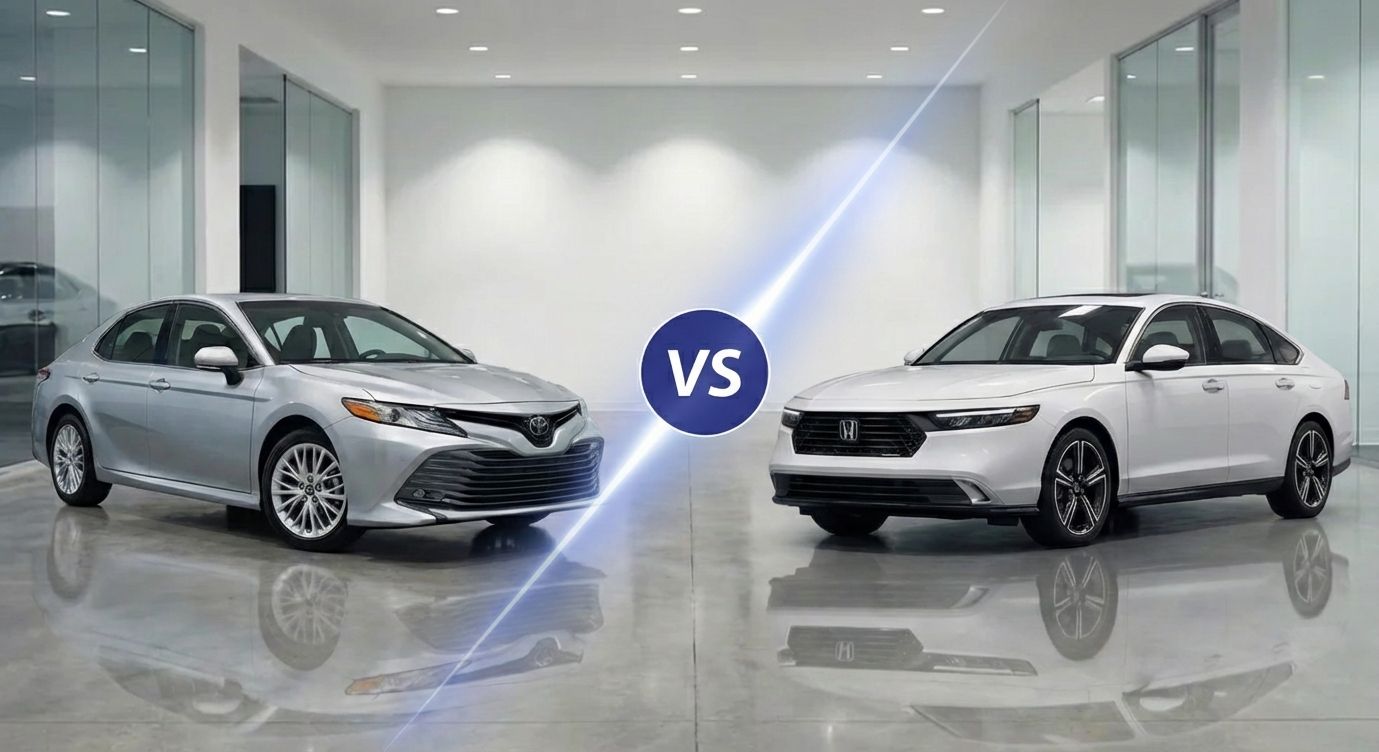
Car battle
Toyota Camry vs. Honda Accord: A Complete 2025 Comparison
Toyota Camry vs. Honda Accord: Which sedan to choose? Our detailed comparison helps you find the right car based on key differences and our verdict.
Apr 13, 2026
Articles
Car battle
Detailed comparison of the Mazda 6 vs. the Peugeot 508. We compared real-world driving characteristics, engines, and equipment. Read the verdict that will make choosing a used car easier.
May 2, 2026
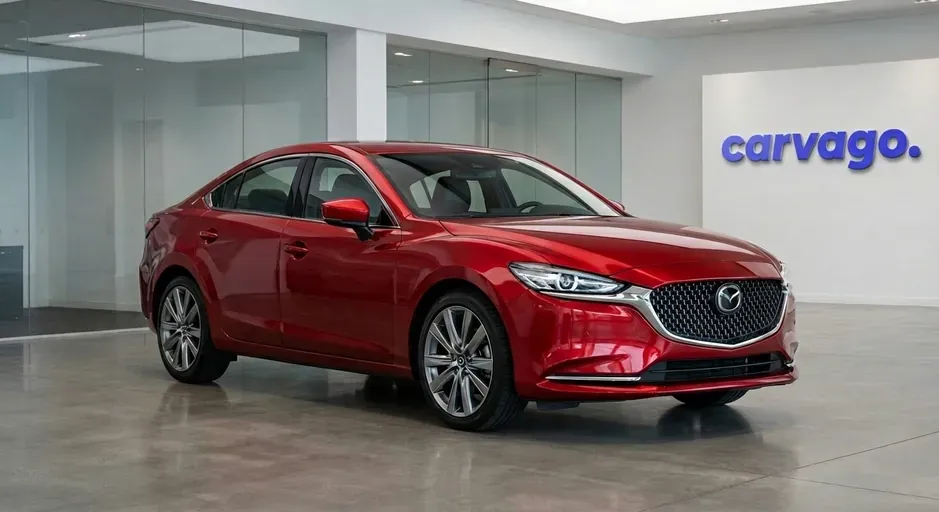
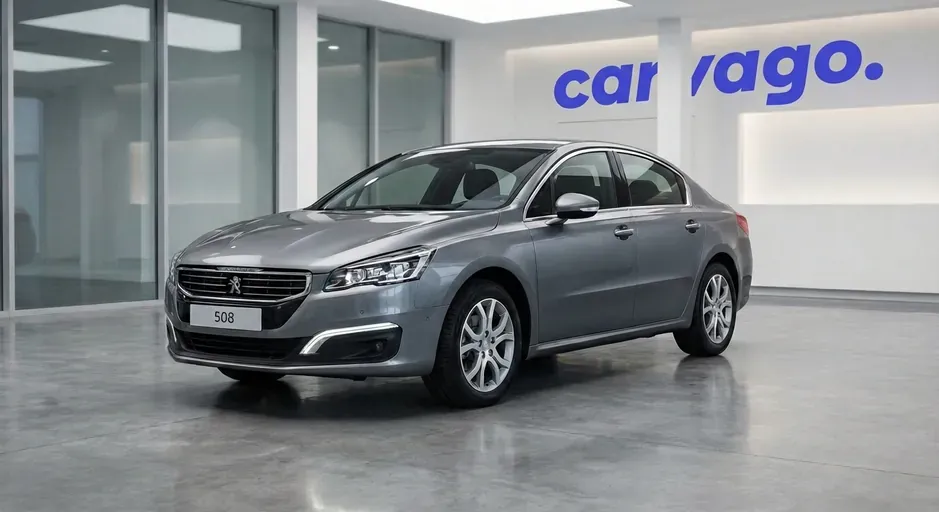
The Mazda 6, also sold as the Mazda Atenza in some markets, has long been sought after for its excellent driving characteristics, timeless design, and premium interior craftsmanship, which proudly competes even with more expensive mid-size cars. On the other hand, there is the Peugeot 508, which brings an unmistakable French avant-garde flair to this segment thanks to its striking sporty silhouette, futuristic i-Cockpit dashboard concept, and high driving comfort. Both of these distinctive models represent an exceptionally attractive alternative to traditional fleet mainstays, which is why in our detailed comparison, we will focus on which of them will be the better choice for you on the nearly-new used car market.
When looking at the exterior dimensions of these two popular mid-size cars, considering the roughly four-year-old generations sought after on the used car market (the second-generation Peugeot 508 and the post-facelift GJ-generation Mazda 6), we encounter very interesting differences that clearly define their character. Mazda 6 is a longer car overall, with its elegant sedan version measuring an impressive 4,870 mm. That is a significant 120 mm more than the dynamically styled Peugeot 508 in its base version, which uses a more practical fifth door and is referred to as a hatchback or fastback (4,750 mm). A very interesting point about the Japanese Mazda is its unusual approach to body dimensions – the more family-oriented and logically larger estate version is paradoxically 65 mm shorter than the sedan. The French competitor follows more traditional proportions, with the SW estate version growing slightly in length to 4,778 mm. In conclusion, if easier maneuvering in tight underground garages is key for you, the more compact dimensions of the Peugeot 508 represent an indisputable advantage, while the longer Mazda 6 will please drivers looking for the more majestic appearance of a classic limousine.
In terms of overall road presence—width and height—both manufacturers follow a different philosophy. The Peugeot 508 immediately catches the eye with its very specific, sporty, low-slung silhouette. With a height of just 1,403 mm (hatchback), it is nearly five centimeters lower than the Mazda 6 sedan, and it also offers a 19 mm wider body (1,859 mm compared to 1,840 mm for the Japanese car). This combination of a wide track and low center of gravity gives the Peugeot an incredibly aggressive look and excellent stability. However, the price for this attractive design is paid when getting in and in terms of rear passenger headroom, where the sloping roof can interfere with taller passengers. The Mazda 6 sticks to more traditional proportions with a height of up to 1,480 mm (estate), which provides a more natural entry into the cabin and a more airy interior. It logically follows that the Peugeot 508 scores with customers who prefer visual drama and a truly sporty driving position, while the Mazda 6 offers a much better compromise for everyday user comfort and easy entry for the whole family.
A crucial parameter for interior longitudinal space is the wheelbase. Here again, the Japanese anomaly, which is quite unique in the automotive world, comes into play. The Mazda 6 sedan features a generous wheelbase of 2,830 mm, ensuring regal legroom for second-row passengers. However, in its estate version, the wheelbase is significantly shortened to just 2,750 mm, which the automaker justifies as an effort to maintain maximum driving agility for a car with a heavier rear end. In contrast, the Peugeot 508 offers an identical wheelbase of 2,793 mm for both of its body variants (hatchback and SW estate). The French representative thus provides a solid standard value that you can rely on regardless of which body shape you choose. The result is a rather surprising finding: for maximum rear-seat space in a limousine, the Mazda 6 sedan is the clear winner, but if you are buying a family estate, the Peugeot 508 paradoxically offers more longitudinal space.
| Parameter | Mazda 6 Sedan | Peugeot 508 Hatchback | Mazda 6 Estate | Peugeot 508 Estate |
|---|---|---|---|---|
| Width (mm) | 1840 | 1859 | 1840 | 1859 |
| Length (mm) | 4870 | 4750 | 4805 | 4778 |
| Height (mm) | 1450 | 1403 | 1480 | 1420 |
| Wheelbase (mm) | 2830 | 2793 | 2750 | 2793 |
Luggage capacity is one of the key parameters when choosing a used mid-size car, as these vehicles often serve as primary family cruisers. Customers expect versatile usability from them, whether for daily commuting, transporting sports equipment, or weekend shopping. Both the Mazda 6 and the Peugeot 508 offer plenty of space inside, but their different body styles bring varying levels of everyday practicality, which is particularly noticeable in the base shorter versions of both models.
While the Mazda 6 sticks to a traditional sedan design for its shorter version, with a boot capacity of 480 litres, the second-generation Peugeot 508 opted for an attractive and more practical five-door liftback (also referred to as a hatchback in some data). The French car thus offers a base space of 487 litres, which can expand to 1537 litres with the rear seats folded. However, the main advantage of the Peugeot lies in its large tailgate, which allows for easy access to the cargo. Loading bulkier items into the elegant Mazda sedan is significantly more difficult due to the limited opening of the rear section.
In the popular and sought-after estate version, the competition is more balanced. The Mazda 6 Estate offers a solid 522 litres, which is perfectly sufficient for weekend shopping or a longer holiday. Folding the rear seats creates a storage area with a total volume of 1664 litres. However, the Peugeot 508 SW provides even more space overall – it has 530 litres in its base configuration, and with the seats folded, the maximum value grows to a generous 1780 litres. In practice, this means welcome room for a few extra suitcases. A major competitive advantage for the Peugeot is also the fact that the popular plug-in hybrid versions did not suffer any loss in volume; the batteries are cleverly integrated into the floor, so the boot capacity remains exactly the same as in the purely internal combustion engine versions.
| Parameter | Mazda 6 Sedan | Peugeot 508 Liftback | Mazda 6 Estate | Peugeot 508 SW |
|---|---|---|---|---|
| Base volume (litres) | 480 | 487 | 522 | 530 |
| Maximum volume with seats folded (litres) | - | 1537 | 1664 | 1780 |
Although the Mazda 6 has a decent and well-utilised boot in the estate version, the Peugeot 508 offers not only a slightly larger volume in the SW variant but, above all, much better access to luggage in the case of the five-door liftback, making it a more versatile family choice.
When choosing a practical car for a family or an active lifestyle, towing capacity is often a decisive factor, whether you plan to tow a caravan for a long holiday or just occasionally attach a trailer sufficient for weekend shopping. Focusing on popular models roughly four years old (available on the used market around 2022), the two manufacturers' approaches to trailer weight differ quite significantly.
The Japanese Mazda 6 (GJ generation) bets on balance and a reliable standard. Most of its petrol engines from the SKYACTIV-G series can easily handle a braked trailer weighing 1300 to 1500 kg. If you opt for the fuel-efficient SKYACTIV-D diesel units, the maximum permissible trailer weight increases to a solid 1600 kg. This standard performance provides a reliable reserve that easily accommodates medium-heavy loads or offers space for a few extra suitcases in a towed trailer.
Conversely, the French Peugeot 508 (2nd generation) shows a much wider range of values, which is closely linked to the chosen engine. Its absolute maximum is the proven 2.0 BlueHDi diesel, which can tow heavy trailers weighing up to 1800 kg. This makes it an excellent choice for owners of large caravans. However, the situation is completely different for modern plug-in hybrid powertrains and the top-of-the-line PSE sports version. Here, the higher weight of the batteries and drive systems has a negative impact, limiting the braked trailer capacity to just 1260 to 1340 kg. Such values restrict the car's towing use more to lighter loads or transporting garden equipment.
Unfortunately, specific factory values for unbraked trailers for these models do not appear in the available data. However, based on technical conventions and legislative limits for mid-size vehicles, a standard value of 750 kg can usually be expected. The choice between these two cars thus directly depends on your preferences: the Mazda 6 represents predictable certainty, while the Peugeot 508 excels in its 2.0-litre diesel specification but requires certain towing compromises as a hybrid.
| Model and engine | Braked trailer weight (kg) | Unbraked trailer weight (kg) |
|---|---|---|
| Mazda 6 2.0 SKYACTIV-G | 1300 - 1500 | - |
| Mazda 6 2.5 SKYACTIV-G | 1500 | - |
| Mazda 6 2.2 SKYACTIV-D | 1600 | - |
| Peugeot 508 1.2 PureTech | 1290 - 1340 | - |
| Peugeot 508 1.5 BlueHDi | 1450 - 1500 | - |
| Peugeot 508 1.6 PureTech | 1600 | - |
| Peugeot 508 2.0 BlueHDi | 1800 | - |
| Peugeot 508 1.6 HYBRID / PSE | 1260 - 1340 | - |
While the Mazda 6 and Peugeot 508 belong to the same class of executive cars, their approach to powertrains is diametrically opposed and beautifully illustrates the differing philosophies of the two automakers. From the perspective of the nearly-new used car market, the Japanese Mazda sticks to the proven path with larger naturally aspirated engines that appeal with their linear power delivery and unparalleled long-term reliability. In contrast, the French Peugeot bets fully on modern trends – downsizing, turbocharging, and massive electrification. Peugeot appeals to forward-thinking drivers with a wide range of plug-in hybrids that can be exceptionally efficient with daily charging, and at the top of the range, it crushes the competition with immense power. The difference is also palpable in the area of transmissions; while the Mazda 6 still delights traditionalists with the option of a precise manual gearbox, you will find four-year-old Peugeot 508s almost exclusively with a comfortable eight-speed automatic.
The engine range for the last generation of the Mazda 6 has shrunk in recent years due to emission standards, gradually focusing almost exclusively on SKYACTIV-G petrol units. These engines intentionally avoid turbochargers, benefit from an unusually high compression ratio, and delight with very modest fuel consumption in real-world driving. The base is a two-litre with 107 kW or 121 kW, but the real highlight for more demanding drivers is the popular 2.5 SKYACTIV-G engine with 143 kW, which is paired exclusively with a reliable six-speed automatic. If you were looking for a diesel powertrain, until recently the Mazda 6 offered the powerful and agile 2.2 SKYACTIV-D diesel in versions with 110 kW and 135 kW. However, due to tightening European regulations, these diesel engines definitively disappeared from production after 2021. Therefore, you must be even more careful when searching for them among four-year-old used cars – you will encounter them rather rarely. Furthermore, the estate version of the more powerful diesel could also be equipped with practical all-wheel drive.
| Engine type | Fuel | Power (kW) | Torque (Nm) | Transmission |
|---|---|---|---|---|
| 2.0 SKYACTIV-G 145 | Petrol | 107 | 213 | 6MT / 6AT |
| 2.0 SKYACTIV-G 165 | Petrol | 121 | 213 | 6MT / 6AT |
| 2.5 SKYACTIV-G 194 | Petrol | 143 | 258 | 6AT |
| 2.2 SKYACTIV-D 150 | Diesel | 110 | 380 | 6MT / 6AT |
| 2.2 SKYACTIV-D 184 | Diesel | 135 | 445 | 6MT / 6AT |
In contrast, the second-generation Peugeot 508 offers a range of units focused on modern technology and on-paper efficiency. Standard models from recent production are built on the turbocharged 1.2 PureTech three-cylinder petrol and the 1.5 BlueHDi four-cylinder diesel, both featuring an identical output of 96 kW. Both are standardly tuned with an eight-speed automatic transmission, which ensures a smooth ride. For older models around the 2020 and 2021 production years, you may still occasionally come across the larger 2.0 BlueHDi diesels or the potent 1.6 PureTech four-cylinders in the listings, but these classic internal combustion engines subsequently disappeared from the price lists entirely. They were replaced by electrified powertrains. The nearly-new used car market thus offers a generous representation of plug-in hybrids (PHEV) consisting of a 1.6-litre engine supplemented by an electric motor, with a total output of 133 kW or 165 kW. The absolute pinnacle for enthusiastic drivers is the high-performance PSE (Peugeot Sport Engineered) variant – it integrates two electric motors, boasts all-wheel drive, lightning-fast reactions, and a massive system output of 265 kW (360 hp). In a straight line, it can easily leave even the most powerful Mazda model behind.
| Engine type | Fuel | Power (kW) | Torque (Nm) | Transmission |
|---|---|---|---|---|
| 1.2 PureTech 130 | Petrol | 96 | 230 | 8AT |
| 1.6 PureTech 180 / 225 | Petrol | 133 / 165 | 250 / 300 | 8AT |
| 1.5 BlueHDi 130 | Diesel | 96 | 300 | 8AT |
| 2.0 BlueHDi 160 / 180 | Diesel | 120 / 130 | 400 | 8AT |
| 1.6 HYBRID 180 | Plug-in Hybrid | 133 | 360 | 8AT |
| 1.6 HYBRID 225 | Plug-in Hybrid | 165 | 360 | 8AT |
| PSE HYBRID4 360 | Plug-in Hybrid | 265 | 520 | 8AT |
If you are looking for long-term reliability and a classic driving experience without worrying about small turbochargers and heavy traction batteries, the large-displacement naturally aspirated Mazda 6 is the clear choice. On the other hand, the Peugeot 508 is great news for modern fleets or drivers with a garage and a charger who can fully exploit the benefits of its quiet and powerful plug-in hybrids.
Choosing the right engine is crucial for long-term satisfaction, and our recommendations are based on real-world experience, fuel consumption in traffic, and mechanical reliability. The approach of both manufacturers to power units is completely different – while Mazda, with the GJ generation (2013–2024), completely ignored European downsizing trends and offers unique naturally aspirated petrol engines with an extremely high compression ratio of 14:1, Peugeot, with the second generation of the 508 model (since 2018), switched to small-displacement turbos and powerful diesels with complex multi-stage exhaust gas treatment. From a used car market perspective, this presents buyers with a clear choice between honest mechanical simplicity and modern turbocharged efficiency.
| Recommended model | Engine type | Power | Historical availability of the generation |
|---|---|---|---|
| Mazda 6 | 2.5 SKYACTIV-G 194 | 143 kW (194 hp) | 2018 - 2024 |
| Peugeot 508 | 2.0 BlueHDi 160 / 180 | 120/130 kW (160/180 hp) | 2018 - 2020 |
As can be seen from the table above, Peugeot's excellent 2.0-liter diesel ceased production as early as 2020. In the segment of approximately four-year-old used cars (around the 2022 model year), you will unfortunately no longer find it and will have to either choose from older years or resort to the newer, but more maintenance-risky, smaller 1.5 BlueHDi diesel engine.
This large-displacement naturally aspirated four-cylinder with 143 kW is an absolute certainty in terms of used cars and represents the most sensible choice in the entire model range (especially as a safer alternative to the 2.2 SKYACTIV-D diesel units, which in their earlier stages struggled with problematic oil dilution by diesel). The engine offers beautifully linear pull, works exemplary with the standard classic torque converter automatic, and its real-world consumption surprisingly easily stays between 7 and 8 liters of petrol per 100 km. The absence of a turbocharger makes it structurally very robust and significantly less prone to carbon buildup, making it a versatile companion whether you are pounding the motorways or commuting daily in the city. When buying a used car, only watch out for newer versions equipped with a cylinder deactivation system – during a test drive at a steady speed with a very light foot, the car should not transmit any resonance or inappropriate vibrations into the interior. If you give it regular service with an oil change at least every 15,000 km, it is a car ready to serve for many years completely without trouble.
If you long for a reliable French executive sedan or estate and spend a lot of time on the road, the best power unit is clearly the massive 2.0-liter diesel, sold in versions with 120 or 130 kW. It offers the driver a fantastic torque of 400 Nm from very low revs, above-average cabin soundproofing, and with the excellent eight-speed Aisin gearbox (EAT8), it forms a perfectly relaxed combo with consumption safely under 6 liters of diesel per 100 km. However, if you are strictly aiming for a roughly four-year-old used car, you must accept the information that this engine has not been installed in the car since 2020 and was replaced by the smaller 1.5 BlueHDi four-cylinder (with that one, monitor the condition of the risky chain between the camshafts extremely carefully, as it tends to snap in DV5 engines). For the 2.0-liter itself, typical modern diesel rules apply – the car does not belong in frequent cold city hopping, otherwise you will quickly clog the diesel particulate filter (DPF). During a physical inspection, focus in detail on the history of engine and UREA emission system warning lights; in PSA Group cars, these often foreshadow a failure of the pump in the AdBlue injection module, leading to the need to replace the entire and relatively expensive tank.
The difference between official fuel consumption figures and the harsh reality of daily driving is often vast in modern cars. To get the most accurate picture possible, we rely on real-world averages from the independent community portal Spritmonitor.de, which collects long-term statistics from thousands of actual owners. Given the demand in the used car market, we are focusing on models approximately four years old – specifically the facelifted Mazda 6 (GJ generation) and the second-generation Peugeot 508. From a fuel perspective, this is an exceptionally attractive battle between two different engineering approaches: classic Japanese naturally aspirated engines versus the French school of downsizing and electrification.
Data source: Spritmonitor.de
| Model and engine | Average consumption (l/100 km) |
|---|---|
| Peugeot 508 1.5 BlueHDi 130 (96 kW) | 5.3 |
| Mazda 6 2.2 SKYACTIV-D 150 (110 kW) | 5.6 |
| Peugeot 508 2.0 BlueHDi 180 (130 kW) | 6.0 |
| Mazda 6 2.2 SKYACTIV-D 184 (135 kW) | 6.4 |
| Peugeot 508 1.2 PureTech 130 (96 kW) | 6.3 |
| Peugeot 508 1.6 PureTech 180 (132 kW) | 6.8 |
| Mazda 6 2.0 SKYACTIV-G 165 (121 kW) | 7.0 |
| Mazda 6 2.5 SKYACTIV-G 194 (143 kW) | 7.6 |
| Peugeot 508 1.6 HYBRID 225 (165 kW) | 4.5 |
Interesting trends are clearly visible when interpreting the collected data. In the field of diesel engines, the smaller 1.5 BlueHDi unit from Peugeot remains the king of efficiency, with which it is possible to drive under 5 liters with a very light foot, and the average stays safely at a great 5.3 l/100 km. However, Mazda's 2.2-liter SKYACTIV-D diesel in its base power version shows that even a larger displacement doesn't necessarily mean high fuel bills, and in a direct comparison, it even narrowly beats the more powerful French two-liter. The biggest surprises, however, are hidden in the petrol engines. Peugeot's small-displacement three-cylinder 1.2 PureTech does not save fuel as effectively as one might expect from the spec sheets. A difference of less than a liter compared to the characterful and reliable 2.0 SKYACTIV-G shows that the naturally aspirated Japanese concept still pays off, especially since the consumption of larger engines does not increase dramatically even on the highway. The plug-in hybrid version of the Peugeot is a chapter in itself – although it can drive for as little as two liters, the overall real-world average of 4.5 l/100 km reflects the fact that not every user faithfully charges the car from the grid every day.
For the average driver, a clear recommendation emerges from these values. If you are a driver who crosses the country daily on highways and keeps a close eye on your budget, the small diesel from Peugeot is an unbeatable workhorse that will save the most money. For users commuting from the suburbs to the city, or for shorter highway trips, the naturally aspirated petrol from Mazda is a very strong argument. The higher consumption of less than a liter of fuel per 100 kilometers for the two-liter is compensated for by reliability and smooth operation without the complications of turbochargers or particulate filters typical of diesels. Investing in a hybrid 508 then makes perfect sense only if you have the opportunity to charge cheaply at home and at work.
Fuel consumption is therefore a strong deciding factor in this duel. While the Peugeot 508 can deliver the absolute minimum in operating costs in its diesel versions during highway driving, the Mazda 6 scores with unprecedented predictability – its large engines always maintain a great balance between dynamics and adequate fuel consumption, regardless of how aggressive a driving style you choose.
When looking for a roughly four-year-old used car from the 2021 to 2022 model years, you will encounter completely different depreciation curves for these two mid-size executive cars. While the Japanese representative attracts buyers with very stable prices thanks to its desirable and reliable engines, its French competitor suffers from a steeper drop in value. However, a savvy used car buyer on the secondary market can benefit significantly from this.
The Mazda 6 holds its value exceptionally well on the used car market. Buyers in used car dealerships are most interested in the reliable 2.0 Skyactiv-G and 2.5 Skyactiv-G petrol engines. These are unique in the mid-size car class due to their non-turbocharged design, which suggests a lower risk of expensive repairs for used car buyers.
The second-generation Peugeot 508 is a relatively expensive car according to the price list, but on the used car market, the situation plays into the hands of buyers. The extravagant design and the rise of plug-in hybrid (PHEV) technologies result in high depreciation. For those interested in a four-year-old car, this means massive financial savings compared to buying a new one.
| Model | Starting price (basic engines) | Average price (better trim / stronger engines) | Depreciation rate |
|---|---|---|---|
| Mazda 6 | from approx. €20,000 | €23,000 – €27,000 | Low |
| Peugeot 508 | from approx. €16,000 | €21,000 – €25,000 | High (especially PHEV) |
If you prefer a car that will hold its value significantly better after purchase for a potential future resale, the Japanese Mazda 6 is a safe bet. However, if you want the maximum in stylish design and rich modern equipment for your money, the massive depreciation of the Peugeot 508 makes it an irresistible choice on the used car market.
Both cars boast a maximum five-star rating in Euro NCAP crash tests, which is always reassuring news for used car buyers. However, when comparing safety, it is necessary to take into account the context and the year of testing. Euro NCAP methodology is constantly evolving and becoming stricter – tests from earlier years did not include such demanding simulations as cyclist detection or emergency braking at intersections. Percentage results thus cannot be directly compared across different years. In this specific case, however, we have a unique opportunity for direct comparison, as both models underwent homologation in the same year (2018) according to the same, then newly tightened methodology. While the validity of these certifications formally expires after six to seven years (as recently happened with the Peugeot), for the market of roughly four-year-old used cars, these results represent a fully valid and highly relevant measure of robustness and active safety.
The Mazda 6 (tested in 2018) achieved excellent results for its time, also thanks to the stiffer SKYACTIV body and the improved i-ACTIVSENSE assistance system package. Adult occupant protection stands at a great 95%, and the car excels in child protection with an above-average rating of 91%. Vulnerable road user protection (pedestrians and cyclists) reached 66%, and assistance systems earned a solid 73%. This data shows that the Mazda 6 benefits from the reliable operation of advanced automatic emergency braking and a strong emphasis on family safety, although it lost a few points in pedestrian protection due to the sharper shapes of the front body parts.
The Peugeot 508 also underwent testing in 2018 (with subsequent confirmation of the rating's validity for hybrid versions) and showed a very balanced performance across all measured categories. In adult occupant protection, it managed to beat the Mazda by one percentage point (96%), but lagged slightly in child protection (86%). The French model, however, gained very valuable points in the vulnerable road user protection rating (71%) and, thanks to an advanced camera and traffic sign and speed limit recognition systems, achieved an overall better result in the safety assist category (79%).
In conclusion, both cars offer a highly modern and comprehensive level of passive and active safety on the used car market. The Peugeot 508 is a slight overall favorite from the Euro NCAP perspective thanks to slightly better assistance systems and slightly higher consideration for pedestrians, but the Mazda 6 remains unsurpassed when maximum protection for children in the rear seats is your absolute priority.
| Parameter | Mazda 6 | Peugeot 508 |
|---|---|---|
| Year of testing | 2018 | 2018 |
| Adult occupant protection | 95 % | 96 % |
| Child protection | 91 % | 86 % |
| Vulnerable road user protection | 66 % | 71 % |
| Safety assistance systems | 73 % | 79 % |
Both models represent exceptionally safe used cars tested according to the strict 2018 methodology; Peugeot handles assistance systems slightly better, while Mazda protects children slightly better.
In addition to standard equipment, each of the models offers several unique features that can be decisive for the customer. Although both cars target the same mid-size segment, their approach to added value, technology, and overall driving feel differs diametrically.
The Japanese automaker has long relied on the Jinba Ittai philosophy (unity of horse and rider) for this model, which is reflected in a specific approach to technology and ergonomics. The Mazda 6 does not try to dazzle with futuristic displays, but rather with a precise driving experience.
The French representative, on the other hand, is the embodiment of automotive avant-garde. The Peugeot 508 appeals to emotions with its dynamic appearance and massive use of the latest technologies, making it one of the most distinctive cars on the used car market in this class.
Top-tier driving dynamics with precise steering and excellent chassis feedback
Reliable naturally aspirated petrol engines (Skyactiv-G) with great longevity
Interior craftsmanship bordering on the premium class using high-quality materials
Very intuitive infotainment control via a physical rotary dial
Timeless and elegant design that doesn't age visually
Smaller luggage capacity compared to direct competitors
Outdated infotainment graphics with a relatively small display
Higher levels of wind noise in the cabin at highway speeds
Narrow range of engines without modern plug-in hybrid alternatives
Mazda 6 is a perfect choice for enthusiastic drivers who appreciate classic naturally aspirated engines, precise driving dynamics, and traditional, easy-to-use ergonomics. It will primarily suit those for whom the driving experience and long-term reliability are more important than maximum boot capacity or the latest digital gadgets.
Extremely attractive and sporty body design with frameless windows
Practical boot access in the fastback version thanks to the liftgate
Excellent cruising comfort and great cabin soundproofing
Availability of fuel-efficient plug-in hybrid (PHEV) powertrains for city driving
Futuristic i-Cockpit interior with high-quality displays
Specific i-Cockpit ergonomics with a small steering wheel do not suit drivers of all statures
Significantly limited headroom in the rear seats due to the sloping roofline
Impractical control of air conditioning and other functions exclusively via the touchscreen
Slower response times and occasionally confusing central infotainment interface
The Peugeot 508 will appeal to those looking for fresh French style, a premium look, and high acoustic and chassis comfort. It is an ideal car for those who prefer modern technology, want to take advantage of hybrid power, and are willing to make a slight compromise on rear-seat space in favor of stunning design.
Based on long-term user experience, service reports, and independent professional inspections, such as our comprehensive used car check CarAudit, we have compiled an overview of the most common problems that buyers of used cars around four years old should watch out for.
The third generation of the Mazda 6 (after the significant facelift in 2018) is considered one of the most reliable cars in the mid-size class, yet certain specific faults can occur.
The Mazda 6 represents a highly above-average reliable choice, especially if you opt for the renowned Skyactiv-G petrol engines. Pay attention mainly to the condition of the paint and the health of the diesel engines in cars that the previous owner used primarily in the city.
The second generation of the Peugeot 508 bets on avant-garde design and modern technology, which also brings specific challenges associated with electronics and body construction.
The Peugeot 508 impresses with style and dynamics, but requires a more careful history check and a thorough test drive. Risks include particularly delicate frameless windows and the AdBlue system in diesels; otherwise, the mechanics as a whole are among the more reliable in current production.
When buying a used car, a thorough inspection is crucial, and although both vehicles are reliable representatives of the mid-size class, they have their specifics and weak points that need to be watched out for.
In terms of practicality, both models are very similar. The Peugeot in the SW version offers a trunk capacity of 530 liters, while the Japanese representative in the Wagon variant provides 522 liters. For the more elegant liftback and sedan body styles, the French model offers 487 liters compared to 480 liters for its competitor.
The Japanese model has long been valued for its sportier and very engaging driving characteristics thanks to an excellently tuned chassis. Peugeot, on the other hand, focuses more on quiet operation, travel comfort, and a slightly smoother ride. The choice therefore depends on whether you prefer sharper dynamics in corners or rather comfortable highway cruising.
Mazda bets on classic ergonomics with physical buttons and an excellent rotary infotainment controller, which significantly minimizes distraction behind the wheel. Peugeot, by contrast, offers the futuristic i-Cockpit with a small steering wheel and most functions integrated into the central touchscreen. Drivers accustomed to traditional controls may take a while to fully get used to the French layout.
The French brand offers economical plug-in hybrid (PHEV) versions, which allow for dozens of kilometers of pure electric range after charging. Its competitor relies primarily on proven naturally aspirated gasoline engines (often with mild-hybrid technology), which offer excellent real-world fuel consumption without the need to look for a socket. If you don't have the option to charge the car regularly, a more traditional gasoline powertrain may be more user-friendly.
In long-term reliability rankings, Mazda consistently performs better thanks to its robust Skyactiv technology, which does not suffer from the complexities of small turbocharged engines. For the 508 model, it is necessary to ensure a consistent maintenance history, especially for diesel units with more sensitive urea injection systems (AdBlue). However, both cars represent a very solid choice if the previous owner did not neglect regular servicing.
Mazda 6 and Peugeot 508 represent two completely different approaches to the mid-size class, each appealing to a specific group of customers. While the Japanese Mazda 6 scores with the long-term reliability of its naturally aspirated engines, classic ergonomics, and top-tier driving characteristics, the French Peugeot 508 attracts with its avant-garde design featuring frameless windows, the futuristic i-Cockpit, and modern plug-in hybrid or fuel-efficient diesel powertrains. If your priority is a pure driving experience, honest mechanics, and stable resale value, the Mazda 6 will be a safe bet for you. However, if you prefer unmistakable style, high travel and acoustic comfort, and can take full advantage of the sharp drop in its original price on the nearly-new used car market, the much more extravagant Peugeot 508 will be your ideal choice.
Sources: ADAC, lidovky.cz, forbes.cz, hybrid.cz, autozive.cz, transport.cz
This article was prepared using artificial intelligence tools. The section guarantor is Petr Dušek.
Toyota Camry vs. Honda Accord: Which sedan to choose? Our detailed comparison helps you find the right car based on key differences and our verdict.
Apr 13, 2026
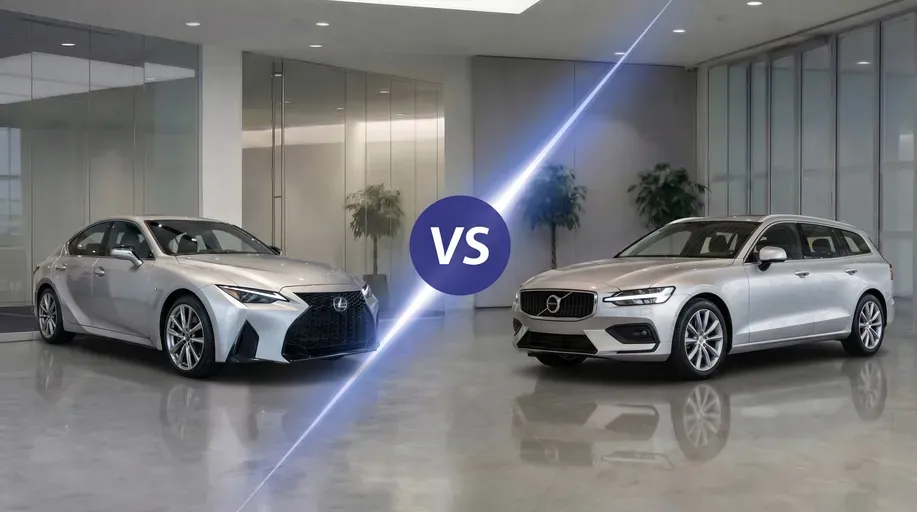
Detailed comparison of Lexus IS vs Volvo V60. Discover the differences in driving characteristics, equipment, and reliability of used cars. Read our clear verdict before buying.
Apr 20, 2026
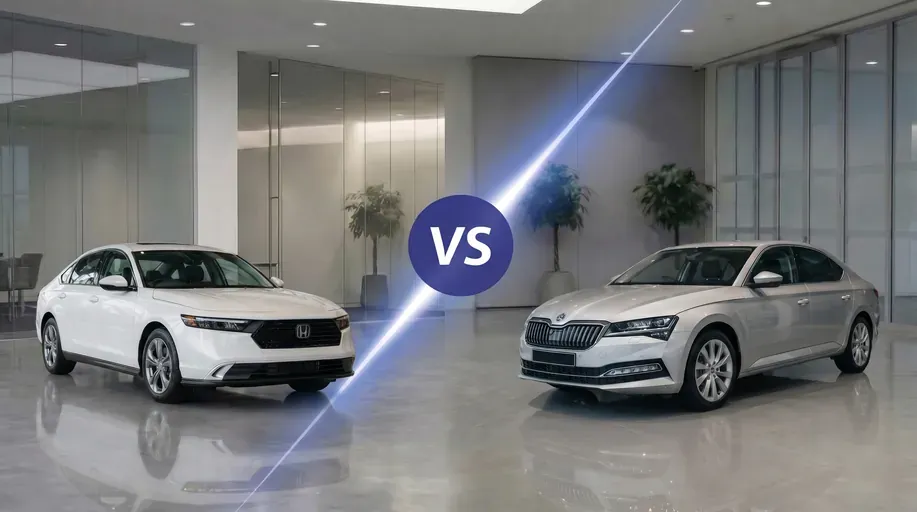
Detailed comparison of Honda Accord vs. Škoda Superb. Discover real-world experiences, equipment and driving characteristics comparisons, and read the verdict for the best choice.
Apr 21, 2026