Car battle
Ford Mondeo vs Toyota Camry: Complete Comparison 2025
Ford Mondeo vs. Toyota Camry: Detailed comparison, tests, data, and verdict. Find out which sedan is the best choice for you on the used car market.
Apr 13, 2026
Articles
Car battle
Peugeot 508 vs. Škoda Superb: Detailed comparison, real-world experiences, and the verdict to help you choose the best executive car.
April 13, 2026
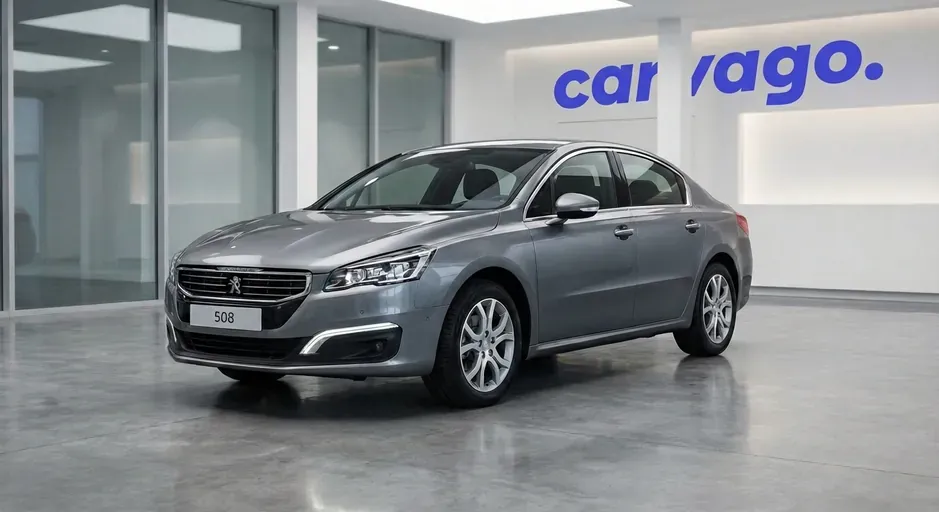
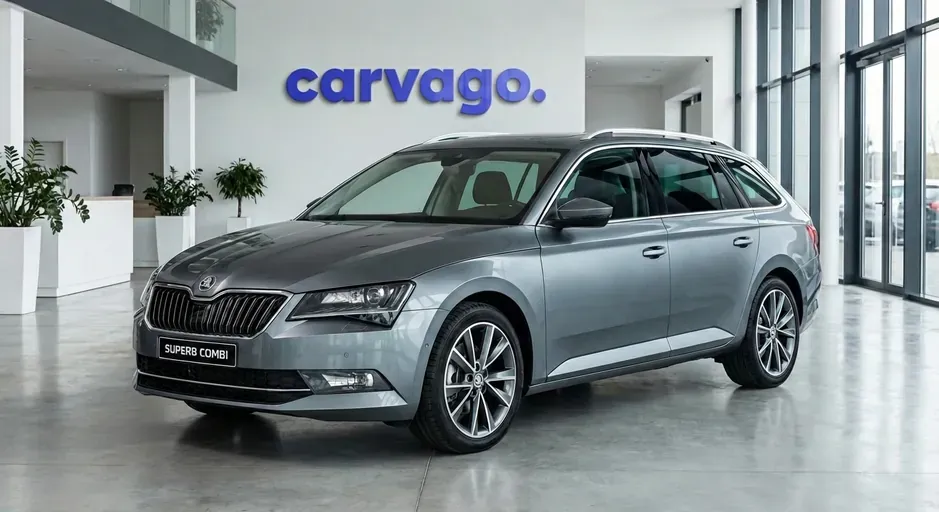
The Peugeot 508, a stylish French liftback that defies convention with its bold design and i-Cockpit interior, goes head-to-head with the Škoda Superb, the Czech icon of space and practicality, long considered the benchmark in its class. The battle between these two executive cars promises a thrilling comparison of different philosophies aimed at similar customers. Let's take a closer look at how they stack up against each other in key disciplines.
A first glance at the Peugeot 508 and the Škoda Superb reveals a fundamental difference in their philosophy, which is most reflected in their exterior dimensions. While the Škoda Superb is the benchmark for spaciousness in its class and proudly shows off its size, the Peugeot 508 opts for a more compact, sportier body that prioritizes design over maximum interior volume.
The Škoda Superb is the larger car in every respect. The liftback version is a noticeable 119 mm longer than the 508, and in the estate variants, the difference is still a significant 84 mm. This lead is mainly reflected in the wheelbase, where the Superb has an advantage of almost five centimetres. In practice, this means only one thing – regal legroom for rear-seat passengers, which is typical for the Superb. In contrast, the shorter Peugeot will be slightly easier to park on city streets and feels more agile.
There is also a dramatic difference in height. The Peugeot 508 is significantly lower, giving it a dynamic and elegant look reminiscent of a four-door coupé. However, the price for this beauty is less headroom, especially in the rear seats. The Superb, on the other hand, offers a much airier cabin and more comfortable entry, which families will particularly appreciate. In terms of width, both cars are very similar, with a difference of just five millimetres, promising comparable shoulder room.
| Parameter | Peugeot 508 Liftback | Škoda Superb Liftback | Peugeot 508 SW (Estate) | Škoda Superb Combi (Estate) |
|---|---|---|---|---|
| Length (mm) | 4750 | 4869 | 4778 | 4862 |
| Width (mm) | 1859 | 1864 | 1859 | 1864 |
| Height (mm) | 1403 | 1469 | 1420 | 1477 |
| Wheelbase (mm) | 2793 | 2841 | 2793 | 2841 |
One of the key battlegrounds where the Peugeot 508 and the Škoda Superb directly clash is the practicality and size of the luggage compartment. While the Škoda Superb has long focused on maximum volume and clever solutions, the second-generation Peugeot 508 has concentrated more on style and dynamic design, which has inevitably been reflected in the on-paper figures. For families and business customers who often transport bulky loads, this difference can be decisive.
The Škoda Superb in its liftback version offers an absolutely dominant basic volume of 625 litres. This is a full 138 litres more than the Peugeot 508, whose fastback body can hold 487 litres. This difference represents, for example, the volume of a large travel suitcase. After folding down the rear seats, the Superb's lead widens even further – it offers 1760 litres compared to the Peugeot's 1537 litres. The situation is similar for the more practical estate variants. The Superb Combi with its 660 litres easily surpasses the Peugeot 508 SW with its 530 litres. The maximum transport capacity is an astounding 1950 litres for the Škoda, while the Peugeot offers a still very respectable 1780 litres.
An interesting twist occurs with the plug-in hybrid versions. Here, the Škoda Superb iV loses its main advantage, as the batteries have taken their toll. The boot volume of the hybrid Superb liftback drops to 485 litres and the estate to 510 litres. This practically puts it on par with its French rival, where, according to the manufacturer's data, there is no reduction in space due to the hybrid technology. The choice between these two cars, if you are interested in a plug-in hybrid, thus becomes much more balanced, and factors other than pure volume come to the forefront.
| Parameter | Peugeot 508 Liftback (Gen 2) | Škoda Superb Liftback (Gen 3) | Peugeot 508 SW (Gen 2) | Škoda Superb Combi (Gen 3) |
|---|---|---|---|---|
| Basic volume (litres) | 487 | 625 | 530 | 660 |
| Maximum volume (litres) | 1537 | 1760 | 1780 | 1950 |
The ability to tow a trailer may not be a key parameter for everyone, but in this class of vehicle, it plays an important role for many owners – whether for a weekend trip with a caravan, transporting a boat, or work materials. And it is here that one of the biggest differences between the two models becomes apparent, with the Škoda Superb significantly outperforming its French competitor.
The second-generation Peugeot 508 (from 2018) offers figures that will suffice for normal needs. The basic petrol engines can handle a trailer weighing around 1330 kg, while the popular 1.5 BlueHDi diesel engine can manage 1500 kg. If you opt for the more powerful 1.6 PureTech petrol variants or the two-litre diesels, you can reach a maximum of 1800 kg. However, it should be noted that the hybrid versions have a reduced towing capacity of approximately 1260–1340 kg due to the weight of the batteries.
The third-generation Škoda Superb (2015–2023) is significantly more capable in this discipline. Even the base 1.5 TSI engine can tow 1600 kg as standard. But the Superb's true strength is evident in the two-litre TDI and TSI engines, especially when combined with all-wheel drive. Here, a maximum braked trailer weight of up to 2200 kg is not uncommon. This is a value that allows for towing even very large and heavy caravans or trailers. Interestingly, even the plug-in hybrid Superb iV version maintains a respectable towing capacity of 1600 kg, surpassing the hybrid Peugeot.
The Peugeot 508 will suffice for occasional towing of a lighter trailer. However, if you plan to regularly use the tow hitch for heavier loads, the Škoda Superb is an incomparably better and more practical choice.
| Model and Engine | Braked Trailer Weight (kg) | Unbraked Trailer Weight (kg) |
|---|---|---|
| Peugeot 508 1.5 BlueHDi 130 | 1500 | 750 |
| Peugeot 508 2.0 BlueHDi 180 | 1800 | 750 |
| Peugeot 508 1.6 HYBRID 225 | 1330 - 1340 | 750 |
| Škoda Superb 1.5 TSI | 1600 | 750 |
| Škoda Superb 2.0 TDI (110 kW) | 2000 | 750 |
| Škoda Superb 2.0 TSI (206 kW) 4x4 | 2200 | 750 |
| Škoda Superb 1.4 TSI iV | 1600 | 750 |
The choice of engine is key for these two cars and reveals their different philosophies. The Peugeot 508 relies on modern, economical, and technologically advanced units, with a strong focus on plug-in hybrid powertrains and standard automatic transmissions. The Škoda Superb, on the other hand, offers a more traditional but extremely broad and proven range of engines from the Volkswagen Group, where there is something for almost everyone – from economical diesel engines for high-mileage drivers to powerful petrol versions with all-wheel drive.
The engine range for the second-generation Peugeot 508 is quite straightforward and focused on efficiency. The basis in the used car market is the economical three-cylinder 1.2 PureTech petrol engine with 96 kW, which is sufficient for normal driving. Much better dynamics were offered by the four-cylinder 1.6 PureTech in 133 kW and 165 kW versions, but it was withdrawn from the offer around 2021. For company fleets and long-distance journeys, the most popular was the 1.5 BlueHDi diesel engine with 96 kW, known for its low fuel consumption. In the first years of production (until 2020), a more powerful and refined 2.0 BlueHDi (120 or 130 kW) was also available, which is now a sought-after choice on the used car market.
Peugeot has focused heavily on plug-in hybrids. The basic HYBRID version combines the 1.6 PureTech engine with an electric motor and offers a system output of 132 kW or 165 kW. The top of the range is the sporty Peugeot Sport Engineered (PSE) model with all-wheel drive, which achieves an impressive 265 kW thanks to the combination of a petrol engine and two electric motors. Almost all engines are paired with a smooth-shifting eight-speed EAT8 automatic transmission.
| Engine Type | Fuel | Power (kW) | Torque (Nm) | Transmission |
|---|---|---|---|---|
| 1.2 PureTech | Petrol | 96 | 230 | 8-speed automatic |
| 1.6 PureTech | Petrol | 133 / 165 | 250 / 300 | 8-speed automatic |
| 1.5 BlueHDi | Diesel | 96 | 300 | 6-speed manual / 8-speed automatic |
| 2.0 BlueHDi | Diesel | 120 / 130 | 400 | 8-speed automatic |
| HYBRID | Plug-in Hybrid | 132 / 165 | 360 | 8-speed automatic |
| HYBRID4 PSE | Plug-in Hybrid | 265 | 520 | 8-speed automatic |
Note: The 1.6 PureTech and 2.0 BlueHDi engines were replaced by other units or hybrid variants during production.
The third-generation Škoda Superb, after its 2019 facelift, offers an engine range that is synonymous with versatility. The petrol base is the reliable and economical 1.5 TSI engine with 110 kW, often available with a manual transmission. For more dynamically-oriented drivers, there is the 2.0 TSI engine, either in the front-wheel-drive version (140 kW) or as the top variant with 4x4 drive and up to 206 kW, which gives the Superb the dynamics of a sports car.
Diesel engines traditionally play a key role. The basic 2.0 TDI with 90 kW is more of a rational choice; the golden mean is the 110 kW version, which represents an ideal compromise between dynamics and fuel consumption. This engine is available with a manual, DSG automatic, and 4x4 drive. The top of the diesel range is the 2.0 TDI with 140 kW or the newer Evo variant with 147 kW, which is almost always paired with an automatic transmission and often with all-wheel drive. The range also includes the plug-in hybrid Superb iV version, which combines a 1.4 TSI engine with an electric motor for a total output of 160 kW.
| Engine Type | Fuel | Power (kW) | Torque (Nm) | Transmission |
|---|---|---|---|---|
| 1.5 TSI | Petrol | 110 | 250 | 6-speed manual / 7-speed DSG |
| 2.0 TSI | Petrol | 140 | 320 | 7-speed DSG |
| 2.0 TSI 4x4 | Petrol | 206 | 400 | 7-speed DSG |
| 2.0 TDI | Diesel | 90 / 110 | 300 / 360 | 6-speed manual / 7-speed DSG |
| 2.0 TDI | Diesel | 147 | 400 | 7-speed DSG |
| 1.4 TSI iV | Plug-in Hybrid | 160 | 400 | 6-speed DSG |
Choosing the right engine is key to long-term satisfaction. Our recommendations are based on a combination of performance, real-world fuel consumption, owner feedback, and mechanical reliability. While Peugeot relies on its own proven BlueHDi diesel engines and PureTech petrol units, Škoda benefits from the VW Group's broad portfolio of TSI and TDI engines, which have undergone significant evolution over the years. Both brands thus offer very different, yet excellent, power units in their respective categories.
This engine is the ideal choice for the second-generation Peugeot 508 (produced until 2020), perfectly underlining its character as a large and comfortable touring car. With 177 horsepower and, above all, a massive torque of 400 Nm, it provides confident dynamics for safe overtaking even with a fully loaded car. It works brilliantly with the EAT8 eight-speed automatic transmission, which shifts smoothly and logically. In real-world driving, fuel consumption ranges between 6 and 6.5 litres per 100 km, which is an excellent figure for such a powerful engine. This is a proven and reliable unit that is the best choice for drivers who cover long distances on the motorway.
The 150 hp 2.0 TDI engine is a safe bet and the absolute most sensible choice for the third-generation Škoda Superb. Especially in its newer "Evo" evolution (EA288 Evo), available from around 2020, it is an exceptionally economical, reliable, and refined unit. With a torque of 340 Nm (up to 360 Nm in newer versions with DSG), it provides perfectly adequate dynamics for normal driving, even at full load. Its greatest asset, however, is its phenomenal real-world fuel consumption, which can easily drop below 5 litres per 100 km during calm driving outside the city.
Official consumption figures often differ from reality, so it's crucial to look at data from real drivers. Information from platforms like the German Spritmonitor.de shows how both cars perform in everyday traffic. When comparing the second-generation Peugeot 508 (from 2018) and the third-generation Škoda Superb (especially after the 2019 facelift), several interesting trends emerge that can influence the choice of the right engine.
The following table summarises the average real-world consumption of the most common engine options, which are most relevant for the used car market for vehicles around four years old.
| Model and engine | Average real-world consumption (l/100 km) |
|---|---|
| Peugeot 508 1.2 PureTech 130 hp | 6.5 - 7.2 |
| Peugeot 508 1.6 PureTech 180 hp | 7.0 - 8.0 |
| Peugeot 508 1.5 BlueHDi 130 hp | 5.3 - 5.9 |
| Peugeot 508 2.0 BlueHDi 160/180 hp | 5.8 - 6.5 |
| Škoda Superb 1.5 TSI 110 kW | 6.8 - 7.5 |
| Škoda Superb 2.0 TSI 140 kW | 7.5 - 8.4 |
| Škoda Superb 2.0 TDI 110 kW | 5.5 - 6.2 |
| Škoda Superb 2.0 TDI 140/147 kW | 6.0 - 6.8 |
For the typical user, this means that if they often drive long distances, the diesel versions of both cars will offer very similar and low running costs. If, on the other hand, shorter trips and city driving prevail, and the lowest possible consumption is a priority, Peugeot's petrol engines offer a slight advantage. Although the differences are not dramatic, fuel consumption can be a deciding factor for some buyers. In this respect, the Peugeot has a slight edge, but the Superb only loses by a whisker, and its slightly higher consumption in petrol engines is offset by other qualities.
A look at used car prices reveals an interesting trend that can influence the decisions of many buyers. Although both models belong to the same class, their price tags on the used car market differ. The Škoda Superb generally holds its value better, which means a higher purchase price but also potentially less depreciation for future resale.
The Škoda Superb, especially in the estate variant, is a fixture on the Czech market, and its popularity is reflected in the prices of used cars. For models that are approximately four years old (2020-2022), prices vary over a very wide range.
The second-generation Peugeot 508 is often a more affordable alternative on the used car market. You can get its avant-garde design and modern interior for surprisingly more favorable prices, reflecting its lower popularity compared to the Superb.
| Model | Approximate Price Range (2020-2022) | Key Factors Affecting Price |
|---|---|---|
| Škoda Superb | €18,000 - €27,000+ | Trim level (L&K, Sportline), engine, mileage, estate body style |
| Peugeot 508 | €14,000 - €25,000 | Trim level (GT Line), engine, overall condition |
Although both cars boast a five-star rating from the independent Euro NCAP organization, there is a fundamental difference between them, which lies in the date of testing. The methodology of crash tests is constantly becoming stricter, and therefore percentage results from different years cannot be directly compared. Tests from a later period reflect more demanding criteria, which gives more recently tested cars an advantage.
The second-generation Peugeot 508 underwent Euro NCAP crash tests in 2018. At that time, it received a full five stars and demonstrated a high level of protection. In the individual categories, it achieved 96% for adult occupant protection and 86% for child protection. The protection of vulnerable road users, such as pedestrians and cyclists, was rated by the commissioners at 71%, and the assistance systems present received 79%.
The third-generation Škoda Superb was tested back in 2015 and also took home the maximum five-star rating. However, the testing was carried out according to the then-valid, slightly less stringent rules. The Superb achieved an excellent 86% in adult protection, 86% in child protection, and 71% in pedestrian protection. The assistance systems category was rated at 76%. Although these are great results, it must be taken into account that the testing methodology has advanced considerably since then.
Although both models offer five-star safety, the Peugeot 508 has a slight advantage in this comparison. Its rating comes from 2018 and was awarded according to a stricter methodology than in the case of the Superb, whose test took place three years earlier. This means that its construction and portfolio of assistance systems were tested according to more demanding criteria, especially in the area of active safety and protection in side impacts. However, both cars are very safe in their class.
| Parameter | Peugeot 508 | Škoda Superb |
|---|---|---|
| Year of Testing | 2018 | 2015 |
| Adult Occupant Protection | 96% | 86% |
| Child Occupant Protection | 86% | 86% |
| Vulnerable Road User Protection | 71% | 71% |
| Safety Assist Systems | 79% | 76% |
In addition to standard equipment, each model offers several unique features that may be decisive for the customer. While Peugeot focuses on avant-garde design and technological innovations, Škoda traditionally concentrates on practicality and clever solutions for everyday use.
The Peugeot 508 stands out primarily for its bold interior concept and advanced technological features that are often not found in the competition.
The Škoda Superb builds on its traditional values – exceptional spaciousness, practicality, and clever details that make everyday life easier.
Advantages:
Disadvantages:
Advantages:
Disadvantages:
Based on our own comprehensive vehicle inspections, breakdown statistics, and owner feedback, we have compiled an overview of the most common problems that buyers of used Peugeot 508 and Škoda Superb cars should look out for. Although neither model suffers from fatal flaws, there are specific areas that require increased attention.
The second-generation Peugeot 508 is generally considered more reliable than its predecessor, yet it does have some recurring problems, mainly related to engines and electronics.
The problems with the 508 are rather specific and often relate to particular engine versions. The key to trouble-free operation is a careful check of the service history and preventive maintenance, especially concerning the timing components. Electronic faults are mostly minor annoyances rather than serious problems. A thorough technical inspection of the car before purchase is an absolute necessity here.
The third-generation Škoda Superb maintains its reputation as a very reliable car, which is also confirmed by TÜV Report statistics. Nevertheless, there are a few areas that are good to check when buying a used car.
The Superb is a mechanically robust and durable car, but its reliability is directly proportional to the conscientiousness of the previous owner and adherence to service intervals. Most of the known problems are well-manageable and are more a result of neglected maintenance than design flaws. A comprehensive vehicle inspection will reveal any potential shortcomings and ensure peace of mind.
When buying a used car, a thorough inspection is crucial and should not be underestimated, even with relatively new vehicles. Here are a few specific points to focus on for these two models. Each has its own specifics that can trouble a future owner.
The Škoda Superb Combi is the clear winner in this category. It offers a luggage capacity of 660 litres, while the Peugeot 508 SW has a capacity of 530 litres. The Superb also scores points with a range of practical solutions and more space for passengers, especially in the rear seats.
Both models have a different focus. The Škoda Superb prioritises maximum comfort; its chassis is softer and filters out bumps excellently. The Peugeot 508 opts for a sportier and stiffer setup, which provides more fun in corners but at the expense of comfort on broken roads.
Both models are considered reliable, but each has its specifics. With the Škoda Superb, it's crucial to check the service history, especially for the DSG gearboxes and 4x4 drive. The Peugeot 508 is mechanically durable but can be troubled by electronics or the AdBlue system in diesel versions. A thorough pre-purchase inspection is essential for both cars.
Thanks to its huge popularity on the Czech market, the Škoda Superb holds its value better and its price depreciates more slowly. The Peugeot 508, on the other hand, loses value faster, which can make it a more attractively priced option when buying a used car. The price difference between similarly aged and equipped units can be significant.
The Superb's interior is conservative, ergonomically excellent, and focused on maximum space and practicality. The Peugeot 508 counters with a modern and bold design featuring the i-Cockpit concept, which includes a small steering wheel and a high-set instrument cluster, which may not suit every driver.
The choice between Peugeot 508 and Škoda Superb is a battle of emotion and reason. Peugeot 508 is ideal for individualists who prefer unique style, captivating design, a futuristic interior, and a driving experience that draws the driver into the action. It offers a premium feel and an excellent compromise between comfort and agility, even at the cost of less practicality. Conversely, Škoda Superb represents a rational choice for those seeking maximum space, unparalleled practicality, and reliability for both family and business purposes. It excels in boot volume, clever solutions, and a wider range of engine options, making it a versatile partner. The decision thus depends on whether you prefer style and emotion, or utility and function.
Sources: ADAC, forbes.cz, idnes.cz, autoweb.cz, emobility.cz, carstyle.cz
This article was prepared using artificial intelligence tools. The section guarantor is Petr Dušek.
Ford Mondeo vs. Toyota Camry: Detailed comparison, tests, data, and verdict. Find out which sedan is the best choice for you on the used car market.
Apr 13, 2026
Ford Mondeo vs. Volkswagen Passat: Detailed comparison, reviews, engines, and verdict. Find out which of these popular cars is the better choice for you.
Apr 13, 2026
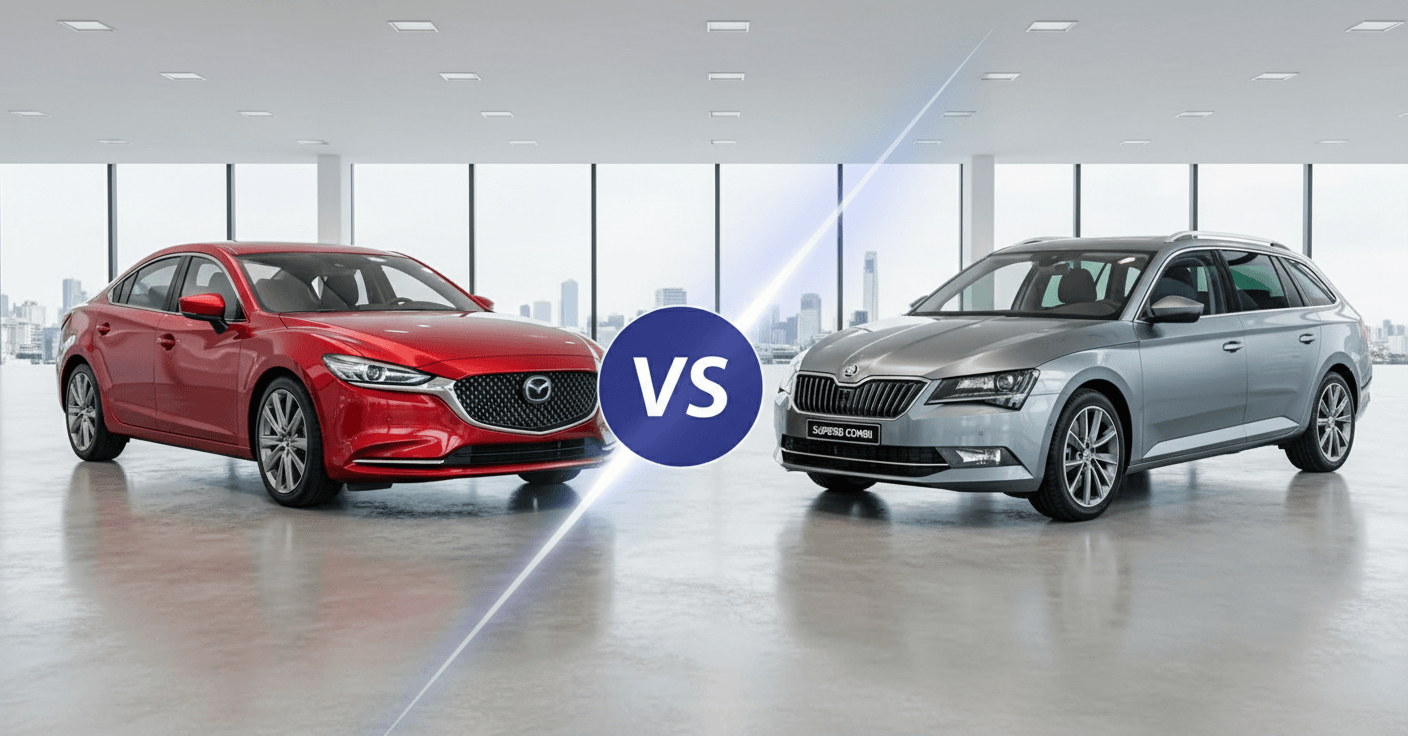
Detailed comparison of used Mazda 6 vs. Škoda Superb. We reveal real-world experiences, fuel consumption, and spaciousness, and provide a clear verdict to help you make the right choice.
Apr 2, 2026