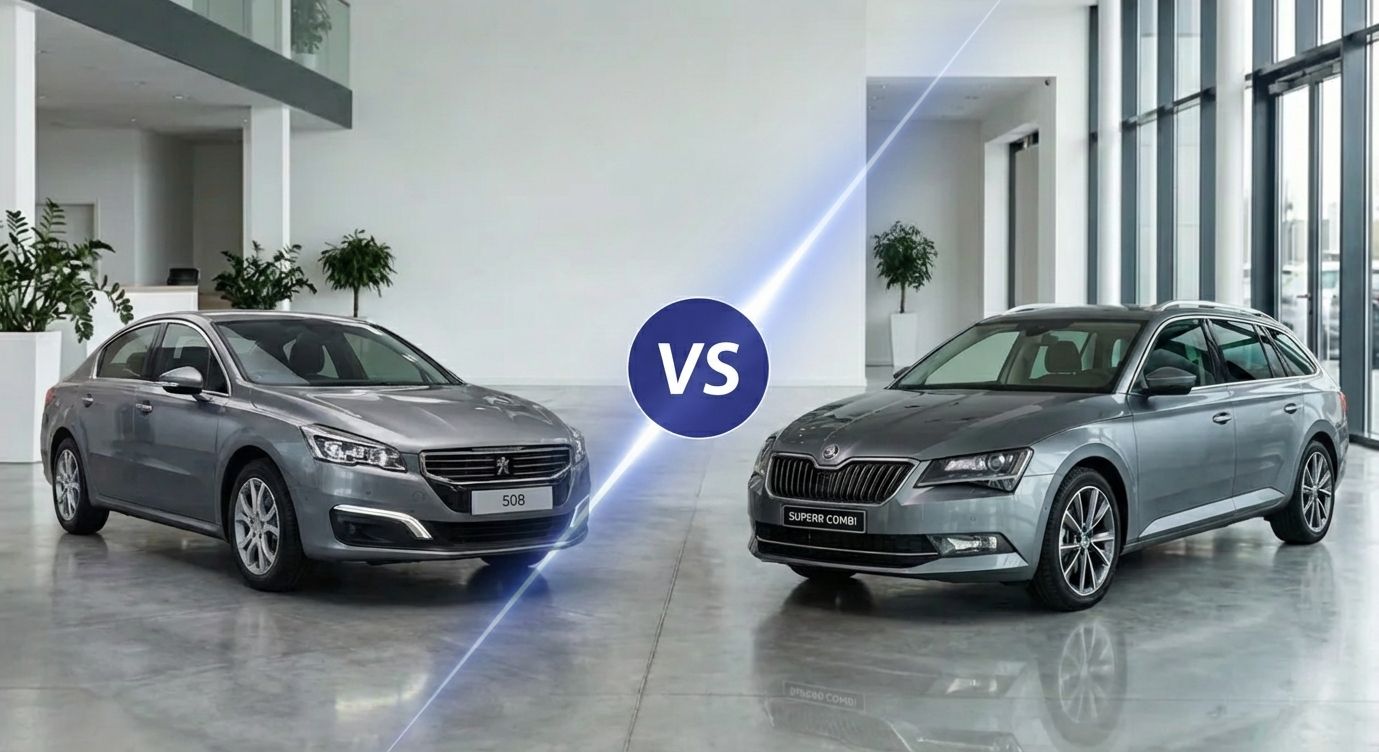
Car battle
Peugeot 508 vs Škoda Superb: Complete Comparison 2025
Peugeot 508 vs. Škoda Superb: Detailed comparison, real-world experiences, and the verdict to help you choose the best executive car.
Apr 13, 2026
Articles
Car battle
Detailed comparison of used Mazda 6 vs. Škoda Superb. We reveal real-world experiences, fuel consumption, and spaciousness, and provide a clear verdict to help you make the right choice.
April 2, 2026
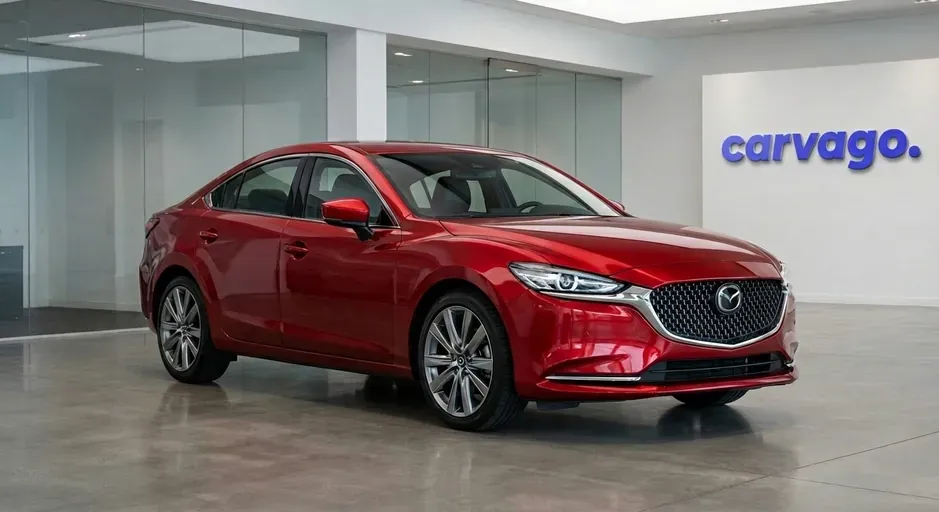
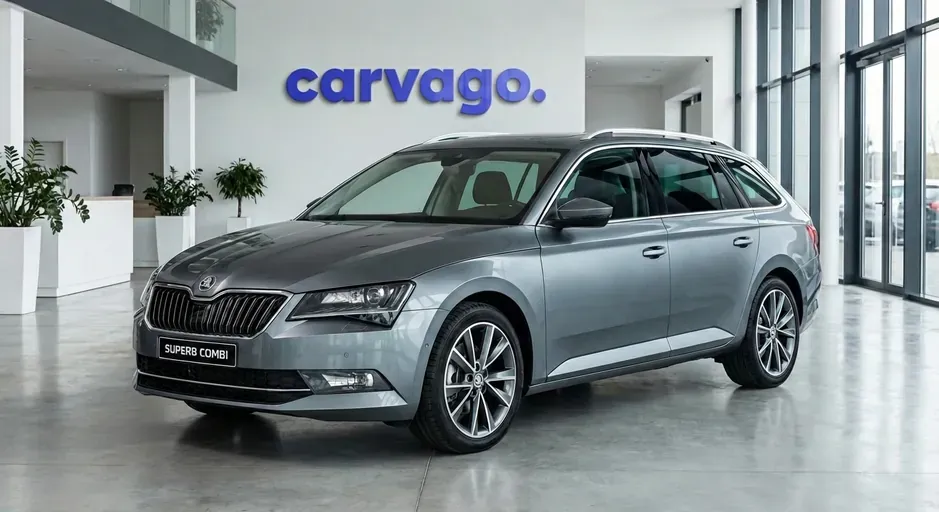
The Mazda 6, also known as the Mazda Atenza in selected Asian markets, is an attractive representative of the mid-size class that has long attracted drivers primarily with its emotive design and sporty driving characteristics. Standing against it is the extremely popular Škoda Superb, which has built a reputation among customers as the uncrowned king of space thanks to its top-tier travel comfort and unrivaled everyday practicality. Let's take a detailed look at how this direct battle between Japanese dynamics and the Czech sense for family and executive use turns out, and which of these cars represents the better choice for your needs.
When comparing the exterior dimensions of both cars, we encounter interesting differences that clearly define their distinct characters. Focusing on models roughly four years old (the third generation of the Škoda Superb and the GJ generation of the Mazda 6), we find that for the sedan/liftback body styles, the length values are surprisingly close. The Mazda 6 Sedan measures an impressive 4,870 mm, surpassing the Škoda Superb liftback (4,869 mm) by a negligible 1 mm. However, for the more practical family variants, the situation is quite different – the Superb Estate with a length of 4,862 mm is 57 mm longer than the Mazda 6 Estate (4,805 mm). In everyday life, this means both cars require plenty of parking space, but the Škoda estate offers a slightly more substantial rear overhang, which is strongly and positively reflected in the total luggage compartment volume.
The width and height of a vehicle play a crucial role not only in interior airiness and the sense of space but also in aerodynamics and driving stability. The Škoda Superb, at 1,864 mm, is 24 mm wider than the Mazda 6 (1,840 mm). While this difference might make maneuvering and parking in narrow underground garages slightly more difficult, it provides passengers with significantly more shoulder room in return. As for height, the Mazda 6 maintains a noticeably sportier and lower-slung silhouette. Its sedan measures only 1,450 mm in height, while the Superb reaches 1,469 mm. Thanks to its overall lower build, the Japanese representative benefits from a lower center of gravity, which the driver will appreciate especially during dynamic cornering. The Czech model, on the other hand, bets on a more conservative cut that ensures easier entry and more generous headroom.
A key parameter for passenger comfort, especially in the rear seats, is the wheelbase. Here, the Škoda Superb fully demonstrates its dominant position on the border between the mid-size and executive classes. With a wheelbase of 2,841 mm (which is identical for both the liftback and estate), it clearly beats the Mazda 6 Estate (2,750 mm) and slightly exceeds the Mazda sedan (2,830 mm). The massive 91 mm difference between the two estates means, in practice, that the Superb offers rear passengers literally royal knee room that the Mazda simply cannot match. Paradoxically, the shorter wheelbase of the Mazda 6 Estate contributes to better agility and a greater willingness to turn, confirming that when choosing between these two cars, you are primarily choosing between absolute family comfort and driving passion.
| Parameter | Mazda 6 Sedan | Škoda Superb Liftback | Mazda 6 Estate | Škoda Superb Estate |
|---|---|---|---|---|
| Length (mm) | 4870 | 4869 | 4805 | 4862 |
| Width (mm) | 1840 | 1864 | 1840 | 1864 |
| Height (mm) | 1450 | 1469 | 1480 | 1477 |
| Wheelbase (mm) | 2830 | 2841 | 2750 | 2841 |
When choosing a used mid-size car, typically around four years old, luggage compartment volume is a key factor for many families and managers. This is where the differing philosophies of the two manufacturers are clearly shown. While the Mazda 6 (GJ generation) emphasizes elegant design and a sporty silhouette, the third-generation Škoda Superb is traditionally designed with maximum practicality and unrivaled interior space in mind. This difference is very noticeable in practice, whether you're planning a weekend shopping trip or a long family vacation.
Looking at the exact figures, the Czech representative literally outclasses its Japanese competition. The Škoda Superb in the liftback version offers a massive basic volume of 625 liters, while the Mazda 6 sedan provides a more modest 480 liters. This difference is even more striking in the popular, more practical versions. The Škoda Superb Estate holds a fantastic 660 liters in its basic configuration, while the Mazda 6 Estate counters with 522 liters. In practice, the difference of nearly 140 liters in favor of the Superb means space for several extra suitcases, which is invaluable especially when packing for a long holiday or transporting bulky strollers.
The differences become even more pronounced when assessing the maximum capacity after folding the rear seats. With a volume of 1,950 litres, the Superb Estate turns into a small van, while the Mazda 6 Estate offers a respectable but smaller 1,648 litres. The Superb Liftback can handle 1,760 litres when folded, and the Mazda 6 Sedan reaches approximately 1,648 litres. However, it is very important to mention one technical exception – if you opt for the modern plug-in hybrid version of the Škoda Superb, labelled iV, the boot capacity is reduced to 485 litres for the liftback and 510 litres for the estate due to the battery placement, making the values of both cars practically equal. In conclusion, if moving capacity and a boot sufficient for any situation are your absolute priority, the Superb is the clear choice. But if you are looking for a more attractive sporty design and a standard family boot is enough for you, the Mazda 6 will certainly not disappoint.
| Parameter | Mazda 6 Sedan | Škoda Superb Liftback | Mazda 6 Estate | Škoda Superb Estate |
|---|---|---|---|---|
| Base volume (litres) | 480 | 625 | 522 | 660 |
| Max. volume with seats folded (litres) | 1648 | 1760 | 1648 | 1950 |
When choosing a used family car or a mid-size estate, the towing weight often plays a very important role, not only for caravan owners but also for active drivers who need to transport heavier loads. When comparing models approximately four years old (the third generation of the Škoda Superb and the GJ generation of the Mazda 6), you will encounter quite fundamental differences. While the Czech representative is considered one of the strongest towers in its class, the Japanese model is designed more for sporty driving, which has slightly affected its towing capabilities.
The Mazda 6 GJ generation can standardly tow 1,500 kg on a braked trailer, in the case of all popular 2.0 and 2.5 Skyactiv-G petrol engines. If you opt for the 2.2 Skyactiv-D diesel version, the limit moves only very slightly to a maximum of 1,600 kg. In practice, this means that the Mazda can easily handle a regular weekend purchase of building materials, towing a smaller recreational boat, or a lighter caravan. However, its construction is not built for heavier loads.
In contrast, the 3rd generation Škoda Superb offers a completely different league of towing capacities. Even the basic 1.5 TSI petrol engine can handle 1,600 kg. The plug-in hybrid Superb iV (1.4 TSI PHEV) has the same value, where the capacity is reduced due to the additional weight of the batteries. But if you reach for more powerful engines, completely different possibilities open up. Most versions of the popular 2.0 TDI diesel engine (from 110 kW upwards) can tow 2,000 kg, and for more powerful variants or all-wheel-drive versions, it can even be a maximum of 2,200 kg. The top 2.0 TSI petrol versions also handle the same 2,200 kg portion. In practice, the Superb offers you the freedom to attach a large twin-axle family caravan, a heavy horse trailer, or a trailer with another vehicle that would otherwise require a large SUV.
In conclusion:
If you plan to use the tow bar mainly for occasional trips to the DIY store or for a bike rack, the Mazda 6 will easily satisfy your requirements. For users who spend their holidays with a large caravan or need a reliable workhorse for regular towing of heavy weights, the Škoda Superb is an absolutely clear and significantly more versatile choice.
| Model and engine | Braked trailer (kg) | Unbraked trailer (kg) |
|---|---|---|
| Mazda 6 2.0 / 2.5 SKYACTIV-G | 1500 | 680 - 730 |
| Mazda 6 2.2 SKYACTIV-D | 1600 | 730 |
| Škoda Superb 1.5 TSI | 1600 | 750 |
| Škoda Superb 1.4 TSI iV (PHEV) | 1600 | 750 |
| Škoda Superb 2.0 TSI (140 - 206 kW) | 1800 - 2200 | 750 |
| Škoda Superb 2.0 TDI (110 - 147 kW) | 2000 - 2200 | 750 |
The engines of the Mazda 6 and Škoda Superb models represent two completely different engineering approaches, which is absolutely crucial for those interested in an approximately four-year-old used car (models from 2021–2022) when making a final decision. While Škoda relies fully on turbocharged engines (TSI and TDI) with massive torque at low revs and expands its range with plug-in hybrid technology (iV), Mazda has remained one of the last proud defenders of large-displacement naturally aspirated four-cylinder engines. In practice, this means a choice between the punchy turbo boost and lightning-fast shifts of the DSG dual-clutch transmissions in the Superb versus the incredibly smooth, linear pull and classic torque converter automatic in the Mazda. The Škoda will be the ideal choice for highway cruisers or drivers requiring all-wheel drive (4x4), while the Mazda will appeal to more traditionally minded motorists who appreciate driving purity and the expectation of high long-term reliability resulting from the absence of a turbocharger.
For the GJ generation (focusing on used cars from the 2021–2022 period), the Mazda 6 range is defined primarily by its petrol engines labelled SKYACTIV-G. These units work with an unusually high compression ratio, which ensures immediate throttle response and refined operation. The base is the 2.0 SKYACTIV-G engine, available in versions with 107 kW (145 hp) or a more powerful 121 kW (165 hp). Both variants can be paired with a precise manual transmission or a six-speed automatic. The true peak is the reliable 2.5 SKYACTIV-G four-cylinder with 143 kW (194 hp), supplied exclusively with an automatic transmission. This engine also features a cylinder deactivation system to reduce consumption during steady driving. The 2.2 SKYACTIV-D diesel engines (110 kW and 135 kW), which previously offered massive torque and optional all-wheel drive, were discontinued in most European markets around 2021 due to emission standards. In used car dealerships in the segment of roughly four-year-old vehicles, you will encounter a diesel Mazda 6 relatively rarely.
| 2.0 SKYACTIV-G 145 | Petrol | 107 | 213 | 6-speed manual / 6-speed automatic |
|---|---|---|---|---|
| 2.0 SKYACTIV-G 165 | Petrol | 121 | 213 | 6-speed manual / 6-speed automatic |
| 2.5 SKYACTIV-G 194 | Petrol | 143 | 258 | 6-speed automatic |
| 2.2 SKYACTIV-D 150* | Diesel | 110 | 380 | 6-speed manual / 6-speed automatic |
| 2.2 SKYACTIV-D 184* | Diesel | 135 | 445 | 6-speed manual / 6-speed automatic |
\Note: Sales and production of 2.2 SKYACTIV-D diesel engines for the European market were phased out for this generation in early 2021.*
The third generation of the Škoda Superb (in the modernised facelift version from 2019–2023) counters with an incomparably wider and more diverse range of powertrains, all of which rely on turbocharging. The petrol base consists of the refined and efficient 1.5 TSI four-cylinder with 110 kW (150 hp), equipped with cylinder deactivation technology (ACT). More dynamically minded drivers will opt for the 2.0 TSI engines. These offer 140 kW (190 hp) for the motorway, or in the top-of-the-range version, a full 206 kW (280 hp), which comes standard with 4x4 drive. For drivers covering tens of thousands of kilometres a year, the economical 2.0 TDI Evo diesel engines are available. The weaker variant offers 110 kW (150 hp), while the more powerful version, better suited for a heavy car, generates 147 kW (200 hp). In this generation, the Superb also introduced the highly sought-after 1.4 TSI iV model – a plug-in hybrid that combines a 1.4-litre petrol engine and an electric motor for a total system output of 160 kW (218 hp). Except for the very basic engines, cars from this period are almost exclusively paired with the excellently tuned dual-clutch DSG transmission.
| Engine type | Fuel | Power (kW) | Torque (Nm) | Transmission |
|---|---|---|---|---|
| 1.5 TSI | Petrol | 110 | 250 | 6-speed manual / 7-speed DSG |
| 2.0 TSI | Petrol | 140 | 320 | 7-speed DSG |
| 2.0 TSI 4x4 | Petrol | 206 | 400 | 7-speed DSG |
| 1.4 TSI iV (PHEV) | Petrol / Electricity | 160 | 400 | 6-speed DSG |
| 2.0 TDI | Diesel | 110 | 340 / 360 | 6-speed manual / 7-speed DSG |
| 2.0 TDI 4x4 | Diesel | 147 | 400 | 7-speed DSG |
Choosing the right engine is absolutely key to long-term satisfaction with a used car, and our recommendations are based on real-world experience, performance, actual fuel consumption, and proven mechanical reliability. When comparing these two popular models, we encounter an interesting contrast between two different engineering approaches. While the Mazda GJ generation (produced and continuously updated between 2012–2024) benefits from extremely reliable naturally aspirated petrol engines with an unusually high compression ratio, the 3rd generation Škoda Superb (2015–2023) excels with its massive range of proven and economical turbocharged diesel units that rely on precise pairing with dual-clutch DSG automatics.
This 2.5-litre naturally aspirated four-cylinder represents the absolute peak of the model range in terms of balance, refinement, and trouble-free operation.
The two-litre turbodiesel from the EA288 engine family (often found in the modernised, cleaner, and quieter Evo version in sought-after four-year-old used cars) is the most natural and by far the most popular choice for a motorway cruiser like the Superb.
Every experienced motorist knows that official consumption figures given by manufacturers in promotional materials often differ significantly from everyday reality. To get an objective picture, it is therefore best to look at real data from drivers themselves in normal traffic. In this comparison, we have relied on data from the popular independent portal Spritmonitor.de, which collects long-term statistics from tens of thousands of users. We focused on models roughly four years old (GJ generation for Mazda and 3rd generation for Škoda), which currently form an exceptionally attractive core of the used car market.
| Model and engine | Average consumption (l/100 km) |
|---|---|
| Škoda Superb 2.0 TDI (110 kW) | 5.5 |
| Mazda 6 2.2 SKYACTIV-D (110 kW) | 5.8 |
| Škoda Superb 1.5 TSI (110 kW) | 6.5 |
| Mazda 6 2.0 SKYACTIV-G (121 kW) | 6.8 |
| Mazda 6 2.5 SKYACTIV-G (143 kW) | 7.5 |
| Škoda Superb 2.0 TSI (140 kW) | 7.8 |
Looking at the real numbers, several interesting trends emerge. The king of efficiency on long journeys remains diesel power, where the Škoda Superb with its proven 2.0 TDI engine achieves an excellent average of 5.5 l/100 km. The Mazda 6 with its larger 2.2 SKYACTIV-D diesel unit lags only slightly behind, although its larger displacement takes a small toll.
Much more interesting, however, is the comparison of petrol power units. While Škoda bets on downsizing and turbocharging a smaller engine, Mazda stubbornly stands by naturally aspirated engines with larger displacement. The result? The difference in real consumption is nowhere near as vast as the absence of a turbo in the Japanese car might suggest. While the smaller turbocharged 1.5 TSI engine in the Škoda can be a few tenths of a litre more efficient, Mazda's large-displacement naturally aspirated four-cylinder engines score with their consistency – their consumption does not rise as steeply during more dynamic driving or at motorway speeds, where small turbo engines often run out of breath very quickly.
For the typical user, clear recommendations emerge from this data:
In conclusion, fuel consumption should not be the sole and main decision criterion in this duel. Both manufacturers have managed to build very economical mid-range vehicles, even though they approached engine development quite differently. The decision should therefore be based more on your personal driving profile, preference for a specific driving character, and overall confidence in the given technological solution.
Looking at the market for roughly four-year-old used cars (2021 and 2022 models), you will encounter a different market reality for both models. While the Škoda Superb is a typical fleet car, which means a huge selection on the secondary market, the Mazda 6 is much rarer and much more often comes from private hands.
Thanks to massive deployment in corporate fleets, the supply of used Superbs is enormous. Diesel engines absolutely dominate the market, especially the popular 2.0 TDI version.
Used Mazda 6s from the same production years appear on the market significantly less often. Compared to the Superb, you will practically not come across a diesel here; the offer is dominated by exceptionally reliable naturally aspirated petrol engines (Skyactiv-G).
| Model | Starting price (higher mileage) | Average price (good condition) | Top versions (top condition/spec) |
|---|---|---|---|
| Skoda Superb | From approx. €16,000 | €20,000 – €24,000 | €28,000 and more |
| Mazda 6 | From approx. €20,000 | €22,000 – €24,000 | €26,000 and more |
Summary: If your main goal is to keep the purchase price as low as possible and you don't mind higher mileage, the Skoda Superb offers a more affordable starting point and a vast selection of available used cars. The Mazda 6 requires a slightly higher minimum budget and narrows your choice, but it rewards you with fantastic reliability from its petrol engines, very generous standard equipment on most available units, and a lower probability of clocked mileage from corporate fleets.
Both compared vehicles – the Mazda 6 and the Skoda Superb – received the maximum five-star rating in safety tests by the independent organization Euro NCAP. However, when comparing them, it is crucial to consider the context and the specific year the models underwent testing. Euro NCAP methodology is constantly evolving and becoming stricter over time. With each new protocol, more demanding simulations (such as intersection collisions or new overlap tests) are integrated into the tests, and significantly greater emphasis is placed on active safety, including pedestrian and cyclist detection. For this reason, percentage scores from different years are not directly and simply comparable.
The Mazda 6, which you will most often encounter on the market as a four-year-old used car, underwent modernized Euro NCAP crash tests in 2018. According to these stricter protocols, the car excelled, achieving an outstanding score of 95% for adult occupant protection and 91% for child occupant protection. The rigid Skyactiv-Body architecture and redesigned crumple zones absorbed impact energy exemplary. Vulnerable road user protection received 66%, with the car benefiting from an active bonnet system that mitigates the risk of serious head injury to a pedestrian upon detecting a collision. In the safety assist category, the car scored 73%, reflecting solid integration of i-ACTIVSENSE technologies, including reliable autonomous emergency braking in the city and lane-keep assist.
Relevant for the four-year-old used car market is the third-generation Skoda Superb, which underwent Euro NCAP tests in 2015. Its five-star rating was at the absolute top at the time. Although the protocols then were less strict than in 2018, the Superb demonstrated extraordinary structural stability. It scored 86% for both adult and child occupant protection, ranking it among the safest choices for families. Pedestrian protection was rated at an above-average 71% for the time, and safety assist systems scored 76%. While the Superb featured a high-quality autonomous braking system, it had not yet been tested for the most modern crisis scenarios (e.g., night-time cyclist detection), which the methodology only began to take into account in later years. (For the sake of completeness, we should add that the brand-new fourth generation from 2024 passed the latest tests with five stars again, but it is not yet commonly found on the traditional used car market).
From the perspective of current safety standards, the Mazda 6 offers a slightly more modern and comprehensive level of documented protection. Its 2018 certification was already subject to stricter rules, and the percentages achieved (especially the top-tier 95% for adult occupants) demonstrate excellent passive safety according to newer metrics. While the validity of the Skoda Superb's 2015 five-star certification has technically expired from the viewpoint of today's official methodologies and the results do not reflect the latest requirements for smart assistants, it still maintains its status as a massive and very safe vehicle with a robust body that will protect a family without issue.
| Parameter | Mazda 6 | Skoda Superb |
|---|---|---|
| Year of testing | 2018 | 2015 |
| Adult occupant protection | 95 % | 86 % |
| Child occupant protection | 91 % | 86 % |
| Vulnerable road users protection | 66 % | 71 % |
| Safety assist systems | 73 % | 76 % |
In addition to standard equipment, both models offer more than just the basics, and each takes a completely different approach to the added value intended to make daily life with the car easier or more pleasant.
With this model, the Japanese automaker primarily targets emotions, driving pleasure, and a traditional approach to ergonomics. Instead of trying to digitalize everything at any cost, it focuses on the Jinba Ittai philosophy – the connection between horse and rider.
The Czech representative, on the other hand, is the embodiment of the family and executive ideal. It focuses on technological maturity, vast interior space, and unmistakable smart solutions that help in everyday driving.
Pros:
Cons:
Pros:
Cons:
Based on data from service centers, long-term user ratings, recall actions, and insights regularly brought to us by a detailed Independent Car Audit, we have compiled an overview of the most common faults and weak points of both models at around four years of age (Škoda Superb 3rd generation post-facelift and Mazda 6 GL generation).
The Mazda 6 benefits from excellent Japanese mechanics, but its reputation is occasionally marred by minor design compromises and details that can make long-term use unpleasant.
Mazda 6 Summary: From the perspective of mechanical reliability, the petrol versions of this car are at the absolute top. The main weaknesses lie in the thin paint and more susceptible minor electronics (mirrors). Petrol versions require only a minimum of unplanned investment, while it is better to avoid diesel variants for predominantly city driving.
The third-generation Superb after the facelift is a robust highway cruiser, where the frequency of faults depends primarily on how diligently maintenance was carried out by fleet managers or previous owners.
Skoda Superb Summary: From a mechanical standpoint, it is a reliable car with robust and well-tested VW Group engines. The biggest pitfalls of the Superb III after the facelift are the faulty infotainment and potentially expensive service for neglected DSG automatic transmissions. However, a regularly serviced car with updated software represents a very safe purchase.
When buying a used car, a thorough inspection is key, and even though these are roughly four-year-old vehicles, both models have their clear specifics and weak points that are worth focusing on in detail.
The Škoda Superb is the clear winner, as the estate version offers a massive 660 liters compared to 522 liters for its Japanese competitor. The liftback version of the Superb provides 625 liters, while the Mazda sedan holds only 480 liters. Additionally, the Škoda has much better and more practical access to the trunk, especially thanks to the opening of the entire tailgate including the glass.
If you're looking for driving pleasure, the Mazda 6 is a much better choice thanks to its precise steering, communicative chassis, and overall lower weight. The Superb, on the other hand, is primarily tuned for smooth comfort and comfortable highway cruising, so it feels a bit more cumbersome in corners. Furthermore, the naturally aspirated engines in the Mazda offer a very linear power delivery, which will be appreciated especially by enthusiastic and sport-oriented drivers.
Mazda's Skyactiv-G gasoline engines are among the most reliable on the market because they don't use a turbocharger and, thanks to their simpler design, don't suffer from expensive failures. TSI and TDI engines in the Škoda are very efficient and offer much stronger pull at low revs, but with increasing mileage, they may require more demanding maintenance due to more complex technology. In terms of overall long-term mechanical durability, the Japanese car is a safer bet for a used car buyer.
The Škoda Superb offers significantly more modern and larger touchscreens, including an advanced digital instrument cluster (Virtual Cockpit) with many display options. The multimedia system in the Mazda feels somewhat outdated in terms of graphics and functionality, but thanks to the hardware rotary controller on the center console, it is much safer to operate while driving. From the perspective of current trends in connectivity and response speed, however, the Czech representative clearly has the upper hand.
In the domestic market, Škoda has a huge advantage in the form of an extremely dense network of authorized and independent service centers. Spare parts for the Superb are very easily available from the aftermarket and are often cheaper, as the car shares most of its technology with models like the Volkswagen Passat. Servicing Mazda cars can be slightly more financially demanding, and waiting times for specific body parts directly from Japan are usually longer.
The decision between a used Mazda 6 and Skoda Superb depends on personal priorities, as both models represent the top of the mid-range class. Skoda Superb is a pragmatic choice for families and highway travelers who appreciate enormous space, practicality, modern technology, and economical TDI engines with a dense service network. In contrast, Mazda 6 will appeal to drivers with a passion for driving, who are looking for elegant design, a premium interior, and reliable atmospheric engines for long-term ownership. Its strength lies in its agile chassis and traditional ergonomics, which offer driving pleasure. While the Superb is a rational choice for maximum utility, the Mazda 6 bets on emotions and the driving experience.
Sources: ADAC, aktualne.cz, e15.cz, mobilmania.cz, dopravniinfo.cz, youngtimer.cz
This article was prepared using artificial intelligence tools. The section guarantor is Petr Dušek.
Peugeot 508 vs. Škoda Superb: Detailed comparison, real-world experiences, and the verdict to help you choose the best executive car.
Apr 13, 2026
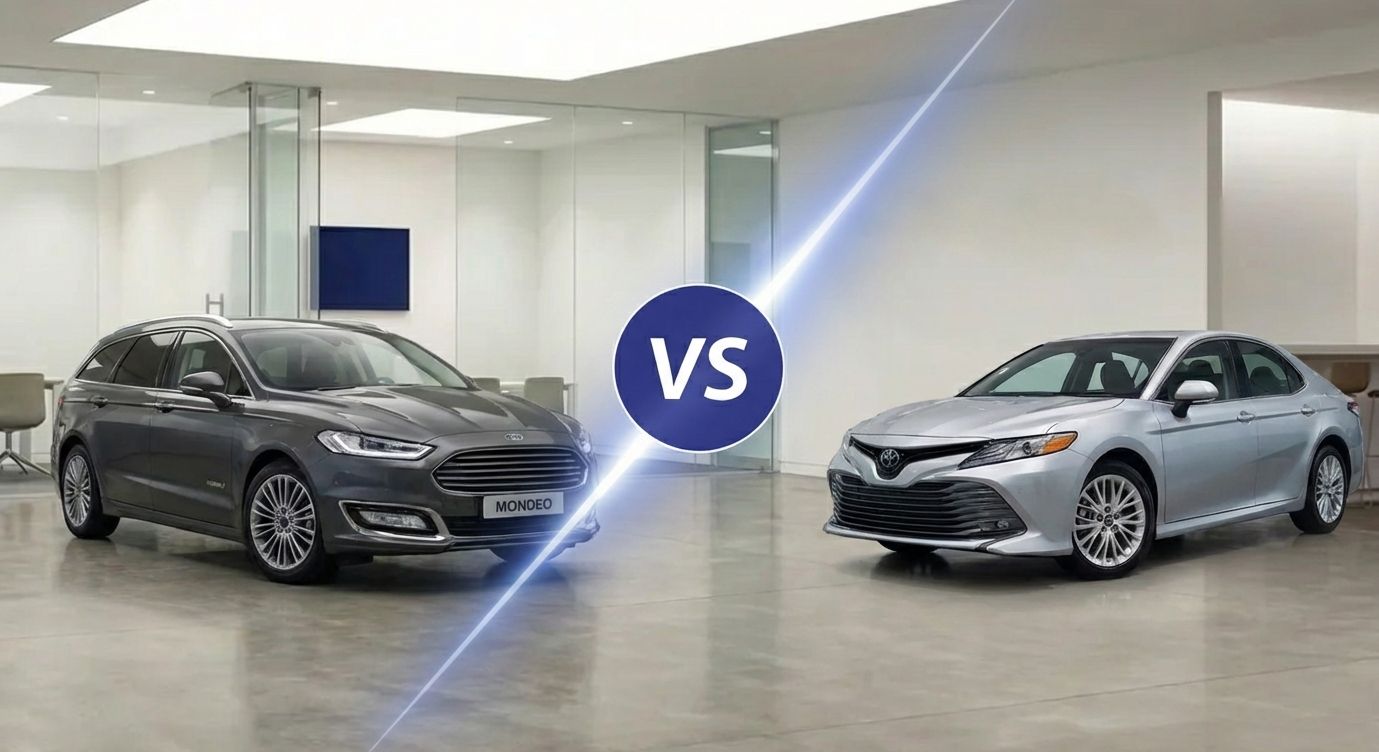
Ford Mondeo vs. Toyota Camry: Detailed comparison, tests, data, and verdict. Find out which sedan is the best choice for you on the used car market.
Apr 13, 2026
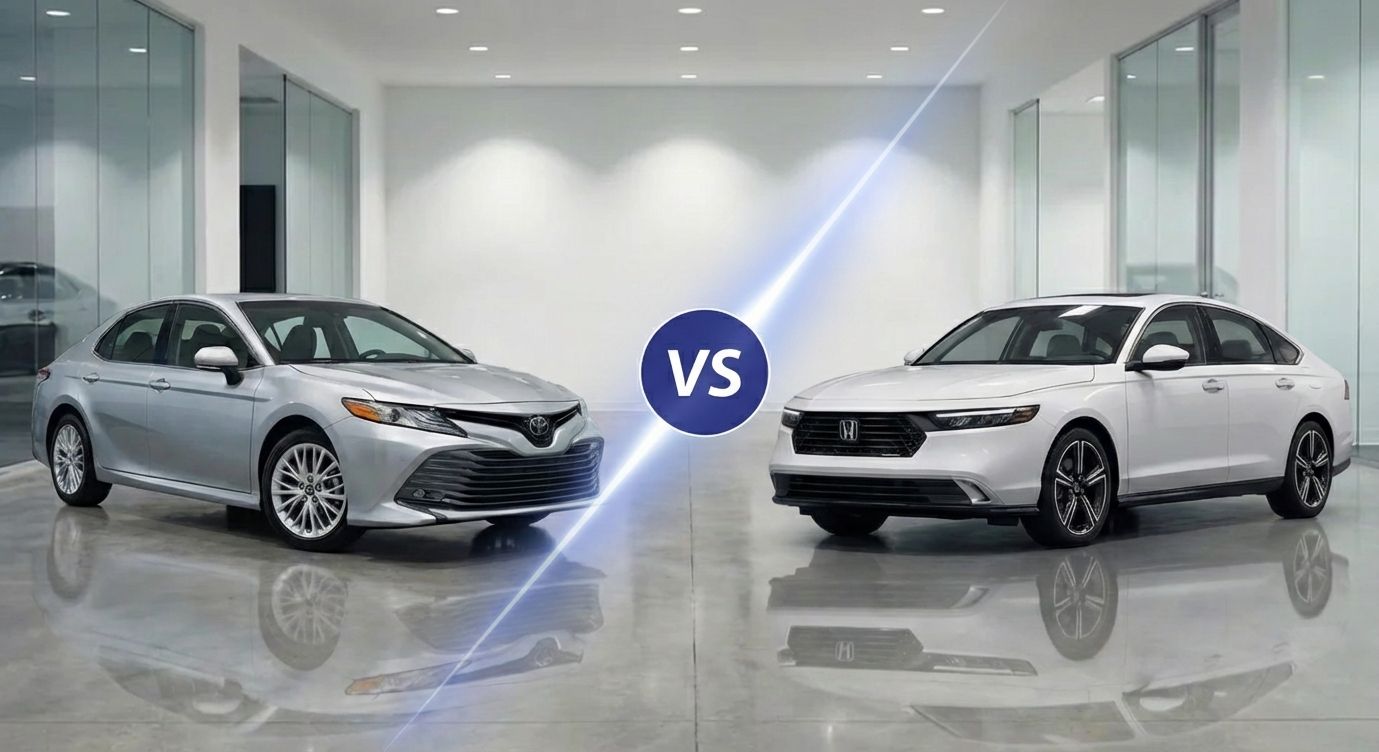
Toyota Camry vs. Honda Accord: Which sedan to choose? Our detailed comparison helps you find the right car based on key differences and our verdict.
Apr 13, 2026