Car battle
Ford Kuga vs. Renault Austral: Complete comparison 2026
Used SUV comparison: Ford Kuga vs. Renault Austral. Find out which model offers better engines, equipment, and real value. Read our final verdict!
Apr 18, 2026
Articles
Car battle
A major comparison of the Peugeot 2008 and Suzuki Vitara. Discover the differences in equipment, reliability, and fuel consumption of used cars. Read our verdict and make the right choice.
May 7, 2026
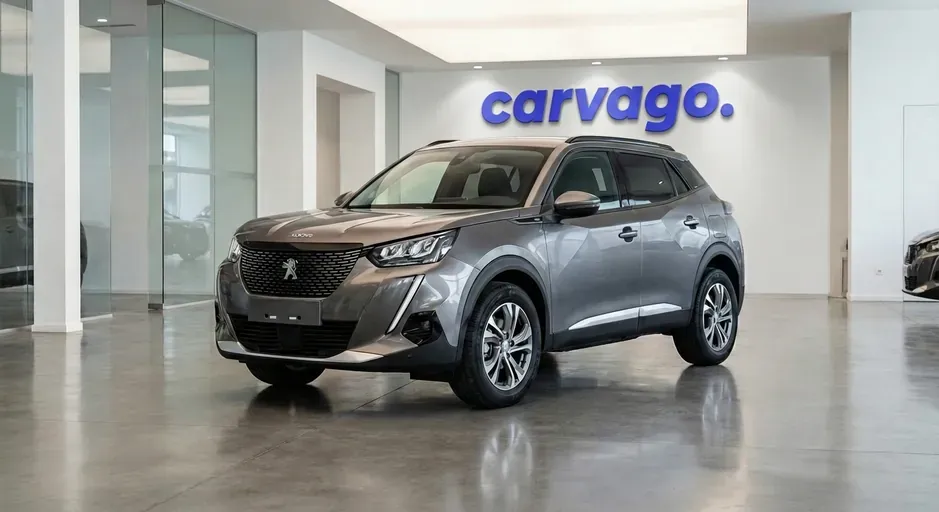
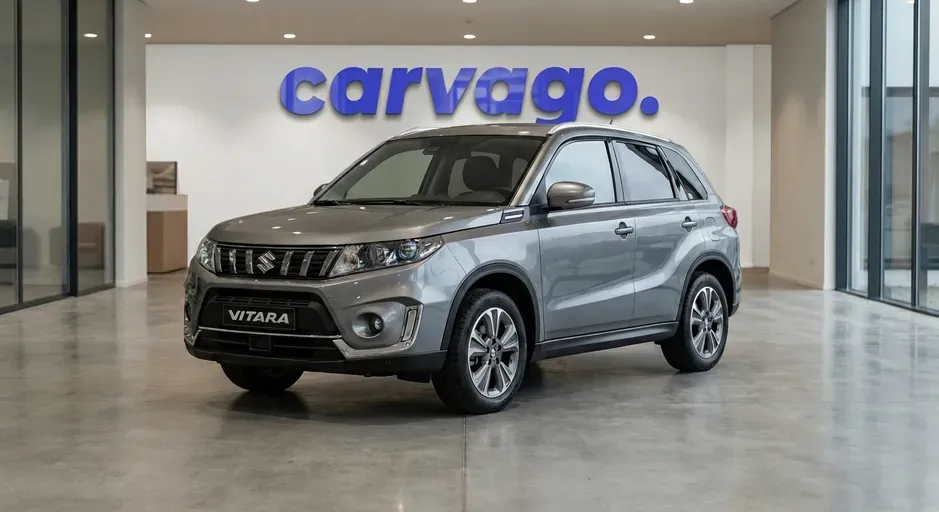
The second-generation Peugeot 2008, a stylish French crossover also known in its all-electric version as the e-2008, brings a bold design and a modern interior to the used car market. Facing it is the fourth-generation Suzuki Vitara, also sold in some markets as the Suzuki Escudo, which excels primarily thanks to its long-standing reputation as a reliable and practical vehicle with the popular option of all-wheel drive. The following comparison details the key differences between these two roughly four-year-old compact SUVs to help you decide which one better suits your daily needs and driving preferences.
When looking at the exterior dimensions of these two popular city crossovers, which are most commonly found on the used car market at around four years of age (i.e., models from 2020 to 2022), we encounter two different approaches to design and space utilization. While both cars fall into the B-SUV category, their physical proportions predispose them to slightly different styles of use. The second-generation Peugeot 2008 bets on a more elongated, dynamic silhouette, while the Suzuki Vitara sticks to the more classic, boxier shapes of traditional off-road vehicles. This difference in basic concept is significantly reflected in daily handling and interior spaciousness.
The most striking difference is the overall length and wheelbase. The Peugeot 2008 measures at least 4300 mm in length, which is a full 130 mm more than in the case of the Suzuki Vitara (4170 mm). Even more important is the difference in wheelbase, where the French representative, with a value of 2605 mm, surpasses the Japanese one (2500 mm) by a substantial 105 mm. In practice, this means that the Peugeot offers noticeably more legroom for rear-seat passengers, and its longer build contributes to better directional stability at highway speeds. On the other hand, a longer body can be a disadvantage when looking for a parking space in a crowded city center. It follows that if you are looking for a car that will often serve as a family cruiser for longer trips, the Peugeot's wheelbase will be a clear advantage, while for purely urban maneuvering, you will appreciate the Vitara's more compact dimensions.
An interesting situation arises when comparing width and height. The width of both cars is almost identical – the Peugeot measures 1770 mm and the Suzuki 1775 mm, which you won't notice in practice, and both cars can be parked in narrower spaces without problems. However, a significant difference can be found in the body height. The Suzuki Vitara towers up to 1610 mm, while the Peugeot 2008, at 1530 mm, is 80 mm lower. The Vitara's taller build provides the driver with a more upright, traditional "SUV" driving position, better all-around visibility, and more generous headroom for passengers. The Peugeot, on the other hand, with its lower silhouette, resembles a raised hatchback, which benefits aerodynamics and lowers the center of gravity. When choosing, you should consider whether you prefer the feeling of driving in a classic, airy SUV (Suzuki) or if you prefer a sportier, more "planted" seating position (Peugeot).
The following table clearly summarizes the exterior dimensions of the relevant generations of both cars (Peugeot 2008 2nd generation and Suzuki Vitara 2nd generation), which currently form the core of the slightly used car market.
| Parameter | Peugeot 2008 SUV | Suzuki Vitara SUV |
|---|---|---|
| Width (mm) | 1770 | 1775 |
| Length (mm) | 4300 - 4304 | 4170 - 4185 |
| Height (mm) | 1523 - 1530 | 1595 - 1610 |
| Wheelbase (mm) | 2605 | 2500 |
Luggage capacity is one of the most important features when choosing a compact SUV, especially if the car serves as the main family vehicle. Every extra liter means easier packing of a stroller or sports equipment and determines whether the car will be sufficient for a regular weekend shopping trip as well as a longer vacation. Although the Peugeot 2008 and Suzuki Vitara target a similar customer group, there are quite significant differences between them in terms of transport capacity.
The second-generation Peugeot 2008, which dominates the market for roughly four-year-old used cars, is among the leaders in its class regarding the trunk. In its basic configuration, it provides a generous 405 liters (up to 434 liters for some newer or specific engine versions). When you fold down the rear seatbacks, you get an almost flat loading surface and an excellent maximum volume of 1467 liters. In practice, this means a deep and highly usable space for several extra suitcases, which easily covers family trips to the mountains.
The current generation Suzuki Vitara relies on overall slightly more compact dimensions, which is directly reflected in a smaller trunk. Standard conventional and mild-hybrid (1.4 Boosterjet) versions offer a basic volume of 375 liters, which can be expanded to 1120 liters by folding the seats. However, customers should be very careful when choosing from the used car market for the full hybrid engine (1.5 Dualjet Hybrid, available since 2022). The placement of a larger traction battery in this version significantly reduces the trunk floor, with its capacity dropping to a modest 289 liters in the base and 1046 liters after folding the seats. This reduction can be very limiting for family travel.
| Parameter | Peugeot 2008 SUV | Suzuki Vitara SUV |
|---|---|---|
| Standard capacity (liters) | 405 - 434 | 289 - 375 |
| Maximum capacity with seats folded (liters) | 1467 | 1046 - 1120 |
When comparing these two models, the numbers give a clear result. In terms of absolute volume and variability, the Peugeot 2008 leads, being a more full-fledged alternative for active families. The Suzuki Vitara, on the other hand, will suit users who do not need to transport bulky items and are just looking for a standard and compact trunk for everyday city commuting.
The Peugeot 2008 is the clear winner for families thanks to its deeper and overall larger trunk, while with the Suzuki Vitara, you have to be very careful about the full hybrid versions, which drastically limit the luggage space.
Towing capacity is a key parameter for drivers who need to expand their vehicle's transport capacity, whether for moving house, weekend trips with building materials, or towing a caravan for a summer holiday. When comparing approximately four-year-old used cars from the second generations of both these compact SUVs, we encounter quite noticeable differences in how many kilograms they can safely tow.
The Suzuki Vitara proves to be an unexpectedly capable workhorse in the small crossover class. Its most widespread and very popular version, the 1.4 Boosterjet Hybrid (95 kW), can tow a braked trailer weighing up to a generous 1,500 kg. However, the range also includes a full-hybrid 1.5 Dualjet Hybrid powertrain, where the towing capacity is reduced to 1,200 kg.
The second-generation Peugeot 2008, on the other hand, is built primarily as a stylish city and family car, which is reflected in its somewhat more modest figures. Most conventional powertrains, including the 1.2 PureTech petrol units and 1.5 BlueHDi diesels, have a standard towing capacity of 1,200 kg. Similar to the Suzuki, there are hybrid variants (the newer 1.2 Hybrid) with reduced capacity – in this case, the value drops to just 1,100 kg. Since official factory values for unbraked trailers are not fully unified in the data and always depend on the exact kerb weight of a specific unit, we have used a dash for this category in the table for selected used cars (generally, however, unbraked values for this class of vehicle hover around the legislative limit of 600 to 750 kg depending on the car's weight).
In practical terms, this means that both vehicles easily offer enough space for a few extra suitcases in the form of a small trailer, and their capacity is perfectly sufficient for a weekend trip to a DIY store. While with the Peugeot 2008 you can easily handle routine transport of garden waste or tow a light tent trailer, the Suzuki Vitara (with the 1.4 Boosterjet engine) takes the possibilities much further. The 1,500 kg limit is already more than enough to tow a medium-sized caravan or transport heavier building materials.
Summary: If you know you will only use a tow bar occasionally to transport a light trailer or bicycles, both cars will meet your requirements without hesitation. However, if you are looking for a more versatile workhorse for active holidays with a larger caravan, the Suzuki Vitara is objectively a more rational and capable choice thanks to its higher towing capacity.
| Model and powertrain | Braked trailer (kg) | Unbraked trailer (kg) |
|---|---|---|
| Suzuki Vitara 1.4 Boosterjet Hybrid (2nd generation) | 1500 | - |
| Suzuki Vitara 1.5 Dualjet Hybrid (2nd generation) | 1200 | - |
| Peugeot 2008 1.2 PureTech / 1.5 BlueHDi (2nd generation) | 1200 | - |
| Peugeot 2008 1.2 Hybrid (2nd generation) | 1100 | - |
When choosing between the Peugeot 2008 and Suzuki Vitara, used car buyers encounter two completely different approaches to powertrains. The Peugeot 2008 relies on traditional internal combustion engines supplemented by a fully electric variant, while strictly sticking to front-wheel drive and comfortable automatic transmissions. In contrast, for approximately four-year-old used cars, the Suzuki Vitara has taken the path of widespread electrification using mild-hybrid and full-hybrid technologies. Its greatest weapon and a true rarity in the B-SUV segment, however, is the sophisticated ALLGRIP four-wheel drive system. While the French crossover appeals to those seeking sleek design, pure electricity, and diesel highway cruisers, the Japanese SUV targets pragmatists requiring reliability and capability in rougher terrain.
The engine range for the second-generation Peugeot 2008 (available since 2020) covers an exceptionally wide range of needs. The petrol base is the award-winning turbocharged 1.2 PureTech three-cylinder, which appears on the market in 74 kW (100 hp) and 96 kW (130 hp) versions. The top-of-the-line petrol variant with 114 kW (155 hp) was reserved exclusively for the sporty GT trim and offers a very brisk ride. For high-mileage drivers, the economical 1.5 BlueHDi four-cylinder diesel remained in the lineup in 74 kW and 96 kW variants. A major attraction for city driving is the fully electric e-2008 version with 100 kW (136 hp), which shares its body with its combustion siblings and offers quiet operation with zero local emissions. For conventional engines, customers can choose between a six-speed manual gearbox and the exceptionally smooth EAT8 eight-speed automatic with a torque converter.
| Engine type | Fuel | Power (kW) | Torque (Nm) | Transmission |
|---|---|---|---|---|
| 1.2 PureTech 100 | Petrol | 74 | 205 | 6MT |
| 1.2 PureTech 130 | Petrol | 96 | 230 | 6MT / 8AT |
| 1.2 PureTech 155 | Petrol | 114 | 240 | 8AT |
| 1.5 BlueHDi 100 | Diesel | 74 | 250 | 6MT |
| 1.5 BlueHDi 130 | Diesel | 96 | 300 | 8AT |
| e-2008 (50 kWh) | Electricity | 100 | 260 | 1AT |
The Suzuki Vitara chose a completely different strategy. In the market for four-year-old used cars (from approximately 2020), you will primarily encounter advanced hybrid technologies. The dominant engine in used cars is the excellent 1.4 Boosterjet Hybrid (95 kW) four-cylinder. This mild-hybrid offers smooth operation, excellent flexibility thanks to electric motor assistance at low revs, and very favorable fuel consumption. In 2022, Suzuki expanded the range with the 1.5 Dualjet Hybrid (85 kW) full-hybrid system, which is paired exclusively with a 6AGS automated manual transmission and excels primarily in city traffic thanks to its ability to drive purely on electricity. A fundamental advantage of the entire model range is the unique possibility of combining most engines with the reliable ALLGRIP 4x4 drive, which clearly distinguishes the Vitara from its front-wheel-drive competition.
Note: If you are looking for older models with classic, pure internal combustion engines without hybrid assistance (for example, the excellent and very dynamic 1.4 Boosterjet with 103 kW), keep in mind that their sale was discontinued in 2020 due to tightening emission standards and you will no longer find them in newer used cars.
| Engine type | Fuel | Power (kW) | Torque (Nm) | Transmission |
|---|---|---|---|---|
| 1.4 Boosterjet | Petrol | 103 | 220 | 6MT / 6AT |
| 1.4 Boosterjet Hybrid | Petrol (Mild-hybrid) | 95 | 235 | 6MT / 6AT |
| 1.5 Dualjet Hybrid | Petrol (Full-hybrid) | 85 | 138 | 6AGS |
While the Peugeot 2008 scores with a wide range of conventional engines and a fully electric version for maximum road comfort, the Suzuki Vitara wins with efficient hybrids and the invaluable option of ALLGRIP all-wheel drive.
Choosing the right engine is crucial for long-term satisfaction with a car, as it affects not only dynamics and real-world fuel consumption but, above all, reliability and future service costs. While the second-generation Peugeot 2008 relies exclusively on front-wheel drive and a stylish appearance using turbocharged three-cylinder engines, the Suzuki Vitara is a rarity in the compact SUV class thanks to the availability of a proper all-wheel-drive system and relies on very durable electrified four-cylinder engines. Our recommendation for roughly four-year-old used cars is based on real-world experience, the mechanical durability of the engines, and feedback from long-term owners.
Within the second generation (available on the used car market from 2020 onwards), the ideal choice is the turbocharged 1.2 PureTech petrol three-cylinder with 96 kW (130 hp). This engine represents a perfect compromise in the range between purchase price, flexibility, and reasonable fuel consumption, which in real-world driving usually hovers around 6 to 6.5 liters per 100 km. Thanks to its 230 Nm of torque, the car has enough power for highway travel or a full load and works excellently with the smooth-shifting EAT8 eight-speed automatic transmission, which is highly sought after on the market.
The main technical specific and also a risk of this engine is the timing belt immersed in oil (wet belt). If service care is not followed, the belt material can crumble and subsequently clog the oil pump's intake strainer. When buying a four-year-old used car, it is therefore absolutely critical to check the documented service history and shorten the oil change interval to a maximum of 10,000 to 15,000 km (ideally 1 year). Furthermore, the condition of the belt can be easily checked visually through the oil filler neck, which should be a rule before every purchase. This engine is most suitable for drivers looking for a stylish and comfortable car with dynamic performance, primarily for urban and suburban travel, who do not neglect regular maintenance.
For Suzuki Vitara cars from 2020 onwards, the 1.4 Boosterjet petrol four-cylinder in the mild-hybrid version with 95 kW (129 hp) clearly reigns supreme. It is one of the most reliable and user-friendly engines in the entire compact crossover segment. Its main technical advantages include an exemplary torque curve (235 Nm), supported by a 48V starter-generator. This fills in "dead spots" when starting from low revs and significantly helps achieve excellent real-world fuel consumption, which often does not exceed 6 l/100 km for the two-wheel-drive version. A huge advantage is also the possibility of pairing it with the renowned ALLGRIP all-wheel-drive system, which makes the Vitara an unexpectedly capable vehicle even off paved roads.
This Japanese four-cylinder (engine code K14D) does not suffer from any fatal design flaws and is famous for its mechanical durability. However, given the presence of direct injection and a gasoline particulate filter (GPF), it is important to avoid exclusively short trips in the city. It is good to take the car out regularly on a longer route or highway so that the filter's regeneration cycle can take place and to prevent oil dilution by gasoline when cold. This choice is absolutely ideal for pragmatically minded drivers, cottage owners, residents of mountainous areas (with 4x4 drive), and everyone looking for a trouble-free, long-lasting car for everyday use.
The difference between official fuel consumption figures, commonly provided by manufacturers, and real-world road practice is often vast. To get an objective picture of how roughly four-year-old used cars from our comparison (i.e., models manufactured mainly in 2021 and 2022) perform, we looked at data coming directly from drivers themselves. We rely on independent user databases, primarily the recognized portal Spritmonitor.de, which reflects everyday operating conditions, weather influences, and highly diverse driving styles much more reliably. Below you will find the averaged values for the most common engine versions of both vehicles of the respective generation.
| Model and engine | Average consumption (l/100 km) |
|---|---|
| Peugeot 2008 1.5 BlueHDi 130 (Diesel) | 5.0 |
| Suzuki Vitara 1.5 Dualjet Hybrid (Full-hybrid) | 5.6 |
| Suzuki Vitara 1.4 Boosterjet Hybrid (Mild-hybrid) | 6.2 |
| Peugeot 2008 1.2 PureTech 100 (Petrol) | 5.9 |
| Peugeot 2008 1.2 PureTech 130 (Petrol) | 6.5 |
| Suzuki Vitara 1.4 Boosterjet (Petrol) | 6.8 |
Several interesting trends emerge from the collected data. In the category of petrol and electrified engines, the huge benefit of the Japanese strategy of widespread hybridization is clearly shown. The mild-hybrid turbocharged four-cylinder 1.4 Boosterjet Hybrid under the hood of the Suzuki Vitara can achieve an average of 6.2 liters per 100 km in practice. Considering the fact that it is very often paired with the ALLGRIP all-wheel drive, this is an excellent result. The full-hybrid version with the 1.5 Dualjet engine even pushes real consumption down to the 5.6-liter mark. In contrast, Peugeot's popular small-displacement 1.2 PureTech three-cylinder petrol engines do not demonstrate the savings in everyday operation that are traditionally promised by "downsizing." The more powerful 130 hp variant, in particular, is very sensitive to driving dynamics, and average real consumption quickly rises towards 6.5 l/100 km. However, if you are looking for the absolute master of thriftiness, the table is confidently dominated by the diesel Peugeot 2008 with the 1.5 BlueHDi engine and an average of exactly five liters.
For typical used car buyers, specific recommendations follow from these figures. If you primarily drive in urban and suburban traffic, or perhaps spend time in daily traffic jams, the full-hybrid Suzuki Vitara offers a great compromise between carefree smoothness and very favorable operating costs. This is where the car can effectively recover energy and drive part of the way on electricity alone. For drivers who, on the other hand, cover a high annual mileage and whose daily bread is long highway commutes, the diesel Peugeot 2008 remains the only logical choice. Its consumption does not rise as dramatically with highway speeds as its petrol competitors. The basic turbocharged units – the 1.2 PureTech 100 in the Peugeot and the classic 1.4 Boosterjet in the Vitara without a hybrid – then represent a rational and budget-friendly basis, though a slightly higher operating budget at the fuel stations must be expected.
In conclusion, it can be simply summarized that calculating fuel consumption can serve as one of the most important decision-making criteria for many buyers. Suzuki holds the proverbial crown in the category of cleverly optimized petrol engines with hybrid assistance, which please with great reliability on shorter and mixed routes. French Peugeot, on the other hand, plays its trump card in the form of a long-proven and unbeatably economical diesel engine suitable for long-distance drivers – a type of engine you would look for in the late-model Vitara range in vain.
When choosing a used city SUV that is roughly 4 years old (model years 2021–2022), you will encounter very different price dynamics for these two models. While the Peugeot 2008 attracts with a wider price range and a lower starting price, the Suzuki Vitara holds its value much more tenaciously thanks to its reputation as a reliable workhorse and the desirable 4x4 drive.
The second generation of the Peugeot 2008 is very common on the secondary market, which plays into the hands of buyers. The selection is diverse, and prices drop faster than those of its Japanese competitor.
A four-year-old Vitara represents models after the second facelift, which already brought mild-hybrid technology as standard. The price range on the used market is narrow, and the initial investment is significantly higher than for the Peugeot.
| Model | Starting Used Price | Average Market Price | Most Common Engine |
|---|---|---|---|
| Peugeot 2008 | ~ €13,000 | ~ €14,000 | 1.2 PureTech (petrol) |
| Suzuki Vitara | ~ €16,000 | ~ €18,000 | 1.4 Boosterjet Mild-Hybrid |
At first glance, the Peugeot 2008 is a more financially friendly choice for the buyer. The huge number of fleet vehicles and cars from operational leases on the market means an easy selection, but on the other hand, expect a faster price drop in the following years of use.
In contrast, the Suzuki Vitara acts as a small insurance policy in your garage. Its robust technology, minimum of "teething problems," and the fact that a proper all-wheel drive is now quite a rarity in this B-SUV segment mean one thing. Although you will pay significantly more for a Vitara at the beginning, a substantial part of the premium purchase price will return to you when you sell it a few years later.
The Peugeot 2008 is much more attractive for buyers with a tighter budget and offers a wider selection, while the more expensive Suzuki Vitara represents a safer investment, as it holds its value exceptionally well thanks to its excellent reliability and 4x4 drive.
Both models boast a maximum five-star rating in tests by the independent organization Euro NCAP, but it is crucial to put these results into the correct context. Testing protocols evolve constantly and become significantly stricter over time. For this reason, percentage ratings from different years cannot be directly compared. A car that received five stars in 2015 was evaluated according to noticeably more lenient criteria than a model tested in 2019. This primarily concerns requirements for active assistance systems, such as automatic emergency braking, cyclist detection, or vehicle behavior during intersection collision simulations.
The second generation of the Peugeot 2008 underwent crash tests in 2019. This car received a so-called dual rating: with standard equipment it received four stars, but after adding the optional Safety Pack, it reached the full five stars. This package adds a more advanced radar system for monitoring surroundings and more sophisticated autonomous braking with more precise detection of vulnerable road users. With this equipment, the Peugeot achieved an excellent result of 93% for adult protection, demonstrating the very high structural safety of its modern platform.
The Suzuki Vitara passed Euro NCAP tests back in 2015. At the time, it was an excellent result, as it became the first compact SUV ever to receive five stars according to the then newly introduced and stricter rules for that year. Scores of 89% for adult protection and 85% for child protection represented the top of the class. However, it is necessary to keep in mind that from the perspective of today's standards, this rating has already formally expired. Although the Vitara still offers a solid foundation and useful active safety features today, it does not reach the level of sophistication in the area of assistants required by today's strict methodologies.
In terms of current standards and the overall level of occupant protection, the Peugeot 2008 comes out better in the comparison. Thanks to a construction several years newer and a more advanced generation of driving assistants (especially in versions with the Safety Pack), the French crossover offers more modern safety equipment that more reliably meets the demands of contemporary family cars.
| Parameter | Peugeot 2008 | Suzuki Vitara |
|---|---|---|
| Year of testing | 2019 | 2015 |
| Adult occupant protection | 93 %* | 89 % |
| Child protection | 84 %* | 85 % |
| Vulnerable road user protection | 73 %* | 76 % |
| Safety assistance systems | 73 %* | 75 % |
*Peugeot 2008 values apply to the version with the optional Safety Pack, which secured 5 stars for the car. With standard equipment, the car received 4 stars (91% adult protection, 84% child protection, 62% vulnerable road user protection, and 68% for assistance systems).
Although both cars protect occupants very well, the Peugeot 2008 offers a more comprehensive safety package from the perspective of today's strict standards, thanks to its newer construction and advanced assistants.
In addition to standard equipment, each model offers several unique features that can be decisive for customers looking for a used car approximately four years old. While the French representative bets on avant-garde design and modern technology, its Japanese competitor scores with robust mechanics and everyday functionality.
The second-generation Peugeot 2008 is the embodiment of a modern approach to the urban crossover. Its equipment targets drivers who appreciate original design, digitalization, and technological innovation.
In its fourth generation (especially after the facelift appearing on the 3–5-year-old used car market), the Suzuki Vitara focuses on maximum utility value, reliability, and technology that helps in the real world and off-road.
Attractive and modern exterior and interior design (i-Cockpit concept)
High-quality materials in the cabin, creating a premium feel for its class
Comfortably tuned chassis that filters out city bumps well
Solid luggage capacity (434 liters) for the segment
Wide range of powertrains including a fully electric version (e-2008)
The specific driving position (i-Cockpit) doesn't suit everyone and can obscure the instruments
The infotainment user interface is occasionally slow and integrates too many functions (including climate control) into the touchscreen
Known issues with the timing belt (so-called "wet belt") in older model years of the 1.2 PureTech engine
Complete absence of all-wheel drive (only the electronic Grip Control system is available)
Peugeot 2008 is an ideal choice for drivers looking for a stylish, comfortable, and modern-looking city SUV. Thanks to its attractive design and high-quality interior craftsmanship, it will satisfy customers with higher aesthetic demands who don't mind the absence of all-wheel drive and rely primarily on driving on paved roads.
Availability of the very capable and reliable ALLGRIP all-wheel drive, which is a rarity in this class
Excellent price-to-reliability and utility ratio on the used car market
Ergonomically friendly controls with classic physical buttons and a climate control panel
Economical and mechanically durable Boosterjet engines (often paired with mild-hybrid technology)
Low curb weight ensuring great agility and driving dynamics
More dated interior design using harder and cheaper-feeling plastics
Smaller luggage compartment (375 liters), which shrinks even further in the full-hybrid version
Significantly worse cabin soundproofing at highway speeds (aerodynamic and road noise)
Graphically outdated and slower multimedia system
Suzuki Vitara will primarily appeal to pragmatically minded buyers looking for a reliable, light, and agile companion that, thanks to the available 4x4 drive, won't get lost even in poor weather conditions or light terrain. It is a very rational choice with an emphasis on long-term functionality and durability, though one must tolerate compromises in the form of an older interior and weaker soundproofing.
Based on long-term user feedback, service reports, and results from comprehensive car inspections, we have compiled an overview of the most common faults and weak points to watch out for in approximately four-year-old used cars.
The second-generation French crossover attracts with its appealing look but requires vigilance and care from the owner regarding the maintenance of power units and onboard electronics.
This model unconditionally requires a documented service history and adherence to prescribed tasks, especially for petrol engines. If the previous owner neglected nothing, the 2008 works very reliably, but underestimated service will very quickly and dearly backfire on a used car.
The fourth-generation Japanese SUV, on the other hand, has long been ranked among exceptionally reliable and durable cars. Most of its shortcomings thus stem more from economical production and the choice of cheaper materials.
The Vitara is a textbook mechanical "workhorse" where there is practically no risk of unexpected and expensive powertrain failures. As a used car, it represents a safe bet, provided you forgive the car for its cheaper-looking interior materials and somewhat more sensitive body paint.
When buying a used car, a thorough inspection is key, and an independent technical inspection of the car should be an absolute matter of course. Here are several specific points to focus on for these two models.
Peugeot 2008 offers a noticeably larger luggage space with a basic volume of 434 liters. Suzuki Vitara has a smaller trunk with a capacity of 375 liters, which may be slightly reduced in full hybrid versions due to the placement of the batteries. The French representative is thus more practical for family shopping and transporting larger items.
The clear winner for poor traction conditions is the Suzuki Vitara, because unlike its competitor, it offers the optional and very capable ALLGRIP all-wheel drive. The Peugeot 2008 is supplied exclusively with front-wheel drive and relies only on the Grip Control electronic assistance system for better grip. If you live in the mountains or often drive on unpaved roads, the Japanese model is a much safer and more versatile choice.
The French crossover provides a very wide choice, including the purely electric e-2008 version with zero local emissions and classic economical internal combustion engines. The Japanese car, on the other hand, bets on proven gasoline engines, which are almost always combined with mild-hybrid or full-hybrid technology to reduce fuel consumption. So if you are looking for a full-fledged electric car, you must choose the Peugeot, while the Suzuki will be appreciated by fans of low-maintenance self-charging hybrids.
The Peugeot impresses with a highly modern and attractive cabin with a digital i-Cockpit, soft-touch materials, and better sound insulation while driving. The Vitara's interior feels much more conservative and uses more hard plastics, but on the other hand, it excels in flawless ergonomics and intuitive control via classic physical buttons. The French model will thus be appreciated by lovers of advanced design, while the Japanese car will better suit more traditionally-minded drivers.
Suzuki has long been considered one of the most reliable small SUVs on the market, mainly thanks to robust mechanics and durable Boosterjet series gasoline engines. With a used Peugeot with the 1.2 PureTech gasoline engine, more attention needs to be paid to timely oil changes and the condition of the timing belt, although reliability has improved in newer model years thanks to modifications. In terms of long-term service costs and worry-free operation, the Japanese automaker represents a safer choice.
Choosing between these two compact SUVs depends primarily on your daily use and personal priorities. Peugeot 2008 is an ideal choice for families and tech enthusiasts, offering a significantly more spacious cabin, a larger boot, and a highly comfortable ride wrapped in an avant-garde design. In contrast, the Suzuki Vitara represents a safe bet for pragmatically-minded drivers looking for maximum mechanical reliability and who will fully utilize the invaluable ALLGRIP all-wheel drive in adverse weather conditions. While the French crossover scores with its sleek style and modern safety assistants, the Japanese representative is an exceptionally rational and resilient investment that holds its value excellently on the used car market.
Sources: ADAC, novinky.cz, aktualne.cz, smartmania.cz, motorvize.cz, logistika.ihned.cz
This article was prepared using artificial intelligence tools. The section guarantor is Petr Dušek.
Used SUV comparison: Ford Kuga vs. Renault Austral. Find out which model offers better engines, equipment, and real value. Read our final verdict!
Apr 18, 2026
Detailed comparison of the Peugeot 2008 vs Seat Arona. Discover the differences in equipment, driving, and used car prices. Our verdict will help you choose the ideal SUV.
Apr 28, 2026
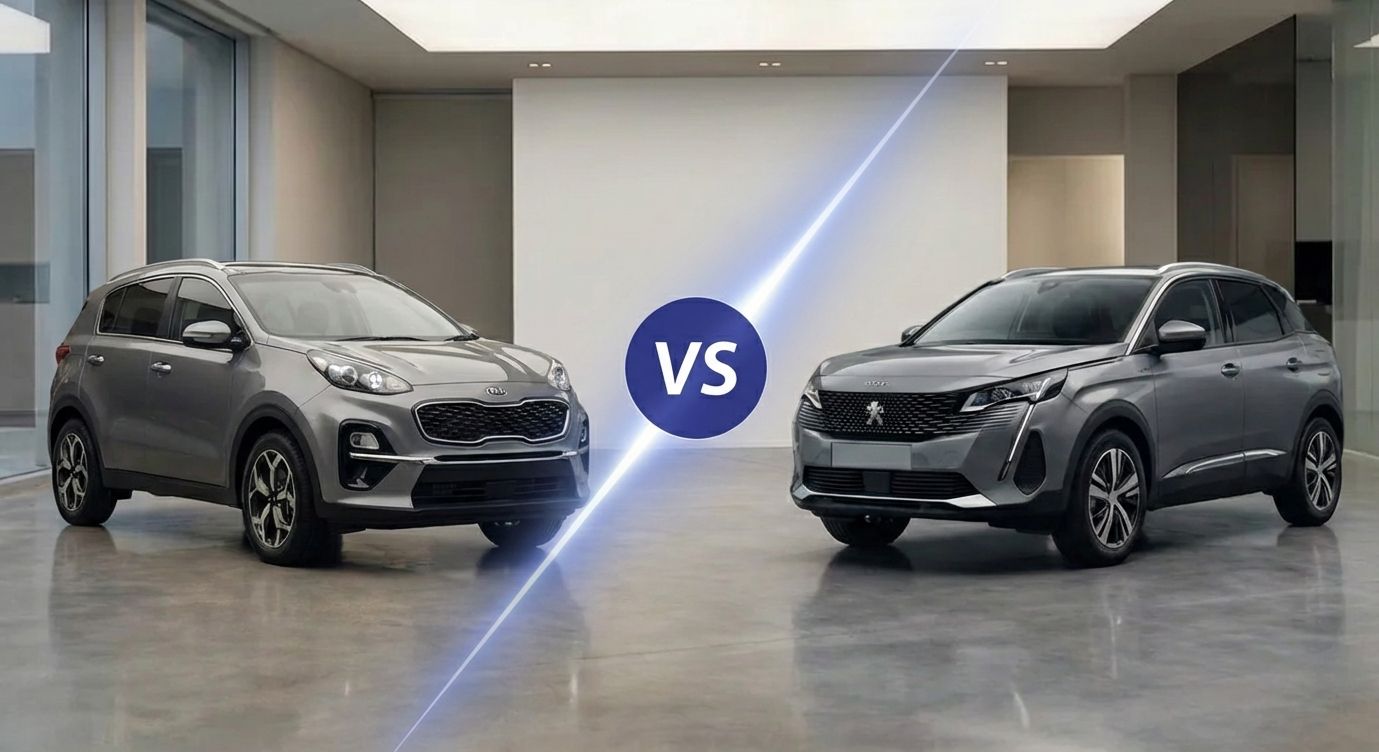
Comparison of the Kia Sportage and Peugeot 3008. Find out which SUV offers better equipment, performance, and value for money in our detailed test and verdict.
Apr 2, 2026