Articles

Car battle

Peugeot 2008 vs. Seat Arona: Complete comparison 2026

Detailed comparison of the Peugeot 2008 vs Seat Arona. Discover the differences in equipment, driving, and used car prices. Our verdict will help you choose the ideal SUV.

April 28, 2026

VS
Peugeot 2008

Peugeot 2008

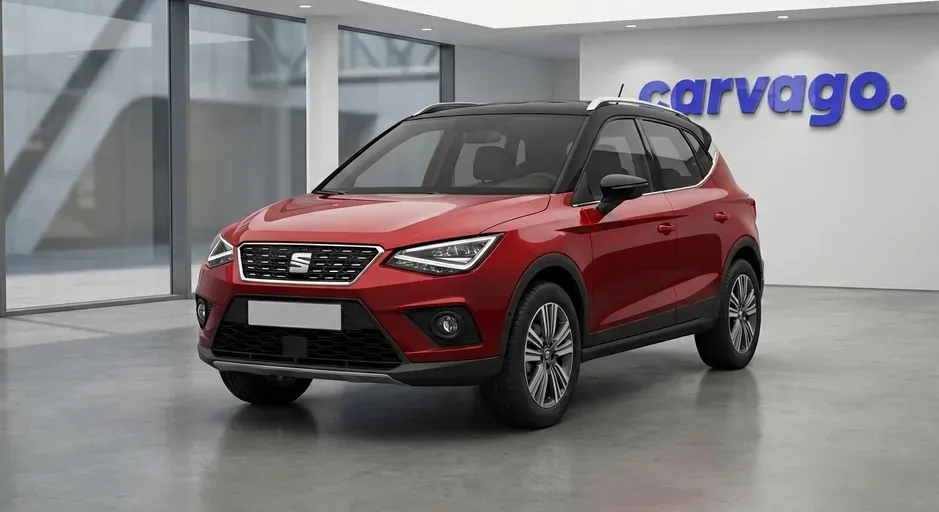
Seat Arona

Seat Arona

Introduction

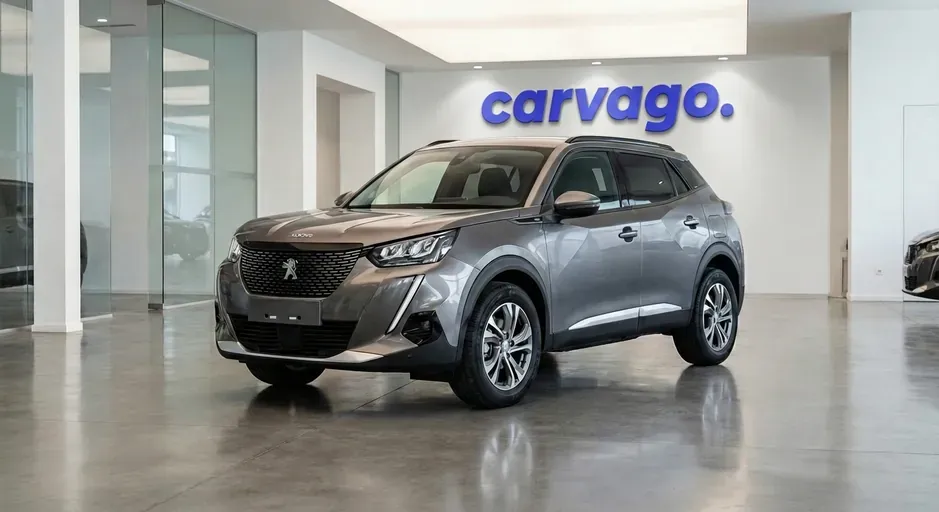
Peugeot 2008, also known in its fully electric variant as the e-2008 (or E-2008 for newer model years), is a popular French city SUV that attracts drivers primarily with its bold exterior design and innovative interior layout. Its challenger today is the Seat Arona, a dynamically styled Spanish crossover closely related to the Ibiza model, which scores points with customers especially for its confident driving characteristics, ergonomics, and everyday practicality. Let's take a detailed look at how these two attractive representatives of the B-SUV segment fare in our direct comparison and which of them represents a more interesting choice.

Comparison of External Dimensions

Comparison of External Dimensions: A Bulkier Frenchman or a More Agile Spaniard?

Although the Peugeot 2008 and Seat Arona both fall into the very popular category of small city crossovers (B-SUV) on the used car market, they approach this task surprisingly differently in terms of physical dimensions. While the Spanish representative bets on more compact and traditional proportions, the second generation of the French model (on the market since 2020) is among the largest cars in its class and approaches family SUVs a size larger in terms of dimensions. This main difference is found primarily when looking at the overall length of the cars.

The Peugeot 2008 measures approximately 4300 millimeters in length, which noticeably exceeds the Seat Arona by 147 to 162 mm (depending on the specific model year and facelift), whose length ranges between 4138 and 4153 mm. In practice, this significant proportional advantage of the Peugeot logically means more space for the crew, a more robust impression of the car, and a slightly more mature visual presence on the road. On the other hand, the Seat Arona, with its more modest overhangs, dominates in a discipline typical for city traffic: maneuverability, agility in narrow streets, and the ability to park in tight parallel spaces is much better in its case.

An interesting perspective is also offered by a comparison of width and wheelbase, which dictate the airiness inside the cabin. The wheelbase of the Peugeot 2008 is a generous 2605 mm, which is exactly 39 mm more than the Arona model (2566 mm). These centimeters play a key role in longitudinal spaciousness – adult passengers will thus find more knee room in the rear seats of the Peugeot. However, the Seat Arona balances this in the transverse direction. With a value of 1780 mm, it is surprisingly exactly one centimeter wider than the externally bulkier Peugeot (1770 mm) and also offers a slightly taller body structure (up to 1552 mm).

Overall, these parameters clearly shape the final choice. If you are looking for a representative for more full-fledged family travel with maximized interior space, the Peugeot 2008 makes more sense in terms of external dimensions and wheelbase. For drivers for whom easy daily parking, a great overview thanks to the taller body structure, and overall agility are the alpha and omega, the shorter Seat Arona will, on the contrary, be a clearly more ideal choice.

ParameterPeugeot 2008 SUVSeat Arona SUV
Length (mm)4300 - 43044138 - 4153
Width (mm)17701780
Height (mm)1523 - 15301537 - 1552
Wheelbase (mm)26052566

Trunk Volume

When choosing a roughly four-year-old city crossover or compact SUV, trunk capacity often plays a key role in whether the vehicle can hold its own as a practical family car. The second-generation Peugeot 2008 (produced since 2020) and the Seat Arona (KJ generation, ideally after the 2021 facelift) are among the most sought-after vehicles on the used car market, offering surprisingly solid utility despite their compact footprints. Although both cars are structurally based on small city hatchbacks, their trunks are sized to easily handle a large weekend grocery run, transport a stroller, and suffice for a family summer vacation. However, the differences in their cargo capacity can be a deciding factor for many buyers in a direct comparison.

Looking closely at the absolute numbers, the French representative has a slight edge in this duel. In its basic configuration, the Peugeot 2008 has a volume of 434 liters, while the Seat Arona offers a slightly more modest, but still very respectable for its class, 400 liters. While a difference of 34 liters might not seem like a dramatic gap at first glance, in practice, it can mean room for a few extra small bags or soft duffels. A much more noticeable gap appears when you decide to fold down the rear backrests. In this configuration, the Peugeot can accommodate exactly 1,467 liters of cargo, clearly beating the Spanish model with its maximum capacity of 1,280 liters. Therefore, if you plan to transport bulky items or sports equipment more frequently, the Peugeot will provide a significantly larger space reserve.

An important aspect when choosing a used car is also the specific engine choice, as alternative powertrain types can negatively impact trunk space. Special attention is required for the Seat Arona in the version burning compressed natural gas (1.0 TGI), where the necessary installation of pressure tanks under the floor reduces the basic volume to a significantly below-average 282 liters. In contrast, the Peugeot has the advantage of its shared chassis platform, which was designed from the start for battery power as well. Thanks to this, the all-electric e-2008 variant maintains exactly the same basic capacity as its combustion-engine siblings. Otherwise, both cars do their best for trouble-free everyday usability; they typically offer an adjustable double floor that can level the loading surface after folding the rear row of seats, preventing an impractical step.

ParameterPeugeot 2008 SUVSeat Arona SUV
Basic volume (liters)434400
Max. volume with seats folded (liters)14671280

A slightly better hauler 📦

The Peugeot 2008 offers not only a slightly larger basic trunk but, above all, a significantly more generous cargo capacity with the seats folded, making it a more practical choice for families or hobbies with more demanding equipment. However, the Seat Arona still maintains a very decent standard, provided you intentionally avoid the TGI gas version with its significantly smaller space.

Discover the true condition of the car thanks to an independent inspection

Order CarAudit™

Trailer Weights

Towing Capacity and Practical Trailer Use

For many buyers in the small SUV segment, towing capacity can be a very important factor. The ability to attach a trailer represents a clear practical advantage – you gain valuable space for several extra suitcases or the ability to comfortably transport building materials to a cottage. Looking at cars roughly four years old, it is clear that Peugeot and Seat approach weight limits differently.

Peugeot 2008 plays it safe across the range
The second-generation Peugeot 2008 is surprisingly generous and consistent when it comes to towing capabilities. The vast majority of its standard internal combustion engines, including the 1.2 PureTech three-cylinder petrol (74–114 kW) and the 1.5 BlueHDi diesel (75–96 kW), can tow a braked trailer with a maximum weight of 1200 kg. An unbraked trailer can then weigh between 630 and 670 kg, depending on the equipment specification. An important exception that you should not overlook when choosing is the newer hybrid variants (e.g., 1.2 Hybrid 136). Due to the implementation of different technology and a battery, these have a towing capacity reduced to 1100 kg.

Seat Arona and performance dependence
In contrast, the Spanish Seat Arona makes the maximum trailer weight dependent on the specific engine chosen. The base 1.0 TSI petrol engine with 70 kW can tow a standard braked trailer weighing only 1000 kg. More powerful one-liter variants (81 kW and 85 kW) push this limit to 1100 kg. If you want to reach the same maximum permitted weight of 1200 kg with the Arona as with the Peugeot, you have to go for the top-of-the-line 1.5 TSI four-cylinder petrol (110 kW) or look for older 1.6 TDI diesel engines on the used car market. Values for an unbraked trailer on the Arona typically range from 590 to 630 kg.

Final Summary
Both crossovers offer values sufficient for weekend shopping and longer holidays involving towing a small trailer or caravan. However, the Peugeot 2008 offers buyers more freedom in this regard. It ensures a maximum capacity of 1200 kg even with its weaker and more affordable engines, whereas Seat Arona owners must always specifically choose more powerful and expensive engines to achieve identical towing capabilities.

Model and EngineBraked Trailer Weight (kg)Unbraked Trailer Weight (kg)
Peugeot 2008 1.2 PureTech 100 (74 kW)1200630 - 640
Peugeot 2008 1.2 PureTech 130 (96 kW)1200630 - 640
Peugeot 2008 1.5 BlueHDi 130 (96 kW)1200630 - 670
Peugeot 2008 1.2 Hybrid 136 (100 kW)1100630
Seat Arona 1.0 TSI (70 kW)1000590
Seat Arona 1.0 TSI (81 kW / 85 kW)1100600 - 610
Seat Arona 1.5 TSI (110 kW)1200630
Seat Arona 1.6 TDI (85 kW)1200630

Overview of Most Common Motorizations

Different paths to performance and fuel economy

While both cars are among the most popular small SUVs on the market, their approach to powertrains differs quite fundamentally. For used car buyers, this means the possibility of choosing a car tailored exactly to their driving style. The Peugeot 2008 offers a very wide range of power units, including petrol and diesel engines, as well as a purely electric and, more recently, a mild-hybrid variant. The Seat Arona, on the other hand, bets on reliable tradition with a clear focus on agile and time-tested petrol units that provide excellent dynamics in combination with top-of-the-line DSG dual-clutch transmissions. Neither model offers all-wheel drive – both rely exclusively on front-wheel drive, which keeps weight and fuel consumption in check. The decision will therefore depend primarily on whether you prefer the motorway savings of a diesel, local zero-emission operation, or a spirited petrol four-cylinder.

Peugeot 2008: A wide selection including electric

In the segment of approximately four-year-old used cars (2nd generation produced since 2020), the Peugeot 2008 represents a very versatile choice. The petrol portfolio is based on 1.2 PureTech turbocharged three-cylinder engines. They are available in three power levels, with the mid-range version with 130 hp (96 kW) being an ideal compromise that can be paired with a very smooth-shifting eight-speed EAT8 torque converter automatic. If you are looking for a car for high mileage, the Peugeot will please you with 1.5 BlueHDi diesel four-cylinders with exceptionally low fuel consumption. However, it is necessary to remember on the used car market that the production of these diesels, as well as the top-of-the-line 1.2 PureTech 155 petrol engine, was discontinued between 2022 and 2023. A completely unique alternative is the fully electric e-2008 model with an output of 100 kW (136 hp), which makes the car a perfect quiet vehicle for the city and suburbs.

Engine typeFuelPower (kW)Torque (Nm)Transmission
1.2 PureTech 100Petrol742056MT
1.2 PureTech 130Petrol962306MT / 8AT
1.2 PureTech 155Petrol1142408AT
1.5 BlueHDi 100Diesel742506MT
1.5 BlueHDi 130Diesel963008AT
e-2008 136Electric1002601AT

Seat Arona: Betting on petrol reliability

The Seat Arona is significantly more straightforward, and as a roughly four-year-old used car, you will find it predominantly with petrol engines from the TSI family. Production of the earlier 1.6 TDI diesel units ended back in 2020, so they play no role for the sought-after age group. The range is led by the refined 1.0 TSI three-cylinder with an output of 70 kW or 81 kW, which impresses with its eagerness to accelerate and its reliability. A major competitive advantage of the Arona is the top-of-the-line engine in the form of the 1.5 TSI petrol four-cylinder with an output of 110 kW (150 hp). This unit, exclusively paired with a seven-speed DSG transmission, gives the Arona's agile chassis a distinctly sporty flair that can excite more demanding drivers. An eco-friendly alternative for a smaller group of motorists was the 1.0 TGI variant with 66 kW running on compressed natural gas (CNG), but even that definitively disappeared from the production programme after 2023.

Engine typeFuelPower (kW)Torque (Nm)Transmission
1.0 TSI 95Petrol701755MT
1.0 TSI 110Petrol812006MT / 7DSG
1.5 TSI 150Petrol1102507DSG
1.0 TGI 90CNG661606MT

Which powertrain to choose? ⛽⚡

Thanks to the availability of reliable diesels and an electric version, the Peugeot 2008 offers much greater flexibility of choice, while the Seat Arona will appeal to those looking for proven petrol engines with top-notch dynamics and sharper driving characteristics.

Choosing the right engine is key to long-term satisfaction with a used car, as it directly affects driving dynamics, real-world fuel consumption, and future maintenance costs. While the second-generation Peugeot 2008 relies primarily on charismatic but slightly more maintenance-intensive PureTech three-cylinder engines and declining BlueHDi diesels, the Seat Arona benefits from the proven Volkswagen Group range of agile TSI units. Both models on the used car market, typically four-year-old vehicles from around 2022, offer rational and efficient choices, but with different demands on user care.

For the Peugeot 2008, we recommend: 1.2 PureTech 130 (96 kW / 130 hp)

This turbocharged three-cylinder represents the ideal compromise in the second-generation Peugeot 2008 lineup. The more powerful 130 hp version offers significantly better dynamics and flexibility compared to the base 100 hp variant, which you will appreciate especially during highway travel or when driving a fully loaded car. In terms of operating costs, it doesn't suffer from a high appetite, and real-world consumption with a light foot is around 6 to 6.5 l/100 km. The engine has a pleasantly flat torque curve and works perfectly with the very smooth-shifting EAT8 eight-speed automatic. The more powerful 155 hp version is unnecessarily expensive for normal purposes and appears sporadically on the used market.

From a long-term reliability perspective, however, a certain level of caution is necessary, stemming from its specific design.

  • Risk of oil strainer clogging: These engines use a timing belt "dipped" in oil. During frequent short city trips, the oil is diluted with unburned gasoline, leading to degradation and peeling of the belt material. Particles then clog the oil pump's intake strainer.
  • How to prevent it: When inspecting a used car, always check the belt's condition visually (it is partially visible through the oil filler neck). After purchase, strictly shorten the oil change interval to a maximum of 10,000 to 15,000 km, or 1 year, and avoid exclusively short cold starts.

This engine is ideal for conscious drivers who combine suburban driving with weekend trips and pay attention to proper servicing. As for the 1.5 BlueHDi diesel versions, we generally do not recommend them for the typical use of this car. Due to complex emission systems and the risk of a clogged diesel particulate filter (DPF), they are not suitable for the city and are completely disappearing from price lists in newer model years.

For the Seat Arona, we recommend: 1.0 TSI (81 kW / 110 hp)

In the case of the Seat Arona, the choice is surprisingly simple and straightforward. The VW Group's one-liter three-cylinder from the EA211 family in its more powerful version (usually tuned to 81 kW / 110 hp on the four-year-old used market) is an absolute hit. The engine offers above-standard dynamics for a compact crossover and linear pull from low RPMs. Compared to its French competitor, it excels particularly in operational efficiency – in practice, consumption usually oscillates between 5.5 and 6 liters per 100 kilometers. It can be purchased with a precise six-speed manual transmission or a seven-speed dual-clutch DSG automatic. Although the four-cylinder 1.5 TSI alternative offers an even sportier ride, it is redundant for most typical Arona users given the higher purchase price of a used car.

Mechanically, the 1.0 TSI engine is above-average robust and does not suffer from fatal design flaws. The timing is handled by a classic and very durable toothed belt, so the concerns known from the rival PureTech are eliminated. Nevertheless, it has its specifics:

  • Carbon buildup: This is a direct-injection engine, so the main risk is carbon deposits on the intake valves. This is a threat primarily if the driver constantly lugs the engine (keeps it at very low RPMs) for the sake of fuel economy (or if the DSG automatic transmission software forces it).
  • How to prevent it: Regularly "rev" the engine to higher RPMs after it has warmed up and use high-quality fuel enriched with cleaning additives (or use your own). When buying a version with DSG, check if the transmission jerks when starting or shifting – after about 150,000 kilometers of city driving, the dry clutches may be ready for replacement.

The 1.0 TSI unit is a perfect, versatile choice for pragmatic drivers and can easily handle both daily city commuting and smoothly reaching highway limits on the way to vacation, with incomparably better peace of mind regarding future service costs.
Real Fuel Consumption

For every car, the official fuel consumption figures provided by the manufacturer differ slightly from the reality of daily operation. While laboratory numbers according to the WLTP methodology provide a good basis for comparison, it is much more useful to look at data from drivers themselves to determine the actual appetite of the engines. Community platforms such as the German site Spritmonitor.de, where thousands of owners record every refueling, are excellent for this purpose. It is from this extensive database that the real average values for the most common engines of approximately four-year-old used cars (both models roughly from production years 2021 to 2022) originate, showing what you can expect in practice.

Model and engineAverage consumption (l/100 km)
Seat Arona 1.0 TSI (81 kW)5.8
Peugeot 2008 1.2 PureTech 100 (74 kW)5.9
Seat Arona 1.5 TSI (110 kW)6.0
Peugeot 2008 1.2 PureTech 130 (96 kW)6.4
Peugeot 2008 1.5 BlueHDi 130 (96 kW)5.0

Looking at the real-world data, several interesting trends emerge. The entry-level three-cylinder petrol engines perform very similarly in both cases, with their average consumption staying just below the six-liter mark with a light foot. However, a big surprise may be the fact that the more powerful and larger-displacement 1.5 TSI four-cylinder petrol engine in the Seat Arona consumes only about two deciliters more fuel in practice than the weaker one-liter three-cylinder. This is mainly due to advanced cylinder deactivation technology (ACT) and the fact that the stronger engine doesn't have to work as hard with the relatively light vehicle. Conversely, with the Peugeot, the shift from the basic 1.2 PureTech version to the more powerful 130-hp variant is more noticeable, and consumption here more easily exceeds the 6.4-liter mark. The clear winner in terms of efficiency is the 1.5 BlueHDi diesel engine from Peugeot, which, with a five-liter consumption, is the only one to satisfy true hunters of low running costs. At around four years of age, the Seat Arona no longer offers diesel engines at all and relies purely on petrol.

For the typical user looking for a car for daily city driving and shorter suburban commutes, it makes the most sense to go for the basic petrol units (1.0 TSI or 1.2 PureTech 100). They are sufficiently brisk, warm up quickly, and their consumption won't break the family budget. If, on the other hand, you spend a lot of time on the highway or regularly commute longer distances, the Peugeot 2008 offers a great advantage precisely because of its exceptionally economical diesel. A great alternative for more demanding drivers is the four-cylinder Seat Arona 1.5 TSI, which clearly demonstrates that a power reserve in modern engines does not automatically have to be redeemed by high fuel consumption.

In conclusion, fuel consumption is unlikely to be the main deciding factor when choosing between these two models – at least in the case of the petrol versions, where the differences in terms of costs are rather negligible. The real turning point comes only when the nature of your daily travel necessitates a preference for a diesel engine. In such a case, the Seat immediately drops out of the competition among newer used cars, and the French crossover with the BlueHDi engine remains the only logical choice.

Price Range and Used Car Offerings

Comparison of used car prices on the Czech market

When choosing a second-hand compact city crossover, models roughly four years old (2021–2022 model years) represent an ideal compromise between purchase price and utility value. Cars from this period have already experienced their steepest depreciation, yet they often come with a clear service history, modern safety equipment, and reasonable mileage. Let's see how the extravagant Peugeot 2008 (second generation) and the practically-minded Seat Arona (first generation after the facelift) compare in this category.

Peugeot 2008 (2021–2022 model years)

The French contender attracts used car buyers primarily with its unmistakable design and a more premium-feeling interior featuring the i-Cockpit layout. However, its attractive looks and generous equipment levels are slightly reflected in its higher average price tag on the secondary market.

  • Base versions: The cheapest units with the reliable 1.2 PureTech three-cylinder petrol engine (often in the lower Active trim level) start at approximately €14,000 in used car dealerships.
  • The golden mean: For better-preserved models with lower mileage, the popular automatic transmission, and the richer Allure trim, you will most often pay between €16,000 and €17,000.
  • Top engines and trims: Sporty GT versions, economical 1.5 BlueHDi diesel variants, or fully electric e-2008 versions (with a 50 kWh battery) approach the €18,000 mark and above.

Seat Arona (2021–2022 model years)

The Spanish crossover underwent a significant facelift in 2021, which improved interior material quality and onboard technology in particular. Thanks to the popular shared Volkswagen Group technology and a slightly more conservative approach, the Arona is somewhat more affordable on the used car market than its French rival.

  • Base versions: The cheapest used models powered by the 1.0 TSI engine (often in Reference or Style trims) can be purchased for amounts ranging from €11,000 to €12,000.
  • The golden mean: Models with the more powerful version of the 1.0-litre three-cylinder (81 kW) and the highly sought-after DSG automatic transmission typically range between €13,000 and €16,000 on the market.
  • Top engines and trims: Popular dynamic FR variants with sharper design, better equipment, or the more powerful 1.5 TSI four-cylinder engine sell for prices around €16,000 to €18,000.

Overview of indicative used car prices (approx. 4-year-old cars)

Model (2021–2022 model years)Price from (base version)Average price (mid-range trim)Price up to (top versions)
Peugeot 2008approx. €14,000€16,000€18,000 and more
Seat Aronaapprox. €11,000€14,000€18,000

Note: Prices may vary in real-time depending on current market supply, the overall technical condition of the specific vehicle, documented service history, and mileage.

Which one is cheaper? 💰

If you are looking for a more affordable car with proven Volkswagen Group technology, the Seat Arona represents a cheaper choice on the used car market, while you will pay a few thousand euros more on average for the striking design and slightly more premium interior of the Peugeot 2008.

Safety and Euro NCAP Rating

Both vehicles boast a maximum five-star rating in tests by the independent Euro NCAP organization (in the case of the Peugeot, with an optional safety pack); however, context and, above all, the year the tests were conducted are key when comparing these results. Euro NCAP testing protocols are constantly evolving and becoming stricter. Percentage results from different years cannot be directly compared – what was easily enough for a top rating a few years ago would often result in point deductions in today's tests.

The Peugeot 2008 underwent crash tests in 2019. It received a very solid four stars with standard equipment, achieving a full five-star rating only with the optional safety pack. This added a more advanced radar for the automatic emergency braking system, capable of better detecting cyclists and functioning at higher speeds outside the city. It offers excellent protection for adults (91%) and children (84%) in its base version. However, lower scores for assistance systems and the protection of vulnerable road users without the optional radar show that the basic sensors of the time did not yet reach today's state-of-the-art standards. Furthermore, it should be noted that according to strict Euro NCAP rules, the 2019 test certification is now formally expiring.

Although the Seat Arona entered the market slightly earlier, Euro NCAP subjected it to a new, significantly stricter round of testing in 2022. Even under these much more demanding conditions, the Arona managed to maintain a flawless five stars even in its base trim. The evaluation included brand-new tests, such as a frontal collision with a moving deformable barrier or a more detailed assessment of side-impact protection, including interaction (collision) between the driver and front passenger. Although the Arona's percentage values for adult protection (83%) appear lower than the Peugeot's at first glance, they were achieved under much tougher conditions, which testifies to a very strong and modernized body structure.

From the perspective of today's standards, the Seat Arona offers a demonstrably more modern and comprehensive safety package, tested according to newer and stricter standards, thanks to its successful recertification in 2022. The Peugeot 2008 is undoubtedly a very safe SUV; however, to ensure the absolute top tier in terms of assistance systems, it is necessary to look for units equipped with the optional safety assistance package on the used car market.

ParameterPeugeot 2008Seat Arona
Year of testing20192022
Adult occupant protection91 %83 %
Child occupant protection84 %83 %
Vulnerable road user protection62 %65 %
Safety assistance systems68 %70 %

🛡️ Safer according to the new rules

Although both SUVs provide excellent protection for the occupants, the Seat Arona has a slight edge from the perspective of current safety requirements, thanks to successfully passing significantly stricter barrier tests in 2022.

Comparison of Interesting Equipment Features

In addition to standard equipment, each model offers several unique features that demonstrate a completely different approach to added value and can be decisive for the customer when choosing. While the French representative attracts with a premium feel and modern technology, the Spanish competitor emphasizes seamless everyday usability and driving experience.

Peugeot 2008: Futuristic Design and Technological Avant-Garde

  • Revolutionary i-Cockpit with 3D Effect: A completely unique dashboard layout with a compact, low-set steering wheel and a raised digital instrument cluster. In higher trims (GT), it also offers an impressive 3D holographic display that dynamically projects the most important information into the foreground. This allows the driver to react to key alerts a fraction of a second faster.
  • Piano-Style Controls: Iconically designed buttons under the central display, known as "piano keys," bring a touch of luxury to the interior. This feature allows for quick, physical, and intuitive access to basic functions such as climate control, audio, or navigation without having to click through menus on the touchscreen.
  • Choice of Three Powertrain Types: In this generation, the 2008 model stands out for its absolute freedom of choice under the hood. Customers can opt for traditional petrol engines (PureTech), fuel-efficient diesel units (BlueHDi), or even choose a fully electric variant (e-2008) without any compromises in interior space.
  • Advanced Traction with Grip Control: Although the car does not have four-wheel drive, it offers a smart traction control system. This includes a rotary selector with special modes for sand, mud, or snow. Combined with Hill Assist Descent Control (HADC), it gives the model unexpected confidence during occasional trips off paved roads.
  • Sporty-Premium GT Versions: The highest equipment level completely changes the character of the car. It brings top-tier sports seats, ambient lighting, Full LED headlights with the iconic "three claws" light signature, and elegant two-tone paint with a Black Diamond roof.

SEAT Arona: Sporty Emotions and Smart Connectivity

  • Sporty Genes with FR (Formula Racing) Trim: The Arona bets on driver appeal and dynamics. The FR variant brings visually more aggressive bumpers, a stiffer suspension setup, and the XDS system, which simulates the function of a limited-slip differential. The driver can then adjust the car's behavior as desired via the SEAT Drive Profile mode selector.
  • Innovative Interior Technology: Most of the nearly new units currently on the market benefit from a facelift that brought a completely new dashboard with a large floating infotainment display (up to 9.2 inches). A charming and unconventional detail is the circular air vents at the edges, which feature LED backlighting around their perimeter, creating a cozy atmosphere during night drives.
  • SEAT Connect and Wireless Freedom: The enhanced Full Link system supports the popular Apple CarPlay and Android Auto platforms fully wirelessly. Thanks to advanced telematics and the SEAT Connect mobile app, the user also has complete control over the vehicle remotely – they can check if the doors are locked, the fuel level, or find the parked car in busy city streets.
  • Alternative Natural Gas Powertrain (TGI): While Peugeot offers diesel and electricity, SEAT presents a rare factory CNG version (1.0 TGI) in the small SUV segment. For drivers looking for exceptionally low operating costs while being concerned about the range of electric vehicles, the compressed natural gas Arona represents an extremely smart and affordable alternative.
  • Travel Assist: This technology combines the functions of adaptive cruise control and lane-keeping assist. It can thus take partial control of the steering at speeds up to 210 km/h, significantly increasing comfort and reducing fatigue during long highway journeys or in traffic jams.

Key Advantages and Disadvantages

Peugeot 2008

Pros

Attractive and distinctive exterior design that stands out from the crowd

High-quality interior craftsmanship with premium materials creating a premium feel

Availability of a fully electric version (e-2008) alongside traditional internal combustion engines

Very good suspension comfort that filters out bumps excellently

Above-average luggage compartment volume in its class (434 liters)

Cons

The specific dashboard layout (i-Cockpit) with a small steering wheel may not suit people of different heights

Outdated and slower-responding multimedia system with more complicated climate control

Poorer rear-quarter visibility due to massive C-pillars and tapering windows

Generally higher purchase price on the used car market compared to direct competition

The Peugeot 2008 is a great choice for those looking primarily for style, comfort, and a touch of luxury in a compact SUV. It will be appreciated by drivers who want to stand out from the crowd, like the futuristic interior concept, and are considering a transition to locally emission-free electric drive.

Seat Arona

Pros

Excellent and agile handling characteristics, making it one of the best-driving cars in its class

Great control ergonomics, retaining physical buttons for key functions (especially in the facelift from 2021 onwards)

Reliable, dynamic, and very fuel-efficient TSI petrol engines

Excellent value for money when buying a used car

Surprisingly generous passenger space given the compact exterior dimensions

Cons

A higher proportion of hard and cheaper-looking plastics in the interior

Firmer suspension tuning means reduced comfort on rough roads (especially in the FR version with larger wheels)

A somewhat more conservative design that doesn't evoke as much emotion visually

Complete absence of hybrid or fully electric powertrains in the used car market

The Seat Arona will appeal to practically-minded drivers who enjoy a brisk drive and prefer traditional and intuitive ergonomics without complex digitalization. It is a rational and cost-effective choice offering excellent VW Group technology in a more playful Spanish package.

Common Problems and Owner Complaints

Based on our own statistics, service bulletins, long-term user experience, and data provided by our comprehensive car audit, we have compiled an overview of the most common problems that buyers of these used crossovers should watch out for.

Peugeot 2008

The second generation of the Peugeot 2008 is a design-attractive and comfortable car, but when buying a used car about four years old, it requires increased vigilance, especially regarding the power units.

  • 1.2 PureTech petrol engines: The most well-known weakness of this car is the timing belt, which runs in oil. If the previous owner did not adhere to shortened oil change intervals (ideally 10,000 to 15,000 km) or drove exclusively short distances, the belt degrades. Its loose particles then clog the oil pump pickup screen, which can lead to fatal engine seizure. Older models also show increased oil consumption.
  • 1.5 BlueHDi diesel engines: Diesel versions are often plagued by failures of the selective catalytic reduction (AdBlue) system. Most often, it is a pump failure or deformation of the plastic tank itself, which requires replacement of the entire module. Also, watch out for the camshaft timing chain, which tended to snap in earlier production versions (the manufacturer later switched from a 7mm to a stronger 8mm chain).
  • Electronics and infotainment: Users often report slow responses, lagging, or freezing of the central touchscreen. In most cases, a software update at an authorized service center will help. Occasionally, there are also false error reports from the blind spot monitoring assistant.
  • Chassis and wear: The front axle shows faster wear and play in heavier variants, which mainly concerns diesel engines and the fully electric e-2008 version.

Peugeot 2008: Careful engine selection and verified history

The basis for trouble-free operation of the Peugeot 2008 is strict adherence to shortened service intervals and a documented maintenance history. Petrol three-cylinder engines require caution regarding the condition of the timing belt.

Seat Arona

The Seat Arona uses proven Volkswagen Group technology, which guarantees excellent availability of spare parts. Nevertheless, typical ailments appear in cars around four years old (including facelifted models from 2021).

  • DSG transmission (DQ200): In versions equipped with the seven-speed dual-clutch transmission with dry clutches, premature wear of the clutch linings occurs, especially if the car was frequently operated in city traffic jams. If maintenance is neglected, expensive mechatronics failures can also occur. Jerky starts or vibrations during gear changes are a clear warning signal.
  • TSI petrol engines: 1.0 TSI engines are generally very reliable, but they tend to develop carbon buildup during frequent short trips. Earlier years of the more powerful 1.5 TSI engine often exhibited so-called "kangarooing" (jerking and hesitation during cold starts), which the manufacturer mostly successfully resolved with an engine control unit software update.
  • Multimedia and software: MIB3 infotainment systems (typical after the facelift) suffered from software bugs in the first years of production. This manifests as spontaneous system restarts, non-functional connections with Apple CarPlay / Android Auto, or audio lag. Here too, most problems were solved by new software.
  • Assistant systems: The emergency braking system (Front Assist) is very sensitive to the cleanliness of the radar located in the front grille. In winter or during heavy rain, it often reports outages or false alarms.

Seat Arona: Solid mechanics with minor quirks

The Seat Arona pleases with reliable petrol engines, but cars with the DSG automatic transmission require caution and a thorough test drive before purchase. Electronic errors in the onboard system are reliably eliminated by installing the latest software.

Tips for Buying a Used Car

When buying a used car, a thorough inspection is key, and it always pays to invest in a professional physical inspection of a used car. Here are some specific points to focus on for these two popular city crossovers.

When choosing a Peugeot 2008:

  • Timing belt on 1.2 PureTech engines: The three-cylinder petrol engines use a timing belt bathed in oil. It is crucial to check the service history and look through the oil filler neck at the condition of the belt. If it is crumbling or showing cracks, there is a risk of clogging the oil pump pickup screen and fatal engine damage.
  • Infotainment and 3D i-Cockpit responsiveness: During the test drive, try clicking through the onboard system menus and test the parking camera. Older software versions can suffer from screen freezing, slow response, or connectivity drops. Sometimes an update helps, other times it's faulty hardware.
  • Smoothness of the EAT8 automatic transmission: If you choose the automatic version, the eight-speed torque converter transmission should shift smoothly and without jerking. If you feel significant jolts when crawling in traffic, starting off, or downshifting, it could indicate neglected oil changes or a damaged torque converter.
  • Battery condition of the electric e-2008 version: If you are buying the fully electric variant, focus on traction battery degradation. Request a State of Health (SoH) diagnostic and monitor the estimated range against the charge percentage in real-world driving during the test drive.
  • Noise from the front axle and chassis: During the test drive over bumps or speed bumps, listen carefully for any metallic knocking from the front suspension. This could be due to play in the stabilizer links or worn ball joints, which is common in used cars driven mainly in the city.

When choosing a Seat Arona:

  • DSG dual-clutch transmission behavior: The seven-speed DSG with dry clutches (DQ200) requires caution. During the test drive, focus on starting off and shifting between first and second gear at low speeds. There should be no jerking, slipping, or rattling noises, which would signal the need for an expensive clutch kit replacement.
  • Cold start of the 1.0 TSI engine: When starting the car from completely cold, listen for any RPM fluctuations or irregular running. Although these engines are reliable, occasional morning "stumbling" can signal the onset of carbon buildup issues or the need for an ECU software update.
  • Infotainment and Full Link functionality: Test the phone connection via Apple CarPlay or Android Auto and the touchscreen functionality. VW Group multimedia systems from this period occasionally suffer from random restarts, sound dropouts, or loss of connection with the phone.
  • Interior rattles: The Arona uses slightly more hard plastics in the interior. Drive the car over a rough section of road or cobblestones and listen for noises from the dashboard and door panels. In higher-mileage units, rattles may appear, which, while not affecting reliability, can disrupt acoustic comfort.
  • Moisture in the headlights: Thoroughly inspect the front and rear headlights from the outside. Fogging or even water droplets collecting inside the covers can indicate broken seals or micro-cracks. In LED headlights, long-term moisture can damage expensive control electronics.

FAQ: Most Frequently Asked Questions

The Peugeot 2008 has a slightly larger luggage compartment with a volume of 434 litres compared to 400 litres for the Seat Arona. The French model benefits from its overall longer body, which is positively reflected in the depth of the storage space. However, the Arona counters with a very regular boot shape and a practical double floor, which makes loading heavier items easier.

The Peugeot 2008 has a wider range, as with roughly four-year-old used cars you can choose between petrol, diesel, and fully electric versions. The Seat Arona, on the other hand, relies almost exclusively on the proven and very reliable TSI petrol engines. So, if you require diesel for long motorway journeys or are looking for a pure electric car, the French car is the only choice.

Thanks to its longer wheelbase, the Peugeot offers slightly more legroom in the rear seats. The Seat, on the other hand, benefits from its boxier body shape and higher roof at the rear, which provides generous headroom. For taller passengers, long journeys in the back can be surprisingly more comfortable in the Spanish model.

The Peugeot relies on a softer suspension that filters out cobblestones, potholes, and sunken manhole covers very effectively and quietly. The Seat has a stiffer Group chassis setup, which is a bit more jittery over bumps but in return provides much better stability and confidence in corners. For maximum comfort, the French car is the better choice, while for more agile handling, the Spanish one is.

The Seat Arona with the popular 1.0 TSI petrol engine is considered an above-average reliable car with relatively cheap and easy maintenance. For the Peugeot 2008 with 1.2 PureTech engines, it is necessary to strictly monitor and shorten oil change intervals due to the specific timing belt design. However, with timely servicing and a verifiable history, both cars can serve you very well.

Conclusion: Which Model to Choose?

Our Verdict

Peugeot 2008 and Seat Arona represent two different approaches to the small city SUV segment, with both models excelling in different disciplines on the used car market. If you are looking for a more stylish and overall more spacious car with a more premium interior, a larger trunk, and you require a diesel or fully electric powertrain, the French Peugeot 2008 will be the ideal choice for you. On the other hand, the Spanish Seat Arona will appeal to more rationally minded drivers who care most about agile driving characteristics, excellent maneuverability when parking, and above-average reliable gasoline engines with more friendly purchase and service costs. Your final choice will thus depend primarily on whether you prefer a fresh design, driving comfort, and a wider range of powertrains, or whether you would rather bet on classic Group ergonomics, driving confidence, and maximum utility value for the money.

Find your ideal car

Sources: ADAC, idnes.cz, e15.cz, autorevue.cz, autosalon.tv, powerfan.cz

This article was prepared using artificial intelligence tools. The section guarantor is Petr Dušek.

Related articles

Car battle

Renault Austral vs. Seat Ateca: Complete comparison 2026

Detailed comparison of Renault Austral vs Seat Ateca. Discover the differences in equipment, driving characteristics, and fuel consumption. Our verdict will make it easier for you to choose the right SUV!

Apr 13, 2026

Car battle

Kia Stonic vs. Seat Arona: Complete comparison 2026

Kia Stonic or Seat Arona? We compare their engines, reliability, and practicality. Find out which used SUV is a better fit for you.

Apr 8, 2026

Car battle

Nissan Qashqai vs. Renault Austral: Complete comparison 2026

Nissan Qashqai vs. Renault Austral: A detailed comparison to help you choose. We compare design, engines, prices, and deliver a clear verdict.

Apr 14, 2026

We accept online card payments as well as wire transfers.

visa payment provider logovisa-electron payment provider logomastercard payment provider logomaestro payment provider logodiners-club payment provider logodiscover payment provider logo