Car battle
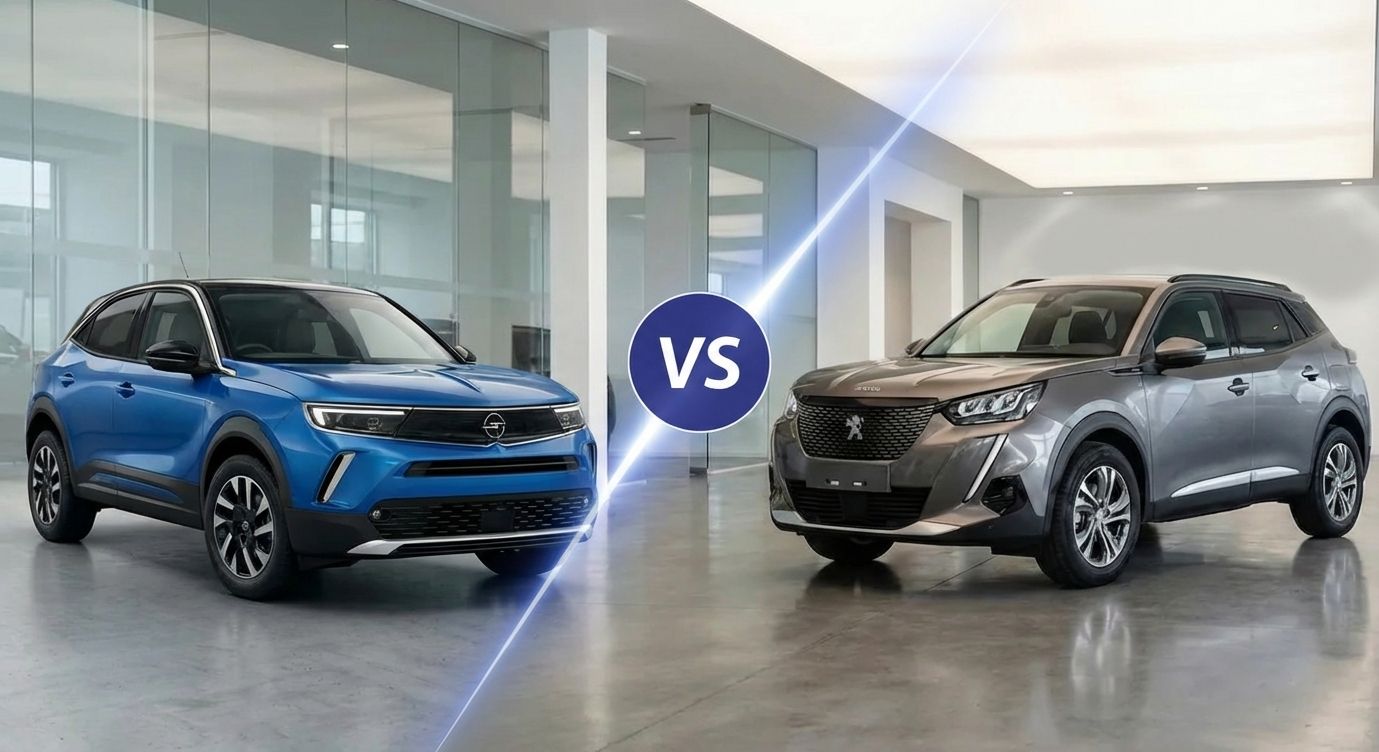
Opel Mokka vs. Peugeot 2008: Complete Comparison 2025
Opel Mokka vs Peugeot 2008. A detailed comparison of engines, design, and practicality. Find out which stylish SUV is the best choice for you.
Apr 14, 2026
Articles
Car battle
Detailed comparison of Renault Austral vs Seat Ateca. Discover the differences in equipment, driving characteristics, and fuel consumption. Our verdict will make it easier for you to choose the right SUV!
April 13, 2026
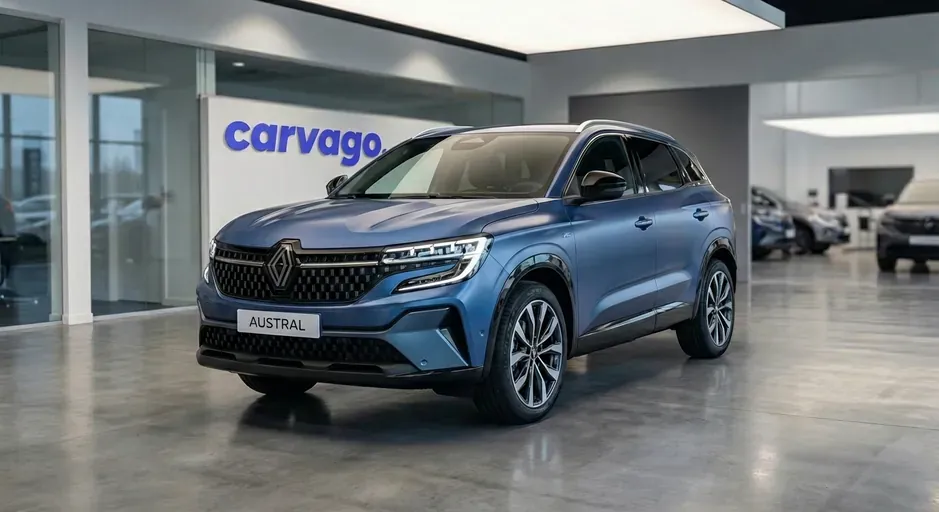
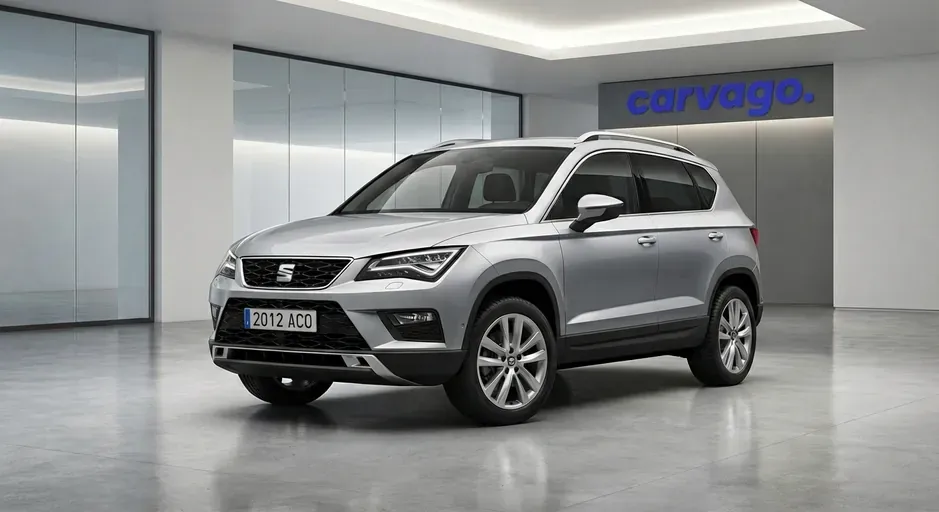
The French Renault Austral, which as the successor to the older Kadjar model brings fresh design and advanced hybrid technologies to the compact SUV segment, represents a very confident player in the used car market. Its challenger today is the popular Spanish SEAT Ateca, also available in its high-performance sports version under the name Cupra Ateca, which has long scored points with excellent driving characteristics, spaciousness, and proven group technology. Let's take a detailed look at how these two differently conceived family cars perform in a direct duel and which of them will be the smarter choice for your daily needs.
Looking at the external dimensions, it is immediately apparent that although both vehicles fall into the popular compact SUV segment, the Renault Austral represents the role of a slightly larger car. With a length of 4510 mm (for models typical of the used car market from around 2022), it exceeds its Spanish competitor, which grew to 4381 mm after the facelift in 2020, by almost 13 centimeters. This difference gives the French car a slightly more majestic appearance and better potential for interior spaciousness; however, for drivers who fight for parking spaces in narrow city streets every day, the Ateca's shorter body will be an indisputable advantage.
An interesting situation arises when comparing the width of both cars. Although the Austral is longer overall, the Seat Ateca is 16 mm wider than its French rival (1825 mm) at 1841 mm. This fact gives the Spanish SUV an optically wider, sportier, and more stable stance on the road, which corresponds well with the Seat brand's focus on more dynamic driving. In terms of height, Renault again slightly dominates, with a value of 1618 mm surpassing the Ateca, which measures between 1601 and 1611 mm (depending on the specific version and the presence of all-wheel drive).
A crucial parameter for interior comfort, especially for rear-seat passengers, is the wheelbase. Here, the Renault Austral has a fairly clear advantage, benefiting from a newer chassis platform and offering a wheelbase of 2667 mm. The Seat Ateca has a wheelbase of 2630 to 2638 mm. The lead of about 3 to just under 4 centimeters in favor of the Renault logically brings slightly more generous legroom in the back. Conversely, thanks to its shorter wheelbase and overall length, the Ateca scores with agility and slightly sharper reactions when weaving through city traffic or on winding country roads.
| Parameter | Renault Austral SUV | Seat Ateca SUV |
|---|---|---|
| Width (mm) | 1825 | 1841 |
| Length (mm) | 4510 | 4381 |
| Height (mm) | 1618 | 1601-1611 |
| Wheelbase (mm) | 2667 | 2630-2638 |
When choosing a family compact SUV, the size and variability of the luggage compartment play one of the most important roles. Whether you're planning a regular weekend shopping trip, transporting a stroller, or packing for a long family vacation, every extra liter available significantly eases daily life. Both the Renault Austral and the Seat Ateca offer highly above-average values and ingenious practical solutions in this discipline, but they approach the organization of interior space with a slightly different philosophy.
The basic trunk volume of the Seat Ateca with front-wheel drive is a very respectable 510 liters, which is fully sufficient for demanding family use. If you choose the version with all-wheel drive (4Drive), the capacity decreases slightly to 485 liters. After folding down the rear backrests, the space in the Spanish representative increases to a generous 1604 liters (or 1579 liters for the 4x4). The Renault Austral, in its standard mild-hybrid version, counters with a 500-liter trunk, which increases to 1525 liters after folding the rear bench. A major advantage of the French SUV is the sliding rear bench, which allows the basic volume to be flexibly increased up to 575 liters. However, it must be taken into account that in the full-hybrid E-Tech variant, the basic capacity drops to 430 liters (maximum 1455 liters after folding) due to the need to store battery cells under the floor.
From a practical standpoint, the Seat Ateca scores mainly with its stable, regularly shaped, and deep space, which offers excellent usability and easy loading without complex manipulation. The Renault Austral, on the other hand, brings clever variability – if you don't currently need maximum legroom in the rear seats, you can easily gain space for a few extra suitcases. In the end, the Ateca is an ideal choice for those who prefer a constant volume with a well-accessible loading area, while the Austral will please drivers who want to operatively change the ratio between rear passenger comfort and transport capacity.
| Parameter | Renault Austral SUV | Seat Ateca SUV |
|---|---|---|
| Base volume (liters) | 430 - 500 | 485 - 510 |
| Max volume with seats folded down (liters) | 1455 - 1525 | 1579 - 1604 |
The ability to tow a trailer is a key factor for many buyers, fundamentally affecting the overall practicality of the car – whether it's a weekend move of garden waste or summer travel. When comparing roughly four-year-old used Renault Austral and Seat Ateca models, we encounter clear differences resulting from the different range of power units, which can play a decisive role in the selection.
Thanks to its classic powerful internal combustion engines, the Seat Ateca boasts very high maximum values. The more powerful 2.0 TDI diesel versions and 2.0 TSI petrol engines can easily tow a braked trailer weighing an impressive 1,800 to 2,100 kg. In contrast, the Renault Austral manages a maximum braked towing capacity of 1,800 kg, offered by its mild-hybrid variants (in 140 and 160 hp versions). Standard smaller engines naturally have lower limits; for example, the base three-cylinder Seat Ateca 1.0 TSI allows only 1,300 kg.
An important difference arises with advanced electrified versions, where the influence of the higher kerb weight of the batteries is evident. For this reason, the full-hybrid Renault Austral E-Tech Full Hybrid 200 has its towing capacity limited to 1,500 kg. In practice, these differences mean that while the towing power of the full-hybrid Austral or the one-litre Ateca is perfectly sufficient for a weekend trip to the DIY store or for attaching a small trailer (providing space for a few extra suitcases that would otherwise take up room in the interior), for a longer holiday with a full-sized heavy caravan, the more powerful diesel Seat Ateca or the mild-hybrid Renault Austral is the ideal partner.
In conclusion, if you only tow a trailer occasionally, both cars will satisfy your needs. However, if absolute versatility and the ability to tow heavy loads on the highway are your priority, the Seat Ateca model family offers wider limits and more universal use across most engine options.
| Model and motorization | Braked weight of trailer (kg) | Unbraked weight of trailer (kg) |
|---|---|---|
| Renault Austral E-Tech Full Hybrid 200 | 1500 | 750 |
| Renault Austral Mild Hybrid 140 | 1350-1800 | 720-745 |
| Renault Austral Mild Hybrid 160 | 1800 | 750 |
| Seat Ateca 1.0 TSI | 1300 | 670-680 |
| Seat Ateca 1.5 TSI ACT | 1600-1900 | 690-710 |
| Seat Ateca 2.0 TSI | 1900 | 750 |
| Seat Ateca 2.0 TDI | 1500-2100 | 750 |
The fundamental difference between the two cars lies in their approach to powertrains and concept. Since its launch, the Renault Austral has relied exclusively on modern electrified engines, combining petrol mild-hybrid and full-hybrid drivetrains. Furthermore, a crucial fact for buyers is that the Austral is available exclusively with front-wheel drive. In contrast, the Seat Ateca has long stuck to traditional and proven internal combustion engines (TSI and TDI). Its huge added value for more demanding drivers is therefore the easy availability of full 4Drive all-wheel drive. For those interested in a roughly 4-year-old used car, this means choosing between very efficient hybrid technology for city or suburban traffic (Austral) and a universal solution for snow, unpaved roads, or swallowing highway kilometres (Ateca).
The range of powertrains for the Renault Austral is focused purely on reducing emissions and smooth operation. For the market of available nearly-new used cars, the base is the proven 1.3 Mild Hybrid 140 (103 kW) four-cylinder with a manual gearbox or a CVT automatic. However, this engine option was discontinued during 2024 and replaced by the more powerful 1.3 Mild Hybrid 160 (116 kW) modification, where the manual option is no longer available. The true technological pinnacle of the range is the 1.2 E-Tech Full Hybrid 200 (147 kW), which combines a turbocharged three-cylinder, separate electric motors, and a sophisticated multi-mode automatic transmission. Thanks to this system, the car spends up to 80% of its time in traffic jams and cities exclusively on electricity. Although another slightly more powerful version (Mild Hybrid 150) was announced for late 2025, it logically won't be in used car dealerships yet.
| Engine / Engine Type | Fuel Type | Power (kW) | Torque (Nm) | Transmission |
|---|---|---|---|---|
| 1.3 Mild Hybrid 140 | Petrol / MHEV | 103 | 260 | 6MT / CVT |
| 1.3 Mild Hybrid 160 | Petrol / MHEV | 116 | 270 | CVT |
| 1.3 Mild Hybrid 150 | Petrol / MHEV | 110 | - | Automatic |
| 1.2 E-Tech Full Hybrid 200 | Petrol / HEV | 147 | 205 (ICE) + 205 (Electric) | Multi-mode automatic |
Note: The 1.3 Mild Hybrid 140 engine mentioned above disappeared from the range in 2024, while the Mild Hybrid 150 entered the price lists at the end of 2025. All variants without exception drive the front wheels only.
In the market for approximately four-year-old cars, the Ateca represents proven Group technology without complex electrification. If you are looking for an affordable family runabout for shopping, the one-litre 1.0 TSI three-cylinder with 81 to 85 kW will suffice. However, a much more popular compromise is the agile 1.5 TSI ACT (110 kW) four-cylinder with cylinder deactivation for fuel savings, available with both front-wheel drive and 4Drive all-wheel drive. The showcase of dynamics is the 2.0 TSI with 140 kW, paired exclusively with DSG and 4Drive. For traditional high-mileage drivers, there is no choice but to go for the famous 2.0 TDI turbodiesel, which was supplied in power versions of 85 kW and the more popular 110 kW.
| Engine / Engine Type | Fuel Type | Power (kW) | Torque (Nm) | Transmission |
|---|---|---|---|---|
| 1.0 TSI | Petrol | 81 - 85 | 200 | 6MT |
| 1.4 EcoTSI | Petrol | 110 | 250 | 6MT / 7DSG |
| 1.5 TSI ACT | Petrol | 110 | 250 | 6MT / 7DSG |
| 2.0 TSI | Petrol | 140 | 320 | 7DSG |
| 1.6 TDI | Diesel | 85 | 250 | 6MT / 7DSG |
| 2.0 TDI | Diesel | 85 - 110 | 300 - 360 | 6MT / 7DSG |
Note: The table shows the full list during the generation of the Ateca model. Older variants such as the 1.4 EcoTSI or the smaller 1.6 TDI were discontinued as early as 2018 and 2020. For roughly four-year-old used examples, you will primarily encounter the more modern 1.5 TSI and various tunings of the 2.0 TDI.
If you primarily drive around town, commute during morning rush hours, and prefer the quietness, smoothness, and fuel efficiency of the modern era, the Renault Austral with its excellent E-Tech Full Hybrid system will bring you immense joy. However, if your weekends involve trips to a mountain cottage through mud and snow, or if you tow heavier trailers, there is no other choice than the Seat Ateca. The configuration of its 2.0 TDI engine, DSG gearbox, and reliable 4Drive all-wheel drive offers mechanical certainty and above-average highway versatility.
Choosing the right engine is a key step for long-term satisfaction with a vehicle, which is why our recommendations are based on real-world road experience, actual fuel consumption, and proven mechanical reliability. While the SEAT Ateca relies on years of proven and traditional Group internal combustion engines with the option of economical diesel, the Renault Austral, as a representative of the modern wave, has completely abandoned diesel units and entered the market exclusively with electrified petrol units.
For the French SUV, which most commonly appears on the used market in model years from 2022 onwards, the most rational choice is the proven 1.3 TCe four-cylinder engine with mild-hybrid technology. The weaker Mild Hybrid 140 variant was only produced for a short time until 2023 and is no longer featured in the range of new or nearly new cars, so for used cars, it makes the most sense to look straight for the more powerful and available 160 version. It is a technically advanced but user-friendly engine.
In the wide range of Ateca engines, the 1.5 TSI petrol four-cylinder represents the absolute ideal. This engine completely replaced the older 1.4 EcoTSI unit, which ended sales back in 2018 (so you won't find it in used cars around four years old). The 1.5 TSI unit offers a great compromise between purchase price, operating costs, and solid dynamics for this age category.
The paper consumption values provided by manufacturers are often far too optimistic, and the reality on the roads can surprise many drivers. While catalog data looks tempting in laboratory conditions, aerodynamics, route profile, vehicle weight, and, of course, driving style come into play in everyday traffic. To get the most accurate picture of how roughly four-year-old used cars corresponding to the current market offer – i.e., Seat Ateca from 2020 to 2023 and the oldest available Renault Austral models from 2022 to 2023 – perform in this regard, we looked at real data directly from drivers on the European community portal Spritmonitor.de.
| Model and engine | Average consumption (l/100 km) |
|---|---|
| Renault Austral E-Tech Full Hybrid 200 (146 kW) | 5.5 |
| Renault Austral Mild Hybrid 140 (103 kW) | 6.9 |
| Renault Austral Mild Hybrid 160 (118 kW) | 7.0 |
| Seat Ateca 2.0 TDI (110 kW) | 6.4 |
| Seat Ateca 1.0 TSI (81 kW) | 7.0 |
| Seat Ateca 1.5 TSI ACT (110 kW) | 7.2 |
Looking at the real-world figures, the different approaches of both brands to fuel economy clearly stand out. Renault relies on electrification for the Austral model, with the top-of-the-line E-Tech Full Hybrid 200 version offering the greatest savings. Despite a high system output of 146 kW and a robust body structure, it can achieve an impressive real-world average of 5.5 litres, making it clearly the most fuel-efficient car of the two compared. In contrast, with the entry-level 1.3-litre mild hybrids (140 and 160 hp), the assistance of the small electric motor does not impact consumption as significantly, and real-world figures for both versions hover around 7 litres. The Seat Ateca offers a more traditional range of internal combustion engines. A surprising finding is that the entry-level three-cylinder 1.0 TSI (7.0 l/100 km) offers almost no operational savings compared to the much more refined and powerful four-cylinder 1.5 TSI ACT (7.2 l/100 km) – the small engine simply has to work harder with the weight of an SUV. The diesel benchmark 2.0 TDI, with a real-world value of around 6.4 l/100 km (often paired with all-wheel drive or a DSG automatic), remains a very efficient choice, while the petrol flagship 2.0 TSI is intended more for enthusiasts who are happy to trade higher consumption approaching nine litres for performance.
For typical users, clear recommendations follow from this data. If you spend a lot of time in the city and on suburban routes, Renault Austral's sophisticated full-hybrid system makes a lot of sense. In the city, it can move largely on pure electricity and rewards you with fuel consumption that is unrivalled for such a large and heavy car. On the other hand, if your routes consist mainly of motorways and long journeys with a fully loaded vehicle, the diesel Seat Ateca 2.0 TDI will prove to be an untiring and reliable mile-eater with consistently low consumption. For the average, budget-conscious driver with an annual mileage of around 15,000 km, the Seat Ateca with the 1.5 TSI ACT engine is the happy medium, offering an excellent compromise between smooth performance and acceptable running costs, which are practically no different from the weaker three-cylinder.
In the end, real-world fuel consumption can be a strong and perhaps even decisive factor in the choice. The Renault Austral will clearly please those who want a modern and genuinely very efficient hybrid solution for suburban and urban traffic, where it can save its owner significant amounts. The Seat Ateca, on the other hand, scores with an honest range of classic, time-tested engines, while still offering the best of the traditional diesel world to those who use their car for long motorway journeys.
When choosing a used SUV approximately four years old, two different philosophies meet on the market. If we look for models from the 2022 production year, we will encounter the very first years of the Renault Austral, as it entered the market as a completely new model in that year. Conversely, the Seat Ateca from the same period represents a fully refined version after the modernization (facelift) that took place in 2020. This difference in the life cycle is directly reflected in the current purchase prices of used cars.
As the Austral is a significantly younger generation of car with a more modern architecture, it maintains a relatively confident price tag even as a used car. The range of four-year-old models is supported by richer standard equipment and modern technology.
A four-year-old Seat Ateca represents a more traditional curve in terms of residual value. The car offers the sophisticated and proven technology of the Volkswagen Group, but thanks to its longer presence on the market, it is much more affordable in used car dealerships and the selection is more varied.
| Input Parameters | Renault Austral (2022+ models) | Seat Ateca (2021–2022 models) |
|---|---|---|
| Starting price of used car | from ~ €24,000 | from ~ €15,000 |
| Average price (mid-range trim) | €28,000 | €22,000 |
| Price for top and sporty versions | up to €39,000 | up to €31,000 |
| Most common powertrain on the used market | 1.3 TCe (Mild Hybrid) | 1.5 TSI / 2.0 TDI |
Key Takeaways for the Buyer
If your main criterion is the total budget and you are looking for maximum utility value for the money invested, the Seat Ateca is the clear favourite. It will provide proven and durable technology, and even in great trim with low mileage, you can get it for the price where the range of the Renault Austral in used car dealerships essentially only begins.
However, Renault reliably justifies its higher purchase price with a significant generational leap. With the Austral, you get a more visually attractive and modern interior, led by the top-tier OpenR Link infotainment and advanced fuel-saving hybrid technologies that are simply missing from the older concept of the Seat.
Both models, the Renault Austral and the Seat Ateca, achieved the maximum five-star rating in independent Euro NCAP crash tests. However, when assessing the safety of used cars, it is necessary to put these results into the correct context and take into account the year the tests were actually performed.
Euro NCAP testing protocols evolve constantly over the years and become significantly stricter. While older models could earn five stars even with less advanced assistance systems, newer cars must face much more demanding simulations. Today, these include, for example, new types of frontal impacts with a mobile barrier, advanced cyclist detection, or emergency situation solutions at intersections. For this reason, percentage results from different years cannot be directly compared – a high rating from 2016 does not mean the same level of protection as an identical percentage gain according to more current standards.
Renault Austral underwent Euro NCAP testing in 2022 and was thus evaluated according to very strict modern criteria. The car excelled primarily in the area of active safety, where it achieved an excellent 87%. Behind this result are advanced autonomous emergency braking systems that reliably detect vulnerable road users, and precise lane-keeping systems. The body also protects passengers with a center airbag, which prevents the bodies of the driver and front passenger from colliding during a severe side impact.
Seat Ateca, on the other hand, was tested in the year of its market launch, i.e., in 2016. In its time, it earned an excellent rating for passive safety, which is clearly demonstrated by the 93% score for adult protection and 84% for child protection. From the perspective of today's demands for active and predictive safety, however, it logically lags behind newer cars, which is reflected in the 60% score for assistance systems at that time. It is important to mention that the validity of this original five-star certificate officially expired at the beginning of 2023, as the car's 2016 specification no longer comprehensively meets today's demanding safety standards.
Overall, it can be summarized that although the Seat Ateca still represents a structurally very solid and safe family SUV, the Renault Austral, thanks to its more modern architecture and more sophisticated set of active electronic assistants, provides a more comprehensive level of protection corresponding to the latest trends.
| Parameter | Renault Austral | Seat Ateca |
|---|---|---|
| Year of testing | 2022 | 2016 |
| Adult occupant protection | 88 % | 93 % |
| Child occupant protection | 83 % | 84 % |
| Vulnerable road user protection | 69 % | 71 % |
| Safety assist systems | 87 % | 60 % |
Both models offer much more than just basic equipment, with each approaching the addition of user value in its own unique way – whether it's state-of-the-art digital platforms or precisely tuned mechanics and proven smart solutions for every day.
The French SUV represents a huge technological leap for the brand and relies primarily on digitalization and unusual chassis solutions that are not standard in this class.
The Spanish competitor benefits from long-proven VW Group technology, which it wraps in a sporty design and complements with flawless ergonomics.
Pros:
Cons:
Pros:
Cons:
Based on long-term user experience, service reports, recalls, and practical findings, we have compiled an overview of the most common problems affecting both models. For used cars around four years old, the first signs of wear or specific generation-related faults may already be appearing. Therefore, a comprehensive car inspection is key before a final decision, as it will help uncover potential expensive repairs.
The Renault Austral replaced the Kadjar model in 2022. Since mostly cars from the first years of production appear on the used market, we most often encounter so-called teething troubles, which mainly concern software and the implementation of new hybrid technology.
Summary:
Most Renault Austral problems fall into the category of software bugs or minor imperfections associated with the production ramp-up. Major mechanical failures are still rare in nearly-new used cars; the vehicle is above-averagely reliable in the long term.
In the case of the Seat Ateca, for used cars around four years old, we are talking about the facelifted version (from 2020). The car shares the MQB platform with vehicles like the Škoda Karoq or VW Tiguan, which brings the great advantage of wide parts availability and proven mechanics, but also the sharing of typical Volkswagen Group ailments from this period.
Summary:
The Seat Ateca is a mechanically mature and overall very solid car. The biggest risk with used cars is potential neglected service of the more delicate DQ200 automatic transmission in weaker front-wheel-drive versions and occasional frustrations associated with the aforementioned onboard electronics of the facelifted version.
When buying a used car, a thorough inspection is key. Both models have their specific areas that require attention, so before making a final decision, a detailed Comprehensive Car Audit is always worthwhile to reveal hidden defects.
The Seat Ateca has a basic luggage capacity of 510 liters (485 liters for the 4x4 version), making it a very consistent and practical choice for cargo transport. The Renault Austral offers a comparable 500 liters in the mild-hybrid version, but in the E-Tech full hybrid version, the space is reduced to 430 liters due to the battery.
The Renault Austral clearly dominates in this area thanks to its top-tier OpenR Link system with built-in Google services, which runs quickly and smoothly on large displays. The Seat Ateca uses an older group interface, which is clear and retains useful physical buttons for the air conditioning, but technologically lags behind its French competitor.
The Renault Austral relies almost exclusively on electrification, so under the hood you will only find petrol mild-hybrids or an advanced full-hybrid system. In contrast, the Seat Ateca targets traditionalists and offers proven TSI petrol units as well as very popular, fuel-efficient TDI diesel engines.
Seat Ateca offers the reliable 4Drive all-wheel drive system with its more powerful engines, which you will appreciate especially in the mountains or in bad weather. The Renault Austral does not offer a 4x4 system at all and relies only on front-wheel drive, however, for an additional fee, it offers the unique 4Control rear-wheel steering system.
The Seat Ateca has long been considered one of the best-driving compact SUVs because it offers a stiffer, sport-tuned chassis and precise steering. The Renault Austral, on the other hand, emphasizes softer family suspension, a smoother ride, and high acoustic comfort in the cabin.
The choice between Renault Austral and SEAT Ateca depends on preferences and how the car will be used. Renault Austral is a smarter choice for urban and suburban environments, where it excels with its innovative electrification, cutting-edge digital technologies, and maximum family versatility with a comfortable setup. In contrast, SEAT Ateca is ideal for those seeking mechanical robustness, 4x4 all-wheel drive, and the ability to tow heavy trailers. With a stiffer chassis and precise steering, it offers driving confidence and dynamism for an active lifestyle and highway travel, plus a more favorable price-to-performance ratio in the used car market.
Sources: ADAC, idnes.cz, svetmotoru.cz, autotechnik.cz, autozive.cz, automakers.cz
This article was prepared using artificial intelligence tools. The section guarantor is Petr Dušek.
Opel Mokka vs Peugeot 2008. A detailed comparison of engines, design, and practicality. Find out which stylish SUV is the best choice for you.
Apr 14, 2026
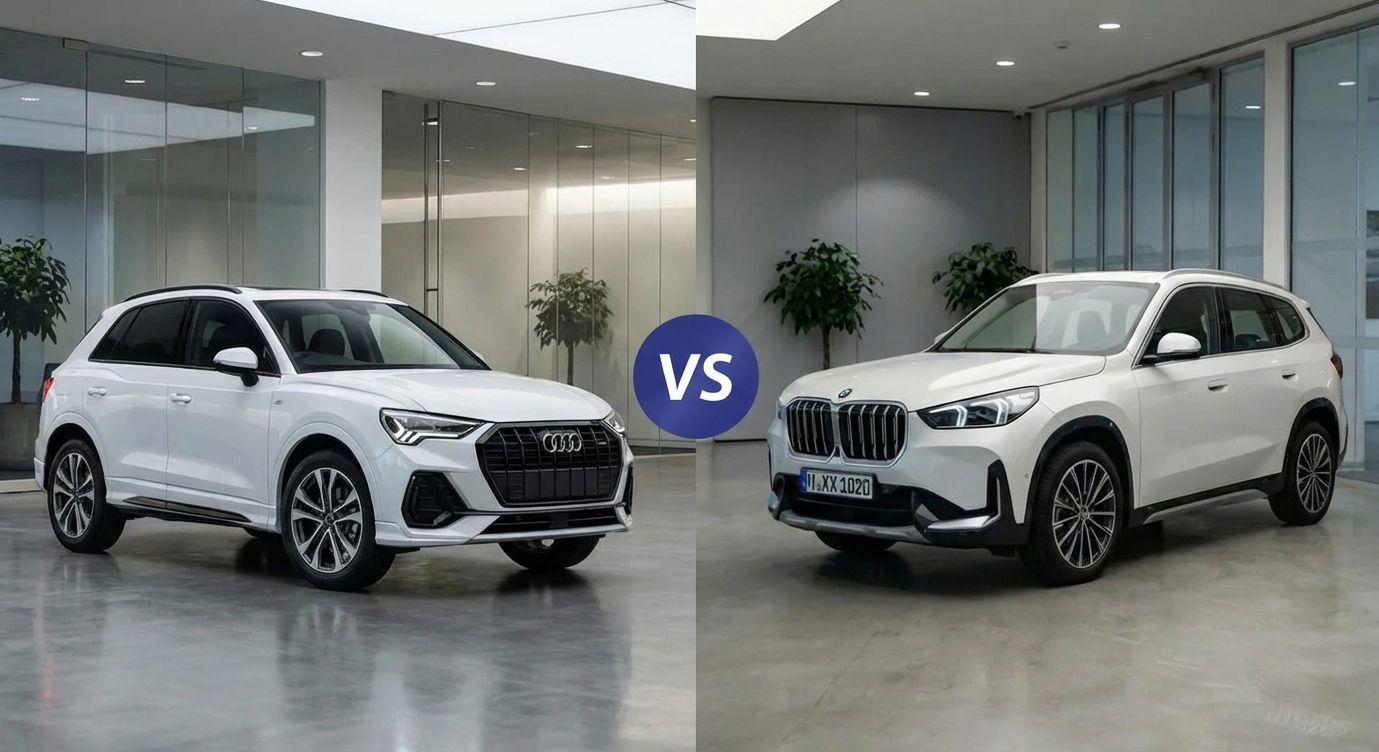
Audi Q3 vs BMW X1: Detailed comparison of design, performance, and practicality. Find out which premium SUV is the right choice for you in our verdict.
Apr 14, 2026
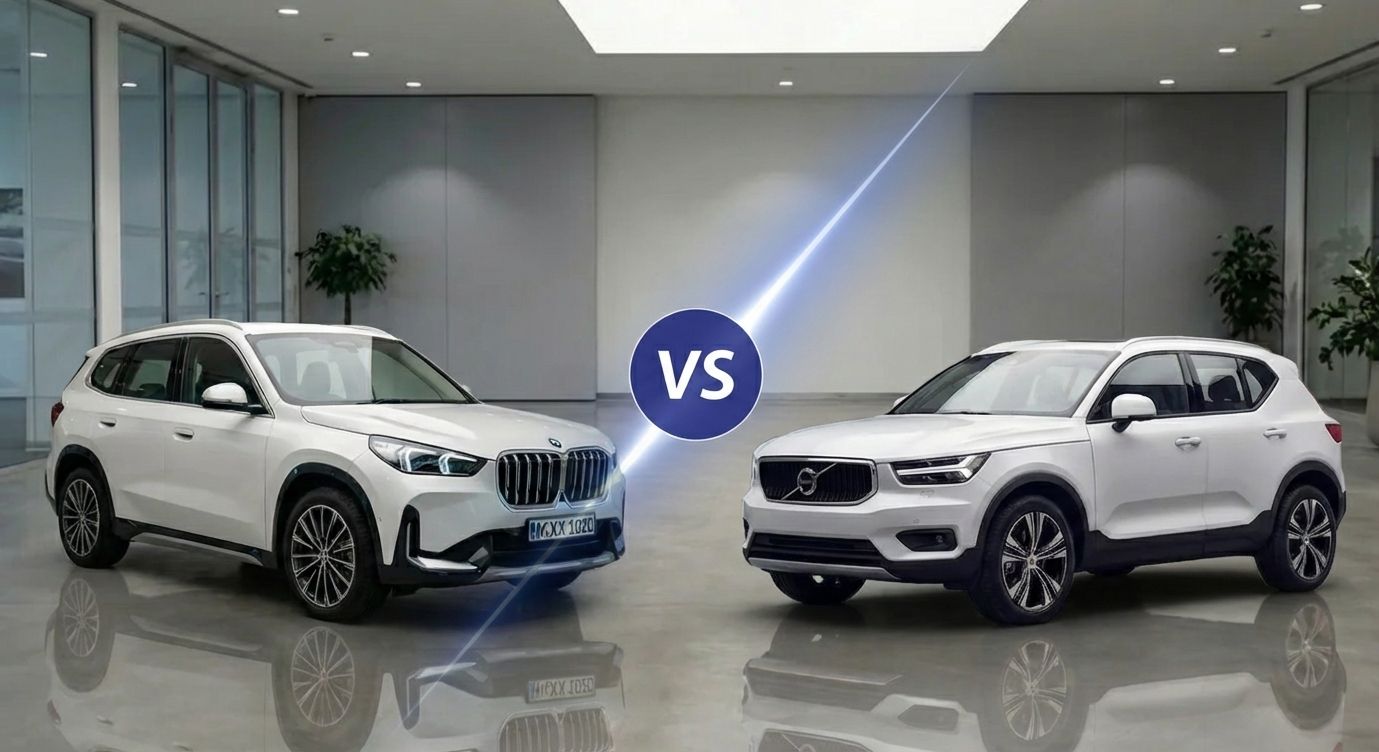
BMW X1 vs. Volvo XC40: Which premium SUV is better for you? Our detailed comparison and verdict will help you make the final decision.
Apr 14, 2026