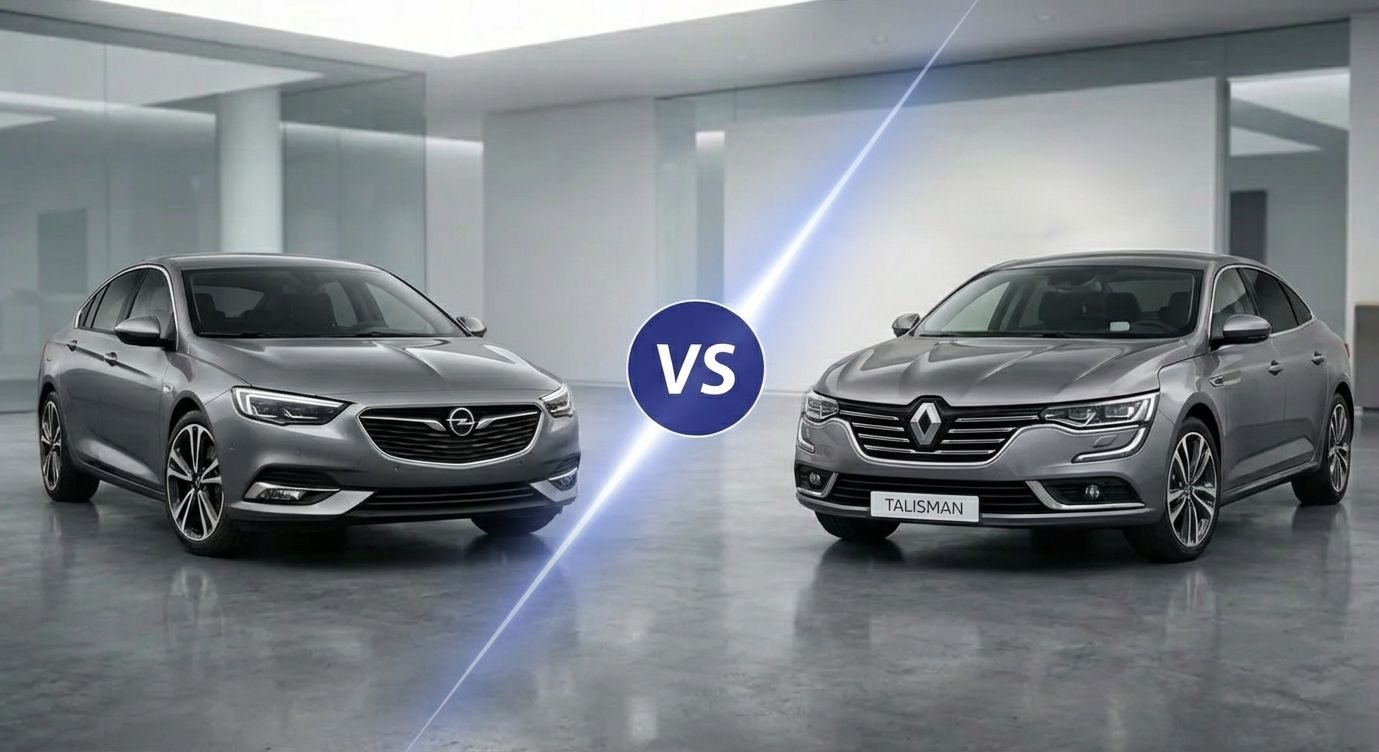
Car battle
Opel Insignia vs. Renault Talisman: Complete comparison 2026
Opel Insignia vs Renault Talisman: A Detailed Comparison. Find out which executive sedan is the better choice. Real data, features, and verdict.
Apr 14, 2026
Articles
Car battle
Detailed comparison of used Opel Insignia and Toyota Camry cars. We compare driving characteristics, reliability, and space. Find out which one is the better choice!
May 14, 2026
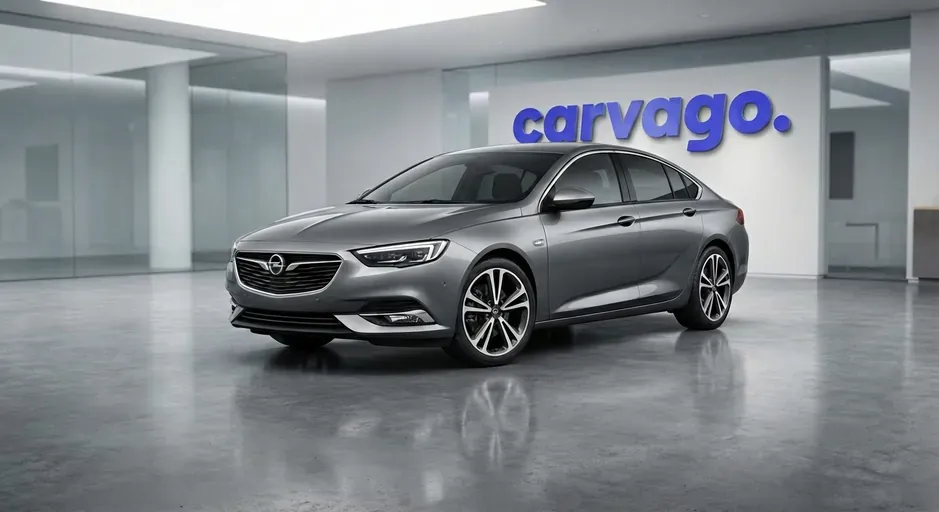
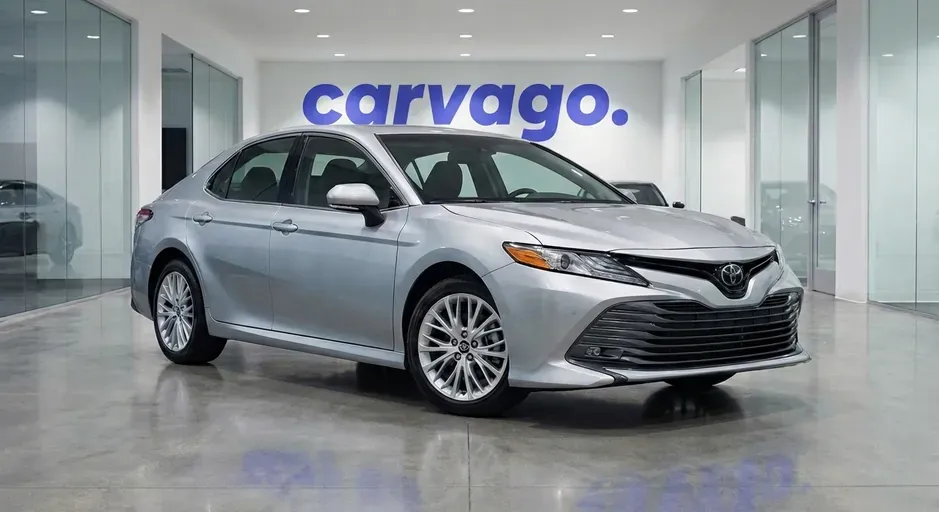
The Opel Insignia, also sold in some global markets under the names Vauxhall Insignia, Buick Regal, or Holden Commodore, is an elegant European car that has gained popularity thanks to its excellent driving characteristics and exceptionally spacious interior. Standing against it is the Toyota Camry, a global bestseller known in selected Asian markets as the Daihatsu Altis, which, as a classic sedan, scores points primarily for its legendary reliability and highly efficient hybrid powertrain. Let's take a detailed look together at which of these two differently conceived mid-size representatives represents the smarter choice for a purchase on the nearly-new used car market.
When choosing a spacious car on the used car market, where you most often encounter approximately four-year-old models today (Opel Insignia generation B from 2017–2022 and Toyota Camry generation XV70 from 2019–2021), exterior dimensions play a crucial role. Both cars rank among full-fledged representatives of the mid-size class with very generous proportions. While the Toyota Camry opted exclusively for a traditional elegant sedan body, the Opel Insignia gives customers a choice between a dynamically styled hatchback (sold under the Grand Sport label) and a majestic estate (Sports Tourer).
Looking at the specific numbers, we find that the models with sloping roofs have little to reproach each other for. The Toyota Camry measures 4885 mm in length, a value that the Insignia hatchback exceeds by a barely noticeable 12 mm (measuring 4897 mm, or 4910 mm for the sporty GSi version). For daily city parking, both models are almost identical and require adequate parking spaces. However, if you opt for the more practical Insignia Sports Tourer estate, you must account for a length approaching a respectable five meters (4986–4998 mm). While this brings a huge benefit for transporting long items, maneuvering in narrow underground garages may require increased attention. The Opel also has a slight edge in width – at 1863 mm, it is 23 mm wider than the Camry. In practice, this means slightly better shoulder room for passengers inside the cabin, albeit at the cost of greater caution when opening doors in cramped shopping center parking lots.
The wheelbase, which is a key indicator for interior longitudinal space, is practically identical for both cars. Opel offers 2829 mm, while Toyota counters with 2825 mm. In real-world use, a clear conclusion follows from these numbers: both models provide king-sized legroom in the rear seats and will easily transport four adult passengers in maximum comfort on long journeys. The low body height of around 1445 mm for both cars aids aerodynamics, lowers the center of gravity, and improves overall stability at highway speeds. In terms of overall dimensions, the final decision depends primarily on whether you prefer the representative and slightly more agile sedan from Toyota, or whether the gigantic space of the elongated German estate better suits your lifestyle.
| Parameter | Opel Insignia Hatchback | Toyota Camry Sedan | Opel Insignia Estate |
|---|---|---|---|
| Width (mm) | 1863 | 1840 | 1863 |
| Length (mm) | 4897 - 4910 | 4885 | 4986 - 4998 |
| Height (mm) | 1445 - 1455 | 1445 | 1490 - 1500 |
| Wheelbase (mm) | 2829 | 2825 | 2829 |
Luggage space is a key factor for many drivers when choosing the ideal used car, whether for everyday family utility, transporting sports equipment, or overall practicality. When comparing approximately four-year-old models of the Opel Insignia (generation B) and Toyota Camry (generation XV70), we encounter completely different approaches. While the Insignia bets on maximum variability and offers two highly practical body versions, the Camry sticks to the traditional concept of a representative sedan combined with fuel-efficient hybrid technology on the European market.
Opel Insignia is a total all-rounder from a moving perspective. In its hatchback version (often referred to as the Grand Sport liftback with a large tailgate), it provides a basic volume of 490 liters, which is comfortably enough for everyday needs. However, the true family king is the estate version, called Sports Tourer by Opel. It boasts a basic luggage compartment of 560 liters, which safely means space for several extra suitcases and a stroller to boot. If you fold down the rear seats, you get 1,450 liters in the hatchback, and in the estate, the space expands to a luxurious 1,665 liters – a value more than sufficient for weekend shopping, longer vacations, or even moving small furniture.
In contrast, the eighth-generation Toyota Camry, which you will find exclusively as a hybrid (2.5 Hybrid) on the pre-owned car market, plays more on the note of elegance and executive focus. The hybrid system's battery and the sedan body type mean a different construction of the rear part of the car. Even so, the Camry scores with an excellent basic trunk volume of 524 liters, which even slightly exceeds the basic value of the Opel hatchback. The deep luggage compartment easily accommodates a set of travel suitcases or golf bags, but due to the fixed partition behind the rear seats and the sedan body, it does not achieve the absolute flexibility and gigantic maximum volume for transporting bulky loads like the Insignia.
| Parameter | Opel Insignia Hatchback | Opel Insignia Estate | Toyota Camry Sedan |
|---|---|---|---|
| Basic volume (liters) | 490 | 560 | 524 |
| Maximum volume with seats folded (liters) | 1450 | 1665 | - |
In conclusion, for buyers who require unrivaled family practicality, the ability to transport large items, and do not want to compromise on rear space variability, the Opel Insignia is the clear winner – especially in the Estate version. The Toyota Camry, on the other hand, will satisfy those who need an above-average and well-utilizable basic trunk without the need to turn their car into a moving van.
While the Opel Insignia reigns supreme in overall variability and giant space after folding the seats, the Toyota Camry offers a generous basic trunk ideal for regular executive or family travel without heavy loads.
The ability to tow a trailer is often a deciding factor when choosing a used car, revealing stark differences in the practical utility of the two competitors. If we focus on roughly four-year-old cars – specifically the Opel Insignia generation B (production 2017–2022) and the Toyota Camry generation XV70 (production from 2019) – we enter completely different worlds. The Opel Insignia is considered an exceptionally versatile workhorse. Its standard braked trailer weight ranges from 1300 to 1625 kg for weaker engines (such as the popular 1.5 Diesel). The maximum braked trailer weight for more powerful versions, such as the 2.0 Diesel or 2.0 DI Turbo, climbs to an excellent 2000 to 2200 kg. In contrast, the Toyota Camry represents a fundamental compromise in this discipline. Roughly four-year-old Camry XV70 models are available on the European market exclusively with the 2.5 Hybrid powertrain. To protect the complex hybrid system, the manufacturer does not provide any tabular data for towing, and the official permitted trailer weight is exactly 0 kg. In practice, this means a huge difference – while with the Insignia you can easily gain space for several extra suitcases in a small trailer, which is a capacity perfectly sufficient for weekend shopping or a longer vacation, or you can easily hitch up a family caravan, the Toyota Camry simply cannot serve these purposes. Due to the complete absence of data and towing homologation for the Camry model, only the values for the Opel Insignia are listed in the overview below. The conclusion is therefore clear: if you are considering using a tow bar in any way, the Opel Insignia is the absolutely clear choice, while you must uncompromisingly exclude the Toyota Camry from your selection.
| Model and motorization | Braked weight of trailer (kg) | Unbraked weight of trailer (kg) |
|---|---|---|
| Opel Insignia Grand Sport 1.5 Diesel (90 kW) | 1500 | 750 |
| Opel Insignia Sports Tourer 1.5 Diesel (90 kW) | 1450 - 1625 | 750 |
| Opel Insignia Grand Sport 2.0 Diesel (128 kW) | 1625 - 1950 | 750 |
| Opel Insignia Sports Tourer 2.0 Diesel (128 kW) | 1550 - 1900 | 750 |
| Opel Insignia Grand Sport 2.0 DI Turbo (147 kW) | 2000 | 750 |
| Opel Insignia Sports Tourer 2.0 DI Turbo (191 kW) | 2200 | 750 |
In terms of powertrains, the Opel Insignia and Toyota Camry offer completely different approaches, perfectly reflecting the differing philosophies of the two brands. While the German Opel relied on an extremely wide range of classic turbocharged petrol and diesel engines for its flagship, with options for manual or automatic transmissions and optional all-wheel drive, the Japanese Toyota follows the path of maximum efficiency through a single, precisely optimized hybrid powertrain. For buyers in the approximately four-year-old used car segment, this presents a very clear decision. Drivers covering huge distances on motorways or requiring the traction of 4x4 drive will appreciate the powerful diesels and versatility of the Insignia. Conversely, customers who prefer a refined and smooth performance with exceptionally low fuel consumption (especially in city and suburban traffic) and renowned reliability will happily opt for the sophisticated hybrid in the Toyota Camry.
The range of engines for the Opel Insignia (generation B, available roughly between 2017–2022) will please anyone who likes to choose exactly according to their needs. The base petrol engines are represented by the reliable 1.5 DI Turbo four-cylinder, which is an ideal choice for daily commutes. Drivers seeking performance had access to top-of-the-line turbocharged two-litre engines with up to 191 kW (169 kW for the GSi version after the facelift), which were standardly paired with advanced all-wheel drive with torque vectoring and an eight- or nine-speed automatic. If you are looking for a motorway cruiser, the Insignia also offered excellent diesel units. The range started with the economical 1.5 and 1.6 Diesel engines, while for the demanding, there was the confident 2.0 Diesel or even the 2.0 BiTurbo Diesel version with 154 kW and a massive 480 Nm of torque. However, it should be noted that as the end of Insignia production approached in 2022, the engine range narrowed significantly – some powerful or diesel BiTurbo variants are therefore no longer present on the used car market for the youngest model years.
| Engine type | Fuel type | Power (kW) | Torque (Nm) | Transmission |
|---|---|---|---|---|
| 1.5 DI Turbo | Petrol | 103 / 121 | 250 | 6MT / 6AT |
| 1.6 DI Turbo | Petrol | 147 | 280 | 6MT / 6AT |
| 2.0 DI Turbo | Petrol | 147 / 169 / 191 | 350 / 400 | 8AT / 9AT |
| 1.5 Diesel | Diesel | 90 | 300 | 6MT / 8AT |
| 1.6 Diesel | Diesel | 81 / 100 | 300 / 320 | 6MT / 6AT |
| 2.0 Diesel | Diesel | 125 / 128 | 400 | 6MT / 8AT |
| 2.0 BiTurbo Diesel | Diesel | 154 | 480 | 8AT |
The eighth-generation Toyota Camry (XV70), which returned to the European market at the end of 2018 and covers exactly the range of four-year-old used cars we are monitoring, chose the philosophy of "strength in simplicity." The traditional Japanese sedan does not offer a long list of optional engines but relies on the best the automaker has in its portfolio – reliable hybrid technology. You can purchase the car exclusively as a full-hybrid designated as 2.5 Hybrid. A naturally aspirated petrol four-cylinder operating on the Atkinson cycle is paired here with a powerful synchronous electric motor, with the system output reaching an excellent 160 kW (218 hp). A sophisticated e-CVT planetary gearbox ensures smooth and completely uninterrupted torque transfer to the front wheels. Although the Camry does not offer the sporty aggressiveness of the powerful Insignias and lacks 4x4 drive, its great weapons are almost absolute smoothness, cabin quietness, and fuel consumption that can easily put even the most modern diesels from competitors to shame in the city.
| Engine type | Fuel type | Power (kW) | Torque (Nm) | Transmission |
|---|---|---|---|---|
| 2.5 Hybrid | Hybrid (Petrol) | 160 | 221 / 202 (electric motor) | e-CVT |
While the Opel Insignia scores with a diverse range of traditional turbocharged engines and the option of 4x4 drive, the Toyota Camry bets everything on one card – an exceptionally economical and durable hybrid powertrain. For purely motorway use or in mountainous areas, the diesel Insignia makes sense; for mixed and city traffic, the comfortable Camry is the clear favourite.
Choosing the right engine is crucial for long-term satisfaction with a car, which is why our recommendations are based on real-world experience, fuel consumption in normal traffic, owner feedback, and mechanical reliability. While the Opel Insignia relies on a traditional European approach, offering a wide range of petrol and diesel power units for various types of use, the eighth-generation Toyota Camry (XV70) put all its eggs in one basket in Europe – a sophisticated hybrid system. While with a used Opel around four years old you can choose between classic internal combustion engines with the option of all-wheel drive, the Camry sticks to a strict philosophy of a single efficient front-wheel-drive powertrain that absolutely dominates reliability charts and real-world city fuel consumption.
In the Insignia B generation (available as Grand Sport or Sports Tourer, following the 2020 facelift), the more powerful two-litre diesel four-cylinder represents the absolute peak in terms of the ratio between dynamics, practicality, and operating costs. This engine boasts a very smooth torque curve (380 Nm), which confidently and quietly handles even a fully loaded car during overtaking, while real-world fuel consumption easily stays around 5.5 litres per 100 km. Mechanically, it is an exceptionally robust and reliable unit, provided it receives proper maintenance. A known risk with modern diesels here is the diesel particulate filter (DPF) and the EGR system. If the car was driven exclusively on short city routes by the previous owner, there may be a risk of premature DPF clogging. When buying a used car, we therefore recommend verifying whether the car actually drove longer distances and, after purchase, making sure to take a longer drive (ideally on the motorway) at least once every two weeks, which triggers the regeneration process and prevents costly repairs. This engine is tailor-made for drivers covering long motorway distances and for family holidays, where you will fully appreciate the excellent ride comfort and a range exceeding 1,000 kilometres on a single tank.
For the Camry (XV70 generation produced roughly from 2019 to 2021), the engine choice for a four-year-old used car is easy, as Toyota imported only a single powertrain to Europe – and they did very well. It is an excellent, naturally aspirated 2.5-litre four-cylinder combined with an electric motor for a total system output of 160 kW (218 hp). The main advantage of this powertrain is its almost bulletproof reliability and efficiency. Thanks to the absence of many delicate components that plague other used cars (the car has no traditional starter, conventional alternator, dual-mass flywheel, DPF, or traditional mechanical gearbox), service risks are reduced to an absolute minimum. In real-world driving, especially in the city, fuel consumption is fantastically low, easily under 5.5 l/100 km. The only "weakness" for drivers might be the unusual acoustic profile; the e-CVT planetary gearbox sends the engine into high revs when the accelerator is pressed hard before physical acceleration occurs (the so-called "vacuum cleaner effect"). To eliminate this phenomenon, simply drive with a smoother throttle input. The Camry is absolutely ideal for calmer drivers, city and suburban commuting, and anyone who requires maximum longevity without unexpected service expenses.
Official paper consumption figures provided by manufacturers in promotional materials are often too optimistic and can unpleasantly surprise a future owner in real-world driving. Especially for large mid-size executive and family cars, it is therefore crucial to monitor actual data from drivers themselves.
For the most accurate comparison of fuel costs, we used objective user data from the independent community portal Spritmonitor.de. We focused the data exclusively on approximately four-year-old vehicles (model years around 2020–2022), which make the most sense in the current used car market. For the Opel Insignia, this is the updated Generation B; for the Toyota, it is the XV70 generation.
| Model and engine | Average consumption (l/100 km) |
|---|---|
| Opel Insignia 1.5 Diesel | 5.4 |
| Opel Insignia 2.0 Diesel | 6.3 |
| Opel Insignia 2.0 DI Turbo | 8.5 |
| Toyota Camry 2.5 Hybrid | 5.9 |
The choice of the ideal engine should depend purely on your driving profile. If you regularly drive within the city and suburban areas, the Toyota Camry's hybrid powertrain is the absolute king. In slow-moving traffic, it effectively recuperates energy, moves largely on electricity, and saves you significant money.
On the other hand, if you are a typical business traveler and cover hundreds of kilometers across the highway network, the Toyota gradually loses its advantage. At steady speeds above 130 km/h, the hybrid battery no longer helps as much, and the large-capacity diesel comes into its own. Here, the Opel Insignia 2.0 Diesel clearly scores, guaranteeing smooth dynamics and exemplary stable consumption even under load.
In the final verdict, it can be stated that fuel consumption definitely plays the role of a fundamental decision-making factor in this specific comparison. It dictates the precise focus of both cars – while the hybrid Japanese model is an unrivaled leader for economical operation in and around the city, the diesel German remains an unsurpassed workhorse for long and fast highway journeys.
Looking at the used car market, where we select roughly four-year-old cars (manufactured around 2021 and 2022), the Opel Insignia and Toyota Camry represent completely different investment approaches. These two cars behave fundamentally differently in terms of residual value and market price. While one model attracts with a steeper price drop and a bargain purchase, the other holds its value with iron-clad regularity.
The second generation of the Opel Insignia is a prime example of a car with a fantastic price-to-performance ratio on the used car market. Depreciation in the first years is relatively fast, which second-hand buyers benefit from to the maximum.
The Toyota Camry is primarily available in Europe as the fuel-efficient 2.5 Hybrid model. The reputation for legendary reliability and an indestructible hybrid powertrain is immediately reflected in Toyota's used car price lists – the car loses value very slowly.
| Model | Starting price of used cars (approx.) | Average price of higher trims | Depreciation rate |
|---|---|---|---|
| Opel Insignia | €14,000 | €18,000 | Fast (advantageous for used car buyers) |
| Toyota Camry | €23,000 | €31,000 | Very slow (protects investment) |
The Opel Insignia scores with an exceptionally attractive purchase price thanks to faster depreciation, while the significantly more expensive Toyota Camry justifies its price with renowned reliability and stable market value for the future.
Both models are generally associated with excellent safety in the automotive world, and five-star occupant protection standards are often cited in connection with them. However, when assessing these results for used cars, it is always necessary to emphasize the importance of context and the specific year of testing. The testing protocols of the independent organization Euro NCAP are constantly evolving and becoming stricter over the years. While older vehicle models underwent more lenient evaluations, newer tests already include much more demanding frontal impact simulations with a mobile barrier, stricter cyclist detection, and complex intersection scenarios. Percentage results from different years simply cannot be directly and objectively compared.
The Opel Insignia Generation B underwent European safety tests in 2017 and earned the maximum five stars according to the standards applicable at the time. The car clearly excelled in the area of adult occupant protection, where it achieved an excellent score of 93%, and it also performed very well in protecting children in the rear seats (85%). Euro NCAP specifically praised the use of an active hood at the time, which lifts in a fraction of a second during a collision with a pedestrian to mitigate the consequences of a head impact. In the safety assist systems category, Opel received 69%, contributed to by the reliably functioning automatic emergency braking. From today's perspective, however, the validity of the 2017 certification has formally expired and does not fully take into account modern intersection and predictive assistants.
For the Toyota Camry model approximately four years old (XV70 generation), the situation is completely different. Although the car collected maximum five-star ratings in strict Australian ANCAP tests and American crash tests, the Euro NCAP organization never officially tested this model after its return to the European market in 2019. For this reason, we do not list any percentage data for the Camry in the table. However, this absence definitely does not mean lower safety. On the contrary, the Camry is already equipped as standard with a very comprehensive Toyota Safety Sense package, which includes adaptive cruise control, a pre-collision system with advanced pedestrian detection, and sophisticated lane-keeping assist.
In conclusion, both vehicles provide families and professionals with an above-average level of protection. While the Opel Insignia can rely on a proven and structurally very strong body confirmed by a five-star European certificate from 2017, the Toyota Camry, even without official Euro NCAP data, possesses a more modern and comprehensive package of active assistants. Thus, the Japanese sedan currently offers a solution that more closely matches contemporary demands for accident prevention and everyday traffic safety.
| Parameter | Opel Insignia | Toyota Camry |
|---|---|---|
| Year of testing | 2017 | - |
| Adult occupant protection | 93 % | - |
| Child protection | 85 % | - |
| Vulnerable road user protection | 78 % | - |
| Safety assist systems | 69 % | - |
Although only the Insignia has an official European certificate, both cars are among the top-tier safe used vehicles. However, in this duel, the Camry scores with a more modern and richer set of preventive assistants.
In addition to standard equipment, each of the models offers several unique features that push the user experience beyond common expectations, with each automaker choosing a completely different approach to added value and innovation.
With the Insignia model, Opel focuses primarily on top-tier ergonomics, advanced lighting, and driving characteristics that will be especially appreciated by drivers spending long hours on highways.
Toyota approaches the Camry model as an executive sedan where maximum reliability, quiet operation, and unexpected comfort for rear-seat passengers play the lead role.
Availability of a very practical estate body style (Sports Tourer) and an elegant liftback (Grand Sport)
Top-tier ergonomic seats with AGR certification, which reduce fatigue on long journeys
Excellent IntelliLux LED Matrix adaptive headlights with smooth masking of surrounding traffic
Confident handling and top-tier stability at high motorway speeds
Option of all-wheel drive (4x4) for more powerful engines
Significantly lower purchase price on the used car market compared to competitors
Faster depreciation of residual value compared to established Japanese and German premium brands
Slightly outdated graphics and slower response of the onboard infotainment
Absence of an efficient full-hybrid engine in the range
Larger exterior dimensions make parking in narrow city streets more difficult
Opel Insignia represents an underrated and exceptionally comfortable motorway cruiser that offers premium equipment, led by great lights and seats, at a very favorable price on the used car market. It is an ideal choice for families and business travelers who require an estate body style and spend a lot of time on longer routes.
Renowned and time-tested overall vehicle reliability
Exceptionally efficient hybrid powertrain (2.5 Hybrid) with low fuel consumption even in city traffic
Top-tier residual value, ensuring minimal financial loss upon resale
Spacious interior focused on quiet operation and maximum acoustic comfort
Low maintenance costs and slower wear of brake pads thanks to strong recuperation
Exclusively available as a sedan on the European market (lacks a more practical estate version)
Graphically and functionally more outdated multimedia system (especially in pre-facelift versions)
Specific monotonous sound of the e-CVT gearbox during sharp acceleration
Not available with all-wheel drive
Limited size of the boot opening
The Toyota Camry is a clear choice for rational drivers for whom reliability, cabin quietness, and low operating costs are absolute priorities. Although the absence of an estate version may deter some families, as a comfortable family or executive sedan, it makes immense sense in the long run.
Based on our own statistics, long-term user experience, service reports, and outputs from the comprehensive CarAudit service, we have compiled an overview of the most common problems that used car buyers should watch out for.
The second-generation Opel Insignia is a robust highway cruiser, but when choosing one, a detailed physical inspection of the used car is worthwhile, as specific faults associated with electronics and certain engines appear.
While the chassis and comfort are at a top level, the Insignia requires a careful history check and regular service, especially regarding the automatic transmission and diesel engines.
The eighth generation of the Toyota Camry is known for its legendary mechanical reliability, but even it has a few minor weaknesses that are good to check when inspecting a used car.
The Toyota Camry is an exceptionally reliable car with a trouble-free hybrid drive, whose main shortcomings are limited only to slower infotainment and a thinner layer of paint.
When buying a used car, a thorough inspection is key because every model has its specific weak points. A comprehensive car audit can save you a lot of worry and money, so we recommend leaving nothing to chance. Here are some specific points to focus on for these two models.
Both models are excellent highway cruisers, but each approaches travel slightly differently. The Opel Insignia excels thanks to its fantastic AGR-certified ergonomic seats and a very stable chassis at higher speeds. The Toyota Camry, on the other hand, scores with its extremely quiet interior and a maximally smooth and soft ride.
The Opel Insignia is more practical overall because it is sold as a five-door liftback (Grand Sport) with a large tailgate, or as a spacious estate (Sports Tourer). The liftback offers a base volume of 490 litres and the estate 560 litres, while the Camry is a classic sedan with a 524-litre boot and a significantly smaller loading opening.
The Toyota Camry, with its advanced hybrid drive, dominates primarily in urban and suburban traffic, where its consumption typically hovers around 5 l/100 km. The Opel Insignia with its economical diesel engine is, on the contrary, a better and more efficient choice for regular and long trips exclusively on the highway.
The Toyota Camry has long been considered a benchmark for reliability across the market, especially thanks to its robust and time-tested hybrid system. While the second-generation Opel Insignia is a solidly built car without chronic defects, it falls slightly behind its Japanese competitor in terms of overall trouble-free operation and long-term durability.
The Opel Insignia offers a very capable all-wheel drive system with its selected more powerful diesel and petrol engines. In contrast, the Toyota Camry is sold on the European market as a used car exclusively with front-wheel drive in combination with the hybrid powertrain.
The duel between these two mid-size representatives presents a clear choice between maximum family versatility and unmatched operational efficiency. Opel Insignia with a practical estate body style, with all-wheel drive capability and high towing capacity, shines as an ideal motorway cruiser for active families and travelers. Toyota Camry, on the other hand, excels as a representative and exceptionally comfortable sedan, whose advanced hybrid powertrain guarantees unrivaled reliability and fuel savings, especially in urban or suburban traffic. So, if you are looking for a more affordable and spacious vehicle for long journeys, choose the versatile Opel; however, if you prefer minimal depreciation and quiet, low-cost operation, the Japanese limousine will be the most sensible investment for you.
Sources: ADAC, auto.cz, svetmotoru.cz, autotechnik.cz, autorevue.cz, nabijecka.cz
This article was prepared using artificial intelligence tools. The section guarantor is Petr Dušek.
Opel Insignia vs Renault Talisman: A Detailed Comparison. Find out which executive sedan is the better choice. Real data, features, and verdict.
Apr 14, 2026
Detailed comparison of used Mazda 6 vs. Škoda Superb. We reveal real-world experiences, fuel consumption, and spaciousness, and provide a clear verdict to help you make the right choice.
Apr 2, 2026
Jaguar XE vs. Mercedes-Benz C-Class comparison. Read a detailed comparison of used cars, driving characteristics, and equipment to find out which one to choose.
Apr 22, 2026