Articles

Car battle

Jaguar XE vs. Mercedes-Benz C-Class: Complete comparison 2026

Jaguar XE vs. Mercedes-Benz C-Class comparison. Read a detailed comparison of used cars, driving characteristics, and equipment to find out which one to choose.

April 22, 2026

VS
Jaguar XE

Jaguar XE

Mercedes-Benz C-Class

Mercedes-Benz C-Class

Introduction

The British Jaguar XE (also known in an extended version as the Jaguar XEL in selected markets) brings unmistakable sporting charm, excellent driving agility, and a sophisticated lightweight aluminum architecture to the premium mid-size sedan segment. Its arch-rival is the long-standing benchmark of this category, the German Mercedes-Benz C-Class, which traditionally dominates with top-tier ride comfort, a luxurious interior finish, and the latest safety and assistance technologies. The following comparison explores the key differences between both models in detail and will help you decide which of these representative cars will better suit your personal requirements and preferences on the used car market.

Comparison of External Dimensions

Exterior Dimensions and Body Concept

When looking at the exterior proportions of both models, especially if we focus on the highly sought-after roughly four-year-old cars (production year around 2022), we encounter interesting differences in the philosophy of both brands. The Mercedes-Benz C-Class in its then-emerging W206 generation measures 4751 mm in length, outgrowing its British competitor, the Jaguar XE, by a full 73 mm. Conversely, according to technical data, the British feline stands out with an above-standard overall width of 1967 mm, which is a staggering 147 mm more than the German sedan, which sticks to a value of 1820 mm. In terms of height, the Stuttgart rival, at 1438 mm, is nearly three centimeters taller than the Jaguar, which has its roof positioned closer to the asphalt (1410 to 1425 mm). The Jaguar's wider and lower build thus gives the car a much more aggressive and sporty stance, while the Mercedes' narrower and slightly longer body facilitates everyday parking and maneuvering in tight city streets.

A crucial parameter for overall cabin spaciousness and driving characteristics is the wheelbase. In this regard, the Mercedes-Benz C-Class has a slight edge, as it offers a respectable wheelbase of 2865 mm. In contrast, the Jaguar XE has a value of 2835 mm, which means a loss of 30 millimeters in favor of the German car. Although this difference might seem like a negligible detail on paper, every millimeter counts in the premium mid-size segment. The longer wheelbase of the Mercedes guarantees slightly more legroom in the rear seats and a smoother ride over bumps, making it a more logical and comfortable choice for drivers who will regularly use the car with more passengers on board.

When choosing a used premium car, the breadth of the body style range also plays an important role. While Jaguar offers the XE model strictly and only as a classic four-door sedan with a sporty cut, Mercedes-Benz traditionally covers a much wider market spectrum. In addition to the base C-Class sedan, you can purchase the popular, design-balanced, and highly practical estate variant (T-Modell, including the slightly raised All-Terrain versions). For more emotionally driven drivers, the used car market also offers a two-door coupe or a stylish convertible with a soft top, although for these variants in the 2021 model years, they are still the outgoing versions of the previous W205 generation. The richer palette of body styles makes the Mercedes a more versatile platform where almost every buyer can choose exactly according to their lifestyle; conversely, Jaguar focuses exclusively on purists demanding the elegant proportions of a British sedan.

Overview of Exterior Dimensions (2021–2023 models)

ParameterJaguar XE SedanMercedes-Benz C-Class SedanMercedes-Benz C-Class EstateMercedes-Benz C-Class CoupeMercedes-Benz C-Class Convertible
Length (mm)467847514751 - 475546864686
Width (mm)19671820182018101810
Height (mm)1410 - 142514381454 - 149414051409
Wheelbase (mm)28352865286528402840

Trunk Volume

When choosing a premium mid-size car, practicality and everyday usability often play a key role. Here, the approach of the Jaguar XE and the Mercedes-Benz C-Class differs quite fundamentally, especially when comparing models around four years old on the used car market (the W206/S206 generation for Mercedes, introduced in 2021). For buyers looking for an ideal family car or who often travel on long holidays, trunk capacity is one of the most important parameters. While the British feline prioritizes a sporty character and focuses more on the driving experience, the German representative offers much more versatility and space for a few extra suitcases.

When comparing the four-door body styles, the Mercedes-Benz C-Class Sedan has a slight edge, offering a very accessible trunk with a base capacity of 455 liters. The Jaguar XE responds with a slightly more modest 410 liters and a relatively narrow loading opening, which can make handling larger items more difficult. A major advantage of the Mercedes, however, is the availability of the more practical estate version. This provides a base capacity of 490 liters, which is fully sufficient for weekend shopping or storing a stroller. Furthermore, with the rear seats folded down, the estate's capacity grows to a generous 1,510 liters. In contrast, Jaguar never produced the XE in a family estate variant.

It is also important to mention the specifics of the highly sought-after hybrid powertrains. If you are considering a plug-in hybrid (PHEV) version of the Mercedes-Benz C-Class, you must expect a significant reduction in practicality due to the installation of a heavy battery. In the sedan, the trunk space drops to a below-average 315 liters, and in the estate to 360 liters (with seats folded, to a maximum of 1,375 liters). The Jaguar XE, which in its latest iterations relies on conventional engines and only mild-hybrid technology (e.g., in the popular D200 diesel version), avoids this compromise and maintains its standard trunk capacity across the entire engine range.

ParameterJaguar XE SedanMercedes-Benz C-Class SedanJaguar XE EstateMercedes-Benz C-Class Estate
Base capacity (liters)410 l455 l-490 l
Maximum capacity with seats folded (liters)---1,510 l

Practicality clearly in favor of Germany 🧳

If a large trunk is a priority for you, the Mercedes-Benz C-Class represents a much more rational choice, primarily thanks to the availability of the very spacious estate version. The Jaguar XE will primarily please drivers for whom a basic capacity for everyday shopping is enough and who prefer elegant sporty style over pure family utility.

Discover the true condition of the car thanks to an independent inspection

Order CarAudit™

Trailer Weights

The ability to tow a trailer is often not the first thing potential buyers of a premium mid-size sedan or estate evaluate, yet it plays a crucial role in everyday practicality. Whether you are planning a summer holiday with a caravan or need to transport a heavier load occasionally, towing capacity can be a deciding factor when choosing a car.

Looking at roughly four-year-old used cars on today's market (i.e., models manufactured around 2022), both cars are remarkably similar and demonstrate a high level of utility. Common petrol and diesel engines of both models, such as the Jaguar XE P250 and D200 (X760 generation) or the Mercedes-Benz C 200 and C 200 d (modern W206 generation), offer a standard and maximum braked trailer weight of exactly 1800 kg. The unbraked trailer weight for both luxury mid-size representatives reaches the standard legal maximum of 750 kg.

Differences can be found mainly in older model years or specific, fuel-efficiency-oriented versions. For example, if you were to opt for an older Jaguar XE in the E-Performance version, the maximum permitted braked trailer load drops to 1600 kg. The previous generation of the Mercedes C-Class (W205) was very similar, where selected older diesel engines (e.g., BlueTEC) or convertible models also had the limit reduced to 1600 kg. However, with the more modern four-year-old cars on offer, you will encounter a full 1800 kg for both brands.

In practice, these values mean an excellent level of versatility and a huge benefit for family life. A towing capacity of 1800 kg is sufficient for a comfortable summer holiday with a medium-sized caravan, trouble-free transport of horses in a trailer, or transporting a smaller recreational boat to the water. An elegant executive car can thus transform in an instant into a capable and stable hauler for active weekends, without you necessarily having to purchase a robust SUV.

From the perspective of total towing capacity, there is no clear winner or loser between these two cars. Both the Jaguar XE and the Mercedes-Benz C-Class can handle an identical load in their main engine configurations. You can therefore consider this category a draw and, when choosing your dream used car, base your final decision more on preferences regarding interior space, technology, or the desire for specific driving dynamics.
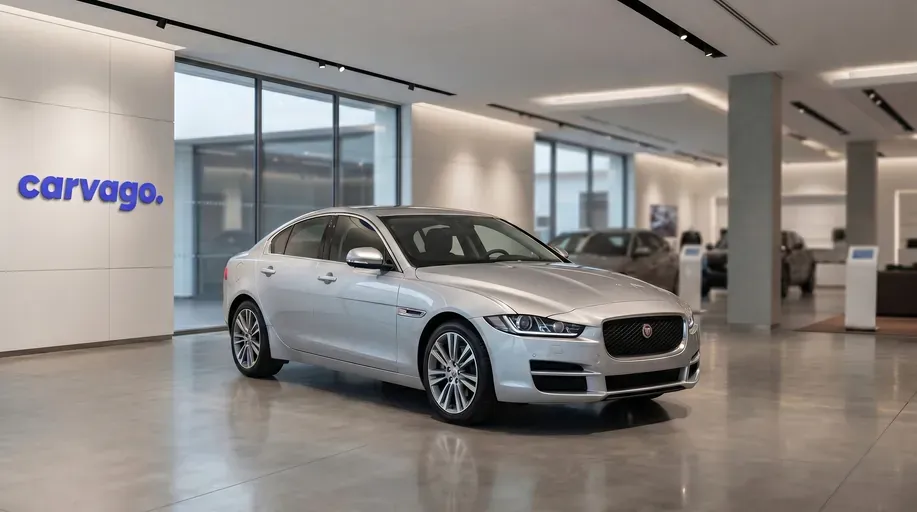
Model and engineBraked trailer weight (kg)Unbraked trailer weight (kg)
Jaguar XE P250 / D200 (X760, 2021+)1800750
Jaguar XE E-Performance (older models)1600750
Mercedes-Benz C 200 / C 200 d (W206, 2021+)1800750
Mercedes-Benz C 200 d / Cabriolet (selected W205 versions)1600 - 1800750

Overview of Most Common Motorizations

Different worlds under the hood

When comparing power units, the Jaguar XE and the Mercedes-Benz C-Class take quite different paths. This difference is crucial for those interested in roughly four-year-old used cars, as it affects not only dynamics and reliability but also future fuel consumption. While Jaguar, as part of its 2019 facelift (and with subsequent technical revisions from 2021), radically cut its offering down to the time-tested two-litre four-cylinder Ingenium engines, Mercedes-Benz, with its W206 generation (produced since 2021), bet on massive electrification across the entire portfolio.

Whichever C-Class of this latest generation you choose, you get mild-hybrid technology (MHEV) with a 48V system and an integrated starter-generator. Jaguar took a somewhat more lukewarm approach to mild hybrids, limiting this assistance technology only to the updated D200 diesel engine. For the buyer, this means that if you prefer maximum efficiency, quiet and smooth engine operation thanks to electricity, and modern technology, Mercedes-Benz has a significant advantage. Jaguar, in return, impresses with a much more straightforward, mechanical character and a reliable eight-speed automatic from the specialists at ZF.

Jaguar XE: A modest but confident range

The British manufacturer opted for significant simplification for the XE luxury sedan. When searching for nearly-new used cars (especially from the 2021 model year onwards), you will exclusively come across modular two-litre turbocharged four-cylinder engines. Petrol engines are represented by the smooth and very flexible P250 version with 184 kW and the noticeably more powerful P300 version (221 kW), which gives the car truly confident dynamics and is paired with all-wheel drive as standard.

The diesel variant is represented by the D200 (150 kW), which benefits from a 48V mild-hybrid circuit. This particular diesel engine is very important and worth noting: in model years from the turn of 2020 and 2021, it completely replaced the older and weaker D180 engine (132 kW, offered mainly between 2019–2020), which lacked electrical assistance and was discontinued. Older power unit designations such as 20t, 25t, or the 25d diesel disappeared completely from the range after the update. This bet on uniformity makes the Jaguar a somewhat more appealing car for a more conservative clientele.

Engine typeFuelPower (kW)Torque (Nm)Transmission
D180 (until 2020)Diesel1324308-speed automatic
D200 (MHEV)Diesel1504308-speed automatic
P250Petrol1843658-speed automatic
P300Petrol2214008-speed automatic

Mercedes-Benz C-Class (W206): The reign of four-cylinders and electricity

The W206 generation is a historical milestone because it entered the market with a bold decision: only four-cylinder engines operate under the hood. As compensation, however, every single engine offers a sophisticated EQ Boost mild-hybrid system as standard, perfectly matched with the smooth 9G-TRONIC nine-speed automatic transmission. The basis for a tighter budget consists of the C 180 (125 kW) and the more popular C 200 (150 kW) petrol versions. More demanding and sportier characters will be easily satisfied by the C 300 (190 kW) variant.

For highway travelers with high mileage, the very refined diesel engines, which often feature 4MATIC all-wheel drive, are the clear choice. An excellent compromise is offered by the entry-level C 200 d (120 kW), while the true king of the highway is the exceptionally efficient C 220 d (147 kW) and the top-of-the-line C 300 d (195 kW) diesel. Furthermore, in the field of roughly four-year-old used cars, variants like the C 300 e with advanced plug-in hybrid technology are already commonly appearing. Its massive battery allows for a real-world range on a single charge of around a generous 100 kilometres, whereby Mercedes completely escapes the competition from Jaguar.

Engine typeFuelPower (kW)Torque (Nm)Transmission
C 180Petrol (MHEV)1252509-speed automatic
C 200Petrol (MHEV)1503009-speed automatic
C 300Petrol (MHEV)1904009-speed automatic
C 200 dDiesel (MHEV)1203809-speed automatic
C 220 dDiesel (MHEV)1474409-speed automatic
C 300 dDiesel (MHEV)1955509-speed automatic
C 300 ePetrol PHEV2305509-speed automatic

Final recommendation

Although the range of the British big cat may seem relatively narrow, the dynamically balanced P250 petrol model makes excellent sense on the used car market for drivers looking for a traditional sporting spark with standard rear-wheel drive. However, if you cover truly large distances or crave emission-free daily commuting to the city, Mercedes-Benz convincingly dominates with its sophisticated range of models like the C 220 d and the plug-in C 300 e. The German rival simply provides many more opportunities to find the absolutely ideal compromise for your needs.

Decision: Proven mechanics or technological dominance? ⚡

While Mercedes-Benz clearly excels in the field of incredible operational efficiency and a massive selection of electrified engines, the British Jaguar will please more purist drivers with its simple and time-tested range of turbocharged petrol engines with great driving character.

Choosing the right engine is absolutely crucial for long-term satisfaction with the car, which is why our recommendations are based on real-world experience with dynamics, actual fuel consumption, user-friendliness, and mechanical reliability. Both of these premium automakers offer advanced power units that, in their latest iterations, have shifted massively to a four-cylinder format supported by mild-hybrid (MHEV) technology. If you are looking for a used car roughly four years old, you must take into account that some earlier engine versions are no longer available in terms of relevant age – these include, for example, the earlier diesel versions of the Jaguar XE 20d (available until 2019) or the historically popular Mercedes-Benz C 200 CDI and petrol C 200 Kompressor units. This is precisely why we are focusing on generations and engines deployed since 2021, which have fully replaced the aforementioned predecessors and currently represent the best intersection of technology and reliability in the used car market.

ModelRecommended enginePowerFuel typeSuitable for generation
Jaguar XED200 MHEV150 kW (204 hp)Diesel + Mild-HybridX760 (from 2021)
Mercedes-Benz C-ClassC 200 MHEV150 kW (204 hp)Petrol + Mild-HybridW206 (from 2021)

For the Jaguar XE, we recommend: D200 (2.0 l Diesel MHEV, 150 kW)

From the current range of the British brand, the updated Ingenium four-cylinder diesel labeled D200 is undoubtedly the most rational choice. This unit delivers 150 kW (204 hp) and a very generous 430 Nm of torque, which perfectly suits the comfortable yet dynamic character of this model. Compared to its predecessors, this newer version (available with the D200 designation since 2021) is equipped with a 48V mild-hybrid system with an integrated starter-generator, which subjectively smoothes out the power delivery from low revs and pushes real fuel consumption well below the 5 l/100 km mark. If you are worried by rumors about the unreliability of older two-liter Ingenium engines, you can breathe a sigh of relief – the factory revised the critical areas in the newer version, and previously common problems with failing timing chains have been almost eliminated. Nevertheless, it is worth preventively verifying the documented service history, and we strongly recommend shortening the engine oil change interval to 15,000 km, which will significantly extend the life of the timing chain. However, watch out for a clogged diesel particulate filter (DPF), which is indicated by reduced power or warning messages on the dashboard; this most often affects cars that the previous owner used only for short city trips without the possibility of natural regeneration. Overall, however, the D200 engine is ideally suited for drivers who spend a lot of time on the highway or country roads and want robust pull combined with a huge range on a single tank.

For the Mercedes-Benz C-Class, we recommend: C 200 (1.5 l Petrol MHEV, 150 kW)

For the latest W206 generation of the Mercedes-Benz C-Class, which began rolling off the lines in 2021 and is now an ideal roughly four-year-old used car, we clearly recommend the petrol C 200 variant. Under its hood, you will find a technically advanced, turbocharged 1.5-liter four-cylinder from the M254 series, which shares the same 150 kW output as the recommended Jaguar, but thanks to the sophisticated EQ Boost electrical system, it can immediately and completely imperceptibly add another 15 kW of "electric" power during acceleration. The result is an unprecedentedly smooth, exceptionally quiet, and velvety ride without vibrations, to which the lightning-fast and gentle nine-speed 9G-TRONIC automatic transmission also contributes significantly. Real-world consumption with this engine can easily be kept around 6.5 l/100 km, making it a fantastic choice for universal use – including regular shorter city commutes, which today's diesel engines (e.g., C 200 d) would likely suffer from. When searching for the right unit, however, be cautious regarding the first owner's service diligence. Some early production units of the C-Class from 2021 and early 2022 occasionally suffered from slightly increased oil consumption through the piston rings or failing variable camshaft timing (clogging of the control valves), which could only be safely avoided by more frequent high-quality oil changes and not neglecting to let the engine warm up smoothly after starting. Once you buy a verified unit and maintain it with proper care, the C 200 represents probably the most pleasant daily drive in the mid-size class.

Real Fuel Consumption

Official fuel consumption figures provided by manufacturers have moved slightly closer to reality thanks to the modern WLTP methodology, yet you often encounter different numbers in everyday driving. To get the most accurate picture of how much fuel these roughly four-year-old cars (primarily focusing on generations and models from 2021–2022) actually require, we looked at real user data from the German community portal Spritmonitor.de. For the comparison, we selected the most common engines that make the most sense for the average buyer on the used car market.

Model and engineAverage consumption (l/100 km)
Jaguar XE P250 (184 kW)9.5
Mercedes-Benz C 200 (150 kW)7.2
Jaguar XE D200 (150 kW)6.0
Mercedes-Benz C 200 d (120 kW)5.3

Looking at the real numbers, fairly clear trends are evident. In the gasoline engine category, the Mercedes-Benz C 200 absolutely dominates. Here, the precisely tuned mild-hybrid technology (EQ Boost) fully proves its worth, managing to keep the average consumption at an excellent 7.2 l/100 km despite solid dynamics. The competing Jaguar XE P250 offers significantly higher power, but in practice, this two-liter gasoline engine asks for roughly 9.5 liters. This represents a somewhat surprising finding – smaller turbocharged units should theoretically save fuel, but here the British technology proves to be very "thirsty" in real-world conditions.

Diesel units are, as expected, substantially better and clearly demonstrate their benefit on long routes. The entry-level diesel Mercedes-Benz C 200 d, with its 5.3 l/100 km, is an uncompromising fuel-saver. The rival Jaguar XE D200 consumes an average of exactly 6.0 l/100 km. This is also a great result, as this engine offers over 200 hp and, combined with the sedan's weight, represents a very interesting balance between dynamics and operating costs.

What does this mean for the typical user?

  • City and suburban driving: If you drive shorter distances and spend a lot of time in city traffic, the gasoline Mercedes makes clear sense. Its electrified system cleverly covers stop-and-go driving, and consumption doesn't skyrocket. With the Jaguar P250, frequent starts will quickly push you over the ten-liter mark, which the daily budget will certainly feel.
  • Highway travel: For mileage eaters and drivers commuting long distances, diesels are an absolute must. Both the German and British representatives handle long highway journeys without problems and with very efficient consumption. While the Mercedes saves a bit more, the Jaguar certainly won't ruin you either.

In conclusion, while the differences in consumption for diesel variants are relatively marginal and should not be the sole reason for choosing between the two cars, the massive difference in gasoline engines is, on the contrary, pivotal. If you are budget-conscious and looking for a reliable gasoline sedan, the efficiency and low real-world consumption make the Mercedes-Benz C-Class the clear winner.

Price Range and Used Car Offerings

When looking at the market for roughly four-year-old used cars (typically 2020–2022 models), we encounter an interesting contrast between these two rivals. While the Mercedes-Benz C-Class is a sought-after staple with excellent value retention, the Jaguar XE has long suffered from faster depreciation. While this may frustrate original owners, it makes the British sedan an unexpectedly attractive choice for used car buyers.

Jaguar XE (Facelift, approx. 2020–2022)

The British sports sedan underwent a significant modernization in 2019, which brought higher-quality interior materials and significantly better onboard technology. However, the XE remains somewhat of a rarity on the used car market.

  • Price range: For four-year-old vehicles, prices most often range from roughly €19,000 to €31,000, depending on the engine (D200 diesel versions with all-wheel drive are very common) and overall mileage.
  • Depreciation: Value loss is noticeably steeper for the Jaguar. This allows you to get a luxurious, great-driving car for a fraction of its original price, but you must accept that the car will lose more value than its German competitors when it comes time to resell.

Mercedes-Benz C-Class (W205 / W206, approx. 2020–2022)

For roughly four-year-old C-Class models, two different generations meet on the market – the outgoing popular W205 series and the completely new, tech-packed W206 generation that arrived in 2021. The selection of used cars is vast in both cases.

  • Price range: The older generation (W205) from the very end of production can be purchased for roughly €23,000 to €31,000. However, if you opt for the newer generation (W206), you will have to pay more. Prices for cars from 2021 and 2022 start at €31,000 and can easily exceed €45,000 for well-equipped versions or more powerful engines (e.g., C 300).
  • Depreciation: Cars with the three-pointed star traditionally hold their value very well on the used market. Although the initial investment is significantly higher, the vehicle protects its value much better over time.

Overview of Prices and Market Availability

ParameterJaguar XE (2020–2022)Mercedes-Benz C (2020–2022)
Estimated price (base / higher mileage)€19,000€23,000
Estimated price (top condition / W206 generation)€31,000€45,000+
Market availabilityLow (mostly isolated units)Very high (hundreds of cars available)
Value retention (Resale value)Below averageHighly above average

Key factors before purchase:

  • Exclusivity vs. Service network: You will hardly see a Jaguar XE on the road. You can be sure your car won't get lost in the crowd. The trade-off is a smaller network of specialized independent workshops and a more limited selection of used spare parts. With Mercedes, the situation is the opposite – it's easy to repair and there is an abundance of aftermarket parts.
  • Warranty expiration: Since cars around four years old are usually just losing their factory warranty, it is crucial to verify the service history. For both brands, any potential electronic or engine issues are resolved with a price tag corresponding to the premium segment.

Decision based on your wallet 💰

If you are looking for a sporty premium car at an unbeatable purchase price, a late-model Jaguar XE is a hidden gem, while the Mercedes-Benz C-Class represents a safer, albeit significantly more expensive, bet with better value retention for the future.

Safety and Euro NCAP Rating

When evaluating safety, it may seem at first glance that both cars offer an identical level of protection, as both boast a maximum five-star rating from the independent organization Euro NCAP. However, for a proper understanding, it is crucial to put these results into context and look at the year of testing. Euro NCAP testing protocols and methodology are constantly evolving and criteria are becoming significantly stricter, meaning that percentage scores from different years cannot be fairly and directly compared.

The Jaguar XE underwent crash tests as early as 2015. At the time, it achieved top results, primarily thanks to its rigid aluminum body, which earned it an excellent 92% for adult occupant protection. However, it is necessary to mention that the validity of this rating officially expired at the beginning of 2022 according to the organization's rules. Although it is still structurally a very safe car, the generation of its assistance systems logically no longer reflects the strictest modern requirements – for example, advanced cyclist detection or complex intersection avoidance scenarios.

In contrast, the current Mercedes-Benz C-Class (W206 generation) underwent testing in 2022 and thus faced disproportionately stricter, modern rules. Its five-star rating translates to 93% for adult protection and a great 89% for child protection. Mercedes benefits from the latest active safety technologies. Its autonomous emergency braking (AEB) system reliably reacts to vulnerable road users, detects oncoming vehicles when turning, and lane-keeping systems can intervene in steering much more confidently.

ParameterJaguar XEMercedes-Benz C-Class
Year of testing20152022
Adult protection92 %93 %
Child protection82 %89 %
Vulnerable road user protection81 %80 %
Safety assist82 %82 %

In an overall comparison, it is clear where the advantage of generationally newer development lies. While the Jaguar XE offers solid passive safety with a robust construction appropriate for its age, the Mercedes-Benz C-Class brings a much more modern and comprehensive package to the used car market. The German representative noticeably benefits from advanced sensors, whose main goal is to completely prevent collisions in modern dense traffic.

🛡️ Mercedes wins thanks to the latest technologies

Both models provide great structural durability and reliable protection, but the Mercedes-Benz C-Class, thanks to its more recent release, features assistance systems that much better meet today's strictest standards.

Comparison of Interesting Equipment Features

In addition to standard equipment, each of the models offers several unique features that can be decisive for a customer when choosing a used premium sedan. While the British representative bets on sports tradition and a dynamic driving experience, the German competitor brings technologies known from the most luxurious limousines to the mid-size class.

Jaguar XE: Sporting Genes and British Elegance

  • Infotainment and on-board technology: Modernized versions of the XE boast the Pivi Pro multimedia system, which can be expanded to a dual-screen configuration (Touch Pro Duo) in some trim levels. However, a true unique feature in this class is the ClearSight digital interior rearview mirror. This uses a camera hidden in the roof antenna and transmits a clear image to the mirror surface even when you have a fully loaded trunk or tall passengers in the back seats obstructing your view.
  • Construction and chassis: The Jaguar XE's architecture is made of more than 75% aluminum, which helps reduce weight and increase the body's torsional rigidity. The double-wishbone front axle is derived directly from the F-Type sports model, thanks to which the car offers exceptionally precise steering and feedback that will delight enthusiastic drivers.
  • Controls and sporting details: Unlike older models with a pop-up rotary controller, newer model years use the traditional and more ergonomic SportShift automatic transmission selector. The vehicle's behavior can be easily tuned using the JaguarDrive Control switch. For those interested in a more dynamic look, the popular R-Dynamic package is available, adding more aggressive bumper styling, specific wheels, and more prominently shaped sports seats.

Mercedes-Benz C-Class: A Scaled-down S-Class and Technological Dominance

  • Infotainment and connectivity: The interior of newer generations is dominated by the second generation of the MBUX system with a huge, vertically oriented touchscreen that flows seamlessly into the center console. The system excels with "Hey Mercedes" voice control and offers advanced navigation with Augmented Reality. This projects directional arrows and street names directly onto the display over a live image from the front camera.
  • Advanced assistance systems and electronics: The C-Class can be equipped with revolutionary Digital Light headlights. These not only provide top-tier masking of oncoming vehicles but can also project warning symbols or guidance lines for narrow lanes onto the road in front of the car. A great choice for everyday use is also the optional rear-axle steering (up to 2.5 degrees), which radically reduces the turning radius and makes parking in tight spaces easier.
  • Powertrains and comfort features: Mercedes-Benz offers a top-tier level of electrification. In addition to the standard mild-hybrid system, the range also includes plug-in hybrid variants, which, thanks to an above-average battery size, allow for a real-world pure electric range of around 100 kilometers. Interior comfort can then be enhanced by the Energizing Comfort system, which cleverly connects ambient lighting, climate control, music, and seat massage functions for maximum relaxation of the occupants during long journeys.

Key Advantages and Disadvantages

Jaguar XE

Pros

Excellent driving characteristics and exceptionally precise, communicative steering

Distinctive and elegant British design that easily stands out from the crowd on the road

Top-tuned chassis offering a great compromise between sportiness and comfort

Smooth-shifting and reliable eight-speed ZF automatic transmission

Generally richer standard equipment in used cars compared to German competitors

Cons

Cramped rear seat space, especially in the legroom and headroom areas

Smaller and less accessible luggage compartment (available only as a sedan)

Despite modernization, the onboard infotainment system lags slightly behind the best in class

Faster depreciation and overall lower interest in the used car market

The Jaguar XE is an ideal choice for enthusiastic drivers looking for a premium sedan with excellent cornering behavior who want to avoid the ubiquitous German premium brands. Although it noticeably loses points in terms of interior spaciousness and advanced digitalization, it fully makes up for it with its distinctive character and captivating experience behind the wheel.

Mercedes-Benz C-Class

Pros

Luxurious and modern interior with premium materials and top-notch craftsmanship

Advanced MBUX infotainment with excellent voice control and large displays

Extraordinary level of travel comfort and perfect cabin soundproofing

Very good residual value and trouble-free resale

Wide and accessible service network

Option to choose the very popular and practical estate body variant

Cons

Less sporty and playful driving performance during dynamic driving on country roads

Higher purchase price on the market for nearly-new used cars

Most interesting technological and comfort features were available for a hefty surcharge

The Mercedes-Benz C-Class will primarily appeal to customers who prefer maximum comfort, a representative appearance, and the latest digital technologies on long journeys. It represents a safe bet in terms of prestige, a wide range of used cars, and practicality (thanks to the estate version), but you will have to pay a bit more for it in the used car market.

Common Problems and Owner Complaints

Based on our own CarAudit inspections, breakdown statistics, long-term user experience, and service reports, we have compiled an overview of the most common problems that buyers of roughly four-year-old used cars should watch out for.

Jaguar XE

The Jaguar XE is an exceptionally attractive car to drive, however, its operation can be financially demanding if you don't pay attention to choosing the right engine and thoroughly check the service history.

  • Engine and timing (Ingenium): The biggest risk is the 2.0 Ingenium diesel engines. They often suffer from premature timing chain stretching, which can lead to fatal engine failure. The cause is usually unnecessarily long oil change intervals and oil dilution with diesel during incomplete particulate filter regenerations.
  • Emission systems and DPF: In diesel versions operated mainly on short city routes, DPF filters clog quickly, AdBlue injection system failures are common, and turbocharger failures can occur.
  • Electronics and infotainment: Facelifted models (from 2019) with the Pivi Pro system are much better in terms of stability than older versions, but owners still occasionally report screen freezing, problems with wireless phone connection, or rear parking camera outages.
  • Build quality and chassis: Although the facelift brought higher quality materials, plastic creaking can be heard in the interior. For peace of mind and to detect any play in the axles or hidden consequences of poor handling, a detailed used car inspection is always worth it.

Jaguar XE: Watch out for diesel engines

The Jaguar XE attracts with great driving characteristics, but Ingenium diesel engines require strict adherence to shortened service intervals and careful inspection of the timing gear. Post-facelift gasoline versions are a much safer choice in terms of reliability.

Mercedes-Benz C-Class

The W206 generation brought a huge technological leap from 2021, however, the first years of production struggle with classic teething troubles, especially in the area of software and completely new onboard electronics.

  • Electronics and infotainment (MBUX): Owners of the first model years (2021–2022) very often complain about freezing and blacking out central displays, random disconnection of Apple CarPlay / Android Auto, and false error messages, most often from tire pressure sensors (TPMS).
  • Increased oil consumption: In gasoline engines (especially the M254 four-cylinder), increased engine oil consumption appears quite often, requiring regular level checks between service inspections.
  • Mild-hybrid system (48V): Complications can occur with the 48V electrical network (EQ Boost), which can suddenly report a fault and limit the car's performance. Therefore, a thorough independent technical inspection of the car's condition is essential before purchase, focusing among other things on deep reading of error codes from all control units.
  • Interior quality and chassis: Despite the luxurious appearance, the W206 generation very often features creaking of shiny "piano black" plastics in the center console and occasional failure of electronic seat adjustment buttons. The standard chassis also has a tendency in some units to unpleasantly hit the bump stops when driving over larger bumps.

Mercedes-Benz C-Class: The price of modern technology

The new C-Class scores with a stunning interior and top-tier technology, but the first model years are plagued by software shortcomings and occasional creaking in the cabin. Additionally, it is necessary to carefully monitor the oil level in gasoline engines.

Tips for Buying a Used Car

When buying a used car, a thorough inspection is key. Here are some specific points to focus on for these two models, especially if you are looking for a car about four years old.

When choosing a Jaguar XE:

  • Timing chains and the condition of Ingenium engines: On two-litre diesels, listen closely to the engine during a cold start. A rattling sound coming from the rear of the engine often signals a stretched timing chain. Due to the location of the timing gears, their repair is very expensive, so a CarAudit, or a thorough physical inspection of the car on a lift, is always worth it.
  • DPF filter condition in diesel versions: The Jaguar XE is very sensitive to short-distance driving, which does not allow for proper regeneration of the particulate filter. If the car jerks during a test drive or error messages appear on the dashboard, the DPF filter may be irreversibly clogged, which subsequently accelerates engine oil degradation.
  • Infotainment and electronics responsiveness: Test the speed and smoothness of the onboard system (often the older Touch Pro or the more modern Pivi Pro). Screen freezes, sound dropouts from the speakers, or flickering of the virtual instrument cluster are not uncommon and often require specialized intervention or a software update.
  • Automatic transmission smoothness: The eight-speed ZF automatic is mechanically robust, but during the test drive, focus on the smoothness of starts and the shifting of the first three gears. Noticeable jerking or hesitant reactions when accelerating from a standstill can mean a software reflash is needed or that transmission oil changes have been neglected.
  • Fluid leaks: Check the engine bay, especially around the turbocharger and the valve cover. On both petrol and diesel Ingenium engines, oil leaks can occur, which if neglected lead to a loss of oil pressure and turbo damage.

When choosing a Mercedes-Benz C-Class:

  • Airmatic air suspension test: If the selected unit is equipped with optional air suspension, test its functionality by switching between driving modes. The car must rise and fall smoothly. A warning sign is a constantly running compressor or the car "leaning" to one side. In such a case, a CarAudit and a comprehensive car inspection come in handy, as repairing air system leaks is usually extremely expensive.
  • 9G-Tronic transmission behavior: With the nine-speed automatic, monitor smoothness during slow driving in traffic and when downshifting to a stop. Hard jolts or hesitation between first and third gears can indicate wear of the torque converter or the need for software calibration.
  • BlueTEC system and emission sensors: Modern diesel engines (e.g., C 220 d with the OM654 engine) feature a sophisticated but sensitive AdBlue system. Inquire about the history of engine error messages. AdBlue pump failures or faulty NOx sensors can block the car so that it won't start, and their replacement represents a significant hit to the budget.
  • Functionality of interior electronics and MBUX: The C-Class, especially the generation between 2021 and 2022, relies on extensive electronics. Test all electric seat controls, the air conditioning, and the touch surfaces of the MBUX system. Slow responses or non-functional elements can stem from minor short circuits or moisture penetrating the control units.
  • Noises and fit in the interior: During a test drive on uneven surfaces, listen for sounds from the center console and door panels. Models at the end of the W205 generation production cycle sometimes have a tendency for unpleasant creaking of harder plastics in the cabin. While not a mechanical defect, in a premium car, this detail can spoil the overall driving impression.

FAQ: Most Frequently Asked Questions

Jaguar XE is prized by drivers for its excellent and sport-tuned driving dynamics, underpinned by an advanced chassis and precise steering. The Mercedes-Benz C-Class on the other hand focuses primarily on maximum driving comfort, superb sound insulation, and a smooth ride on long trips. For driving enthusiasts seeking fun behind the wheel, the British sedan is therefore the better choice.

The Mercedes-Benz C-Class is more practical, as its sedan offers a 455-liter trunk and is also available as a more spacious estate on the used car market. The Jaguar XE is sold exclusively as a sedan, and its trunk provides a more modest 410 liters. Furthermore, the German contender offers significantly more legroom and headroom in the rear seats.

The C-Class (W206 generation from 2021/2022) clearly dominates thanks to its interior inspired by the luxury S-Class, centered around a massive vertical touchscreen. While Jaguar uses the fast Pivi Pro infotainment system in more recent model years, its cabin architecture feels more conservative and slightly dated. In terms of overall connectivity, voice control, and driver assistance systems, the German model is the technological leader.

Mercedes-Benz bets primarily on electrified four-cylinder engines and offers class-leading plug-in hybrid versions with a real-world electric-only range of over 100 kilometers. Jaguar relies on traditional Ingenium family internal combustion engines with mild-hybrid technology, which offer solid performance. However, a full plug-in hybrid with external charging capability is entirely absent from the British model's lineup.

Due to a broader and more accessible service network, better parts availability, and more stable residual values, the Mercedes-Benz is the more sensible choice for daily driving. The Jaguar XE represents an exclusive alternative for individualists, where one must expect potentially higher costs and less accessible specialized servicing. In terms of overall reliability, both premium vehicles require meticulous and regular maintenance.

Conclusion: Which Model to Choose?

Our Verdict

The final verdict on these two premium mid-size cars shows that while the Mercedes-Benz C-Class bets on technological dominance, maximum travel comfort, and everyday practicality supported by the availability of a spacious estate, the British Jaguar XE targets primarily emotions and pure driving pleasure. Thanks to its efficient electrified engines, top-tier infotainment, and modern assistance systems, the German representative is a more rational choice for families, long-distance motorway drivers, and lovers of luxury innovations. Conversely, a used Jaguar XE represents a great alternative for enthusiastic drivers and individualists who don't mind a smaller boot but fully appreciate the precise sports chassis, communicative steering, and fresh, elegant design at a very attractive purchase price.

Find your ideal car

Sources: ADAC, lidovky.cz, auto.cz, autoexpress.cz, techfocus.cz, retroauta.cz

This article was prepared using artificial intelligence tools. The section guarantor is Petr Dušek.

Related articles

Car battle

Alfa Romeo Giulia vs. Mercedes-Benz C-Class: Complete comparison 2026

Alfa Romeo Giulia vs Mercedes-Benz C-Class comparison. We compared driving characteristics, engines, and equipment. Find out in our verdict which used sedan to choose.

Apr 19, 2026

Car battle

Opel Insignia vs. Renault Talisman: Complete comparison 2026

Opel Insignia vs Renault Talisman: A Detailed Comparison. Find out which executive sedan is the better choice. Real data, features, and verdict.

Apr 14, 2026

Car battle

Honda Accord vs. Volkswagen Passat: Complete comparison 2026

Detailed comparison of Honda Accord vs. Volkswagen Passat. Read real-world experiences, a detailed equipment analysis, and a clear verdict that will make your choice easier.

Apr 22, 2026

We accept online card payments as well as wire transfers.

visa payment provider logovisa-electron payment provider logomastercard payment provider logomaestro payment provider logodiners-club payment provider logodiscover payment provider logo