Articles

Car battle

Alfa Romeo Giulia vs. Mercedes-Benz C-Class: Complete comparison 2026

Alfa Romeo Giulia vs Mercedes-Benz C-Class comparison. We compared driving characteristics, engines, and equipment. Find out in our verdict which used sedan to choose.

April 19, 2026

VS
Alfa Romeo Giulia

Alfa Romeo Giulia

Mercedes-Benz C-Class

Mercedes-Benz C-Class

Introduction

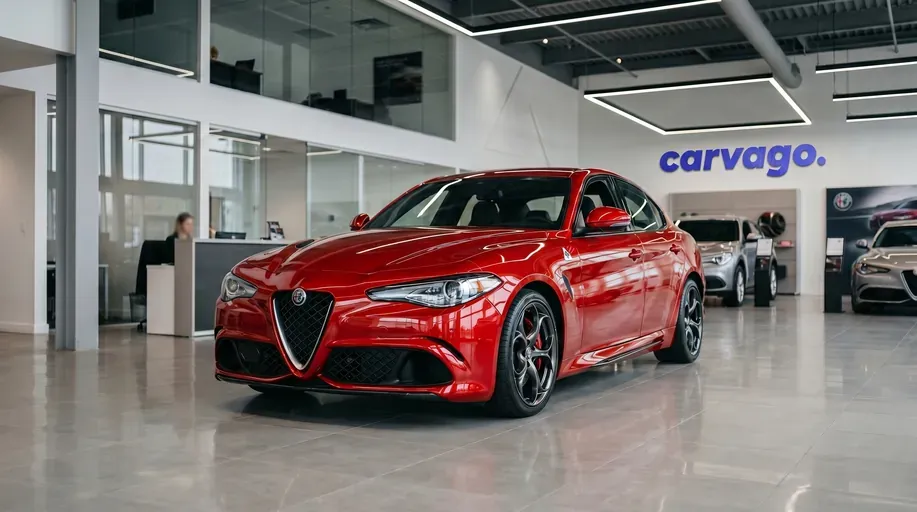
Alfa Romeo Giulia, also known internally by the code name Type 952, represents the embodiment of Italian passion for dynamic driving and stands out in the premium sedan segment with its unmistakable design and emphasis on excellent driving characteristics. On the other side of the barricade stands the Mercedes-Benz C-Class, traditionally sold as the C-Class (often searched for under internal generation codes W205 or the newer W206), which is a long-standing benchmark of German precision, advanced technology, and top-tier travel comfort. The following comparison will show you in detail how these two distinctly different rivals fare in a direct duel and will help you find out which of these attractive, roughly four-year-old used cars will better suit your daily needs.

Comparison of External Dimensions

Exterior Dimensions and Proportions

When looking at the overall dimensions of approximately four-year-old used cars, both vehicles diverge slightly in their design and spatial philosophy. The Mercedes-Benz C-Class clearly surpasses the Alfa Romeo Giulia in length across its relevant generations (the outgoing W205 and the incoming W206 from 2021). While the Italian sedan measures a maximum of 4650 mm in length, its German competitor has stretched to 4751 mm in the newer generation, which is a significant difference of about 10 centimeters. A similar trend is seen in the wheelbase, where Mercedes offers 2840 to 2865 mm compared to the standard 2820 mm of the Alfa. For used car buyers, this means that Mercedes-Benz can extract more longitudinal space for rear passengers from the longer wheelbase, making it a more comfortable choice for adult passengers or family trips.

However, an interesting turn occurs when comparing the width of both vehicles. The Alfa Romeo Giulia, at 1860 mm (up to 1874 mm for the top-of-the-line Quadrifoglio sports version), is noticeably wider than the C-Class, which maintains a width in a slightly narrower range of 1810 to 1820 mm. In terms of height, the sedans of both brands are very similar, hovering just above the 1430 mm mark, which underlines their sporty-elegant silhouettes. A wider track and an overall more planted stance give the Giulia not only a more muscular appearance but, above all, a lower center of gravity and better stability in corners, which will clearly appeal to enthusiastic drivers. Conversely, the narrower body of the Mercedes slightly facilitates daily parking and maneuvering in tight city garages.

In the used car market, the variety of available body styles also plays a major role, where the German premium brand clearly has the upper hand. The Alfa Romeo Giulia generation 952 has been produced exclusively as a classic four-door sedan throughout its existence. In contrast, the Mercedes-Benz C-Class offers a highly desirable estate (T-Modell) alongside the sedan, and in slightly older model years, even a coupé or cabriolet. The estate version of the Mercedes also offers an increased body height reaching up to 1494 mm (in the All-Terrain variant). If a large and easily accessible luggage compartment is a key parameter for your lifestyle, the Mercedes-Benz estate is the only logical choice in this comparison, while the Alfa remains ideal for traditionalists and drivers who prefer the clean and emotional lines of a classic sedan.

Overview of Exterior Dimensions

The following table lists the values for the generations available on the four-year-old used car market (Alfa Romeo Giulia gen. 952 and Mercedes-Benz C-Class gen. W205 and W206):
ParameterAlfa Romeo Giulia SedanMercedes-Benz C-Class SedanMercedes-Benz C-Class Estate
Width (mm)1860 - 18741810 - 18201810 - 1820
Length (mm)4639 - 46504686 - 47514702 - 4755
Height (mm)1433 - 14501438 - 14421454 - 1494
Wheelbase (mm)28202840 - 28652840 - 2865

Trunk Volume

When choosing a premium mid-size car, trunk capacity often plays a key role, especially if you plan to use the vehicle as your primary family car. Although models like Alfa Romeo Giulia and Mercedes-Benz C-Class primarily attract buyers with their excellent driving dynamics and luxurious craftsmanship, their everyday practicality is decisive for many buyers on the used car market. While both cars can handle family trips or routine weekend shopping with ease, for longer vacations or transporting bulkier items, you must more carefully consider which body style will suit your lifestyle needs.

The Alfa Romeo Giulia represents the traditional sports sedan concept and is available on the market (including approximately four-year-old used cars) exclusively in this single body version. Its trunk offers a standard capacity of 480 liters, which is a solid value in its class, easily accommodating luggage for four people for a long weekend. Although the rear seatbacks can be folded down to transport longer items, the Italian automaker does not provide an official figure for the maximum volume. It is also necessary to account for the fact that, as a classic sedan, access to the trunk is limited by a smaller opening, which can complicate the loading of larger boxes or a stroller.

On the other hand, the Mercedes-Benz C-Class (in its current W206/S206 generation) offers buyers much greater flexibility thanks to the choice between a classic sedan and the popular estate (Estate). The sedan has a slightly smaller base capacity of 455 liters, which grows to 1,335 liters when the seats are folded. If you are looking for space for a few extra suitcases, the estate version provides a generous 490 liters as base and an impressive 1,510 liters with the seatbacks folded. However, it is crucial to point out the popular plug-in hybrid (PHEV) variants of the Mercedes, where capacity is significantly reduced due to the battery installation in the floor – dropping to 315 liters for the sedan and 360 liters for the estate (maximum 1,375 liters).

ParameterAlfa Romeo Giulia SedanMercedes-Benz C-Class SedanMercedes-Benz C-Class Estate
Base capacity (liters)480455 (315 for PHEV)490 (360 for PHEV)
Maximum capacity with seats folded (liters)Not specified13351510 (1375 for PHEV)

In the end, if hauling cargo and easy trunk access are your absolute priorities, the Mercedes-Benz C-Class Estate represents the more rational choice. However, if you are looking for an elegant car and rarely transport oversized items, the Alfa Romeo Giulia's trunk will reliably suffice, and in a direct comparison of sedans, it even slightly outperforms its German rival in base capacity.

Mercedes offers practicality, Alfa style 🧳

While the Mercedes-Benz C-Class scores points for its estate body and overall greater space variability, the Alfa Romeo Giulia proves that even a pure sports sedan can easily cover common daily needs with a very decent base trunk.

Discover the true condition of the car thanks to an independent inspection

Order CarAudit™

Trailer Weights

When choosing a used mid-size car, the maximum trailer weight can play a crucial role, especially if you plan on towing a caravan, a boat, or a spacious utility trailer. The Mercedes-Benz C-Class is significantly more versatile in this regard, as the generations making up the main offering of approximately four-year-old cars (the previous W205 and the succeeding W206) can handle a maximum braked trailer weight of up to 1800 kg. A standard unbraked trailer for the Mercedes can weigh the legally common 750 kg. The Alfa Romeo Giulia (generation 952) is slightly more modest – its limits are 1600 kg for a maximum braked trailer and 745 kg for a standard unbraked one. While most common engine versions share these standards, there are exceptions on the used car market. Some specifications of the older C-Class (generation 205) had their capacity reduced to the 1600 kg mark, and conversely, for purist sports models like the Alfa Romeo Giulia Quadrifoglio, approved data for a tow bar is missing, as these versions do not support trailer towing at all. In practice, the higher braked trailer capacity of the German representative represents a significant advantage. While the Alfa Romeo's limit safely provides space for a few extra suitcases in the form of a lighter luggage trailer or a smaller recreational trailer, the full 1800 kg capacity of the Mercedes is safely sufficient for a weekend purchase of heavy building materials or a longer holiday with a full-sized family caravan. In conclusion, if the possibility of versatile towing is a priority for you, the Mercedes-Benz C-Class represents a much more practical and robust choice, while the Italian sedan is better suited for the occasional transport of lighter loads.

Model and engineBraked trailer weight (kg)Unbraked trailer weight (kg)
Alfa Romeo Giulia 2.0 Turbo 16V (147 kW)1600745
Alfa Romeo Giulia 2.0 Turbo 16V (206 kW)1600745
Alfa Romeo Giulia 2.2 Diesel (140 kW)1600745
Alfa Romeo Giulia 2.2 Diesel (154 kW)1600745
Mercedes-Benz C-Class C 200 (135 kW)1600 - 1800750
Mercedes-Benz C-Class C 200 (150 kW)1800750
Mercedes-Benz C-Class C 200 d (118 kW)1800750
Mercedes-Benz C-Class C 200 d (120 kW)1800750

Overview of Most Common Motorizations

The engine lineup for the Alfa Romeo Giulia and Mercedes-Benz C-Class represents a clash of two completely different engineering philosophies, which is crucial for every used car buyer. While Mercedes-Benz, in its most recent generation (W206), has fully committed to a technological revolution and widespread electrification in the form of exclusively four-cylinder mild-hybrid and plug-in hybrid units, Alfa Romeo continues to breathe pure passion for internal combustion engines without electrical assistance in its Giulia (generation 952). For the market of roughly four-year-old cars, this means a fundamental decision. Mercedes brings top-tier efficiency, extraordinary refinement, and extremely low fuel consumption (especially in PHEV versions with a pure electric range of around 100 km). Alfa Romeo, on the other hand, attracts with immediate mechanical response, linear power, and an emotive sound. The base petrol variants of both cars, such as the C 200 (150 kW) or Giulia 2.0 Turbo (147 kW), provide great daily dynamics, but at the top of the spectrum, the differences widen significantly. While the sporty Mercedes-AMG C 43 uses a heavily electrified two-liter, Alfa Romeo retains a full-blooded 2.9-liter six-cylinder. For highway mile-munchers and tech fans, the economical Mercedes is ideal, while driving enthusiasts and purists will reach for the Italian sedan.

Alfa Romeo Giulia (Generation 952)

When searching databases for the Alfa Romeo Giulia, you might come across classic historical generations 105/115 (Giulia 1300 and 1600 from 1964–1976), but these are prized collector's classics today. For the relevant market of approximately four-year-old used cars, we are talking exclusively about the modern generation (952 series). Its engine range is surprisingly straightforward and highly driver-oriented. The petrol side is represented by the excellent turbocharged four-cylinder 2.0 Turbo with outputs of 147 kW and 206 kW (Veloce version), which is always perfectly paired with the ZF 8-speed automatic transmission. Diesel alternatives are the robust 2.2 JTDM engines with outputs of 118 kW, 140 kW, and 154 kW. It is important to note that manual transmissions were phased out early in production, so in four-year-old cars, you will exclusively find the top-tier eight-speed automatic. Rear-wheel drive is standard, but more powerful variants commonly feature the sophisticated Q4 all-wheel drive. The real icing on the cake is the Quadrifoglio version with a 2.9 V6 Bi-Turbo engine producing 375 kW, which represents an absolute purist rarity in today's market full of downsizing.

Engine TypeFuelPower (kW)Torque (Nm)Transmission
2.0 Turbo 16VPetrol147 / 206330 / 4008AT
2.2 JTDMDiesel118 / 140 / 154450 / 4708AT
2.9 V6 Bi-Turbo (Quadrifoglio)Petrol3756008AT

Mercedes-Benz C-Class (Generation W206)

In the C-Class, on the other hand, the used car market situation is entirely determined by a generational shift. While older and long-sold generations (W202 to W205) historically offered a diverse range including manual transmissions and multi-cylinder engines, the current W206 generation clearly dominates the segment of nearly new four-year-old cars. This brought a revolutionary technological reset: all models rely exclusively on four-cylinder engines and the standard 9G-TRONIC 9-speed automatic. Standard petrol (C 180, C 200, C 300) and diesel versions (C 200 d, C 220 d, C 300 d) are always enhanced by the 48V mild-hybrid EQ Boost system, which can instantly and imperceptibly provide an additional 15 kW and 200 Nm of torque for more efficient coasting and smoothed-out starts. A major selling point in the used market are the exceptionally capable plug-in hybrids (e.g., C 300 e), which, with an above-average 25.4 kWh battery, can cover over 100 kilometers in pure electric mode. Even the AMG division has embraced this trend, and the AMG C 43 model thus benefits from a superbly tuned mild-hybrid two-liter with a massive output of 300 kW. 4MATIC all-wheel drive is widely available across almost the entire C-Class range.

Engine TypeFuelPower (kW)Torque (Nm)Transmission
C 180 / C 200 (1.5)Petrol (MHEV)125 / 150250 / 3009G-TRONIC
C 300 (2.0)Petrol (MHEV)1904009G-TRONIC
C 200 d / C 220 d (2.0)Diesel (MHEV)120 / 147380 / 4409G-TRONIC
C 300 d (2.0)Diesel (MHEV)1955509G-TRONIC
C 300 e (2.0 PHEV)Plug-in Hybrid2305509G-TRONIC
AMG C 43 (2.0)Petrol (MHEV)3005009G-TRONIC

Reason vs. Emotion ⚡🍀

Mercedes-Benz excels in the used car market with unrivaled fuel efficiency and advanced plug-in hybrids, while Alfa Romeo wins the hearts of driving enthusiasts with purist mechanical clarity and explosive pure internal combustion engines.

Choosing the right engine is absolutely crucial for long-term satisfaction with the car, which is why our recommendations are based on real-world performance, actual fuel consumption, owner feedback, and mechanical reliability. For roughly four-year-old used cars, we encounter an extremely interesting generational contrast in these models. While the Alfa Romeo Giulia relies purely on internal combustion engines and precise driver response without electrification, Mercedes-Benz made a significant technological leap with the arrival of the C-Class (generation 206) and integrated modern mild-hybrid engines across the board for unprecedented efficiency and refinement. In the table below, you will find our selected favorites primarily intended for the market of used cars approximately four years old. It is important to note that some historically popular units, such as the exceptionally economical Giulia 2.2 Diesel Advanced Efficiency (generation 952, available only in 2016–2018), are no longer available on the market for nearly new used cars. Similarly, older and non-electrified versions of the C 200 d diesels from the previous Mercedes generation (generation 205), whose availability ended in early 2021, have been replaced by new fuel-efficient hybrid technology in four-year-old cars.

ModelRecommended enginePowerGenerationAvailable years
Alfa Romeo Giulia2.0 Turbo 16V Veloce Q4206 kW (280 hp)9522020 – 2023
Mercedes-Benz C-ClassC 200 d 9G-TRONIC120 kW (163 hp)2062021 – 2023

For the Alfa Romeo Giulia, we recommend: 2.0 Turbo 16V, 206 kW (280 hp)

Within the Giulia model range (from production years around 2022, generation 952), the 2.0 Turbo 16V petrol four-cylinder, typically paired with Q4 all-wheel drive in the Veloce trim, represents the absolute best choice on the used car market. It ensures a perfect balance between everyday usability and passionate dynamics, which fully harmonizes with the car's fantastic chassis, without the risk of huge operating costs like the top-of-the-line Quadrifoglio version. Technically, the engine reigns supreme with its powerful low-end pull thanks to 400 Nm of torque and is perfectly matched with the ZF eight-speed automatic, while real-world fuel consumption stays at a reasonable 8.5 liters per 100 km with a little effort. However, a certain risk is posed by the delicate MultiAir electro-hydraulic valve timing system. When buying a used car, always carefully check if the previous owner changed the engine oil at least every 15,000 km, because old and degraded oil irreversibly clogs the fine screens in the module affecting the valves. You can detect a possible problem with the MultiAir module by having the car started from cold – if you hear a loud and harsh metallic clicking from the top of the engine or if the engine starts and idles irregularly, these are the first signs of a dying module. Given the high costs for its replacement, it's better to avoid such a car. Overall, however, this engine is tailored specifically for enthusiastic drivers with a sportier style who seek fun on winding backroads but also need a reliable partner for routine trips.

For the Mercedes-Benz C-Class, we recommend: C 200 d, 120 kW (163 hp)

If you are aiming for an attractive four-year-old used C-Class, it is worth looking for generation 206 cars (on sale since the second half of 2021), where the C 200 d diesel four-cylinder emerges as the most rational unit. In this modern version, the base block uses fuel-efficient EQ Boost mild-hybrid assistance integrated into the 9G-TRONIC transmission, which guarantees above-standard refinement and completely smooth, almost imperceptible start-stop system activations. Its greatest and unrivaled advantage, however, is its phenomenal efficiency at the gas station – in the real world, you can consistently drive between 4.5 and 5.0 liters of diesel per 100 km outside the city. Don't expect a slouch; the rich 380 Nm of torque provides more than decent flexible acceleration even with a fully loaded car. The biggest risk factor for this advanced diesel is undoubtedly the diesel particulate filters (DPF), especially in vehicles that were relegated mainly to stop-and-go city traffic, where regenerations don't have time to take place. When you inspect the car, perform a crucial test: use a flashlight and reach into the actual exhaust tips with your finger (or use a white handkerchief). The tips must be absolutely clean inside. Any deposit of black greasy soot reliably reveals that the DPF filter's ceramic insert has collapsed or cracked, and the car will need a repair costing tens of thousands of crowns at the first technical inspection. The C 200 d is therefore a bullseye specifically for "mileage eaters," fleet travelers, and families who primarily appreciate quiet acoustic comfort and can confidently cross all of Europe on a single tank.

Real Fuel Consumption

Paper fuel consumption values in official manufacturer brochures often seem slightly optimistic. When choosing a used car, such as roughly four-year-old models of the Alfa Romeo Giulia (generation 952) and Mercedes-Benz C-Class (generations W206 and late W205), it is therefore crucial to look at reality. Real-world consumption in normal traffic typically differs by more than a liter per hundred kilometers. To maintain maximum objectivity, we base this on long-term averages from real drivers on the popular community portal Spritmonitor.de, where one can see exactly how these two premium cars stack up against each other in everyday life.

Model and engineAverage consumption (l/100 km)
Mercedes-Benz C 200 d (Diesel, 120 kW)5.4
Alfa Romeo Giulia 2.2 Diesel (118–154 kW)6.4
Mercedes-Benz C 200 (Petrol, 150 kW)7.2
Alfa Romeo Giulia 2.0 Turbo (Petrol, 147–206 kW)8.5

A detailed comparison reveals the different technological approaches of the two manufacturers. Mercedes-Benz makes the most of its sophisticated mild-hybrid technology. The diesel C 200 d, with an average of 5.4 l/100 km, is an absolute benchmark for efficiency, while the 2.2 Diesel in the Alfa Romeo lags behind by about a liter in the real world. The same trend applies to petrol engines. The four-cylinder in the C 200 model, thanks to the assistance of an electric motor, manages a very respectable 7.2 l/100 km. Conversely, the 2.0 Turbo under the Giulia's hood confirms the rule that Italian horses require a more generous supply of fuel. Consumption around 8.5 l/100 km reveals that the lack of electrification takes its toll, even though savings are often expected with smaller turbo engines.

These trends lead to clear recommendations for different types of users:

  • Highway travelers: If you swallow hundreds of kilometers daily and strictly watch your budget, the economical diesel Mercedes-Benz C 200 d is undoubtedly the clear choice.
  • Enthusiastic drivers: The Alfa Romeo Giulia will appeal to those looking for emotion and precise mechanical feedback. If you are willing to accept higher fuel costs, the Italian sedan will reward you with excellent dynamics, for which you will gladly forgive its higher consumption.
  • City drivers: The petrol Mercedes-Benz C 200 shows that mild-hybrid support can effectively mask the car's weight and significantly save fuel even during frequent stopping and starting.

In conclusion, fuel consumption will be a decisive factor for many buyers in this duel. The Mercedes-Benz C-Class wins convincingly in the field of overall economy and will please rational-minded individuals. The Alfa Romeo Giulia, on the other hand, makes it clear from the start that its higher consumption is a necessary price for its uncompromising sporty character – a price that its specific target group will pay with absolute joy.

Price Range and Used Car Offerings

Price Comparison on the Used Car Market

When looking for roughly four-year-old used cars (2021–2022 models), you will find that both models target a slightly different type of buyer, which is reflected in the overall dealership inventory and prices. Although both cars belong to the premium mid-size segment, the dynamics of their value depreciation and market availability differ significantly.

Alfa Romeo Giulia (2021–2022 models)

  • Availability: On the used car market, it is more of an exclusive and less frequent occurrence. The Giulia was not a typical fleet car; original owners primarily bought it for the joy of driving.
  • Base model prices: Modestly equipped units, often with the 2.2 JTDM diesel engine or a weaker two-liter petrol engine and higher mileage, can be found at prices ranging from €23,000 to €27,000.
  • Popular specifications: The used car market is absolutely dominated by models in the excellent Veloce sport trim (typically with Q4 all-wheel drive and 280 hp). These cars, with reasonable mileage, most often sell in the range of €31,000 to €39,000.

Mercedes-Benz C-Class (2021–2022 models)

  • Availability: The selection is many times wider, mainly due to cars returned from corporate fleets and operational leases. Furthermore, 2021 and 2022 represent a generational turning point, when the successful W205 generation was ending and the completely new, technologically advanced W206 generation was arriving.
  • Base model prices: Very popular economical diesel variants (C 200 d, C 220 d) of the older generation or newer versions with higher motorway mileage start just above the €25,000 mark.
  • Popular specifications: If you are interested in the more modern W206 generation in the attractive AMG Line optical package, with 4MATIC drive and lower mileage, market prices confidently range between €33,000 and €45,000.

Indicative Price Comparison for 4-Year-Old Used Cars

Price CategoryAlfa Romeo GiuliaMercedes-Benz C-Class
Base equipment and higher mileage€23,000 – €27,000€25,000 – €29,000
Attractive versions (Veloce / AMG Line)€31,000 – €39,000€33,000 – €45,000
Top-tier models (Quadrifoglio / AMG)from €62,000from €66,000

Reason vs. Emotion in the Wallet 💰

While Mercedes-Benz benefits from a huge selection of ex-fleet used cars and the ease of finding your dream equipment, the Alfa Romeo Giulia is a rarer sight on the market, which holds its value surprisingly well in the sought-after Veloce version.

Safety and Euro NCAP Rating

Both models boast a maximum five-star rating in independent Euro NCAP crash tests. However, when choosing a used car, it is crucial to put these results into the context of the time when the cars were tested. Euro NCAP's methodology is constantly evolving and becoming significantly stricter, especially with an emphasis on active accident prevention and the protection of pedestrians or cyclists. For this reason, percentage scores from different years cannot be directly and fairly compared.

Alfa Romeo Giulia underwent crash tests immediately after its market launch in 2016. At that time, it dominated with a historically record-breaking result of 98% for adult occupant protection, proving the absolute top-tier mechanical rigidity of its body. However, given the age of this test, the original five-star certification has formally expired according to today's Euro NCAP rules. Although Alfa Romeo added missing assistants during later updates, the original 2016 rating for assistance systems and protection of vulnerable road users naturally no longer meets the most modern requirements.

Mercedes-Benz C-Class (generation W206), on the other hand, underwent testing in 2022. Its rating therefore reflects much stricter testing protocols, which include, for example, new frontal impact simulations, advanced cyclist detection, or emergency scenarios at intersections. Mercedes demonstrated a high level of safety across all categories, as evidenced by very strong and balanced results for assistance systems and protection of vulnerable road users.

ParameterAlfa Romeo GiuliaMercedes-Benz C-Class
Year of testing2016 (certification expired)2022
Adult occupant protection98 %93 %
Child occupant protection81 %89 %
Vulnerable road users protection69 %80 %
Safety assistance systems60 %82 %

In terms of passive safety and mechanical protection during the impact itself, both cars will protect you reliably. However, if the presence of advanced active assistants that can prevent an accident and are certified according to the strictest current standards is important to you in a used car, the German representative offers a significantly more modern and comprehensive safety package.

Modern assistance vs. mechanical rigidity 🛡️

The Mercedes-Benz C-Class excels in active accident prevention according to the latest standards, while the Alfa Romeo Giulia relies on an exceptionally rigid body proven over time.

Comparison of Interesting Equipment Features

In addition to standard equipment, each of the models offers several unique features that can be decisive for the customer, and each approaches added value in its own way. While the Italian representative bets on a purist experience and mechanical sophistication, the German rival brings technologies known from the most luxurious limousines to the mid-size class.

Alfa Romeo Giulia: Emotion, Driver Focus, and Sporting Spirit

The Giulia was designed from the outset with maximum driving pleasure in mind. Its equipment and technical solutions will therefore appeal primarily to drivers looking for agility and mechanical feedback.

  • Construction and Chassis: An almost unprecedented feature in this class is the carbon fiber driveshaft (carbon fiber driveshaft), which the Giulia has as standard across all engine versions. It helps reduce rotational mass and improves throttle response. Together with aluminum body parts, this guarantees an ideal 50:50 weight distribution.
  • Controls and Driving Modes: The iconic Alfa DNA rotary driving mode selector (Dynamic, Natural, Advanced Efficiency) significantly changes the car's characteristics from a calm highway cruiser to sharp sporty driving. The atmosphere is enhanced by huge, column-mounted aluminum paddle shifters that evoke supercars.
  • Technology and Infotainment: Alfa Romeo's approach is very traditional. The central infotainment display is elegantly integrated into the dashboard so as not to be visually distracting. Instead of touch-controlling everything, the Giulia relies on clear physical buttons for the air conditioning and an ergonomic rotary controller on the center console.
  • Drivetrain and Traction: The clever Q4 all-wheel-drive system is primarily set up to favor the rear axle. It sends power to the front wheels lightning-fast only when the system detects a loss of traction, thereby maintaining the car's playful rear-wheel-drive character.
  • Sport Versions: An attraction for enthusiasts is the Veloce or Estrema trim level, which adds active suspension and a mechanical limited-slip differential. The absolute pinnacle is the Quadrifoglio version with a 2.9 V6 Bi-Turbo engine, developed in collaboration with Ferrari engineers.

Mercedes-Benz C-Class: Technological Supremacy and S-Class Luxury

The W206 generation, which appeared on the market in 2021, is often rightly described as a scaled-down S-Class. It concentrates top-tier innovations, assistance systems, and a maximum level of comfort.

  • Infotainment and Connectivity: The interior is dominated by the second generation of the MBUX system with a vertical touchscreen that replaces most mechanical buttons. The system learns continuously thanks to artificial intelligence, offers advanced "Hey Mercedes" voice control, and supports over-the-air (OTA) software updates.
  • Advanced Electronics and Lighting: The optional Digital Light headlights use millions of micro-mirrors. They ensure not only precise masking of oncoming vehicles but can also project assistance markings and warning symbols directly onto the road in front of the driver.
  • Chassis and Maneuverability: A great aid for everyday use is the rear-axle steering (up to 2.5 degrees). When parking in the city, it virtually shortens the wheelbase and makes maneuvering easier, while at higher speeds, the rear wheels follow the front ones, providing excellent highway stability.
  • Engines and Electrification: Mercedes-Benz opted for complete electrification with this generation. All internal combustion engines are equipped as standard with a 48V mild-hybrid system (EQ Boost), which smooths engine operation, adds power during acceleration, and allows for seamless "sailing" with the engine off. Additionally, plug-in hybrids with DC fast-charging capability are available.
  • Smart Assistance and Augmented Reality: The navigation system can be equipped with an Augmented Reality function, which uses the front camera to capture intersections and inserts graphic arrows and street names directly into the image on the central display in real-time, completely eliminating the risk of taking a wrong turn.

Key Advantages and Disadvantages

Alfa Romeo Giulia

Pros

Top-tier driving dynamics thanks to perfect weight distribution

Quick and very precise steering that provides excellent feedback

Attractive Italian design and relative exclusivity on the used car market

Perfectly tuned eight-speed ZF automatic transmission

Lightweight construction utilizing a carbon fiber driveshaft

Cons

More outdated and slower infotainment compared to German competitors

Limited practicality, as it is only offered as a sedan with a smaller trunk opening

Less dense network of specialized service centers and slightly more expensive specific spare parts

Cheaper-feeling details and plastics in the lower part of the interior

The Alfa Romeo Giulia is an ideal choice for enthusiastic drivers who prioritize driving pleasure, a top-tier chassis, and emotive design over maximum utility. It perfectly suits those looking for a sporty sedan who are happy to sacrifice the latest digital gadgets in exchange for mechanical refinement.

Mercedes-Benz C-Class

Pros

Luxurious and superbly soundproofed interior oriented towards maximum passenger comfort

Highly advanced MBUX multimedia system with perfect voice control

Availability of a more practical estate body style

Excellent plug-in hybrid versions with significantly above-average electric range

High residual value and excellent brand prestige

Cons

Noticeably higher purchase price on the market for nearly-new used cars

Less engaging and rather detached driving experience compared to the sportier Alfa

Very complex onboard electronics, which can mean more expensive out-of-warranty service

Some used units exhibit creaking of the glossy plastics on the center console

The Mercedes-Benz C-Class targets buyers who demand perfect comfort, modern connectivity, and a representative character. It excels as a perfect and efficient highway cruiser that stands out for its refinement, even if it doesn't offer such an immediate driving experience.

Common Problems and Owner Complaints

Based on long-term user experience, workshop breakdown statistics, recall data, and detailed findings regularly provided by our CarAudit service, we have compiled an overview of the most common problems you should watch out for in roughly four-year-old used cars of these models.

Alfa Romeo Giulia

The Italian sedan has made a huge leap in reliability and build quality during its production, but specific defects still appear in roughly four-year-old used cars from 2020 and 2021 that need to be carefully considered when choosing.

  • Electronics and Wiring: Owners often complain about warning lights randomly illuminating on the instrument cluster without a mechanical cause, rapid battery drain, or a malfunctioning Start/Stop system. The cause is often control modules that do not properly "sleep" after the car is locked and continue to draw current, or it may be a symptom of a weak battery.
  • Braking System (Recalls): Models from 2020 and 2021 faced two more serious brake issues. These involved the risk of the ABS hydraulic control unit detaching during heavy braking and cracking of the rear brake discs. The manufacturer addressed both of these safety defects with extensive free recalls and parts replacement.
  • Fuel System (2.0 Turbo engines): A problem with a cracking fuel line sensor cover occurred in the turbocharged four-cylinder petrol engines. The defect posed a risk of fuel leakage and was also the subject of a widespread factory recall.
  • Specific Chassis Behavior (Ackermann Effect): This is not a technical defect, yet it is one of the most common complaints from new owners. At full steering lock at low speeds (typically when parking) and in cold weather, the front wheels tend to "skip" or "chatter" and make hollow thumping sounds. This is due to the exceptionally sharp steering geometry that makes the Giulia so incredibly stable in corners and at high speeds.

Alfa Romeo Giulia: Watch out for electronics and recall history

The Giulia offers an unrivalled driving experience, but for used cars, it is critically important to verify via the VIN code whether the vehicle has undergone all key recalls regarding the brakes and fuel system. Regular software updates and keeping the battery in perfect condition will help with occasional electronic quirks.

Mercedes-Benz C-Class

The C-Class represents the absolute pinnacle of premium mid-size comfort, but complex onboard electronics, modern mild-hybrid systems, and the susceptibility of certain mechanical parts to wear take their toll on older models.

  • Rear Subframe Corrosion (W205 generation): An extremely common and dangerous problem in the popular outgoing generation produced until 2021. The rear subframe can begin to corrode heavily and unnoticed from the inside, and in extreme cases, it risks snapping while driving. A detailed physical inspection of a used car on a workshop lift is an absolutely essential step before buying this model.
  • Timing Chain on OM654 Engines: While older diesel engines (OM651) were considered almost indestructible once the initial bugs were ironed out, the more modern, fuel-efficient two-litre (fitted from late 2018) surprisingly often suffers from premature timing chain stretching. Typical rattling from the engine immediately after starting indicates the need for an immediate and, above all, very expensive repair.
  • Complex Mild-Hybrid Systems (EQ Boost): Petrol and diesel units relying on a 48V electrical network with an integrated starter-generator are plagued by failures of expensive traction batteries or DC/DC voltage converters. If this system fails, it can completely immobilise the car, and repairs outside of the warranty period can cost thousands of euros.
  • Airmatic Air Suspension and Rough Shifting: In cars with the excellent optional air suspension, air leaks from the rubber bellows or burnout of the overworked compressor occur after several years. The nine-speed 9G-Tronic automatic is mechanically very robust in itself, but it sometimes suffers from rough shifting when cold between the first three gears, which usually requires a software adaptation of the gearbox at an authorised service centre.

Mercedes-Benz C-Class: Technological sophistication requires absolute care

Although the "C-Class" clearly dominates in terms of material quality and exemplary soundproofing, its susceptibility to expensive mild-hybrid electronics faults and hidden rear subframe corrosion issues on the W205 generation make it a risky choice for a blind purchase. A complete and documented service history is the alpha and omega of a successful purchase here.

Tips for Buying a Used Car

When buying a used car, a thorough inspection is key. Here are some specific points to focus on for these two models. Before making a final decision, it is always worth using the CarAudit service, as a professional physical inspection of a used car will reveal defects that you might not notice at first glance.

When choosing an Alfa Romeo Giulia:

  • Electronics and infotainment: Check the response of the Uconnect system, Bluetooth pairing, and any screen freezing. Most minor delays or display dropouts in the 2020 and newer generation can be resolved with a software update. However, if nonsensical error codes or random warnings from assistance systems appear during the test drive, it is very often caused simply by a weak 12V car battery, to which the Giulia's electronics are extremely sensitive.
  • Axle geometry and tire wear: This model excels with exceptionally sharp and precise steering, which, however, requires the chassis to be in perfect condition. Carefully inspect the inner edges of both front and rear tires. Significantly asymmetrical wear reliably reveals misaligned geometry or play in the control arms, which can completely ruin the car's renowned driving characteristics.
  • Cooling system condition (2.0 Turbo engine): The 2.0-liter gasoline engines are generally very robust and reliable, but plastic cooling system components (such as connectors, radiators, or the expansion tank) can gradually become brittle and crack due to heat. Look for white or pinkish traces of dried coolant in the engine compartment.
  • Braking system behavior (IBS): The Alfa Romeo Giulia uses a "brake-by-wire" system (Integrated Brake System), so the brake pedal has no mechanical connection to the calipers. During the drive, try braking both very gently and sharply. The onset of braking force must be natural, predictable, and without sudden drops in pedal pressure under all circumstances.
  • Cold starts: Although modern Giulia engines do not have timing chain issues as frequently as some competing units, have the car started completely cold. Any metallic rattling from the timing area immediately after starting can mean a worn chain tensioner, which is usually a result of the previous owner not following shortened oil change intervals. In these cases, a used car check with engine diagnostics is an absolute necessity.

When choosing a Mercedes-Benz C-Class:

  • Mild-hybrid system (EQ Boost / ISG): On newer models (facelift of the W205 generation and early W206), carefully test the start-stop function and the electric motor's pull. Transitions when shutting down and starting the engine must be velvety smooth. If you hear a strange whine from the engine compartment that resembles a spooling turbocharger, it could be a failing integrated starter-generator (ISG). Faults associated with the 48V battery end in extremely expensive repairs.
  • AIRMATIC air suspension: If the car being tested has the optional air suspension, check the condition of the air bellows and the compressor. If the car has been sitting all night, it must not be "slumped" close to the ground. If the compressor sounds suspiciously loud or runs for too long after starting, the suspension is leaking and expensive service is imminent.
  • Carbon buildup in diesel engines: Four-cylinder diesel units (especially the popular C 220 d and C 200 d) suffer from carbon buildup in EGR valves and intake tracts if the car was primarily driven on short city trips while cold. During the test drive, accelerate smoothly under load – the engine must not jerk and acceleration must not be hesitant.
  • Infotainment response (MBUX/COMAND): In the C-Class, the vast majority of functions are controlled via displays or touch surfaces on the steering wheel. Test the speed of menu transitions, map zooming, or phone pairing. If the system permanently freezes or the touch sensors on the steering wheel do not respond to finger swiping, it could be a faulty hardware module.
  • 9G-Tronic gearbox behavior: The nine-speed automatic is exemplary reliable under normal conditions, but with a used car, carefully monitor the gearbox's behavior with cold oil. Shifting between first, second, and third gear must not be accompanied by kicking or jerking under any circumstances. Any jerking can mean a neglected transmission oil change (prescribed to be changed after 125,000 km or 5 years) or worn friction plates. A detailed independent technical inspection of the car will help you detect these anomalies in time.

FAQ: Most Frequently Asked Questions

Alfa Romeo Giulia clearly stands out thanks to its sharp steering, top-tier weight distribution, and precisely tuned chassis. The Mercedes-Benz C-Class on the other hand primarily focuses on maximum driving comfort, perfect sound insulation, and a smooth ride on long highway routes. For driving enthusiasts seeking feedback and agility in corners, the Italian sedan is a much more engaging choice.

In the field of modern digital technologies, Mercedes-Benz dominates thanks to its advanced MBUX system with a giant vertical screen and intelligent voice control. While the infotainment in the Alfa Romeo is clear and logical after its update, it lags behind the German competitor's architecture, which is several years newer, in terms of graphics and functionality. If you require the latest digital gadgets and connectivity features in a car, the C-Class is the clear winner.

The Alfa Romeo Giulia offers a standard trunk capacity of 480 liters, which is an average and fully sufficient value for premium cars in this class. The Mercedes-Benz C-Class sedan (W206 generation) provides 455 liters in mild-hybrid versions, but in plug-in hybrids, the volume decreases to 315 liters due to the battery placement. In terms of standard internal combustion versions, both cars are very similar in terms of trunk practicality and usability.

Thanks to its fully electrified engine lineup (mild-hybrids as standard and powerful plug-in hybrids with an electric range of over 100 km), Mercedes-Benz has overall lower consumption in the city and in stop-and-go traffic. However, the diesel versions of both cars (Giulia 2.2 JTDM and C 220 d) are extremely efficient on the highway, realistically achieving excellent consumption of around 5 to 6 l/100 km. Nevertheless, the German car has a slight advantage in overall efficiency due to better aerodynamics and advanced energy recovery.

The Mercedes-Benz C-Class provides slightly more rear-seat space for passengers and, unlike the Giulia, also offers the popular and very practical station wagon (Estate) body style. The Mercedes estate makes transporting strollers or larger items significantly easier, which families will definitely appreciate. The Alfa Romeo is produced exclusively as a sedan with a narrower trunk opening, which limits its daily family potential to some extent.

Conclusion: Which Model to Choose?

Our Verdict

Choosing between a roughly four-year-old Alfa Romeo Giulia and a Mercedes-Benz C-Class is ultimately a textbook battle between a driver's heart and pragmatic reason. While the Italian sedan charms driving enthusiasts with its unrivaled handling, sharp steering, and purist internal combustion engines, its German rival dominates in the fields of technological innovation, absolute travel comfort, and extraordinary fuel efficiency. If you are looking for maximum family practicality supported by the availability of an estate body style or spend long hours on motorway commutes, the Mercedes-Benz undoubtedly represents the more rational and luxurious choice. Conversely, the Alfa Romeo Giulia remains the perfect premium machine for those who prioritize pure driving emotion, distinctive style, and perfect mechanical feedback over the latest digital trends.

Find your ideal car

Sources: ADAC, svetmotoru.cz, garaz.cz, autorevue.cz, automix.cz, carstyle.cz

This article was prepared using artificial intelligence tools. The section guarantor is Petr Dušek.

Related articles

Car battle

Renault Talisman vs. Toyota Camry: Complete comparison 2026

Detailed comparison of Renault Talisman vs. Toyota Camry. Discover the real differences in reliability, equipment, and fuel consumption. Find out which car to choose based on our verdict.

Apr 8, 2026

Car battle

Mazda 6 vs. Škoda Superb: Complete comparison 2026

Detailed comparison of used Mazda 6 vs. Škoda Superb. We reveal real-world experiences, fuel consumption, and spaciousness, and provide a clear verdict to help you make the right choice.

Apr 2, 2026

Car battle

Opel Insignia vs. Renault Talisman: Complete comparison 2026

Opel Insignia vs Renault Talisman: A Detailed Comparison. Find out which executive sedan is the better choice. Real data, features, and verdict.

Apr 14, 2026

We accept online card payments as well as wire transfers.

visa payment provider logovisa-electron payment provider logomastercard payment provider logomaestro payment provider logodiners-club payment provider logodiscover payment provider logo