Articles

Car battle

Opel Corsa vs. Volkswagen Polo: Complete comparison 2026

Detailed comparison of Opel Corsa vs. Volkswagen Polo (VW Polo). Discover real-world experiences, differences in equipment, and the verdict for choosing the ideal used hatchback.

May 5, 2026

VS
Opel Corsa

Opel Corsa

Volkswagen Polo

Volkswagen Polo

Introduction

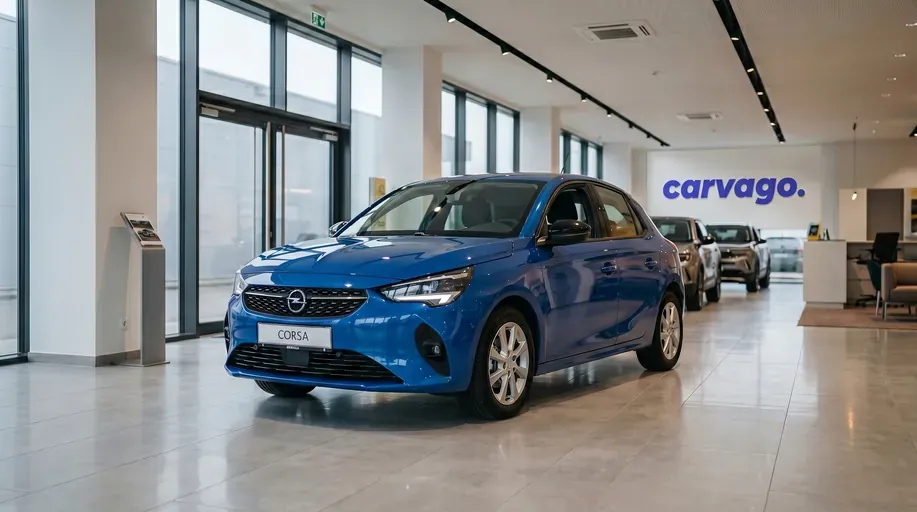
The Opel Corsa, also known as the Vauxhall Corsa in selected markets, represents a stylish and dynamic choice in the small city car segment, which has won the hearts of many European drivers thanks to its agility and modern approach. Standing against it is the Volkswagen Polo, a true benchmark of this automotive class, which has long scored points primarily for its precise craftsmanship, timeless design, and surprisingly mature driving characteristics. Let's take a detailed look in this direct comparison at which of these two immensely popular hatchbacks offers a better overall package on the used car market and represents a more sensible purchase.

Comparison of External Dimensions

When you place the current generations of both models (Opel Corsa generation F and Volkswagen Polo generation VI), which confidently dominate the current market for nearly-new used cars, side by side, you will find that both cars have safely surpassed the magic four-meter mark. With its maximum length of 4074 mm, the Volkswagen Polo is a mere 13 mm longer than the Opel Corsa (which reaches up to 4061 mm). Much more interesting, however, is the look at the wheelbase. In this regard, the Polo offers up to 2555 mm, which is a noticeable difference compared to the 2538 mm of the Corsa. In terms of practical use, this gives the Volkswagen a slight advantage in longitudinal interior legroom for rear-seat passengers and slightly more stable behavior at higher highway speeds.

The Opel Corsa, on the other hand, confidently counters with a wider body. With a value of 1765 mm, it surpasses the Polo (1751 mm) by 14 mm. This seemingly minor difference gives the Corsa a more muscular and sporty stance on the road, which is further supported by the overall height. The Corsa, with its 1433 to 1435 mm, is overall slightly lower than the standard versions of the Polo, which reach up to 1451 mm. The wider and lower build of the Opel thus theoretically benefits handling and gives the car a slightly lower center of gravity. Conversely, the slightly taller build of the Volkswagen favors easier entry and more generous headroom. The difference in overall width can then influence the daily choice – while the Polo, thanks to its slimmer silhouette, fits slightly more easily into older and narrow parking spaces, the Corsa will please with a wider cabin at elbow and shoulder level.

Overall, regarding external proportions, it can be stated that while the Volkswagen Polo honors traditional German rationality and uses its dimensions to maximize interior comfort and airiness, the Opel Corsa bets primarily on dynamics. If you choose the Corsa, you get a car that visually hugs the road more and feels more agile. The Polo, on the other hand, is a safe bet for those who expect mature proportions from a small car for the city and beyond, closer to those of compact class vehicles.

ParameterOpel Corsa HatchbackVolkswagen Polo Hatchback
Width (mm)17651751
Length (mm)4060 - 40614053 - 4074
Height (mm)1433 - 14351431 - 1451
Wheelbase (mm)25382548 - 2555

Trunk Volume

When it comes to choosing a roughly four-year-old used car in the small city hatchback category, trunk capacity plays a surprisingly large role for many buyers. Whether you plan to regularly transport strollers or sports equipment, or you are looking for a car sufficient for weekend shopping and longer holidays for two, the differences between the Opel Corsa and the Volkswagen Polo can be decisive in everyday life. Although both cars share similar external dimensions and are among the most sought-after models on the used car market (especially representatives of generation F for the Corsa and generation VI for the Polo), their approach to interior practicality and overall family usability differs significantly.

In standard versions with internal combustion engines, the Volkswagen Polo clearly has the upper hand. Its trunk offers a highly above-average base volume of 351 liters in its class, which increases to an impressive 1,125 liters after fully folding down the rear backrests. In practice, this means valuable space for several extra suitcases and excellent variability when moving larger items. The Opel Corsa lags slightly behind its German competitor – it offers 309 liters at the base and reaches a maximum of 1,081 liters with the seats folded down. Even though the Corsa's trunk is relatively easy to access and perfectly adequate for everyday needs, you will feel every missing liter when packing for a longer trip or folding larger items.

When choosing a specific used car, it is also necessary to take into account specific engine versions that significantly limit trunk capacity due to the installation of batteries or additional tanks. In the fully electric Opel Corsa Electric version, the base volume drops to just 267 liters (1,042 liters when folded), while in the modern mild-hybrid variant, although 309 liters are maintained at the base, the maximum space is slightly reduced to 1,004 liters. Similar compromises can be found at Volkswagen, where the eco-friendly Polo 1.0 TGI version running on compressed natural gas (CNG) has a very modest 251 liters of base volume and 1,025 liters when folded. You will also notice a slight loss in the sporty Polo GTI model, which sacrifices part of the trunk for the sake of technology and offers 305 liters (or 1,079 liters). This clearly shows that if overall capacity and transport flexibility are your top priorities, the standard petrol Polo represents a much more practical and reliable choice.

ParameterOpel Corsa HatchbackVolkswagen Polo Hatchback
Base volume (liters)309351
Max volume with seats folded down (liters)10811125

📦 Polo is a packing champion

If trunk size is a priority for you, the Volkswagen Polo VI offers some of the best values in its class. The Opel Corsa F is sufficient for everyday use, but it lags significantly behind the Polo when it comes to larger loads.

Discover the true condition of the car thanks to an independent inspection

Order CarAudit™

Trailer Weights

Towing capacity (trailer weight) is a surprisingly important parameter for many small hatchback buyers, whether it's for attaching a small trailer for weekend work and material shopping, or towing a lighter caravan on holiday. For approximately four-year-old used cars represented by the Opel Corsa (generation F) and Volkswagen Polo (generation VI), we find interesting differences that reflect the capabilities of individual engines.

The base Opel Corsa with a naturally aspirated 1.2 engine can tow a braked trailer weighing only 500 kg, which is at most enough for a light trailer. However, if you choose more powerful variants, such as the turbocharged 1.2 DI Turbo engines, the economical 1.5 Diesel, or the newer hybrid version, the Corsa's maximum capacity rises sharply to an excellent 1,200 kg. The all-electric Corsa Electric version does not standardly account for trailer towing in its homologation.

For the Volkswagen Polo, the starting towing capacity is significantly higher. The completely basic 1.0 and 1.0 MPI engines allow for a braked trailer weighing 800 kg, and the popular turbocharged three-cylinder 1.0 TSI or diesel 1.6 TDI versions can handle 1,000 to 1,100 kg. Only the top Polo engines, such as the four-cylinder 1.5 TSI or the sporty GTI version, reach the same maximum as the Corsa, i.e., 1,200 kg. The weight of an unbraked trailer for both cars depends on the specific version and the car's curb weight, but usually ranges between 500 and 670 kg.

If you are looking for space for a few extra suitcases and only need occasional towing of smaller loads, the base Polo engine will serve you better as it offers significantly more generous limits. However, once you aim for heavier trailers sufficient even for longer holidays, the more powerful versions of both vehicles perform absolutely identical, highly reliable work.
Model and engineBraked trailer (kg)Unbraked trailer (kg)
Opel Corsa 1.2 (55 kW)500500
Opel Corsa 1.2 DI Turbo / 1.5 Diesel1200580
Volkswagen Polo 1.0 / 1.0 MPI800550
Volkswagen Polo 1.0 TSI / 1.6 TDI1000 - 1100570 - 590
Volkswagen Polo 1.5 TSI / GTI1200670

Overview of Most Common Motorizations

The range of engines is often a decisive factor for used car buyers, as it determines the daily compromise between fuel consumption, driving dynamics, and long-term reliability. In the case of roughly four-year-old Opel Corsa (generation F) and Volkswagen Polo (generation VI) models, both brands rely primarily on efficient, small-displacement turbocharged three-cylinder petrol engines. While the base versions of both cars are powered by naturally aspirated 1.2 (Corsa) and 1.0 MPI (Polo) units, which are suitable mainly for city driving due to their modest performance, the turbocharged 1.2 DI Turbo and 1.0 TSI variants dominate the used car market for more versatile use and motorway trips. A fundamental difference between the models lies in their approach to higher performance and alternative powertrains. Opel took the path of local zero emissions and offers the fully electric Corsa-e version. Volkswagen, on the other hand, saved the electricity and scores with more powerful four-cylinder petrol engines (1.5 TSI and the hot 2.0 TSI for the GTI version), or the economical model running on compressed natural gas (1.0 TGI). Diesel engines were gradually withdrawn from the range for both models around 2021 and 2023, so when looking for a four-year-old used car, diesels represent an absolute minority on the market.

The sixth-generation Corsa benefits from the shared Stellantis group platform (originally PSA), which gave it a very lightweight construction and modern power units. The entry point is a naturally aspirated 1.2 three-cylinder with 55 kW, paired exclusively with a five-speed manual. However, the golden middle ground, chosen by most buyers, are the turbocharged 1.2 DI Turbo versions tuned to 74 kW or 96 kW. The more powerful of these is equipped as standard with a very smooth and, by class standards, premium eight-speed torque converter automatic (EAT8). For drivers with high annual motorway mileage, a 1.5 Diesel four-cylinder (75 kW) was available in the early years, but its production finally ended in the spring of 2023. A completely different target group is addressed by the purely electric Corsa-e (later Corsa Electric) with 100 kW and a 50 kWh battery, which is a quiet and agile solution for emission-free urban and suburban traffic.

Engine typeFuelPower (kW)Torque (Nm)Transmission
1.2Petrol551185MT
1.2 DI TurboPetrol742056MT / 8AT
1.2 DI TurboPetrol962308AT
1.5 DieselDiesel752506MT
Corsa-e (50 kWh)Electricity1002601AT

While the sixth-generation Volkswagen Polo cannot boast a fully electric variant, it makes up for it with a wider and more diversified range of classic internal combustion engines. The base naturally aspirated 1.0 MPI engine with 59 kW and a five-speed manual disappeared from the range at the end of spring 2021, making way for exclusively turbocharged, reliable 1.0 TSI three-cylinders (70 kW and 81 kW). In addition to manuals, these can be found with the lightning-fast seven-speed dual-clutch DSG transmission. Demanding drivers and sports driving enthusiasts swear by the refined four-cylinders: whether it's the smooth 1.5 TSI with 110 kW or the iconic Polo GTI model, under whose hood beats a potent 2.0 TSI engine with 147 kW (even 152 kW after 2021). Until approximately 2021, Volkswagen also offered a factory conversion for compressed natural gas, the 1.0 TGI, and the 1.6 TDI turbodiesel; however, with the gradual tightening of emission standards, these variants also had to leave the new car market and are now harder to find as four-year-old used cars.

Engine typeFuelPower (kW)Torque (Nm)Transmission
1.0 MPIPetrol59935MT
1.0 TSIPetrol70 / 81175 / 2005MT / 6MT / 7DSG
1.5 TSIPetrol1102507DSG
1.0 TGIPetrol/CNG661606MT
1.6 TDIDiesel59 / 70230 / 2505MT / 7DSG
2.0 TSI (GTI)Petrol147 / 1523206DSG / 7DSG

The Decision: Electricity or Sporting Classic? ⚡🏁

While the Opel Corsa scores with the option of pure electric operation and an excellent eight-speed automatic, the Volkswagen Polo will please more sport-oriented drivers with its wide range of dynamic petrol four-cylinders, including the legendary GTI model.

Choosing the right engine is a key step for your long-term satisfaction with a car, as it affects not only dynamics and fuel consumption but, above all, future service costs and reliability. Our recommendations are based on the real-world experiences of owners and mechanics of used cars around four years old. Historically, both models offered a very diverse range of diesel engines, but today's market for lightly used cars clearly shows the retreat of diesels from this automotive class. In the Volkswagen Polo, the 1.6 TDI diesel engine even disappeared from the range entirely after 2020. For both rivals today, the market is absolutely dominated by 1.0 and 1.2-litre petrol three-cylinder engines, albeit with very different technical foundations.

For the Opel Corsa, we recommend: 1.2 DI Turbo (74 kW / 100 hp)

The turbocharged 1.2 DI Turbo three-cylinder is undoubtedly the best and most versatile choice for the sixth-generation Opel Corsa (Model F, available from late 2019). While the basic naturally aspirated version without a turbo (55 kW / 75 hp) is relatively weak for such a heavy car and its real-world consumption increases unpleasantly when trying to drive more dynamically, the 100-hp turbo offers a perfect balance.

  • Why it's the best choice: The engine has a solid torque of 205 Nm, which kicks in nicely from the low end. This makes the Corsa very flexible in the city, it doesn't run out of steam even on the highway, and it pairs perfectly with both the smooth eight-speed automatic transmission and the manual.
  • Technical strengths: A major positive is the fuel consumption. In reality, this version can be driven for a pleasant 5.5 to 6.0 l/100 km, making the Corsa a very economical car for daily use.
  • Known risks and weaknesses: The engine comes from the PureTech family (from the Stellantis group) and uses a specific timing belt design that runs in an oil bath ("wet belt"). In used cars older than 4 years where owners have neglected maintenance, this belt can degrade and crumble. Pieces of rubber then clog the oil pump pickup strainer, which in extreme cases leads to engine seizure. How to prevent the problem: When buying, have an experienced mechanic check the condition of the belt (it is partially visible through the oil filler neck). Essential prevention is to shorten the oil change interval to 10,000 to 15,000 km (or strictly 1 year) and unconditionally use only the oil prescribed by the manufacturer. (Note: Newer hybrid versions from 2024 switched to a timing chain, but you won't find those on the market for roughly four-year-old cars yet).
  • Who it's ideal for: It will suit commuters as well as small families. It's great for drivers with a more dynamic style who don't want to pay extra at the petrol pump.

For the Volkswagen Polo, we recommend: 1.0 TSI (70 kW / 95 hp)

For the sixth-generation Volkswagen Polo (available from late 2017), the turbocharged 1.0 TSI three-cylinder is the undisputed king of the market. You have to push the basic naturally aspirated 1.0 MPI engine with high revs to get performance, and the more powerful 1.5 TSI four-cylinder is, conversely, too expensive and rare for a four-year-old used car. The 1.0 TSI variant with 70 kW (or potentially the slightly more powerful 81 kW / 110 hp) is a phenomenal choice.

  • Why it's the best choice: The engine from the EA211 family is one of the most advanced and refined one-litre three-cylinders today. It boasts excellent soundproofing, unlike many older three-cylinders it doesn't have unpleasant vibrations, and it gives the Polo mature, confident dynamics comparable to older 1.6-litre four-cylinders.
  • Technical strengths: In terms of consumption, it is one of the most economical non-hybrid cars on the market – in real-world traffic, you can very easily stay within the range of 5.0 to 5.5 l/100 km. A huge plus is the reliability of the conventional dry timing belt, which shows a long service life and is not at risk of crumbling in oil.
  • Known risks and weaknesses: Like any direct fuel injection engine, the 1.0 TSI is prone to carbon buildup on the intake valves and in the combustion chamber if operated exclusively on very short city trips where it doesn't have time to warm up. How to prevent the problem: Regularly take the car on longer highway or extra-urban drives and don't hesitate to rev the engine for short periods. Using premium fuels with cleaning additives is very beneficial for this engine and will extend the life of the injectors. In some units, a rattle from the turbocharger wastegate actuator rod may occur, but this is usually just a harmless acoustic flaw.
  • Who it's ideal for: The 1.0 TSI handles practically everything. It is small and economical enough for the week-long battle with city traffic jams, but it is also strong and quiet enough to take you on holiday on fast highways without feeling like a compromise. A great and rational choice for both calm and slightly more spirited drivers.

Real Fuel Consumption

Official fuel consumption figures provided by manufacturers often differ from harsh reality, although the widespread transition to the stricter WLTP measurement cycle has significantly narrowed this gap for modern vehicles. To obtain the most accurate picture of the actual operating costs of roughly four-year-old used cars, we rely on data from thousands of drivers on the crowdsourced portal Spritmonitor.de. For comparison, we focused on the current and highly sought-after generations of both models on the used car market – the Opel Corsa generation F and the sixth-generation Volkswagen Polo (VI).

Model and engineAverage consumption (l/100 km)
Opel Corsa 1.5 Diesel (75 kW)4.6
Volkswagen Polo 1.6 TDI SCR (70 kW)5.0
Volkswagen Polo 1.0 MPI (59 kW)5.7
Opel Corsa 1.2 (55 kW)5.8
Volkswagen Polo 1.0 TSI OPF (70 kW)5.8
Opel Corsa 1.2 DI Turbo (74 kW)6.1

Several interesting facts emerge from the real-world consumption databases. It may come as a surprise that the weaker naturally aspirated engines (the 1.2 in the Opel and the 1.0 MPI in the VW) do not bring any significant financial savings. On the contrary – due to lower torque, drivers have to rev them more in everyday traffic, which reliably brings their consumption up to the level of much more powerful turbocharged engines. Small three-cylinder turbo engines promise miracles in the catalog, but in the real world, they consistently demand values around the six liters per hundred kilometers mark. If you are looking for a dedicated highway sprinter, diesel variants clearly rule, with the French 1.5-liter unit in the Opel Corsa being noticeably more economical than Volkswagen's conventional 1.6 TDI.

This leads to a clear recommendation for the typical user. If you are looking for a brisk and refined car primarily for the city and suburban roads, the turbocharged 1.0 TSI in the Polo offers slightly better efficiency than its direct competitor, the 1.2 DI Turbo in the Corsa. Conversely, if you are buying a car as a budget-conscious choice for long highway commutes, the diesel Corsa, with real-world consumption well below five liters, represents a very rational and wallet-friendly choice.

Overall, however, fuel consumption alone is unlikely to be the deciding factor that definitively settles the battle between these two popular hatchbacks. Both cars, at around four years of age, feature very sophisticated and efficient engines. The differences are only in tenths of a liter, so when choosing a specific used car, the actual technical condition of the vehicle, its equipment, and overall brand preference will play a much larger role.

Price Range and Used Car Offerings

When looking at the market for roughly four-year-old used cars (mainly 2021 and 2022 models), the sixth-generation Opel Corsa (F) and the sixth-generation Volkswagen Polo (AW) stand in direct competition. Both cars are well-represented in used car dealerships, but their pricing policies and depreciation over time show noticeable differences that can play a decisive role for the buyer.

While the Opel Corsa is a typical representative of the B-segment, where value tends to drop a bit faster, the Volkswagen Polo traditionally holds its price much better. For a used car buyer, this means that with the Corsa, they get a significantly more attractive initial price tag for a car of comparable age, whereas with the Polo, it is necessary to pay extra for the stronger brand image and better price stability upon resale.

Comparison of prices for nearly new used cars (2021–2022 models)

Model (Gen. 2021–2022)Typical starting pricePrice for better-equipped unitsDepreciation rate
Opel Corsa (F)from approx. €10,000€12,000 – €14,000Faster
Volkswagen Polo (AW)from approx. €14,000€16,000 – €18,000Slower, stable

Prices are indicative and depend on mileage, documented service history, and the chosen engine.

  • More affordable Opel Corsa: The cheapest units from 2021 and 2022 often feature the basic 1.2 naturally aspirated engine with 55 kW, which is mainly suitable for city driving. If you are looking for a more dynamic drive and opt for the much more popular 1.2 Turbo (74 kW) version, prices will hover safely around the €12,000 mark. The Corsa thus appeals primarily to those who want a modern, nearly new car with low mileage for a reasonable amount of money.
  • More premium Volkswagen Polo: The cornerstone of the used Polo market is the exceptionally popular 1.0 TSI turbocharged three-cylinder. Most of these cars on the secondary market tend to have richer equipment and higher-quality interior materials, which partially justifies an average price starting roughly €3,000 higher than a comparable Opel. Models equipped with the reliable DSG automatic transmission or cars in the sporty R-Line trim level commonly exceed the €16,000 mark.

Overall, it can be said that if your budget is strictly limited, the Opel Corsa offers more value in terms of purchase price, or rather a newer model year for the same money. On the other hand, the Volkswagen Polo may be a better choice from a long-term perspective, as its strong position in the used car market ensures that your vehicle will not lose as much of its value when you sell it in the future.

Reason vs. Image 🚗

While the Opel Corsa F scores with a much more favorable purchase price and a great price/performance ratio, the Volkswagen Polo AW rewards with slower depreciation and the overall feel of a more mature car.

Safety and Euro NCAP Rating

In terms of active and passive safety, modern cars in this class are among the top performers, and both models have achieved prestigious five-star Euro NCAP ratings in their history. When choosing a four-year-old used car, however, it is crucial to emphasize the context and the specific year the cars underwent crash tests. The testing protocols of this independent organization are constantly evolving and becoming stricter. More demanding frontal impact simulations, advanced cyclist detection, or complex emergency scenarios at intersections are gradually being introduced into the evaluation. Therefore, percentage results from different years cannot be directly compared – a value that would have sufficed for a top result in an older car would mean a lower score today according to the new metrics.

The current generation of the Opel Corsa (Generation F) underwent crash tests in 2019, earning a strong four stars in its basic safety equipment. It missed the absolute maximum by only a single percent in the assistance systems category. The results confirmed excellent structural protection of the cabin and overall safety for adults (84%) and children (86%). Autonomous Emergency Braking (AEB) in the Corsa was standardly based on a camera system and responded reliably to vehicles and pedestrians. In the basic version, however, it could not detect faster-moving cyclists (which required an optional radar), which slightly affected the car's final score.

Conversely, the Volkswagen Polo underwent significantly more demanding testing according to newer protocols in early 2022 as part of its facelift and received a full five stars. During this modernization, the automaker integrated a new center airbag, which prevents the heads of front passengers from colliding in a side impact. The capabilities of the assistance systems to prevent accidents also improved significantly, even in the most complicated emergency scenarios at intersections. Despite the stricter methodology, the Polo managed to achieve excellent adult passenger protection with a value of 94%.

ParameterOpel CorsaVolkswagen Polo
Year of testing20192022
Adult occupant protection84 %94 %
Child occupant protection86 %80 %
Vulnerable road user protection66 %70 %
Safety assistance systems69 %70 %

In the final comparison, both cars represent a very reliable choice from a safety perspective. The Opel Corsa offers a solid construction and an excellent score in child protection, but the Volkswagen Polo currently has a significantly more modern and comprehensive safety package available. Thanks to its 2022 certification, the Polo easily meets the most current and strictest protection standards, while its improved active systems and additional center airbag reflect the latest safety trends on the market much better.

Modern technology wins 🛡️

Although both cars safely protect the whole family, the Volkswagen Polo, with its five-star rating according to the stricter 2022 protocols, represents a more technologically advanced and comprehensive safety package.

Comparison of Interesting Equipment Features

In addition to standard equipment, each model offers something extra, with both approaching added value from their own and very distinctive perspective that goes beyond the usual conventions of the small car class.

Opel Corsa: Advanced Technologies and an Electric Alternative

  • Lighting and safety electronics: One of the biggest draws of the Corsa (generation F) is the IntelliLux LED Matrix adaptive headlights. This technology, previously reserved only for premium cars of higher classes, can mask out oncoming vehicles while leaving the rest of the road fully illuminated by high beams.
  • Engine and drive types: The Corsa benefits from the Stellantis group platform (CMP). In addition to economical three-cylinder petrol engines (1.2 Turbo) and the now less common diesel engine (1.5 Diesel), it is one of the few cars on the used car market in this category to offer a fully electric variant, the Corsa-e. This is ideal for purely urban and suburban use.
  • Transmission and controls: Models equipped with an eight-speed automatic transmission use the modern "e-Toggle" selector integrated into the center console. This solution not only looks great but also saves space and facilitates quick changes of driving modes.
  • Ergonomics and smart design: Although the Corsa shares its technical basis with the Peugeot 208, it has retained typical German practicality. Unlike its French sibling, it uses a conventional instrument cluster placement and retains hardware buttons for climate control, which significantly simplifies operation while driving.
  • Chassis and sports versions: For drivers looking for a more dynamic experience, the GS Line trim level is available. This adds a stiffer chassis setup, sports seats with more pronounced lateral support, aluminum pedals, and a more aggressive bumper look, making the Corsa a very playful car on winding country roads.

Volkswagen Polo: Digitalization and Maturity a Class Above

  • Digitalization and infotainment: The Polo Mk6 generation (especially after the 2021 facelift) bets on complete digitalization. The digital instrument cluster (Digital Cockpit) has become standard, and in the higher Pro versions, it allows for extensive personalization, including displaying the navigation map directly in front of the driver. The infotainment is complemented by the wireless App-Connect interface for Apple CarPlay and Android Auto.
  • Smart electronics and assistance systems: The Polo brought advanced systems known from the Golf model to the small car segment. The IQ.DRIVE package with Travel Assist function enables partially automated driving (a combination of adaptive cruise control and active lane keeping) up to speeds of 210 km/h, which significantly reduces fatigue on highways.
  • Engine types and chassis: The main domain of the Polo is its reliable and refined TSI engines. The chassis using the MQB A0 platform is tuned primarily for comfort and stability, thanks to which the car behaves confidently even at high highway speeds. The top of the range is the legendary Polo GTI sports version with a 2.0 TSI engine, which combines everyday usability with hot-hatch performance.
  • Comfort and space: Thanks to the excellent space packaging of the MQB A0 platform, the Polo offers one of the largest interiors in its class, including a 351-liter luggage compartment. On board, we also find equipment features such as dual-zone automatic climate control with touch controls or the premium 300 W BeatsAudio sound system.
  • Lighting technology: In newer models, Volkswagen counters Opel with its own IQ.LIGHT technology. These LED Matrix headlights are connected by an illuminated strip on the radiator grille, which gives the Polo not only great visibility at night but also an unmistakable light signature that visually brings it closer to the brand's larger and more expensive models.

Key Advantages and Disadvantages

Opel Corsa

Pros

Attractive and dynamic exterior design with a lower body profile

More fun and agile driving characteristics thanks to lower weight (CMP platform)

Option of a fully electric version (Corsa-e) on the used car market

Rare availability of advanced IntelliLux LED Matrix headlights in this segment

Usually a more favorable purchase price for a used car compared to Volkswagen

Cons

Noticeably more cramped space in the rear seats, both for legs and head

Smaller basic luggage compartment volume (309 liters) compared to the class average

More outdated graphics and occasional slower responses of the onboard infotainment

Higher proportion of hard and cheaper-to-the-touch plastics in the lower part of the interior

The Opel Corsa will primarily appeal to drivers looking for a stylish, nimble, and more affordable city hatchback with excellent driving characteristics. It is an ideal choice for individuals or couples who do not need to transport adult passengers in the rear seats but appreciate modern technology and excellent headlights.

Volkswagen Polo

Pros

Above-standard interior spaciousness that fully accommodates four adult passengers

Top-tier luggage compartment volume in its class (351 liters)

Highly comfortable chassis and excellent cabin soundproofing reminiscent of higher-class vehicles

High-quality fit and finish and more premium materials used on the dashboard

Very good residual value and slower price depreciation upon resale

Cons

Significantly higher purchase price on the used car market

Very conservative exterior and interior design, which may not evoke as much emotion

Absence of a fully electric version

More detached steering focused on a calm ride rather than driving fun

The Volkswagen Polo performs on the road like a mature and sophisticated car, which in its character closely resembles a scaled-down Golf model. It serves excellently as a primary car for a small family and will appeal to more demanding buyers who require maximum practicality, flawless ergonomics, and high driving comfort at the cost of a slight premium.

Common Problems and Owner Complaints

Based on our own inspections via CarAudit, breakdown statistics, service reports, and user feedback, we have compiled an overview of the most common problems that buyers of roughly four-year-old used cars should watch out for.

With the current generation Opel Corsa, owners most often face issues associated with on-board electronics and some specifics of the group's power units.

  • Engines (1.2 Turbo): The most well-known problem with the petrol engines (from the PureTech family) is the timing belt bathed in oil. If strict oil change intervals are not followed or the wrong type of lubricant is used, the belt can start to crumble. This subsequently leads to clogging of the oil pump suction strainer and, in extreme cases, fatal engine failure. A thorough physical inspection of the used car focusing on the condition of the belt is absolutely essential for these engines.
  • Electronics and infotainment: Complaints often appear about slower response of the multimedia system, occasional screen freezing, or dropouts when mirroring smartphones via Apple CarPlay or Android Auto. In most cases, these problems are solved by a software update at an authorized service center.
  • Chassis: On the front axle, premature play may appear in vehicles with higher mileage or units operated on poor quality roads. Typically, these are worn stabilizer links, which manifests as audible knocking when driving over bumps.
  • Gearbox: Manual gearboxes are characterized by a somewhat rubbery and less precise gear lever action, which is more of a characteristic than a defect. The eight-speed automatic of classic design is reliable, however, when crawling very slowly in traffic jams, it can occasionally jerk uncomfortably.

Opel Corsa: Watch out for the timing belt

When choosing a used Corsa, it is critically important to check the service history and physical condition of the timing belt on 1.2 Turbo petrol engines. Otherwise, it is a solidly built car that mostly suffers only from minor software shortcomings.

The Volkswagen Polo is generally considered an above-average reliable car in its class, yet specific defects can appear, especially in connection with automatic transmissions and sensitive sensors.

  • Engines (1.0 TSI): The petrol three-cylinders are mechanically very durable. However, some units show rougher running during cold starts or very fine jerking at low revs. With frequent short trips and high mileage, there is a risk of carbon deposits on the intake valves, which is due to the direct fuel injection design.
  • Gearbox (DSG): The seven-speed automatic with dry clutches (DQ200) is the most common source of expensive repairs. With neglected maintenance or frequent operation in city traffic jams, there is a risk of premature clutch wear and mechatronics failures. A typical symptom of approaching problems is noticeable jerking when starting or shifting lower gears.
  • Electronics and assistance systems: Owners relatively often report false warnings from the Front Assist system (emergency braking). This problem is usually caused simply by dirt on the radar in the radiator grille due to snow or heavy rain.
  • Chassis and interior: From the rear axle, occasional noises may be heard caused by creaking shock absorber mounts. In the interior, harder plastic door panels may resonate, especially with louder music or on rough asphalt. An independent technical inspection of the car combined with a test drive is thus essential for detecting these ailments.

Volkswagen Polo: Reliable foundation, but sensitive DSG

The Polo offers highly reliable and economical TSI engines that can withstand even a larger portion of kilometers. The biggest bogeyman and financial risk when buying a used car remains the condition of the DSG dual-clutch transmission, which requires caution and a thorough test drive before purchase.

Tips for Buying a Used Car

When buying a used car, a thorough inspection is key. Here are some specific points to focus on for these two models, as both cars have their strengths but also typical ailments that are worth checking before purchase.

When choosing an Opel Corsa:

  • Condition of the timing belt on 1.2 engines: The 1.2-litre three-cylinder petrol engines (originally from the PSA Group) use a timing belt immersed in engine oil. If maintenance has been neglected or the wrong oil was used, the belt can crumble and clog the lubrication circuit. A comprehensive car inspection should always include a detailed check of the service history and an assessment of the condition of both the belt and the engine oil.
  • Infotainment responsiveness and stability: The multimedia system can be sluggish or freeze on some model years. During the test drive, click through the system thoroughly, pair your phone, and try the navigation to see if it needs a software update.
  • Smoothness of the eight-speed automatic (EAT8): If you are considering a version with an automatic transmission, focus on its behaviour during stop-and-go traffic and downshifting. Gear changes must be smooth and without jerking. Hesitation from the gearbox indicates a need for a software update or an oil change.
  • Front axle noise: The Corsa is often driven in city traffic over cobblestones. During the test drive, listen for any knocking from the front axle. Stabilizer links or ball joints can develop play after a few years of city driving.
  • Battery health on the Corsa-e version: When buying a fully electric version, it is absolutely crucial to have the SOH (State of Health) of the traction battery read via diagnostics. Also, focus on the condition of the charging port to see if it shows signs of mechanical damage or burnt pins.

When choosing a Volkswagen Polo:

  • DSG automatic transmission behaviour: The seven-speed DSG gearbox (DQ200) with dry clutches tends to be sensitive to city crawling. Find a slight incline and test the smoothness of the pull-away. If the car jerks or shakes noticeably when shifting between first and second gear, you are likely facing an expensive clutch replacement.
  • Cold starts and TSI engine smoothness: With the very popular 1.0 TSI and 1.5 TSI engines, closely monitor the engine's operation immediately after a cold start. Pay attention to any RPM fluctuations or hesitation and jumping during the first acceleration (so-called "kangarooing"). These issues often required a software update for the engine control unit on earlier models.
  • Chassis squeaking and knocking: The Volkswagen Polo can suffer from prematurely worn front stabilizer bushings or upper strut mounts. Find a section with speed bumps and listen carefully as you drive over them for any squeaking reminiscent of an old mattress. Only a professional physical inspection of the used car on a lift will help identify the exact cause of any play.
  • Spontaneous MIB3 system restarts: On more modern Polo infotainment systems (especially after the 2020 model year), screen outages, phone disconnections, or spontaneous system restarts during driving can occur. Leave the system on throughout the test drive and monitor its behaviour.
  • Coolant leaks: On both 1.0 and 1.5 TSI engines, minor coolant leaks occasionally occur around the water pump. After the test drive, open the hood and visually check the coolant level in the expansion tank, and check for the sweet smell typical of leaking antifreeze in the engine compartment.

FAQ: Most Frequently Asked Questions

The Volkswagen Polo offers an above-average luggage space in its class with a volume of 351 liters, which stands out for its great usability. The Opel Corsa lags behind with a volume of 309 liters, which is sufficient for normal daily needs but less practical for larger shopping trips. Additionally, the Polo has a more regular boot shape and overall better accessibility.

Both cars are among the reliable choices, but the Volkswagen Polo generally shows slightly better interior craftsmanship and long-term durability of materials. The Opel Corsa benefits from the proven technology of the Stellantis group, but occasionally struggles with minor infotainment system glitches. For both cars, regular engine maintenance is key, especially timely oil changes for the turbocharged one-liter three-cylinder engines.

The Volkswagen Polo is characterized by a more mature driving performance, excellent sound insulation, and a more comfortable chassis, making it feel more like a car from a class above. The Opel Corsa, on the other hand, is tuned slightly more sportily, which brings more fun driving in the city, but it is firmer on bumps. For frequent longer highway trips, the Polo is therefore the overall better and more comfortable choice.

The fuel consumption of both competitors is very similar; for standard petrol engines, it hovers around 5.5 liters per 100 kilometers in real-world driving. However, the Opel Corsa scores with the offering of a purely electric variant, the Corsa-e, which is ideal for reducing urban operating costs to an absolute minimum. In contrast, the Polo relies on highly efficient TSI engines, which can be perfectly combined with the economical dual-clutch DSG transmission.

The Volkswagen Polo clearly dominates in overall cabin spaciousness, especially in the rear seats, where it offers more legroom and headroom. Due to its sloping roofline and sportier design, the Opel Corsa has more cramped conditions in the back and a smaller entry opening. If you frequently carry adult passengers or older children in car seats, the Polo will be much more practical for you.

Conclusion: Which Model to Choose?

Our Verdict

Choosing between these two popular hatchbacks ultimately depends primarily on your daily needs and budget. While the Opel Corsa scores with a more affordable purchase price, sportier design, and agile driving characteristics, which, along with the availability of a fully electric version, will be especially appreciated by individuals or couples looking for a stylish city car, the Volkswagen Polo fulfills the role of a more mature and rational vehicle. Thanks to its significantly more spacious cabin, larger trunk, and highly comfortable chassis, the Polo easily defends its position as the main car for a small family. If maximum practicality, excellent ergonomics on longer trips, and a more stable residual value are essential for you, the Volkswagen represents a safe bet, while a nearly new Corsa will appeal more to those buyers who prefer modern visual style and a livelier performance behind the wheel.

Find your ideal car

Sources: ADAC, aktualne.cz, e15.cz, autotechnik.cz, elektromobil.cz, f1sport.cz

This article was prepared using artificial intelligence tools. The section guarantor is Petr Dušek.

Related articles

Car battle

Kia Picanto vs. Volkswagen up!: Complete comparison 2026

Comparison of Kia Picanto vs Volkswagen up! (VW up!). Discover real-world experiences, differences in fuel consumption and equipment, and find out which city car is the better choice.

Apr 15, 2026

Car battle

Suzuki Ignis vs. Volkswagen up!: Complete comparison 2026

Detailed comparison of the Suzuki Ignis and Volkswagen up! (VW up!). Find out which used city car offers better reliability, real-world fuel consumption, and a clear verdict.

Apr 17, 2026

Car battle

Škoda Fabia vs. Toyota Yaris: Complete Comparison 2025

Škoda Fabia vs. Toyota Yaris. A detailed comparison of engines, features, and prices. Find out which of these popular small cars is the right one for you.

Apr 13, 2026

We accept online card payments as well as wire transfers.

visa payment provider logovisa-electron payment provider logomastercard payment provider logomaestro payment provider logodiners-club payment provider logodiscover payment provider logo