Car battle
Fiat 500 vs. Kia Picanto: Complete comparison 2026
Fiat 500 or Kia Picanto? Our detailed comparison will help you choose the right city car. Detailed tests, features, and verdict.
Apr 14, 2026
Articles
Car battle
Comparison of Kia Picanto vs Volkswagen up! (VW up!). Discover real-world experiences, differences in fuel consumption and equipment, and find out which city car is the better choice.
April 15, 2026
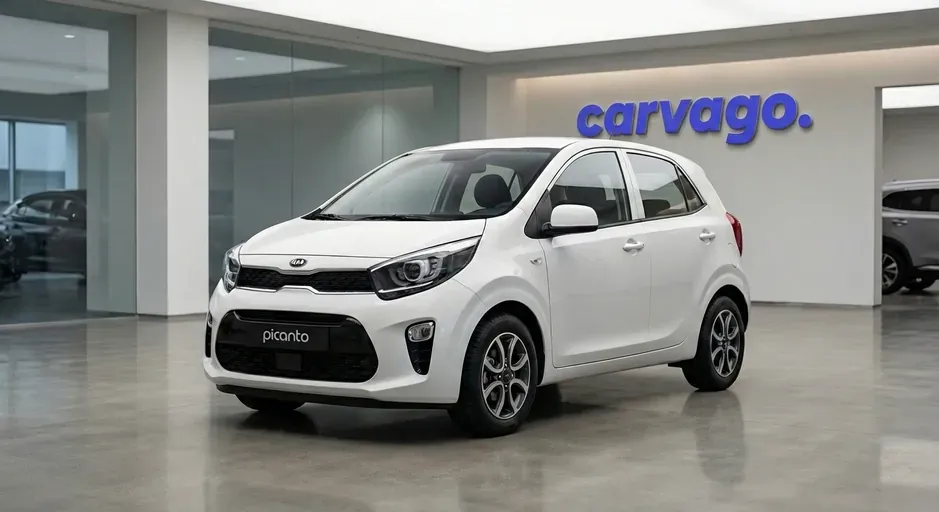
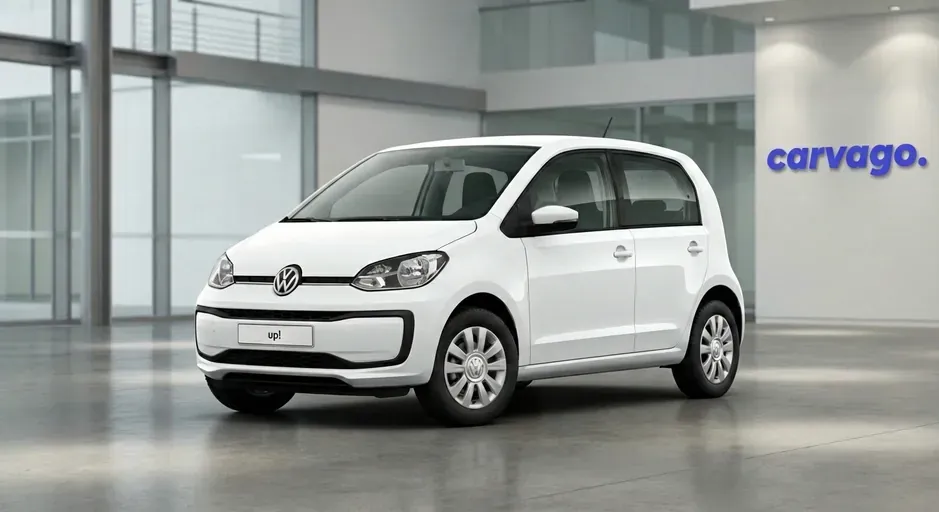
Kia Picanto, also known as the Kia Morning in some global markets, is an agile and reliable city hatchback that has gained popularity thanks to its attractive design and surprisingly rich equipment. Its challenger is the Volkswagen up!, an exceptionally practical and efficient compact car that is well-known on the market also under the names of its technically related group siblings, the Škoda Citigo and SEAT Mii. Let's take a detailed look at how these two popular competitors fare in a head-to-head battle and which of them represents the smarter choice for your daily journeys.
When choosing the ideal city car, exterior dimensions play a key role. Both the Kia Picanto and the Volkswagen up! represent the best that the city car segment has to offer, and looking at their proportions, it is clear that both models share a similar philosophy. If we focus on used cars about four years old (generations and model years available around 2022), both cars fight a very close battle in terms of length. The Volkswagen up! measures exactly 3600 mm, while the Kia Picanto is just a tiny 5 mm shorter at 3595 mm. In practice, this means that with both cars, you can easily park in even the smallest gaps in crowded streets.
However, a more significant difference can be found in the body width. With its 1645 mm, the Volkswagen up! offers a noticeably wider build than the Kia Picanto, whose standard version has a width of 1595 mm (or 1625 mm for specific trim levels and design packages). This extra width of up to 50 millimetres in favour of the Volkswagen has a positive effect on the interior space, especially regarding shoulder room for front-seat passengers. On the other hand, the narrower Picanto is a bit easier to squeeze through tight one-way streets and more comfortable to get out of in cramped garages.
As for height and wheelbase, both competitors have little to complain about. The height of both cars oscillates just below the 1.5-metre mark, which guarantees a reasonably low centre of gravity and plenty of headroom. The wheelbase of the Volkswagen up! is slightly longer (up to 2417 mm compared to exactly 2400 mm for the Kia), which gives it a slightly more mature driving character and smoothness when overcoming bumps. Conversely, the Picanto's shorter wheelbase benefits overall agility and uncompromising manoeuvrability. As a result, the wider and slightly longer-wheelbase up! will appeal to those looking for a more airy feel and a more stable car on the road, while the Picanto remains the absolute master of agile weaving through the urban jungle.
| Parameter | Kia Picanto Hatchback | Volkswagen up! Hatchback |
|---|---|---|
| Width (mm) | 1595 - 1625 | 1645 |
| Length (mm) | 3595 | 3600 |
| Height (mm) | 1485 - 1500 | 1483 - 1507 |
| Wheelbase (mm) | 2400 | 2407 - 2417 |
When choosing a used city car, practicality plays a surprisingly important role. Although models like Kia Picanto and Volkswagen up! spend most of their time in narrow streets or city parking lots, their owners often need to transport weekend groceries, sports bags, or luggage for shorter trips. The luggage compartment is therefore a key factor for everyday family usability and overall comfort. Looking at cars approximately four years old – specifically the third generation of the Kia Picanto (referred to as the JA generation) and the very popular first generation of the Volkswagen up! after its facelift – we find that both models are at the absolute top of their class and can please even more demanding drivers with their interior dimensions.
In terms of specific numbers, the Kia Picanto offers a 255-liter trunk in its standard five-seat configuration. However, if you fold down the rear seatbacks, you get an excellent 1,010 liters of interior space, which is sufficient even for transporting smaller pieces of furniture or oversized boxes. The Volkswagen up! practically keeps pace with its Korean rival in its base configuration, providing a perfectly comparable volume of 251 liters. After folding the rear bench, however, its maximum capacity increases to only 951 liters. The difference of nearly 60 liters in maximum volume in favor of the Kia can, in practice, mean space for several extra suitcases or significantly easier handling when loading bulkier items. The optional double floor also significantly contributes to the overall usability of both cars, as it can level the loading surface after the seats are folded.
It is also important to mention the differences in alternative powertrains that you might encounter in used car dealerships. While the Picanto relies almost exclusively on classic internal combustion engines, the fully electric e-up! version is very popular for the Volkswagen. Fortunately, thanks to the clever placement of the batteries, it maintains a nearly identical base volume of 250 liters. The reduction is only felt when the seats are folded, where the maximum capacity of the electric version stops at 923 liters. Thus, the electric drive does not demand significant compromises in spaciousness from the owner. Whether you choose the Kia or the Volkswagen, both hatchbacks offer a great balance between miniature dimensions for easy parking and surprisingly mature luggage space.
| Parameter | Kia Picanto Hatchback | Volkswagen up! Hatchback |
|---|---|---|
| Base volume (liters) | 255 | 251 |
| Max. volume with seats folded (liters) | 1010 | 951 |
Both cars offer an excellent base trunk of comparable volume for their compact class, but if you often fold the rear seats to transport larger loads, the Kia Picanto will provide you with significantly more practical space.
The towing capacity of the smallest city cars (A-segment), which includes the Kia Picanto and Volkswagen up!, is a parameter that significantly affects overall practicality and the ability to transport bulkier loads. On the market for four-year-old used cars, however, those interested in towing a trailer will encounter a fundamental limitation. Available data clearly shows that the modern Kia Picanto (JA generation) and the Volkswagen up! (1st generation) do not have homologation for towing a trailer. For both of these models around four years old, the standard and maximum weight for both braked and unbraked trailers is 0 kg (or the values are not specified by the manufacturer at all).
An exception can only be found in older cars. If we look at the previous generation of the Kia Picanto (TA generation, sold until 2017), it offered a maximum braked trailer weight of up to 700 kg for the 1.0 and 1.2 engines, while the standard unbraked weight was around 400 kg. The Volkswagen up!, on the other hand, does not offer this option across any of its model years or versions. This also applies to alternative powertrains – the fully electric e-up! model or the natural gas versions (EcoFuel) do not allow a tow bar at all due to a strict emphasis on the lowest possible weight and aerodynamic efficiency.
In practice, these differences mean that with an older Picanto, you could easily attach a small trailer. It could offer the ideal space for a few extra suitcases, and its capacity was easily sufficient for weekend shopping, longer holidays, or transporting materials to the garden. With modern four-year-old representatives of both brands, you have to forget about such flexibility. Any installed tow bar (the "ball") on newer models usually serves exclusively as a mount for bike racks and is neither designed nor homologated for actual trailer loads.
From the perspective of choosing a late-model used car, the verdict is quite strict: if you absolutely need a tow bar for a classic trailer, neither of today's four-year-old models will suffice. While with the Kia Picanto you can at least reach for a demonstrably older generation (TA) if you have this need, you will have to exclude the Volkswagen up! from your selection of towing vehicles entirely.
(Note: The modern Kia Picanto JA generation and Volkswagen up! 1st generation are not factory-homologated for towing a trailer, which is why data is missing for them. The table below, in accordance with the methodology, contains only available data for older Picanto model years where towing was permitted.)
| Model and engine | Braked trailer weight (kg) | Unbraked trailer weight (kg) |
|---|---|---|
| Kia Picanto 1.0 (gen. TA) | 700 | 400 |
| Kia Picanto 1.2 (gen. TA) | 400-700 | 400 |
| Kia Picanto 1.1 (gen. BA) | 400-700 | 400 |
The range of engine options for the Kia Picanto and Volkswagen up! demonstrates the completely different approaches of the two manufacturers to the city car segment. Differences in powertrains have a fundamental impact on fuel consumption, reliability, and performance, which should be among the main criteria when choosing a used car. While South Korea's Kia focuses on proven and structurally simpler petrol engines (both naturally aspirated and turbocharged) for cars around four years old, Volkswagen scores with a variety of alternative drives that is unprecedented for this class. Both models are based on modest one-litre three-cylinder engines; however, for drivers looking for a more spirited ride, a comparison of the top-of-the-line turbo engines is offered – the turbocharged 1.0 T-GDI (74 kW) in the Kia versus the German 1.0 TSI (66 kW) and even the sharply tuned up! GTI (85 kW). The decision on the used car market thus depends on the driver's profile: conservative drivers with a limited budget will appreciate the mechanical simplicity of Kia's petrol versions, while tech enthusiasts, drivers covering purely urban miles, or those interested in a purist sporty drive will find their ideal more likely with Volkswagen.
Under the hood of the current third-generation Kia Picanto (codenamed JA, corresponding to nearly-new used cars around the 2022 model year), you will find exclusively traditional internal combustion engines. This strategy brings a major advantage in the form of good mechanical reliability and low service costs. The range starts with the naturally aspirated 1.0 MPI / DPi three-cylinder with 49 kW (67 hp), intended primarily for heavy city traffic. More demanding drivers who occasionally head out onto country roads and motorways will prefer the more flexible 1.2 MPI / DPi four-cylinder (62 kW / 84 hp) or the top-of-the-line turbocharged 1.0 T-GDI direct-injection variant, which delivers a solid 74 kW (100 hp) and a maximum torque of 172 Nm. A precise five-speed manual transmission is standard for all engines, although a five-speed automated manual transmission (AMT) was also available for the naturally aspirated variants. The weakness of Kia's offering is the complete absence of full hybrid or electric versions. Looking at historical production data, it is also clear that the economical 1.0 LPG versions, which allowed for popular low-cost operation on autogas, ended with the TA generation and are no longer found on the market for relevant four-year-old JA generation cars.
| Engine type | Fuel | Power (kW) | Torque (Nm) | Transmission |
|---|---|---|---|---|
| 1.0 MPI / DPi | Petrol | 49 | 96 | 5MT / 5AMT |
| 1.2 MPI / DPi | Petrol | 62 | 122 | 5MT / 5AMT |
| 1.0 T-GDI | Petrol | 74 | 172 | 5MT |
The range of engine options for the Volkswagen up! is among the most extensive on the used city car market. Volkswagen did not rely solely on conventional powertrains here but introduced highly efficient alternatives throughout the production of the 1st generation. The role of a reliable city car is fulfilled by the basic naturally aspirated 1.0 MPI petrol three-cylinder (available in 44 kW and 55 kW versions), which can be combined with a five-speed manual or the less smooth ASG automated manual transmission. Excellent flexibility across speeds is provided by the advanced 1.0 TSI turbo engine with 66 kW (90 hp). A true gem is the top-of-the-line up! GTI variant, whose one-litre TSI tuned to a powerful 85 kW (115 hp) combined with a precise six-speed manual makes the lightweight car a genuine pocket rocket. However, Volkswagen's immensely strong weapon is its economical eco-friendly variants: the eco up! model was cleverly modified by the manufacturer for very low-cost operation on compressed natural gas (CNG) with 50 kW, and the small e-up! electric car (61 kW / 210 Nm) celebrated huge sales success, with its improved battery from 2020 safely guaranteeing a great range for city commuting. According to available production information, all versions of the Volkswagen up! were gradually phased out of production in 2022 and 2023, leaving only attractive used examples available for interested buyers.
| Engine type | Fuel | Power (kW) | Torque (Nm) | Transmission |
|---|---|---|---|---|
| 1.0 MPI | Petrol | 44 / 55 | 95 | 5MT / 5ASG |
| 1.0 TSI | Petrol | 66 | 160 | 5MT |
| up! GTI (1.0 TSI) | Petrol | 85 | 200 | 6MT |
| eco up! 1.0 | CNG / Petrol | 50 | 90 | 5MT |
| e-up! | Electric | 61 | 210 | 1AT |
While the Kia Picanto is absolutely ideal for conservative drivers looking for reliable traditional petrol engines, the Volkswagen up! satisfies even the most demanding used car buyers thanks to the excellent e-up! electric car, the economical CNG version, and the fantastic GTI model.
Choosing the right engine is absolutely crucial for long-term satisfaction with a used car. Our recommendations are based on real-world mechanic experience, actual fuel consumption, and verified owner feedback. While the Kia Picanto has retained the option of an exceptional and refined four-cylinder engine in recent years, Volkswagen has gradually narrowed its range for the up! model. As can be seen from the availability of models on the market, turbocharged 1.0 TSI units (with the exception of the top-of-the-line GTI version) ceased to be commonly offered around the turn of 2018 and 2019. In the market for roughly four-year-old used cars, a premium four-cylinder from Korea thus competes with a technically minimalist but indestructible three-cylinder from Germany.
Although the basic one-liter three-cylinder is perfectly adequate for the city, the larger naturally aspirated 1.2 MPI engine (referred to as DPI in newer model years) represents a huge and highly valued rarity in the segment of the smallest cars. It turns the Picanto into an unexpectedly versatile vehicle.
Given that the more powerful turbocharged 1.0 TSI engine completely disappeared from the standard range after 2019 and remained reserved only for the niche GTI version, the one-liter naturally aspirated three-cylinder has become the absolute standard for roughly four-year-old used cars. It is a rational and mechanically very safe choice.
Official fuel consumption figures provided by manufacturers are often overly optimistic in practice, and relying on them when choosing a used car can lead to unnecessary disappointment. In real-world driving, where air conditioning, frequent starts at city traffic lights, vehicle load, or fast highway trips come into play, actual values can differ by more than one liter of fuel per hundred kilometers.
To get the most accurate picture of the actual appetite of roughly four-year-old used cars (model years around 2020–2022), we analyzed data from the independent user portal Spritmonitor.de. Here, thousands of real drivers record their daily refueling, providing a much more accurate view than laboratory measurements from car manufacturers.
The following table shows average real-world values for the most common engines on the market, clearly organized by powertrain type:
| Model and Engine | Average Consumption (l/100 km) |
|---|---|
| Volkswagen up! 1.0 MPI (naturally aspirated) | 5.4 |
| Kia Picanto 1.0 DPI (naturally aspirated) | 5.6 |
| Kia Picanto 1.2 DPI (naturally aspirated) | 6.0 |
| Volkswagen up! GTI 1.0 TSI (turbocharged) | 5.9 |
| Kia Picanto 1.0 T-GDI (turbocharged) | 6.3 |
| Volkswagen eco up! 1.0 (alternative CNG) | 3.8 kg/100 km |
Looking at real-world data, it is clear that the basic one-liter naturally aspirated three-cylinder engines are the absolute most economical gasoline choice for both models. The Volkswagen up! with the base 1.0 MPI engine is, in practice, about two-tenths of a liter more efficient than the equivalent 1.0 DPI under the hood of the Kia Picanto.
An interesting and perhaps surprising finding for many is that small turbocharged engines (the downsizing concept) do not actually reduce consumption in this segment; on the contrary. The 1.0 T-GDI unit in the Kia requires over 6 liters in the real world because it simply needs more fuel to cool components under load. On the other hand, the sporty Volkswagen up! GTI with the 1.0 TSI engine proves the VW Group's long-standing experience with turbocharging and, despite significantly higher power and better dynamics, manages to keep the average below the six-liter mark.
A completely missing element in the segment of roughly four-year-old city cars is diesel engines. For logical reasons, manufacturers have already abandoned them in this class, so a direct comparison with gasoline is no longer possible for newer used cars. A completely unique alternative for maximizing savings is the Volkswagen eco up! running on compressed natural gas (CNG), which offers incomparably low operating costs per kilometer driven.
Differences in consumption clearly shape which version you should choose based on your driving profile:
Although minor differences in tenths of a liter exist, fuel consumption should not be the only and main deciding factor in the battle between these two models. Both the Kia Picanto and the Volkswagen up! represent above-average fuel-efficient vehicles in all their conventional engine versions, which certainly won't break the bank. Much more weight should be given to the verifiable technical condition, interior layout, and personal preference for the specific user interface when choosing a specific four-year-old used car.
In the used car market, both the Kia Picanto and the Volkswagen up! are highly sought-after. As representatives of the smallest A-segment, they score points with low operating costs and reliability. If we focus on cars approximately four years old (2021 to 2022 models), we find that the price range for both models is very similar at the base level, but they differ in niche versions and how they hold their value over the long term.
For four-year-old examples, the main market offering consists of models with basic naturally aspirated one-liter engines. Prices start slightly above the €8,000 mark. The Volkswagen up! can be slightly more expensive on average, which is due to the brand's strong reputation and often more extensive optional equipment chosen by the original owners.
| Model (2021–2022 models) | Typical market price (Standard version) | Price (Better equipped and special versions) |
|---|---|---|
| Kia Picanto (3rd generation) | €9,000 – €10,000 | €11,000 – €12,000 (GT-Line, X-Line) |
| Volkswagen up! (1st generation) | €9,000 – €11,000 | €12,000 – €16,000 (GTI, e-up!) |
From the perspective of residual value and investment protection, each car offers a different compelling argument for purchase:
When browsing listings, you will notice that for both cars, specific engines or trim levels can significantly drive the price up.
For the Kia Picanto, cars in the sporty GT-Line trim or with crossover-style cladding called X-Line are at the upper end of the price range. Versions with the turbocharged 1.0 T-GDi engine, which makes the small Picanto a very brisk car even outside the city, are also more expensive.
The Volkswagen up! has a much wider price range due to its diversity. At the very top of the range sit two completely different versions. The first is the purely electric e-up!, which holds its value excellently thanks to its great efficiency and the solid range of the version with the larger battery. The other extreme is the sporty up! GTI with 85 kW of power. This pocket rocket has almost cult status on the used market, and its prices drop very reluctantly. Also specific are the widely represented and affordable compressed natural gas (CNG) versions labeled EcoFuel, which attract buyers with extremely low running costs.
While the Kia Picanto is a bet on absolute certainty without hidden risks thanks to its long factory warranty, the Volkswagen up! stubbornly defends its value due to the end of production and the popularity of special versions.
Although a once-prestigious five-star Euro NCAP rating is often mentioned in connection with these model lines or their earlier generations, it is essential to consider the context and the exact year of testing when buying a used car. Euro NCAP's independent protocols are constantly evolving and becoming more stringent over the years. Modern and much more demanding safety scenarios are gradually being introduced, such as stricter frontal impact simulations, advanced cyclist detection, or the ability of assistance systems to react at intersections. For this reason, percentage results and star ratings from different years cannot be directly compared, as a former top rating may already be insufficient by today's strict standards.
The third-generation Kia Picanto underwent testing in 2017. At that time, the car received only a three-star rating in its standard equipment, and from today's perspective, this safety certification has already fully expired. The Picanto performed solidly in adult passenger protection but lost significant points in child protection and assistance systems. The base models of that time lacked modern features such as autonomous emergency braking (AEB), and the structure of the rear seats meant a higher risk of neck strain for children in the event of an impact.
The Volkswagen up! has a rather specific history from the Euro NCAP perspective. Upon its market launch in 2011, this car received a full five-star rating, but in 2019, it was re-tested according to the modernized methodologies of the time. Newer and stricter rules dropped its result to three stars. Although the up! demonstrated very good passive safety for adults and excellent protection for children even in 2019, it lost valuable points for the protection of vulnerable road users (pedestrians) and the lack of modern assistance functions.
The following table clearly compares the last valid ratings for models found on the market as approximately four-year-old used cars:
| Parameter | Kia Picanto | Volkswagen up! |
|---|---|---|
| Year of testing | 2017 | 2019 |
| Adult occupant protection | 79 % | 81 % |
| Child occupant protection | 64 % | 83 % |
| Vulnerable road user protection | 54 % | 46 % |
| Safety assist systems | 25 % | 55 % |
The results show that even though both models represent an older design school and their safety equipment is gradually becoming obsolete, there is a vast difference in passive passenger protection between them. The low scores for assistance systems in both cars simply reflect the fact that these are affordable city cars in which advanced active safety was not mass-installed.
In an overall comparison, the Volkswagen up! provides a more comprehensive and robust level of passive safety according to more modern standards, from which child passengers in rear-seat car seats benefit most. Conversely, with its expired rating and significantly worse score in child protection, the Kia Picanto appears to be a less safe car for family use from a structural standpoint.
Although neither car has a current five-star certification, the Volkswagen up! demonstrably provides significantly higher safety for both adult and child passengers than the aging structure of the Kia Picanto.
In addition to standard equipment, each model offers several unique features that can be decisive for the customer and demonstrate their very different approaches to added value.
Seven-year factory warranty, which still provides a great deal of certainty for a four-year-old used car
Five-door body is always standard, unlike some competitors
Modern and fast infotainment with full support for Apple CarPlay and Android Auto
Attractive appearance and rich equipment, especially in the popular GT-Line or X-Line versions
Excellent agility and easy parking in narrow city streets
Automated manual transmission (AMT) suffers from unpleasant jerking when crawling
The basic naturally aspirated 1.0 MPI engine has relatively weak dynamics even on the highway
Noticeably noisier chassis and worse filtering of sharp bumps than the competition
Limited headroom for taller passengers in the rear seats
The Kia Picanto is an ideal choice for pragmatic buyers looking for a stylish, modernly equipped, and agile car exclusively for the city. Especially thanks to the long seven-year factory warranty, buying a four-year-old used car represents minimal risk and guarantees peaceful ownership for years to come.
Exceptional suspension comfort and cabin soundproofing; the ride feels like a car from a class above
Great use of interior space and a surprisingly airy cabin for front passengers
Top-notch driving characteristics and the availability of the collectable and fun up! GTI version
Above-average residual value and very slow price depreciation on the used car market
Reliable, very economical, and refined one-liter engines
Outdated infotainment concept, which in most versions relies only on an integrated smartphone holder
Higher purchase price of a used car compared to Korean competitors
Standard two-year warranty, which has long since expired for a typical four-year-old used car
Poorer ergonomics of some details, such as the absence of classic central air vents
The Volkswagen up! will appeal to drivers who demand mature driving characteristics, premium comfort, and high-quality workmanship from a city car. Despite the older onboard technology solution, this model holds its value excellently and offers a very refined experience behind the wheel.
Based on long-term user experience, service reports, recalls, and a comprehensive vehicle inspection, we have compiled an overview of the most common problems you should watch out for when choosing these used city cars.
The third generation of the Kia Picanto (type JA) is considered a very reliable city car, yet certain typical ailments associated with city traffic may appear as part of wear and tear.
Kia Picanto is overall an above-average reliable car, where the greatest operational risk is a prematurely worn clutch from city driving and a susceptibility to carbon deposits in turbocharged versions.
The Volkswagen up! in its newer model years offers very mature driving characteristics for the microcar class, but even its group technology has its specific weak points.
The Volkswagen up! is mainly troubled by minor faults such as leaking water pumps, noisier reverse gear shifting, and more susceptible rear brakes; mechanically, however, it is a very solid and durable car.
When buying a used car, a thorough inspection is crucial. Here are some specific points to focus on for these two models around four years of age, where although they are nearly new cars, specific city traffic may have already left its mark. For maximum certainty, an independent technical inspection of the car is always a good step to reveal any hidden defects.
Both cars offer a surprisingly practical luggage compartment for their class, which is almost identical in volume. The Kia Picanto provides 255 liters as standard, while the Volkswagen up! lags only slightly behind with 251 liters. Although the difference in daily use is minimal, the Picanto benefits from a slightly more usable boot shape and a flatter loading surface when the seats are folded.
Both models are considered very reliable and low-maintenance cars, especially when equipped with basic naturally aspirated engines. However, Kia clearly scores on the used car market with its seven-year factory warranty, which still covers potential defects even on four-year-old vehicles. The Volkswagen up!, on the other hand, benefits from the excellent availability of cheap spare parts and a wide network of independent service centers.
Although both cars are primarily intended for the city, the Volkswagen up! handles highway travel much better and overall gives a more mature and robust impression. Its chassis is more stable at higher speeds, and the cabin is better insulated from aerodynamic and road noise. The Kia Picanto is noticeably more nervous and noisier on the highway; conversely, it excels in agility and easy parking in narrow streets.
The Volkswagen up! surprises with generous space in all directions in the front seats, reminiscent of cars from a larger segment. However, the Kia Picanto, which has been sold exclusively with a five-door body in recent years, offers much more comfortable access to the rear seats. If you plan to carry adult passengers or children in car seats in the back more often, the five-door Picanto will be significantly more practical than the common three-door versions of the up! model.
The Volkswagen up! dominates in this regard thanks to the very popular fully electric e-up! version and the popular sporty up! GTI version. The Kia Picanto does not offer a purely electric variant at all and relies solely on internal combustion engines. However, customers looking for a more dynamic drive from Kia can opt for the turbocharged one-liter T-GDi engine in the sporty GT-Line trim.
While the Kia Picanto excels as an exceptionally agile city specialist with modern technologies and a major trump card in the form of a persistent seven-year factory warranty, the Volkswagen up! scores with unexpectedly mature driving characteristics and a subjectively airier interior. Furthermore, the German representative on the nearly-new used car market attracts with an unbeatably diverse range of powertrains, from which you can obtain the ideal tool for a radical reduction in operating costs thanks to the popular electric e-up! version or the economical CNG variant. The South Korean hatchback, on the other hand, is a perfect choice for pragmatic buyers looking for mechanically reliable petrol engines, richer standard equipment, and worry-free ownership without hidden risks in a roughly four-year-old vehicle. Ultimately, the decision depends purely on whether you prefer the security of a long warranty and agile city maneuvering with the Kia, or rather the more mature travel comfort and wider range of alternative powertrains with the Volkswagen.
Sources: ADAC, svetmotoru.cz, denik.cz, fdrive.cz, autojournal.cz, logistika.ihned.cz
This article was prepared using artificial intelligence tools. The section guarantor is Petr Dušek.
Fiat 500 or Kia Picanto? Our detailed comparison will help you choose the right city car. Detailed tests, features, and verdict.
Apr 14, 2026
Toyota Aygo X vs Volkswagen up! (VW Up): Detailed comparison of city cars. Discover the differences in space, fuel consumption and equipment, and read our verdict.
Apr 13, 2026
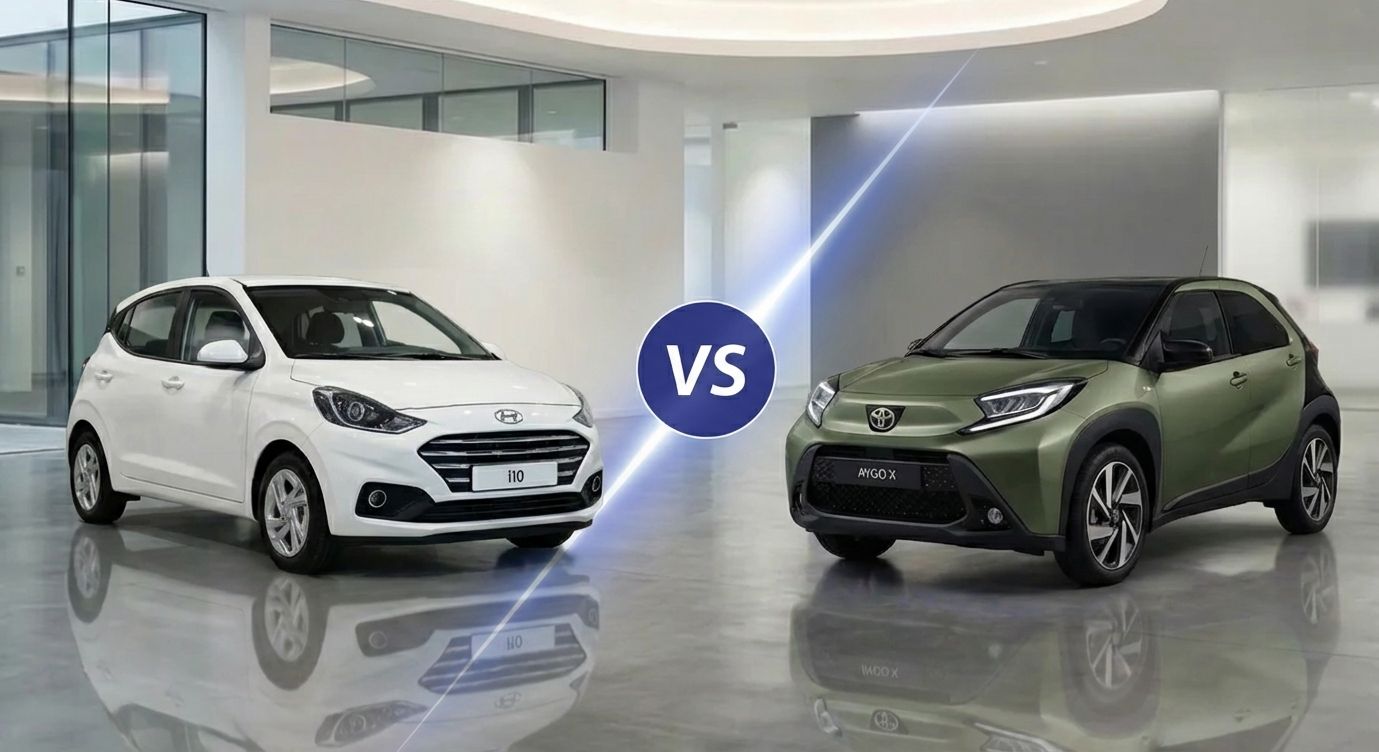
Hyundai i10 vs. Toyota Aygo X: A detailed comparison, real-world insights, and a verdict to help you choose the right small city car.
Apr 2, 2026