Car battle
Hyundai i20 vs. Suzuki Swift: Complete Comparison 2025
Hyundai i20 vs Suzuki Swift: Which hatchback is better? Our detailed comparison of equipment, ride, and price will help you choose. Read the verdict.
Apr 13, 2026
Articles
Car battle
Toyota Aygo X vs Volkswagen up! (VW Up): Detailed comparison of city cars. Discover the differences in space, fuel consumption and equipment, and read our verdict.
April 13, 2026
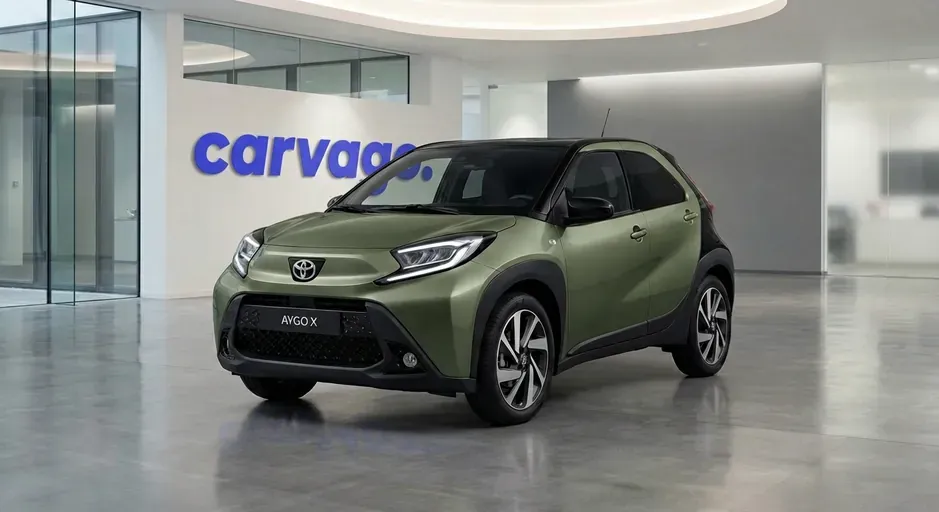
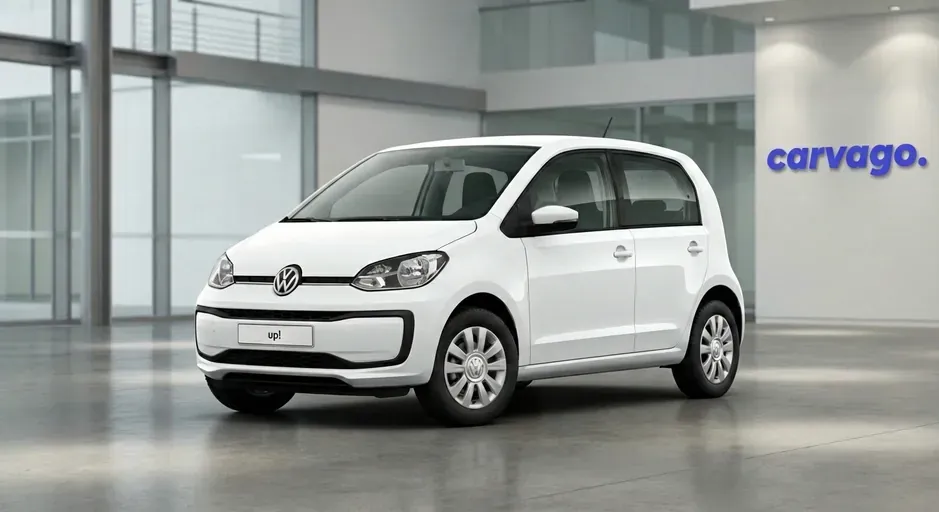
Toyota Aygo X, officially pronounced as Aygo Cross and originally introduced under the concept name Aygo X prologue, represents a modern and boldly styled city crossover with higher ground clearance. Its attractive concept will be challenged by the proven Volkswagen up!, an exceptionally practical hatchback also known on the market under the names of its group siblings, the Škoda Citigo and SEAT Mii, or in specific in-house derivatives such as the electric e-up! or the off-road-styled cross up!. Let's take a detailed look at how these two completely different approaches to the ideal city car perform in our direct comparison and which one represents the smarter choice.
When comparing the external dimensions of these two popular city cars, which are highly relevant for the market of approximately four-year-old used cars (centered around the 2022 model year), we encounter two different design approaches. The Toyota Aygo X, which arrived on the market as a new model in 2022, bets on a modern and muscular city crossover concept. In contrast, the Volkswagen up! in its refreshed version embodies a traditional, maximally efficient approach to a small and functional city car. At 3700 mm, the Toyota Aygo X is exactly 100 mm longer than the Volkswagen up!, which measures exactly 3600 mm. For used car buyers, this means in practice that while the shorter Volkswagen up! is slightly easier to park in tight parallel spaces, the ten-centimeter longer Aygo X feels more mature on the road and can extract a slightly larger basic luggage compartment volume from its extended body.
There are also fundamental differences between the two models in overall width and height. The Toyota Aygo X measures an impressive 1740 mm in width, while the Volkswagen up! is noticeably narrower, with values oscillating between 1641 and 1645 mm depending on the version. The height is also significantly different; the Aygo X crossover has grown to 1510–1525 mm, easily surpassing the up! with its maximum of 1504 mm. The Toyota's additional width doesn't just bring a more attractive look, but actually gives the driver and passenger more shoulder room, while the slightly higher build makes daily entry easier. For urban use, this defines a clear choice: the wider and taller Aygo X provides better driving comfort, a sense of security, and a better view at intersections, while the narrow up! with its lower center of gravity remains the undisputed king when weaving through the densest city traffic.
Finally, looking at the wheelbase – a key parameter for longitudinal interior space and directional stability – the differences almost disappear. The Toyota Aygo X offers a wheelbase of 2430 mm, which is only a negligible 10 mm more than the 2420 mm of the Volkswagen up!. Although the German representative has a significantly smaller external footprint, its boxier body shape, steeper windshield, and almost vertical rear mean it can conjure a surprisingly airy and bright interior from the given wheelbase. From a used car selection perspective, this detail clearly shows that if you require generous interior space for passengers despite the smallest possible external dimensions, the boxier VW up! uses its wheelbase more efficiently. Conversely, the Toyota Aygo X sacrifices some interior space in favor of a more muscular design and a more prominent road presence.
| Parameter | Toyota Aygo X Hatchback | Volkswagen up! Hatchback |
|---|---|---|
| Length (mm) | 3700 | 3600 |
| Width (mm) | 1740 | 1641 - 1645 |
| Height (mm) | 1510 - 1525 | 1492 - 1504 |
| Wheelbase (mm) | 2430 | 2420 |
Trunk volume is often a key compromise in the smallest city cars, yet buyers expect sufficient everyday practicality from them. Whether it's family usability, space for weekend shopping, or transporting sports equipment, every extra liter counts. Although both compared models target similar customers and represent a sought-after choice on the market for approximately four-year-old used cars, their approach to utilizing the enclosed space differs quite fundamentally, which has a direct impact on how much you can actually fit in them.
Looking at the exact numbers, the boxier and more efficiently packaged Volkswagen up! wins. In its standard configuration, it offers an excellent 251 liters for its class, while the more modern and robust-looking crossover Toyota Aygo X lags behind with a value of 231 liters. The twenty-liter difference translates in practice to space for one or two more bulky shopping bags. Interestingly, while the standard drive concept in the Toyota does not limit the basic trunk volume, the optional premium JBL audio system reduces it to a modest 189 liters due to the subwoofer. Volkswagen, on the other hand, scores with a clever double floor, and in its fully electric e-up! version, the capacity drops only very slightly to 250 liters.
When the rear backrests are folded down, the gap between the two hatchbacks widens even further. The Volkswagen up! can offer a maximum transport capacity of up to 951 liters, creating an area sufficient for weekend shopping and longer holidays for two, but also for moving smaller pieces of furniture. The Toyota Aygo X provides a maximum volume of 829 liters with the rear seats folded. In terms of overall practicality and moving capabilities, the Volkswagen up! is clearly the more advantageous choice for those who require maximum spatial flexibility. The smaller trunk of the Aygo X, on the other hand, will fully suffice for drivers for whom stylish design and routine city errands are the priority.
| Parameter | Toyota Aygo X Hatchback | Volkswagen up! Hatchback |
|---|---|---|
| Base volume (liters) | 231 | 251 |
| Max volume with seats folded down (liters) | 829 | 951 |
Trailer weight is usually a crucial parameter for drivers who require maximum practicality from their vehicle and the ability to occasionally transport bulky cargo that simply wouldn't fit in a standard trunk. However, in the category of the smallest cars, which includes roughly four-year-old models like the Toyota Aygo X (produced since 2022) and the Volkswagen up! (from 2020–2023), the situation regarding towing capacity is quite specific and may slightly surprise potential tow bar applicants.
If you are considering hitching up a classic trailer, you will encounter uncompromising legislative and technical restrictions with both of these rivals. Both the Toyota Aygo X and the Volkswagen up! have the same standard and maximum permitted weight for braked and unbraked trailers – exactly 0 kg. This figure applies across the entire range of both brands. Even different or more powerful versions do not change this fact. Zero towing capacity applies to both the Toyota Aygo X with CVT automatic transmission and the more powerful Volkswagen up! GTI or its purely electric variant, the e-up!. Simply put, both manufacturers did not homologate these generations for towing cargo at all.
From a practical standpoint, this means you cannot hitch even a small trailer for hauling garden waste or materials for a weekend cabin renovation to either car. Their transport capacities are limited exclusively to the interior cabin space (which is otherwise sufficient for regular and even larger weekend shopping if you fold the rear seats) or to the installation of a roof box. Nevertheless, there is one exception that will please sporty owners. A special towing device can be purchased and installed for both models, which, while not allowed to pull a trailer, serves exclusively as a certified vertical support for a bicycle carrier, typically with a load capacity of around 50 kg.
In the end, trailer weight will not make the decision between these two cars any easier, as neither of them scores in this discipline. Both the Toyota Aygo X and the Volkswagen up! remain true to their nature as pure city specialists, for whom towing heavy loads is simply taboo.
| Model and motorization | Braked weight of trailer (kg) | Unbraked weight of trailer (kg) |
|---|---|---|
| Toyota Aygo X 1.0 VVT-i (53 kW) | 0 | 0 |
| Volkswagen up! 1.0 / 1.0 TSI / GTI (48–85 kW) | 0 | 0 |
When choosing a roughly four-year-old used city car, the range of engines is crucial not only in terms of reliability but also consumption and future operating costs. The Toyota Aygo X and Volkswagen up! approach the powertrain solution quite differently. While Toyota bets on absolute simplicity for its crossover and offers only a single proven gasoline engine without complex electrification or turbocharging, the Volkswagen up! provided a much more diverse palette at the end of its life cycle. With the German competitor, you could choose from basic naturally aspirated engines to a factory version for compressed natural gas (CNG) and fully electric drive, all the way to a sporty turbocharged unit. Volkswagen thus offers much wider possibilities for adaptation to your driving style, whereas Toyota scores with the renowned durability of its Japanese naturally aspirated classic.
The Toyota Aygo X entered the market in 2022 as a stylish city crossover with higher ground clearance. As historical data shows, previous generations of the Aygo model (produced until March 2022) offered various specific derivatives – for example, 1.0 Eco versions or models equipped with the older MMT and x-shift automated transmissions, which you will no longer find in the current lineup. The current Aygo X model, relevant for the nearly-new used car market, makes do with a single power unit. Under the hood works exclusively the proven naturally aspirated 1.0 VVT-i three-cylinder with an output of 53 kW (72 hp). While it won't impress with dynamics, it rewards with excellent mechanical durability and real-world consumption below 5 liters per 100 km. Customers have a choice between a precise five-speed manual transmission and an optional S-CVT continuously variable automatic, which successfully replaced the earlier automated gearboxes with better comfort.
| Engine type | Fuel | Power (kW) | Torque (Nm) | Transmission |
|---|---|---|---|---|
| 1.0 VVT-i | Gasoline | 53 | 93 | 5MT / S-CVT |
Around 2022, the Volkswagen up! offered an incomparably more diverse portfolio on the used car market, even though its total production definitively ended in 2023 and none of the engines are being manufactured anymore. The basis of the range is the reliable naturally aspirated 1.0 MPI three-cylinder, which in the last years of production had an output of 48 kW (65 hp), or older versions with 44 kW or 55 kW. Environmentally and economically minded drivers swear by the factory 1.0 EcoFuel version burning CNG, or the fully electric e-up! version with 61 kW, whose 32.3 kWh battery ensures an excellent city range of over 250 km. A true gem for enthusiastic drivers is the turbocharged one-liter 1.0 TSI engine in the up! GTI version. Thanks to its output of 85 kW (115 hp), torque of 200 Nm, and six-speed manual transmission, it turns the lightweight car into an exceptionally fun pocket rocket.
| Engine type | Fuel | Power (kW) | Torque (Nm) | Transmission |
|---|---|---|---|---|
| 1.0 MPI | Gasoline | 44 / 48 / 55 | 95 | 5MT |
| 1.0 EcoFuel | CNG | 50 | 90 | 5MT |
| 1.0 TSI GTI | Gasoline | 85 | 200 | 6MT |
| e-up! | Electricity | 61 | 210 | 1-speed |
Choosing the right engine is absolutely key to long-term satisfaction with a used car, which is why our recommendations are based on real mechanical experience, actual fuel consumption, and verified owner feedback. Both cars compared have a very interesting technical basis, but completely different directions. While the Toyota Aygo X, which rolls out of Kolín in the Czech Republic, has transformed into a designer city crossover in its current generation, the Volkswagen up! from the "New Small Family" group has definitively ended its life cycle. As can be seen from market availability data, the popular up! is no longer produced as new and is therefore not available in the current lineup. However, on the market for approximately four-year-old used cars, both of these vehicles still rank among the best that can be purchased in the smallest car segment.
| Model and engine | Power | Engine type | Ideal territory |
|---|---|---|---|
| Toyota Aygo X 1.0 VVT-i | 53 kW (72 hp) | Naturally aspirated, indirect injection | City and surroundings |
| VW up! 1.0 TSI | 66 kW (90 hp) | Turbocharged, direct injection | City, backroads, and highways |
The Japanese automaker decided to simplify the offering for its smallest model, the Aygo X, and this reliable three-cylinder gasoline engine is thus the only available choice on the market for four-year-old used cars. However, this is certainly not a bad thing, as this engine makes perfect sense in the urban jungle.
While the naturally aspirated 1.0 MPI base makes up the vast majority of the used car market and works excellently for short distances, if you are looking for a used car without compromises and with perfect dynamics, definitely look for the turbocharged 1.0 TSI version. This excellent engine was not installed in its cheaper sibling, the Škoda Citigo, at all, which makes this model an exclusive and sought-after vehicle on the secondary market.
Official fuel consumption values provided by manufacturers in promotional materials often look very tempting; however, the reality on the roads is usually somewhat different. Especially with small city cars that often move in heavy traffic and on very short routes, real fuel consumption can be surprising. To get the most accurate picture, we therefore turned to user data from the popular independent portal Spritmonitor.de, where thousands of drivers from all over Europe record their actual gasoline costs. We focused on roughly four-year-old models, which currently represent a relevant and frequent choice on the used car market.
| Model and engine | Average consumption (l/100 km) |
|---|---|
| Toyota Aygo X 1.0 VVT-i 53 kW | 4.8 |
| Volkswagen up! 1.0 MPI 44 kW | 5.3 |
| Volkswagen up! 1.0 MPI 55 kW | 5.7 |
| Volkswagen up! 1.0 TSI 66 kW | 5.2 |
Looking at real-world data, we immediately notice interesting trends. In this mini-car segment, diesel engines are now completely absent, and attention is focused exclusively on three-cylinder petrol engines. A major and, for many, surprising finding is that the more modern turbocharged 1.0 TSI engine in the Volkswagen up! (5.2 l/100 km) can actually be more fuel-efficient in practice than its more powerful naturally aspirated 1.0 MPI variant with 55 kW (5.7 l/100 km). The small turbo offers much higher torque at lower revs, meaning drivers don't have to "rev" the engine as much. However, the Japanese crossover remains the undisputed leader in efficiency. With its time-tested naturally aspirated 1.0 VVT-i three-cylinder and low kerb weight, the Toyota Aygo X reliably stays below the five-liter mark on average.
For typical users, these figures provide clear recommendations. If you are looking for a car primarily for the city, occasional shopping, and quiet suburban commuting, the basic naturally aspirated engines of both brands are perfectly adequate. The Toyota Aygo X, in particular, is an unbeatable choice for budget-conscious drivers in this regard. Conversely, for users who commute longer distances or don't shy away from motorways, the Volkswagen up! in the 1.0 TSI version makes much more sense in terms of both consumption and overall comfort. The turbocharged engine doesn't struggle as much on highways, has the necessary power reserve for safe overtaking, and paradoxically maintains excellent fuel efficiency.
In conclusion, fuel consumption for both of these small cars is objectively very low, and differences of a few tenths of a liter do not represent dramatic financial expenses given average annual mileage. Although the Toyota Aygo X is demonstrably slightly more efficient in absolute terms, your real need for driving dynamics and, of course, the verifiable technical condition of the specific vehicle should play a much larger role in the final decision between these used cars.
Looking at the market for roughly four-year-old used cars (mostly 2021 and 2022 models), a fundamental difference in the life cycle of both models emerges. While with the Toyota Aygo X you are essentially buying a near-new model from the very beginning of its production, the Volkswagen up! represents very mature cars from the very end of the first facelifted generation's production. This fact is significantly reflected in their prices.
| Model | Generation | Estimated price (from) | Estimated price (to) |
|---|---|---|---|
| Toyota Aygo X | 1st generation (start of production) | €12,000 | €16,000 |
| Volkswagen up! | 1st generation (facelift, end of production) | €7,000 | €10,000 |
From a financial perspective, the choice is clear: the Volkswagen up! offers those interested in a reliable four-year-old city car a significantly better ratio of pure price to utility value. The Toyota Aygo X makes sense primarily for drivers who are happy to pay a significant premium for more modern technology, the status of a stylish crossover, and a fresh look.
When evaluating the safety of used cars, one often encounters mentions of historical five-star results in tests by the independent organization Euro NCAP; however, in this regard, it is absolutely crucial to understand the context and the year of testing. Test protocols are constantly evolving and becoming stricter over time. For this reason, percentage scores from different years cannot be directly and objectively compared. New frontal crash simulations, stricter cyclist detection, or emergency scenarios at intersections, which older models did not undergo at all, now come into play.
The Japanese Toyota Aygo X underwent Euro NCAP crash tests in the summer of 2022. According to very strict modern standards, it received an overall rating of four stars, which is an excellent result for a small city car. This model excels primarily due to the presence of advanced technologies. The standard safety package includes autonomous emergency braking with sophisticated pedestrian and cyclist detection, as well as assistance systems for safer navigation through intersections. This was reflected in a highly above-average score of 81% in the safety assist category.
The German Volkswagen up! has a much longer history on the market. Although it received a full five stars at its debut in 2011, safety standards have advanced dramatically since then. When re-evaluated by Euro NCAP in 2019, its rating was reduced to three stars. The structural protection of the occupants (both adults and children) itself remained at a very good level, but the drop in the overall score was caused by the absence of modern active safety features. The car lacked standard autonomous emergency braking (AEB), which dragged down the scores for safety assistants and the protection of vulnerable road users. From the perspective of today's strict standards, the original safety certification of this model is already considered expired.
In conclusion, although both models provide a very solid and robust body structure for their size category, the safety winner by today's standards is the Toyota Aygo X. The Volkswagen up! protects its occupants very decently during an actual impact, but it suffers from an older architecture without advanced sensors. The Aygo X, on the other hand, brings a highly modern and comprehensive active safety package that can completely prevent many typical accidents in busy city traffic.
| Parameter | Toyota Aygo X | Volkswagen up! |
|---|---|---|
| Year of testing | 2022 | 2019 |
| Adult occupant protection | 78 % | 81 % |
| Child occupant protection | 78 % | 83 % |
| Vulnerable road user protection | 74 % | 46 % |
| Safety assistance systems | 81 % | 55 % |
In addition to standard equipment, both models offer more than just basic mobility, with each approaching added value and practicality in everyday life in its own very distinctive way.
The Japanese automaker decided to spice up the smallest city car segment with a popular outdoor look, benefiting not only the design but also everyday usability.
The German representative, on the other hand, honors the traditional philosophy of a small city car with an emphasis on maximum space efficiency, availability of interesting powertrains, and clever, low-cost solutions.
Advantages:
Disadvantages:
Advantages:
Disadvantages:
Based on long-term user experience, service reports, and reliability statistics, we have compiled an overview of the most common problems that buyers of these used city cars should watch out for. Whichever of these models you choose, an independent technical inspection of the car is strongly recommended before buying a roughly four-year-old used car, as it can reliably detect hidden damage or wear from city traffic.
The Toyota Aygo X has been on the market for a relatively short time (produced since 2022), so most used cars available on the market are still in very fresh condition. However, the automaker opted for a proven platform and technology from previous years, allowing typical wear patterns to be predicted quite accurately.
Summary for the Aygo X model:
Mechanically, it is one of the most reliable city crossovers today, and serious mechanical faults are a rarity. Most recorded problems revolve exclusively around minor software bugs in the on-board electronics.
The final model years of the Volkswagen up! (approximately 2019–2023) represent a technically very refined product at the end of its life cycle. Even so, this popular model has its typical weak points.
Summary for the up! model:
In terms of driving and overall impression, the Volkswagen up! feels much more mature than its dimensions suggest. Any problems are usually related to wear and tear of the clutch, brakes, or minor imperfections in the body seals. If the selected unit passes a successful physical vehicle inspection, it still represents a highly above-average and reliable choice on the used car market.
When buying a used car, a thorough inspection is key, especially for city cars that often face hazards in the form of high curbs, potholes, and constant short trips with a cold engine. A professional independent technical inspection of the car can reveal hidden defects, but you should also be alert during the test drive, as both models have their specifics to watch out for.
Volkswagen up! offers a surprisingly practical trunk with a volume of 251 liters with good access and regular shapes. Toyota Aygo X, despite its more robust crossover appearance, has a slightly smaller luggage compartment with a volume of 231 liters and a significantly higher loading sill. For larger shopping trips and better space usability, the Volkswagen is more practical.
Thanks to its boxy body shape, the Volkswagen up! maximizes interior space and surprisingly offers enough head and legroom also in the rear seats. The Toyota Aygo X feels more cramped inside, especially in the back, where small windows and a sloping roofline limit passenger comfort. For more frequent transport of adults, the Volkswagen is clearly the better choice.
Toyota Aygo X benefits from increased ground clearance and large wheels, which makes it excellent at handling city potholes and easier to drive onto curbs. The Volkswagen up!, on the other hand, offers a much better panoramic view from the cabin thanks to its generous glazing, which significantly facilitates parking in narrow streets. Both cars excel in tight spaces, but the Aygo X is slightly more comfortable on poor surfaces.
Both city cars are very economical; the real-world consumption of the basic petrol versions reliably ranges between 4.5 and 5 litres per 100 km. However, the Volkswagen up! has the advantage of a wider range of engines on the used car market, including a fully electric version (e-up!) or a natural gas (CNG) variant. The Aygo X relies exclusively on its highly efficient naturally aspirated three-cylinder petrol engine without hybrid technology.
Both cars are considered above-average reliable in the smallest car class, with low operating costs. Toyota benefits from its time-tested naturally aspirated one-litre three-cylinder engine, which is mechanically very simple and almost indestructible in the long run. The Volkswagen up! also has a very solid reputation; however, in terms of absolute maintenance costs in later years, the Japanese car has a slight advantage.
The choice between Toyota Aygo X and Volkswagen up! in the used car market depends on individual priorities for a city car. Toyota Aygo X is recommended for those who prioritize uncompromising reliability, the attractive appearance of a miniature SUV, and a sense of safety thanks to modern assistance systems, which justifies its higher price. Conversely, if a lower purchase price, maximum spatial flexibility, and the option to choose an engine tailored precisely to your needs are key for you, Volkswagen up! remains the unbeatable king of practical urban mobility. It offers surprising spaciousness and a wide range of powertrains, from economical to electric. In short, the choice is between modern style and safety, or rational practicality and affordability.
Sources: ADAC, aktualne.cz, auto.cz, autohome.cz, dopravniinfo.cz, motorsport.cz
This article was prepared using artificial intelligence tools. The section guarantor is Petr Dušek.
Hyundai i20 vs Suzuki Swift: Which hatchback is better? Our detailed comparison of equipment, ride, and price will help you choose. Read the verdict.
Apr 13, 2026
Detailed comparison of Citroën C3 vs. Mazda 2 (Mazda2). We offer real-world driving experiences, an equipment overview, engine comparison, and a clear verdict for the right choice.
Apr 13, 2026
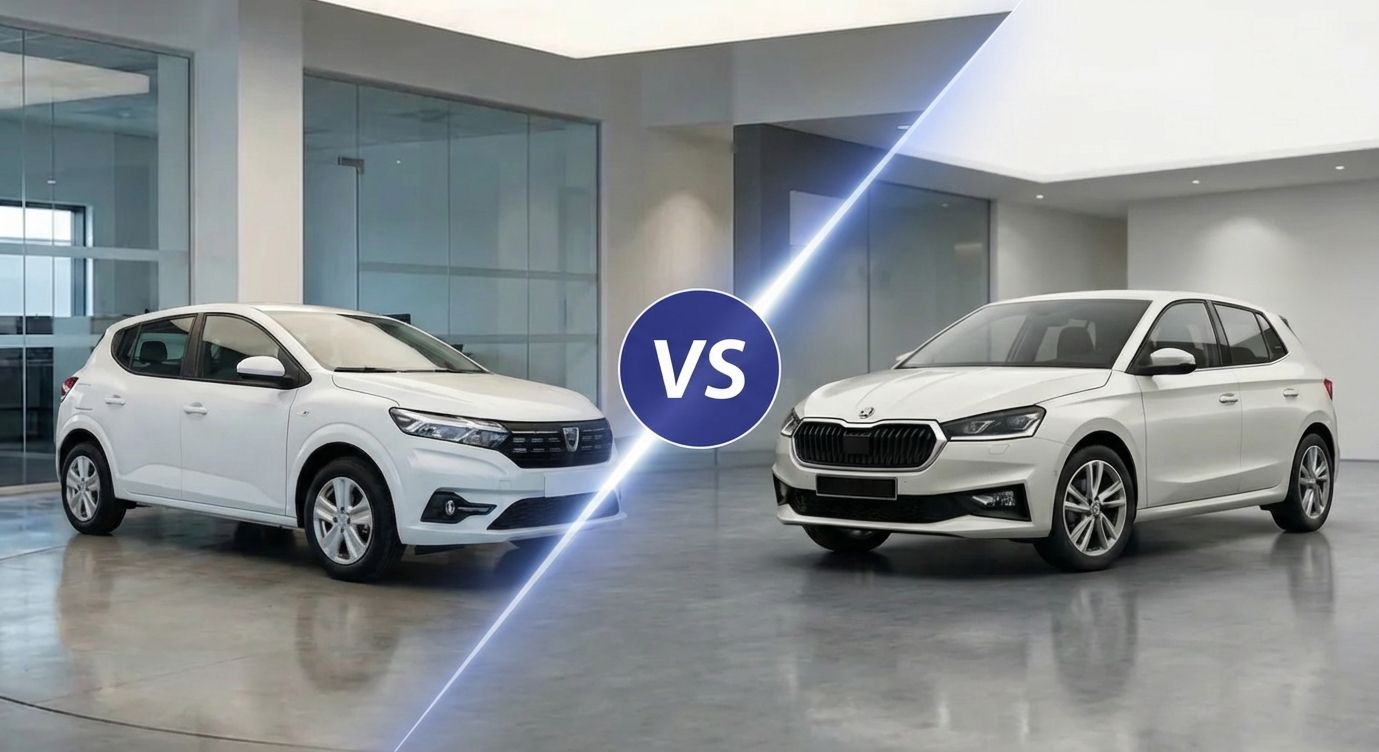
Dacia Sandero vs. Škoda Fabia: Which car is better? We compare engines, equipment, and price. Our detailed verdict will help you choose.
Apr 14, 2026