Car battle
Opel Corsa vs. Škoda Fabia: Complete comparison 2026
Detailed comparison: Opel Corsa vs. Škoda Fabia. Discover the differences in equipment, engines, and reliability. Real-world experiences to help you choose your used car.
Apr 24, 2026
Articles
Car battle
Detailed comparison of Opel Corsa vs. Toyota Yaris. Find out which city hatchback offers better reliability, fuel consumption, and equipment. Read our clear verdict!
May 20, 2026
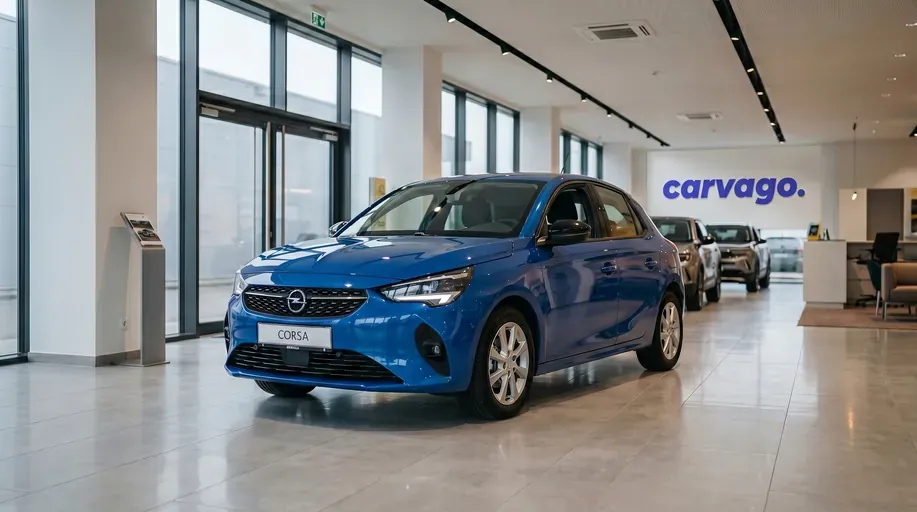
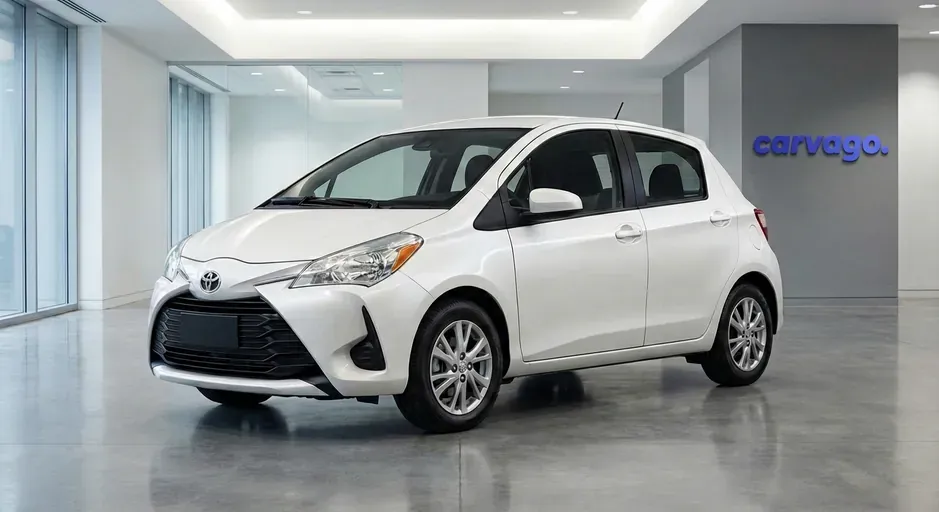
The German Opel Corsa, also known as the Vauxhall Corsa in some markets, is a long-standing staple of the small city car segment, which today scores points primarily with its dynamic design and modern technologies. Standing against it is the popular Japanese Toyota Yaris, world-renowned for its reliability and fuel efficiency, whose current generation is also sold in Europe as the rebadged Mazda2 Hybrid model. Let's take a detailed look at how these two popular representatives of the so-called supermini category fare in a direct comparison and which of them represents a smarter choice for buying a used car.
When looking at external dimensions, the Opel Corsa and Toyota Yaris take slightly different paths, which has a direct impact on their daily usability. If we focus on models roughly four years old (Corsa F and Yaris XP21 generations), the Corsa, with its length of 4060 mm, is 120 mm longer than the standard Yaris (3940 mm). The Opel is also slightly wider (1765 mm compared to 1745 mm for the standard Yaris, excluding the specific GR sports version). In practice, this means the Corsa feels a bit more mature on the road and offers proportions closer to compact class cars, while the Yaris retains ultra-compact dimensions that make it the absolute champion for parking in narrow city streets.
However, an interesting twist comes when looking at the wheelbase and height. Although the Toyota Yaris is shorter overall, engineers managed to push the wheels further to the corners of the body. The result is a wheelbase of 2560 mm, which is 22 mm more than the longer Corsa (2538 mm). The Yaris is also taller (1500 mm compared to 1433–1435 mm for the Opel). Thanks to its lower build and longer overhangs, the Corsa offers a sportier and more aerodynamic silhouette with a lower center of gravity, which you'll appreciate during more dynamic driving or on the highway. In contrast, the Yaris bets on a taller and more upright build.
When choosing a used car, it primarily depends on your lifestyle. If you're looking for an agile city car that fits into every gap but can conjure up a surprising amount of space for the crew inside thanks to its long wheelbase, the Toyota Yaris is the ideal choice. The Opel Corsa, on the other hand, will appeal to drivers who prefer a more traditional, dynamically styled hatchback whose dimensions are suitable not only for the city but also offer a greater sense of stability on longer weekend trips.
| Parameter | Opel Corsa Hatchback | Toyota Yaris Hatchback |
|---|---|---|
| Length (mm) | 4060 - 4061 | 3940 - 3995 |
| Width (mm) | 1765 | 1745 - 1805 |
| Height (mm) | 1433 - 1435 | 1455 - 1500 |
| Wheelbase (mm) | 2538 | 2560 |
Trunk space is often one of the deciding factors even for small city hatchbacks, as it determines how usable the car will be for daily duties. Although models like Opel Corsa and Toyota Yaris do not primarily target large families, the difference in trunk volume can play a big role in whether you can comfortably fit items for everyday life into the car. For used car buyers looking for roughly four-year-old vehicles (generation F for the Corsa and XP21 for the Yaris), a comparison of these two competitors brings interesting findings regarding their practicality.
Looking at the basic trunk volume, the Opel Corsa has a slight edge. Its standard version with a combustion engine offers a volume of 309 liters, which represents an ideal space for a few extra suitcases and common daily needs. The competing Toyota Yaris lags only slightly behind – its trunk holds 286 liters in the basic configuration. In practice, this slight difference means a bit less flexibility, but for normal city use, it is still perfectly sufficient for weekend shopping or a longer vacation for two passengers. However, after folding the rear seats, the gap between the two cars widens a bit more; the Corsa offers up to 1081 liters, while the Yaris reaches a maximum of 935 liters.
An important aspect when choosing, however, is also the different engine options of both models, which have a direct impact on the trunk size. If you decide on the fully electric Opel Corsa Electric for a roughly four-year-old used car, you must expect a noticeable reduction in capacity to 267 liters in the base and 1042 liters with the seats folded, due to the battery placement. Similarly, for newer mild-hybrid versions of the Corsa, the maximum volume drops to 1004 liters. In contrast, the Toyota Yaris offers a huge advantage in that its extremely popular full-hybrid version fully retains the standard 286 liters (or 935 liters with the seats folded). An extreme case is the purely sporty Toyota GR Yaris (1.6 Turbo) model, where the specific construction and all-wheel drive required a reduction in capacity to just 141 liters.
Since both modern generations (from approximately 2020) are produced exclusively as hatchbacks, we bring a direct comparison of their standard combustion versions:
| Parameter | Opel Corsa Hatchback | Toyota Yaris Hatchback |
|---|---|---|
| Basic volume (liters) | 309 | 286 |
| Max. volume with seats folded (liters) | 1081 | 935 |
In the end, the Opel Corsa counts as a slightly more practical choice for those who occasionally need to transport bulkier cargo and every extra liter is key for them. While the Toyota Yaris offers slightly less absolute space, it brilliantly maintains its capacity even in the most sought-after hybrid engine versions, making it an excellent compromise between efficiency and daily usability.
While the Opel Corsa scores with a more generous total volume and better capacity with the seats folded in conventional versions, the Toyota Yaris represents the ideal for drivers who want an economical hybrid drive without compromises in trunk space.
Although small city cars are not primarily intended for towing heavy loads, the permitted trailer weight can be a crucial factor when choosing a used car. It often determines whether you can only attach a small e-bike rack, a trailer with garden waste, or if it can handle a small caravan for weekend trips. Looking at cars approximately four years old, we encounter vast differences that clearly define the practical use of both models.
Strong Opel for Heavier Loads
The current generation of the Opel Corsa (F, on the market since 2019) offers surprisingly generous and varied limits. While the base naturally aspirated 1.2 engine (55 kW) handles a more modest 500 kg, the more powerful turbocharged 1.2 DI Turbo variants and the economical 1.5 Diesel versions boast a maximum braked trailer weight of up to 1,200 kg. This capacity represents a huge advantage for drivers who need to transport heavier construction materials or tow a caravan on holiday. A standard unbraked trailer can be loaded up to approximately 580 kg with the more powerful engines. However, watch out for the purely electric variants (Corsa Electric), which are not homologated for towing a trailer.
Urban Toyota and the Limits of the Popular Hybrid
The latest generation Toyota Yaris (XP21, on the market since 2020) represents a significantly more cautious choice, which is a logical trade-off for its strict focus on the most efficient urban operation. Standard internal combustion versions like the 1.0-litre three-cylinder (53 kW) can tow a braked trailer weighing 750 kg, and the more powerful 1.5 engine (92 kW) can handle 850 kg. However, a major compromise comes with by far the most sought-after used version – the 1.5 Hybrid 116. For this model, the permitted braked trailer weight drops to just 450 kg. In practice, this means the hybrid Yaris will reliably serve for installing a robust bike rack or light weekend leaf removal, but it simply won't handle heavy work.
Mini Conclusion
If you know you will regularly tow a loaded trailer, transport construction materials, or a small caravan, the turbocharged Opel Corsa is the clear winner, offering above-standard space and reserve in its class. The Toyota Yaris, on the other hand, is a typical urban companion whose dominant hybrid powertrain will only serve for the absolute minimum, sufficient for leisure activities and light transport.
| Model and motorization | Braked weight of trailer (kg) | Unbraked weight of trailer (kg) |
|---|---|---|
| Opel Corsa 1.2 (55 kW) | 500 | 500 |
| Opel Corsa 1.2 DI Turbo (74 / 96 kW) | 1200 | 580 |
| Opel Corsa 1.5 Diesel (75 kW) | 1200 | 580 |
| Toyota Yaris 1.0 (53 kW) | 750 | 520 |
| Toyota Yaris 1.5 (92 kW) | 850 | 550 |
| Toyota Yaris 1.5 Hybrid 116 (68 kW) | 450 | 450 |
The approaches of both carmakers to their engine lineups exactly reflect their overall corporate strategies and represent two completely different paths for buyers of used cars around four years old. The Opel Corsa (generation F, from 2019) benefits from the shared technology of the Stellantis Group and offers a classic, very wide range of powertrains. Prospective buyers can choose from simple naturally aspirated three-cylinder engines to dynamic turbocharged petrol engines, a highway-friendly diesel, or even a fully electric version. In contrast, the Toyota Yaris (generation XP21, from 2020) bet everything on what it does best – electrification. Roughly 80% of Yarises sold feature the legendary full-hybrid powertrain, which makes it the unsurpassed king of fuel economy in city traffic. While the Yaris scores with reliability and efficiency without the need for charging, the Corsa attracts drivers looking for traditional turbo engines or locally emission-free electric driving.
The Opel Corsa's engine range is designed to satisfy absolutely everyone. The foundation consists of 1.2-liter three-cylinder petrol engines. The most affordable naturally aspirated version without a turbo (55 kW) serves undemanding drivers, but the much more sought-after variant is the turbocharged 1.2 DI Turbo, which provides either 74 kW or a confident 96 kW, where an excellent eight-speed automatic transmission is standard. A significant advantage in the used car market is the presence of the 1.5 Diesel (75 kW) engine. This is absolutely ideal for drivers with high annual mileage. However, as production data shows, this diesel engine was definitively phased out of the range in mid-2023, making it a prized commodity exclusively for the secondary market. An alternative for modern-thinking buyers is the fully electric Corsa-e (later Corsa Electric) with 100 kW of power and a 50 kWh battery, which is quiet and extremely agile in suburban traffic.
| Engine type | Fuel type | Power (kW) | Torque (Nm) | Transmission |
|---|---|---|---|---|
| 1.2 | Petrol | 55 | 118 | 5MT |
| 1.2 DI Turbo | Petrol | 74 / 96 | 205 / 230 | 6MT / 8AT |
| 1.5 Diesel | Diesel | 75 | 250 | 6MT |
| Corsa-e (50 kWh) | Electricity | 100 | 260 | 1AT |
In the world of city cars, the Toyota Yaris is synonymous with reliability and innovative hybrid technology. The base engine for less demanding markets was the traditional naturally aspirated one-liter three-cylinder 1.0 (53 kW), but its availability within standard trim levels gradually ended after 2023. There was also a more powerful naturally aspirated 1.5 version (92 kW), which could be paired with a reliable manual transmission or a CVT automatic. However, the absolute core of sales and the most desirable variant on the used market is the 1.5 Hybrid 116 (85 kW) model. This is a so-called full-hybrid (HEV), which charges exclusively through recuperation during braking and can drive purely on electricity for a large part of the time in the city, often pushing consumption below 4 liters per 100 kilometers. A true curiosity and the icing on the cake of Japanese engineering is the homologation rally special GR Yaris 1.6 Turbo, which is one of the few cars in the segment to offer advanced all-wheel drive (4WD) and a breathtaking 192 kW of power.
| Engine type | Fuel type | Power (kW) | Torque (Nm) | Transmission |
|---|---|---|---|---|
| 1.0 | Petrol | 53 | 93 | 5MT |
| 1.5 | Petrol | 92 | 153 | 6MT / CVT |
| 1.5 Hybrid 116 | Hybrid (HEV) | 85 | 120 (ICE) | e-CVT |
| 1.6 Turbo (GR Yaris) | Petrol | 192 | 360 | 6MT |
The decision between these two hatchbacks depends primarily on your driving environment. If you commute daily through heavy city and suburban traffic and your priority is absolute reliability combined with minimal operating costs and no need to shift gears, the Toyota Yaris 1.5 Hybrid has no equal competitor in the 4-year-old used car market. In terms of overall versatility, however, the Opel Corsa is slightly better. The Corsa 1.2 DI Turbo (74 kW) offers punchier acceleration at higher speeds and a more pleasant highway demeanor in this price range than the naturally aspirated or hybrid engines from Toyota. And if you are one of those drivers covering tens of thousands of highway kilometers a year, a used Corsa with the discontinued 1.5 Diesel engine will provide you with admirable travel economy that is hard to find in the small car class today.
While the used Toyota Yaris clearly rules frugal city commutes thanks to its proven hybrid technology, the Opel Corsa counters with a more sophisticated range of punchy turbocharged engines, making it a better all-rounder for longer trips and highways.
When choosing a roughly four-year-old used car, selecting the right engine is key to ensuring not only pleasant dynamics and real fuel savings but, above all, long-term mechanical reliability. While the Opel Corsa benefits from synergies within its parent group and offers agile turbocharged three-cylinder engines with very good pull across a wide rev range, the Toyota Yaris is the uncrowned king of city hybrids on the used car market, where maximum efficiency and legendary Japanese durability play the main role. Both engines we have selected are currently well-represented on the four-year-old used car market and represent the most sensible choice you can make for these models.
The best and most versatile choice in the Corsa range (for the F generation produced since 2019) is the 1.2 DI Turbo turbocharged three-cylinder. Compared to the weaker naturally aspirated versions, it offers significantly better flexibility thanks to early torque delivery, which you as a driver will appreciate not only during brisk starts from intersections but also when needing to overtake safely on country roads. Real-world fuel consumption easily stays around 5.5 to 6 liters per 100 km with calm driving.
The fourth generation of the Toyota Yaris (XP21 generation on the market since 2020) took a huge technological leap with the introduction of an entirely new three-cylinder hybrid. The combination of the 1.5 Dynamic Force petrol engine, an electric motor, and a robust e-CVT planetary gearbox is, without exaggeration, the benchmark of its class. The system ensures incredible driving smoothness and the ability to spend more than half the time in heavy traffic purely on electricity without the need to plug the car in anywhere. The result is fuel consumption that commonly and effortlessly stays below 4 liters per 100 km in the city.
The difference between official laboratory fuel consumption figures and real-world driving is a well-known fact in the automotive world, and the small city hatchback segment is no exception. Although newer measurement methodologies have brought somewhat more realistic numbers, actual consumption always remains heavily dependent on the route profile and individual driving style. To get the most accurate picture of real-world costs, we rely on long-term data from thousands of regular users on the popular community portal Spritmonitor.de. For this comparison, we focused on cars approximately four years old, which in terms of used market availability corresponds to the fourth-generation Toyota Yaris (XP21) and the sixth-generation Opel Corsa (F).
| Model and Engine | Average Consumption (l/100 km) |
|---|---|
| Full Hybrid Engines | |
| Toyota Yaris 1.5 Hybrid 116 (85 kW) | 4.0 |
| Diesel Engines | |
| Opel Corsa 1.5 Diesel (75 kW) | 4.8 |
| Petrol Engines (Naturally Aspirated) | |
| Toyota Yaris 1.0 VVT-i (53 kW) | 5.2 |
| Toyota Yaris 1.5 Dynamic Force (92 kW) | 5.4 |
| Opel Corsa 1.2 (55 kW) | 6.0 |
| Petrol Engines (Turbocharged) | |
| Opel Corsa 1.2 DI Turbo (74 kW) | 5.9 |
When interpreting the collected real-world data, several interesting trends emerge. The absolute king of efficiency is, unsurprisingly, the Toyota Yaris with its advanced hybrid powertrain, which can achieve a long-term average of exactly 4 liters of petrol per hundred kilometers. Conversely, a surprising finding may be that the smallest naturally aspirated engines – the 1.0-liter three-cylinder in the Toyota and the base 1.2 engine in the Opel – do not deliver the fuel savings many budget-conscious city car buyers might expect. Due to their lower power output, drivers must rev them more frequently, which brings their consumption in line with larger or more powerful engines. This is perfectly illustrated by the modern turbocharged 1.2 DI Turbo unit in the Corsa, which, despite significantly better dynamics, manages to drive on average a tenth of a liter more efficiently than its weaker non-turbocharged variant. The diesel Corsa is the sole representative of diesel power, but its consumption of 4.8 l/100 km is not particularly impressive compared to the hybrid Toyota.
For typical users and used car buyers, this data provides a clear conclusion. For drivers operating mainly in the city and suburban traffic jams, the hybrid Toyota Yaris makes immense sense. It can drive on pure electricity for a large portion of the time, saving not only fuel but also wear on the engine itself. Customers on a tighter budget who opt for non-electrified base petrol engines should prepare for operating consumption between 5.2 and 6 liters. As for the diesel Corsa, despite its originally urban character, it is exclusively suitable for long motorway and intercity commutes; otherwise, the particulate filter system will clog up very quickly.
In conclusion, if fuel consumption is your primary decision criterion, the hybrid Toyota Yaris is the unbeatable favorite in the four-year-old used car category, rewarding you with the lowest fuel bills in the long run. While the Opel Corsa does not achieve such phenomenal efficiency in the city, with the more powerful 1.2 DI Turbo engine, it still offers a pleasant compromise for those looking for a classic turbocharged car with brisk performance and reasonable consumption under six liters.
When choosing a roughly four-year-old used car (model years 2021–2022), the current Opel Corsa generation F and the fourth-generation Toyota Yaris (XP210) represent completely different worlds from a budget perspective. While the German representative scores points for affordability, its Japanese competitor is considered a master of residual value retention.
| Model | Typical price range | Most popular engines on the market |
|---|---|---|
| Opel Corsa (F) | €10,000 – €14,000 | 1.2 (55 kW) / 1.2 Turbo (74 kW) |
| Toyota Yaris (XP210) | €15,000 – €19,000 | 1.5 Dynamic Force / 1.5 Hybrid |
(Note: Exact prices depend on mileage, service history, and the equipment level of the specific vehicle.)
A used Corsa, sharing its platform with the Peugeot 208, is a highly sought-after choice on the used car market for those with a tighter budget who still want a modern and safe car.
The Toyota Yaris holds its price on the used car market with almost unbelievable tenacity. Its reputation as a reliable workhorse and its sophisticated hybrid system make it a scarce commodity.
The difference in the average price of both competitors of the same age commonly exceeds €4,000. The Opel Corsa offers a substantially better ratio of purchase price to the age of the car – you can buy it with less impact on the family budget. The Toyota Yaris, on the other hand, represents a more conservative financial investment. The higher initial costs are compensated by excellent reliability, extremely economical city driving, and a high resale value when you decide to move it on.
While a used Opel Corsa scores with an attractive purchase price and is an ideal choice for a tighter budget, the Toyota Yaris requires a significantly higher initial investment, which it balances in the long term with minimal loss of value and unrivaled reliability.
While many modern cars in this segment are generally expected to earn a five-star Euro NCAP rating, it is always essential to consider the specific context and the year the tests were conducted. Crash test protocols evolve over time and become increasingly strict, meaning that percentage scores from different years cannot be directly and equally compared. Furthermore, in this comparison, we encounter one fundamental factual difference: the Toyota Yaris earned a full five stars, while the Opel Corsa received a four-star rating.
Opel Corsa underwent independent Euro NCAP crash tests in 2019. Given the standards at the time, the car demonstrated a very good level of passive safety, particularly regarding child protection in the rear seats, where it achieved an excellent 86%. However, commissioners identified certain shortcomings in active assistance systems (69%) and the protection of vulnerable road users (66%), which ultimately cost the Corsa its fifth star. These results are thus based on a slightly more lenient methodology than that faced by its Japanese rival.
Toyota Yaris, on the other hand, completed safety tests in 2020 and became one of the first cars ever tested under the significantly more demanding new protocol. This format included a redesigned frontal impact simulation against a moving barrier, stricter criteria for side-impact injury protection, and entirely new scenarios for intersections with cyclist and pedestrian detection. The Yaris excelled in these tough conditions, primarily thanks to the advanced Toyota Safety Sense package. This was clearly reflected in the high rating for safety assistance systems (85%).
| Parameter | Opel Corsa | Toyota Yaris |
|---|---|---|
| Year of testing | 2019 | 2020 |
| Adult occupant protection | 84 % | 86 % |
| Child occupant protection | 86 % | 81 % |
| Vulnerable road user protection | 66 % | 78 % |
| Safety assistance systems | 69 % | 85 % |
The results show that although the Opel Corsa provides a solid cabin and good protection during the impact itself, its older safety rating shows a slight disadvantage in the area of prevention. The platform of the Toyota Yaris fully meets modern requirements – for example, the use of a center airbag significantly reduces occupant injuries in a side impact, while smarter radars and cameras help better protect surrounding pedestrians and cyclists.
In conclusion, if modern safety equipment is your absolute priority when choosing a four-year-old used car, the Toyota Yaris represents the more advanced choice with demonstrably more functional systems for active accident prevention according to stricter current standards.
Although both cars offer robust passive occupant protection, the Toyota Yaris represents a safer choice for today's heavy traffic thanks to its five-star rating from more demanding tests and more advanced safety assistants.
In addition to standard equipment, each of the models offers something extra and brings its own, completely different approach to added value, which can be decisive for a used car buyer.
Attractive dynamic design and confident driving characteristics
Option for optional IntelliLux LED Matrix smart headlights
Very comfortable front seats with excellent lateral support
Wide range of powertrains including economical petrol engines and a fully electric version
Good cabin soundproofing, which makes motorway travel more pleasant
Very cramped space for rear-seat passengers
Narrow rear door opening significantly makes getting in more difficult
Outdated graphical interface and slower infotainment response
Only average luggage compartment volume (309 litres)
The Opel Corsa will primarily appeal to drivers looking for a stylish and well-equipped hatchback with great front-seat comfort and mature driving characteristics. It serves individuals or couples excellently, but due to the very cramped space in the second row, it is not very suitable for frequently carrying adult passengers in the back.
Unrivalled economy and efficiency of the hybrid powertrain in city traffic
Renowned long-term reliability and excellent residual value retention
Rich standard equipment of advanced safety assistants (Toyota Safety Sense)
Fun and agile driving performance thanks to the stiff TNGA chassis platform
Option for an extended factory warranty under the Toyota Relax programme
Below-average luggage compartment with a volume of just 286 litres
Noisier engine performance during sharp acceleration due to the e-CVT gearbox
Limited headroom and legroom in the rear seats
Outdated graphics and unintuitive multimedia system controls
The Toyota Yaris is an ideal choice for pragmatic buyers who require bulletproof reliability, low operating costs, and top-tier safety equipment. The hybrid version absolutely excels in the city, where it offers a smooth and incredibly economical drive, but you must accept a smaller boot and more modest space in the rear seats.
Based on our long-term experience, breakdown statistics, service reports, and findings from comprehensive vehicle inspections, we have compiled an overview of the most common problems that buyers of used cars around four years old should watch out for.
The current generation Opel Corsa shares its technology with other Stellantis group models, which brings modern technological solutions but also some specific technical quirks to focus on when buying a used car.
For petrol versions, it is absolutely crucial to monitor the condition of the timing belt and shorten oil change intervals to a minimum. Otherwise, it is a relatively solid car, troubled more by infotainment software shortcomings than mechanical defects.
The Toyota Yaris has long been considered the absolute benchmark of reliability in its class, but even this extremely popular generation has not escaped a few minor, mostly user-related ailments.
Mechanically and engine-wise, the Yaris is exceptionally durable and above-average reliable; most owners are thus only troubled by the more sensitive 12V battery in hybrids and softer body paint. Buying this model represents an extremely safe choice despite minor user shortcomings.
When buying a used car, a thorough inspection is crucial. Here are some specific points to focus on for these two models, while any detailed Used car inspection by professionals will reveal potential hidden defects before they become your expensive problem.
Opel Corsa offers a slightly larger luggage compartment with a volume of 309 liters. The Toyota Yaris, on the other hand, has a slightly smaller trunk with a volume of 286 liters. The Corsa is thus a slightly more practical choice for carrying bulkier shopping or luggage.
Thanks to its proven hybrid powertrain, the Toyota Yaris is considered one of the most reliable cars ever and has very few reported faults. The Opel Corsa uses group engines (e.g., 1.2 PureTech), where oil change intervals need to be monitored more strictly due to the timing belt. In the long run, the Yaris is a safer bet.
In terms of fuel economy, the Toyota Yaris clearly dominates, especially if you choose its highly popular full-hybrid powertrain. The real-world fuel consumption of the hybrid Yaris in the city is around an excellent 4 liters per 100 km. The Opel Corsa with standard gasoline engines shows a combined consumption closer to 5.5 liters per 100 km.
The Toyota Yaris is slightly more suitable for narrow city streets thanks to its shorter body and smaller turning radius. On the other hand, the Opel Corsa is more stable at highway speeds and offers slightly better overall cabin soundproofing. However, both cars are excellent and agile representatives of the small city car segment.
Both cars have relatively limited legroom in the rear seats, which is typical for this car class. Although the Opel Corsa is a longer car overall, the Toyota Yaris can offer slightly more rear headroom thanks to its taller body design. In the front seats, however, both models provide enough comfort even for taller-than-average individuals.
The decision between these two popular hatchbacks ultimately depends primarily on your daily driving profile and financial priorities. Toyota Yaris represents the absolute ideal for pragmatic drivers who spend most of their time in city traffic and require bulletproof reliability, excellent safety, and minimal fuel consumption thanks to its unrivaled hybrid powertrain. Conversely, the Opel Corsa is a significantly better choice for buyers looking for more mature driving characteristics, a larger luggage compartment, and agile turbocharged engines, making it a more versatile companion for regular motorway trips and weekend outings. While the German representative pleases with a significantly more favorable purchase price on the used car market, its Japanese competitor requires a higher initial investment but pays off in the long run with unrivaled residual value retention.
Sources: ADAC, lidovky.cz, garaz.cz, autoservis.cz, autotechnik.cz, youngtimer.cz
This article was prepared using artificial intelligence tools. The section guarantor is Petr Dušek.
Detailed comparison: Opel Corsa vs. Škoda Fabia. Discover the differences in equipment, engines, and reliability. Real-world experiences to help you choose your used car.
Apr 24, 2026
Detailed comparison of the Suzuki Swift and Toyota Yaris. Which city hatchback should you choose? Discover the differences in fuel consumption, equipment, and reliability. Read our verdict.
Apr 16, 2026
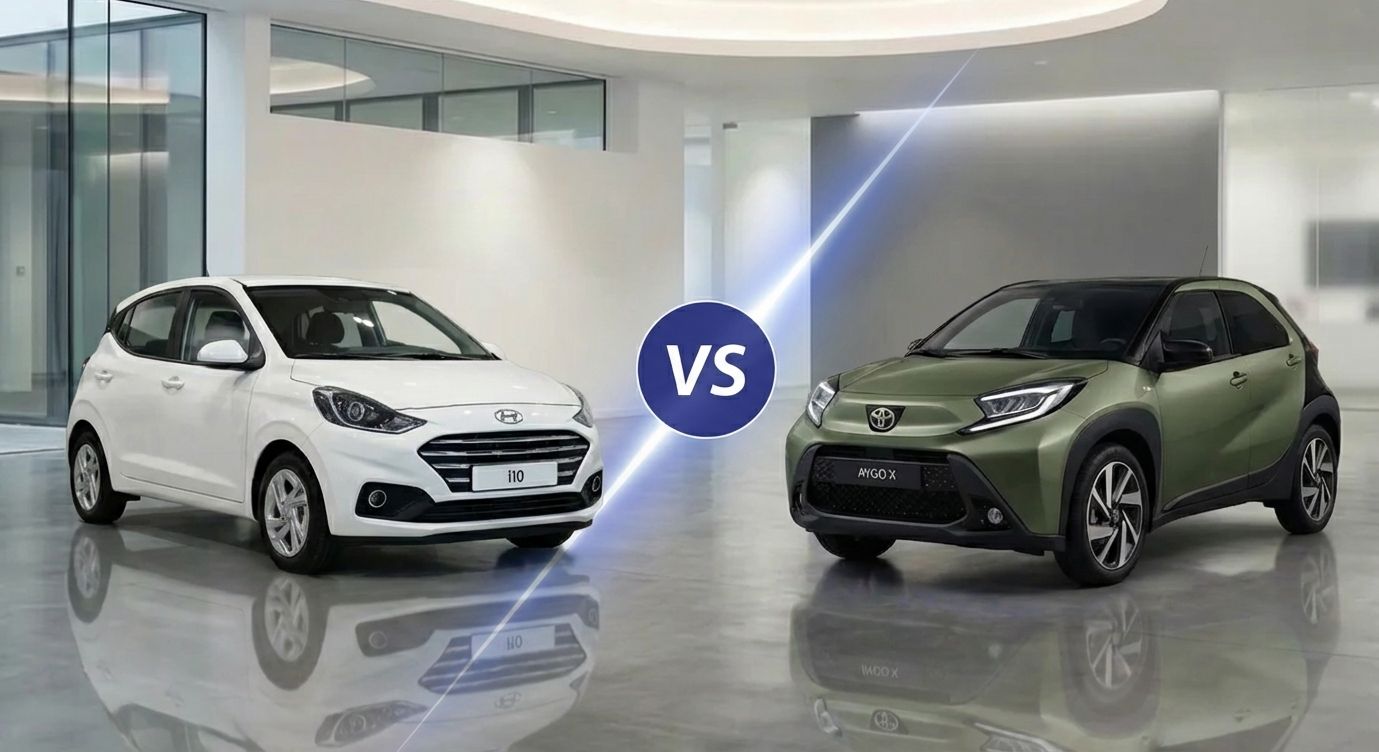
Hyundai i10 vs. Toyota Aygo X: A detailed comparison, real-world insights, and a verdict to help you choose the right small city car.
Apr 2, 2026