Articles

Car battle

Mazda CX-5 vs. Škoda Karoq: Complete comparison 2026

Comparing popular compact SUVs: Mazda CX-5 vs Škoda Karoq. Read a detailed used car comparison, reliability test, driving characteristics, and our verdict.

May 15, 2026

VS
Mazda CX-5

Mazda CX-5

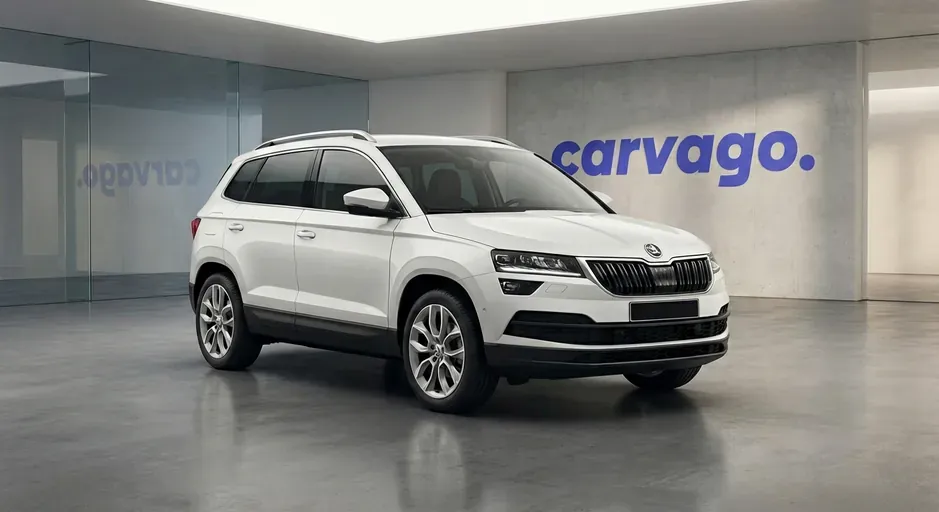
Škoda Karoq

Škoda Karoq

Introduction

The Mazda CX-5 is a dynamically tuned SUV that has won the hearts of many drivers with its premium craftsmanship, renowned reliability, and captivating driving performance. Standing against it is the very popular Škoda Karoq, which, on the other hand, scores as an exceptionally versatile family car with excellent interior space utilization and famous clever solutions for every day. In the following comparison, we will therefore take a detailed look at the strengths and weaknesses of both models to find out which of these advanced compact crossovers will be the better choice for your specific needs.

Comparison of External Dimensions

In a direct comparison of exterior dimensions, it is immediately apparent that the Mazda CX-5 and Škoda Karoq target slightly different audiences within the SUV family. While the Japanese representative ranks on the border between compact and mid-size SUVs with its proportions, the Czech model is a perfectly typical representative of the compact class. This fundamental difference is clearly reflected in their exterior bodywork, with the Mazda giving an overall more robust and mature impression on the road.

With a length of up to 4575 mm, the Mazda CX-5 is a substantial 152 to 193 mm longer than the Škoda Karoq. The height difference also works in favor of the Mazda, which, at a steady 1680 mm, is roughly 50 to 77 mm taller. In practice, this means the CX-5 offers a more dominant driving position and a more majestic appearance. The Karoq, on the other hand, wins hands down in everyday driving in crowded cities thanks to its more modest exterior dimensions. With a shorter body, parallel parking in tight spaces is much easier, and the car is overall more agile when maneuvering.

The situation regarding the width of both cars is interesting; despite visual differences, we find identical values. Both the Mazda and the Škoda show a width oscillating around 1841 mm (Mazda 1840-1845 mm depending on specification). In standard parking spaces at shopping centers, they therefore take up the same amount of width. However, a significant difference is again hidden in the wheelbase. The Mazda offers a generous 2700 mm, while the Karoq has values between 2630 and 2638 mm. The longer wheelbase of the CX-5 gives the driver the advantage of a smoother ride on the highway and better directional stability at high speeds, although the Karoq benefits from its shorter wheelbase with better agility in tight corners.

ParameterMazda CX-5 SUVŠkoda Karoq SUV
Width (mm)1840 - 18451841
Length (mm)4550 - 45754382 - 4398
Height (mm)16801603 - 1629
Wheelbase (mm)27002630 - 2638

Trunk Volume

Boot capacity is an absolutely key factor for many buyers when choosing a family SUV on the used car market. Whether it's for daily transport of sports equipment, folding baby strollers, or packing for a two-week holiday by the sea, every extra available litre plays an important role. Both the Mazda CX-5 and the Škoda Karoq are very popular cars, but they approach practicality with a slightly different philosophy. Furthermore, the resulting paper values might surprise many interested parties.

In a detailed comparison of models around four years old (i.e., the KF generation for Mazda and the first generation for Škoda), we find that the boot size is unexpectedly balanced. The larger Mazda CX-5 offers a basic capacity of 522 litres for pure petrol versions, while diesel engines (SKYACTIV-D) have a slightly reduced capacity of 510 litres due to technical installation. The Škoda Karoq, on the other hand, provides 521 litres as standard. Considering that the Karoq is a significantly shorter car on the outside, this is a respectable result and a demonstration of top-tier interior space packaging. In practice, both cars will provide you with a generously sized space that is perfectly sufficient for a large weekend shop as well as fitting several large suitcases.

After folding the rear seats, the total maximum transport capacity levels out even more. The Mazda CX-5 can offer a space of up to 1638 litres (or 1626 litres for diesel engines), which only negligibly surpasses the Škoda Karoq with its 1630 litres. Both vehicles can thus easily handle the transport of larger boxes when buying furniture or carrying bulkier sports equipment. The advantage of the Mladá Boleslav SUV is its typical variability and very regular boot shape with plenty of fixing elements, while the Japanese competitor can counter with more premium upholstery throughout the cargo area.

ParameterMazda CX-5 SUVŠkoda Karoq SUV
Basic capacity (litres)510 - 522521
Maximum capacity with seats folded (litres)1626 - 16381630

A close battle for every litre 📏

Although the Škoda Karoq is a more compact car from the outside, thanks to the clever use of interior space, it can offer practically the same boot capacity as the class-larger Mazda CX-5. Both SUVs thus represent an excellent and fully comparable choice for families requiring trouble-free everyday practicality.

Discover the true condition of the car thanks to an independent inspection

Order CarAudit™

Trailer Weights

A vehicle's towing capacity often plays a pivotal role when choosing a family SUV. The right maximum towing capacity isn't just a practical detail for hauling bulky materials or construction rubble on weekends; for heavier variants, it directly determines whether you can confidently hitch a large caravan or a boat for your holiday. Looking at models approximately four years old (generations and variants from 2021–2024), a vast difference emerges, primarily due to the build and construction of both cars.

Mazda CX-5 (KF generation)The Japanese SUV benefits from its overall more robust body, thanks to which it offers strong performance across the board, even with base engines.

  • The standard naturally aspirated 2.0 SKYACTIV-G petrol engine can tow a braked trailer with a very respectable weight of 1800 to 2000 kg.
  • Interestingly, the newer mild-hybrid variants (e-SKYACTIV-G) maintain their limits to the exact kilogram, with no reduction in capacity—something commonly seen in some other hybrid vehicles.
  • If you opt for the larger 2.5 SKYACTIV-G petrol four-cylinder or the 2.2 SKYACTIV-D diesel engines, the maximum braked weight increases to a stable 2000 to 2100 kg.
  • The maximum weight for an unbraked trailer is a solid 750 kg for all variants, which is more than sufficient for any domestic trailer.

Škoda Karoq (1st generation)The popular Czech representative much more clearly shows its compact family focus. Furthermore, the values in the registration document change dramatically depending on which powertrain you choose.

  • The entry-level 1.0 TSI three-cylinder has significant towing limits. It can only handle 1200 kg for a braked trailer, and for an unbraked one, the capacity drops to 660–680 kg. This value is truly intended only for light weekend shopping at a DIY store or hauling away leaves.
  • The much more common 1.5 TSI engine increases this limit to a more reasonable 1500 kg (occasionally up to 1800 kg for some model years), a mark that opens the door to towing an average family caravan.
  • However, those looking for a true workhorse must look to the higher tiers and seek out 4x4 specifications. Only the 2.0 TDI diesel (110 kW) can easily tow 1800 to 2100 kg. It is ably supported by the top-of-the-range 2.0 TSI petrol engine with a towing capacity of 1900 kg. For these most powerful versions, the limit for an unbraked trailer increases to the standard 750 kg.

Final VerdictWhile the Škoda Karoq is perfectly adequate for normal domestic use and occasionally hitching a trailer with firewood (only turning into a capable workhorse in its top specifications), the Mazda CX-5 delivers solid towing capacity across the board. For avid caravanners and drivers who regularly transport heavy loads, the Japanese car represents a more reliable choice without strictly requiring the most expensive engine in the price list.

Model and engineBraked trailer weight (kg)Unbraked trailer weight (kg)
Mazda CX-5 2.0 (e-)SKYACTIV-G (121 kW)1800 - 2000750
Mazda CX-5 2.5 (e-)SKYACTIV-G (143 kW)2000750
Mazda CX-5 2.2 SKYACTIV-D (110 - 135 kW)2000 - 2100750
Škoda Karoq 1.0 TSI (81 - 85 kW)1200660 - 680
Škoda Karoq 1.5 TSI (110 kW)1500680 - 700
Škoda Karoq 2.0 TDI (85 kW)1500730
Škoda Karoq 2.0 TDI (110 kW)1800 - 2100750
Škoda Karoq 2.0 TSI (140 kW)1900750

Overview of Most Common Motorizations

Both models approach their engine lineups with completely different philosophies, which plays a key role for used car buyers in terms of performance, fuel consumption, and long-term reliability. While the Škoda Karoq relies exclusively on small-displacement turbocharged engines (from the three-cylinder 1.0 TSI to the performance-oriented four-cylinder 2.0 TSI with 140 kW), the Mazda CX-5 follows the traditional path of larger naturally aspirated petrol engines without turbochargers (2.0 and 2.5 SKYACTIV-G). These units appeal primarily through their linear power delivery, exceptional refinement, and mechanical durability. The Karoq's base engine is a one-litre three-cylinder with 81 kW (85 kW in newer versions), while for Mazda, the base role is filled by a two-litre four-cylinder with 121 kW. The diesel engine range for both brands revolves around powerful four-cylinders – Škoda offers its proven and efficient 2.0 TDI (in 85 kW and 110 kW versions), while Mazda counters with the robust 2.2 SKYACTIV-D unit with twin turbochargers (110 kW and 135 kW). Regarding transmissions, Škoda bets on precise manuals and lightning-fast DSG dual-clutch units, whereas Mazda combines manual gearboxes with classic, very smooth-shifting torque converter automatics. While the Karoq will particularly please motorway drivers with the top efficiency of its TDI engines and drivers who prefer strong pull from low revs, the Mazda will appeal to those looking for the mechanical longevity of larger naturally aspirated petrol engines and who don't mind revving the engine higher for more spirited driving.

Mazda CX-5

The engine range for the Mazda CX-5 in the current KF generation (which is an ideal target when looking for a roughly four-year-old used car) is built on proven units from the SKYACTIV family. Petrol engines are represented by the naturally aspirated 2.0 SKYACTIV-G with 121 kW (165 hp). In newer model years (from approximately late 2022), this engine received electrification via mild-hybrid technology, with these models bearing the e-SKYACTIV-G designation. A more powerful alternative is the larger naturally aspirated 2.5 SKYACTIV-G four-cylinder with 143 kW (194 hp), which is most commonly paired with a comfortable six-speed automatic on the used car market. Diesel variants rely on the 2.2 SKYACTIV-D engine, available in 110 kW and the more powerful 135 kW power levels. All more powerful versions can also be combined with intelligent all-wheel drive (AWD). If you were looking for cars from the older generation or the earliest production phase after 2015, you might come across older variants in advertisements, such as the 2.0 SKYACTIV-G with a reduced output of 118 kW (160 hp) or the older 2.2 SKYACTIV-D diesel specification with 129 kW (175 hp). However, these have already been completely replaced by their more powerful successors in the market for relevant four-year-old vehicles.

Engine typeFuelPower (kW)Torque (Nm)Transmission
2.0 SKYACTIV-G / e-SKYACTIV-GPetrol1212136MT / 6AT
2.5 SKYACTIV-G / e-SKYACTIV-GPetrol1432586AT
2.2 SKYACTIV-D 150Diesel1103806MT / 6AT
2.2 SKYACTIV-D 184Diesel1354456MT / 6AT

Škoda Karoq

In contrast, the Škoda Karoq's range of powertrains consists exclusively of efficient turbo engines and covers a wide spectrum of driving requirements. For undemanding users and city traffic, there is the one-litre three-cylinder 1.0 TSI (81 kW, or 85 kW in the latest post-facelift versions). The most popular and probably the most versatile choice on the used car market is the 1.5 TSI petrol four-cylinder (110 kW), which very often features Active Cylinder Technology (ACT) to ensure even lower fuel consumption during steady driving. At the top of the petrol range is the powerful 2.0 TSI (140 kW), which was typically reserved for the sporty Sportline version with all-wheel drive. Regarding diesel engines, an interesting detail is that until 2020, a weaker 1.6 TDI SCR (85 kW) diesel unit was offered. However, it soon disappeared from price lists, and for the four-year-old used car market, only a "detuned" version of the more robust and modern 2.0 TDI with the same 85 kW output was available. The standard and more powerful variant of the popular 2.0 TDI provides a confident 110 kW and, like the top petrol engine, offers the option to pay extra for the proven 4x4 all-wheel drive.

Engine typeFuelPower (kW)Torque (Nm)Transmission
1.0 TSIPetrol81 - 852006MT
1.5 TSI / 1.5 TSI ACTPetrol1102506MT / 7DSG
2.0 TSIPetrol1403207DSG
1.6 TDI SCR (until 2020)Diesel852506MT / 7DSG
2.0 TDI SCRDiesel85250 - 3006MT / 7DSG
2.0 TDI SCRDiesel110340 - 3606MT / 7DSG

Turbocharger vs. Large Naturally Aspirated Engine ⚔️

If you prefer trouble-free reliability and linear pull regardless of the need to downshift occasionally, the naturally aspirated petrol Mazda CX-5 will delight you. Conversely, for motorway journeys or more frequent driving with a loaded car, the Škoda Karoq offers significantly better flexibility at low revs thanks to its turbocharged engines.

Choosing the right engine is crucial for long-term satisfaction with a car. Our recommendations are based on real-world experience, fuel consumption research, owner feedback, and the mechanical reliability of used cars approximately four years old. While the Mazda CX-5 appeals to fans of traditional large-displacement naturally aspirated engines with an emphasis on absolute longevity, the Škoda Karoq excels with modern turbocharged units that offer strong pull from the lowest RPMs and high efficiency for daily commutes. An interesting fact from the databases is that both manufacturers gradually changed their approach to engines for four-year-old used cars – from 2022, Mazda began to more strongly promote mild-hybrid e-SKYACTIV units, while Škoda dropped the specific "ACT" cylinder deactivation technology designation from its price lists and uses the simplified name 1.5 TSI for newer model years, although the technology remains.

For the Mazda CX-5, we recommend: 2.5 SKYACTIV-G 194 (143 kW)

For a used CX-5 of the KF generation (from relevant model years around 2021–2022), this top-of-the-line naturally aspirated four-cylinder petrol engine is by far the best choice for long-term ownership. Its technical advantage is a beautifully linear power curve and complete mechanical durability – the absence of a turbocharger and a complex emission system means a minimum of potential service traps for second-hand buyers. In real-world driving, you'll appreciate fuel consumption around 7.5 to 8.5 l/100 km, aided by the integrated cylinder deactivation system. This engine is ideal for drivers looking for a smooth, comfortable ride and versatile use without compromises. Regarding risks, the 2.5-liter petrol engine is almost indestructible with proper care, which is a major advantage over the 2.2 SKYACTIV-D diesel version. The latter suffers significantly from DPF clogging and critical engine oil dilution with diesel during frequent city driving. The only recommendation for the SKYACTIV-G version is to shorten the oil change interval to 10,000–15,000 kilometers, which reliably prevents potential camshaft wear. In terms of market availability, we emphasize that the pure internal combustion version of the 2.5 SKYACTIV-G 194 was produced for the KF generation until roughly the end of 2024, before being gradually and definitively replaced in production by the mild-hybrid e-SKYACTIV-G variant.

For the Škoda Karoq, we recommend: 1.5 TSI (110 kW)

For an approximately four-year-old first-generation Škoda Karoq, the 1.5 TSI petrol four-cylinder is the absolute ideal, perfectly balancing purchase price, fuel consumption, and dynamics for a used family SUV. The technical advantage of the unit (from the robust and exceptionally reliable EA211 evo series) is strong torque available from low RPMs. Thanks to its modern design and efficient cylinder deactivation system under low load, this model can achieve real-world fuel consumption even below 6.5 l/100 km. The engine is best suited for versatile drivers and families – it has sufficient power reserves and quiet operation on the highway, while (unlike the larger 2.0 TDI SCR diesel units) it is not harmed by demanding city traffic with cold starts. As for known risks, the engine block itself is practically trouble-free. However, caution is advised when buying versions equipped with the seven-speed DSG automatic transmission with dry clutches (type DQ200). Frequent stop-and-go driving in city traffic causes excessive wear on the clutch linings. Therefore, during the test drive, closely monitor the smoothness of take-offs – any inappropriate jerking is a warning sign of an approaching expensive overhaul. Regarding market navigation, we point out that older model years (2018–2021) often carried the "ACT" designation for this engine, but after 2021, you will usually only see the simple 1.5 TSI. It is also worth noting that the earlier, weaker 1.6 TDI SCR diesel was discontinued at the end of 2020, so you will no longer find it among the more attractive four-year-old used cars.

Real Fuel Consumption

Official fuel consumption figures provided by car manufacturers often differ significantly from real-world driving conditions. When choosing a nearly new used car, it is therefore much more reliable to rely on the long-term experience of drivers themselves. To get an accurate picture of the real-world consumption of roughly four-year-old cars on the secondary market – for Mazda, these are the KF generation models, and for Škoda, the first generation (2021–2022) – we have relied on real user data.

**Data source: Spritmonitor.de and **

Model and engineAverage consumption (l/100 km)
Škoda Karoq 1.0 TSI 81 kW6.0
Škoda Karoq 1.5 TSI 110 kW6.2
Škoda Karoq 2.0 TSI 140 kW7.8
Škoda Karoq 2.0 TDI 110 kW5.3
Mazda CX-5 2.0 Skyactiv-G 121 kW7.2
Mazda CX-5 2.5 Skyactiv-G 143 kW7.9
Mazda CX-5 2.2 Skyactiv-D 110 kW6.1
Mazda CX-5 2.2 Skyactiv-D 135 kW6.8

Looking at the real-world results, the completely different technical approaches of the two manufacturers are clearly visible. With the Karoq, Škoda relies on smaller turbocharged units. However, a surprising finding is that the base three-cylinder one-litre engine does not bring any dramatic fuel savings compared to the full-fledged 1.5 TSI four-cylinder (the difference is only about two-tenths of a litre), while at highway speeds or with a fully loaded car, its consumption rises faster. Mazda CX-5, on the other hand, stubbornly uses larger-displacement naturally aspirated petrol engines. These naturally require on average just under a litre more petrol than Škoda's TSI engines, but on the other hand, they can keep their consumption in check over the long term and are not as extremely sensitive to a more spirited driving style. In the case of diesel engines, the 2.0 TDI under the Karoq's hood clearly dominates, having long profiled itself as one of the most fuel-efficient units in its class. Mazda's 2.2 Skyactiv-D diesel units are not much worse, but logically they pay the price for slightly higher aerodynamic drag and higher kerb weight.

For average users, these figures mean clear recommendations. For drivers who cross the city and suburban areas daily, the petrol Karoq with the 1.5 TSI unit is the most worthwhile, representing an almost ideal compromise between sufficient power and excellent operating economy. Conversely, highway travellers with an annual mileage of tens of thousands of kilometres will save the most if they opt for a diesel Karoq. The Mazda CX-5 then makes the most sense for drivers for whom the absolute minimum in consumption is not an idol, but who rather appreciate the smooth and highly predictable performance of a large-displacement engine without a turbocharger.

Fuel consumption can undoubtedly act as a decisive factor in this Japanese-Czech duel, especially if you are watching the family budget. If you desire truly economical operation, the Škoda Karoq is the safer and more efficient choice of the two options considered. While Mazda asks for a little more money at every fill-up, in exchange it can reward you with a robust engineering foundation, which for many more conservative drivers can easily justify that slightly higher amount at the petrol station.

Price Range and Used Car Offerings

When looking for a roughly four-year-old family SUV (focusing on the 2021 and 2022 model years), you will encounter two completely different market scenarios. While the domestic Škoda Karoq (first generation after facelift) floods the used car market with thousands of units, the second-generation Mazda CX-5 is a significantly rarer choice. This is clearly reflected in how both cars maintain their residual value.

Market Situation

  • Škoda Karoq: Thanks to its immense popularity among corporate customers, the supply of used cars is extremely wide. You can find everything from basic trims with manual transmissions to attractive SportLine versions with all-wheel drive. Competition among dealerships and fleet sell-offs naturally push the prices of basic and higher-mileage units lower.
  • Mazda CX-5: This Japanese SUV was most often purchased by private owners with clear intentions. These cars tend to be very well-equipped and often have a verifiable authorized service history. Furthermore, the naturally aspirated Skyactiv engines are considered "bulletproof," which helps this model resist depreciation excellently.

Approximate Prices for 4-Year-Old Vehicles (2021–2022)

ModelStarting Price (higher mileage)Average Price (good condition)Full Equipment / Powerful Engine
Škoda Karoqfrom ~ €16,000€19,000 – €23,000€25,000 – €29,000
Mazda CX-5from ~ €19,000€21,000 – €25,000€27,000 – €31,000

Prices correspond to the average of the used car market for vehicles approximately 4 years old.

What Affects Depreciation?

The Influence of Fleet Vehicles
A significant portion of used Karoqs consists of former company cars (very often with 2.0 TDI and 1.5 TSI engines paired with DSG automatic transmissions). If you are not afraid of highway mileages approaching or exceeding 150,000 kilometers, you can purchase a four-year-old Karoq well below the €16,000 mark. In contrast, the Mazda CX-5 almost never comes from corporate fleets. Used units tend to have noticeably lower mileage and better-preserved interiors.

Equipment and Reliability
While used Karoq buyers pay a significant premium for the SportLine design package and the Style trim level, Mazda prices are primarily determined by the chosen engine displacement and whether the car has AWD. The most powerful naturally aspirated 2.5 Skyactiv-G versions in top-tier Revolution Top or Homura trims easily justify prices exceeding €27,000 even after 4 years, as enthusiasts of honest, large-displacement engines are willing to pay for them.

Residual Value
In the long run, the Mazda CX-5 holds its percentage residual value better. This is due to the vastly lower competition of identical used cars in advertisements, the absence of massive fleet sell-offs, and the excellent reputation of the entire powertrain. On the other hand, buying a Karoq brings the certainty of cheaper and more accessible servicing, but when you come to sell it in a few years, your car will be competing with a huge mass of similar listings.

Price Verdict 💰

Thanks to the enormous supply of used cars, the Škoda Karoq offers a more affordable entry point into the world of four-year-old SUVs, especially for units from corporate fleets. In contrast, the Mazda CX-5 holds its value significantly better thanks to private owners and the unrivaled reputation for reliability of its naturally aspirated engines.

Safety and Euro NCAP Rating

Both of these vehicles boast a prestigious five-star rating from the independent organization Euro NCAP. However, when buying a used family SUV, it is always crucial to consider the context and the year these crash tests were conducted. Euro NCAP's testing methodology is constantly evolving and becoming more stringent. Today's standards place much greater emphasis on advanced active assistants, early detection of cyclists, or crisis scenarios at complex intersections, which is why percentage results from older years cannot be directly compared with the latest models. In the case of this comparison, however, used car buyers have ideal conditions – both cars underwent testing in the same year, according to the exact same methodology, allowing for a direct and objective comparison.

Mazda CX-5

The second generation of the Mazda CX-5 underwent Euro NCAP testing in 2017 with an excellent result, earning the full five stars. It excelled particularly in passive safety, where it achieved a top-tier 95% for adult occupant protection and a solid 80% for child protection. The lower result of 59% in the safety assist category is quite typical for vehicles tested during this period, when protocols did not yet require today's level of standard active prevention and autonomous braking. The validity of this specific certificate formally expired at the beginning of 2024, which is a standard administrative procedure of the organization for older models and does not change the actual rigidity and safety of the bodywork itself.

Škoda Karoq

The Škoda Karoq also passed through the testing laboratories in its launch year (2017) and it too easily walked away with the maximum five stars. Furthermore, its values are very similar to those of the Japanese model. Adult protection reached a great 93% and child occupant protection 79%. In the protection of vulnerable road users (pedestrians), it trailed behind the Mazda by only a few percent (73% compared to 78%). The safety assist rating then stood at 58%, which again proves that in terms of active electronic driver assistance, both cars were at a completely comparable level at the time.

Comparison of Euro NCAP Parameters

ParameterMazda CX-5Škoda Karoq
Year of testing20172017
Adult occupant protection95 %93 %
Child occupant protection80 %79 %
Vulnerable road user protection78 %73 %
Safety assist systems59 %58 %

In terms of overall safety, approximately four-year-old used examples of both models offer exceptionally balanced protection. Although both vehicles share the same testing year and older assessment methodology, the Mazda CX-5 shows slightly more convincing results on paper in both adult occupant and pedestrian protection. In terms of active assistance systems, neither car deviates from the average of the time, so Mazda provides a slight advantage and an overall somewhat more sophisticated passive shield. In real-world traffic, however, both models represent highly safe and rigid constructions that function with absolute reliability for family travel needs.

A balanced battle for occupant safety 🛡️

Whether you choose the Mazda or the Škoda, you get a very robust family SUV with a five-star foundation, where the real differences in passive protection are absolutely minimal and both cars will do a first-class job in a crisis situation.

Comparison of Interesting Equipment Features

In addition to standard equipment, each model offers several unique features that can be decisive for daily life with the car. Both automakers approach added value quite differently – while the Japanese brand targets emotions behind the wheel and a traditional approach to controls, the Czech representative scores with maximum family practicality and smart variability.

Mazda CX-5: Driving Purism and Premium Craftsmanship

  • Engines and Technology (Skyactiv): While most of the market has switched to small-displacement turbocharged engines, Mazda sticks with reliable naturally aspirated Skyactiv-G four-cylinder engines (2.0 and 2.5 liters) for the CX-5. These please with smooth power delivery and immediate throttle response. A powerful and economical Skyactiv-D diesel engine with twin turbocharging is also available, ideal for long highway journeys.
  • Chassis and Handling: G-Vectoring Control Plus (GVC Plus) technology is an invisible assistant that improves cornering stability and reduces the need for steering corrections through subtle adjustments to engine torque. The result is a much smoother ride and less fatigue for the driver and passengers on long trips.
  • Ergonomics and Infotainment: Mazda goes against the grain, relying on the HMI Commander rotary controller on the center console instead of large touchscreens. This makes controlling the infotainment intuitive, logical, and, above all, much safer, as it doesn't require taking your eyes off the road.
  • Interior and Premium Feel: Higher trim levels (such as Takumi or Homura) can be compared with premium brands. The use of real wood, soft-touch materials, Nappa leather upholstery, and excellent cabin soundproofing give the car a luxurious atmosphere.
  • Electronics and Displays: Instead of cheaper solutions, Mazda uses a full-fledged head-up display that projects key driving data and navigation directly onto the windshield, so the driver's eyes stay on the road at all times.

Škoda Karoq: King of Family Practicality and Simply Clever Solutions

  • Interior and Variability (VarioFlex): The Karoq's biggest trump card is the optional VarioFlex rear seat system. These are three separate seats that can be independently slid, reclined, or even completely removed from the vehicle. The compact SUV can thus transform into a small moving van in a matter of minutes.
  • Simply Clever Details: Iconic Škoda features significantly simplify daily life. These include an ice scraper in the fuel filler flap, a parking ticket holder behind the windshield, an umbrella under the passenger seat, a double-sided trunk mat, or practical folding tables on the back of the front seats.
  • Engines and Transmissions: A wide range of modern turbocharged engines includes economical TSI gasoline units (including the popular 1.5 TSI with cylinder deactivation) and reliable 2.0 TDI EVO diesel engines. These can be perfectly combined with the fast-shifting dual-clutch DSG automatic transmission.
  • Chassis and Comfort: The DCC (Dynamic Chassis Control) adaptive suspension system allows the driver to electronically change the stiffness of the shock absorbers. At the touch of a button, you can switch between a very comfortable setting for bumpy city roads and a stiffer sport mode for dynamic driving.
  • Technology and Electronics: Following its facelift, the Karoq offers top-of-the-line Matrix-LED headlights that can actively mask oncoming and preceding vehicles, allowing you to drive with high beams on at all times without dazzling others. The interior is dominated by modern connectivity, led by a fully digital instrument cluster (Virtual Cockpit) with extensive display personalization options.

Key Advantages and Disadvantages

Mazda CX-5

Pros

Excellent driving characteristics and very communicative steering

Premium craftsmanship and high-quality materials in the interior

Reliable naturally aspirated Skyactiv-G engines with linear power delivery

Durable and smooth-shifting classic torque converter automatic transmission

Excellent acoustic insulation of the cabin even at highway speeds

Cons

Smaller luggage compartment volume and a more cramped feel in the rear seats

Infotainment system with somewhat dated graphics and limited touch control

Higher fuel consumption for petrol engines paired with all-wheel drive

Mazda CX-5 is an ideal choice for enthusiastic drivers who demand top-tier driving characteristics, reliable Japanese engineering, and a sense of luxury on board from an SUV. It perfectly suits buyers who prefer classic naturally aspirated engines over turbocharged units and are willing to sacrifice a few liters of luggage space for driving pleasure.

Škoda Karoq

Pros

Extraordinary practicality thanks to the VarioFlex variable rear seat system

Spacious, perfectly accessible, and highly usable luggage compartment

Low operating costs and unrivaled availability of spare parts

A very wide range of proven and efficient TSI and TDI engines

Great driver's cockpit ergonomics with intuitive control of all functions

Cons

Fewer emotions behind the wheel and a generally duller driving experience

Possible occasional jerking of the DSG dual-clutch automatic transmission in stop-and-go traffic

Firmer chassis tuning on versions without DCC adaptive dampers

Greater presence of hard plastics in the interior in lower trim levels

The Škoda Karoq represents an exceptionally rational family SUV that scores primarily with maximum interior space, clever variability, and everyday ease of use. It will particularly appeal to pragmatically-minded buyers looking for a practical, economical, and easy-to-service family helper where utility outweighs sporting ambitions.

Common Problems and Owner Complaints

Based on our own statistics, long-term owner experience, service bulletins, and results provided by independent car technical inspection, we have compiled an overview of the most common problems you should watch out for with these roughly four-year-old used cars.

Mazda CX-5

The second-generation Mazda CX-5 is generally considered a highly reliable car; however, even it has its typical ailments that must be taken into account when buying a used unit.

  • Bodywork and exterior: A traditional weakness of modern Mazda vehicles is a very thin layer of paint, which is doubly true for the otherwise beautiful optional Soul Red Crystal color. The paint is very susceptible to stone chips and car wash damage. Plastic gears for the electric folding side mirror motors also fail quite often.
  • Engines and technology: While gasoline engines (Skyactiv-G) are renowned for their bulletproof reliability, the 2.2 Skyactiv-D diesel units experience engine oil dilution with diesel during frequent short-distance trips due to incomplete DPF filter regenerations. There is also a risk of increased carbon buildup in the intake.
  • Infotainment and electronics: Owners of older model years sometimes complain about "ghost touches" (spontaneous clicking on the screen) with the older MZD Connect system. The system also often suffers from slow startup when the vehicle is started, which is usually resolved by a software update.
  • Chassis and brakes: Due to the higher weight and the brake system setup, brake pads and discs wear out faster than average.

Mazda CX-5: Solid foundation, sensitive to engine choice

By choosing a gasoline engine, you get an exceptionally reliable SUV where you will deal with at most cosmetic paint defects or troublesome mirrors. It is better to avoid diesel engines, especially if you do not plan on regular long highway trips.

Škoda Karoq

Škoda Karoq benefits from the proven MQB group platform, but like any modern family SUV, it has not avoided several teething problems and specific service pitfalls.

  • Engines and technology: With the popular 1.5 TSI gasoline engine from the first years of production (until 2019/2020), noticeable jerking or "hopping" when cold when starting in first gear often appeared. Most of these issues were successfully eliminated by a manufacturer-issued software update. For TDI engines, it is good to watch out for coolant leaks in the water pump area.
  • Transmission: Models powered by 1.0 TSI and 1.5 TSI engines in combination with the DSG automatic use a dry-clutch gearbox (DQ200). Frequent stop-and-go driving in city traffic poses a risk of premature clutch set wear or mechatronics failure; the repair is then financially demanding.
  • Electronics and infotainment: The Karoq, especially in units equipped with the newer MIB3 system (from approx. 2020), has a fairly rich history of software issues. These include random screen freezes, spontaneous system restarts, or wireless smartphone connection dropouts.
  • Interior and chassis: Drivers often point out creaking of interior plastics in the door handle area and squeaking of door seals when driving over larger bumps, which requires regular care with silicone spray. Knocking sounds from the rear axle also appear, mostly associated with worn shock absorber bump stops.

Škoda Karoq: Practical with minor software ailments

The Karoq is a sturdy and technically refined car that can trouble you with a temperamental infotainment system or expensive repairs to the dry DSG automatic in weaker engines. The key to trouble-free ownership is a careful check of the software update history and clutch condition.

Tips for Buying a Used Car

When buying a used car, a thorough inspection is key. Both of these SUVs are popular and reliable choices; however, there are still several specific points you must focus on in detail during a test drive or a physical inspection of a used car for models around four years old.

When choosing a Mazda CX-5:

  • Paint condition and thickness (especially for Soul Red Crystal): Mazda's premium paints are visually stunning but tend to be quite thin and prone to stone chips. Check the front hood and bumper for excessive chipping. We recommend requesting a comprehensive car check, which uses a paint thickness gauge to reliably reveal whether a masked accident repair lies behind the beautiful appearance.
  • Testing power-folding mirrors: This is a typical weak point of this model. During the inspection, fold and unfold the side mirrors several times. The mechanism must not jam, vibrate, or make unnatural noises. Otherwise, you can expect a relatively expensive motor replacement soon.
  • Behavior of 2.2 Skyactiv-D diesel engines: If you are considering a diesel version, pull out the oil dipstick. These engines can suffer from excessive oil dilution with diesel fuel, especially if the car was frequently driven on short trips with unfinished DPF regenerations. If the level is high above the "X" mark, the engine suffers from exactly this ailment.
  • Infotainment functionality and center console controller: Although Mazda uses a very user-friendly interface, older systems can experience "ghost touches" (spontaneous menu switching on the touchscreen). Also, test whether the rotary controller jams and if the system connects smoothly with your phone.
  • Wear of brake components: Especially with heavier diesel variants or units operated mainly in the city, original brake pads and discs wear out faster. During the test drive, brake more firmly from a higher speed – if you feel vibrations in the steering wheel, the discs are warped and will need replacement.

When choosing a Škoda Karoq:

  • DSG transmission smoothness: For dual-clutch automatics, focus thoroughly on pulling away and slow driving in traffic. The transmission should not jerk, hesitate excessively, or make metallic clanking sounds when crawling. Jerking when starting from a standstill usually indicates a worn clutch set, the replacement of which is not cheap.
  • 1.5 TSI engine behavior when cold: Always start the test drive with a completely cold engine. Although newer models received software updates, early 1.5 TSI units struggled with the so-called "kangaroo effect" – noticeable jerking in first and second gear before the engine warmed up.
  • MIB3 infotainment stability: Karoq cars from roughly 2020 onwards use a newer generation of the onboard system, which quite often faced software bugs. During the inspection, click through the menus and try connecting via Apple CarPlay or Android Auto. Random restarts or slow loading indicate the need for a software update.
  • Noises from the front axle: When driving over speed bumps, manhole covers, or other irregularities, roll down the window and turn down the radio. Squeaking or dull thuds from the front axle often signal worn control arm bushings or stabilizer mounts. In such a case, an independent technical inspection of the car on a lift should be used to accurately determine play in the chassis.
  • Panoramic roof tightness: If the chosen unit has a panoramic sunroof, carefully check the headliner and pillars. Look for water stains, which indicate clogged drain channels or perished seals. The mechanism itself must operate smoothly when opening without squeaking or cracking.

FAQ: Most Frequently Asked Questions

The basic luggage compartment volume is almost identical for both cars, sitting slightly above the 520-liter mark. However, the Škoda is more practical thanks to the optional VarioFlex rear seat system, which allows the seats to be independently slid, folded, or completely removed. Mazda, on the other hand, scores points with more premium materials in the trunk but does not offer the same level of variability for transporting oversized items.

The Mazda is much more engaging for the driver, providing precise steering, excellent feedback, and a more sportily tuned chassis. The Škoda, by contrast, focuses on maximum comfort, great bump absorption, and easy maneuverability in city traffic. The choice therefore depends on whether you prefer a dynamic and fun drive or a quiet and comfortable family journey.

Mazda relies on large-displacement naturally aspirated Skyactiv-G gasoline engines, which are highly valued for their mechanical simplicity and top-tier long-term reliability. Škoda uses turbocharged TSI engines, which offer stronger pull at lower RPMs but require more careful adherence to service intervals and oil changes. Overall, however, for cars approximately four years old, the power units from both manufacturers are considered very trouble-free.

Both vehicles offer a very capable 4x4 system that safely handles poor grip conditions, snowy roads, and light off-roading. In the Mazda, the i-Activ AWD system is paired with a wider range of trims and engines, while the Karoq typically offers all-wheel drive only with its most powerful engines. For regular trips to the mountains and stable traction in the wet, both electronically controlled systems work perfectly reliably.

In the CX-5, Mazda prioritizes safety and driver focus, so the display is operated while driving via an intuitive hardware controller on the center console. Karoq relies primarily on large touchscreens, which excel with more modern graphics and broader wireless connectivity options. A huge advantage of both these models from these production years is the retention of classic physical buttons for quick and easy climate control.

Conclusion: Which Model to Choose?

Our Verdict

Choosing between a four-year-old Mazda CX-5 and a Škoda Karoq represents a classic battle between driving emotions and cool family rationality. The Japanese SUV will primarily appeal to more demanding motorists looking for premium craftsmanship, excellent driving characteristics, and the bulletproof reliability of honest naturally aspirated engines. The Czech representative, on the other hand, excels as an unrivaled family practicalist, which, thanks to clever interior variability, more affordable servicing, and highly efficient turbocharged engines, handles the daily routine perfectly. While the Karoq is the embodiment of the ideal choice for pragmatically-minded buyers demanding maximum utility, the Mazda CX-5 will thrill those for whom even a family car is a matter of the heart and who do not want to compromise on driving pleasure.

Find your ideal car

Sources: ADAC, idnes.cz, novinky.cz, mobilmania.cz, autosalon.tv, autickar.cz

This article was prepared using artificial intelligence tools. The section guarantor is Petr Dušek.

Related articles

Car battle

Hyundai Tucson vs. Toyota RAV4: Complete comparison 2026

Detailed comparison of Hyundai Tucson vs. Toyota RAV4. Read real-world experiences, a comparison of reliability, fuel consumption, and equipment, and find out our final verdict.

Apr 17, 2026

Car battle

Citroën C5 Aircross vs. Ford Kuga: Complete comparison 2026

Used car comparison: Citroën C5 Aircross vs. Ford Kuga. Find out which SUV offers better space, equipment, and reliability. Read our detailed verdict!

May 4, 2026

Car battle

Opel Grandland vs. Seat Ateca: Complete comparison 2026

Opel Grandland vs. Seat Ateca: Which SUV to choose? Our detailed comparison will reveal the key differences and help you find the right car for you.

Apr 14, 2026

We accept online card payments as well as wire transfers.

visa payment provider logovisa-electron payment provider logomastercard payment provider logomaestro payment provider logodiners-club payment provider logodiscover payment provider logo