Car battle
Jaguar E-Pace vs. Volvo XC40: Complete 2025 Comparison
Detailed comparison of Jaguar E-Pace vs Volvo XC40. Explore performance, equipment, and our verdict to help you choose the best compact premium SUV.
Apr 14, 2026
Articles
Car battle
Opel Grandland vs. Seat Ateca: Which SUV to choose? Our detailed comparison will reveal the key differences and help you find the right car for you.
April 14, 2026
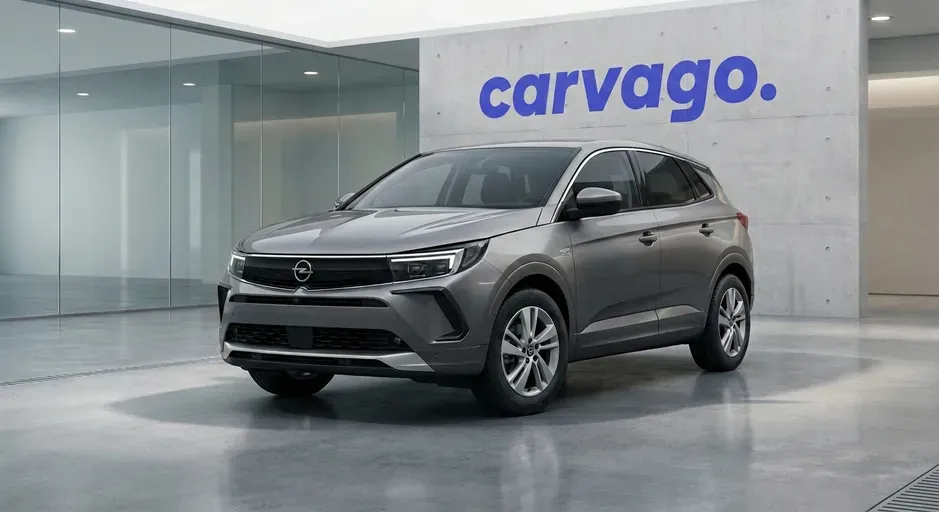
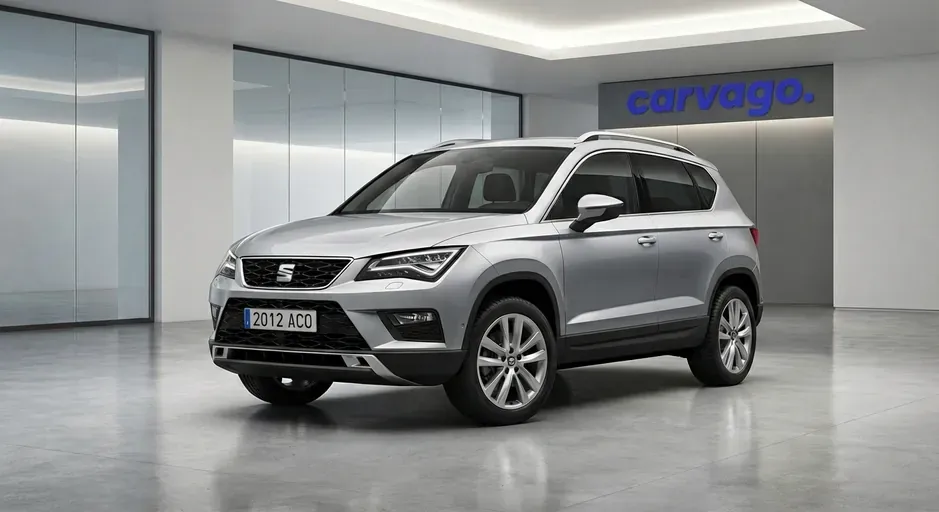
Opel Grandland, also known in the UK as the Vauxhall Grandland, represents a comfortable and stylish German take on the compact SUV, focusing on a bold design and a modern interior. Against it stands the Seat Ateca, which brings Spanish charm and sportier driving characteristics to the segment, with its sports version available under the separate Cupra brand. Let's see how these two popular European rivals fare in a head-to-head comparison.
At first glance at the Opel Grandland and the Seat Ateca, it's clear that both cars are aimed at the same customer, but each with a slightly different philosophy on size. The Opel Grandland is larger than its Spanish competitor in all key dimensions. This difference is not negligible and significantly affects interior space, driving performance, and manoeuvrability in the city.
The biggest difference is in the overall length. The Grandland measures 4477 mm, while the Ateca is 4381 mm. The Opel's almost ten-centimetre lead translates primarily into a more spacious interior, especially in the rear seats, and a larger luggage compartment. Conversely, the shorter Ateca scores points when parking and navigating narrow city streets, where every centimetre counts. The choice is therefore clear: do you prefer interior space and comfort, or agility and compactness?
The difference in wheelbase, which is 2675 mm for the Grandland compared to 2630–2638 mm for the Ateca, promises a calmer and more stable ride on longer journeys for the German SUV. A longer wheelbase usually means better absorption of bumps and more legroom for rear passengers. The Grandland is also 15 mm wider, contributing to its more robust stance on the road. In terms of height, the cars are very similar, both providing a confident view from the vehicle, as befits a proper SUV. The Seat Ateca's dimensions are generally more sporty and compact, which will be appreciated by drivers looking for more dynamic driving characteristics and easier handling.
| Parameter | Opel Grandland | Seat Ateca |
|---|---|---|
| Length (mm) | 4477 | 4381 |
| Width (mm) | 1856 | 1841 |
| Height (mm) | 1609 | 1601 - 1615 |
| Wheelbase (mm) | 2675 | 2630 - 2638 |
Practicality is key in the family SUV segment, and boot size plays a major role in the selection process. The Opel Grandland and the Seat Ateca are very evenly matched in this regard, but there are important differences between them that could influence your decision. Both models offer plenty of space for everyday use and family holidays, but the choice of a specific engine can significantly affect the luggage capacity.
In its standard configuration, the Opel Grandland (facelifted version from 2022) with combustion engines offers a slightly larger basic volume of 514 litres. The Seat Ateca (also facelifted from 2020) in front-wheel-drive versions is only slightly behind with 510 litres. With the rear seats folded down, the Grandland maintains its small lead, offering a maximum capacity of 1652 litres compared to the Ateca's 1604 litres. In practice, this is a negligible difference that you would only notice when moving very large items.
However, the situation changes if you are considering alternative powertrains. The plug-in hybrid versions of the Opel Grandland have a significantly smaller boot due to battery storage – its volume drops to just 390 litres. Similarly, the Seat Ateca in its 4Drive all-wheel-drive variants has its boot reduced to 485 litres to accommodate the rear axle mechanics. When choosing an engine, it is therefore necessary to consider whether more economical operation and better traction are more important to you, or maximum transport capacity.
| Parameter | Opel Grandland | Seat Ateca |
|---|---|---|
| Basic volume (litres) | 514 | 510 |
| Maximum volume with seats folded (litres) | 1652 | 1604 |
The ability to tow a trailer is a key factor for many SUV owners. And it is in this discipline that the Opel Grandland and Seat Ateca differ significantly. While the Grandland can handle basic tasks, the Ateca offers a substantially higher towing capacity, especially in its more powerful variants, making it a much more versatile partner for both work and leisure.
The Opel Grandland focuses more on lighter loads. Its basic 1.2 DI Turbo petrol engine can tow a braked trailer weighing 1300 to 1400 kg, and the 1.5-litre diesel can handle 1300 kg. This is sufficient for a small unbraked garden trailer or a bike rack. Interestingly, the hybrid versions paradoxically have a reduced towing capacity of 1250 kg, which is the price for more complex technology and the car's higher weight.
On the other hand, the Seat Ateca clearly dominates in this respect. Even the popular 1.5 TSI petrol engine can handle a trailer of up to 1800 kg. The real workhorse, however, is the 2.0 TDI diesel engine, which, depending on the version and all-wheel drive, can manage an impressive 1800 to 2100 kg. With such a value, towing a larger caravan, a boat trailer, or a horsebox is no longer a problem. For buyers for whom maximum towing capacity is a priority, the choice between these two models is unequivocally in favour of the Spanish SUV.
| Model and Engine | Braked trailer weight (kg) | Unbraked trailer weight (kg) |
|---|---|---|
| Opel Grandland 1.2 DI Turbo (96 kW) | 1300 - 1400 | 600 |
| Opel Grandland 1.5 Diesel (96 kW) | 1300 | 600 |
| Opel Grandland 1.6 DI Turbo Hybrid (133 kW) | 1250 | 600 |
| Seat Ateca 1.5 TSI (110 kW) | 1600 - 1800 | 750 |
| Seat Ateca 2.0 TSI 4Drive (140 kW) | 1900 | 750 |
| Seat Ateca 2.0 TDI (110 kW) | 1800 - 2100 | 750 |
The choice of engine is key for these two SUVs and highlights the completely different philosophies of the two brands. Whereas the Opel Grandland, after its 2021 facelift, has focused on electrification and offers two powerful plug-in hybrid versions, the Seat Ateca sticks to a proven and wide range of traditional petrol and diesel engines from the Volkswagen Group. For the buyer, this means a clear choice: either the modern approach with the option of electric driving in the Grandland, or the proven and mechanically simpler technology in the Ateca.
The engine range for the Grandland (post-facelift, from 2021) is quite straightforward. The base is a proven turbocharged three-cylinder for more relaxed drivers. For those who drive long distances, an economical diesel engine was available, but it has gradually been phased out. However, the main stars are the plug-in hybrids. The basic front-wheel-drive version offers a very respectable 224 horsepower, while the top Hybrid4 variant with all-wheel drive and a system output of 300 horsepower makes the Grandland one of the fastest cars in its segment. It is this version, which also served as the basis for the sporty GSe model, that is the biggest draw for drivers seeking performance and modern technology. However, it is important to note that the 1.5 Diesel engine is no longer offered in the latest models, which is crucial information for those interested in a used car with high annual mileage.
| Engine Type | Fuel | Power (kW) | Torque (Nm) | Gearbox |
|---|---|---|---|---|
| 1.2 DI Turbo | Petrol | 96 | 230 | 6-speed manual / 8-speed automatic |
| 1.5 Diesel | Diesel | 96 | 300 | 8-speed automatic |
| Hybrid | Plug-in Hybrid | 165 | 360 | 8-speed automatic |
| Hybrid4 / GSe | Plug-in Hybrid | 221 | 520 | 8-speed automatic |
The Seat Ateca sticks to a more traditional, yet very broad and time-tested range of engines. The range starts with the economical 1.0 TSI three-cylinder engine, which is sufficient for urban and suburban driving. The golden mean is the popular 1.5 TSI engine with 150 horsepower, which offers an ideal compromise between dynamics and fuel consumption and is available with both a manual and a DSG automatic transmission. For drivers with high mileage, the 2.0 TDI engine is available in two power variants. The top of the range is the powerful 2.0 TSI petrol engine with 190 horsepower, which comes standard with 4Drive all-wheel drive and a DSG transmission, making the Ateca a very agile and capable SUV. Unlike the Grandland, there is no form of hybridization here.
| Engine Type | Fuel | Power (kW) | Torque (Nm) | Gearbox |
|---|---|---|---|---|
| 1.0 TSI | Petrol | 81 | 200 | 6-speed manual |
| 1.5 TSI | Petrol | 110 | 250 | 6-speed manual / 7-speed DSG |
| 2.0 TDI | Diesel | 85 / 110 | 300 / 360 | 6-speed manual / 7-speed DSG |
| 2.0 TSI 4Drive | Petrol | 140 | 320 | 7-speed DSG |
Who Chooses What?
Choosing the right engine is key to long-term satisfaction with a car. Each of the pair, the Opel Grandland and the Seat Ateca, offers engines with different characteristics to suit different needs. Our recommendations are based on a combination of performance, real-world fuel consumption, owner feedback, and mechanical reliability, which are the most important factors when buying a used car.
For the Opel Grandland, the 1.5 Diesel four-cylinder engine appears to be the most sensible choice. This engine, from the workshops of the PSA Group (now Stellantis), is an ideal partner for a family SUV intended for longer journeys.
In the case of the Seat Ateca, the clear favourite is the 1.5 TSI petrol engine with ACT cylinder deactivation technology. It is a modern, refined, and versatile unit that is suitable for a much broader spectrum of drivers than the diesel.
Official fuel consumption figures, measured under laboratory conditions of the WLTP cycle, are one thing, but the reality on the roads is often different. That's why we looked at data from drivers themselves, for example from the German portal Spritmonitor.de, which collects real data from thousands of owners. These values much better reflect what running costs you can expect with used cars in everyday use.
The following table shows the average real-world consumption for the most common engine options of both models, which are relevant for the market of approximately four-year-old used cars.
| Model and Engine | Average Real-World Consumption (l/100 km) |
|---|---|
| Opel Grandland 1.2 DI Turbo (96 kW) | 6.9 |
| Opel Grandland 1.5 Diesel (96 kW) | 5.8 |
| Seat Ateca 1.0 TSI (81 kW) | 6.5 |
| Seat Ateca 1.5 TSI (110 kW) | 6.8 |
| Seat Ateca 2.0 TDI (110 kW) | 6.1 |
Several interesting trends are clear from the data. For petrol engines, the Seat Ateca is slightly more economical, both in the case of the smaller three-cylinder 1.0 TSI and the popular four-cylinder 1.5 TSI. The difference is not dramatic, but it will show in the long run. The Opel Grandland 1.2 DI Turbo requires an average of just under 7 litres, which makes it one of the thirstier representatives in this comparison.
Diesel engines show a similar picture. The Opel Grandland with the 1.5 Diesel engine is exemplarily economical and can run on average under six litres, making it a great choice for drivers with high annual mileage who spend a lot of time on motorways. The Seat Ateca with the 2.0 TDI engine has a larger displacement, but its consumption is only a few tenths of a litre higher. However, with the 4Drive all-wheel-drive version, it is necessary to expect consumption closer to 6.5 l/100 km.
For the typical user looking for the lowest possible running costs, the best choice seems to be the diesel Grandland or the petrol Ateca with the 1.5 TSI engine, which offers the best compromise between dynamics and consumption. Although the differences in consumption are not vast, for a buyer with a limited budget, every decilitre of fuel saved can be a deciding factor. Overall, however, it cannot be said that consumption is a key element that would clearly favour one of these two models.
A look at the used car market shows that both the Opel Grandland and the Seat Ateca offer interesting options, but with slightly different pricing strategies. In general, the Spanish competitor holds its value a bit more tenaciously, which attests to its continued popularity on the market.
The Seat Ateca, especially after the 2020 facelift, holds up very well as a used car. For models from 2020 and 2021, prices most often range from €16,000 to €25,000. The price, of course, depends on the engine, equipment, and mileage. Cars with the popular 1.5 TSI engine and in higher trim levels often approach the upper end of this range. The average price for a 2020 model is around €16,000, while for the 2021 model year it can be significantly higher depending on the engine.
The Opel Grandland (referred to as Grandland X before the 2021 facelift) represents a more affordable alternative. Used units from 2020 can be purchased for prices starting at around €14,000. Better-equipped models with low mileage then climb towards the €21,000 mark. The average price for the 2020 model year is thus around €15,000. Models after the modernization, i.e., from 2021, start at approximately €17,000 for diesel versions.
| Model | Approximate Price Range (2020-2021) |
|---|---|
| Opel Grandland / X | €14,000 - €21,000 |
| Seat Ateca | €16,000 - €25,000 |
Summary:
When choosing a family SUV, safety is a key factor. Both the Opel Grandland and the Seat Ateca boasted the highest, five-star rating from the independent Euro NCAP organisation at the time of their testing. However, it must be emphasised that the methodology of these tests is constantly becoming stricter. A rating that is several years old cannot be directly compared with the results of new cars tested according to current, more stringent criteria. For a used car buyer, however, it is important to know how the cars performed according to the standards of their time.
The Opel Grandland X underwent Euro NCAP crash tests in 2017 and came away with a full five stars. The car demonstrated a high level of protection for adult occupants, where it scored 84%, and performed even better in child occupant protection with an excellent score of 87%. In the category of vulnerable road user protection (pedestrians), it achieved 63%, and for its assistance systems, it scored 60%. Although this rating formally expired in January 2024, it still speaks to the solid structural safety of the car at the time of its creation.
The Seat Ateca was tested a year earlier, in 2016, and also received five stars. The Spanish SUV excelled particularly in the protection of adult occupants, where it achieved an impressive 93%. For child protection, the Ateca scored 84%, which is only slightly less than the Grandland. It was slightly better in pedestrian protection with a result of 71%, while in the safety assistants category, it received an identical 60%. In the case of the Seat, the certificate has also expired (in January 2023), which is common practice for cars of this age.
Both models were at the forefront of safety in their day. However, in the 2016 tests, the Seat Ateca demonstrated significantly better protection for adult occupants and also performed slightly better in pedestrian protection. The Opel Grandland X countered with a slightly higher score in child occupant protection. Given that both ratings are now invalid and were conducted according to older, less demanding rules, it is not possible to definitively declare one car safer by today's standards. However, based on the original results, the Seat Ateca showed a slight lead in key areas.
| Parameter | Opel Grandland X (2017) | Seat Ateca (2016) |
|---|---|---|
| Year of testing | 2017 | 2016 |
| Adult occupant protection | 84% | 93% |
| Child occupant protection | 87% | 84% |
| Pedestrian protection | 63% | 71% |
| Safety assist systems | 60% | 60% |
In addition to standard equipment, each model offers several unique features that may be decisive for the customer, with each taking a different approach to added value.
The Opel Grandland tries to attract customers with equipment features often seen in premium brands. It places a strong emphasis on comfort and safety, making it a great companion for long journeys.
The Seat Ateca targets drivers who appreciate more dynamic driving characteristics and modern technology wrapped in a sport-oriented design. It offers practical solutions and features that make everyday use more enjoyable.
Based on our own vehicle technical inspections, breakdown statistics, and expert articles, we have compiled an overview of the most common problems that used car buyers should watch out for. Neither model suffers from major flaws, but there are areas that require increased attention.
The Opel Grandland is generally considered a reliable car, but some engine versions and components require more careful inspection.
Summary for the Grandland: Most problems are related to specific engine versions and can be prevented with careful maintenance. A thorough check of the service history is key, especially for the 1.2 PureTech engine. Overall, these are minor inconveniences rather than fatal flaws.
The Seat Ateca benefits from proven Volkswagen Group technology, which is reflected in its good reliability. However, even here there are weaker points that deserve attention.
Summary for the Ateca: The problems mostly relate to known weaknesses of the VW Group's technology. For the 1.5 TSI engine, it is crucial to verify that a software update has been performed. For versions with the DSG, a comprehensive vehicle inspection focusing on the smoothness of shifting and the gearbox's service history is an absolute must. These are generally solvable issues rather than reasons not to buy the car.
When buying a used car, a thorough inspection is key, and you shouldn't underestimate anything, even with these two reliable models. Each has its own specifics that are good to focus on and which can reveal potential future problems. A professional pre-purchase car inspection is always the best choice.
The Opel Grandland has a slightly larger basic trunk volume of 514 liters, while the Seat Ateca offers 510 liters. After folding down the rear seats, the difference increases in favor of the Grandland, which provides up to 1652 liters compared to 1604 liters in the Ateca. In the all-wheel-drive versions of the Seat Ateca, the trunk volume is reduced to 485 liters.
The Seat Ateca is often perceived as a car with more agile and sportier driving characteristics, which is typical for the Seat brand. The Opel Grandland, on the other hand, is more focused on comfort and a smooth ride, which families will especially appreciate on longer trips. While the Ateca offers all-wheel drive, the Grandland is mainly available with front-wheel drive, with the exception of the top plug-in hybrid version, which has 4x4 drive.
Both models are considered comparably reliable. For the Opel Grandland, the economical 1.5 Diesel engine is recommended for drivers with high mileage. The three-cylinder 1.2 DI Turbo serves as a gasoline alternative, but it requires careful servicing. For the Seat Ateca, the best choices are the proven VW Group 1.5 TSI engines for all-around use or the reliable 2.0 TDI for frequent highway driving.
For families looking for maximum comfort and a slightly larger trunk, the Opel Grandland is a slightly better choice. However, the Seat Ateca counters with a subjectively more spacious interior and the practicality of VW Group cars. Both cars can comfortably transport a four-person crew even on longer distances.
The Opel Grandland has a more robust and mature feel, with an interior focused on clarity and comfort. The Seat Ateca has sharper lines and a sportier design, which is also reflected in the interior with its classic VW Group layout. The Grandland is technically related to the Peugeot 3008, which is reflected in some of its features.
Deciding between Opel Grandland and Seat Ateca is a choice between different philosophies, where each car excels in a different area. Opel Grandland is ideal for those who prioritize maximum comfort, spaciousness, and modern technology, offering a quiet ride, ergonomic seats, and a generous boot for family trips. In contrast, Seat Ateca will appeal to drivers looking for driving pleasure, more agile handling, precise steering, and versatility thanks to all-wheel drive and higher towing capacity. Choose Opel Grandland, if comfort, a quiet ride, and modern assistance systems at a more advantageous price are a priority. Select Seat Ateca, if you desire dynamic performance, need 4x4 drive, or frequently tow a trailer.
Sources: ADAC, mdcr.cz, novinky.cz, autozive.cz, autojournal.cz, ceskyautoblog.cz
This article was prepared using artificial intelligence tools. The section guarantor is Petr Dušek.
Detailed comparison of Jaguar E-Pace vs Volvo XC40. Explore performance, equipment, and our verdict to help you choose the best compact premium SUV.
Apr 14, 2026
Ford Puma vs Peugeot 2008: Which crossover should you choose? Our detailed comparison, real-world insights, and verdict will help you decide.
Apr 13, 2026
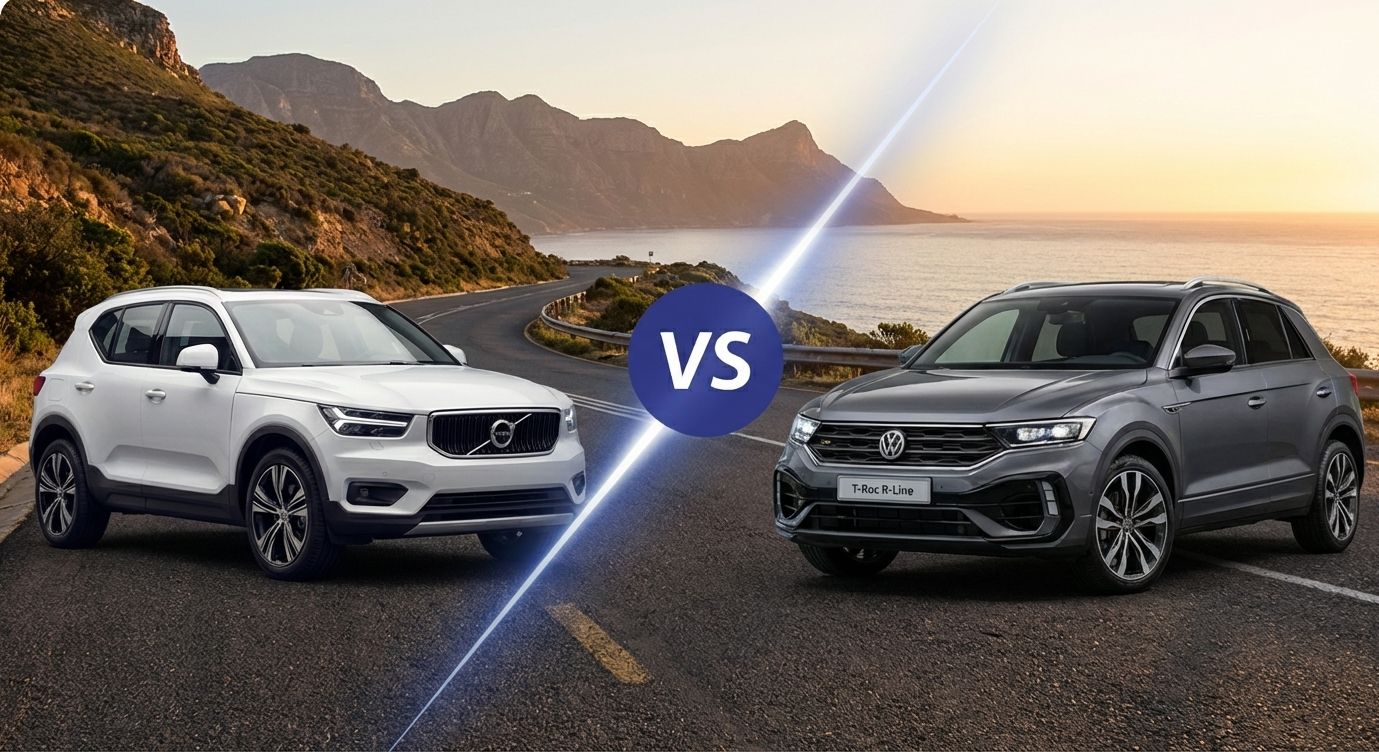
Undecided between a Volvo XC40 and a VW T-Roc? Our comparison will help you choose. Discover the main differences, real-world impressions, and a clear verdict.
Apr 14, 2026