Car battle
Audi Q3 vs. BMW X1: A Complete 2025 Comparison
Audi Q3 vs BMW X1: Detailed comparison of design, performance, and practicality. Find out which premium SUV is the right choice for you in our verdict.
Apr 14, 2026
Articles
Car battle
Detailed comparison of Jaguar E-Pace vs Volvo XC40. Explore performance, equipment, and our verdict to help you choose the best compact premium SUV.
April 14, 2026
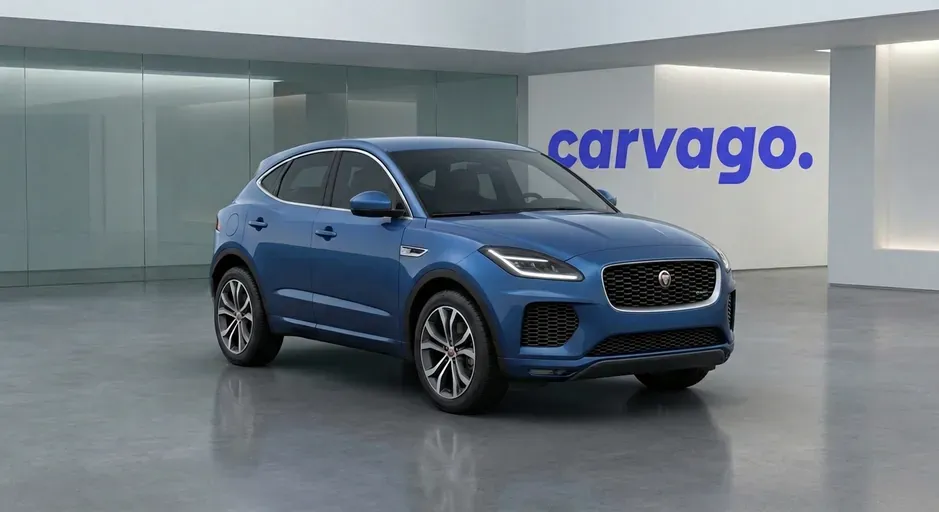
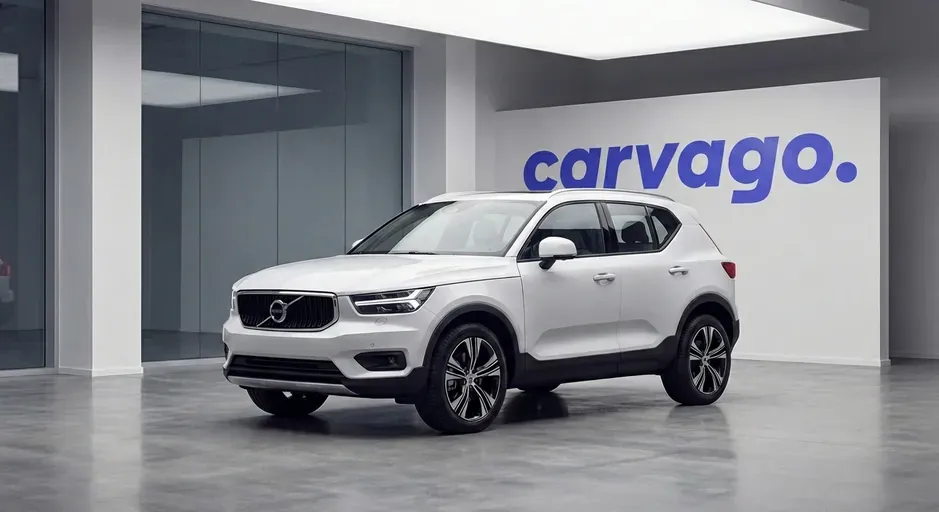
The Jaguar E-Pace enters the premium compact SUV segment with a design inspired by sports cars and the promise of agile handling. It faces the Volvo XC40, which counters with a distinctive Scandinavian style, an uncompromising emphasis on safety, and a cleverly designed interior. In our comparison, we'll see which of these two different approaches to luxury and practicality comes out on top in this highly competitive battle.
Looking at the dimensions table, it's clear that the Jaguar E-Pace and the Volvo XC40 take different approaches, even though they fall into the same category of compact premium SUVs. The main difference is not in the length, but in the width, which fundamentally influences the character of both cars. While Volvo focuses on balanced proportions ideal for the city, Jaguar presents a significantly more muscular and sporty stance.
The Volvo XC40 is about 3 centimetres longer (4425 mm vs. 4395 mm) and has a 2-centimetre longer wheelbase (2702 mm vs. 2681 mm). Although these are small differences, in practice they may slightly favour the interior space for Volvo's occupants, especially in the rear seats. In contrast, the Jaguar E-Pace dominates in width by a whopping 12 centimetres (1984 mm vs. 1863 mm). This dimension gives the Jaguar an impressive look and contributes to a feeling of stability on the road, but it also makes it a less agile companion in narrow city streets and tight parking spaces.
The height of both models is almost identical, with a difference of only a few millimetres, which has no effect on practical use. The choice between these two cars in terms of dimensions will therefore depend on priorities. If you are looking for a car with a dominant appearance and don't mind minor compromises when parking, the E-Pace is the clear choice. If, on the other hand, you prefer practicality, easier manoeuvrability in the city and slightly better utilised interior space, the Volvo XC40 will be a better servant.
| Parameter | Jaguar E-Pace SUV / Offroad | Volvo XC40 SUV / Offroad |
|---|---|---|
| Width (mm) | 1984 | 1863 |
| Length (mm) | 4395 | 4425 - 4440 |
| Height (mm) | 1648 - 1649 | 1647 - 1652 |
| Wheelbase (mm) | 2681 | 2702 |
Practicality and luggage space are key factors in the compact premium SUV segment. This is where one of the most significant differences between the Jaguar E-Pace and the Volvo XC40 emerges, which can be a deciding factor for many buyers. The Jaguar E-Pace, especially in its older versions, offers a noticeably more generous space in its basic configuration, which will be appreciated mainly by families with children or those who often travel with a lot of luggage.
The Jaguar E-Pace produced between 2018 and 2020 boasts an above-average boot capacity of 577 litres. However, after the 2021 facelift, which introduced mild-hybrid and plug-in hybrid versions, this space was reduced to a still solid 494 litres. In contrast, the Volvo XC40 offers slightly more modest figures. Most combustion versions from 2018 to 2021 provide a volume between 428 and 433 litres, while the plug-in hybrid variants have to make do with an even smaller space of 405 litres due to the battery placement. Newer models from 2022 onwards, including the all-electric ones, have slightly improved to 452 litres.
An interesting twist occurs when the rear seats are folded down. Here, the advantage shifts to the Swedish SUV. While the E-Pace offers a maximum capacity of 1234 litres (for older models) or 1170 litres (for newer ones), the Volvo XC40 counters with a volume exceeding 1300 litres (up to 1328 litres in the latest versions). For those who often transport bulky items such as sports equipment or furniture, the Volvo may be more practical. The choice therefore depends on priorities: the Jaguar wins in everyday use without needing to fold the seats, while the Volvo offers greater overall flexibility for transporting large items.
| Parameter | Jaguar E-Pace SUV (2018-2020) | Jaguar E-Pace SUV (2021+) | Volvo XC40 SUV (Combustion Engine, 2018-2021) | Volvo XC40 SUV (Plug-in Hybrid) |
|---|---|---|---|---|
| Basic capacity (litres) | 577 | 494 | 428 - 433 | 405 |
| Max. capacity with seats folded (litres) | 1234 | 1170 | 1304 - 1309 | 1281 |
The ability to tow a trailer is a key factor in the practicality of premium compact SUVs. Whether you need to transport a boat, a caravan or just a bulky load, the differences in towing capacity between the Jaguar E-Pace and the Volvo XC40 can be decisive. Both models offer solid figures, but the winner in this discipline is quite clear.
The Volvo XC40 generally offers a higher maximum braked trailer weight. The most powerful petrol and diesel versions, such as the T5, B5 or D4, can handle a trailer weighing up to 2100 kg. This makes the Volvo an ideal partner for those who regularly tow heavier loads. The Jaguar E-Pace lags slightly behind; its most powerful D200 diesel version can manage a respectable 2000 kg, but most other engine options, including the popular P200 and P250 petrol variants, have a limit set at 1800 kg.
Significant differences emerge in the electrified versions. While the plug-in hybrid Volvo XC40 (T4 and T5 Recharge) can still tow a very respectable 1800 kg, its counterpart, the Jaguar E-Pace P300e, has its capacity reduced to 1600 kg. The base diesel E-Pace D150 is in a similar situation. For the electric versions of the XC40, the capacity ranges from 1500 kg for single-motor variants to 1800 kg for the more powerful dual-motor versions. For the buyer, this means that if maximum towing capacity is a priority, the Volvo XC40 offers a wider selection of powertrains that can meet even the most demanding requirements.
| Model and Powertrain | Braked trailer weight (kg) | Unbraked trailer weight (kg) |
|---|---|---|
| Jaguar E-Pace | ||
| D165 / D180 / P200 / P250 | 1800 | 750 |
| D200 | 2000 | 750 |
| P300e (Plug-in Hybrid) | 1600 | 750 |
| Volvo XC40 | ||
| D4 / T5 / B5 | 2100 | 750 |
| D3 / T4 / B4 | 1800 - 2000 | 750 |
| T4/T5 Recharge (Plug-in Hybrid) | 1800 | 750 |
| Recharge Twin Motor (Electric) | 1800 | 750 |
| Recharge Single Motor (Electric) | 1500 | 750 |
When it comes to engine selection, the paths of the Jaguar E-Pace and Volvo XC40 diverge most significantly. While Jaguar relies more on traditional and powerful combustion engines, gradually supplemented by mild-hybrid technology and one plug-in hybrid, Volvo has embraced electrification much more aggressively and earlier. The Swedish brand quickly abandoned pure diesel engines and now offers a wide range from mild-hybrids and plug-in hybrids to fully electric versions. This different philosophy fundamentally affects both the driving experience and running costs, targeting different groups of drivers.
The Jaguar E-Pace, especially in its first years of production (2018–2020), offered powerful two-litre four-cylinder engines from the Ingenium family, in both diesel and petrol versions. After the 2020 facelift, electrification was introduced – most engines received a 48V mild-hybrid system to reduce fuel consumption and ensure smoother start-stop system operation. The top of the range became the powerful P300e plug-in hybrid, which combines a three-cylinder petrol engine with an electric motor. For those interested in a used car, it is important to distinguish between the older, purely combustion versions and the newer, partially electrified models. While the older models offer a purer, albeit less economical, experience, the newer mild-hybrid and PHEV versions are more efficient in daily operation.
Available Jaguar E-Pace Powertrains (X540, 2020–2022)
| Engine Type | Fuel | Power (kW) | Torque (Nm) | Transmission |
|---|---|---|---|---|
| P160 MHEV 1.5 | Petrol (mild-hybrid) | 118 | 280 | 8-speed automatic |
| P200 MHEV 2.0 | Petrol (mild-hybrid) | 147 | 320 | 9-speed automatic |
| P250 MHEV 2.0 | Petrol (mild-hybrid) | 184 | 365 | 9-speed automatic |
| D165 2.0 | Diesel | 120 | 380 | 6-speed manual |
| D165 MHEV 2.0 | Diesel (mild-hybrid) | 120 | 380 | 9-speed automatic |
| D200 MHEV 2.0 | Diesel (mild-hybrid) | 150 | 430 | 9-speed automatic |
| P300e PHEV 1.5 | Plug-in hybrid | 227 | 540 | 8-speed automatic |
Note: Older, more powerful pure combustion versions like the D240 (177 kW) and P300 (221 kW), which were available before the 2020 facelift, can also be found on the used car market.
The Volvo XC40 is the complete opposite when it comes to powertrains. Around 2020, it began a massive shift from traditional engines (designated "T" for petrol and "D" for diesel) to electrified variants. Diesel engines were completely removed from the lineup. The foundation became mild-hybrid petrol units ("B"), complemented by a pair of plug-in hybrids ("Recharge T4/T5") and later, fully electric versions ("Recharge"), available with one or two electric motors. Thanks to this, it caters to both drivers looking for an economical mild-hybrid for longer journeys and those who want to drive purely on electricity in the city. The breadth of the electrified range for the XC40 is unparalleled in this segment.
Available Volvo XC40 Powertrains (1st generation, 2020–2022)
| Engine Type | Fuel | Power (kW) | Torque (Nm) | Transmission |
|---|---|---|---|---|
| T2 1.5 | Petrol | 95 | 245 | 6-speed manual / 8-speed auto |
| T3 1.5 | Petrol | 120 | 265 | 6-speed manual / 8-speed auto |
| B3 MHEV 2.0 | Petrol (mild-hybrid) | 120 | 265 | 7-speed dual-clutch |
| B4 MHEV 2.0 | Petrol (mild-hybrid) | 145 | 300 | 7-speed dual-clutch |
| Recharge T4 PHEV | Plug-in hybrid | 155 | 405 | 7-speed dual-clutch |
| Recharge T5 PHEV | Plug-in hybrid | 192 | 425 | 7-speed dual-clutch |
| Recharge P8 | Electric | 300 | 660 | 1-speed automatic |
| Recharge Single | Electric | 170 | 330 | 1-speed automatic |
Note: Older diesel engines D3 (110 kW) and D4 (140 kW) were available until around 2020 and are still available on the used car market.
The choice of powertrain is a clear fork in the road for this pair.
Choosing the right engine is key to long-term satisfaction with your car. Our recommendations are based on a combination of performance, real-world fuel consumption, owner feedback, and mechanical reliability to help you choose the best power unit for your needs.
After the 2020 facelift, the D200 mild-hybrid diesel engine became the ideal choice for the E-Pace. It combines the best of both worlds: power and reasonable fuel consumption. With 430 Nm of torque, it offers confident flexibility, which is useful for both overtaking on country roads and cruising on the motorway. It comes standard with a smooth-shifting nine-speed automatic transmission and all-wheel drive, making it an ideal partner for any weather. Real-world fuel consumption ranges between 6.5 and 7.5 litres per 100 km in normal driving. The Ingenium diesel engines from the first years of production had some teething problems, but the post-2020 versions are considered more reliable. However, like any modern diesel with a diesel particulate filter (DPF), it is not ideal for drivers who exclusively take short trips in the city, where the DPF does not have time to regenerate. This engine is the best choice for drivers with higher annual mileage who often travel long distances and appreciate the combination of power and efficiency.
For the Volvo XC40, the most balanced choice is the B4 mild-hybrid petrol engine. After the discontinuation of the excellent but older D3 and D4 diesel engines, this unit became the golden mean of the range. Its 197 hp and 300 Nm of torque provide the car with more than enough dynamism for family use and spirited driving. The main advantage here is the 48V mild-hybrid system, which ensures incredibly smooth operation of the start-stop system and assists with acceleration at low revs. This makes driving in the city and in traffic jams much more pleasant. Real-world fuel consumption is around 7 to 8 litres per 100 km, which is an acceptable figure for a petrol SUV of this size. The engine is reliable and well-matched with the eight-speed Geartronic automatic transmission. It is an ideal choice for drivers looking for a versatile car for daily commuting, family trips, and occasional longer journeys, and who prioritise refinement and modern technology over the lowest possible consumption of diesel engines.
Official fuel consumption figures are one thing, real-world driving is another. That's why we looked at data from drivers themselves, specifically from the German portal Spritmonitor.de, which collects data on the actual consumption of thousands of cars. This allows us to get a much more accurate picture of how much both premium crossovers consume from the tank in daily use. We focused our comparison on the generations of cars that are relevant to the used car market, i.e., cars that are approximately four years old.
The following table shows the average real-world consumption of the most common engine versions of both models that you would find on the used car market.
| Model and Engine | Average real-world consumption (l/100 km) |
|---|---|
| Jaguar E-Pace | |
| D150 / D165 (2.0 Diesel, 110-120 kW) | 6.7 – 7.4 |
| D180 / D200 (2.0 Diesel, 132-150 kW) | 7.2 – 7.8 |
| P200 (2.0 Petrol, 147 kW) | 9.5 – 10.5 |
| P250 (2.0 Petrol, 184 kW) | 10.2 – 11.0 |
| P300e (1.5 Plug-in Hybrid) | 3.5 – 5.5* |
| Volvo XC40 | |
| D3 (2.0 Diesel, 110 kW) | 6.3 – 6.9 |
| D4 (2.0 Diesel, 140 kW) | 6.8 – 7.5 |
| T3 (1.5 Petrol, 115-120 kW) | 7.8 – 8.5 |
| B4 (2.0 Mild-Hybrid Petrol, 145 kW) | 7.9 – 8.6 |
| T4/T5 Recharge (1.5 Plug-in Hybrid) | 3.0 – 5.0* |
\The consumption of plug-in hybrids is extremely dependent on driving style and charging frequency. The values shown represent the average with regular charging on shorter routes. When driving with a depleted battery, consumption is significantly higher.*
Several trends are clear from the data. Firstly, the diesel engines in both cases are a significantly more economical choice, especially for drivers who often travel longer distances. The Volvo XC40 has a slight edge with the D3 and D4 engines and can achieve slightly lower real-world consumption than the comparably powered diesels in the Jaguar.
Conversely, the situation is reversed for petrol engines – both models are quite thirsty. The Jaguar E-Pace, especially with the two-litre P200 and P250 engines, will ask for more than 10 litres per 100 km, which is not exactly a small amount. The Volvo XC40, even with the newer "B" mild-hybrid engines, is not much better, with real-world consumption hovering around 8-9 litres. This is the price to pay for the higher weight and aerodynamics of the SUV category.
For those looking for maximum economy and the ability to charge regularly, the plug-in hybrid versions are the clear choice. Both the Volvo XC40 Recharge and the Jaguar E-Pace P300e can run almost purely on electricity for daily commutes, dramatically reducing running costs. However, if you often drive longer distances with a depleted battery, their advantage is lost and consumption increases.
Ultimately, fuel consumption for conventional engines is not the deciding factor that would clearly favour one of the cars. Both models offer economical diesels for long-distance travellers and rather demanding petrol engines for those who prefer a more dynamic drive regardless of cost. The real difference comes from the plug-in hybrids, which can dramatically reduce fuel bills, but at the cost of a higher purchase price and the need for regular charging.
When entering the used premium compact SUV market, the Jaguar E-Pace and Volvo XC40 present themselves as two strong, but differently priced alternatives. Both models hold their value better than mainstream competitors, but their price tags after a few years of use reflect different brand images and market demand.
The Jaguar E-Pace, with its sporty design inspired by the F-Type, is often a surprisingly more affordable choice on the used car market. For models that are around four years old (2020-2022), prices range from approximately €22,000 to €31,000.
As the holder of the 2018 European Car of the Year title and thanks to its reputation as a safe and modern choice, the Volvo XC40 holds its value noticeably better. Four-year-old used cars typically range in price from €25,000 up to the €37,000 mark.
While the Jaguar E-Pace offers a more attractive price-to-design exclusivity ratio, the Volvo XC40 counters with a higher residual value, a wider range of modern (and more economical) engines, and a reputation for reliability.
A buyer with a more limited budget who desires a sporty style and a premium brand will find an attractive offer in the E-Pace. Conversely, someone who prefers certainty, modern technology, and is willing to pay extra for a car that will hold its value better will lean towards the XC40. In both cases, it is crucial to check the service history and the condition of the specific vehicle, as maintenance costs for premium brands can be higher.
Although both cars boast a five-star rating from the independent Euro NCAP organization, the results must be viewed in the context of when they were tested. The crash test methodology is constantly becoming stricter, and therefore percentage gains from different years cannot be directly compared. Newer tests place greater emphasis on advanced assistance systems and the protection of vulnerable road users.
The Jaguar E-Pace underwent Euro NCAP crash tests in 2017. It received a full five stars at the time and demonstrated a solid level of protection. In the adult occupant protection category, it achieved 86%, and for child occupant protection, it scored 87%. Pedestrian protection was rated at 77%, which was a very good result for its time. In the safety assist systems category, the car received 72%, reflecting the standards of the time, which did not place as much emphasis on autonomous braking in complex scenarios as is the case today.
The Volvo XC40 was tested a year later, in 2018, and immediately ranked among the safest cars on the market. Its rating reflects slightly stricter criteria, and it excelled particularly in adult occupant protection, where it received an exceptional 97%. In child protection, it achieved the same 87% as the E-Pace. The 2018 tests already included more demanding scenarios, such as cyclist detection, which was reflected in a score of 71% in the vulnerable road users category and 76% for safety assist systems.
Although both models are at the top of their respective model years, the newer test and higher scores in key categories, such as adult protection and the presence of more modern assistants, slightly favor the Volvo XC40. Its 2018 result better corresponds to current demands for active and passive safety. The Jaguar still offers a very high level of safety, but the testing protocols have moved on since 2017.
| Parameter | Jaguar E-Pace | Volvo XC40 |
|---|---|---|
| Year of testing | 2017 | 2018 |
| Adult occupant protection | 86 % | 97 % |
| Child occupant protection | 87 % | 87 % |
| Pedestrian protection | 77 % | 71 % |
| Safety assist systems | 72 % | 76 % |
In addition to standard equipment, each model offers several unique features that may be decisive for the customer. While Jaguar focuses on sporty elegance and dynamic technologies, Volvo concentrates on thoughtful practicality, safety, and minimalist design.
The Jaguar E-Pace tries to transfer the brand's sporty DNA into a compact SUV, which is reflected not only in its driving characteristics but also in specific equipment features.
The Volvo XC40 is the embodiment of the brand's human-centric philosophy. Every element is designed for maximum simplicity, practicality, and, of course, safety.
Advantages:
Disadvantages:
Advantages:
Disadvantages:
Based on reliability statistics and owner feedback, we have compiled an overview of the most common problems that used car buyers should be aware of. Neither model is flawless, but the nature of their issues differs.
The Jaguar E-Pace, especially from its first years of production, struggled with several teething problems that the manufacturer gradually tried to address. Nevertheless, extra caution and a thorough car inspection are advisable for used models.
Overall, the E-Pace can be reliable if it receives regular, high-quality maintenance. The petrol versions are generally considered less risky. However, a comprehensive vehicle inspection before purchase is an absolute must.
The Volvo XC40 is considered a very solid and reliable car, but it is not immune to some recurring problems. These are mostly minor but potentially annoying faults.
The problems with the Volvo XC40 are mainly software-related or concern minor mechanical components. Serious engine or transmission failures are very rare, which makes it a slightly safer choice in terms of reliability.
A thorough inspection is key when buying a used car. Here are a few specific points to focus on with these two models, as both have known weaknesses that can be expensive to repair.
The Jaguar E-Pace offers a slightly larger boot with a basic volume of 494 litres compared to 452 litres in the Volvo XC40. However, after folding down the rear seats, the situation is reversed, and the XC40 provides more space, specifically 1328 litres compared to 1234 litres in the E-Pace. The Volvo is also perceived as a car with more cleverly designed storage compartments in the interior.
The Jaguar E-Pace is focused on a sportier and more dynamic ride, which will be appreciated by drivers who prefer agility and precise handling. In contrast, the Volvo XC40 places more emphasis on comfort and a relaxed ride, with its chassis absorbing bumps better. While the E-Pace feels lighter and more powerful despite its higher weight, the XC40 offers a calmer and more comfortable ride.
Both cars are among the safest in their class, but the Volvo XC40 has a slight edge thanks to the brand's traditionally high safety standards. It received a high rating in Euro NCAP tests, specifically 97% for adult occupant protection. It comes standard with advanced assistance systems, such as pedestrian and cyclist detection, which operate over a wide speed range.
Volvo generally has a better reputation for reliability, and Jaguar owners more frequently report issues with electronics. In terms of fuel consumption, the figures vary depending on the specific engine, but they are generally comparable for both models. Service costs and spare part prices tend to be higher for both premium brands, but the Jaguar can be slightly more expensive in this regard.
For family use, the Volvo XC40 appears to be the more practical choice. It offers more space in the rear seats and a larger total cargo volume when they are folded down. Additionally, it features clever interior storage solutions, such as large door pockets and bag hooks, which families with children will appreciate in daily use.
The choice between Jaguar E-Pace and Volvo XC40 is a battle of heart versus mind. Jaguar E-Pace appeals to drivers seeking a sporty character, distinctive design, and an enjoyable driving experience, albeit with compromises in running costs. Conversely, the Volvo XC40 represents a rational choice, excelling in safety, comfort, thoughtful details, and modern economical powertrains. While the Jaguar is for those who want a car that entertains and represents, the Volvo is an ideal, more versatile, and more sensible partner for most life situations. The final decision thus depends on personal priorities, whether you prefer style and experience, or intelligence, safety, and comfort.
Sources: ADAC, carwow.co.uk, motor1.com, electrek.co, caranddriver.com, electriccarsreport.com
This article was prepared using artificial intelligence tools. The section guarantor is Petr Dušek.
Audi Q3 vs BMW X1: Detailed comparison of design, performance, and practicality. Find out which premium SUV is the right choice for you in our verdict.
Apr 14, 2026
BMW X1 vs. Volvo XC40: Which premium SUV is better for you? Our detailed comparison and verdict will help you make the final decision.
Apr 14, 2026
Detailed comparison of used SUVs Citroën C3 Aircross and Suzuki Vitara. Find out the differences in engines, equipment, or reliability and read our final verdict.
Apr 13, 2026