Car battle
Kia Ceed vs. Seat Leon: Complete comparison 2026
Detailed comparison of Kia Ceed vs SEAT Leon. Discover real-world experiences, differences in equipment, engine reliability, and read our verdict before buying a used car.
Apr 20, 2026
Articles
Car battle
Detailed comparison of Mazda 3 (Mazda3) vs Volkswagen Golf (VW Golf). Explore the equipment, real-world driving experiences, and read our verdict before making your choice.
May 5, 2026
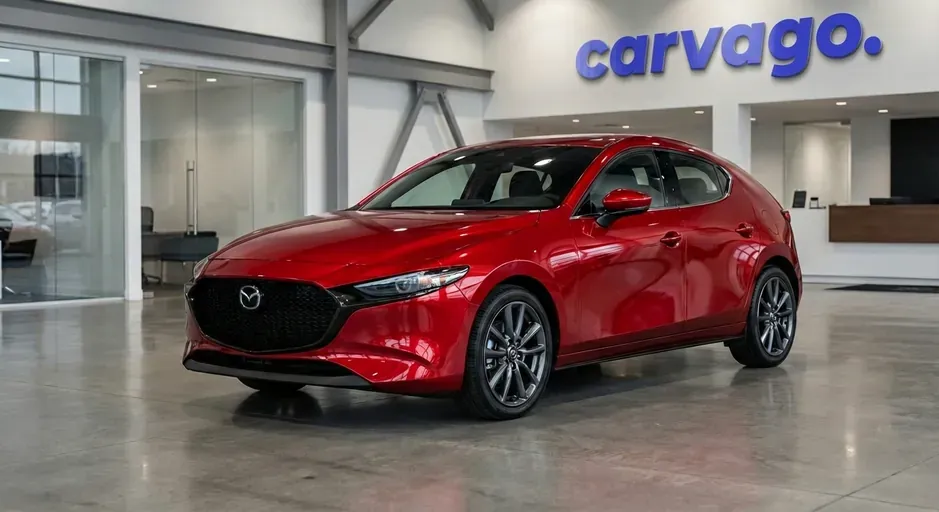
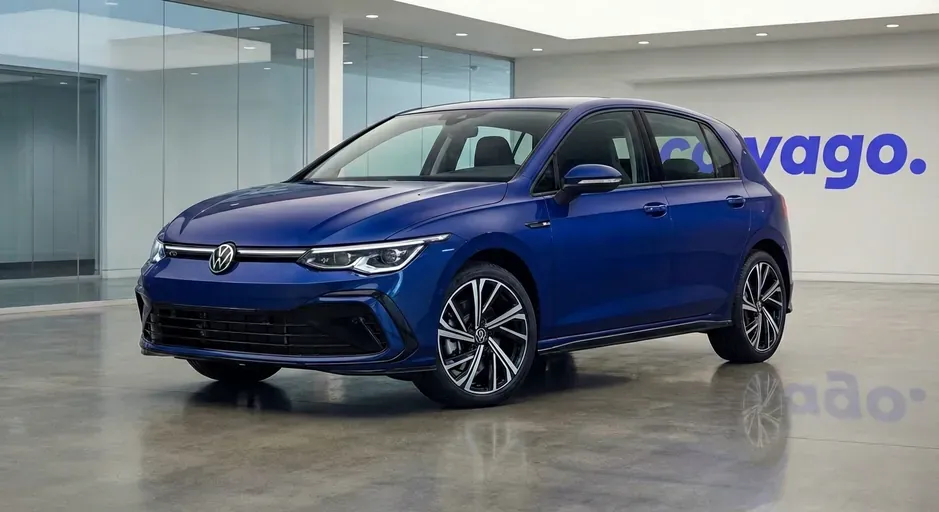
The Mazda 3, which was sold for many years under the name Mazda Axela in its home Japanese market, is a dynamically styled representative of the compact class that relies primarily on top-notch driving characteristics and premium design. Standing against it is the iconic Volkswagen Golf, the long-term ruler of the compact hatchback category (historically known in certain markets as the VW Rabbit or Caribe), which scores with customers through its unrivaled versatility, ergonomics, and technological maturity. Let's compare in detail how Japanese driving passion stands up in a direct duel against renowned German precision and practicality, so you can easily find out which of these popular cars is better suited for your daily journeys.
When you place the current generations of these two cars side by side – roughly four-year-old used cars corresponding to the eighth generation of the Volkswagen Golf (since 2020) and the fourth generation of the Mazda 3 (BP, since 2019) – you immediately notice a completely different approach to exterior dimensions. While the Golf carefully maintains traditional compact proportions ideal for maneuvering in European cities, Mazda plays the card of aggressive dynamics and unusual elegance. The Japanese daily commuter sacrifices a bit of agility in favor of a wide and elongated stance that creates a much sportier impression on the road.
The biggest difference between the two models lies in the overall length and wheelbase. Mazda 3 in the hatchback version measures 4,460 mm in length, which is a staggering 176 mm more than the standard five-door Golf (approx. 4,284 mm). This significant difference is also reflected in the wheelbase, where Mazda, with a value of 2,725 mm, surpasses the Golf by a full 106 mm. Although it might seem that such a long wheelbase would bring a crushing advantage in rear-seat space, Mazda dedicated this dimension more to a visually long front hood. The Golf, on the other hand, masterfully benefits from top-tier space packaging on a shorter footprint. For drivers who often park in underground garages and cramped city centers, the Volkswagen is therefore a more rational and easier-to-drive choice.
An important factor for the driving experience and user comfort is the overall body height. At 1,435 mm, the Mazda hatchback sits a significant 56 mm lower to the asphalt than the Volkswagen Golf (up to 1,491 mm). This difference helps the Japanese car achieve better aerodynamics and a lower center of gravity for more confident cornering, but it comes at the cost of slightly more difficult entry and less headroom for rear passengers. The choice in terms of exterior height thus depends purely on whether you prefer an immersive sporty seating position (Mazda) or more comfortable and airy daily travel (Golf).
The two carmakers differ fundamentally in their offering of extended body versions. While Volkswagen traditionally offers an extremely practical and family-oriented estate (Variant) with a length of over 4.6 meters for the eighth generation, Mazda counters exclusively with an elegant four-door sedan, which it calls the Fastback. Although it has grown to an impressive length of 4,660 mm and looks truly representative, it cannot compete with the German estate in transporting larger items due to the smaller trunk opening. Therefore, if maximum versatility and easy loading are key for you, the Volkswagen body makes much more sense in terms of utility value.
| Parameter | Mazda 3 Hatchback | Volkswagen Golf Hatchback | Mazda 3 Fastback (Sedan) | Volkswagen Golf Variant (Estate) |
|---|---|---|---|---|
| Width (mm) | 1795 | 1789 | 1795 | 1789 - 1795 |
| Length (mm) | 4460 | 4282 - 4296 | 4660 | 4631 - 4651 |
| Height (mm) | 1435 | 1454 - 1491 | 1440 | 1462 - 1510 |
| Wheelbase (mm) | 2725 | 2619 - 2630 | 2725 | 2669 - 2679 |
The luggage compartment is often one of the decisive factors when choosing a family or everyday car. When comparing the Mazda 3 and the Volkswagen Golf from roughly the same period (focusing on the current generations popular on the four-year-old used car market), we encounter completely different philosophies from both manufacturers. While the Volkswagen Golf sticks to its long-standing reputation as a highly practical all-rounder, the Mazda 3 bets primarily on emotive and sporty exterior shapes, which inevitably takes its toll on the total liters intended for luggage. For buyers, it plays a huge role whether they prioritize style or utility value.
The basic hatchback body versions offer a noticeable difference at first glance, which you will feel in practice every time you transport larger items. The eighth-generation Volkswagen Golf has a standard luggage compartment volume of 381 liters, which is easily enough for regular family shopping and weekend travel. In contrast, the Mazda 3 in the same body style offers a more modest 351 liters. This deficit deepens even further after completely folding down the rear seats – the Golf boasts a maximum capacity of up to 1,237 liters, while its Japanese rival ends at 1,026 liters. A lead of roughly 200 liters means a comfortable space for several extra bags and significantly more relaxed loading of bulky boxes for the German representative.
A major turning point for family use comes with the other body variants on offer. Volkswagen clearly dominates with the popular estate (Golf Variant), which provides an excellent 611 liters as standard and swallows a massive 1,624 liters of cargo after folding the seats – a capacity more than sufficient for any long holiday with a full load. Mazda does not produce a traditional estate in this class at all and presents the elegant Sedan (Fastback) as an extended alternative. While it has a nice 450 liters, you have to account for the narrow loading aperture of the classic stepped rear. However, the choice of body style is not the only thing; used car buyers should also pay attention to hybrid systems. Mazda's mild-hybrid engines do not limit the usable volume in any way, but if you were to go for a plug-in hybrid Golf (eHybrid or GTE), the trunk shrinks dramatically to just 273 liters due to the batteries stored under the floor.
| Parameter | Mazda 3 Hatchback | Volkswagen Golf Hatchback | Mazda 3 Sedan | Volkswagen Golf Variant |
|---|---|---|---|---|
| Base volume (liters) | 351 | 381 | 450 | 611 |
| Max. volume with seats folded (liters) | 1026 | 1237 | - | 1624 |
While the Mazda 3 charms with its fantastic design, the Volkswagen Golf, with its significantly larger trunk in the hatchback and its unrivaled family estate version, represents a much more usable choice for practically-minded used car buyers.
The ability to tow a trailer often plays a surprisingly important role when choosing a compact car, whether it's for hauling building materials to a cottage or summer travel with a family caravan. In this regard, the approach of the two manufacturers for nearly-new used cars (approximately four-year-old generations of the Mazda 3 BP and Volkswagen Golf VIII) is diametrically different. Japan's Mazda bets on absolute simplicity and offers a uniform maximum braked trailer weight of 1300 kg across all its modern engine options. In contrast, the eighth-generation Volkswagen Golf provides much wider variability and, above all, higher absolute limits. While the base one-liter engines in the Golf (1.0 TSI and eTSI) handle the same 1300 kg as the Mazda, more powerful units like the 1.5 eTSI or the popular 2.0 TDI diesel have capacities ranging from 1500 to 1600 kg. The hybrid variants of both cars offer a very interesting comparison. Plug-in hybrid Golfs (eHybrid and GTE) maintain excellent utility value with a braked towing capacity of around 1500 kg (up to 1700 kg for the latest facelifts), while the mild-hybrid variants of the Mazda 3 (labeled M Hybrid) do not exceed their set universal standard of 1300 kg. As for unbraked trailers, both models safely cover common needs – the Mazda can tow a standard 600 kg, while the Golf can handle 600 to 750 kg depending on the chosen equipment and engine. In practice, these values for the Mazda mean trouble-free space for a few extra suitcases, safe transport of garden waste, or a smaller trailer. This capacity is more than sufficient for weekend shopping and light camping. However, if you are planning a longer holiday with a spacious, heavier family caravan, the Golf offers a much larger margin. In conclusion, the Mazda 3 pleases with a clear and consistent towing capacity across the range, but the Volkswagen Golf, thanks to its objectively higher limits, is a much more rational choice for users requiring maximum towing performance.
| Model and engine | Braked trailer weight (kg) | Unbraked trailer weight (kg) |
|---|---|---|
| Mazda 3 2.0 e-SKYACTIV-G 150 M Hybrid (110 kW) | 1300 | 600 |
| Mazda 3 2.0 e-SKYACTIV-X M Hybrid (132 kW) | 1300 | 600 |
| Volkswagen Golf 1.0 eTSI (81 kW) | 1300 | 600 - 750 |
| Volkswagen Golf 1.5 eTSI (110 kW) | 1500 | 600 - 750 |
| Volkswagen Golf 1.4 eHybrid (110 kW) | 1500 | 600 - 750 |
| Volkswagen Golf 2.0 TDI SCR (110 kW) | 1600 | 600 - 750 |
Engine options play a key role when choosing a car, whether it's about fuel consumption, dynamics, or overall long-term reliability. The differences between the Mazda 3 and the Volkswagen Golf in this area are vast and beautifully illustrate the different engineering approaches of the two automakers. While Volkswagen relies on the massive use of smaller-displacement turbocharged engines (TSI and TDI) and an incredibly wide range of electrified versions from mild-hybrids to plug-in hybrids, Mazda follows the path of classic, larger-displacement naturally aspirated engines. Today, these are supported by innovative technologies for maximum efficiency without compromising the driving experience.
The Mazda 3 (in the current BP generation, offered since 2019 and widely represented in the 4-year-old used car market) maintains a more traditional approach and relies primarily on two-liter naturally aspirated petrol four-cylinder engines. Today, these units are standardly equipped with a 24V mild-hybrid system (known as e-Skyactiv G and X), which helps smooth out responses and reduce urban fuel consumption. The technological jewel of the Japanese automaker is the e-Skyactiv X engine, which is the first in the world to combine the principles of spark-ignition and compression-ignition engines – it uses spark-controlled compression ignition, offering the efficiency of a diesel and the smooth, high-revving character of a petrol engine.
Diesel lovers will still find the 1.8 Skyactiv-D on the nearly-new used car market, although Mazda completely phased it out for this model over the years. A peculiarity and a huge advantage of the Mazda is the choice of a precise manual or a reliable classic torque-converter automatic transmission for practically all engine versions. Furthermore, the most powerful unit can be combined with optional all-wheel drive (AWD).
| Engine Type | Fuel | Power (kW) | Torque (Nm) | Transmission |
|---|---|---|---|---|
| 2.0 e-Skyactiv-G 122 | Petrol (MHEV) | 90 | 213 | 6MT / 6AT |
| 2.0 e-Skyactiv-G 150 | Petrol (MHEV) | 110 | 213 | 6MT / 6AT |
| 2.0 e-Skyactiv-X 186 | Petrol (MHEV) | 137 | 240 | 6MT / 6AT |
| 1.8 Skyactiv-D | Diesel | 85 | 270 | 6MT / 6AT |
The eighth-generation Volkswagen Golf (VIII, produced since 2020) offers a significantly more diverse and structured range of power units, tailored exactly to current European fleet needs. The range starts with efficient one-liter three-cylinder engines (1.0 TSI and eTSI) and continues with the extremely popular 1.5 TSI turbocharged four-cylinders with active cylinder management (ACT) technology under low load. Versions designated eTSI feature a 48V mild-hybrid system and are paired exclusively with a seven-speed dual-clutch DSG transmission.
For urban users, plug-in hybrids (eHybrid and the sporty GTE) are available, capable of covering a significant distance on pure electricity. A constant and hard-to-beat choice for highway drivers remains the economical 2.0 TDI diesel two-liter engines, which in the VIII generation are newly supplemented by the Twindosing system, significantly reducing previously criticized nitrogen oxide emissions. For true enthusiasts, the Golf traditionally offers the hot GTI and Clubsport versions, and the ultimate R with 4Motion all-wheel drive.
| Engine Type | Fuel | Power (kW) | Torque (Nm) | Transmission |
|---|---|---|---|---|
| 1.0 TSI / eTSI | Petrol / MHEV | 66 / 81 | 175 / 200 | 6MT / 7DSG |
| 1.5 TSI / eTSI | Petrol / MHEV | 96 / 110 | 200 / 250 | 6MT / 7DSG |
| 1.4 eHybrid / GTE | Petrol (PHEV) | 150 / 180 | 350 / 400 | 6DSG |
| 2.0 TDI SCR | Diesel | 85 / 110 | 300 / 360 | 6MT / 7DSG |
| 2.0 TSI (GTI / R) | Petrol | 180 - 245 | 370 - 420 | 7DSG |
While the Mazda 3 charms driving purists with reliable two-liter engines featuring linear pull and flawless shifting, the VW Golf strikes back with the strong torque of turbo engines and the legendary highway express in the form of the 2.0 TDI. The choice thus depends purely on whether you enjoy driving more, or moving efficiently.
Choosing the right engine is absolutely crucial for long-term satisfaction with a car, its reliability, and overall operating costs. Our recommendations are based on real-world experience, long-term fuel consumption, and mechanical durability proven on the used car market. If you are choosing from roughly four-year-old cars (manufactured around 2021 and 2022), you will encounter completely different technical philosophies from both rivals. While Mazda goes against the grain with large-displacement naturally aspirated engines complemented by a 24V mild-hybrid system, Volkswagen bets on turbocharged downsizing with sophisticated cylinder deactivation and a 48V electrical system. It is also good to know what not to look for on the used market – with the Mazda 3, you will come across the 1.8 SKYACTIV-D diesel unit in the 2019–2021 model years, which was soon discontinued due to low interest, and in the 8th generation Golf (from 2020), the previously very popular 1.6 TDI fleet engine has definitively disappeared. Gasoline power is thus a safe bet for both cars.
This two-liter naturally aspirated four-cylinder (available since April 2020) represents the ideal compromise within the BP generation. The base 122-hp version can feel a bit sluggish at higher highway speeds, while the revolutionary e-SKYACTIV-X engine brings interesting technology and higher performance, but may pose a greater service question mark for used cars. The "sweet spot" is precisely the 150-hp version, which is mechanically robust and sufficiently dynamic.
For the eighth-generation Golf from 2020 to 2023, the turbocharged 1.5 eTSI four-cylinder is a clear bullseye. The letter "e" at the beginning indicates the presence of a 48-volt mild-hybrid system, which is paired exclusively with the seven-speed dual-clutch DSG transmission. Compared to the weaker one-liter three-cylinder engines (1.0 TSI / eTSI), it offers much more advanced refinement and, above all, the necessary power reserve for safe overtaking.
When choosing a used car, real fuel consumption is one of the most important parameters. Official values provided by car manufacturers often paint an overly optimistic picture that can differ significantly from everyday reality. To get a more accurate idea of how the current generations of the Mazda 3 (BP generation, from 2019) and Volkswagen Golf (VIII generation, from 2020) perform as roughly four-year-old used cars, we rely on extensive data from the crowdsourcing portal Spritmonitor.de. This portal has long been collecting real refueling records from thousands of ordinary drivers, providing the most reliable metric possible for what you can expect in real-world traffic.
{news_site}
| Model and engine | Average consumption (l/100 km) |
|---|---|
| Volkswagen Golf 2.0 TDI SCR (110 kW) | 4.8 |
| Mazda 3 1.8 SKYACTIV-D (85 kW) | 5.3 |
| Volkswagen Golf 1.0 eTSI (81 kW) | 5.5 |
| Volkswagen Golf 1.5 eTSI (110 kW) | 5.9 |
| Mazda 3 2.0 e-SKYACTIV-X 186 (137 kW) | 6.1 |
| Mazda 3 2.0 e-SKYACTIV-G 122 (90 kW) | 6.3 |
Looking at the real-world data, the completely different technological approaches of the two manufacturers are immediately apparent. The efficiency table is topped by Volkswagen's 2.0 TDI SCR four-cylinder diesel, proving that the German group is still hard to beat when it comes to highway cruising. The Japanese response in the form of the 1.8 SKYACTIV-D diesel also offers very solid efficiency, but you will only rarely encounter it on the used car market, as Mazda soon shifted its focus almost exclusively to petrol. As for petrol engines, the comparison between Volkswagen's mild-hybrid small-displacement turbo engines and Mazda's full-sized naturally aspirated two-liter units is interesting. The 1.0 eTSI and 1.5 eTSI units can be exemplarily frugal with gentle handling, benefiting from cylinder deactivation and electric assistance. A real surprise is Mazda's innovative e-SKYACTIV-X 186 engine, which can burn a very lean mixture in certain modes, similar to a diesel. Despite its significantly higher power, this unit commonly achieves slightly lower real-world fuel consumption than its structurally simpler and weaker sibling, the e-SKYACTIV-G 122.
These results lead to fairly clear recommendations for different types of drivers:
Overall, fuel consumption and the range of power units can be a key factor when deciding between these two models. In terms of efficiency and the breadth of options, the Volkswagen Golf has a slight edge, covering various needs with higher efficiency. However, if your priorities lie more in seeking larger-displacement atmospheric reliability and refinement, you certainly won't go wrong with a petrol Mazda either; you just have to accept that you won't become a highway efficiency record-breaker.
If you are looking for a used car in the compact class and are aiming for roughly four-year-old examples (model years 2021–2022), the current generations of these models meet on the market – the Mazda 3 (BP generation) and the Volkswagen Golf (Mk8 generation). Both cars offer a great driving experience, but their positions on the secondary used car market differ significantly.
While the Volkswagen Golf has always been the undisputed king of corporate and fleet sales, which is reflected in the hundreds of units available across dealerships, the Mazda 3 maintains the status of a slightly niche and design-oriented "Japanese premium" car. This supply and demand dynamic directly shapes their market prices.
| Model (years 2021–2022) | Average price from | Average price to | Most common engines |
|---|---|---|---|
| Mazda 3 (BP) | €18,000 | €23,000 | 2.0 e-Skyactiv (G/X) |
| Volkswagen Golf (Mk8) | €16,000 | €21,000 | 1.0 TSI / 1.5 TSI / 2.0 TDI |
(Note: Prices are indicative and vary depending on mileage, origin, and trim level. Extremely high-performance versions such as the Golf GTI/R or cars with mileage over 150,000 km are not included in the standard average.)
From the perspective of value retention over time, both cars have their distinct specifics:
When browsing classifieds, it is important not to just look at the price tag itself, but to analyze what you actually get for your money.
This fact makes the Mazda 3 a stylish car for those drivers who demand great equipment, top-tier design, and a reliable petrol engine. The Volkswagen Golf, on the other hand, remains the best universal solution on the market, capable of fulfilling practically any conceivable requirement – you just have to patiently choose the right unit.
While the huge supply of used Golfs allows you to push the purchase price lower and gives you complete freedom to choose the ideal engine and body style, the Mazda 3 confidently justifies its slightly higher average price tag with rich standard equipment and a reputation for superior Japanese reliability.
Both cars, the Mazda 3 and the Volkswagen Golf, boast a maximum five-star rating in independent Euro NCAP crash tests. When choosing a used car, however, it is necessary to view these results in a broader context and take into account the specific year of testing. Euro NCAP protocols are constantly evolving and tightening very quickly. They include new simulations of frontal and side impacts, advanced detection of cyclists and pedestrians, or emergency scenarios at intersections. Percentage point gains from different years cannot be directly compared, as even a seemingly lower percentage in a newer test can mean passing a much more demanding trial.
The current fourth-generation Mazda 3 underwent testing in 2019 and achieved phenomenal results by the standards of the time. It earned 98% for adult occupant protection, which ranked it among the safest cars on the European market in this regard. Child protection was rated at 87% and vulnerable road user protection at 81%. In the assistance systems category, the car took home a solid 73%. These data show an excellent level of passive safety, a very rigid body, and reliably functioning autonomous emergency braking. Although the 2019 certification was conducted according to an older methodology and its formal validity will soon expire, in terms of structural resistance, it remains an exceptionally safe car for those interested in a used vehicle.
The eighth-generation Volkswagen Golf was also first tested in 2019, but the automaker decided not to stand still and introduced significant technical improvements for 2022. The Golf received a center airbag for the front seats as standard (which effectively prevents the heads of the driver and passenger from colliding in a side impact), new seat belt pretensioners, and more advanced fatigue monitoring or an intersection safety assistant. Thanks to these steps, the car underwent new, significantly stricter Euro NCAP tests in 2022, where it confidently defended its full five stars. It earned 88% for adult protection, 87% for children, 74% for vulnerable road user protection, and 82% for advanced assistance systems. Achieving 88% in 2022 has, thanks to much more demanding rules, huge informative value about the car's technological maturity.
| Parameter | Mazda 3 | Volkswagen Golf |
|---|---|---|
| Year of testing | 2019 | 2022 |
| Adult occupant protection | 98 % | 88 % |
| Child protection | 87 % | 87 % |
| Vulnerable road user protection | 81 % | 74 % |
| Safety assistance systems | 73 % | 82 % |
In the overall safety assessment, both models are a great choice in the context of the used car market, though each in a slightly different way. The Mazda 3 impresses with its massive and strong structure, which ensured almost perfect adult protection according to 2019 standards. The Volkswagen Golf, on the other hand, offers a more modern and comprehensive safety package. By including a center airbag and a thorough update of assistance systems certified in 2022, it better meets current, strictest requirements for active and passive protection, making it a step more advanced choice in terms of modern standards.
While the Mazda 3 impresses with top-tier body rigidity, the updated Volkswagen Golf, with its 2022 tests and innovative center airbag, provides slightly more advanced protection in line with the latest trends.
In addition to standard equipment, each of the models offers several unique features that bring not only higher comfort to everyday life but also a completely different approach to added value and the overall driving experience.
Premium interior craftsmanship with high-quality materials
Excellent driving dynamics and precise, communicative steering
Innovative and reliable Skyactiv engines with a pleasant naturally aspirated character
Intuitive infotainment control via a rotary knob on the center console
Attractive and fresh body design that stands out from the crowd
Cramped rear seat space, especially in terms of legroom and headroom
Smaller luggage compartment compared to direct competitors
Poor rear and rear-quarter visibility due to massive C-pillars
Restricted touchscreen control while driving may not suit every user
The Mazda 3 is the perfect choice for more demanding drivers looking for an emotional driving experience and a premium interior feel without having to pay for luxury brands. It will primarily suit individuals or couples for whom maximum interior space and trunk size are not the highest priority.
Great balance of driving characteristics with an emphasis on high travel comfort
Spacious and airy interior with plenty of room even for adult passengers in the back
Wide range of proven and highly efficient engines (including eTSI and TDI)
Practically shaped luggage compartment with a decent base volume
Excellent residual value and very easy resale on the used car market
Problematic and often criticized touch controls for infotainment and climate (especially in early eighth-generation models)
Noticeable cost-cutting in the quality of some interior plastics compared to the previous generation
Considerably conservative design, which may seem too bland to some
Traditionally higher purchase price on the used car market due to the model's immense popularity
Volkswagen Golf will appeal to pragmatically-minded customers who demand maximum versatility, above-average spaciousness, and a wide selection of efficient power units. It represents an ideal and safe all-rounder for everyday family use, which also holds its value excellently.
Based on long-term owner experience, service reports, recalls, and our detailed technical inspection within CarAudit, we have compiled an overview of the most common problems you may encounter with these models on the used car market.
The fourth-generation Mazda 3 (BP) is considered a mechanically above-average reliable car; however, even in roughly four-year-old examples, there are several typical weak points worth focusing on.
The Mazda 3 is a mechanically exceptionally reliable car, where the biggest worries revolve mainly around the delicate paint and occasional noises in the interior. Regarding powertrains and transmissions, it ranks among the most durable in the compact class.
The eighth-generation Volkswagen Golf brought significant digitalization compared to its predecessor, which is associated with most "teething troubles" in early model years that any thorough used car inspection will reveal.
The eighth generation pays the price in the first years of production mainly for unrefined onboard software and an unreliable capacitive steering wheel. However, once these electronic "teething pains" are resolved by warranty repairs, you get a very comfortable and mature car with fuel-efficient engines.
When buying a used car, a thorough inspection is key. A professional and comprehensive car inspection is always the ideal step, but you should also be attentive during the test drive. Here are several specific points to focus on for these two models.
Volkswagen Golf offers 381 liters in the hatchback version, while the Mazda 3 provides a slightly smaller 358 liters. Furthermore, if you are looking for a family station wagon, the Golf Variant features a massive 611-liter trunk, whereas its Japanese competitor is not produced in a more practical body style.
The Mazda 3 enjoys a reputation as an above-average reliable car, primarily thanks to its proven naturally aspirated engines and Skyactiv mild-hybrid units. The eighth-generation Volkswagen Golf initially suffered from freezing software issues with the infotainment system, although mechanically it is a durable car. For more worry-free operation in roughly four-year-old used cars, the Japanese automaker is more frequently recommended.
The Mazda 3 offers a premium-crafted interior with classic physical buttons for the air conditioning and excellent control ergonomics via a rotary dial. The eighth-generation Golf opted for a fully digital cockpit with touch-sensitive surfaces, which looks very modern but can impair intuitive control while driving. In terms of user-friendliness and a luxury feel, the Mazda wins for many drivers.
The Mazda 3 scores points with its low seating position, precise steering, and sportier-tuned chassis that manages to engage the driver. The Golf, on the other hand, is the ultimate all-rounder, which may not feel as sharp but excels in overall driving comfort and excellent sound insulation. If you enjoy driving and are looking for a mechanical connection with the car, the Japanese model is clearly the better choice.
For family use, the Volkswagen Golf is significantly more practical, as it offers more headroom and legroom for rear-seat passengers. Due to its sloping roofline and wide pillars, the Mazda has a more cramped space in the back, which may bother adults or older children. The German representative thus provides passengers with overall better and airier everyday comfort.
Choosing between a four-year-old used Mazda 3 and an eighth-generation Volkswagen Golf ultimately depends on whether you prioritize emotion or everyday rationality in a car. Mazda 3 with its premium interior finish, reliable naturally aspirated engines, and fantastic driving characteristics, is the ideal choice for enthusiastic drivers who don't mind a smaller boot and a more cramped second row of seats. Volkswagen Golf, on the other hand, easily defends its title as the king of versatility, scoring points with a wide range of fuel-efficient engines led by the effective TDI, a more airy interior, and a highly practical estate body style. While the Japanese car wins you over with its timeless design and mechanical purity, the German compact represents a smart, spacious, and exceptionally versatile safe bet that will handle all family and motorway needs without hesitation.
Sources: ADAC, idnes.cz, e15.cz, hybrid.cz, autotechnik.cz, portalridice.cz
This article was prepared using artificial intelligence tools. The section guarantor is Petr Dušek.
Detailed comparison of Kia Ceed vs SEAT Leon. Discover real-world experiences, differences in equipment, engine reliability, and read our verdict before buying a used car.
Apr 20, 2026
Detailed comparison of the Peugeot 308 and Renault Mégane. Compare engines, equipment, and the reliability of used cars. Read our verdict and choose the best car!
Apr 15, 2026
Detailed comparison of the Citroën C4 vs Škoda Octavia. We compare the driving characteristics, space, and equipment of these used cars. Find out from our verdict which car to choose.
Apr 18, 2026