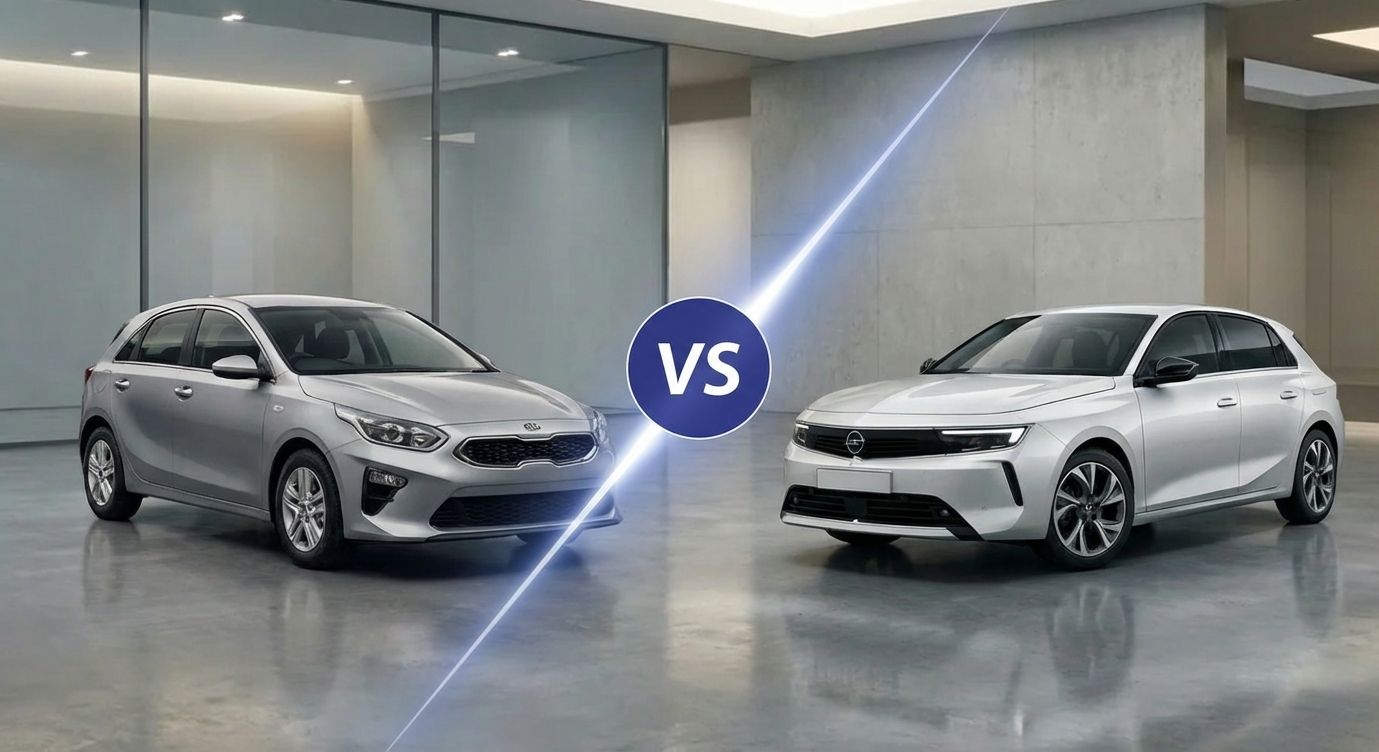
Car battle
Kia Ceed vs. Opel Astra: Complete comparison 2026
Detailed comparison of the Kia Ceed and Opel Astra. We compared real-world fuel consumption, reliability, and equipment. Find out which popular hatchback is worth buying.
Apr 14, 2026
Articles
Car battle
Detailed comparison of the Peugeot 308 and Renault Mégane. Compare engines, equipment, and the reliability of used cars. Read our verdict and choose the best car!
April 15, 2026
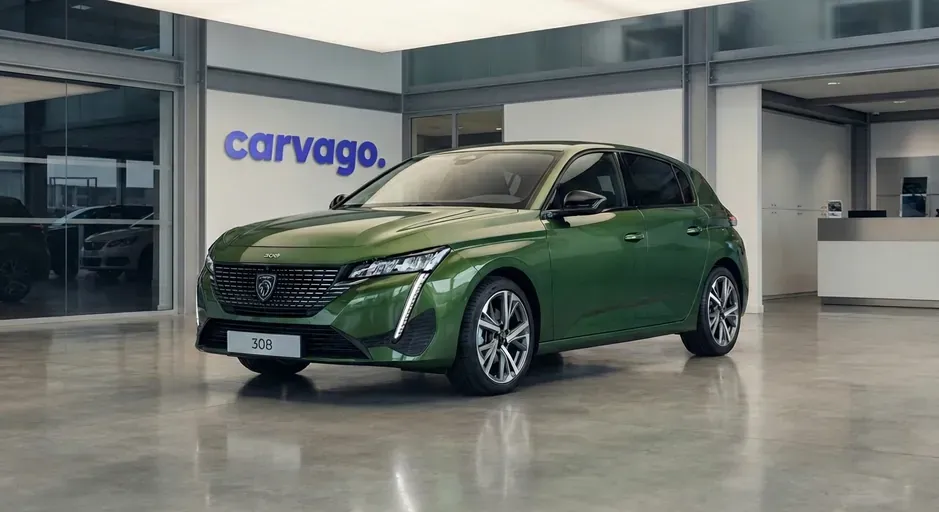
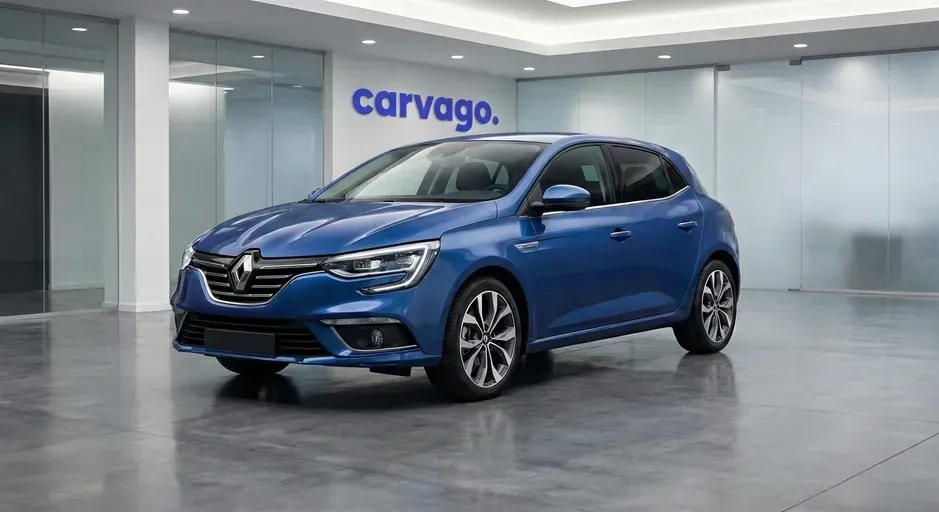
Peugeot 308, in its extremely popular estate version also known as the 308 SW, is a stylish French representative of the lower-middle class that attracts drivers primarily with its bold exterior design and innovative interior concept. Its long-standing domestic rival is the Renault Mégane (often searched for without the accent as Megane, with its more practical body variants named Grandtour for the estate and Grandcoupé for the sedan), which traditionally bets on a balanced ratio of driving comfort, smooth elegance, and modern technology. In the following comparison, we will take a detailed look at which of these two popular French cars represents an overall smarter and more reliable choice for those interested in a quality second-hand vehicle.
When choosing a roughly four-year-old used car in the compact class, you will most often encounter the third generation of the Peugeot 308 (which entered the market in 2022) and the fourth generation of the Renault Mégane (in production since 2016, with a significant facelift in 2020). In terms of external dimensions, both models play the typical game of the European C-segment; however, a closer look at the numbers reveals significant differences. In the hatchback variant, the Peugeot 308 is a negligible 8 mm longer than the Mégane, but it surpasses it in width by a very noticeable 38 mm (1852 mm compared to 1814 mm for the Renault). This more pronounced difference in width gives the Peugeot a much more muscular and planted stance on the road and, in practice, means a bit more airiness in the shoulder area for front passengers.
On the other hand, the more compact width of the Renault Mégane represents a major everyday advantage in cramped city streets, older underground garages, or when trying to park in narrow spots at shopping centers. If we focus on the wheelbase, which is one of the most important parameters for longitudinal interior space for rear passengers, the basic hatchback versions are almost identical – Peugeot offers 2675 mm and Renault 2669 mm. The choice in this body style will therefore depend more on whether you prefer a wider car for interior comfort or a more compact profile for easier maneuverability in the city.
However, the more practical estate body styles make much more sense for families, where the two cars differ slightly in their proportions. The Peugeot 308 in the Estate (SW) version boasts a wheelbase generously extended to 2732 mm, which is 20 mm more than what the Renault Mégane Estate (Grandtour) from recent production years offers. The longer wheelbase and an overall length that is 10 mm greater in the Peugeot contribute to a very calm and smooth ride on highways, as well as slightly better longitudinal space in the rear. Conversely, the Renault Mégane estate is 7 to 11 mm taller. While the taller body construction does not visually narrow the car's silhouette as much as on the Peugeot, from a practical standpoint, you will appreciate the slightly more comfortable entry and somewhat easier handling of heavy child car seats, as you won't have to lean in as much.
| Parameter | Peugeot 308 Hatchback | Renault Mégane Hatchback | Peugeot 308 Estate | Renault Mégane Estate |
|---|---|---|---|---|
| Width (mm) | 1852 | 1814 | 1852 | 1814 |
| Length (mm) | 4367 | 4359 | 4636 | 4626 |
| Height (mm) | 1438 - 1441 | 1438 | 1438 - 1442 | 1449 |
| Wheelbase (mm) | 2675 | 2669 | 2732 | 2712 |
Luggage space is often one of the key factors when choosing a used car, especially if you are selecting a vehicle for family purposes or an active lifestyle. In this French duel, models representing the advanced third generation of the Peugeot 308 (produced since 2022) and the post-facelift versions of the fourth generation Renault Mégane (typically model years 2020–2022) are pitted against each other. Both models can satisfy both couples and individuals with their stylish hatchback variants, as well as families with their very spacious estate versions. The choice of the body style and engine in these cars ultimately significantly determines how practical your car will be for everyday use.
If we look at the basic hatchback version with a standard internal combustion engine, the Peugeot 308 offers a very decent 412 liters of volume, which increases to 1323 liters after folding the rear seats. The fourth-generation Renault Mégane is not to be outdone and offers up to 473 liters on paper for gasoline versions (slightly less for diesel), while after folding the backrests, the total volume stops at 1367 liters. However, much more distinct differences occur with the popular family estates. The Peugeot 308 in the Estate version (referred to as SW) holds an excellent 608 liters in the standard configuration and transforms into a spacious hauler with a volume of 1634 liters after completely folding the rear seats. In contrast, the competing Renault Mégane Estate (Grandtour) lags slightly behind with its 563 liters in the base and 1543 liters after folding. In practice, the Peugeot SW's luggage compartment offers space for several extra suitcases, making it a highly practical helper. For both rivals, however, this volume is perfectly sufficient for weekend shopping and longer family vacations.
When choosing at a used car dealership, it is also necessary to keep in mind plug-in hybrid powertrains (PHEV), which you will encounter more and more often. Due to the need to install a traction battery in the area under the luggage compartment floor, you must expect a certain loss of valuable liters. For the Peugeot 308, the basic trunk volume drops to 361 liters for the hatchback version and 548 liters for the SW estate. For the Renault Mégane model labeled E-Tech, the situation is similar – for example, with the Grandtour estate version, you have to accept a reduction in the basic space to 447 liters. Overall, this comparison represents a valuable victory for the Peugeot 308, which, especially in the estate version, scores with a larger absolute transport capacity and a modern layout of the loading area, making it a smarter and more practical choice for everyday logistics.
| Parameter | Peugeot 308 Hatchback | Renault Mégane Hatchback | Peugeot 308 Estate | Renault Mégane Estate |
|---|---|---|---|---|
| Base volume (liters) | 412 | 473 | 608 | 563 |
| Max volume with seats folded down (liters) | 1323 | 1367 | 1634 | 1543 |
While in the hatchback version the battle of liters is very close and Renault has a slight edge on paper, in the key category of family estates, the Peugeot 308 SW wins outright, offering a more voluminous and flexibly usable space.
Towing capacity is a key parameter for drivers planning to tow a caravan, transport heavy materials on a trailer, or just use a bike rack on the tow bar. For compact cars like the Peugeot 308 and Renault Mégane, these values can differ fundamentally, primarily depending on the chosen powertrain. While conventional internal combustion versions offer values fully sufficient for a family holiday with a caravan, electrified models often come with unexpected compromises that might only mean space for a small trailer for a weekend purchase of building materials.
The third-generation Peugeot 308 (sold since 2022) offers a relatively stable and solid towing capacity across the range. Standard petrol versions (1.2 PureTech) can handle a braked trailer weighing 1200 to 1300 kg. If you are looking for a real workhorse, the 1.5 BlueHDi diesel engine raises this limit to an excellent 1550 to 1600 kg. A big surprise is the plug-in hybrid versions (180 and 225), which, despite heavier batteries, maintain a very practical capacity of 1450 to 1500 kg. A slight reduction occurs in the newer mild-hybrid variants from 2023, where the maximum is around 1100 to 1150 kg.
Renault Mégane takes a completely different approach, and the choice of generation plays an absolutely crucial role here. The established fourth generation (available as a roughly 4-year-old used car) with internal combustion engines is the absolute champion of this comparison. Petrol and diesel versions like the TCe 140 or Blue dCi 115 can tow a massive 1650 to 1700 kg (and the more powerful dCi even up to 1850 kg). On the other hand, if you opt for the plug-in hybrid (E-Tech Plug-in 160), the capacity drops drastically to just 750 kg. It is even more noticeable with the fully electric fifth generation (Mégane E-Tech Electric, from 2022), where the base EV40 models can only handle a tow bar load of 500 kg and the more powerful EV60 variants with a larger battery can tow a maximum of 900 kg.
From a practical standpoint, this means that a diesel Renault Mégane IV or Peugeot 308 will easily tow a large caravan for a long holiday. However, if you choose the electric Renault or its plug-in hybrid version, your tow bar will serve at most for a bike rack or a small unbraked trailer for a trip to the recycling center.
Summary: In terms of towing capacity, the traditional internal combustion Renault Mégane IV is the absolute leader for the heaviest loads. However, if you are looking for a modern plug-in hybrid and also need to tow a caravan, the Peugeot 308 represents a much better balanced and versatile compromise.
| Model and Engine | Braked Trailer Weight (kg) | Unbraked Trailer Weight (kg) |
|---|---|---|
| Peugeot 308 1.2 PureTech 130 (3rd gen) | 1200 - 1300 | max 680 |
| Peugeot 308 1.5 BlueHDi 130 (3rd gen) | 1500 - 1600 | max 740 |
| Peugeot 308 1.6 Plug-In Hybrid (3rd gen) | 1450 - 1500 | max 750 |
| Renault Mégane IV TCe 140 GPF | 1650 - 1700 | max 690 |
| Renault Mégane IV BLUE dCi 115 | 1650 - 1700 | max 740 |
| Renault Mégane IV E-Tech Plug-in 160 | 750 | max 750 |
| Renault Mégane V E-Tech Electric EV60 | 900 | max 750 |
The range of powertrains for both French representatives shows how differently the transition to low-emission mobility can be approached today. While the Peugeot 308 (3rd generation, from 2022) relies on a flexible platform that can accommodate traditional internal combustion engines, powerful plug-in hybrids, and pure electric drive under one body, the Renault Mégane splits into two separate directions in the market for roughly four-year-old used cars. The fourth generation after the facelift primarily offers refined internal combustion engines and an efficient plug-in hybrid, while the concurrently sold 5th generation (Mégane E-Tech, from 2022) has switched exclusively to pure electric drive. For buyers, this means that while with Peugeot you choose the powertrain, with Renault, the choice of fuel largely determines which generation and vehicle concept you opt for.
The third-generation Peugeot 308 offers a very clear range that covers all the main needs of the used car market. The standard petrol engine is the turbocharged 1.2 PureTech three-cylinder. However, data shows that this pure internal combustion engine has been making way in recent years for the more modern 1.2 Hybrid 136 unit (available from the turn of 2023/2024), which uses mild-hybrid technology with a new e-DSC6 dual-clutch transmission for smoother starts and lower consumption. For high-mileage drivers, there is the excellent and now relatively rare economical 1.5 BlueHDi diesel. The real highlights are the plug-in hybrid versions with 180 or 225 hp, which combine hot-hatch dynamics with a real-world pure electric range of around 50 kilometres. At the end of 2023, the fully electric e-308 version was added to the range.
| Engine type | Fuel | Power (kW) | Torque (Nm) | Transmission |
|---|---|---|---|---|
| 1.2 PureTech 130 | Petrol | 96 | 230 | 8A (EAT8) |
| 1.2 Hybrid 136 | Petrol / MHEV | 100 | 230 | 6A (e-DSC6) |
| 1.5 BlueHDi 130 | Diesel | 96 | 300 | 8A (EAT8) |
| 1.6 PHEV 180 | Petrol / PHEV | 132 | 360 | 8A (e-EAT8) |
| 1.6 PHEV 225 | Petrol / PHEV | 165 | 360 | 8A (e-EAT8) |
| e-308 156 | Electric | 115 | 270 | 1A |
When choosing a Renault Mégane from 2020 to 2022, you will encounter a wide spectrum of technologies. The classic fourth-generation Mégane benefits from excellent TCe four-cylinder petrol engines (developed in cooperation with Mercedes-Benz), which score points over Peugeot's three-cylinders with smoother operation and more linear pull. The range also includes the sophisticated E-Tech Plug-in 160 system with a clutchless multi-mode transmission and the economical Blue dCi 115 diesel. However, historical production data shows that internal combustion engines in the fourth generation are slowly ending their market presence. For those interested in the latest technology, the Mégane E-Tech Electric (5th generation) has been available since 2022, which is a purebred electric car on a dedicated platform, offering an impressive 220 hp in the most popular EV60 version.
| Engine type | Fuel | Power (kW) | Torque (Nm) | Transmission |
|---|---|---|---|---|
| TCe 115 GPF | Petrol | 85 | 220 | 6M |
| TCe 140 GPF | Petrol | 103 | 240 | 6M / 7A (EDC) |
| TCe 160 GPF | Petrol | 118 | 260 | 7A (EDC) |
| E-Tech Plug-in 160 | Petrol / PHEV | 118 | 300 | Multi-mode |
| Blue dCi 115 | Diesel | 85 | 260 | 6M / 7A (EDC) |
| EV60 220hp (Gen V) | Electric | 160 | 300 | 1A |
The Peugeot 308 has a clear advantage if you are looking for a modern plug-in hybrid with high combined power (up to 225 hp), or if you require an attractive latest-generation body combined with a traditional diesel. Its weakness may be the reliance on a three-cylinder base for pure petrol versions. The fourth-generation Renault Mégane, on the other hand, will please more conservative drivers with its excellent TCe petrol four-cylinders, which offer exemplary refinement. But if you keep up with the times and your budget allows, the fully electric Renault Mégane E-Tech (Gen V) provides a driving experience and technological sophistication that traditional internal combustion competition can hardly match.
While the Peugeot 308 offers top-tier plug-in hybrids and an economical diesel in one package, Renault attracts with refined petrol four-cylinders in the older generation or the ultimate pure electric experience in the latest one.
Choosing the right engine is absolutely crucial for your long-term satisfaction with a car, which is why our recommendations are carefully selected based on real-world performance, actual fuel consumption, feedback from long-term owners, and documented mechanical reliability.
In the market for roughly four-year-old used cars, the two French automakers have taken slightly different directions, opening up interesting choices. The Peugeot 308 continues the tradition of exceptionally fuel-efficient diesel power units, while Renault, after years of experimentation, hit the jackpot with a reliable four-cylinder petrol engine, co-developed with Mercedes-Benz engineers. Interesting differences can also be found in the current availability of these engines on the new car market.
| Model | Recommended engine | Power | Generation for 4-year-old used car | Available production years |
|---|---|---|---|---|
| Peugeot 308 | 1.5 BlueHDi 130 | 130 hp (96 kW) | 2nd and 3rd generation | 2017 – present |
| Renault Mégane | 1.3 TCe 140 GPF | 140 hp (103 kW) | 4th generation | 2018 – 2024 |
As can be seen in detail from our database and the table above, the excellent TCe 140 petrol engine in the Renault Mégane is unfortunately no longer available as a new car – its production ended in 2024 with the conclusion of the 4th generation, as the successor 5th generation (E-Tech Electric) relies exclusively on fully electric drive. Conversely, the recommended 1.5 BlueHDi diesel engine under the hood of the Peugeot continues to survive and, with ongoing innovations, is also supplied in the latest 3rd generation. For buyers of a roughly four-year-old used car, however, both engines represent an affordable and great choice.
There is often a noticeable difference between the paper fuel consumption figures from homologation laboratories and real-world consumption in everyday traffic. Moreover, official values sometimes mask the fact that downsized engines "consume" more under load than larger-displacement ones. To get an objective picture of fuel costs for approximately four-year-old used cars (specifically the Peugeot 308 at the turn of the 2nd and 3rd generation and the Renault Mégane IV generation), we looked at real data from the independent community portal Spritmonitor.de, where thousands of European drivers enter their refueling records [1, 5, 8]. We focused on the most popular and relevant petrol and diesel engines for this age.
| Model and engine | Average consumption (l/100 km) |
|---|---|
| Renault Mégane 1.5 Blue dCi 85 kW | 4.9 |
| Peugeot 308 1.5 BlueHDi 96 kW | 5.1 |
| Renault Mégane 1.3 TCe 103 kW | 6.3 |
| Peugeot 308 1.2 PureTech 96 kW | 6.6 |
As long-term statistics show, diesel engines from both French brands represent the absolute top in operational efficiency. Renault's popular 1.5 Blue dCi diesel four-cylinder and Peugeot's competing 1.5 BlueHDi can easily achieve real-world consumption around five liters per hundred kilometers [1, 3]. However, a major surprise lies with the petrol engines. Renault's 1.3 TCe four-cylinder (developed in cooperation with Mercedes-Benz) performs significantly better in the real world than Peugeot's downsized 1.2 PureTech three-cylinder [5, 8]. This fully confirms a well-known trend – small-displacement turbocharged three-cylinders do not necessarily bring fuel savings, as they have to work harder under higher loads on the highway or on long climbs, which pushes overall consumption slightly up [19].
For a typical used car buyer, there is a clear recommendation. If you are looking for a car for long journeys and spend a lot of time swallowing highway kilometers, the diesel versions of both cars will save you considerable money in the long run and guarantee an excellent range on a single tank [3]. Conversely, for frequent suburban commuting, crawling in traffic jams, and shorter routes, petrol engines are incomparably more suitable, and you also avoid potential risks associated with particulate filter clogging. In this regard, Renault's modern, quiet, and refined 1.3 TCe four-cylinder is an exceptionally attractive choice, offering solid dynamics and very favorable fuel consumption [6].
Ultimately, fuel consumption itself will likely not be the main and only deciding factor that would clearly tip the scales in favor of Peugeot or Renault – both cars are above-average efficient in their classes. In the final tally, however, the Renault Mégane has a slight edge among used petrol cars thanks to its larger-displacement four-cylinder [6], while in the diesel variants, the battle between the two traditional French rivals is incredibly close.
In the market for roughly four-year-old used cars (vehicles manufactured around 2021–2022), these two models represent very different price worlds. While the fourth-generation Renault Mégane (post-facelift) attracts buyers with an excellent price-to-value ratio, the third-generation Peugeot 308 (launched in 2021) aims a step higher, benefiting from a very progressive design and a wide range of plug-in hybrid powertrains.
| Model | Base versions (higher mileage) | The golden middle ground (mileage up to 80,000 km) | Top trims and plug-in hybrids |
|---|---|---|---|
| Peugeot 308 | from €14,000 | €17,000 – €21,000 | €23,000 – €27,000+ |
| Renault Mégane | from €10,000 | €12,000 – €15,000 | €16,000 – €20,000 |
While the Renault Mégane offers excellent value for money and represents a highly rational choice, the Peugeot 308 appeals to buyers who are happy to pay extra for modern design, a more premium finish, and electrified powertrains.
When looking at safety standards, it is important to mention that both of these model series have commonly boasted a maximum five-star Euro NCAP rating throughout their history and previous generations. However, for a correct assessment and responsible choice of a used car, it is crucial to put these results into the context of the specific year of testing. Euro NCAP testing protocols are constantly evolving, becoming stricter, and responding to the latest technological trends. While in the past a rigid body shell and basic airbags were enough to earn a full star rating, today's modern methodology places huge emphasis on active accident prevention, advanced cyclist detection, safe handling of critical scenarios at intersections, and new types of frontal impacts. For this reason, percentage scores from different years simply cannot be directly compared.
The latest generation of the Peugeot 308 underwent crash tests in 2022 according to highly strict modern standards. Although it took home four stars in the overall rating, this reflects the uncompromising requirements of the current methodology rather than safety deficiencies. The car lost points, among other things, for the absence of a center airbag (a feature increasingly required for protection against front passenger collision in a side impact) and missing functions for autonomous evasive maneuvers at intersections. Despite this, occupant protection stands up even by the strictest standards, and active safety systems clearly reflect modern engineering from 2022.
Conversely, the fourth-generation Renault Mégane (in its internal combustion versions) last underwent Euro NCAP tests in 2015, when it earned a full five stars with ease. However, the testing was conducted according to a significantly older and more lenient methodology. The bodywork and overall protection of adult occupants represented the absolute top at the time; however, the validity of this safety certificate has already expired from the perspective of today's Euro NCAP organization for new cars. Therefore, it cannot be inferred from the seemingly higher percentage results of that time that the Mégane is safer. Its assistance systems, which were above standard in 2015, represent only an average baseline today.
In conclusion, although older tests seemingly speak in favor of Renault in terms of percentages, from the perspective of today's real-world standards, the Peugeot 308 offers more modern and comprehensive safety protection. Its architecture guarantees the presence of advanced active and passive safety technologies that correspond much better to modern traffic.
| Parameter | Peugeot 308 | Renault Mégane |
|---|---|---|
| Year of testing | 2022 | 2015 |
| Adult occupant protection | 76 % | 88 % |
| Child occupant protection | 84 % | 87 % |
| Vulnerable road user protection | 68 % | 71 % |
| Safety assist systems | 65 % | 71 % |
Although the Renault Mégane boasts a historical five-star rating, in terms of current safety standards and advanced assistance systems, the more modern construction of the Peugeot 308 is a safer choice for a family.
In addition to standard equipment, each of the models offers several unique features that can be decisive for the customer and bring a completely different approach to daily life.
The third generation of the Peugeot 308 focuses on a significant technological shift, premium craftsmanship, and maximum personalization of the user interface.
The modernized fourth-generation Renault Mégane counters with very intuitive controls, sophisticated assistance technology, and attractive accessories referencing the brand's famous sports division.
Attractive and premium-looking exterior and interior design
Wide range of engines including economical and powerful plug-in hybrids
High suspension comfort and excellent cabin soundproofing at highway speeds
Modern infotainment with fast response and wireless smartphone mirroring
Very high-quality materials and precise dashboard craftsmanship
The specific driving position (i-Cockpit) with a small steering wheel may not suit every driver
Limited legroom for rear passengers, especially in the hatchback version
Higher purchase price on the used car market compared to older competitors
Significantly smaller luggage space in plug-in hybrid variants due to battery placement
The third-generation Peugeot 308 is an ideal choice for drivers looking for a stylish hatchback or estate with a premium feel and a maximum emphasis on comfort. Thanks to its high-quality craftsmanship and top-tier technology, it will primarily appeal to customers who don't mind paying extra for extravagant design and an innovative interior layout.
Very favorable price-to-value ratio on the used car market
High ride comfort with a softer and more compliant chassis setup
Reliable and refined 1.3 TCe four-cylinder petrol engine, developed in cooperation with Mercedes-Benz
Intuitive and improved Easy Link multimedia system (after the 2020 facelift)
Extremely practical Grandtour body style with a well-utilizable luggage compartment
More outdated platform and overall concept compared to the latest generation of competitors
Presence of harder and cheaper plastics in the lower parts of the interior
More cramped head and shoulder room in the rear seats of the five-door hatchback
Less communicative steering and a rather detached driving experience when attempting dynamic driving
The fourth-generation Renault Mégane after its facelift represents a rational choice for pragmatically-minded buyers who prefer comfort and excellent affordability. Although it does not feel as technologically or visually modern as its French rival, thanks to its economical engines and comfortable tuning, it is a great and undemanding car for daily commuting and family trips.
Based on long-term user experience, service bulletins, and data from our comprehensive vehicle inspections, we have compiled an overview of the most common problems that used car buyers should watch out for.
For the Peugeot 308 (especially from 2018–2022), the most common faults mainly concern specific engines and temperamental onboard electronics.
For both petrol and diesel engines of the Peugeot 308, a verifiable service history and preventive maintenance of the timing system are absolutely crucial; otherwise, very expensive repairs are a risk.
The fourth-generation Renault Mégane is considered a relatively reliable car, yet typical weaknesses appear, mainly associated with the onboard interface and dual-clutch automatics.
The Mégane offers very durable power units, led by the successful 1.3 TCe engine, but the overall driving impression can occasionally be spoiled by a jerking EDC automatic or a malfunctioning onboard system.
When buying a used car, a thorough inspection is crucial. Here are several specific points to focus on for these two models to avoid any unpleasant surprises after purchase. For complete peace of mind, an independent technical inspection of the car is always worth it when buying.
The Peugeot 308 hatchback offers a boot capacity of 412 litres, while the Renault Mégane has 384 litres. In the more practical estate versions, the difference is similar, with Peugeot scoring 608 litres compared to 521 litres for Renault. If you frequently carry more cargo, the Peugeot is overall the more practical and spacious choice.
Peugeot relies on the innovative i-Cockpit architecture with a smaller steering wheel, high-set instrument cluster, premium materials, and a very modern infotainment system. Renault, on the other hand, offers a more classic dashboard layout with a vertical display, which is user-friendly but lags slightly behind technologically. Overall, the interior of the Peugeot feels more luxurious and sophisticated.
Both cars offer very efficient petrol and diesel engines, with the real-world fuel consumption of the popular diesel versions (1.5 BlueHDi and 1.5 Blue dCi) consistently around 4.5 to 5 litres per 100 km. Both brands also have plug-in hybrid versions in their portfolios, which can significantly reduce consumption during daily city driving. However, the availability of newer and more attractive electrified powertrains on the used car market is currently slightly wider for Peugeot.
Renault is renowned for its exceptionally comfortable chassis, which can filter out even significant road imperfections smoothly and fluidly. Peugeot, conversely, has a slightly stiffer and sportier setup, which ensures more confident handling and agility in corners but is slightly firmer on broken surfaces. For a calm, floating ride and maximum comfort on the motorway, Renault is therefore the better companion.
Both cars perform quite well in terms of long-term durability, provided they have a documented regular service history and maintenance. For Peugeot petrol engines, it is crucial to monitor the correct timing belt replacement interval, while Renault may experience minor software glitches in the infotainment system. In the overall assessment, neither model represents an excessive or unusual risk for a used car buyer.
The choice between these two French rivals ultimately depends primarily on your budget and overall requirements for modern technology. The fourth-generation Renault Mégane represents an exceptionally rational choice, scoring points with an unrivaled price-to-value ratio, a highly reliable 1.3 TCe petrol four-cylinder engine, and smooth ride comfort. Conversely, the newer Peugeot 308 will appeal to more demanding drivers and families who don't mind a higher purchase price in exchange for more premium craftsmanship, avant-garde design, more up-to-date safety assistants, and a more practical trunk in the estate version. Whether you prefer Renault's pragmatic and intuitive approach or Peugeot's stylish elegance and wider range of plug-in hybrids, a verifiable service history remains the most important key to happy ownership for both used models.
Sources: ADAC, mdcr.cz, forbes.cz, mobilmania.cz, auto-mania.cz, podnikatel.cz
This article was prepared using artificial intelligence tools. The section guarantor is Petr Dušek.
Detailed comparison of the Kia Ceed and Opel Astra. We compared real-world fuel consumption, reliability, and equipment. Find out which popular hatchback is worth buying.
Apr 14, 2026
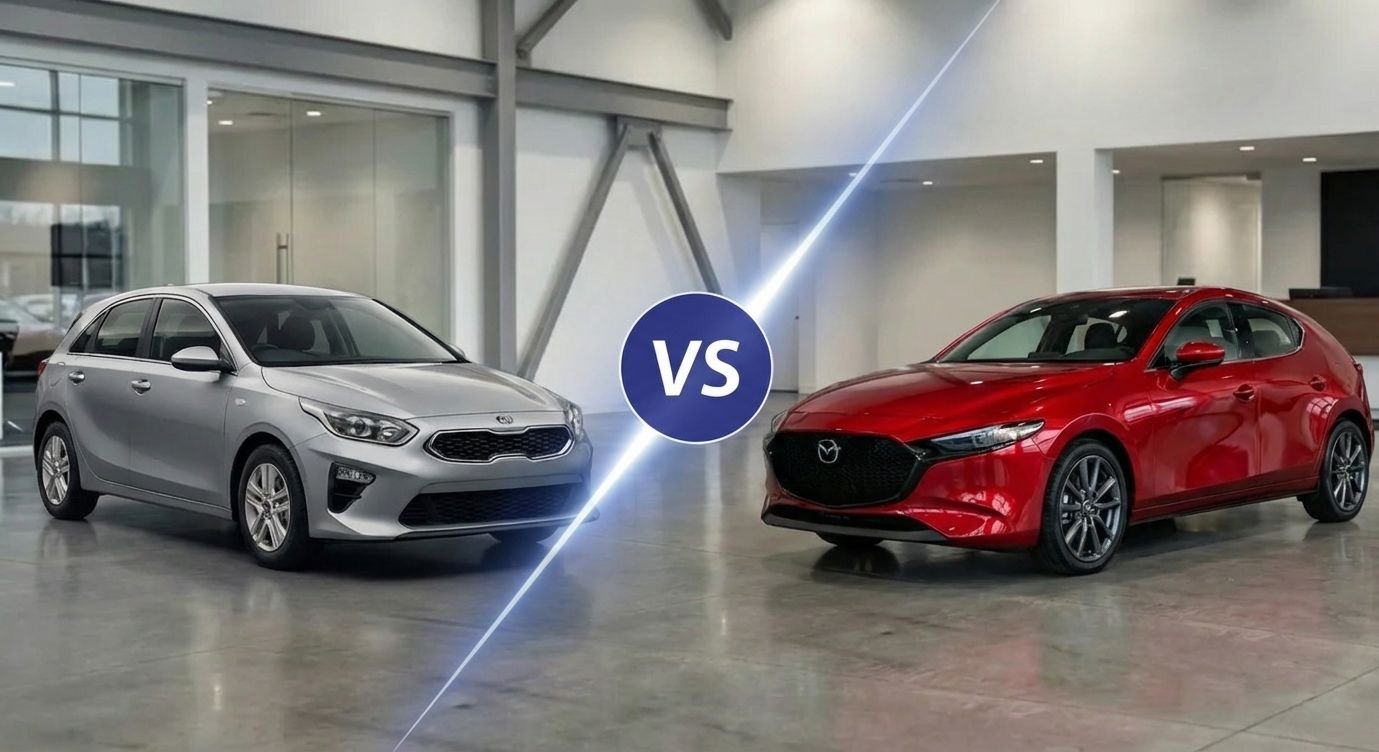
Detailed comparison: Kia Ceed vs. Mazda 3. We compared the engines, equipment, and driving characteristics. Read our verdict and find out which hatchback to choose.
Apr 8, 2026
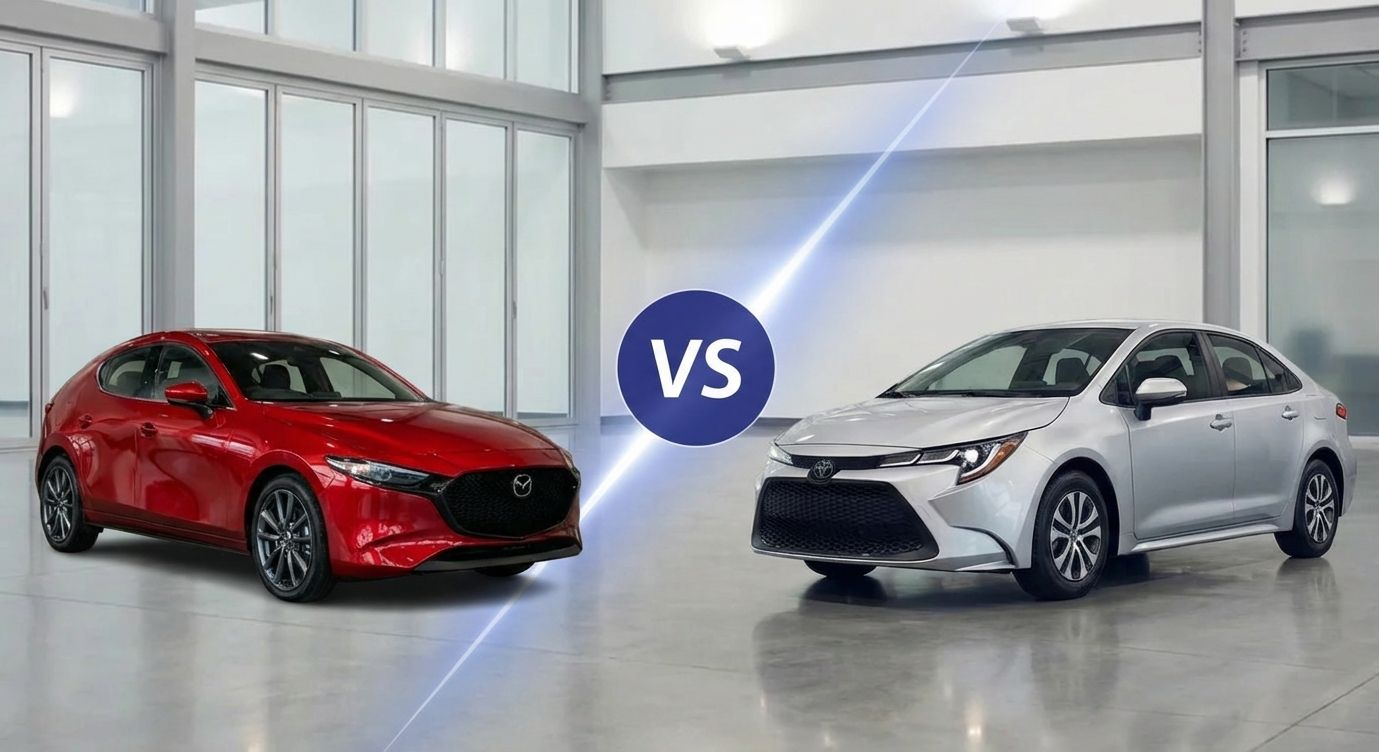
Mazda 3 vs. Toyota Corolla: Which bestseller is better? Our detailed comparison of engines, features, and handling will help you make your final choice.
Apr 13, 2026