Car battle
Citroën C4 vs. Peugeot 308: Complete comparison 2026
Detailed comparison of Citroën C4 vs Peugeot 308. Real-world driving experience, equipment comparison, and a detailed verdict for the right choice of your next car.
Apr 19, 2026
Articles
Car battle
Detailed comparison of Kia Ceed vs SEAT Leon. Discover real-world experiences, differences in equipment, engine reliability, and read our verdict before buying a used car.
April 20, 2026
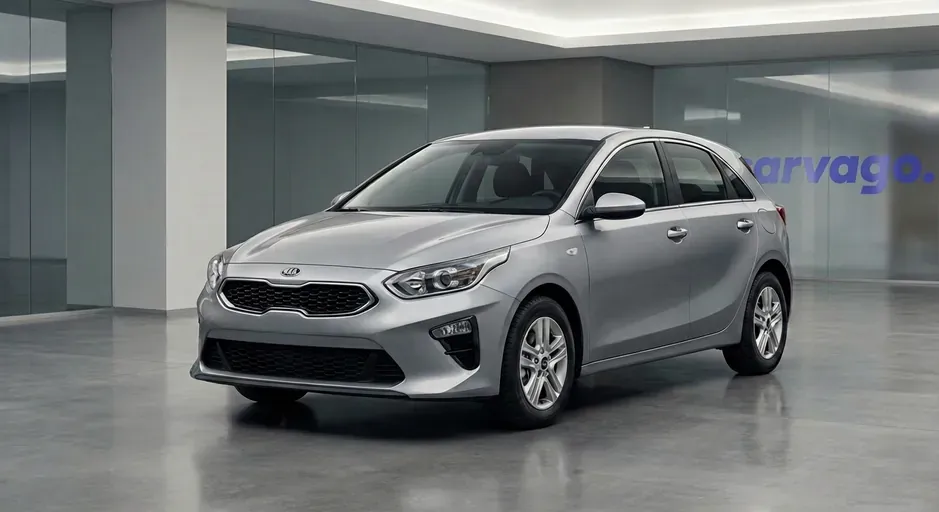
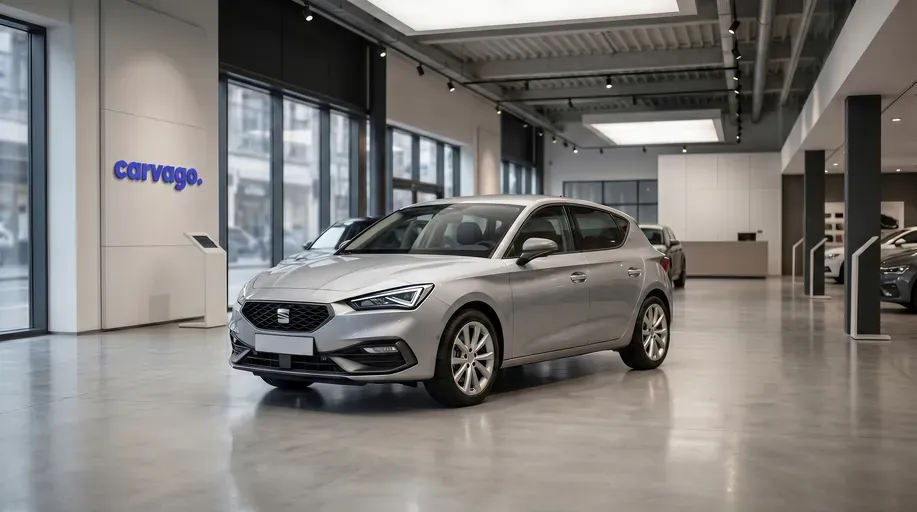
Kia Ceed, formerly known by the unconventionally spelled name Kia cee'd, has over time evolved into one of the most sensible and reliable compact hatchbacks on the European market. Standing against it today is the Seat Leon, a spirited Spanish car betting on a more emotive design and advanced Group technology, whose top-tier sports versions can now be found on the market under the separate Cupra Leon brand. The following comparison will show you in detail which of these two attractive representatives of the lower-middle class will better suit your daily driving and practical needs.
When comparing the exterior dimensions of these two popular representatives of the compact class, it is evident at first glance that although both target the same customer, their approach to space utilization differs slightly. Focusing on models roughly four years old, the Kia Ceed in its third generation (code name CD) faces off against the Seat Leon in its fourth generation (KL). Both manufacturers offer both a classic five-door hatchback and a popular and very practical estate (referred to as Sportswagon by Kia and Sportstourer by Seat).
The most significant difference directly affecting passenger space is the wheelbase. While the Kia Ceed maintains a standard 2650 mm across all body styles, the fourth-generation Seat Leon uses an extended platform, offering a wheelbase of up to 2686 mm. This extra 30+ mm translates in practice to generous knee room for rear-seat passengers. The Seat Leon is also longer overall – measuring 4368 mm in the hatchback body style, slightly outgrowing the Kia Ceed (up to 4325 mm). A similar trend applies to the estate versions, where the Leon Sportstourer with a length of 4642 mm surpasses the Ceed Sportswagon by nearly 4 centimeters.
On the other hand, the slightly more compact dimensions of the Kia Ceed can be a minor advantage when navigating tight city streets and parking. The width of both cars is practically identical (1800 mm for the Kia vs. 1799 mm for the Seat), meaning similar comfort in terms of elbow room in the front seats. In terms of height, both models are also very similar, although the Seat Leon can offer a slightly lower body profile in some sportier versions, emphasizing its more dynamic visual stance.
The table below summarizes the exterior dimensions for the currently most relevant generations of both models on the used car market (Ceed CD from 2018 and Leon KL from 2020), including the range of values depending on specific equipment and engine.
| Parameter | Kia Ceed Hatchback | Seat Leon Hatchback | Kia Ceed Estate | Seat Leon Estate |
|---|---|---|---|---|
| Length (mm) | 4310 - 4325 | 4368 | 4600 - 4605 | 4642 |
| Width (mm) | 1800 | 1799 | 1800 | 1799 |
| Height (mm) | 1442 - 1447 | 1442 - 1460 | 1460 - 1465 | 1437 - 1456 |
| Wheelbase (mm) | 2650 | 2682 - 2686 | 2650 | 2682 - 2686 |
For many compact car buyers, luggage space is one of the most important criteria, especially in a family context. When choosing a roughly four-year-old used car, we focus on the current, fully mature generations of both models (Kia Ceed CD and Seat Leon KL), which, with their dimensions, serve perfectly as full-fledged primary cars. While hatchback variants appeal more to younger couples or serve for daily city commuting, the estate versions play in the league of maximum practicality, where every usable liter counts.
In the basic configuration, the Kia Ceed hatchback offers a slightly larger boot with a value of 395 liters, slightly beating the 380 liters of the five-door Seat Leon. However, after folding down the rear seats, the tables turn in favor of the Spanish representative, which offers a maximum capacity of 1,301 liters compared to 1,291 liters for the Kia. But the real battle of transport capacities takes place in the popular estate variants. Here, the basic volumes are remarkably balanced – the Kia Ceed (in the Sportswagon version) holds 625 liters, and the Seat Leon (as the Sportstourer) lags only slightly behind with 620 liters. However, if you plan to transport bulky items and fold down the backrests, the Seat Leon fully demonstrates the magic of its extended platform and, with a generous capacity of 1,750 liters, clearly surpasses the 1,694 liters of the Kia. Nevertheless, both estate versions offer perfectly sufficient space for weekend shopping and longer family holidays.
It is also important to consider the choice of engine. For both models, the batteries in plug-in hybrid (PHEV) variants significantly affect the boot volume. While in the Kia Ceed estate, the basic boot shrinks to 437 liters, the hybrid Seat Leon estate drops to 470 liters. Electrification takes the biggest toll on the hatchback, where the boot of the hybrid Seat Leon drops to a modest 270 liters. In practice, this means a noticeable loss of space for several extra suitcases and can represent a complication when packing for a longer trip.
| Parameter | Kia Ceed Hatchback | Seat Leon Hatchback | Kia Ceed Estate | Seat Leon Estate |
|---|---|---|---|---|
| Base volume (liters) | 395 | 380 | 625 | 620 |
| Max volume with seats folded down (liters) | 1291 | 1301 | 1694 | 1750 |
Overall, it can be summarized that if you fully occupy the rear seats and the largest possible basic boot is crucial for you, the Kia Ceed will suit you slightly better. However, if you prefer variability and often fold down the rear seats to transport long or bulky loads, the Seat Leon (especially in its long version) offers a practically unrivaled space reserve.
While the Kia Ceed wins in basic boot volume, the Seat Leon offers significantly more maximum cargo space after folding down the rear seats, making it a more flexible choice for moving or transporting bulky sports equipment.
The ability to tow a trailer is a key factor for many buyers in the compact car segment, whether it's for hitching up a caravan for a summer holiday or a simple trailer for a weekend trip to the DIY store. Looking at cars approximately four years old (Kia Ceed generation CD and Seat Leon generation KL), we encounter quite fundamental differences that can easily decide the winner.
The Seat Leon is generally the better workhorse in this regard. Its base one-litre engines (1.0 TSI and eTSI) can tow a braked trailer weighing 1,100 to 1,300 kg, while the comparable Kia Ceed 1.0 T-GDI from those years mostly handles a standard 1,000 kg. If you opt for more powerful engines, the Leon with the 1.5 TSI or 2.0 TDI unit can tow 1,300 to 1,600 kg. In the estate version (Sportstourer) with the 2.0 TDI engine, this maximum even increases to a fantastic 2,000 kg, which already represents a sufficient reserve even for a medium-sized family caravan and effectively provides room for several extra suitcases. In contrast, the Kia Ceed has its absolute maximum set at 1,500 kg, specifically for the popular 1.6 CRDi diesel versions.
Special attention should be paid to the hybrid variants of both models. While the Seat Leon maintains very solid towing capacity values between 1,300 and 1,700 kg for its mild-hybrids (eTSI) and plug-in hybrids (e-HYBRID), the towing capacity of the Kia Ceed drops to just 700 to 710 kg for the one-litre mild-hybrid versions (1.0 T-GDI 48V). In practice, this means that while the Leon will comfortably serve for transporting heavier construction materials, the Ceed in certain electrified versions is really only sufficient for the lightest trailer with garden waste.
Conclusion: For drivers who plan to use a tow bar to its full potential and are looking for a car sufficient for both weekend shopping and longer holidays, the Seat Leon is clearly the more flexible choice. It offers not only higher maximum limits but also much better and more reliable consistency across all levels of electrification.
| Model and engine | Braked trailer weight (kg) | Unbraked trailer weight (kg) |
|---|---|---|
| Kia Ceed 1.0 T-GDI (CD) | 1000 - 1200 | Not specified |
| Kia Ceed 1.0 T-GDI 48V (CD) | 700 - 710 | Not specified |
| Kia Ceed 1.5 T-GDI (CD) | 1210 - 1410 | Not specified |
| Kia Ceed 1.6 CRDi (CD) | 1500 | Not specified |
| Kia Ceed 1.6 GDI PHEV (CD) | 1300 | Not specified |
| Seat Leon 1.0 TSI / eTSI (KL) | 1100 - 1300 | Not specified |
| Seat Leon 1.5 TSI / eTSI (KL) | 1300 - 1500 | Not specified |
| Seat Leon 2.0 TDI (KL) | 1500 - 2000 | Not specified |
| Seat Leon 1.4 / 1.5 e-HYBRID (KL) | 1500 - 1700 | Not specified |
Those interested in roughly four-year-old used Kia Ceed and Seat Leon models have a very diverse range of engines at their disposal, which differ fundamentally in their philosophy and technological approach. While Kia focuses on straightforwardness and long-term durability with its optimized standard 1.5 T-GDI petrol engine and economical 1.6 CRDi diesel, the Seat Leon, with VW Group technology, scores with an exceptionally varied range. This starts from refined 1.5 TSI units through sophisticated mild-hybrids (eTSI) to the popular 2.0 TDI diesel, which is unrivaled for those who cover long distances on the motorway. The Leon's strength lies in its immense versatility and excellent fuel consumption in electrified versions, although the higher complexity of the systems may be a disadvantage in the long run. Kia, on the other hand, attracts with its straightforwardness and more robust construction without forced electrification in most available used cars. For motorway drivers and fans of modern technology, the Seat Leon will be the better choice, while budget-oriented drivers who value classic mechanics with a minimum of complex elements will be satisfied with the Kia Ceed.
Under the hood of a roughly four-year-old Kia Ceed (CD generation produced since 2018), proven turbocharged units predominate, ideally covering the needs of the market. The basic choice is the 1.0 T-GDI three-cylinder, which is particularly suitable for suburban traffic. However, the most sought-after engine is the 1.5 T-GDI four-cylinder with 118 kW. This more modern engine replaced the older and less powerful 1.4 T-GDI unit in the range (its sale ended in spring 2021) and guarantees an excellent compromise between agility and reasonable consumption. The diesel branch is represented by the 1.6 CRDi four-cylinder with 100 kW, which can often be found in used cars with a 48V mild-hybrid system, paired either with a seven-speed DCT dual-clutch automatic or a smart iMT manual transmission. Customers looking for maximum efficiency in city driving can choose the 1.6 GDI Plug-in Hybrid variant with a system output of 104 kW for the Sportswagon (estate) body version. For more sport-oriented drivers, there is the top-of-the-range Ceed GT version equipped with a brisk 1.6 T-GDI engine with 150 kW.
| Engine type | Fuel | Power (kW) | Torque (Nm) | Transmission |
|---|---|---|---|---|
| 1.0 T-GDI | Petrol | 74 / 88 | 172 | 6MT / 7DCT |
| 1.5 T-GDI | Petrol | 118 | 253 | 6MT / 7DCT |
| 1.6 CRDi (or 48V) | Diesel | 100 | 280 / 320 | 6MT (iMT) / 7DCT |
| 1.6 GDI Plug-in Hybrid | PHEV | 104 | 265 | 6DCT |
| 1.6 T-GDI (GT) | Petrol | 150 | 265 | 7DCT |
The fourth-generation Seat Leon (internal designation KL, produced since 2020) is built on the MQB platform and shares technology with the VW Golf, ensuring an above-standard wide range of powertrains. The entry-level engine is the turbocharged 1.0 TSI three-cylinder (also offered as a mild-hybrid eTSI), but the most versatile and popular choice in used car dealerships is the 1.5 TSI four-cylinder. This is sold in two tuning levels (96 kW and 110 kW), and its mild-hybrid eTSI version always works with a smooth-shifting seven-speed DSG transmission. Diesel engines are proudly represented by the 2.0 TDI, which provides the assurance of high mileage with excellent consumption in four-year-old used cars. Compared to its Asian competition, the Leon can boast a strong involvement of alternative fuels – until the end of 2023, an ecological version burning natural gas (1.5 TGI) was also on offer, so it is easily available in used car dealerships. The pinnacle of efficiency and ecology is represented by the powerful 1.4 e-HYBRID plug-in hybrid delivering a total of 150 kW, while lovers of dynamic driving will be satisfied by the 2.0 TSI petrol powerhouse.
| Engine type | Fuel | Power (kW) | Torque (Nm) | Transmission |
|---|---|---|---|---|
| 1.0 TSI / eTSI | Petrol / MHEV | 81 | 200 | 6MT / 7DSG |
| 1.5 TSI / eTSI | Petrol / MHEV | 96 / 110 | 200 / 250 | 6MT / 7DSG |
| 1.5 TGI | CNG | 96 | 200 | 7DSG |
| 2.0 TDI | Diesel | 85 / 110 | 300 / 360 | 6MT / 7DSG |
| 1.4 e-HYBRID | PHEV | 150 | 350 | 6DSG |
| 2.0 TSI | Petrol | 140 | 320 | 7DSG |
The Seat Leon dominates with its staggering versatility, featuring advanced fuel-efficient mild-hybrids and top-tier 2.0 TDI diesels for those who cover long distances, while the Kia Ceed relies on proven user-friendly mechanics with a very convincing 1.5 T-GDI engine. If you are looking for advanced technology and range, go for the Leon; for long-term durability and a classic feel, the Kia makes sense.
Choosing the right engine is key to long-term satisfaction with a car, which is why we have based our recommendations on real-world experience, fuel consumption, dynamics, and mechanical reliability. Since we are focusing on cars approximately four years old (corresponding to model years 2021 and 2022), we are comparing the third generation of the Kia Ceed (designation CD) and the fourth generation of the Seat Leon (designation KL). During this period, both manufacturers launched their latest 1.5-liter turbocharged four-cylinder engines, which have become the most interesting options in their respective lineups. While Seat relies on advanced efficiency with cylinder deactivation and mild-hybrid technology, Kia offers slightly higher on-paper performance and a more traditional driving feel.
This modern turbocharged four-cylinder (available since spring 2021, when it replaced the older 1.4 T-GDI unit) represents the absolute best compromise between purchase price, dynamics, and operating costs in the current generation of the Ceed. With 160 horsepower, the engine provides the car with excellent flexibility and confident overtaking maneuvers, while maintaining a very reasonable real-world fuel consumption of around 6 to 6.5 liters per 100 km. Its main technical advantages are a balanced torque curve, refined operation, and a quiet cabin, which you will appreciate on longer journeys.
What to look out for when buying:
Who it is ideal for:
This engine is a great choice for universal use. It will please drivers with a more dynamic style who drive mixed routes (a combination of city, country roads, and highways) and appreciate a power reserve for overtaking without having to reach deep into their pockets at the gas station.
For the fourth generation of the Leon (available since 2020), the absolute favorite is the VW Group's 1.5 TSI engine in the 150 hp version. If you opt for a car with a DSG automatic transmission, you get the version designated eTSI, which, unlike the manual version, is equipped with a 48V mild-hybrid system. This powertrain stands out for its fantastically low fuel consumption (in practice, it is common to drive under 6 liters) thanks to the ACT system, which imperceptibly deactivates two cylinders under low load. The eTSI version also allows for "coasting" with the engine off and beautifully smoothes out the operation of the start-stop system. In terms of performance, it provides the Leon with excellent sporty lightness, typical for Seat models.
What to look out for when buying:
Who it is ideal for:
The 1.5 TSI (or eTSI) engine is a perfect choice for both daily commuters and highway travelers. The mild-hybrid in combination with the quick DSG automatic provides unrivaled comfort in city traffic jams. We definitely recommend it to drivers who like modern technology and focus on maximum possible fuel efficiency.
Although official fuel consumption figures provided by manufacturers have become more realistic in recent years thanks to the stricter WLTP methodology, they still cannot be 100% relied upon. To get a more accurate idea of how much fuel both cars actually consume, it is ideal to look at data from real drivers. Community websites such as the Spritmonitor platform, which gathers thousands of records of actual refueling from everyday driving, are a source of such information. This gives us a very clear picture of the real appetite of approximately four-year-old used cars, specifically the current generations of the Kia Ceed (CD generation) and Seat Leon (KL generation).
The following table shows the average consumption of the most common engines for both models that you will most often encounter in used car dealerships from the 2021 and 2022 model years. The values are sorted by fuel type and average consumption.
| Model and engine | Average consumption (l/100 km) | Source |
|---|---|---|
| Seat Leon 2.0 TDI (110 kW) | 4.5 | Spritmonitor |
| Kia Ceed 1.6 CRDi (100 kW) | 4.8 | Spritmonitor |
| Seat Leon 1.0 TSI (81 kW) | 5.5 | Spritmonitor |
| Seat Leon 1.5 TSI (110 kW) | 5.8 | Spritmonitor |
| Kia Ceed 1.5 T-GDI (118 kW) | 6.2 | Spritmonitor |
| Kia Ceed 1.0 T-GDI (88 kW) | 6.3 | Spritmonitor |
Looking at user data reveals several interesting trends. Traditionally, diesel engines remain the most economical choice. The two-liter TDI under the hood of the Seat Leon and the popular 1.6 CRDi unit in the Kia Ceed can easily achieve a real-world average of under five liters per hundred kilometers. Compared to petrol alternatives, they save an average of 1 to 1.5 liters of fuel, which makes a significant difference in the wallet with high annual mileage.
A surprising but very common finding in practice is the behavior of small turbocharged three-cylinder engines. In the Kia Ceed, it turns out that the basic 1.0 T-GDI engine de facto does not save fuel at all. In real-world traffic – especially with a loaded car or on the highway – the small engine works harder and drivers rev it more often. Paradoxically, its consumption ends up slightly above the values of the larger, more refined, and more powerful 1.5 T-GDI four-cylinder. In the Seat Leon, the smaller 1.0 TSI engine is slightly better tuned and shows a slight saving, but even here there is no dramatic difference compared to the more dynamic "one-point-five".
For typical buyers interested in a used hatchback or estate, these data lead to fairly clear recommendations:
Overall, fuel consumption will likely not be the main and only argument for choosing one of these two cars. Both offer a highly modern and, by normal standards, economical range of power units. However, it is clear from the figures that the Seat Leon's technology uses fuel slightly more efficiently than its Korean rival, across both the diesel and petrol spectrum. For users who count every penny at the gas station, the Spanish car may represent a slightly more attractive option.
When looking at the used car market for vehicles around four years old (mainly 2021 and 2022 models), both the Kia Ceed and Seat Leon are popular choices in the compact class. In terms of price, these cars differ slightly – the Seat Leon holds its value a bit better thanks to its group affiliation and shared technology with the VW Golf or Škoda Octavia. The Kia Ceed, on the other hand, attracts buyers with more affordable purchase prices and the trump card of a remaining factory warranty.
Price levels on the used car market depend on the engine, trim level, and total mileage. Below are the average values for the most sought-after specifications:
Kia Ceed stands out with a major argument for used car buyers: a seven-year factory warranty. For a four-year-old car, the new owner still has about three years of protection for main components (provided, of course, that the previous owner performed regular authorized servicing). This coverage eliminates the fear of unexpected expenses and gives the Ceed a huge competitive advantage.
The fourth-generation Seat Leon does not have such a generous warranty (usually standard or extended to 5 years), but its strong suit is slower depreciation. Furthermore, thanks to the unified MQB platform, the service network is perfectly accessible, and mechanics can easily handle the shared group technology in almost any workshop.
While the Kia Ceed represents a more rational choice with the appeal of a remaining factory warranty and a lower purchase price, the Seat Leon justifies its higher price on the used market with more advanced technologies and slower depreciation over time.
When comparing the safety of both vehicles, it is obvious at first glance that both models boast a maximum five-star rating from the independent Euro NCAP organization. However, for proper context, it is essential to consider the year of testing. Crash test protocols are constantly evolving and their criteria become stricter every year. For this reason, percentage scores from different years are not directly and equally comparable. While older standards primarily tested passive deformation zones and basic automatic braking, newer tests include more demanding scenarios such as frontal impact simulations with a moving barrier, cyclist detection, or handling crisis situations at intersections.
The third-generation Kia Ceed underwent Euro NCAP evaluation in 2019. The car achieved the maximum five stars, but with an important condition – the tested specimen had to be equipped with the optional Advanced Driving Assistance package, which added better pedestrian and cyclist detection to the car. With this package, the car received a solid 88% for adult protection, 85% for child protection, 68% for vulnerable road user protection, and 73% for safety assistants. Models with basic equipment were rated only four stars. In any case, the results testify to a very strong body made of high-strength steel, but for used cars from around the 2021 or 2022 model years, be careful to check whether the specific unit actually has the optional safety package.
The fourth-generation Seat Leon entered Euro NCAP tests in 2020. Its great advantage is that it passed the tests according to the new, significantly stricter methodology. This reflected stricter scoring for active prevention and a newly introduced emphasis on side impact protection (the Leon benefits from the installation of a center airbag between the front seats). Despite these more difficult conditions, the Seat Leon easily defended its five-star rating even in standard equipment. It scored a top 92% for adult protection, 88% for children, 71% in pedestrian protection, and an excellent 80% in the safety assistants category.
| Parameter | Kia Ceed | Seat Leon |
|---|---|---|
| Year of testing | 2019 | 2020 |
| Adult occupant protection | 88% | 92% |
| Child protection | 85% | 88% |
| Vulnerable road user protection | 68% | 71% |
| Safety assistance systems | 73% | 80% |
In terms of overall safety, both cars represent a very solid and reliable choice, but the Seat Leon provides slightly more modern and comprehensive protection. Since it managed to excel in much tougher tests from 2020 and, unlike its Korean rival, features more advanced elements (such as the aforementioned center airbag) across all trim levels, it represents a slightly safer and more technologically advanced family car on the used car market from the perspective of current safety standards.
While both cars protect the occupants excellently, the Seat Leon has a slight edge thanks to its more advanced architecture and better results in the stricter 2020 tests.
In addition to standard equipment, each of the models offers something extra and approaches added value in its own distinctive way. While the South Korean representative bets on user-friendliness and proven classics, the Spanish competitor is not afraid to experiment and brings elements inspired by the premium segment to its class.
The third generation of the Kia Ceed is popular mainly due to its pragmatic and rational approach, which is reflected in everyday use. Engineers focused on ensuring that technology does not bother the driver, but rather helps them.
The fourth generation of the Seat Leon, built on the modern MQB Evo platform, has made a huge leap towards digitalization. Its strength is an emotional design supported by modern features that we know more from more expensive Volkswagen Group cars.
Physical buttons for climate control and basic functions (excellent ergonomics)
Still valid seven-year factory warranty, which is a huge advantage for four-year-old used cars
Reliable and refined petrol engines (especially the 1.5 T-GDi version)
Fast and user-friendly multimedia system without unnecessary delays
Very attractive price-to-value ratio on the used car market
Poorer chassis soundproofing and more noticeable aerodynamic noise at highway speeds
Stiffer chassis tuning, which feels less comfortable on broken roads than the competition
Slightly more conservative exterior and interior design
The Kia Ceed represents a rational choice for drivers who appreciate top-notch ergonomics with classic hardware buttons and peace of mind thanks to a long factory warranty. It is a practical car with an excellent price-performance ratio that scores points for everyday reliability and user-friendliness.
Emotional and dynamic exterior design that ages very slowly
Great driving characteristics benefiting from the MQB Evo platform with an excellent compromise between comfort and sportiness
Wide range of efficient engines including economical mild-hybrids (eTSI)
Above-average space for rear passengers and a voluminous trunk in the Sportstourer estate version
Advanced assistance systems and availability of smart Matrix LED headlights
Almost exclusively touch controls (including climate control), which significantly worsens ergonomics while driving
Occasional infotainment freezes and slower system starts on older software versions
Higher purchase price on the used car market compared to Korean competition
Shorter basic factory warranty, which has already expired for most four-year-old vehicles
The Seat Leon will especially appeal to those drivers who demand modern technology, attractive style, and precise driving dynamics provided by the advanced VW Group platform. However, interested buyers must accept a digitalized interior relying on touch surfaces and potentially pay extra for better-equipped versions.
Based on long-term user experience, service reports, and detailed inspections such as our comprehensive car audit, we have compiled an overview of the most common problems that used car buyers should watch out for with these models.
The third generation of the Kia Ceed is generally considered an above-average reliable car, however, it also has its specific weak points that appear with increasing mileage or inappropriate driving style.
Thanks to quality mechanics and honest workmanship, the Ceed represents a reliable choice, especially with a manual transmission. Moreover, most potential electronic ailments usually fall under the generous seven-year factory warranty.
The fourth generation of the Seat Leon brought significant digitalization of the interior and new powertrains, which is reflected in the completely different nature of the most common defects in used cars around four years old compared to previous generations.
Mechanically, the fourth-generation Leon is a sophisticated and durable car with excellent engines. However, its reputation is marred by unfinished software from the start of production, so when buying a used car, always insist on checking that all system updates are current.
When buying a used car, a thorough inspection is crucial. Both models have their specifics and weak points that are worth watching out for when choosing, which is why a careful independent technical inspection of the car is always appropriate before the purchase itself. Here are the main points you should focus on during a test drive.
In the hatchback body style, the Kia Ceed has a slightly larger luggage compartment with a volume of 395 litres compared to 380 litres for the Seat. For the more practical estate versions, the situation is very balanced, as the Ceed SW holds 625 litres and the Leon Sportstourer 620 litres. Both cars will thus easily satisfy even more demanding family needs.
The Spanish representative traditionally benefits from the excellently tuned Volkswagen Group chassis, which gives it a slightly more agile character and confidence at high speeds. However, the South Korean model does not lag far behind in dynamics and offers a great compromise between everyday comfort and cornering stability. Nevertheless, for outright driving enthusiasts, the Leon will be a slightly better choice.
A major advantage of a used Kia is its seven-year factory warranty, which means that for a roughly four-year-old car, you still have up to three years of premium coverage remaining. Seat typically offers a five-year warranty, which for a car of similar age is likely already ending or will end soon. In terms of overall mechanical reliability, both cars perform very well, but software errors in the infotainment system may appear more frequently in early model years of the Spanish car.
The Ceed is much more ergonomically friendly because even in modern generations, it has retained classic hardware buttons for controlling the air conditioning and basic functions. Its competitor from the Volkswagen stable switched to almost fully touch-based controls with the latest generation, which can be more distracting for the driver while driving. If you prefer traditional and intuitive controls without the need to look at a display, the Kia will be more pleasant for you.
For both cars, the ideal choice is the turbocharged 1.5-litre petrol engines, specifically the 1.5 T-GDi with 118 kW and the 1.5 TSI with 110 kW. These engines offer an excellent balance between smooth dynamics and low fuel consumption, which in practice is around 6 litres per 100 kilometres. Furthermore, the Group engine in the Seat offers cylinder deactivation technology (ACT) or mild-hybrid assistance (eTSI) in some versions for even greater savings in the city.
Choosing between these two exceptionally well-made compacts depends primarily on what you expect from your car in everyday life. Kia Ceed represents a highly rational and user-friendly choice that, thanks to excellent ergonomics with physical buttons, reliable mechanics, and a lasting seven-year factory warranty, will please more conservative drivers looking for long-term security and a great price-performance ratio. In contrast, the Seat Leon is ideal for tech enthusiasts and more demanding highway travelers, providing them with more engaging driving characteristics, top-tier and exceptionally efficient engines, and a more generous interior space. While the South Korean representative scores with worry-free operation without unnecessary digital complexities, the Spanish competitor will win you over with its more emotional design and modern technologies, which perfectly match its sportier and more versatile character.
Sources: ADAC, denik.cz, auto.cz, auto-mania.cz, autojournal.cz, classiccars.cz
This article was prepared using artificial intelligence tools. The section guarantor is Petr Dušek.
Detailed comparison of Citroën C4 vs Peugeot 308. Real-world driving experience, equipment comparison, and a detailed verdict for the right choice of your next car.
Apr 19, 2026
Mazda 3 vs. Peugeot 308: A detailed comparison of engines, interior, and reliability. Find out which stylish hatchback is the best choice for you.
Apr 13, 2026
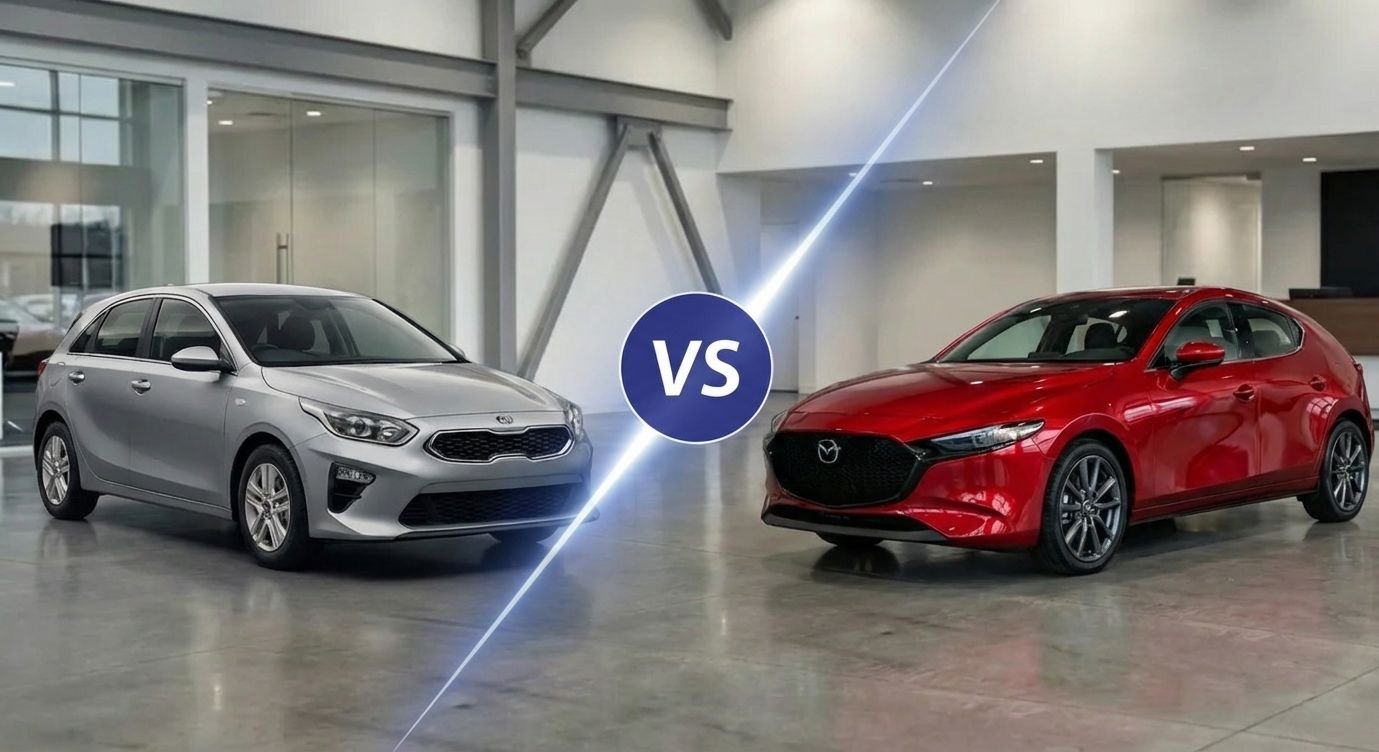
Detailed comparison: Kia Ceed vs. Mazda 3. We compared the engines, equipment, and driving characteristics. Read our verdict and find out which hatchback to choose.
Apr 8, 2026