Car battle
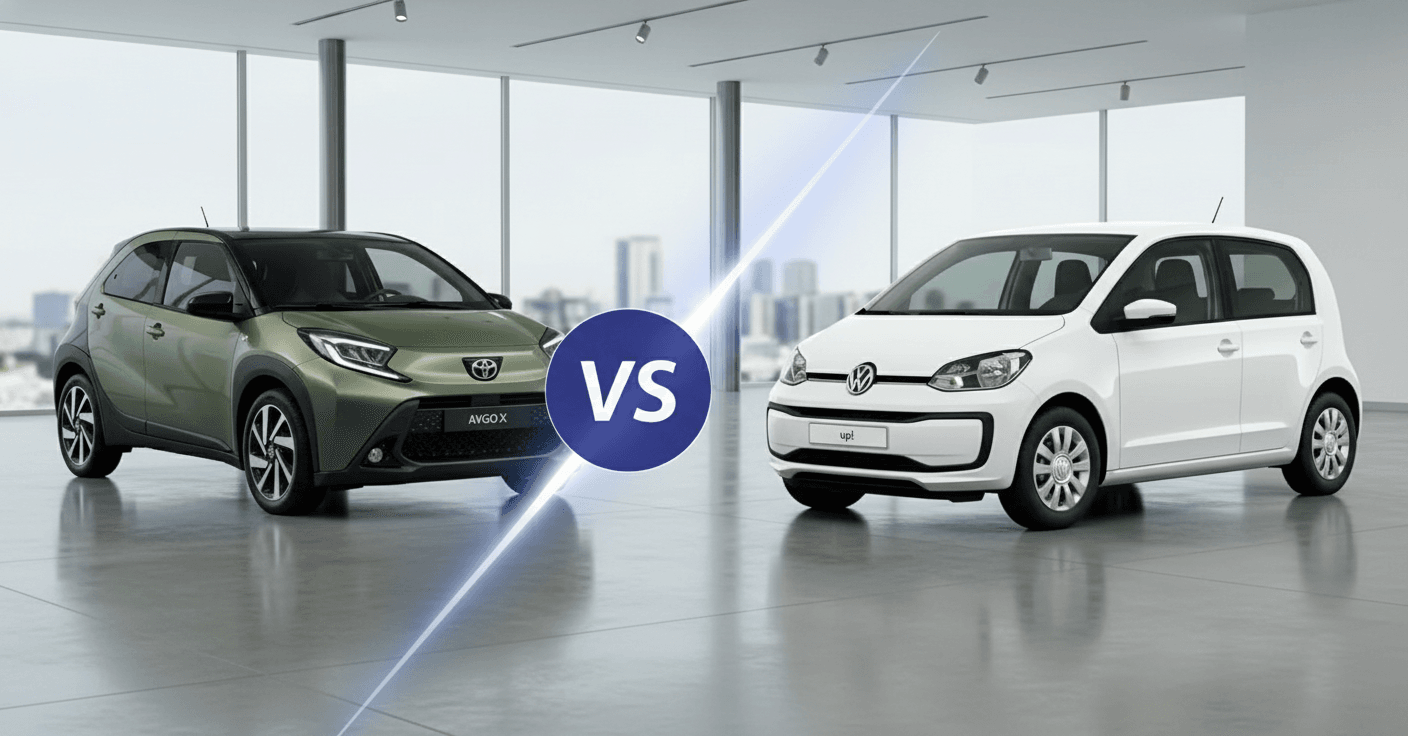
Toyota Aygo X vs. Volkswagen up!: Complete comparison 2026
Toyota Aygo X vs Volkswagen up! (VW Up): Detailed comparison of city cars. Discover the differences in space, fuel consumption and equipment, and read our verdict.
Apr 13, 2026
Articles
Car battle
Detailed comparison of Kia Rio vs. Renault Clio. Discover the differences in equipment, fuel consumption, and reliability. Our verdict will help you choose the best used hatchback.
May 3, 2026

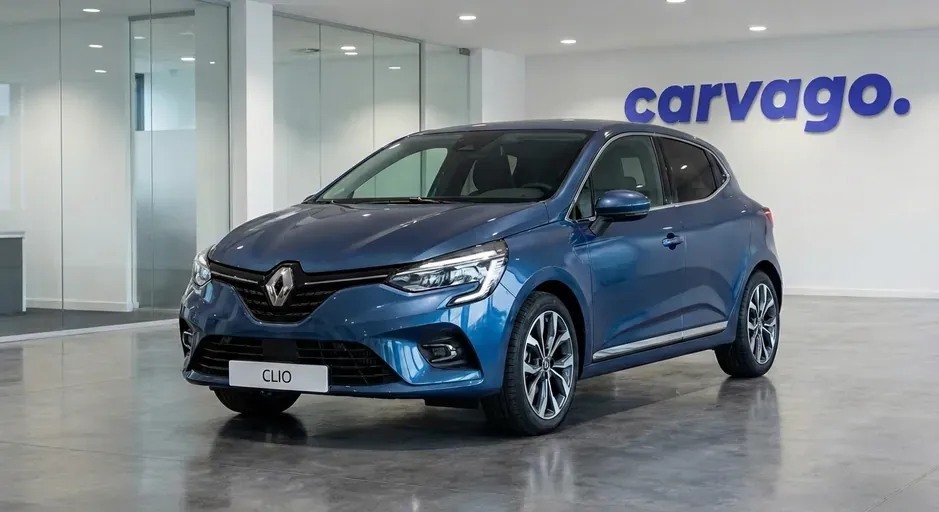
Kia Rio, also known in some markets as the Kia K2 or historically as the Kia Pride, represents a practical and reliable representative of the small car segment, which wins over customers primarily with its excellent price-to-value ratio. Standing against it is the popular Renault Clio, which is sold in Japan, for example, under the name Renault Lutecia and which served as the basis for popular affordable sedans like the Symbol or Thalia, and which, on the other hand, has long scored points with its attractive French design and very comfortable driving characteristics. Let's take a detailed look in this comprehensive comparison at which of these two popular hatchbacks will better suit your daily needs on the road.
In the small city car segment, every millimeter plays an important role when choosing. When comparing approximately four-year-old used cars – specifically the fourth generation of the Kia Rio (YB designation) and the fifth generation of the Renault Clio (generation V) – we encounter very similar basic figures, but with several key differences that clearly define the character of both cars. While the Rio bets on more classic, slimmer proportions, the Clio presents itself with a wider and more aggressive stance. This difference in approach to external dimensions directly affects not only the visual impression of the car but also its daily practicality.
In terms of overall length, the Kia Rio is a negligible 12 to 20 mm longer (measuring up to 4070 mm compared to a maximum of 4053 mm for the Clio). However, the real and most noticeable difference for the driver lies in the width of both cars. The Renault Clio, with its 1798 mm, is a significant 73 mm wider than its South Korean competitor (1725 mm). In practice, this means that the French model offers a subjectively airier interior with better shoulder room, and its wider track ensures more stable behavior at higher speeds. Conversely, the slightly narrower body of the Kia Rio makes maneuvering in narrow streets, underground garages, and during parallel parking easier, making it a more agile choice for crowded city centers.
In terms of height, both cars differ only minimally; the Kia Rio, at 1450 mm, is 10 mm taller than Renault, which could theoretically mean a slight advantage in headroom for taller passengers. The wheelbase, which is a key factor for longitudinal space in the cabin, is remarkably balanced in both cars – 2580 mm for the Rio and 2583 mm for the Clio. As a result, both models offer almost identical knee room for rear-seat passengers. Overall, it can be said that if you are looking for a car that feels more mature with a more aggressive look for occasional longer trips, the wider Clio will be a more attractive choice, while you will appreciate the Rio especially where every extra centimeter is a guarantee of worry-free parking.
| Parameter | Kia Rio Hatchback | Renault Clio Hatchback |
|---|---|---|
| Width (mm) | 1725 | 1798 |
| Length (mm) | 4065 - 4070 | 4050 - 4053 |
| Height (mm) | 1450 | 1440 |
| Wheelbase (mm) | 2580 | 2583 |
Luggage capacity is often a key parameter when choosing a car, even in the small city car category. Whether you are looking for a reliable car for everyday family duties, need to head out for a major weekend shop, or have a longer holiday for two ahead of you, every available liter plays a big role. Although these models are not among the giant load-luggers, modern generations of cars like the Kia Rio and Renault Clio strive to satisfy all common demands and surprise with relatively generous utility value.
Looking at the currently most sought-after used cars around four years old, the Kia Rio in hatchback body style (fourth generation, designated YB) offers a very decent standard boot space of 325 liters. After folding down the rear backrests, you get exactly 1103 liters, which is space perfectly sufficient for weekend shopping and transporting smaller pieces of furniture. The competing fifth-generation Renault Clio goes even further in its standard form – regular versions with an internal combustion engine boast a volume of 340 liters. They thus provide space for a few extra suitcases or even more complex sports equipment. However, after folding the seats, the maximum capacity of the Clio ends at 1069 liters, slightly lagging behind its Korean rival.
Significant differences can be found in specific engine options and body versions. While the mild-hybrid version of the Kia Rio does not lose any utility space and retains its 325 liters, those interested in the fuel-efficient full-hybrid Clio E-Tech must accept a major compromise. Due to the placement of the traction battery, the standard volume of the Renault shrinks to a below-average 246 to 254 liters. Families looking for maximum practicality should not miss the fact that although the fifth-generation Clio no longer offers an estate body style among four-year-old used cars, the previous generation Renault Clio Grandtour (Estate) can still be found on the market as it was being phased out. It offers families a respectable 443 liters as standard and up to 1380 liters with the seats fully folded. In contrast, the Kia Rio has been available exclusively as a five-door hatchback in its modern history.
| Parameter | Kia Rio Hatchback | Renault Clio Hatchback | Renault Clio Estate |
|---|---|---|---|
| Standard volume (liters) | 325 | 340 (246 for hybrid) | 443 |
| Max. volume with seats folded (liters) | 1103 | 1069 | 1380 |
In the final decision, it holds that if your priority is a slightly larger everyday boot and you are not choosing a hybrid powertrain, the Renault Clio Hatchback will serve you better. On the other hand, the Kia Rio will please those who more frequently fold down the rear seats to transport bulkier loads and do not want to lose valuable space even when choosing a modern electrified engine.
While the Renault Clio pleases with a slightly larger standard boot for everyday shopping, the Kia Rio gains valuable points for greater total space after folding the seats and the complete absence of compromises in its hybrid versions.
Although trailer weight is not usually the primary reason for buying a small hatchback, this parameter fundamentally affects the overall practicality of the car – whether for towing a small trailer, moving materials, or securely attaching a bicycle rack. When comparing approximately four-year-old cars from the used car market, we encounter different approaches for both models. The fifth-generation Renault Clio is completely consistent in this regard. All its versions, from the petrol one-liter TCe engine, through the diesel Blue dCi, to the full-hybrid E-Tech, offer the same maximum braked trailer weight of 900 kg. The fourth-generation Kia Rio (YB), on the other hand, is somewhat more variable. While its naturally aspirated base 1.2 DPi can handle a braked trailer weighing 910 kg and the newer mild-hybrid 1.0 T-GDI 48V version is limited to 900 kg, older or conventional versions of the one-liter turbo engine (1.0 T-GDI) could tow up to 1110 kg.
There is also an interesting difference in unbraked trailers. While the limit for the Kia Rio is set at 450 kg across the board, the Renault Clio, thanks to its design, allows towing 580 to 630 kg depending on the specific specification. In everyday life, these values mean that both cars can easily hitch a light trailer sufficient for weekend shopping or a longer holiday, easily gaining space for several extra suitcases. As a result, if you often transport heavier loads without brakes, the Renault Clio will be a slightly more suitable choice due to its higher tolerance. However, if you need to hitch a heavier braked trailer, it may be more advantageous to carefully select a specific petrol version of the Kia Rio, which offers a significantly higher margin.
| Model and motorization | Braked weight of trailer (kg) | Unbraked weight of trailer (kg) |
|---|---|---|
| Kia Rio 1.2 DPi (62 kW) | 910 | 450 |
| Kia Rio 1.0 T-GDI (74 kW / 88 kW) | 900 - 1110 | 450 |
| Kia Rio 1.0 T-GDI 48V MHEV (88 kW) | 900 | 450 |
| Renault Clio SCe 65 (49 kW) | 900 | 580 |
| Renault Clio TCe 90 / TCe 100 LPG (67 - 74 kW) | 900 | 580 - 630 |
| Renault Clio E-Tech Hybrid 140 / 145 (67 - 69 kW) | 900 | 600 - 630 |
| Renault Clio BLUE dCi 100 / 115 (74 - 85 kW) | 900 | 630 |
When choosing a roughly four-year-old used car, the Kia Rio and Renault Clio offer diametrically different approaches to their engine lineups. While the South Korean Rio (within the 2020 YB generation facelift) bets on a clear, simplified, and exclusively petrol range enriched with mild-hybrid technology, the French Clio (fifth generation, on the market since 2019) brings an unusually diverse range of powertrains. For a used Renault, buyers can choose from naturally aspirated and turbocharged petrol engines, a very popular factory LPG version, an economical diesel, and even an advanced E-Tech full hybrid system. This difference is fundamental for used cars: the Rio appeals more to conservative drivers looking for mechanical simplicity without complex emission systems, while the Clio better suits diverse needs, from long highway hauls to purely urban driving with minimal fuel consumption.
Under the hood of a roughly four-year-old Kia Rio, you will only find petrol units, as the CRDi diesel engines disappeared from its range before 2020 and you won't encounter them on today's market for nearly new cars. The cornerstone and a phenomenal bet on reliability for shorter trips is the naturally aspirated 1.2 four-cylinder (or 1.2 DPI with indirect injection) with 62 kW. Above it sit the modern turbocharged 1.0 T-GDI three-cylinders, which require higher-quality fuel and more careful servicing but reward with significantly better dynamics. The weaker version with 74 kW (100 hp) is available in 2020–2023 models with a six-speed manual or a seven-speed 7DCT dual-clutch automatic transmission. The top variant tuned to 88 kW (120 hp) is standardly paired with a 48V mild-hybrid system in the period under review. This electrified version uses a specific iMT intelligent manual transmission (without a mechanical pedal link) or the 7DCT gearbox, reducing urban consumption at the cost of higher technological complexity.
| Engine type | Fuel type | Power (kW) | Torque (Nm) | Transmission |
|---|---|---|---|---|
| 1.2 / 1.2 DPI | Petrol | 62 | 118 | 5MT |
| 1.0 T-GDI 100 | Petrol | 74 | 172 | 6MT / 7DCT |
| 1.0 T-GDI 120 48V-Mild-Hybrid | Petrol (Mild-hybrid) | 88 | 200 | 6iMT / 7DCT |
The fifth-generation Renault Clio has a significantly more diverse lineup under the hood. The basic naturally aspirated one-liter three-cylinder SCe 65 (48 kW) is suitable only for exceptionally calm city drivers. The clear and by far most widespread middle-ground choice is the turbocharged one-liter three-cylinder TCe 90 (66 kW), which can alternatively be paired with a CVT automatic transmission (labeled as X-tronic). A huge competitive advantage of the Clio over the Rio is the TCe 100 LPG (74 kW) model, which, thanks to factory integration of the gas drive, represents one of the best tools for radically reducing operating costs without compromising on warranty or safety. Those interested in a more powerful used car with a manual will be pleased by the brisk TCe 140 (103 kW) four-cylinder, and despite current trends, the 2020–2023 Clio had the economical Blue dCi 100 diesel in its price list for a limited time – it offers a strong 260 Nm of torque for long highway stretches. The pinnacle of the Clio's technological advancement is the sophisticated E-Tech 140 full hybrid system (or the later slightly more powerful E-Tech 145), which combines a naturally aspirated 1.6-liter petrol engine with two electric motors and a unique multi-mode sequential gearbox without a conventional clutch, with which you can commonly achieve fuel consumption below 5 liters per hundred kilometers in the city.
| Engine type | Fuel type | Power (kW) | Torque (Nm) | Transmission |
|---|---|---|---|---|
| SCe 65 | Petrol | 48 | 95 | 5MT |
| TCe 90 | Petrol | 66 | 160 | 6MT / CVT (X-tronic) |
| TCe 100 LPG | Petrol / LPG | 74 | 170 | 6MT |
| TCe 140 | Petrol | 103 | 260 | 6MT |
| E-Tech Hybrid 140 / 145 | Petrol (Full-hybrid) | 103 / 105 | 144 / 205 (el.) | Multi-mode (Aut.) |
| Blue dCi 100 | Diesel | 74 | 260 | 6MT |
If you are a low-cost-oriented driver with a preference for city traffic, the naturally aspirated 1.2 DPI petrol engine in a four-year-old Kia Rio is an absolutely bulletproof choice, where you will avoid problems with expensive components in the long run (it has no turbo or complex particulate filters). However, drivers with higher highway mileage or those looking for the cheapest possible cost per kilometer will find a winner in the Clio. The fifth generation of the French model crushes its opponent with the exceptionally advantageous TCe 100 LPG version, the rare Blue dCi diesel option, and for automatic lovers, it offers a very advanced E-Tech full hybrid powertrain, which shames even Kia's turbocharged petrol three-cylinders in terms of urban fuel consumption.
While the Kia Rio attracts with its simple, maintenance-free naturally aspirated four-cylinder, the Renault Clio dominates with its variety – on the used car market, you'll find a top-tier full hybrid, a successful factory LPG version, and a highway-ready diesel, making it a much more versatile choice for specific driver needs.
Choosing the right engine is key to long-term satisfaction, maintaining low fuel consumption, and ensuring mechanical reliability without unexpected expensive investments. Used cars around 4 years old present us with a choice of modern technologies, which both manufacturers approached quite differently in selected generations (the facelifted Kia Rio YB and the Renault Clio V). In the case of the Kia Rio, you will no longer find the previously highly sought-after larger naturally aspirated 1.4 CVVT engine on the used market, as its production for this model ended in 2019. The role of the dynamic unit was taken over by powerful turbocharged one-liter three-cylinder engines, which, however, use direct injection and do not fare well with frequent short trips in the city. The "secret tip" for absolute durability has thus become the smaller, inconspicuous naturally aspirated 1.2-liter engine. The fifth-generation Renault Clio also bet on similarly sized turbocharged three-cylinder engines, but with completely bulletproof indirect injection. While more powerful four-cylinder 1.3 TCe versions were briefly installed in the Clio (discontinued in 2020 and replaced by more expensive E-Tech hybrids), for the average buyer of a four-year-old used car, these are extremely rare and unnecessarily complex options on the market today.
This classic 1.2-liter naturally aspirated four-cylinder is, from today's perspective, a true gem for the average user and the embodiment of mechanical durability. While the rest of the automotive world, in pursuit of low emissions, moved exclusively toward small turbocharged engines, Kia maintained a very simple concept that works as an extremely reliable daily workhorse.
The small turbocharged one-liter three-cylinder in Renault Clio cars is deceptive on paper. Although it has a small displacement, it is a top-tier unit in terms of design, completely outclassing the vast majority of the competition regarding service concerns and resale value.
Official fuel consumption figures given in manufacturers' official materials often differ significantly from the reality of everyday driving. To provide you with the most accurate comparison of running costs for approximately four-year-old used cars – specifically the fourth generation of the Kia Rio (code YB after the facelift) and the fifth generation of the Renault Clio – we are using real data from the independent community portal Spritmonitor.de, where owners record their own refuelling. Experience with these generations shows that real-world consumption is usually half a litre to a litre higher than what the strict laboratory tests of the time promised.
Source: Spritmonitor.de
| Model and engine | Average consumption (l/100 km) |
|---|---|
| Renault Clio 1.0 SCe 48 kW | 5.3 |
| Kia Rio 1.2 DPI 62 kW | 5.3 |
| Kia Rio 1.0 T-GDI 74 kW | 5.4 |
| Renault Clio 1.0 TCe 66 kW | 5.8 |
| Kia Rio 1.0 T-GDI 48V 88 kW | 5.4 |
| Renault Clio 1.5 Blue dCi 74 kW | 4.2 |
| Renault Clio E-Tech Hybrid 103 kW | 4.8 |
| Renault Clio 1.0 TCe 100 LPG | 6.8 |
A detailed look at the measured data reveals several very interesting trends. Traditional naturally aspirated engines (the 1.2 DPI in the Kia and the 1.0 SCe in the Renault) do not dazzle with dynamics, but they reward you with a stable average consumption of around 5.3 litres, which is only minimally sensitive to an aggressive driving style. Perhaps a surprising finding is that modern small turbocharged three-cylinder engines do not automatically bring radical savings. On the contrary, for example, the 1.0 TCe in the Clio is more sensitive to fuel input during more dynamic driving and easily approaches the six-litre mark. Even the deployment of mild-hybrid 48V technology in the more powerful variant of the Kia Rio did not push consumption down to miraculous figures; the system rather helps the engine smooth out more efficiently and maintain an average of a pleasant 5.4 l/100 km. However, the French competitor clearly dominates in the field of specialised powertrains: while the technologically advanced E-Tech full hybrid excels in city traffic jams at 4.8 l/100 km, the 1.5 Blue dCi diesel unit shows that with a value of 4.2 litres, it is the undisputed king of the motorways.
For you as someone interested in an affordable four-year-old used car, this brings clear conclusions. If you are an average user moving primarily around the city and its immediate surroundings, the naturally aspirated four-cylinder and three-cylinder engines in both cars represent an exceptionally reliable and overall cheapest choice. However, if you commute long distances for work, the clear winner is the economical diesel in the Renault. For drivers who strictly watch their family budget and count every penny per kilometre, the Clio has one more ace up its sleeve in the form of the factory LPG version. Although it has the highest absolute consumption of all (around 6.8 litres), thanks to the half price of gas compared to petrol, it pushes total costs down to an unbeatable minimum.
In the final analysis, consumption and the range of engines can undoubtedly act as a decisive argument when purchasing. While the Kia Rio is limited exclusively to well-tuned, classic petrol engines ideal for the average conservative motorist, the fifth-generation Renault Clio presents a comprehensive arsenal – from an excellently functioning full-hybrid to diesel and LPG. Therefore, if you have specific requirements for fuel or powertrain technology, the French hatchback will cater to you much better.
When searching for a reliable city car that is approximately four years old (focusing on models manufactured around 2021 and 2022), both the Kia Rio (4th generation facelift) and the Renault Clio (5th generation) offer a very attractive price-to-value ratio. Although both models are very comparable in price at their base, a closer look at the market reveals minor differences stemming primarily from the range of engine options and available trim levels.
| Model | Starting price (from) | Average price (approx.) | Price ceiling (up to) |
|---|---|---|---|
| Kia Rio | €8,600 | €9,800 | €11,500 |
| Renault Clio | €9,000 | €10,900 | €13,100 |
Both cars start as roughly four-year-old used vehicles at a similar price point slightly above €8,200, but the richer selection of premium equipment and more advanced engines pushes the price ceiling for the Renault Clio significantly higher.
Both these popular cars boast a maximum five-star rating in Euro NCAP crash tests, but it is crucial to put these results into the context of the time they were tested. The methodology of the independent Euro NCAP organization is constantly evolving and tightening every year, which means that percentage scores from different years cannot be directly compared. Modern testing protocols place much greater emphasis on sophisticated active safety systems, more advanced frontal impact simulations, more accurate cyclist detection, and handling of emergency situations at intersections.
The fourth-generation Kia Rio underwent Euro NCAP testing back in 2017. In its basic trim, the model received only three stars, but with the optional Safety Pack, it achieved the full five stars. Fortunately, in used cars from the last years of production (around 2021 and 2022), this assistance package is relatively common. However, its official five-star certification has already expired according to today's very demanding standards. The 59% score for assistance systems shows that while the car offers basic autonomous braking, it does not reach the full complexity and sensitivity to vulnerable road users as newer vehicles.
The fifth-generation Renault Clio underwent testing in 2019 and was thus evaluated according to significantly stricter and more modern rules. It not only received the full five stars in standard equipment but was also one of the safest cars in its class at the time. Excellent results of 96% for adult protection and 75% for safety assistants prove the huge advantage of the newer platform. The Clio performed much better in accident prevention and advanced pedestrian protection thanks to more modern sensors and radars that function reliably even at highway speeds.
In terms of overall safety, the Renault Clio therefore represents a more modern and advanced choice. Although the Kia Rio still offers solid protection with the right equipment and will not disappoint, the Clio clearly scores points for higher structural rigidity and, above all, much more advanced active accident prevention, which better corresponds to the standards of today's busy traffic.
| Parameter | Kia Rio | Renault Clio |
|---|---|---|
| Year of testing | 2017 (with Safety pack) | 2019 |
| Adult occupant protection | 93 % | 96 % |
| Child occupant protection | 84 % | 89 % |
| Vulnerable road users protection | 71 % | 72 % |
| Safety assist systems | 59 % | 75 % |
Although both models have five stars in their respective years, the Renault Clio, tested under stricter rules in 2019, offers substantially better occupant protection and significantly more modern active safety assistants.
In addition to standard equipment, each model offers more than just basic functions, with both cars taking their own distinct approach to added value.
Long seven-year factory warranty, which often still covers even four-year-old used cars
Above-average spacious interior with plenty of room for rear-seat passengers
Great ergonomics with logical controls and the retention of physical buttons
Renowned reliability of both naturally aspirated and turbocharged engines
Excellent maneuverability and good all-round visibility from the car
Firmer chassis tuning, which filters out larger road bumps less effectively
More dated dashboard design and more frequent use of hard plastics in the cabin
Poorer soundproofing of the chassis and engine at highway speeds
Lack of modern full-hybrid engine options
The Kia Rio represents a very rational choice for drivers looking for maximum reliability, low operating costs, and a user-friendly cabin. Thanks to the unrivaled seven-year warranty, which still applies to four-year-old used cars, it is an exceptionally safe and worry-free purchase for more conservative buyers or small families.
Top-notch interior craftsmanship using premium and soft-touch materials
Very attractive and dynamic exterior design
Excellent suspension comfort and class-leading cabin soundproofing
Standard trunk capacity is among the best in its class (391 liters for internal combustion versions)
Availability of a very efficient and advanced full-hybrid E-Tech version
More cramped legroom and headroom in the rear seats compared to the Rio
Wide rear pillars and a small window significantly limit rear-quarter visibility
The infotainment system in earlier model years can sometimes respond more slowly
Higher trunk loading sill
The fifth-generation Renault Clio targets customers who demand style, driving comfort, and a driving feel reminiscent of cars from higher segments in a compact vehicle. It is an ideal companion for individuals or couples who don't mind the smaller space in the back but appreciate the refined craftsmanship, modern technology, and huge trunk.
Based on long-term user feedback, service statistics, and detailed data provided by an independent comprehensive car audit, we have compiled an overview of the most common problems that buyers of both these models should watch out for.
The fourth-generation Kia Rio is generally considered a mechanically robust and low-maintenance vehicle, yet it can still exhibit typical ailments associated with its equipment and driving conditions.
This model scores points for its overall robustness and honest mechanical durability. Most typical problems relate to solvable electronic faults or minor clutch defects in manual versions. The key for this car is to ensure regular servicing and timely oil changes.
The fifth generation of the Renault Clio made a massive leap forward in terms of materials and comfort, but given its high level of modern equipment, it faces occasional software-related "teething troubles."
From a mechanical standpoint, it is a very reliable car, and the TCe engines represent a safe bet in the used car category. However, the unpredictable whims of the onboard software cause the most headaches for owners, requiring a bit of patience.
When buying a used car, a thorough inspection is key, and both compared cars have their own specifics that are worth focusing on. It is always true that an independent technical inspection of the car before purchase will give you peace of mind and can reveal potential hidden defects before you sign the purchase agreement.
Renault Clio offers one of the largest trunks in its class with an above-average volume of 391 liters. Kia Rio on the other hand lags slightly behind with a capacity of 325 liters, which is sufficient for regular shopping but not enough to match its French competitor. After folding the rear seats, however, the differences in the overall practicality of both cars almost disappear.
Kia clearly scores with its generous 7-year or 150,000-kilometer factory warranty, which still provides great peace of mind even to owners of four-year-old used cars. Although the fifth-generation Renault Clio has significantly improved its overall reliability, its standard warranty is substantially shorter. In terms of long-term maintenance, the South Korean model with simpler engines is often considered a less risky choice.
The fifth-generation Renault Clio boasts a very high-quality interior with soft-touch plastics, excellent sound insulation, and a prominent vertical infotainment display. The South Korean model relies more on traditional ergonomics and pragmatism, with harder materials but a logical layout of physical buttons. If you are looking for a more premium feel, the French car clearly wins, while more conservative drivers will appreciate the Kia's intuitiveness.
The Renault Clio features a softer suspension setup that excellently filters out city potholes and unevenness on country roads. Its competitor from Kia has a slightly stiffer suspension, which provides more confident handling in faster corners but can feel a bit stiff on broken roads. On longer trips, the French representative will thus be a noticeably more comfortable and quieter choice.
A fundamental difference is that Renault offers a popular LPG version directly from the factory or an advanced E-Tech full hybrid system. The Kia Rio, on the other hand, attracts with its reliable 1.2 DPI naturally aspirated four-cylinder engine, which handles constant stop-and-go city driving much better than modern direct-injection engines. Both manufacturers, of course, also offer classic turbocharged one-liter three-cylinder engines, which represent an ideal compromise for mixed driving.
Choosing between a roughly four-year-old used Kia Rio and Renault Clio depends primarily on your daily needs and priorities. Thanks to its renowned mechanical durability, classic interior ergonomics, and the remainder of its seven-year warranty, the Kia Rio represents an exceptionally rational and trouble-free choice for more conservative drivers looking for a reliable workhorse for city driving. Conversely, the Renault Clio feels more mature and clearly scores points with its more premium cabin finish, more modern safety equipment, and a wide range of engines, among which the unbeatably economical factory LPG version stands out. So, if you prefer maximum structural simplicity and carefree maneuvering through narrow streets, the Korean hatchback certainly won't disappoint you, while for higher ride comfort on longer journeys and top-tier digital technologies, the French representative will be a much better companion.
Sources: ADAC, forbes.cz, mdcr.cz, autoservis.cz, techfocus.cz, carsandcoffee.cz
This article was prepared using artificial intelligence tools. The section guarantor is Petr Dušek.
Toyota Aygo X vs Volkswagen up! (VW Up): Detailed comparison of city cars. Discover the differences in space, fuel consumption and equipment, and read our verdict.
Apr 13, 2026
Detailed comparison of Mazda 2 vs Suzuki Swift. Are you looking for the ideal city hatchback? Find out the differences in driving characteristics, fuel consumption, and read our verdict.
Apr 8, 2026

Used Car Comparison: Citroën C3 vs Suzuki Swift. Read a detailed comparison of engines, reliability, and equipment. Find out which city hatchback is the right one for you.
Apr 28, 2026