Articles

Car battle

Citroën C3 vs. Suzuki Swift: Complete comparison 2026

Used Car Comparison: Citroën C3 vs Suzuki Swift. Read a detailed comparison of engines, reliability, and equipment. Find out which city hatchback is the right one for you.

April 28, 2026

VS
Citroën C3

Citroën C3

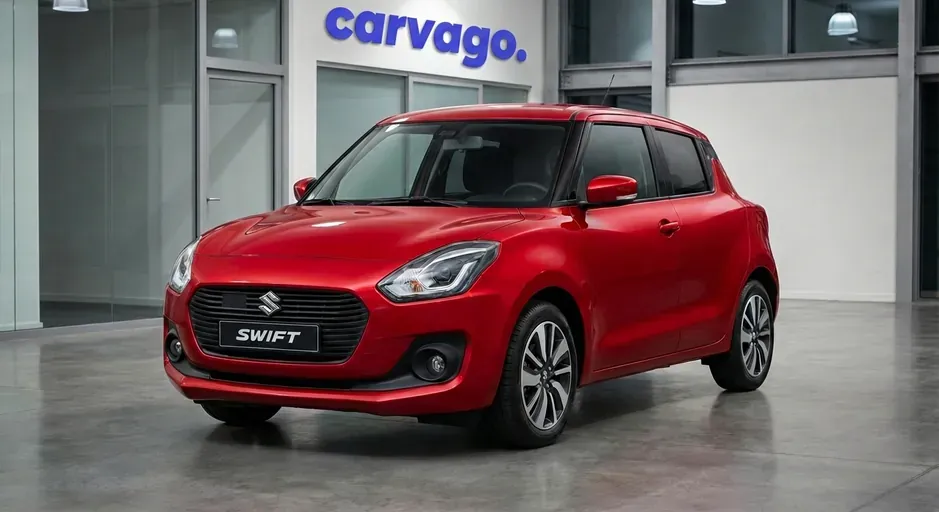
Suzuki Swift

Suzuki Swift

Introduction

The French Citroën C3 brings an unmistakable avant-garde design and a traditional emphasis on maximum passenger comfort to the small city car segment. Standing against it is the Japanese Suzuki Swift, offered in some regions as the Maruti Suzuki Swift and historically known by names such as Suzuki Cultus or Geo Metro, which instead bets on exceptionally low weight, agility, and driving fun. Let's take a detailed look at how these two different yet very popular representatives of the used car market stand in a direct comparison and which one will better suit your daily needs.

Comparison of External Dimensions

When looking at the external dimensions of both cars on the used car market – focusing on models roughly four years old, namely the third generation of the Citroën C3 (2017–2024) and the sixth generation of the Suzuki Swift (2017–2024) – we encounter different approaches from both manufacturers. While the French representative bets on a more robust build approaching the four-meter mark, its Japanese competitor maintains very compact, strictly urban proportions.

The Citroën C3 measures 3996 mm in length, which is a significant 156 mm more than the standard Suzuki Swift, which has a length of 3840 mm (3890 mm for the Swift Sport version). This difference manifests itself in practice in two ways. On the one hand, thanks to its shorter body, the Swift has a clear advantage when maneuvering and parallel parking in crowded city streets. On the other hand, the Citroën benefits from a longer wheelbase. This measures 2539 mm, while the Swift offers 2450 mm. These extra 89 mm in favor of the C3 mean a smoother ride over bumps and slightly more knee room for rear-seat passengers. Conversely, the Suzuki's shorter wheelbase ensures more playful and agile behavior in tight corners.

As for width, the difference is rather symbolic – at 1749 mm, the Citroën is a negligible 14 mm wider than the Swift (1735 mm), so the feeling of interior shoulder width is very similar. However, a surprise lies in the body height. Although the C3 appears to be a taller and more substantial car due to its rounded design and plastic trim, the Suzuki Swift is actually slightly taller at 1480 to 1505 mm than the French hatchback (1474 mm). In practice, this means that despite its smaller overall footprint, the Japanese car can offer a very decent amount of headroom, which taller passengers will particularly appreciate.

ParameterCitroën C3 HatchbackSuzuki Swift Hatchback
Width (mm)17491735
Length (mm)39963840 - 3890
Height (mm)14741480 - 1505
Wheelbase (mm)25392450

Trunk Volume

When choosing a compact used car, such as a roughly four-year-old Citroën C3 (3rd generation) or Suzuki Swift (6th generation), trunk capacity often plays a surprisingly important role. Although these are typical city cars, for many buyers they represent the only family vehicle, where everyday practicality is key. The ability to accommodate not only regular groceries but also sports equipment or weekend luggage can be the deciding factor. And it is in this discipline that both models differ quite significantly in their approaches to interior packaging.

The French Citroën C3 bets on a more robust build and offers a very decent 300 liters in its basic configuration for its class. This represents space for a few extra suitcases, and the volume is quite sufficient for weekend shopping or a longer holiday for two. In contrast, the Suzuki Swift is more oriented towards overall more compact dimensions and agile driving, which is reflected in a smaller basic trunk volume of 265 liters. In practice, the 35-liter difference means that the Citroën can swallow roughly one more medium sports bag in its basic setup. However, an interesting twist occurs after folding down the rear seatbacks. While the Citroën C3 can offer a maximum usable space of 922 liters, the Suzuki Swift, thanks to the clever efficiency of its interior layout, surprisingly grows to a total of 947 liters.

These differences on paper have real practical impacts. The Citroën C3 scores with a slightly deeper trunk with a relatively regular shape, under the floor of which many used cars also hide a full-size spare wheel, which is a rarity in modern cars. A slight trade-off, however, is a slightly higher loading sill and an impractical step that is created after folding down the backrests. While the Suzuki Swift carries a bit less for everyday shopping, it scores with better usable space for larger loads after folding the seats. On the used car market, you will commonly come across versions of the Swift with mild-hybrid technology (SHVS) or AllGrip all-wheel drive; while additional mechanics and batteries take away centimeters in some cars, official standardized values for standard mild-hybrid hatchbacks remain at identical figures, which testifies to the excellent packaging of the Japanese car.

ParameterCitroën C3 HatchbackSuzuki Swift Hatchback
Base volume (liters)300 l265 l
Max volume with seats folded down (liters)922 l947 l

Trunk Capacity: Basic vs. Maximum Volume 🧳

The Citroën C3 is a better choice for those who need to regularly transport larger groceries and luggage without folding the seats, while the Suzuki Swift will be appreciated by drivers looking for an agile car with surprisingly large hauling potential after folding down the second row. Both cars easily satisfy the daily demands of urban and suburban traffic.

Discover the true condition of the car thanks to an independent inspection

Order CarAudit™

Trailer Weights

Towing capacity in small city hatchbacks is often an overlooked parameter, but if you plan to transport bulkier loads, move small pieces of furniture, or carry e-bikes, these values play a crucial role for buyers. When comparing roughly four-year-old used cars on the market – specifically the sixth-generation Suzuki Swift and the third-generation Citroën C3 – we encounter surprisingly vast differences in total towing capacity, which clearly define the practical limits of both vehicles.

While the Suzuki Swift acts as an inconspicuous workhorse, the Citroën C3 is much more reserved when it comes to towing. Across almost all available versions of the Japanese Swift – including the popular 1.2 Dualjet engine with mild-hybrid technology or the more powerful one-liter Boosterjet – it maintains a standard and maximum braked trailer weight at a generous 1000 kg. Conversely, the third-generation Citroën C3 offers a very modest braked trailer limit of just 450 kg for its standard petrol engines (for example, the 1.2 PureTech version with 61 kW). The C3 fares slightly better with more powerful engines, such as the 1.5 BlueHDi diesel or the turbocharged 1.2 PureTech 110, where the capacity rises to a maximum of 600 kg. As for unbraked trailers, both cars oscillate within similar boundaries, usually around 400 kg for the Swift and 450 kg for the Citroën.

In practice, these differences mean that the Suzuki Swift offers much greater utility. Its stable towing capacity provides a safe margin for a few extra suitcases loaded into a larger trailer, making the car sufficient for weekend shopping as well as longer holidays with camping equipment. In contrast, the Citroën C3, with its very tight limits, can essentially only handle light hauling of leaves and branches from the garden, or reliably serve for mounting a bicycle rack.

For buyers, trailer weight thus represents an unexpected but pivotal decision-making factor. If you occasionally require your car to carry a heavier load and stand in for a vehicle from a class above, the Suzuki Swift is the clear favorite thanks to its uncompromising towing capacity. The Citroën C3, on the other hand, profiles itself as a car intended primarily for solo use and city driving, where tow bars and fully loaded trailers do not play a significant role.

Model and motorizationBraked weight of trailer (kg)Unbraked weight of trailer (kg)
Citroën C3 1.2 PureTech 83 (61 kW)450450
Citroën C3 1.5 BlueHDi 100 (75 kW)600450
Suzuki Swift 1.2 Dualjet Hybrid (61 kW)1000400
Suzuki Swift 1.0 Boosterjet (82 kW)1000400

Overview of Most Common Motorizations

When comparing the engines of roughly four-year-old used Citroën C3 and Suzuki Swift models, we encounter two completely different technical philosophies that fundamentally influence fuel consumption, driving dynamics, and overall operating costs. While the French representative sticks to traditional combustion solutions, offering popular petrol three-cylinders (in both naturally aspirated and turbocharged versions) and even a full-fledged diesel engine, its Japanese competitor fully transitioned to fuel-efficient petrol mild-hybrids for the sixth generation during that period (from 2020). For a used car buyer, this means that the Suzuki offers phenomenal efficiency in the city thanks to the car's very low weight and assistance from the electric motor. In contrast, the Citroën bets on the higher torque of turbocharged engines, the option of a reliable classic automatic transmission, and even offers a diesel, which is a true rarity in the small city and country road car category today.

Citroën C3 Engines

The third generation of the Citroën C3 (available as new until 2024) covers a wide range of drivers with its engine portfolio. The base is the proven naturally aspirated 1.2 PureTech 83 three-cylinder with 61 kW, which is mechanically simple and perfectly adequate for city commutes. If you plan on more frequent trips outside the city, the turbocharged 1.2 PureTech 110 (81 kW) version makes significantly more sense. This engine not only offers a great 205 Nm of torque but was also the only one in the range to allow the choice of a classic six-speed automatic transmission with a torque converter (EAT6). A specific feature of the C3 is the presence of the 1.5 BlueHDi 100 four-cylinder turbodiesel, which is often sought after by high-mileage drivers for its fuel consumption, frequently well below 5 litres per 100 kilometres.

Engine TypeFuelPower (kW)Torque (Nm)Transmission
1.2 PureTech 83Petrol611185MT
1.2 PureTech 110Petrol812056MT / 6AT
1.5 BlueHDi 100Diesel752506MT

Suzuki Swift Engines

In the market for four-year-old cars, you will find an exclusively electrified range for the sixth-generation Suzuki Swift after the facelift. Older conventional units (such as the 1.0 Boosterjet) were phased out. The dominant power unit is the naturally aspirated 1.2 Dualjet Hybrid (61 kW) four-cylinder using a twelve-volt mild-hybrid system (SHVS). Although its figures on paper don't look aggressive, in a car weighing only around 900 kilograms, its response is very agile, and real-world fuel consumption commonly falls below the 5 l/100 km mark. A significant advantage for this small hatchback is the optionally available AllGrip all-wheel drive, which is almost unparalleled in this segment. One also cannot overlook the highly sought-after Swift Sport version with the 1.4 Boosterjet Hybrid (95 kW) turbo engine, which offers an above-average 230 Nm and provides a great sporty experience thanks to its lightweight construction.

Engine TypeFuelPower (kW)Torque (Nm)Transmission
1.2 Dualjet HybridPetrol (MHEV)611075MT / CVT
1.2 Dualjet Hybrid AllGripPetrol (MHEV)611075MT
1.4 Boosterjet HybridPetrol (MHEV)952306MT

Strengths and Weaknesses

The strength of the Citroën C3 is the existence of a comfortable classic automatic and a rare, very efficient diesel engine. The turbocharged PureTech 110 scores with a generous reserve of torque; on the other hand, the base PureTech 83 is truly tied primarily to the city by its performance. The advantage of Suzuki's engines is the long-term excellent reliability of the naturally aspirated four-cylinder concept, extreme efficiency ensured by low weight, and the presence of the fun Sport model. The AllGrip all-wheel-drive system is a huge benefit for customers living in areas with poor grip conditions. A weakness may be the absence of a diesel unit for long-distance highway drivers and the fact that the Swift relies exclusively on a smooth, yet feel-specific CVT for automation.

For city and suburban drivers looking for the lowest possible fuel consumption and agility, the mild-hybrid Suzuki Swift will be the optimal choice. However, buyers requiring the flexibility of a turbocharger, a traditional worry-free automatic, or looking for economical miles for long distances will clearly find a better solution in the Citroën C3.

Electrification vs. Classic ⚡

While the Swift excels with fantastic lightness and efficient petrol mild-hybrids for the city, the Citroën C3 holds trumps in the form of a comfortable automatic, turbocharged engines, and an unexpected diesel alternative.

Choosing the right engine is absolutely crucial for long-term satisfaction with a used car, as it fundamentally affects not only daily dynamics and real-world fuel consumption but, above all, mechanical reliability and future service costs. While for roughly four-year-old used cars of the generations studied (the third generation of the Citroën C3 and the sixth generation of the Suzuki Swift, both available until 2024), the French automaker relies exclusively on characterful and high-revving three-cylinder engines, Japan's Suzuki still offers increasingly rare and mechanically exceptionally durable naturally aspirated four-cylinder engines supported by efficient mild-hybrid technology in this class.

For the Citroën C3, we recommend: 1.2 PureTech 110 (81 kW)

This turbocharged petrol three-cylinder represents by far the best compromise in the third generation's lineup (produced until 2024) between daily practicality, smooth dynamics, and operating efficiency. Compared to the weaker naturally aspirated version, it offers an excellent torque curve (205 Nm from as low as 1,500 rpm), thanks to which the car doesn't lose breath even during motorway journeys or when fully loaded. Real-world fuel consumption easily stays around 5.5 to 6 litres per 100 km with sensible driving.

The main mechanical risk of this engine is the timing belt immersed in an oil bath. During frequent and short city trips, the engine does not have time to warm up fully, unburnt fuel penetrates the oil, causing faster degradation and subsequent crumbling of the belt material. The loose pieces can then clog the oil pump pickup screen. However, these problems can be successfully prevented: shorten the oil change interval to a maximum of 10,000 km or 1 year and visually check the condition of the belt at every change – an experienced mechanic or even an informed layman can check it simply by looking through the oil filler neck. This engine is an ideal choice for versatile drivers who want to use the car not only for shorter trips but also appreciate a power reserve for weekend outings or commuting on faster roads.

For the Suzuki Swift, we recommend: 1.2 Dualjet Hybrid (61 kW)

Under the bonnet of the sixth generation (available until spring 2024), you will hardly find a more sensible choice than the 1.2 Dualjet naturally aspirated four-cylinder with an integrated mild-hybrid system (SHVS). From the perspective of long-term reliability, it is an absolute gem. You won't find a sensitive turbocharger or complex timing gear here. A small starter-generator helps the internal combustion engine fill in the gaps when pulling away from low revs and contributes significantly to fascinating fuel efficiency – real average consumption for this engine is typically below 5 litres per 100 km, even in the city.

The engine's main "weakness" does not stem from technology but from its design nature – natural aspiration means the engine lacks a punchy pull at low and medium revs. If you need to overtake safely on a country road or merge into a faster lane on the motorway, you must not be afraid to downshift even by two gears and rev the engine. That is exactly where it comes to life. In terms of faults, it is almost bulletproof technology, where it is enough to follow regular annual inspections and change the oil. This engine is the perfect partner for drivers moving mainly in urban and suburban environments who prefer maximum reliability, longevity, and the lowest possible operating costs over motorway dynamics.
Real Fuel Consumption

Real-world fuel consumption in everyday operation

Official manufacturer figures often differ significantly from reality, which is influenced by driving style, route profile, seasonal effects, and the overall load of the vehicle. To get the most accurate picture, it is ideal to look at hard data from real users. In our evaluation, we focused on cars approximately four years old (models produced around 2020–2022), which are among the most sought-after on the used car market – in this case, the third-generation Citroën C3 and the sixth-generation Suzuki Swift.

Data source: Spritmonitor.de and

Model and engineAverage consumption (l/100 km)
Citroën C3 (3rd generation)
Citroën C3 1.5 BlueHDi 100 (75 kW)4.2
Citroën C3 1.2 PureTech 83 (61 kW)5.4
Citroën C3 1.2 PureTech 110 (81 kW)5.6
Suzuki Swift (6th generation)
Suzuki Swift 1.2 Dualjet Hybrid (61 kW)5.0
Suzuki Swift 1.0 Boosterjet (82 kW)5.1
Suzuki Swift Sport 1.4 Boosterjet Hybrid (95 kW)5.6

An analysis of real-world values shows fairly clear trends for both engineering schools. The sixth-generation Suzuki Swift consistently scores points thanks to its featherweight build and excellently tuned mild-hybrid system. The base 1.2 Dualjet four-cylinder can maintain a consumption of around five liters in normal operation, and interestingly, the more powerful 1.0 Boosterjet three-cylinder does not increase fuel appetite dramatically. In contrast, the PureTech three-cylinder gasoline units in the Citroën C3 demand a slightly higher fuel allowance, partly due to the vehicle's higher weight and design. However, it may come as a surprise that the more powerful turbocharged 81 kW variant does not mean a significant worsening of consumption compared to the naturally aspirated base. A completely separate chapter is the diesel Citroën C3, which even in reality approaches an exceptionally low value of 4.2 liters, clearly showing that diesel engines still have the upper hand when it comes to maximum efficiency on longer trips.

For typical buyers of these vehicles, there are fairly clear recommendations. If you are looking for an agile car for daily maneuvering through the urban jungle and short commutes within suburban areas, the gasoline Suzuki Swift with mild-hybrid drive will be a more financially economical and efficient choice. For frugal drivers who, on the other hand, swallow dozens of highway kilometers or commute longer distances between cities, the diesel Citroën C3 can make a lot of sense. It will not only drive costs down to the bottom but, compared to its Japanese rival, it also offers a softer chassis tuning that you will appreciate on long journeys.

In conclusion, both cars are among the more frugal in their segment and certainly won't break the bank at the gas station. Fuel consumption should therefore not be the main and only deciding factor here, but rather a confirmation of which model better fits your daily lifestyle and the nature of your planned trips.

Price Range and Used Car Offerings

Price Comparison on the Used Car Market

When looking for roughly four-year-old cars (production years around 2021 and 2022), we most often encounter facelifted versions of both models on the used car market. In both cases, these are popular representatives of B-segment city cars, whose approach to pricing and depreciation differs slightly.

Price Range and Value Retention

While the Citroën C3 (3rd generation after facelift) bets on maximum affordability and, thanks to a faster initial price drop, represents an exceptionally attractive choice for used car buyers, the Suzuki Swift holds its value slightly better in the long run. The reason is not only the renowned mechanical durability of this Japanese model but also the fact that since 2020, the Swift has been almost exclusively equipped with standard mild-hybrid technology, which naturally increases its residual value on the secondary market.

Approximate Prices (cars approx. 4 years old)

Model (2021–2022 models)Price from (base trim / higher mileage)Price up to (rich trim / low mileage)
Citroën C3€9,000€13,000
Suzuki Swift€10,000€14,000

Looking more closely at the listings, several interesting market trends can be observed:

  • More Affordable Frenchman: Most advertised Citroën C3 cars feature the proven naturally aspirated 1.2 PureTech three-cylinder engine with a manual transmission, which keeps purchase prices very low. However, if you are looking for a well-maintained unit with the more attractive Shine trim (offering, for example, very comfortable Advanced Comfort seats or stylish two-tone paint), you will be moving towards the upper limit of the table.
  • Technologically Equipped Japanese Car: In Suzuki Swift models from these years, you will almost without exception come across the 1.2 DualJet Mild-Hybrid engine. Its slightly higher average market price is well compensated by the presence of an efficient electrified powertrain and traditionally richer basic safety equipment.
  • Optional Features and Equipment: While for used Citroën C3 cars, the price is mainly driven up by the desirable EAT6 automatic transmission, Swift buyers often pay extra for the all-wheel drive (AllGrip), which is a rarity in this class. Well-maintained 4x4 models easily hold their price safely above the €12,000 mark even after years.
  • Sporty Alternative: The sharp Suzuki Swift Sport hatchback with a more powerful turbocharged 1.4 BoosterJet four-cylinder engine forms a completely separate category on the used car market, highly sought after by enthusiasts. For a four-year-old Sport model, buyers usually need to prepare an amount reliably exceeding €16,000.

Affordability versus Residual Value 💰

The Citroën C3 is an excellent choice on the used car market for those looking for the most affordable and stylish city car, while the slightly more expensive Suzuki Swift scores with lower depreciation and a unique 4x4 drive offering.

Safety and Euro NCAP Rating

Although in many of today's comparisons we can state right at the beginning that both cars received a five-star Euro NCAP rating, for these more affordable representatives of the small car class from 2017, the situation is different, and the importance of context and the year of testing stands out all the more. The methodology and testing protocols of the independent Euro NCAP organization are constantly evolving and becoming stricter. In practice, this means that percentage scores from different years cannot be directly compared. While today's tests include advanced intersection simulations or cyclist detection and reversing, the protocols valid for these models only placed the first major emphasis on basic autonomous emergency braking. However, both roughly four-year-old used cars come from generations that underwent testing in the same year (2017), which fortunately allows for a very accurate mutual comparison.

The Citroën C3 took away a solid four-star rating from the 2017 crash tests. The car demonstrated a very good level of passive safety, as clearly evidenced by the 88% score for adult occupant protection and 83% for child protection. The assessors praised the overall rigidity of the body, but the car lost points in the category of vulnerable road user protection (59%) and safety assist systems (58%). The safety equipment in the standard of that time included rather basic elements, such as lane departure warning or traffic sign recognition. Due to the age of the car, the validity of this certificate formally expired in January 2024.

The Suzuki Swift underwent testing according to the same methodology in standard equipment with a result of only three stars. While the car achieved a decent 83% in adult protection and 75% for children, it was significantly penalized for insufficient basic active safety. This was reflected in a very low score of 25% in the safety assist category. Compared to its French rival, however, the Swift performed better in pedestrian protection (69%), thanks to a more softly designed front bumper. A crucial piece of information for buyers is that if the first owner checked the optional "Radar Brake Support" safety package with autonomous emergency braking (AEB) in the price list, the Swift's safety score immediately jumped to four stars.

ParameterCitroën C3Suzuki Swift
Year of testing20172017
Adult occupant protection88 %83 %
Child protection83 %75 %
Vulnerable road user protection59 %69 %
Safety assist systems58 %25 %

From the perspective of today's strict safety standards, both used cars represent rather basic protection, and the certification of both vehicles has already officially expired. In a direct comparison of the base versions, however, the Citroën C3 offers a slightly more modern and comprehensive safety package – it protects the occupants inside better and has a wider range of safety electronics as standard. The Suzuki Swift becomes an equal competitor the moment you reach for a better-equipped unit with the aforementioned optional AEB package on the used car market.

A more secure French base 🛡️

The Citroën C3 offers better passive protection for both adults and children in its standard equipment, while for the Suzuki Swift, it makes sense from a safety perspective to look for specifications with optional radar braking on the used car market.

Comparison of Interesting Equipment Features

In addition to standard equipment, each of the models offers several unique features that can be decisive for the customer and clearly prove that even small city cars can offer much more than just basic mobility. Both cars have their own, completely different approach to added value – while one bets on avant-garde design and maximum comfort, the other plays on the theme of lightness, efficiency, and driver engagement.

Citroën C3: Emphasis on absolute comfort and distinctive style

  • Comfort first (Advanced Comfort): In this generation, Citroën significantly distinguishes itself from the stiff and more sportily tuned competition. Higher trims feature special Advanced Comfort seats, which use a reinforced layer of memory foam. Combined with a softly tuned chassis, the C3 offers a level of bump filtration reminiscent of cars from a class above.
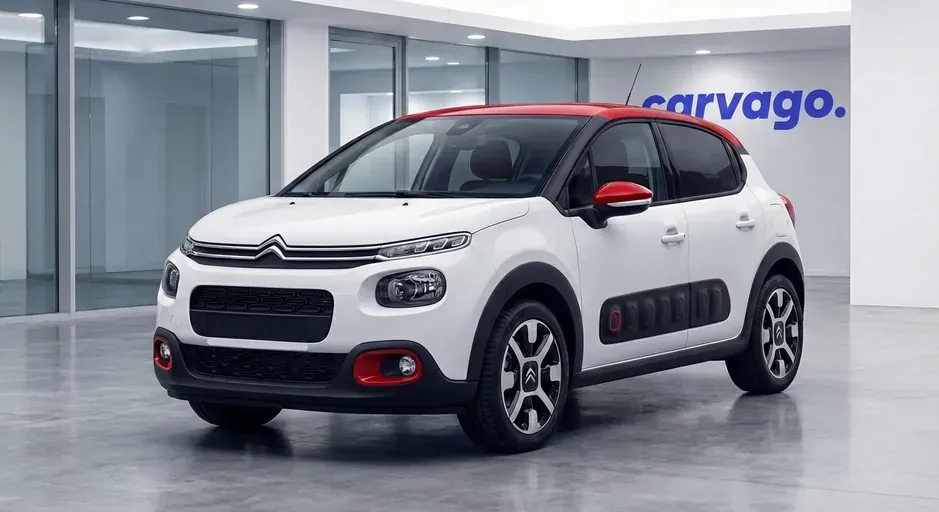
  • Smart body protection (Airbump): An iconic and very practical design element is the Airbump air pockets on the side doors. This functional detail protects the bodywork from typical city parking lot scrapes while giving the car an unmistakable look reminiscent of a small SUV.
  • Technological innovation (ConnectedCAM): Citroën is one of the few manufacturers to offer an optional integrated dashcam hidden behind the interior rearview mirror. It allows you to take photos or videos of your travels with a single press and share them directly via a mobile app. In the event of an accident, the recording is also automatically saved, which is a huge benefit for the insurance company.
  • Engines and classic automatic: The range of engines for four-year-old used cars primarily revolves around PureTech three-cylinder petrol engines and economical BlueHDi diesels. A big advantage for daily city traffic is the availability of a traditional six-speed automatic transmission with a hydrodynamic torque converter (EAT6), which shifts very smoothly and seamlessly.
  • Wide personalization: The customization options for the C3 are huge. On the used car market, you will come across dozens of color combinations thanks to differently painted roofs, mirrors, and fog light surrounds.

Suzuki Swift: Light athletics and unprecedented all-wheel drive

  • Unique drive (ALLGRIP and Mild-Hybrid): The Swift offers something completely exceptional on the four-year-old used car market – the option of four-wheel drive (ALLGRIP Auto). In the small city hatchback segment, this is an absolute rarity, making it an ideal choice for mountainous areas. Furthermore, a widely deployed efficient mild-hybrid system (SHVS) is standard on newer models of this generation, reducing consumption and assisting with acceleration.
  • Platform and chassis (Heartect): The basis of the excellent driving characteristics is the modern Heartect platform. Thanks to it, the car's weight stays well below the one-ton mark (around 900 kg), even with hybrid technology. This is positively reflected in cornering agility, playful handling, and minimal wear on brakes and tires.
  • Sporting genes (Swift Sport): For car enthusiasts, Suzuki offers a separate Sport version with a potent 1.4 Boosterjet four-cylinder engine. It boasts not only a more aggressive design and dual exhaust tips but, above all, a fantastic power-to-weight ratio, making it one of the most affordable and fun "hot-hatches" on the market.
  • Asistance systems and safety: The Swift surprises with rich electronic equipment even in lower trim levels. The Dual Sensor Brake Support system (combining a camera and laser) reliably monitors the area in front of the car. Very common features even in more affordable used cars are adaptive cruise control, blind-spot monitoring, or lane-keeping assist.
  • Japanese ergonomics: The interior bets on strict functionality and classic physical buttons for controlling the air conditioning and basic functions. Unlike the Citroën, which concentrates controls into a touchscreen, Suzuki offers a more traditional and more intuitive driving environment while on the move.

Key Advantages and Disadvantages

Citroën C3

Pros

Above-average ride comfort thanks to a softer chassis and special Advanced Comfort seats

Original and easily recognizable design with Airbump protective side panels

Economical PureTech petrol engines with low operating costs

Wide range of exterior personalization options, including two-tone body paint

Larger luggage compartment volume (300 liters) in direct comparison with the Swift

Cons

More pronounced body roll in corners and generally more detached steering response

Tedious control of air conditioning and other functions exclusively via a slower touchscreen

More cramped legroom and headroom in the rear seats for taller passengers

The Citroën C3 is an ideal choice for drivers who prioritize an exceptionally comfortable ride and unmistakable French style over sporty performance. It is perfectly suited for city traffic, where its smooth suspension easily filters out bumps, and will appeal to those looking for a stylish, economical, and easy-to-maneuver car for daily commuting.

Suzuki Swift

Pros

Excellent driving characteristics and fun handling thanks to an exceptionally low curb weight

Standard mild-hybrid technology ensuring excellent fuel consumption

A unique option in the small car segment for optional all-wheel drive (AllGrip system)

Renowned reliability of naturally aspirated engines and low service costs

Intuitive driver's cockpit ergonomics with traditional physical air conditioning controls

Cons

Below-average luggage compartment volume, offering only 265 liters as standard

Higher proportion of hard plastics in the interior and generally simpler material quality in the cabin

Poorer sound insulation, resulting in increased aerodynamic noise at highway speeds

Narrower range of individualization options and assistance systems compared to the competition

The Suzuki Swift will be especially appreciated by practical-minded and enthusiastic drivers for whom agile handling, long-term reliability, and operational efficiency are priorities. Thanks to its lightness and maneuverability, it is a perfect compact car for the city, yet thanks to its well-tuned chassis, it can offer a very fun drive even on winding country roads.

Common Problems and Owner Complaints

Based on our own inspections, long-term user experience, service bulletins, and breakdown statistics, we have compiled an overview of the most common problems that used car buyers should watch out for. A crucial discovery of hidden defects can be brought about by an independent comprehensive car audit before the actual purchase.

The third generation of the Citroën C3 (approximately four-year-old post-facelift models) is stylish and comfortable, but it hides several notorious weaknesses, primarily concerning the powertrains and onboard electronics.

  • 1.2 PureTech engine: The most significant and well-known problem with these petrol three-cylinder engines is the "wet" timing belt running in oil. Over time, particles break off from it and clog the oil pump pickup screen. This can lead to a loss of oil pressure and fatal engine damage. Shortening oil change intervals (ideally to 10,000 km / 1 year) and regular inspection of the belt's condition are absolute necessities.
  • 1.5 BlueHDi engines: In diesel versions, problems with the urea injection system (AdBlue) appear quite frequently. Most often, the pump fails, but unfortunately, it is integrated into the tank itself, requiring an expensive replacement of the entire module.
  • Electronics and infotainment: Many owners complain about the slow response of the central touchscreen, which also controls the air conditioning. Occasional freezing, random restarts, or loss of the rear parking camera image are common.
  • Chassis and wear: The front axle of this French representative is somewhat softer and prone to faster wear. Play in the front stabilizer links or early oil leaks from the shock absorbers occur more frequently. Therefore, a professional technical inspection of the car is strongly recommended before purchase.

Citroën C3: Watch out for the service history of petrol engines

The greatest risk with a used C3 is clearly the degrading timing belt in the otherwise popular 1.2 PureTech engines. A flawless, documented service history with shortened oil change intervals is an absolute prerequisite for a safe purchase of this car.

The Suzuki Swift (in its sixth generation produced until 2024) benefits from traditional Japanese engineering simplicity and generally ranks among above-average reliable used cars, though it is not entirely free of minor operational flaws.

  • Bodywork and paint: Probably the most frequently mentioned weakness of modern Suzukis is the eco-friendly and very thin paint, which is extremely susceptible to damage from stone chips (especially on the bonnet and bumper). For cars from mountainous regions, surface corrosion can also form more quickly on unprotected chassis parts.
  • Interior and build quality: The use of harder and thinner plastics in the interior means that various noises, squeaks, and rattles may be heard in used cars with higher mileage. These sounds are particularly evident when driving on rough asphalt or cobblestones.
  • Infotainment and connectivity: The onboard multimedia system occasionally suffers from poor stability. Owners report occasional freezing, connection drops via Apple CarPlay or Android Auto, or slower system loading immediately after starting the engine.
  • Gearbox: The mechanics and engines (including the reliable SHVS mild-hybrid systems) are exceptionally durable. However, with manual transmissions, some drivers complain about a stiffer gear lever action and more difficult engagement of first gear and reverse, especially in cold weather.

Suzuki Swift: A reliable workhorse with delicate paint

The Swift's engines and technology are renowned for their reliability; the main trade-off for its low weight remains the thinner paint and a cheaper-feeling interior that occasionally creaks. In terms of overall mechanical durability, however, it is one of the safest choices in the world of used cars.

Tips for Buying a Used Car

When buying a used car, a thorough inspection is key, and we always recommend not underestimating the preparation. Both cars have their specifics and weak points that need to be watched out for. Therefore, before making a final decision, the best step is always a detailed physical inspection of the used car, which will reveal any hidden defects. Here are some specific points to focus on for these two models:

When choosing a Citroën C3:

  • Condition of the timing belt (1.2 PureTech engines): These petrol engines use a "wet belt" (submerged in oil), which can crumble if maintenance is neglected and clog the oil pump pickup strainer. Open the oil filler cap and visually check the condition of the belt (look for cracks or fraying). Insist on proof of regular, ideally more frequent, oil changes.
  • Infotainment and air conditioning functionality: Most of the car's functions, including ventilation controls, are operated via the central touchscreen in modern C3 models. During the test drive, test the system's response speed and try changing the temperature. If the system freezes, you lose the ability to control the heating, which could necessitate an expensive software reflash or unit replacement.
  • Noises from the front axle: The Citroën chassis is tuned for high comfort, but it suffers on broken roads. During the test drive, drive over several bumps or speed bumps and listen for any dull knocking sounds. Stabilizer links or front control arm bushings often wear out early.
  • AdBlue system (for 1.5 BlueHDi diesel engines): If you are choosing a diesel version, carefully check if there are any warnings on the dashboard regarding the emission system or engine diagnostics. These engines occasionally suffer from AdBlue pump failure or urea crystallization, a defect that requires a relatively expensive replacement of the entire tank.

When choosing a Suzuki Swift:

  • Paint condition and surface corrosion: The Swift is famous for its very thin paint layer, which is prone to stone chips. Thoroughly inspect the front hood and bumper for chips. At the same time, look at the chassis and wheel arches – the lack of quality anti-corrosion protection on older units can mean the early onset of surface corrosion. In this regard, a professional technical inspection of the car performed on a lift is invaluable.
  • Manual gearbox operation: In used Swifts, there is sometimes stiffness when shifting into second gear or reverse. During the test drive, try a quick downshift from third to second and listen for any synchro noise, or if there is a humming sound coming from the gearbox while driving (which would indicate worn bearings).
  • Mild-hybrid system (SHVS): Most models from recent years have a small Li-ion battery under the seat and an integrated starter-generator (ISG). During the drive, observe whether the system smoothly and quietly stops and starts the engine (Start-Stop function) and whether the trip computer shows energy recuperation during braking. Ignoring hybrid error messages can lead to the need for expensive repairs.
  • Interior plastics and rattling: Due to the strong emphasis on low vehicle weight, Suzuki uses exclusively harder plastics in the cabin. Take a test route with a poor surface (e.g., cobblestones) and listen for noises from the dashboard or door panels. Although it doesn't affect overall reliability, excessive rattling can help you discover how roughly the car has been treated.
  • Wear on seat bolsters: Swift seats have relatively pronounced side bolsters for their class. With frequent entry and exit in the city, these foam bolsters quickly wear down or break. Check the condition of the driver's seat – if it is saggy or torn on a car with supposedly very low mileage, you should be wary.

FAQ: Most Frequently Asked Questions

Citroën C3 offers a more voluminous trunk with a capacity of 300 liters, which is a solid value for its class. Suzuki Swift has a smaller trunk with a volume of 265 liters due to its more compact dimensions. For transporting larger loads or family shopping, the French representative is therefore more practical.

The Citroën C3 focuses primarily on maximum driving comfort thanks to a softer chassis and specially shaped Advanced Comfort seats. The Suzuki Swift, on the other hand, is noticeably lighter, more agile, and offers sportier steering response for a more spirited drive. It depends on whether you prefer a calm, smooth ride or rather dynamic cornering.

The Japanese Suzuki Swift scores with very reliable naturally aspirated engines that have a long lifespan and minimal tendency for breakdowns. For a used Citroën C3 with the 1.2 PureTech gasoline engine, it is necessary to carefully monitor regular timing belt replacements, as the belt is immersed in oil. In terms of long-term trouble-free operation and lower service costs, Suzuki is thus a slightly safer choice.

Both cars are among the very economical vehicles, but the Suzuki Swift often achieves better results thanks to its exceptionally low weight and standard mild-hybrid technology. In real city traffic, it can be driven with consumption easily under 5 liters per 100 km. The Citroën C3's gasoline versions have only slightly higher consumption, but unlike its competitor, it also offers an economical diesel engine for more frequent long-distance trips.

In this category of small city cars, the Suzuki Swift is a complete rarity because it optionally offers a reliable all-wheel-drive system known as AllGrip. The Citroën C3 is sold on the used car market exclusively with front-wheel drive. If you live in mountainous areas or often drive on snowy roads, the Japanese model represents the clear choice.

Conclusion: Which Model to Choose?

Our Verdict

The French Citroën C3 represents an ideal choice for drivers looking for a stylish and exceptionally comfortable car with a larger basic trunk, who appreciate the option of a classic automatic transmission or an economical diesel for longer journeys. In contrast, the Japanese Suzuki Swift clearly excels with its featherweight, excellent mechanical reliability of naturally aspirated mild-hybrids, agile driving characteristics, and all-wheel drive, which is quite rare in this class. While Citroën will delight you with its smooth ride and bold design, bringing everyday comfort on broken city roads, the Swift will serve as a maximally efficient and financially undemanding partner that also offers its owner an unexpected dose of driving fun.

Find your ideal car

Sources: ADAC, e15.cz, lidovky.cz, hybrid.cz, elektromobil.cz, autoemotion.cz

This article was prepared using artificial intelligence tools. The section guarantor is Petr Dušek.

Related articles

Car battle

Suzuki Swift vs. Toyota Yaris: Complete comparison 2026

Detailed comparison of the Suzuki Swift and Toyota Yaris. Which city hatchback should you choose? Discover the differences in fuel consumption, equipment, and reliability. Read our verdict.

Apr 16, 2026

Car battle

Peugeot 208 vs. Renault Clio: Complete comparison 2026

Detailed comparison of Peugeot 208 vs Renault Clio. Find out which French hatchback has better equipment, fuel consumption, and reliability. Read our verdict!

Apr 8, 2026

Car battle

Hyundai i20 vs. Toyota Yaris: Complete comparison 2026

Detailed comparison of Hyundai i20 vs Toyota Yaris. Read our verdict and discover real-world data on fuel consumption, reliability, and equipment of these used cars.

Apr 18, 2026

We accept online card payments as well as wire transfers.

visa payment provider logovisa-electron payment provider logomastercard payment provider logomaestro payment provider logodiners-club payment provider logodiscover payment provider logo