Car battle
Kia Ceed vs. Mazda 3: Complete comparison 2026
Detailed comparison: Kia Ceed vs. Mazda 3. We compared the engines, equipment, and driving characteristics. Read our verdict and find out which hatchback to choose.
Apr 8, 2026
Articles
Car battle
Detailed comparison of the Kia Ceed (Cee'd) vs Peugeot 308. Find out which used hatchback offers better engines, equipment, and real-world reliability. Choose the right one for you!
April 20, 2026
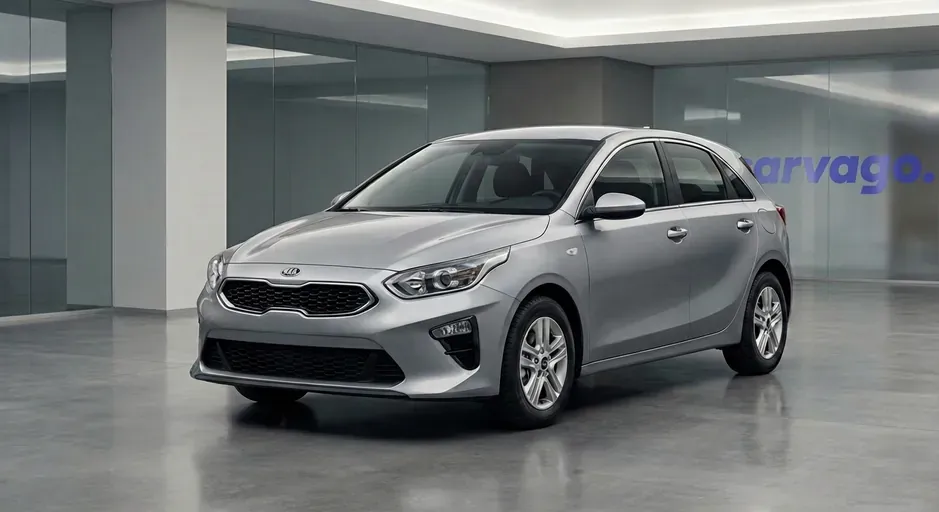
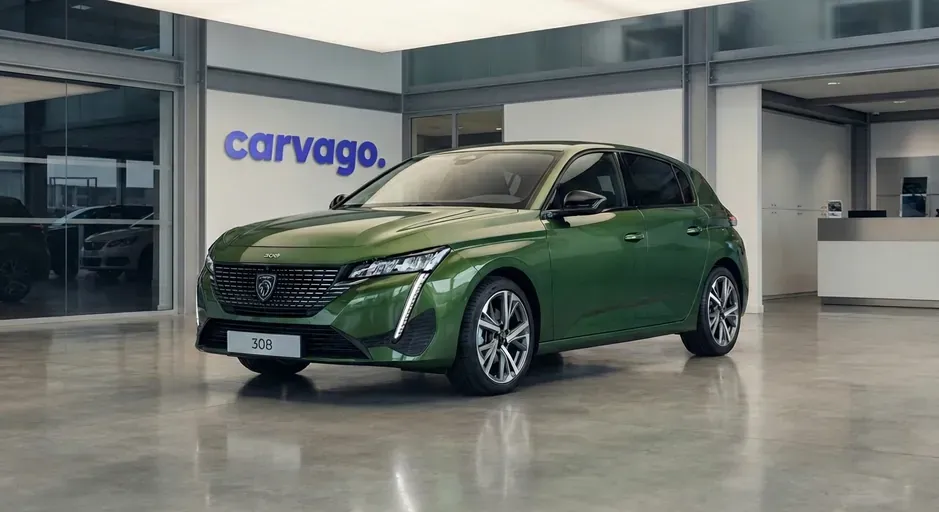
The South Korean Kia Ceed, which was known by the stylized name Kia cee'd until 2018, has earned a strong position in the European market thanks to its practicality, excellent reliability, and design tailored specifically to local drivers. Its challenger today, the French Peugeot 308, on the other hand, has long relied on an unmistakable elegant appearance, an innovative interior layout, and legendary driving comfort. In the following comparison, we will take a detailed look at how these two popular representatives of the compact class perform in a head-to-head battle and which of them represents the smarter choice for your daily travel.
When comparing used cars around four years old, we encounter an interesting generational shift in both models, which significantly impacts their overall exterior dimensions. While the Kia Ceed Hatchback (CD generation) maintains stable compact dimensions with a length between 4310 and 4325 mm, the Peugeot 308 underwent a generational change at the turn of 2021 and 2022. The newer third generation of the French model has stretched to 4367 mm, noticeably outgrowing the Kia in length. A similar situation exists with the popular estate body styles, where the Kia Ceed Sportswagon measures 4600 to 4605 mm, while the newer Peugeot 308 SW reaches a length of up to 4636 mm. For everyday use, this means the Kia is a slightly more agile choice for maneuvering in narrow city streets and parallel parking, while the Peugeot's longer body offers a bit more presence and mass, benefiting highway stability.
The Kia Ceed maintains a very versatile width of 1800 mm and a height of around 1442 to 1447 mm (up to 1465 mm for the estate version) across its entire current generation. In contrast, the Peugeot 308 (especially in its third generation) has widened significantly – with a width of 1852 mm, it is a substantial 52 mm wider, while also offering a slightly lower, more crouched silhouette (height dropped to 1438 mm). The wider stance gives the Peugeot a more aggressive and sporty look and a sense of more shoulder room, but it can be a significant disadvantage in older parking spaces or tight underground garages. Here, the more conventionally and narrowly styled Kia will undoubtedly make it easier for users to get out and open doors safely.
A key parameter for longitudinal cabin space is the wheelbase, which again reflects the different engineering approaches of the two carmakers. Kia Ceed played it safe and shares the same 2650 mm wheelbase across both body versions, achieving a balanced compromise between overall agility and interior space. Peugeot, on the other hand, differentiates its models in terms of chassis. While the Peugeot 308 Hatchback has a wheelbase of 2617 to 2675 mm, for the estate (SW) version, engineers extended the wheelbase to a generous 2732 mm. Thanks to the significantly extended wheelbase of the estate version, the French representative can offer a slightly smoother ride over bumps and theoretically more longitudinal knee room for rear passengers. If a smooth ride on long family holidays is your priority, the stretched chassis of the Peugeot 308 SW will work in your favor.
Note: Values reflect models available on the four-year-old used car market (includes the Kia Ceed CD generation and the transitional 2nd and 3rd generations of the Peugeot 308).
| Parameter | Kia Ceed Hatchback | Peugeot 308 Hatchback | Kia Ceed Estate | Peugeot 308 Estate |
|---|---|---|---|---|
| Length (mm) | 4310 - 4325 | 4253 - 4367 | 4600 - 4605 | 4585 - 4636 |
| Width (mm) | 1800 | 1804 - 1852 | 1800 | 1804 - 1852 |
| Height (mm) | 1442 - 1447 | 1438 - 1457 | 1460 - 1465 | 1438 - 1461 |
| Wheelbase (mm) | 2650 | 2617 - 2675 | 2650 | 2730 - 2732 |
When choosing a family or daily car on the used car market, trunk volume often plays a decisive role. Whether you're planning a weekend shopping trip, regularly transporting a stroller, or heading on a long summer vacation, every extra liter can mean a noticeable difference between comfortable packing and having to make compromises. In the compact segment, which includes the Kia Ceed and Peugeot 308, both models are very popular and practical choices. Furthermore, both manufacturers cleverly offer their cars (in the corresponding current generations roughly 4 years old) as both a traditional hatchback and a much more spacious estate, to cover the needs of the widest possible range of drivers.
In the case of standard five-door hatchbacks, the French representative has a slight edge. The Peugeot 308 Hatchback (in its 3rd generation from 2022 and newer) offers a trunk volume of 412 liters in its basic configuration, while the Kia Ceed Hatchback (CD generation) has 395 liters. This 17-liter difference in practice represents space for one smaller backpack or an extra shopping bag. After folding the rear seats, the total loading space in the Peugeot increases to 1,323 liters, again slightly surpassing the Kia with its 1,291 liters. Nevertheless, the trunk space of both hatchbacks is perfectly sufficient for weekend shopping and, thanks to regular shapes, is easily usable even for bulkier boxes.
However, if you require maximum transport capacity from the car, the estate body versions are absolutely essential. Here, on the contrary, the Kia Ceed Estate confidently takes the lead, boasting a basic volume of an excellent 625 liters compared to 608 liters for the Peugeot 308 Estate. After folding the rear backrests, the Kia offers an impressive 1,694 liters (compared to 1,634 liters for the Peugeot). This noticeable lead easily provides space for several extra suitcases and serves perfectly not only for longer vacations but also for transporting oversized items. However, it is very important to remember that both brands also offer economical plug-in hybrid powertrains, where trunk capacity is limited due to batteries. For example, in the Peugeot 308 plug-in hybrid hatchback, the basic volume drops to just 361 liters, while in the Kia Ceed Estate plug-in hybrid, the capacity is reduced from a generous 625 to a compromising 437 liters.
| Parameter | Kia Ceed Hatchback | Peugeot 308 Hatchback | Kia Ceed Estate | Peugeot 308 Estate |
|---|---|---|---|---|
| Basic volume (liters) | 395 | 412 | 625 | 608 |
| Max. volume with seats folded (liters) | 1291 | 1323 | 1694 | 1634 |
While the Peugeot 308 wins by a few liters in the hatchback version, for those looking for uncompromising space and practicality, the Kia estate is a much better choice.
Towing capacity often determines whether a car will serve only for weekend shopping and moving garden waste, or if it can confidently handle a summer family holiday with a full-sized caravan. If we focus on popular roughly four-year-old used cars on the market – specifically the Kia Ceed (CD generation) and the third-generation Peugeot 308 – the French representative offers slightly more robust parameters for more demanding users.
While both cars are similar in standard petrol versions, the maximum values diverge. The Peugeot 308, in its popular 1.5 BlueHDi diesel engine, allows for towing a braked trailer weighing 1500 to 1600 kg. The plug-in hybrid versions of the Peugeot are also very strong, managing 1450 to 1500 kg. In contrast, the Kia Ceed ends at exactly 1500 kg with its 1.6 CRDi diesel unit. In the widely available petrol variants, the Peugeot 308 with the 1.2 PureTech engine offers a limit of 1200 to 1300 kg, while the sought-after Kia Ceed with the 1.5 T-GDI petrol engine can tow between 1210 and 1410 kg. The weakest three-cylinder 1.0 T-GDI in the Kia can handle a braked trailer weighing 1000 to 1200 kg.
However, a major disappointment in the Kia Ceed model can be the more ecologically oriented basic mild-hybrid 1.0 T-GDI 48V engine. In this specific version, the maximum towing capacity for a braked trailer drops to a mere 700 to 710 kg, which significantly limits the car's capabilities.
The differences in these figures have a direct impact on everyday practice. A diesel or plug-in hybrid Peugeot is the ideal choice for trouble-free towing of a heavier caravan for a family holiday or transporting a larger boat. Standard internal combustion variants of the Kia Ceed, on the other hand, provide fully sufficient capacity for weekend trips to DIY stores, towing a full trailer when moving, or for common trailers for the cottage. The aforementioned basic mild-hybrid version of the Kia is essentially only sufficient for a small unbraked trailer with leaves or for installing a bike rack on the tow bar.
If connecting a heavy caravan or cargo trailer is a key criterion for you, the Peugeot 308 is the clear favorite in this discipline thanks to slightly higher limits for the diesel variants. While the Kia Ceed can easily handle the role of a universal family workhorse for everyday and occasional moving needs, when choosing a used car, you must carefully examine the engine and avoid the basic mild-hybrids in time, as they severely limit any towing ambitions.
| Model and engine | Braked trailer weight (kg) | Unbraked trailer weight (kg) |
|---|---|---|
| Kia Ceed 1.0 T-GDI | 1000 - 1200 | 600 |
| Kia Ceed 1.0 T-GDI 48V | 700 - 710 | 500 |
| Kia Ceed 1.5 T-GDI | 1210 - 1410 | 600 |
| Kia Ceed 1.6 CRDi | 1500 | 650 |
| Peugeot 308 1.2 PureTech 130 | 1200 - 1300 | 660 - 680 |
| Peugeot 308 1.5 BlueHDi 130 | 1500 - 1600 | 710 |
| Peugeot 308 1.6 Plug-In Hybrid | 1450 - 1500 | 710 - 750 |
The range of powertrains for both models clearly reflects two different approaches to modern motoring, which is very important for those interested in a roughly four-year-old used car. While the Kia Ceed still relies on a rich and traditional range of petrol and diesel engines (often enhanced with 48V mild-hybrid technology for lower consumption), the third-generation Peugeot 308 shows a massive shift towards plug-in hybrids and the perfect integration of comfortable automatic transmissions. While you will very often come across a manual gearbox or a DCT dual-clutch automatic in a used Kia, Peugeot in its latest generation has almost pushed the manual out of the used car market, and the vast majority of cars use the excellent EAT8 eight-speed torque-converter automatic.
Under the hood of the Kia Ceed (CD generation, relevant for cars from 2018 as well as facelifted versions around 2021 and 2022), you will find an excellently curated selection. A completely standard and very popular city engine is the turbocharged 1.0 T-GDI three-cylinder. The role of the exceptionally popular "golden mean" is played by the excellent 1.5 T-GDI four-cylinder with 118 kW, which offers a great balance between dynamics and low consumption. Driving enthusiasts will certainly appreciate the range-topping Ceed GT version with a powerful 1.6 T-GDI four-cylinder producing 150 kW. An interesting option is the economical 1.6 CRDi diesel engine. According to available market data, this unit, popular with high-mileage drivers, ceased production at the end of 2023, so you won't find it in nearly-new used cars and must look at older model years. An alternative for the family estate (Sportswagon) is the economical 1.6 GDI Plug-in Hybrid.
| Engine Type | Fuel | Power (kW) | Torque (Nm) | Transmission |
|---|---|---|---|---|
| 1.0 T-GDI | Petrol | 74 / 88 | 172 | 6MT / 7DCT |
| 1.5 T-GDI | Petrol | 118 | 253 | 6MT / 7DCT |
| 1.6 T-GDI (GT) | Petrol | 150 | 265 | 7DCT |
| 1.6 CRDi | Diesel | 85 / 100 | 280 / 320 | 6MT / 7DCT |
| 1.6 GDI PHEV | Plug-in Hybrid | 104 | 265 | 6DCT |
Peugeot 308 (3rd generation, available roughly since the beginning of 2022) offers a relatively strict but highly modern portfolio of power units. The base and most common choice on the nearly-new used car market is the 1.2 PureTech three-cylinder petrol engine with 96 kW, which impresses with decent flexibility. Long-distance travelers swear by the extremely economical 1.5 BlueHDi four-cylinder diesel with the same 96 kW output, but much stronger pull thanks to 300 Nm of torque. The French carmaker places the greatest emphasis in this generation on the powerful 1.6 Plug-In Hybrid variants. These provide the car with above-standard performance of 132 kW or even 165 kW and work in conjunction with a specially tuned e-EAT8 eight-speed automatic transmission. Newer model years (from 2024) have also added the all-electric e-308 and new mild-hybrids (1.2 Hybrid 136) to the range, but these make up only a fraction of the four-year-old used car market.
| Engine Type | Fuel | Power (kW) | Torque (Nm) | Transmission |
|---|---|---|---|---|
| 1.2 PureTech 130 | Petrol | 96 | 230 | 6MT / 8AT (EAT8) |
| 1.5 BlueHDi 130 | Diesel | 96 | 300 | 8AT (EAT8) |
| 1.6 Plug-In Hybrid 180 | Plug-in Hybrid | 132 | 360 | 8AT (e-EAT8) |
| 1.6 Plug-In Hybrid 225 | Plug-in Hybrid | 165 | 360 | 8AT (e-EAT8) |
Summary and Recommendation:
If you are a budget-conscious driver looking for simple petrol four-cylinders without the need to carry heavy batteries (or if you insist on a manual transmission), the Kia Ceed with the 1.5 T-GDI engine will make you very happy. Conversely, the Peugeot 308 targets comfort lovers thanks to the ubiquitous and very smooth EAT8 automatics and will thrill those interested in powerful plug-in hybrids who have the option to charge the battery at home and enjoy the strong dynamics of the 225-hp version with quiet, pure electric operation in the city. Motorway travelers will be well-served by both models in diesel versions, although for the Kia, you will have to look exclusively for model years up to 2023 in used car dealerships.
While Kia offers immense freedom in choosing proven internal combustion four-cylinders for everyday use on the used car market, the modern Peugeot 308 will tempt you with a premium-feeling combination of an eight-speed automatic and sophisticated, very powerful plug-in hybrids.
Choosing the right power unit is absolutely critical for your long-term satisfaction, which is why our recommendations are based on a combination of dynamics, real-world fuel consumption, owner feedback, and documented mechanical reliability. When comparing the offers for these two models, you will encounter two very different approaches. While Kia has long built its reputation on refined T-GDI series petrol four-cylinders and is moving away from diesel engines in passenger cars, Peugeot has reduced its petrol base to the punchy but maintenance-sensitive 1.2 PureTech three-cylinders. At the same time, however, the French carmaker has kept the highly sophisticated BlueHDi diesels in its range, which still play a leading role for corporate customers and those who devour highway kilometers.
The 1.5 T-GDI (118 kW / 160 hp) petrol four-cylinder, which replaced the older 1.4 T-GDI version in the CD generation from 2021, is the best choice overall within the current range of approximately four-year-old used cars. Compared to the base one-liter three-cylinder, this four-cylinder provides significantly smoother and more fluid operation. It brings an ideal balance between practicality and certain dynamics for overtaking.
For the third generation of the Peugeot 308, which is currently starting to expand the market for four-year-old used cars, the most rational choice is surprisingly the advanced 1.5 BlueHDi (96 kW / 130 hp) diesel four-cylinder. It makes great sense for its robustness and unrivaled operating economy. Although the 1.2 PureTech petrol three-cylinder is more popular among first owners, for used cars it requires a meticulous check of the condition of the timing belt immersed in oil. The modern diesel does not have this design trap and promises much more peace of mind if correct service procedures are followed.
Official fuel consumption figures often look very optimistic on paper, but the reality of daily operation is usually different. For the most accurate comparison of used cars around four years old, we searched user data from the well-known motoring portal Spritmonitor.de. It brings together the real experiences of thousands of drivers and gives us an objective picture of how the generations suitable for today's used car market – namely the Kia Ceed (CD generation) and Peugeot 308 (turn of the second and third generation) – actually perform.
| Model and engine | Average consumption (l/100 km) |
|---|---|
| Kia Ceed 1.0 T-GDI 88 kW | 6,4 |
| Peugeot 308 1.2 PureTech 96 kW | 6,3 |
| Kia Ceed 1.5 T-GDI 118 kW | 6,2 |
| Kia Ceed 1.6 CRDi 100 kW | 4,9 |
| Peugeot 308 1.5 BlueHDi 96 kW | 4,9 |
| Peugeot 308 1.6 Plug-In Hybrid 132 kW | 2,5 |
A look at real-world figures reveals several interesting trends. The most striking is the finding that small-displacement turbocharged three-cylinder engines do not save much fuel in the real world. An example is the one-liter Kia Ceed 1.0 T-GDI engine, which actually requires an average of 6,4 l/100 km. Paradoxically, its consumption curve only drops with the transition to the larger and more refined 1.5 T-GDI four-cylinder, which, with a value of 6,2 l/100 km, represents the clear favorite of the Korean brand's gasoline range. The Peugeot 308 with the 1.2 PureTech three-cylinder moves at similar values and realistically consumes around 6,3 l/100 km. In the diesel engine camp, on the other hand, there is perfect agreement – modern diesels (1.6 CRDi and 1.5 BlueHDi) in both cars oscillate just below the five-liter mark, confirming their innate potential for economical highway cruising. A completely specific chapter is the plug-in hybrid Peugeot 308, where fuel consumption depends extremely on how carefully and often you connect the car to the charger.
For typical users, a clear recommendation follows from this data. If you move mainly in the city and on shorter routes, the gasoline versions will suit you. Here, it makes great sense to go for the larger four-cylinder in the Kia, because you won't pay extra for higher consumption, but on the contrary, you will save slightly on fuel. For drivers who regularly cover long stretches of highway kilometers, the diesel versions of both models are still clearly worth it, saving about 1,5 liters of fuel for every 100 km and thus significantly reducing commuting costs. If you have the opportunity to charge the car daily from a home or company network, the plug-in hybrid Peugeot becomes an ideal choice for budget-conscious buyers looking for the cheapest possible daily operation.
Can it be said, then, that fuel consumption is the deciding factor when choosing between these two cars? From the perspective of conventional internal combustion engines, rather not – the results are very balanced for both rivals, and real expenses depend more on your right foot than on the logo on the hood. The decision will therefore be based more on the preferred type of drive, specifically whether you desire modern plug-in hybrid technology, which the Kia Ceed Hatchback does not offer, or whether you prefer a traditional and more robust combustion four-cylinder in the form of the Kia.
When choosing a car approximately four years old (2021–2022 models), both models are in completely different price brackets. While Kia bets on a great price-to-value ratio, the French third-generation representative aims for more premium waters, and its residual value remains very high.
The Kia Ceed is renowned on the used car market for its affordability. Four-year-old models that have already undergone the 2021 modernization can commonly be purchased on the market for amounts ranging from €10,000 to €16,000.
The Peugeot 308 underwent a major generational change in 2021. A completely new, avant-garde design, sharp lines, and the modern i-Cockpit interior pushed its original purchase prices, and thus used car prices, significantly higher. For roughly four-year-old cars of this generation, you will be looking at a range of €14,000 to €23,000.
| Parameter | Kia Ceed (3rd generation) | Peugeot 308 (3rd generation) |
|---|---|---|
| Approximate used car price | €10,000 – €16,000 | €14,000 – €23,000 |
| Most common engine on the market | 1.5 T-GDi (118 kW) | 1.2 PureTech (96 kW) |
| Alternative powertrains | Mostly conventional internal combustion engines | Significantly higher share of plug-in hybrids |
| Remaining factory warranty | Yes (up to 3 years) | Mostly no (or optionally purchased) |
Note: The prices listed may vary depending on mileage, documented service history, and the overall technical condition of the specific vehicle.
While a used Kia Ceed is a clear rational choice thanks to its much lower purchase price and ongoing factory warranty, the Peugeot 308 commands a premium for its unmistakable design and advanced technology.
When comparing the safety of both vehicles, it is crucial to put the independent Euro NCAP test results into the correct context. Although both models represent a very safe choice, the crash test methodology is constantly evolving and regularly becoming stricter. Therefore, percentage results or the number of stars for cars tested in different years cannot be directly compared. While older models with excellent ratings met the standards of the time, newer vehicles must withstand much more demanding scenarios, such as new frontal impact simulations, cyclist detection, or emergency situations at intersections.
Kia Ceed underwent Euro NCAP testing in 2019. It received a solid four stars in standard equipment; however, models equipped with the optional advanced safety assistance package achieved the maximum five-star rating. In this better-equipped version, the car excelled in adult and child protection. The results reflect a high level of passive safety and the reliability of the assistants at the time, but it is necessary to remember that the tests took place before the introduction of the latest strict rules.
Peugeot 308 underwent crash tests in 2022, i.e., according to a significantly tougher and more modern methodology, and earned an overall rating of four stars. The seemingly lower percentage score for adult protection is primarily due to the absence of a center airbag between the front seats—a safety feature to mitigate consequences in a side impact, which Euro NCAP began to strongly require and penalize its absence in newer protocols. Despite this stricter assessment and the four-star result, the Peugeot offers a highly modern safety architecture with advanced emergency braking systems that reliably respond to vulnerable road users.
| Parameter | Kia Ceed (with pack) | Peugeot 308 |
|---|---|---|
| Year of testing | 2019 | 2022 |
| Adult protection | 88 % | 76 % |
| Child protection | 85 % | 84 % |
| Vulnerable road user protection | 68 % | 68 % |
| Safety systems | 73 % | 65 % |
In conclusion, although the Kia Ceed in higher trim levels boasts a five-star result from older tests, the Peugeot 308 has the advantage of more modern technologies due to its market launch date. Both cars comfortably satisfy safety requirements, but the Peugeot offers an overall package tuned to the newer and much stricter demands of today's European traffic.
Although the Kia Ceed holds five stars with the optional package from older testing, the Peugeot 308 underwent newer and much stricter tests, thanks to which it offers more up-to-date active safety technologies.
In addition to standard equipment, each model offers several unique features that can be decisive for the customer, as each carmaker approaches added value in its own way.
Still valid 7-year factory warranty (a significant advantage and peace of mind in the used car market)
Excellent driver's cockpit ergonomics with physical buttons for climate control retained
Reliable and refined 1.5 T-GDi four-cylinder petrol engine
Confident and predictable handling thanks to the multi-link rear axle (on selected engines)
Generally very good value for money and overall utility
More conservative exterior and interior design compared to French competitors
Higher levels of aerodynamic and road noise at highway speeds
More basic materials in lower and mid-range trim levels
Slightly smaller boot space in the hatchback version
The Kia Ceed is a highly rational and user-friendly choice that relies on proven ergonomics and an exceptionally long factory warranty. It will primarily appeal to practical-minded used car buyers looking for a mechanically reliable car for daily driving with hassle-free controls.
Very attractive, modern, and dynamic design that ages very slowly
Interior craftsmanship and materials that successfully challenge the premium class
Top-tier cabin soundproofing and extraordinary overall ride comfort
Wide range of efficient plug-in hybrid (PHEV) powertrains
Larger boot capacity and overall practicality in the extended SW variant
The specific i-Cockpit layout with a small steering wheel limits the view of the instruments and doesn't suit every body type
Tedious control of climate and assistance systems almost exclusively via the touchscreen
Cramped rear seat space, especially in the knee area and entry space
Higher purchase price for a used car and potentially higher service costs
The Peugeot 308 is a more emotional choice focused on style, a representative look, and excellent acoustic comfort. It will attract drivers who are happy to pay extra for a more premium atmosphere on board and don't mind getting used to the French manufacturer's more specific ergonomics.
Based on long-term user experience, service reports, and findings from our own inspections—where every used car purchase is preceded by a detailed physical inspection of the used car—we have compiled an overview of the most common problems that potential buyers of these roughly four-year-old models should watch out for.
Kia Ceed (CD generation)
The third generation of the Kia Ceed is among the most reliable representatives of the compact class. It usually deals with minor ailments, while fatal failures are very rare in regularly serviced units.
The third generation of the Ceed model represents an exceptionally reliable choice on the used car market, with only a negligible amount of expensive technical problems if the car has had regular servicing.
Peugeot 308 (turn of the 2nd and 3rd generation)
The Peugeot 308 scores with excellent comfort and a premium-cut design. However, its sophisticated technology—especially in the powertrains and complex onboard electronics—requires a more thorough check of the car's history before purchase.
The French hatchback and estate are very comfortable and stylish, however, they require caution when choosing an engine and a precise service history, otherwise their repairs can become unexpectedly expensive.
When buying a used car, a thorough inspection is key. This is why an independent technical inspection of the car, which reveals any hidden defects, is always worthwhile before the purchase itself.
The Peugeot 308 has a boot capacity of 412 liters in its standard configuration, which is slightly more than the 395 liters of the Kia Ceed. For the plug-in hybrid versions of the Peugeot, the capacity is reduced to 361 liters due to the batteries. Conversely, the Ceed in the estate version (SW) wins with a massive volume of 625 liters compared to 608 liters for its French competitor.
The South Korean representative traditionally scores with its unrivaled seven-year warranty (or up to 150,000 km), which gives used car owners great peace of mind. In terms of overall reliability and service costs, Kia tends to be rated slightly better thanks to simpler and more robust technology. While Peugeot standardly offers a shorter warranty period, its modernized engines and classic automatic transmissions with a torque converter are considered very durable.
Peugeot bets on a wide range of electrification, where in addition to classic internal combustion engines, you will also find very efficient plug-in hybrids with a pure electric range of over 50 km. For the hatchback, Kia sticks more to traditional gasoline engines with mild-hybrid technology, which more conservative drivers will appreciate. Kia offers a full plug-in hybrid powertrain only for the longer and heavier estate body style.
Kia relies on a traditional and highly ergonomic design with many physical buttons, which the driver gets used to immediately and without problems. Peugeot is characterized by the avant-garde i-Cockpit layout with a small steering wheel and higher-positioned instruments, which looks exceptionally modern but may not suit every body type. Peugeot's multimedia system offers nicer and finer graphics, but the South Korean infotainment responds noticeably faster.
The Peugeot 308 is tuned significantly more for comfort, and its excellent cabin soundproofing makes it a great companion even for highway trips. The Kia Ceed, on the other hand, offers a slightly stiffer chassis supported by an advanced multi-link rear axle, which brings more confident and sportier handling in corners. The choice thus depends entirely on whether you prefer absolute comfort or rather driving agility and feedback.
Choosing between a used Kia Ceed and the third-generation Peugeot 308 ultimately boils down to a choice between rational certainty and an emotional experience with a touch of premium. The South Korean Ceed represents an ideal choice for practical-minded drivers and families, offering the security of a lasting seven-year warranty, an exemplary ergonomic interior with classic buttons, and mechanically reliable four-cylinder petrol engines at a much more favorable purchase price. In contrast, the Peugeot 308 targets more demanding motorists who are happy to pay extra for attractive avant-garde design, an exceptionally comfortable chassis, great sound insulation, and advanced plug-in hybrid or economical diesel engines ideal for long motorway journeys. While the Kia thus clearly wins as an unpretentious, affordable, and highly functional everyday workhorse, the French representative will reward you on the road with exceptional style and a more luxurious driving feel.
Sources: ADAC, e15.cz, mdcr.cz, emobility.cz, autoexpress.cz, autorskola.cz
This article was prepared using artificial intelligence tools. The section guarantor is Petr Dušek.
Detailed comparison: Kia Ceed vs. Mazda 3. We compared the engines, equipment, and driving characteristics. Read our verdict and find out which hatchback to choose.
Apr 8, 2026
Detailed comparison of the Peugeot 308 and Renault Mégane. Compare engines, equipment, and the reliability of used cars. Read our verdict and choose the best car!
Apr 15, 2026
Detailed comparison: Peugeot 308 vs Volkswagen Golf (VW Golf). Read real-world experiences, engine comparisons, and a clear verdict on which hatchback to choose.
Apr 16, 2026