Car battle
Kia Ceed vs. Renault Mégane: Complete comparison 2026
Used car comparison: Kia Ceed vs Renault Mégane. Which hatchback or estate to choose? We compared engines, equipment, and reliability. Read our verdict!
Apr 22, 2026
Articles
Car battle
Used car comparison: Hyundai i30 vs Peugeot 308: We compared engines, equipment and reliability. Read our verdict and find out which hatchback to choose.
May 8, 2026
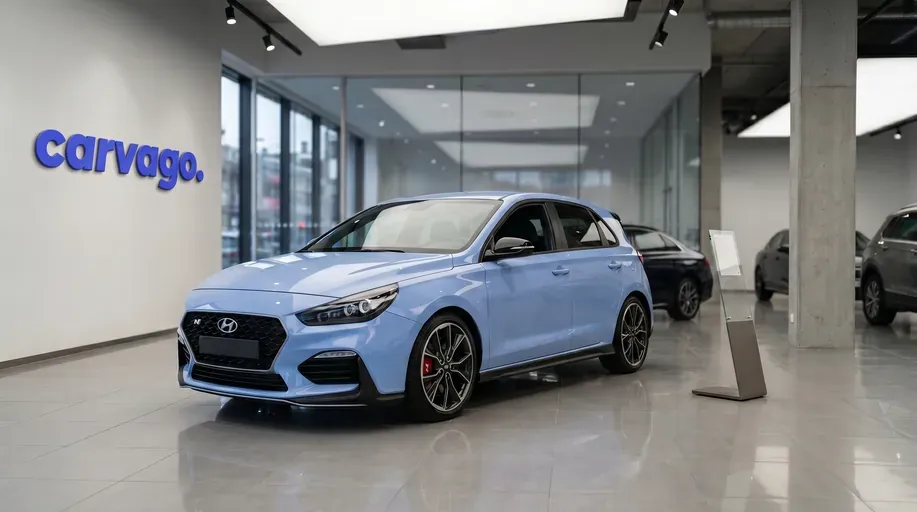
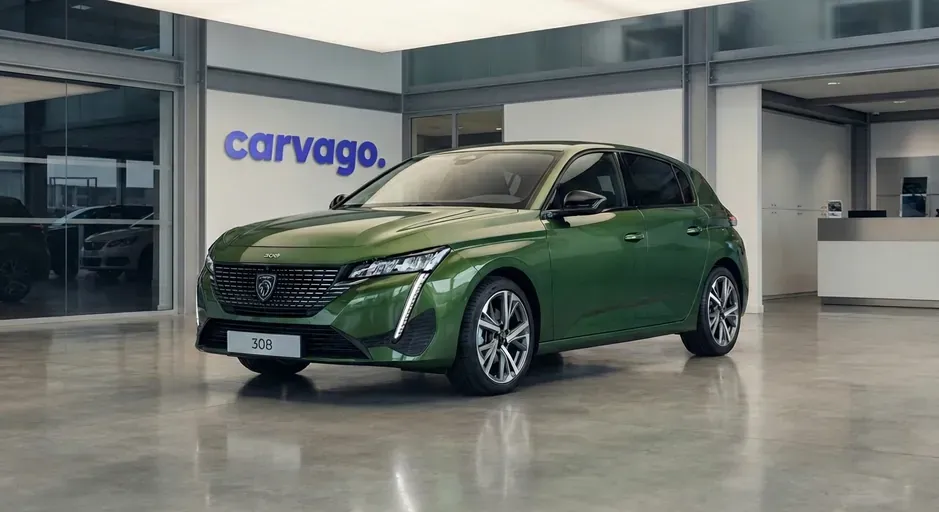
The South Korean Hyundai i30, which also appears under the names Elantra GT or Avante in selected global markets, represents an exceptionally practical and reliable choice in the highly competitive compact family car segment. Its challenger today is the French Peugeot 308, which, by contrast, brings a very bold design, an innovative interior layout, and a renowned emphasis on a comfortable driving experience to the same automotive class. Let's take a detailed look at how these two popular hatchbacks fare in a direct comparison and which of them represents a better investment on the used car market for your daily needs.
When comparing the exterior dimensions of both cars, focusing on the current third-generation models (around the 2022 model year), the width is the first thing that catches the eye. The French representative, Peugeot 308, appears much more muscular and planted on the road, measuring 1 852 mm in width. This is a significant 57 mm more than the Hyundai i30, which has a value of 1 795 mm. The greater width of the Peugeot means more generous shoulder room for the occupants and a more confident stance on the road, but the Hyundai, thanks to its narrower body, is much better suited for those who have to maneuver daily in narrow underground garages or older parking houses.
If we focus on the overall length and wheelbase, the Peugeot 308 surpasses its Korean rival in both of its traditional body styles. The Peugeot hatchback, with a length of 4 367 mm, is slightly longer than the Hyundai i30 (up to 4 340 mm), but in the popular family estate versions, the difference grows to a noticeable 51 mm in favor of the French model (4 636 mm versus 4 585 mm). Even more significant is the difference in wheelbase – the Peugeot 308 Estate offers 2 732 mm, which beats the Hyundai i30 Estate with its 2 650 mm by 82 mm. The longer wheelbase and greater overall length make the Peugeot a better choice for highway travelers and families requiring maximum legroom, while the Hyundai's more compact footprint makes it easier to find a parallel parking spot in cities.
Conversely, the Hyundai i30 maintains an advantage in overall height, reaching up to 1 455 mm for the standard hatchback (compared to a maximum of 1 441 mm for the Peugeot) and up to 1 475 mm for the estate version. This contributes to a slightly easier entry and a more airy cabin in terms of headroom. Furthermore, Hyundai's unique weapon is the third body variant, the Fastback (represented as Liftback in the table below), which is completely absent from the Peugeot lineup. The slightly taller build of the standard versions and the simultaneous presence of the stylish, only 1 425 mm high Fastback mean that Hyundai offers a wider range of solutions for both those interested in a slightly higher seating position and drivers preferring an elegant and sportier body style.
| Parameter | Hyundai i30 Hatchback | Peugeot 308 Hatchback | Hyundai i30 Liftback | Peugeot 308 Liftback | Hyundai i30 Estate | Peugeot 308 Estate |
|---|---|---|---|---|---|---|
| Length (mm) | 4335 - 4340 | 4367 | 4455 | - | 4585 | 4636 |
| Width (mm) | 1795 | 1852 | 1795 | - | 1795 | 1852 |
| Height (mm) | 1439 - 1455 | 1438 - 1441 | 1417 - 1425 | - | 1465 - 1475 | 1438 - 1442 |
| Wheelbase (mm) | 2650 | 2675 | 2650 | - | 2650 | 2732 |
It is clearly visible from the table that both manufacturers chose a different philosophy when designing the dimensions, which has a direct impact on the choice of a specific car. The choice thus depends on your lifestyle – the Peugeot 308, with its dimensions, clearly aims for greater stability on long journeys and pampers the crew with a giant wheelbase (especially in the estate version), while the Hyundai i30 will please with its everyday agility, better maneuverability thanks to its more moderate width, and last but not least, the attractive Liftback variant.
Luggage capacity plays a key role for many used car buyers, especially when choosing a versatile family car for everyday use. Whether you need to transport bulky shopping, sports equipment, or a pram and luggage for a weekend trip, those extra litres can make the difference between easy packing and a stressful struggle for every free centimetre. In this comparison, we focus on the third generations of both models (around the 2022 model year), which currently make up popular four-year-old used cars. These are vehicles from the same segment, though both manufacturers have approached practicality with slightly different philosophies.
In the standard hatchback configuration, the French representative has a slight edge. The third-generation Peugeot 308 offers a very solid 412 litres in its basic layout, while the Hyundai i30 counters with 395 litres. If you fold the rear seats, the situation remains very similar – Peugeot boasts a maximum value of 1323 litres compared to 1301 litres for its Korean rival. However, the South Korean model hides a trump card in the form of the Fastback body variant (falling into the liftback category). This swallows an excellent 450 litres in its base configuration (and 1351 litres when folded), providing an excellent compromise between a sporty look and enough space for weekend shopping or a longer holiday. Peugeot does not offer a similar variant with a sloping rear for this model.
The most important battle from the perspective of many customers, however, takes place in the extremely popular estate segment. Here, the Hyundai i30 Wagon dominates securely with its generous 602 litres, which can be expanded up to 1650 litres. It thus provides space for several extra large suitcases. The Peugeot 308 Wagon (SW) offers a fully usable 551 litres (1449 litres maximum), but it lags significantly behind its rival in terms of volume. When choosing on the used car market, it is also necessary to pay attention to the type of powertrain used. While Hyundai maintains its maximum boot volume completely unchanged in its mild-hybrid variants, with the technically more advanced Peugeot 308 in the plug-in hybrid (PHEV) version, you must expect a very significant reduction in capacity. The large battery reduces the luggage compartment in the hatchback to just 314 litres and in the estate to 467 litres, which already represents a noticeable compromise for family needs.
| Parameter | Hyundai i30 Hatchback | Peugeot 308 Hatchback | Hyundai i30 Liftback | Peugeot 308 Liftback | Hyundai i30 Wagon | Peugeot 308 Wagon |
|---|---|---|---|---|---|---|
| Base volume (litres) | 395 | 412 | 450 | - | 602 | 551 |
| Max. volume with seats folded (litres) | 1301 | 1323 | 1351 | - | 1650 | 1449 |
From the perspective of maximum family practicality and hauling capabilities, the Hyundai i30 comes out on top. Its estate version offers immense space unburdened by compromises in the form of batteries, while with the Peugeot 308, you will benefit from a slightly more voluminous basic hatchback, but you will have to lower your transport requirements for the family estate or sophisticated hybrid versions.
While Peugeot leads in the short hatchback thanks to its clever layout, the South Korean representative fully makes up for it with a massive 602-litre boot in the estate version, where, unlike its French competitor, you won't lose space even when choosing hybrid technology.
The towing capacity a car can handle is a crucial parameter for anyone planning to go on holiday with a small caravan or who occasionally needs to transport heavier loads on a trailer. In this regard, the current generations of the two compared models differ slightly, with the French representative having a slight edge in the overall figures.
For generations from around 2022, the Peugeot 308 offers slightly better values overall. The base 1.2 PureTech petrol engines can handle a braked trailer weighing 1,200 to 1,300 kg. However, if you opt for the popular 1.5 BlueHDi diesel engine, the maximum capacity rises to a very respectable 1,500 to 1,600 kg. In contrast, the Hyundai i30 (3rd generation) holds back slightly with its base engines – for the 1.0 T-GDI three-cylinder, the braked trailer weight is 1,000 to 1,200 kg. Greater potential opens up with the more powerful 1.6 CRDi diesel variants, which keep pace with a maximum of 1,500 kg, or the sporty N models, which can tow a braked trailer weighing up to 1,600 kg.
Looking at specific versions, other interesting differences emerge. For the Hyundai i30, the popular mild-hybrid units (e.g., 1.5 T-GDI 48V) have a maximum towing capacity adjusted to 1,410 kg. In contrast, the Peugeot 308 in its modern plug-in hybrid versions limits towing power only minimally, maintaining a very good average of 1,450 to 1,500 kg. There is also a noticeable difference in unbraked trailers. Here, the Peugeot can handle 680 to 750 kg depending on the chosen engine, while the Hyundai provides a range of 600 to 700 kg for most civilian versions.
In practice, even the lower values of the Korean model are perfectly sufficient for a weekend trip to a DIY store or for hauling common garden waste. However, the slightly higher capacity of the French car provides excellent room for a few extra suitcases and overall greater confidence when handling a fully loaded trailer.
In conclusion, if you expect to tow more regularly and plan trips with a heavier caravan, the Peugeot 308 (especially in the diesel or plug-in hybrid version) will be a slightly more practical choice for you. But for occasional moving and typical trips to the cottage, even the Hyundai i30 won't let you down.
| Model and engine | Braked trailer weight (kg) | Unbraked trailer weight (kg) |
|---|---|---|
| Hyundai i30 1.0 T-GDI (3rd gen) | 1000-1200 | 600 |
| Hyundai i30 1.5 T-GDI 48V (3rd gen) | 1410 | 600-700 |
| Hyundai i30 1.6 CRDi (3rd gen) | 1500 | 700 |
| Hyundai i30 N (3rd gen) | 1600 | 700 |
| Peugeot 308 1.2 PureTech (3rd gen) | 1200-1300 | 680 |
| Peugeot 308 1.5 BlueHDi (3rd gen) | 1500-1600 | 750 |
| Peugeot 308 1.6 Plug-In Hybrid (3rd gen) | 1450-1500 | 710 |
The engine range of both cars clearly shows different approaches to today's emission and performance requirements, which has a fundamental impact on which type of driver each model appeals to. The 3rd generation Hyundai i30 (in the version available on the market as roughly four-year-old used cars) relies on slightly more traditional concepts supported by 48V mild-hybrid assistance. It includes absolute classics like the 1.5 DPi naturally aspirated four-cylinder, as well as turbocharged units like the 1.0 T-GDI and 1.5 T-GDI or the 1.6 CRDi diesel engine. In contrast, the third generation of the Peugeot 308, which entered the market at the end of 2021, was designed from the start with an emphasis on much stronger electrification and downsized engines. Its backbone consists of small 1.2 PureTech three-cylinders, an economical 1.5 BlueHDi diesel four-cylinder, and at the top, you'll find advanced 1.6 Plug-In Hybrid systems with up to 225 hp, which Hyundai does not offer at all in the same class. While the South Korean carmaker will satisfy more conservative motorists looking for honest internal combustion engines and the choice of a classic manual transmission, the French competitor targets those who appreciate the possibility of driving purely on electricity and the dominant use of excellent eight-speed automatics. For drivers looking for simplicity and reliability at a good price, the Hyundai is ideal, while the Peugeot is an attractive entry ticket to the world of modern technology.
The diverse range of powertrains in roughly four-year-old used Hyundai i30s (after the 3rd generation facelift) will especially please lovers of classic internal combustion engines. Until early 2022, the reliable 1.5 DPi naturally aspirated four-cylinder excelled in the range, attracting buyers today with exceptionally low service costs. Similarly, those looking for diesel could previously opt for the 1.6 CRDi unit (in both classic and 48V mild-hybrid versions) – however, the Korean carmaker recently discontinued both of these legendary choices from production. Used cars from this era are thus often dominated by the small 1.0 T-GDI turbocharged three-cylinder and, above all, the highly praised 1.5 T-GDI 48V mild-hybrid four-cylinder. The latter provides 118 kW of power, confident flexibility thanks to 253 Nm, and very friendly fuel consumption. The cars are paired with precise manuals (often in the iMT version with an electronic clutch) or with the snappy seven-speed dual-clutch 7DCT automatic. For purists and track enthusiasts, there is the unmistakable i30 N division with its fantastic two-liter turbo engine.
| Engine Type | Fuel | Power (kW) | Torque (Nm) | Transmission |
|---|---|---|---|---|
| 1.5 DPi | Petrol | 81 | 144 | 6MT |
| 1.0 T-GDI (incl. 48V) | Petrol / Mild-hybrid | 88 | 172 | 6MT / 6iMT / 7DCT |
| 1.5 T-GDI 48V | Petrol (Mild-hybrid) | 118 | 253 | 6iMT / 7DCT |
| 1.6 CRDi (incl. 48V) | Diesel / Mild-hybrid | 85 / 100 | 280 / 320 | 6MT / 6iMT / 7DCT |
| 2.0 T-GDI (i30 N) | Petrol | 184 / 206 | 353 / 392 | 6MT / 8DCT |
In the third generation of the Peugeot 308, the philosophy of downsizing clearly prevails. Until recently, the petrol base was represented by the proven 1.2 PureTech three-cylinder. However, the weakest version (81 kW) disappeared from this generation's lineup very quickly in mid-2022. The more powerful and incomparably better-selling 130 hp (96 kW) variant then stayed on the market until 2024, before having to make way for brand-new mild-hybrid systems. The diesel classic is bravely and successfully represented by the 1.5 BlueHDi, which is still in production today; while it doesn't have displacement to spare, it offers a very pleasant 300 Nm of torque, making it suitable for swallowing highway miles. But the lion's strongest weapon is clearly the 1.6 Plug-In Hybrid variants. By combining a powerful petrol four-cylinder, a 12.4 kWh battery, and an electric motor, it delivers up to 165 kW to the wheels. Furthermore, those who have the possibility to charge at home can easily cover up to 50 km with zero emissions. A major advantage of the Peugeot is the widespread availability of the comfortable eight-speed EAT8 (or e-EAT8) automatic, which shifts admirably smoothly and seamlessly.
| Engine Type | Fuel | Power (kW) | Torque (Nm) | Transmission |
|---|---|---|---|---|
| 1.2 PureTech 110 | Petrol | 81 | 205 | 6MT |
| 1.2 PureTech 130 | Petrol | 96 | 230 | 6MT / EAT8 |
| 1.5 BlueHDi 130 | Diesel | 96 | 300 | 6MT / EAT8 |
| 1.6 Plug-In Hybrid 180 | Plug-in Hybrid | 132 | 360 | e-EAT8 |
| 1.6 Plug-In Hybrid 225 | Plug-in Hybrid | 165 | 360 | e-EAT8 |
While a used Hyundai i30 will please those interested in classic naturally aspirated or tuned mild-hybrid internal combustion engines with great longevity, the Peugeot 308 attracts with economical diesels and very sophisticated plug-in hybrids with the possibility of pure electric driving.
Choosing the right engine is absolutely crucial for long-term satisfaction with a used car, as it directly determines driving dynamics, real-world fuel consumption, and future mechanical reliability. Looking at roughly four-year-old cars (manufactured around 2022), we see a very different approach to technology from both rivals. While Hyundai has successfully deployed highly refined four-cylinder petrol engines supported by mild-hybrid technology in its third-generation i30, Peugeot relies primarily on powerful but structurally specific PureTech three-cylinder engines and sophisticated plug-in hybrid systems in the third generation of its attractive 308 model. Both strategies have clear advantages on the used car market, but they require a completely different approach to selecting a specific unit and its subsequent maintenance.
This turbocharged four-cylinder from the Smartstream family (available on the market between 2020 and 2026 within the third generation) is by far the best and most versatile choice in the used car range. Its greatest advantage is the fact that it has retained a four-cylinder layout, which guarantees silky-smooth operation and high refinement—something that is becoming a rarity in today's compact class. The torque curve benefits significantly from the standard 48V mild-hybrid system, which uses a starter-generator to fill in the turbocharger's "dead" spots at low revs and, in real-world driving, effectively brings combined consumption down to around 6 litres per 100 km. The mechanical reliability of this engine is rated very highly. The only potential risk—as with most modern direct-injection units—is the threat of carbon buildup on the intake valves and oil dilution with fuel in cases where the car is operated exclusively on short city trips with a cold engine. Prevention is easy: it pays to shorten the oil change interval to a maximum of 15 000 km and regularly "stretch" the car with a higher load on the motorway. This engine is ideal for both dynamic drivers and families looking for a quiet, economical, and sufficiently confident car for long motorway journeys.
For third-generation Peugeot 308 models, the more powerful version of the 1.2 PureTech turbocharged petrol three-cylinder (widely represented in cars from 2022 to 2024) represents the most sensible rational choice, especially when paired with the very smooth-shifting EAT8 eight-speed automatic. On the road, the engine surprises with its liveliness, delivering its maximum 230 Nm of torque at just 1750 revolutions per minute, giving the car prompt reactions in city and suburban traffic. Furthermore, real-world fuel consumption can easily be kept around 6 to 6.5 litres of petrol. However, choosing a used car with this engine requires increased caution, as it is well known for its specific design feature: a timing belt that runs directly in an oil bath. If the previous owner exceeded oil change intervals or used the car only for short trips where the oil degrades faster, the belt can crumble and fatally clog the oil pump intake screen. When buying a four-year-old car, it is therefore absolutely critical to insist on proof of a perfect service history with oil changes every 15 000 km at the latest (ideally sooner) and to visually check the condition of the belt through the filler neck. For users who drive mainly in the city and on country roads with lower annual mileage, this is a very pleasant, agile, and stylish engine once this risk has been ruled out.
Official fuel consumption figures provided by manufacturers often differ significantly from what you actually see on the trip computer display. To get the most accurate picture of real-world running costs, we analyzed user data from the independent community portal Spritmonitor.de. Here, thousands of drivers from all over Europe regularly and diligently record their daily refueling. For our comparison, we focused on the current third generations of both models, which are among the most sought-after on the current market for roughly four-year-old used cars (vehicles manufactured around 2022).
| Model and engine | Average consumption (l/100 km) |
|---|---|
| Petrol engines | |
| Peugeot 308 1.2 PureTech 130 | 5.6 |
| Hyundai i30 1.0 T-GDI | 6.2 |
| Hyundai i30 1.5 T-GDI 48V-Mildhybrid | 6.4 |
| Diesel engines | |
| Peugeot 308 1.5 BlueHDi 130 | 4.9 |
| Hyundai i30 1.6 CRDi | 5.3 |
| Plug-in hybrids | |
| Peugeot 308 1.6 Plug-In Hybrid 180 | 1.3 |
Several very interesting trends clearly emerge from the real-world operating data. It confirms the well-known rule that a small engine displacement does not automatically mean extreme fuel savings. The small South Korean three-cylinder 1.0 T-GDI often has to work at higher revs to maintain smooth vehicle dynamics, which is reflected in a real-world consumption of 6.2 l/100 km. Conversely, the slightly larger French three-cylinder 1.2 PureTech performs significantly more efficiently in practice, making do with an average about six-tenths of a liter lower. The situation is very similar in the field of diesel units, where the French 1.5 BlueHDi engine, with an average of 4.9 l/100 km, clearly demonstrates its long-standing dominance and easily beats even the otherwise reliable and popular 1.6 CRDi engine from the Korean brand.
What does this mean for typical buyers of used hatchbacks and estates?
Overall, the differences at the filling stations are certainly not negligible, and fuel consumption can and should be an important deciding factor when choosing. If your absolute priority is the lowest possible family bill for petrol or diesel, the Peugeot 308 emerges from the comparison as the clear winner. Its power units across all versions show significantly higher efficiency in practice than comparable engines in the Hyundai i30.
When choosing a roughly four-year-old used car (model years 2021 and 2022), you will encounter a rather different situation with these two models. While the Hyundai i30 maintains a stable position thanks to its popularity and massive market presence, for the Peugeot 308, it fundamentally depends on which generation you choose. During the mentioned period, the French representative was undergoing a generational changeover.
The Hyundai i30 is among the most common used cars in its class. A wide selection and a large share of corporate fleets push the prices of base versions to a very friendly level, yet the vehicles as a whole hold their value quite well.
For the Peugeot 308 from the same period, the used car market situation is significantly more specific. 2021 marked the end of sales for the second generation and the gradual, closely watched arrival of the very distinctive third generation. The price differences are thus quite vast.
| Model and specification | Starting price (approx.) | Average price of well-maintained cars | Top trims / powerful engines |
|---|---|---|---|
| Hyundai i30 (3rd gen FL) | €10,000 | €14,000 | €16,000+ |
| Peugeot 308 (outgoing 2nd gen) | €9,000 | €11,000 | €13,000 |
| Peugeot 308 (incoming 3rd gen) | €16,000 | €18,000 | €21,000+ |
Key factors determining price:
The price of the South Korean Hyundai i30 is kept up primarily by demand for the more powerful 1.5 T-GDI engine and the N Line appearance package; conversely, cars with the 1.0 T-GDI engine from corporate sales are often available with very significant discounts. In the case of the Peugeot 308, the price is most influenced by which generation you ultimately choose. The price of the modern 3rd generation is then sharply increased by plug-in hybrid technologies, which have found considerable use in the French model, even though their price as new cars and as used vehicles can form a relatively tough barrier for many buyers.
While the Hyundai i30 offers a huge selection of used cars across a wide price spectrum and scores with a great price-performance ratio, the new generation of the Peugeot 308 represents a substantially more expensive, albeit undeniably stylish, choice. However, if you are looking for maximum savings, the outgoing second generation of the Peugeot may pleasantly surprise you with its unbeatably low price.
In the used car market, both of these popular models can boast that their established generations achieved the prestigious five-star Euro NCAP safety rating. However, it is absolutely crucial to consider the context and the year of testing. The methodology and protocols of independent Euro NCAP tests are constantly evolving and becoming stricter over the years. For this reason, percentage scores or even the number of stars from different years cannot be directly compared. Results that were sufficient for a confident five-star rating a few years ago would, under the latest standards—which include new intersection collision scenarios or advanced cyclist detection—result in a significantly lower rating.
The third-generation Hyundai i30 underwent Euro NCAP crash tests in 2017, where it received the maximum five stars according to the methodology at the time. The car demonstrated a high level of structural strength and reliable passive occupant protection, reflected in an excellent score of 88% for adult protection and 84% for child protection. However, it should be noted that standards in 2017 did not yet place such a strong emphasis on advanced safety assistants. Due to the age of this test, the car's official five-star certification has formally expired. As a used car, the i30 remains a very safe vehicle, albeit with a somewhat older generation of active features and sensors for the protection of vulnerable road users.
The Peugeot 308, on the other hand, shows how quickly safety requirements change. While its predecessor from 2013 achieved five stars, the latest third generation—typical of today's younger used cars—received four stars in 2022. Do not be misled by this result, however. In practice, four stars under the extremely strict 2022 protocols mean the presence of a significantly more modern suite of assistance systems than five stars from 2017. Peugeot scored reliably in child protection (84%) and showcased more modern systems for pedestrian and cyclist protection (68%). The slightly lower adult protection rating (76%) was due to new strict penalties and the absence of a new center airbag; nevertheless, the car provides a top-tier level of protection from a real-world safety perspective.
Ultimately, if you prefer modern and comprehensive active protection that meets current standards, the Peugeot 308 offers a technologically more advanced and more recently tested safety package. The Hyundai i30, by contrast, represents a structurally solid and time-tested classic, though its assistance systems correspond to standards and tests that are five years older.
| Parameter | Hyundai i30 | Peugeot 308 |
|---|---|---|
| Year of testing | 2017 | 2022 |
| Adult occupant protection | 88 % | 76 % |
| Child protection | 84 % | 84 % |
| Vulnerable road user protection | 64 % | 68 % |
| Safety assistance systems | 68 % | 65 % |
Although the Hyundai i30 boasts five stars from an older methodology, the newer Peugeot 308 with four stars from 2022 offers a used car buyer an overall more modern and more rigorously tested range of safety systems.
Both models offer much more than just basic equipment, with each approaching the addition of value, comfort, and technological innovation for the driver in a completely different way. While the South Korean representative bets on traditional ergonomics and a sporty spark, the French competitor dazzles with avant-garde design and top-tier digital equipment.
The Hyundai i30 has long prided itself on remaining a maximally user-friendly car despite modernization, scoring points with clever mechanical and electronic solutions.
The Peugeot 308, on the other hand, bets on a strong "wow effect" and brings solutions to the compact hatchback and estate segment more commonly known from the premium class.
Great control ergonomics with a large number of classic physical buttons
Excellent price-to-value ratio on the four-year-old used car market
Reliable and proven engines without excessive technical complexity
Five-year factory warranty (unlimited mileage), which often still covers used vehicles
Comfortably tuned chassis that handles bumps on Czech roads well
More dated interior design and infotainment graphics compared to more modern competitors
Average trunk capacity for the hatchback version
Less premium feel of materials used in base trim levels
Lack of more advanced plug-in hybrid engine options
The Hyundai i30 is an exceptionally rational choice for drivers looking for a conservative, reliable, and user-friendly car without unnecessary frills. Thanks to intuitive controls and the remaining long factory warranty, it represents a safe bet and offers worry-free operation for individuals and families on a tighter budget.
Very attractive and aggressive exterior design that stands out on the road
Premium-crafted interior with high-quality materials and modern displays
Above-standard acoustic comfort and excellent cabin soundproofing
Huge trunk space in the estate (SW) variant, which is among the best in its class
Wide range of powertrains, including very efficient plug-in hybrids
The specific driving position behind the small steering wheel (i-Cockpit) doesn't suit everyone and can obscure the instrument cluster
More complex control of the air conditioning and most functions exclusively via the touchscreen
Significantly less legroom for rear-seat passengers
Higher average purchase prices on the used car market
The Peugeot 308 will appeal to buyers who desire emotive design, premium craftsmanship, and the latest technologies. It is an ideal car for those who are happy to pay extra for style and driving comfort and appreciate the range of electrified engines, while being willing to tolerate slight compromises in rear-seat space.
Based on long-term user feedback, authorized service reports, reliability statistics, and practical insights, including independent technical inspection of the car, we have compiled an overview of the most common problems of both cars that used car buyers should watch out for.
The third generation of the Hyundai i30 is generally considered a very reliable and mechanically durable car; however, it also has its specific weaknesses depending on the chosen engine and trim level.
The Hyundai i30 is overall a very robust car where serious faults occur only rarely, and potential issues with the DCT transmission can be predicted through a careful test drive. The most common problems are more cosmetic or software-related in nature.
For the Peugeot 308, it is worth paying increased attention to the specifics of modern French power units and more complex onboard electronics in used cars around four years old.
Peugeot 308 pleases with driving comfort and equipment, but its 1.2 PureTech and 1.5 BlueHDi engines hide known technical risks that require a flawless service history. A thorough physical inspection of a used car is an absolute necessity for this model.
When buying a used car, a thorough inspection is key, because despite their overall reliability, both models have specific areas that need attention. To ensure you're not buying a problematic car, a comprehensive car inspection is absolutely essential, during which a professional mechanic will uncover even hidden technical defects.
The Peugeot 308 offers a slightly larger luggage compartment in both body styles. The hatchback has a volume of 412 litres compared to 395 litres for the Hyundai i30. In the more spacious estate versions, the French car leads with its 608 litres over the 602 litres of its South Korean competitor.
The Hyundai i30 is perceived as a safe bet in terms of petrol engines, especially thanks to the proven T-GDI units without major design flaws. For newer Peugeot models with the 1.2 PureTech engine, it is necessary to more carefully monitor oil change intervals and the condition of the timing belt. The South Korean car is therefore a slightly safer choice in the used car market in the petrol engine category.
Peugeot excels with top-tier cabin soundproofing and a smoother suspension setup, making it a very comfortable car for longer trips. Hyundai, on the other hand, has a slightly stiffer suspension, which transmits a bit more bumps but offers a more confident and stable feel when cornering. The choice thus depends on whether you prefer French "floatiness" or a more communicative driving experience.
Peugeot bets on the specific i-Cockpit with a small steering wheel and the vast majority of onboard functions integrated directly into the central touchscreen. Hyundai, by contrast, maintains a more traditional approach with a large number of physical buttons for quick and easy control of the air conditioning or assistance systems. Thanks to this, the Korean model offers more intuitive operation without the need to take your eyes off the road, while the interior of the French car feels significantly more futuristic.
Hyundai mostly benefits from slightly simpler onboard technology and well-available spare parts, which can slightly reduce long-term regular maintenance costs. For Peugeot, some specific spare parts associated with modern electronics may be slightly more expensive. However, both cars keep their average operating and service costs within very reasonable limits for the compact class.
The final decision between these two cars depends primarily on your personal priorities, as each excels in completely different areas. Hyundai i30 represents a highly rational choice with an excellent price-to-value ratio, which, thanks to traditional ergonomics, reliable internal combustion engines, and a huge trunk in the estate version, will ideally serve more conservative drivers or practically-minded families. Peugeot 308, on the other hand, will delight those interested in modern design and highway travelers with its premium craftsmanship, innovative i-Cockpit interior layout, and a range of exceptionally efficient diesel or plug-in hybrid powertrains. While the South Korean representative is a user-friendly safe bet with more favorable purchase and service costs, the stylish French model will become the perfect companion for those who are happy to pay extra on the used car market for a fresh look, advanced technology, and excellent driving comfort.
Sources: ADAC, forbes.cz, lidovky.cz, chytreauto.cz, automix.cz, automakers.cz
This article was prepared using artificial intelligence tools. The section guarantor is Petr Dušek.
Used car comparison: Kia Ceed vs Renault Mégane. Which hatchback or estate to choose? We compared engines, equipment, and reliability. Read our verdict!
Apr 22, 2026
Detailed comparison of Citroën C4 vs. Hyundai i30. Find out which car offers better real-world fuel consumption, equipment, and value for money. Read our final verdict!
May 6, 2026
Detailed comparison of used Škoda Octavia vs Toyota Corolla. We reveal real fuel consumption, reliability, and equipment. Find out which family car is the better choice!
Apr 16, 2026