Car battle
Peugeot 308 vs. Renault Mégane: Complete comparison 2026
Detailed comparison of the Peugeot 308 and Renault Mégane. Compare engines, equipment, and the reliability of used cars. Read our verdict and choose the best car!
Apr 15, 2026
Articles
Car battle
Detailed comparison of used Škoda Octavia vs Toyota Corolla. We reveal real fuel consumption, reliability, and equipment. Find out which family car is the better choice!
April 16, 2026
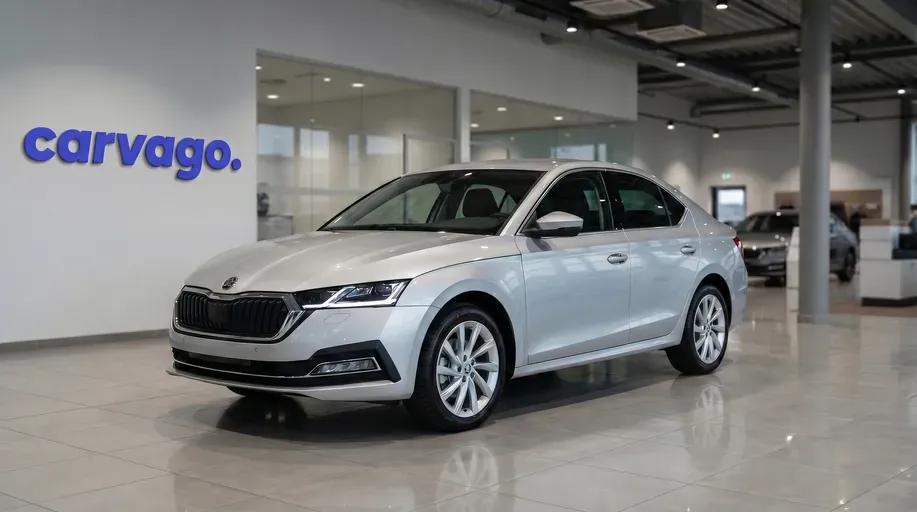
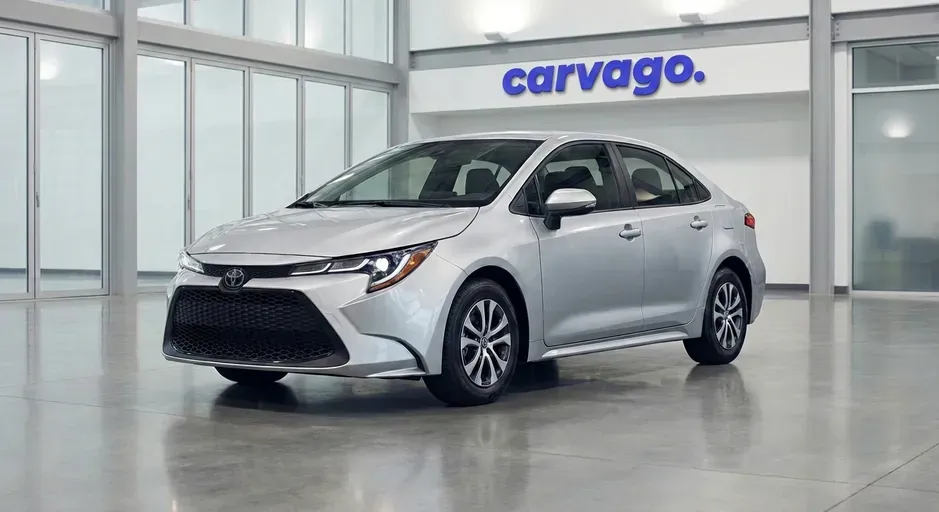
The Škoda Octavia, also known as the Octavia Pro in some Asian markets, has long been the European benchmark for the compact class, winning over drivers with its unrivaled interior space and excellent utility value. Standing against it is the Toyota Corolla, the world's best-selling car in history, available in certain regions under the name Corolla Altis or in Europe as its sister estate, the Suzuki Swace, which attracts buyers primarily with its exceptionally efficient hybrid powertrains and renowned reliability. Let's take a detailed look at which of these two extremely popular cars fares better in a direct comparison and offers a more attractive choice on the used car market.
When looking at the external dimensions of both cars, focusing on models roughly four years old (Škoda Octavia 4th generation and Toyota Corolla E21 generation), you quickly notice the different approaches of both manufacturers to body style offerings. While Škoda Octavia bets on a traditional large liftback and a highly practical estate, Toyota Corolla offers three variants – a compact hatchback, an elegant sedan, and a family estate known as Touring Sports. This fact fundamentally influences a direct comparison, because while the Corolla in hatchback form is primarily an agile city car, the Octavia, with its generous dimensions, always confidently attacks the boundaries of the mid-size class.
If we place the base body styles side by side, the Škoda Octavia liftback, at 4 689 mm, is a massive 319 mm longer than the Corolla hatchback. This difference is naturally reflected in the Japanese car's better maneuverability in narrow streets or when parking, but in return, the Octavia wins hands down in overall interior space. If we look at the family estate versions, the dimensional gap narrows significantly. The Škoda Octavia Combi measures up to 4 709 mm in length, while the Toyota Corolla Touring Sports reaches a length of 4 653 mm. Furthermore, with a width of 1 829 mm, the Octavia is 39 mm wider than its Japanese competitor, which provides valuable extra centimeters for passengers' shoulders in the interior. Conversely, the Corolla stands out with its flatter and lower body construction (consistently 1 435 mm compared to up to 1 508 mm for the raised versions of the Czech competitor), giving it a sportier silhouette and contributing to a lower center of gravity for more stable handling in corners.
A look at the wheelbase, which is a key parameter for longitudinal space in the rear seats, is very interesting. The Toyota Corolla in sedan and estate versions offers an impressive 2 700 mm, surpassing even the most spacious versions of the Octavia (up to 2 686 mm) by 14 mm. However, the Corolla Hatchback must settle for a significantly shorter wheelbase of 2 640 mm, which in practice means more cramped conditions on the rear bench. Overall, it can be said that the Octavia remains a more majestic and generally wider car, while the Corolla gives the customer the choice between a compact and agile city car and a full-fledged family car with a surprisingly generous wheelbase.
| Parameter | Škoda Octavia Liftback | Toyota Corolla Hatchback | Toyota Corolla Sedan | Škoda Octavia Combi | Toyota Corolla Touring Sports |
|---|---|---|---|---|---|
| Length (mm) | 4689 - 4698 | 4370 | 4630 | 4689 - 4709 | 4650 - 4653 |
| Width (mm) | 1829 | 1790 | 1780 | 1829 | 1790 |
| Height (mm) | 1470 - 1486 | 1435 | 1435 | 1454 - 1508 | 1435 |
| Wheelbase (mm) | 2669 - 2686 | 2640 | 2700 | 2647 - 2686 | 2700 |
Luggage capacity is often a deciding factor for families and drivers who demand maximum versatility and practicality from their vehicle. When comparing the fourth-generation Škoda Octavia and the current generation of the Toyota Corolla (E21) – the models most frequently represented on the market for approximately four-year-old used cars – we encounter quite fundamental philosophical and spatial differences. The Škoda Octavia has long been considered the benchmark for interior space, and its boot offers values that often challenge cars from a class above. The Toyota Corolla, on the other hand, focuses more on a sophisticated hybrid powertrain and more compact body dimensions. This makes it an ideal choice for agile city traffic, but in terms of raw transport capacity, it lags behind the Czech bestseller.
The differences in volume are obvious in both compared body variants. Škoda Octavia in the liftback version has a generous base volume of 600 litres, which can be increased to a staggering 1,555 litres after folding the rear seats. The Toyota Corolla hatchback offers a more modest 361 litres, which grows to 1,052 litres with the seats folded. In the popular family versions, the battle is somewhat more balanced. The Škoda Octavia Combi boasts a 640-litre boot (maximum 1,700 litres), which in practice means a huge space for several extra suitcases, bulky sports equipment, or a pram. The Toyota Corolla Touring Sports, with a base of 598 litres and 1,606 litres with the seats folded, is a very capable challenger whose capacity is easily sufficient for weekend shopping as well as a longer family holiday.
When choosing on the used car market, it is crucial to pay attention to the chosen engine, as the batteries of electrified models often take away valuable centimetres of boot space. If you come across a plug-in hybrid version of the Škoda Octavia (marked as iV) in the listings, expect the base volume to decrease to 450 litres for the liftback and 490 litres for the estate. For Toyota, the full hybrid technology manifests differently depending on the chosen power output. While the more economical 1.8 Hybrid version offers a full 598 litres for the estate body, the more dynamic 2.0 Hybrid variant limits the space to 581 litres, as the standard 12V battery had to be moved to the rear of the car to save space under the bonnet. For the shorter hatchback, the more powerful two-litre hybrid even means a significant drop in base capacity from 361 to 313 litres.
| Parameter | Škoda Octavia Liftback | Toyota Corolla Hatchback | Škoda Octavia Combi | Toyota Corolla Touring Sports |
|---|---|---|---|---|
| Base volume (l) | 600 | 361 | 640 | 598 |
| Max. volume with seats folded (l) | 1555 | 1052 | 1700 | 1606 |
The Škoda Octavia clearly wins with its unrivalled transport capacity and giant boot, while the Toyota Corolla represents a sensible compromise with a smaller but still very practical space, which reliably compensates with the top-tier efficiency of its full hybrid powertrain.
Towing capacity represents one of the most significant differences between these two cars and can be a deciding factor for many buyers when it comes to overall practicality. The fourth-generation Škoda Octavia (from roughly 2020) clearly excels in this regard. Standard petrol versions, such as the 1.5 TSI, offer a standard braked trailer weight of 1500 kg, while the most powerful 2.0 TDI diesel variants can handle a maximum load of up to 2000 kg. Even the plug-in hybrid Octavia iV maintains a very respectable towing capacity of 1500 kg.
In contrast, the Toyota Corolla (E21 generation from similar production years) has significantly stricter limits due to its advanced hybrid technology. Its by far most common hybrid versions (1.8 and 2.0 Hybrid) can tow a braked trailer with a maximum weight of only 750 kg and an unbraked trailer weighing up to 450 kg. An exception in the model range is the pure petrol 1.2T engine, where the braked trailer value reaches 1300 kg – however, this is a relatively marginal choice on the nearly new used car market.
Practical impacts and use
These paper values have a fundamental impact on the daily use of both vehicles:
Final evaluation
If you plan to regularly tow heavier loads or a family caravan, the Škoda Octavia is an incomparably more versatile and usable choice. The Corolla, on the other hand, is engineered primarily for maximum daily efficiency in the city, and its towing hitch serves more as a supplementary feature for very undemanding tasks.
| Model and engine | Braked trailer weight (kg) | Unbraked trailer weight (kg) |
|---|---|---|
| Škoda Octavia 1.0 TSI (81 kW) | 1300 | 660-680 |
| Škoda Octavia 1.5 TSI ACT (110 kW) | 1500 | 670-750 |
| Škoda Octavia 2.0 TDI SCR (85 kW) | 1500 | 710 |
| Škoda Octavia 2.0 TDI SCR (110 kW) | 1600-2000 | 730-750 |
| Škoda Octavia 1.4 TSI iV (110 kW) | 1500 | 750 |
| Toyota Corolla 1.2T (85 kW) | 1300 | 450 |
| Toyota Corolla 1.8 Hybrid (72 kW) | 750 | 450 |
| Toyota Corolla 2.0 Hybrid (112 kW) | 750 | 450 |
Choosing the right engine is often the deciding factor for a used car buyer, as it directly affects fuel consumption, service costs, and the overall driving experience. The Škoda Octavia and Toyota Corolla approach this task from completely different technological perspectives. While the 4th generation Octavia covers almost every conceivable need with its engine range—from traditional fuel-efficient diesel engines (2.0 TDI) and advanced petrol units (1.5 TSI) to plug-in hybrids (iV)—the Japanese automaker has chosen the path of maximum specialization. In its E21 generation, the Toyota Corolla relies almost exclusively on advanced self-charging full hybrids, which completely outclass the competition in efficiency during urban and suburban driving. For those interested in a car roughly four years old, this means choosing between a traditional highway cruiser and a technologically bulletproof urban pioneer.
The 4th generation Škoda Octavia (from 2020) offers impressive variability on the secondary market, satisfying both budget-conscious drivers and high-mileage hunters. The base engine is the 1.0 TSI three-cylinder petrol with 81 kW, logically followed by the popular and very refined 1.5 TSI four-cylinder (110 kW). A very interesting specific of used Octavias is that if these petrol engines are paired with a DSG automatic transmission, they receive the additional e-TEC designation and feature mild-hybrid technology for smoother starts and reduced fuel consumption. For drivers who spend a lot of time on highways, the iconic 2.0 TDI EVO diesel engine remains the most attractive option. It is available in several power levels (85, 110, and 147 kW) and is famous for its exceptionally low highway appetite. The range is rounded off by the sporty RS derivatives with a powerful 2.0 TSI engine (180 kW) and advanced iV plug-in hybrid variants allowing for pure electric range.
| Engine Type | Fuel Type | Power (kW) | Torque (Nm) | Transmission |
|---|---|---|---|---|
| 1.0 TSI / 1.0 TSI e-TEC | Petrol / Mild-hybrid | 81 | 200 | 6-speed manual / 7-speed DSG |
| 1.5 TSI / 1.5 TSI e-TEC | Petrol / Mild-hybrid | 110 | 250 | 6-speed manual / 7-speed DSG |
| 2.0 TSI (incl. RS) | Petrol | 140 / 180 | 320 / 370 | 7-speed DSG |
| 2.0 TDI SCR | Diesel | 85 / 110 / 147 | 300 - 400 | 6-speed manual / 7-speed DSG |
| 1.4 TSI iV | Plug-in Hybrid | 150 / 180 | 350 / 400 | 6-speed DSG |
| 1.5 TGI G-TEC | CNG | 96 | 200 | 7-speed DSG |
The Toyota Corolla (E21 generation) builds its success on proven self-charging hybrids. When exploring the market for four-year-old cars, you may occasionally come across the base purely petrol turbocharged 1.2T four-cylinder with 85 kW, but according to the manufacturer's data, this was completely phased out after 2021 due to emission limits. The main attractions today are undoubtedly the 1.8 Hybrid (90 kW) and the more dynamic 2.0 Hybrid (135 kW). The former will primarily appeal to more defensive drivers and provides unprecedented fuel economy in congested cities, where the car often moves solely on quiet electric power. The 2.0 Hybrid variant easily holds its own even during dynamic highway driving and gives the car an unexpectedly sporty character. Both hybrid engines are strictly paired with a sophisticated e-CVT planetary gearbox, which does not use a traditional clutch or belts, making it an almost indestructible solution. Unlike the Octavia, do not expect diesel power or a plug-in hybrid with a socket here.
| Engine Type | Fuel Type | Power (kW) | Torque (Nm) | Transmission |
|---|---|---|---|---|
| 1.2T (phased out in 2021) | Petrol | 85 | 185 | 6-speed manual / CVT |
| 1.8 Hybrid | Petrol + electric | 90 | 142 (+ electric) | e-CVT |
| 2.0 Hybrid | Petrol + electric | 135 | 190 (+ electric) | e-CVT |
The Škoda Octavia scores with a huge selection of internal combustion engines, led by the phenomenal 2.0 TDI highway diesel, while the Toyota Corolla makes absolute sense for daily commuting thanks to its unbeatably reliable and efficient hybrid technology.
Choosing the right engine is crucial for long-term satisfaction with the car. Our recommendation is based on real-world experience, fuel consumption in normal traffic, owner feedback, and long-term mechanical reliability. While Škoda offers a wide range of advanced turbocharged petrol engines and traditional fuel-efficient diesels for the fourth-generation Octavia, Toyota relies primarily on one unique technology for the E21 generation. The Japanese automaker has completely phased out diesel engines in the Corolla and relies on the fourth generation of its legendary full-hybrid powertrain. While the petrol Octavia can imperceptibly deactivate half of its cylinders to save fuel, the Corolla can cover a large part of city driving purely on electricity, without the need for any charging from a set of cables.
The four-cylinder petrol engine 1.5 TSI ACT (110 kW / 150 hp) represents the absolute golden mean for a four-year-old used car (typically from the 4th generation, widely available between 2020 and 2023).
For the Toyota Corolla E21 generation (in our focus for used cars mainly from 2019 to 2023 production), the clear recommendation is the more powerful hybrid version, the 2.0 Hybrid (135 kW / 184 hp) called Dynamic Force.
Official fuel consumption figures often promise miracles, but the reality in everyday traffic is usually a bit more sober. For an objective comparison of both models, we focused on used cars approximately four years old, which dominate the current market – namely the 4th generation Škoda Octavia (produced since 2020) and the Toyota Corolla generation E21 (produced since 2019). To get the most accurate picture of actual fuel costs, we used real-world data directly from drivers themselves.
news_site: Spritmonitor.de
| Model and Engine | Average Consumption (l/100 km) |
|---|---|
| Toyota Corolla 1.8 Hybrid 90 kW | 4.8 |
| Toyota Corolla 2.0 Hybrid 135 kW | 5.2 |
| Škoda Octavia 2.0 TDI 110 kW | 5.0 |
| Škoda Octavia 1.0 TSI 81 kW | 5.5 |
| Škoda Octavia 1.5 TSI 110 kW | 5.9 |
| Toyota Corolla 1.2T 85 kW | 6.4 |
A look at real-world data reveals two completely different technological approaches. The absolute champions in mixed and city traffic are Toyota's hybrid engines. The entry-level 1.8 Hybrid can constantly and effectively recuperate energy, making it the king of slower traffic. If you opt for the more powerful 2.0 Hybrid variant, you get significantly better dynamics at the cost of only a minimal increase in consumption. Toyota's 2.0-litre engine benefits from dual injection (D-4S), which optimizes both performance and efficiency. Conversely, Toyota's traditional 1.2T petrol engine without hybrid assistance ends up at the bottom of the comparison.
Škoda Octavia counters with traditional values. The main pillar for economy-focused drivers is the legendary 2.0 TDI diesel engine. With a real-world average of exactly five litres, it keeps pace confidently with the hybrid Toyota. Modern TSI petrol engines also do a great job. The 1.5 TSI ACT unit with cylinder deactivation technology offers a golden middle ground below the six-litre mark, where the driver doesn't suffer from a lack of power. The smaller three-cylinder 1.0 TSI can work miracles on paper and in light traffic, but with a fully loaded car, it needs to be revved more, which slightly reduces its actual savings compared to the 1.5-litre engine.
So, is fuel consumption the main deciding factor between these two rivals? It certainly can be, but the key to the decision lies purely in your personal driving profile. The Toyota Corolla excels where the car is constantly starting and braking, offering incredibly cheap and smooth operation for city and suburban areas. The Škoda Octavia with the TDI diesel engine, on the other hand, shines on highways, where it benefits from a massive range on a single tank. Both manufacturers clearly demonstrate that exceptionally low consumption can be achieved through two completely different, yet functional, paths.
When choosing a used car approximately four years old (2021–2022 models), the fourth-generation Škoda Octavia and the twelfth-generation Toyota Corolla represent two different philosophies, which is also reflected in the used car market. While the Czech market is literally oversaturated with Octavias, the Corolla attracts a specific group of buyers looking for an exceptionally reliable hybrid powertrain.
Thanks to its position as the most popular company car in the Czech Republic, the supply of used Octavias is enormous. This gives buyers the advantage of a wide selection, but at the same time puts pressure on prices for models with high mileage.
The supply of Corollas on the Czech market is somewhat more modest and is clearly dominated by the estate body style (Touring Sports) and hybrid powertrains. Toyota vehicles are generally known for losing their value very slowly.
| Model | Starting price (high mileage) | Average price (good condition) | Advantage in the used car market |
|---|---|---|---|
| Škoda Octavia IV | from €15,000 | €17,000 – €21,000 | Unrivaled selection of units and cheaper spare parts |
| Toyota Corolla XII | from €16,000 | €19,000 – €23,000 | Excellent residual value thanks to the reputation of hybrids |
Both cars represent a safe investment in the four-year-old used car category. The Octavia will please those who want to be able to choose from dozens of listings and are looking for the ideal balance of price, equipment, and boot size. The Corolla, on the other hand, scores points with buyers who are happy to pay a little extra for peace of mind and the long-term proven reliability of Japanese hybrid technology.
Both compared models boast a maximum five-star rating in independent Euro NCAP tests. However, when evaluating the safety of used cars, it is necessary to take into account the context and the year of testing. The methodology and requirements of the Euro NCAP organization are constantly evolving and becoming more stringent. While older tests focused primarily on passive safety during the impact itself, newer protocols place much greater emphasis on active safety assistants, advanced sensors for cyclist detection, and solutions for complex crisis scenarios at intersections. Percentage results from different years cannot always be directly compared.
The fourth-generation Škoda Octavia underwent Euro NCAP tests at its market launch in 2019. However, the automaker continuously improved the car (among other things, adding a center airbag between the driver and passenger to the standard equipment), and so the Octavia underwent re-evaluation in 2022 according to new, significantly stricter rules. Even in this much more demanding test, the car successfully defended its maximum five-star rating, ensuring the validity of its safety certification until 2028. The result of 86% for adult protection and 81% for assistance systems proves that the modernized sensors reliably react to pedestrians and cyclists and the car fully complies with very strict current safety standards.
The twelfth generation of the Toyota Corolla underwent crash tests in 2019, where it also took home a full five stars. Although it was tested according to older protocols, it absolutely shone in the category of adult occupant protection, where it earned an exceptional 95%. This result ranks the Corolla among the most resilient cars in its class from a passive safety perspective. Much of the credit goes to the rigid platform and the standard Toyota Safety Sense second-generation safety package. Even in the base trim, it offers a pre-collision system with pedestrian and cyclist detection day and night, adaptive cruise control, and lane-keeping assist.
| Parameter | Škoda Octavia | Toyota Corolla |
|---|---|---|
| Year of testing | 2022 | 2019 |
| Adult occupant protection | 86% | 95% |
| Child occupant protection | 84% | 84% |
| Vulnerable road users protection | 68% | 86% |
| Safety assist systems | 81% | 77% |
The overall comparison shows that both models represent an excellent choice in terms of safety on the used car market. The Toyota Corolla scores primarily with phenomenal passive occupant protection from the measurement at that time and very good results in collisions with pedestrians. The Škoda Octavia, on the other hand, offers a more modern and comprehensive safety package, as it successfully passed through a stricter testing sieve in 2022, which was reflected in a more relevant evaluation of advanced assistance systems according to the latest standards.
Whether you choose the Corolla with its top-tier passive protection or the Octavia with its more modern certification and advanced assistants, in both cases, you get a maximally safe family car proven by five stars.
In addition to standard equipment, each model offers several unique features and advanced technologies, through which both cars bring a completely different approach to added value and everyday use.
Huge and highly usable luggage compartment (600 l for the liftback, 640 l for the estate)
Above-average legroom for rear-seat passengers
Very comfortable chassis tuning, ideal for long motorway journeys
Wide range of engines, including exceptionally fuel-efficient TDI diesel engines
Smart and practical "Simply Clever" solutions that make daily life with the car easier
Slow and software-unstable infotainment in early years of the fourth generation
User-unfriendly touch controls for air conditioning and volume without physical buttons
Occasional hesitation and jerking of the DSG automatic transmission during slow starts
Higher purchase price on the used car market within its class
Škoda Octavia is an excellent choice for families and high-mileage drivers who need maximum interior space and outstanding practicality. Despite minor ergonomic missteps in the interior, it offers an unbeatable boot, great cruising dynamics, and fuel-efficient conventional engines for long journeys.
Highly reliable and fuel-efficient full hybrid powertrains (especially the 1.8 and 2.0 Hybrid versions)
Unrivalled real-world fuel consumption in urban and suburban traffic
Excellent chassis tuning that combines high comfort with confidence in corners
Possibility of using the manufacturer's extended warranty programs on the used car market
Traditionally high residual value and long-term proven overall reliability
Significantly smaller luggage compartment and more cramped conditions in the rear seats (especially in the hatchback)
Outdated graphics, lower resolution, and an overall slower multimedia system
Specific behavior of the e-CVT transmission, which keeps the engine at high revs during sharp acceleration
Poorer cabin soundproofing at higher motorway speeds compared to competitors
Toyota Corolla will primarily appeal to drivers looking for an exceptionally reliable and low-maintenance car with an excellent hybrid system. Although it is not as practical or spacious as its Czech rival, it makes great sense on the used car market for daily commuting, a calmer driving style, and minimizing future service costs.
Based on our own failure statistics, long-term user experience, service reports, and outputs from the CarAudit inspection service, we have compiled an overview of the most common problems you should watch out for with four-year-old used cars. Every independent technical inspection of a car's condition should therefore focus on the specific weaknesses of the given generation for these models.
The fourth generation of the Škoda Octavia struggles primarily with teething problems in the area of software and electronics, while the mechanical part of the car remains relatively robust.
The fourth generation of the Octavia plagues its owners primarily with software bugs and infotainment errors, but mechanically, with timely servicing, it is a very reliable car.
The twelfth generation of the Toyota Corolla is considered a benchmark of reliability on the used car market, yet even it has its weaker points, relating more to user comfort and consumable parts.
The Corolla fully lives up to its reputation as a workhorse thanks to its bulletproof hybrids, but owners must accept thinner paint and watch out for 12V battery discharge during occasional use.
When buying a used car, a thorough inspection is crucial. Here are some specific points to focus on for these two models, which is why we always recommend using the CarAudit service before purchasing, which ensures a comprehensive vehicle check directly by an independent mechanic.
The Škoda Octavia clearly dominates in this regard with a volume of 600 litres for the liftback and 640 litres for the estate version. The Toyota Corolla offers less space overall, with the hatchback having only 361 litres and the more practical Touring Sports estate providing a maximum of 598 litres depending on the engine. For families and carrying bulkier loads, the Czech representative is significantly more practical.
The Toyota Corolla uses a time-tested full hybrid system (HEV), which is renowned for its exceptional reliability and maintenance-free operation. The Škoda Octavia, on the other hand, offers mild-hybrid engines (e-TEC) or a plug-in hybrid (iV), which requires regular charging from a socket for maximum efficiency. In terms of long-term durability and smoothness in city traffic, the Japanese brand has a noticeable advantage thanks to its extensive experience.
Both cars can be driven very economically, but each dominates in a different environment. The Corolla with its hybrid engine excels in the city and on country roads, where the system often uses electricity and consumption commonly drops to around 4.5 l/100 km. The Octavia, on the other hand, benefits from excellent aerodynamics and modern TDI diesel engines, making it a more economical and suitable choice for frequent and long motorway journeys.
The Toyota Corolla relies on a more conservative interior layout with physical buttons for climate control, ensuring safer operation while driving. The fourth-generation Škoda Octavia has a much more modern and minimalist interior, but has moved the vast majority of functions to the touchscreen. This solution requires a longer adjustment period, and furthermore, early models from 2020 and 2021 suffered from occasional software issues with the Octavia's infotainment.
The Škoda Octavia is overall a better choice for the average family thanks to its above-average rear legroom and huge boot. While the Toyota Corolla in the Touring Sports version handles family needs very well, rear passengers have to settle for less space. If you often transport older children or adult passengers and need to load a pram, the Octavia will offer you significantly higher comfort.
The final decision between the Škoda Octavia and the Toyota Corolla depends primarily on your typical driving profile and space requirements. If you spend a lot of time on highways, have a family, or regularly transport bulky loads, the Škoda Octavia will absolutely delight you with its unrivaled interior space and excellent conventional engines for long distances. On the other hand, if you move mainly in city or suburban traffic and are looking for a car with long-term minimal service costs, the Toyota Corolla, with its exceptionally reliable and economical full-hybrid powertrain, represents the most sensible choice possible. While the Czech benchmark dominates in overall transport capacity and everyday versatility, the Japanese challenger counters with bulletproof mechanical durability and phenomenal efficiency during routine commuting.
Sources: ADAC, forbes.cz, novinky.cz, techfocus.cz, motorvize.cz, autickar.cz
This article was prepared using artificial intelligence tools. The section guarantor is Petr Dušek.
Detailed comparison of the Peugeot 308 and Renault Mégane. Compare engines, equipment, and the reliability of used cars. Read our verdict and choose the best car!
Apr 15, 2026
Mazda 3 vs. Toyota Corolla: Which bestseller is better? Our detailed comparison of engines, features, and handling will help you make your final choice.
Apr 13, 2026
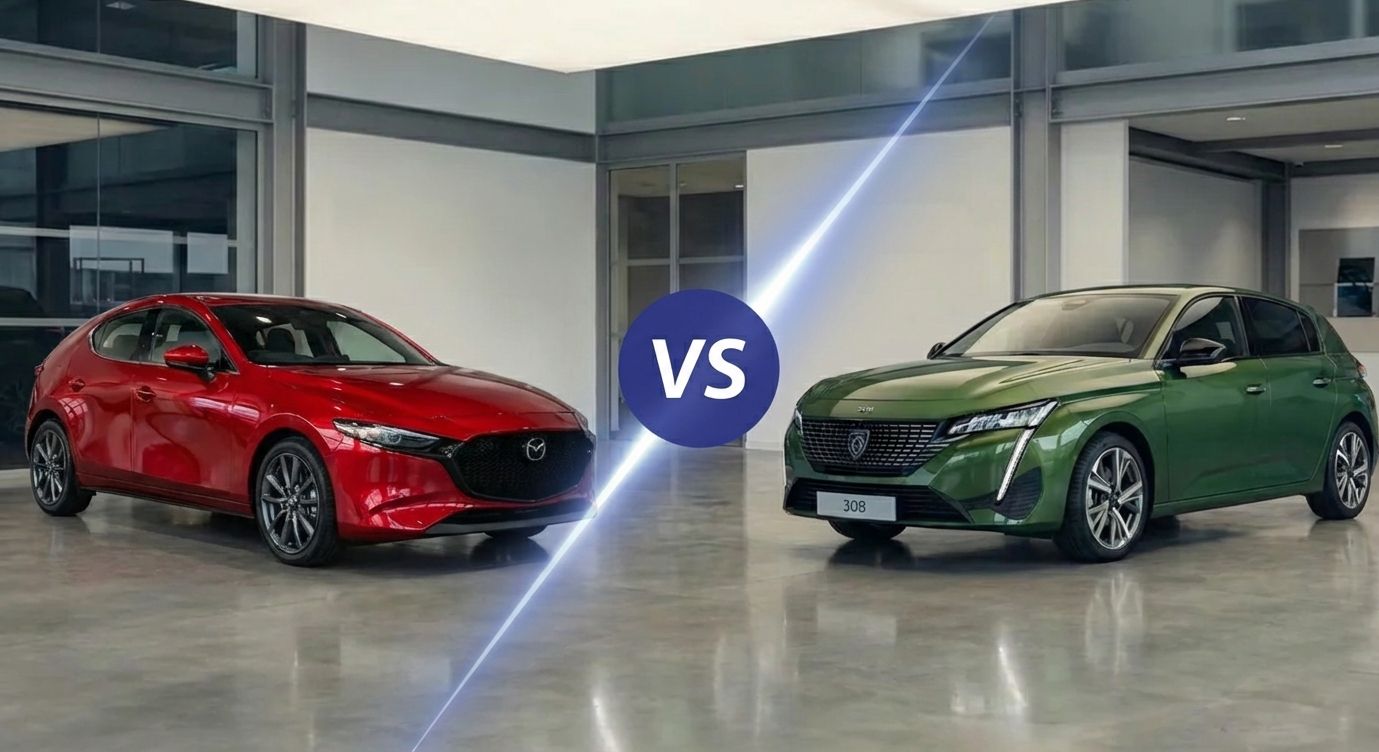
Mazda 3 vs. Peugeot 308: A detailed comparison of engines, interior, and reliability. Find out which stylish hatchback is the best choice for you.
Apr 13, 2026