Articles

Car battle

Kia Ceed vs. Renault Mégane: Complete comparison 2026

Used car comparison: Kia Ceed vs Renault Mégane. Which hatchback or estate to choose? We compared engines, equipment, and reliability. Read our verdict!

April 22, 2026

VS
Kia Ceed

Kia Ceed

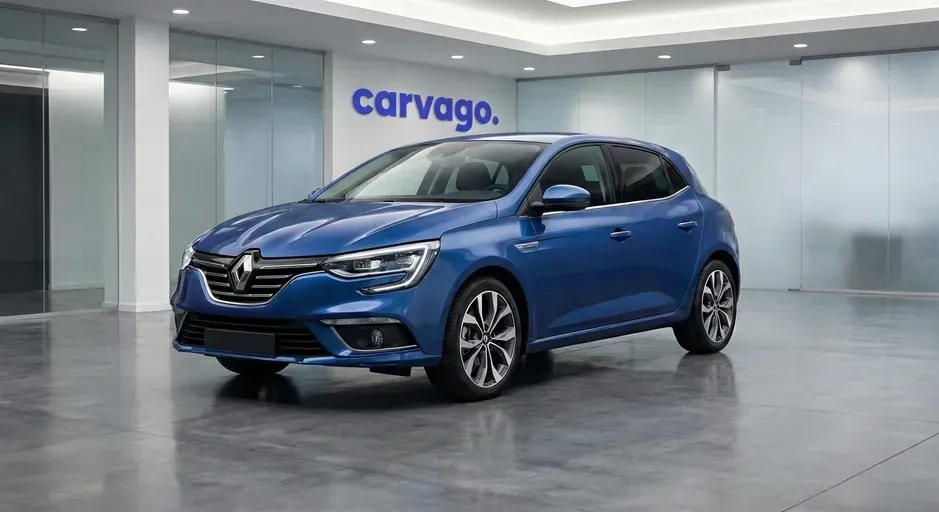
Renault Mégane

Renault Mégane

Introduction

The Kia Ceed, also known by the stylistic designation cee'd in older generations, is a popular South Korean representative of the lower-middle class designed and manufactured in Europe, which wins over drivers primarily with its reliability and excellent value for money. Standing against it is the French Renault Mégane, which has long attracted buyers with its unmistakable attractive design, exceptionally comfortable chassis, and rich technological equipment. Let's take a detailed look at which of these two popular family hatchbacks represents a smarter and more sensible choice on the used car market.

Comparison of External Dimensions

Exterior Dimensions and Proportions

Both models form traditional pillars of the European lower-middle class (the so-called C-segment), and their exterior dimensions clearly reflect customer demands for compact yet practical vehicles. If we focus on generations corresponding to roughly four-year-old used cars on the market (Kia Ceed CD generation and Renault Mégane IV generation), we find quite interesting differences even in the basic five-door hatchbacks. The Renault Mégane is, with a length of 4359 mm, nearly 5 centimeters longer than the Kia Ceed, whose length ranges from 4310–4325 mm. The French representative is also wider (1814 mm compared to exactly 1800 mm for the Kia) and boasts a slightly longer wheelbase (2669 mm vs. 2650 mm). Conversely, in terms of height, the Mégane sits slightly lower to the road. For the buyer, this means that thanks to its wider and lower build, the Renault gives a visually sportier and more planted impression, while the slightly more compact footprint and better visibility of the Kia Ceed will be appreciated when frequently parking in narrow city streets.

Even more striking structural differences can be found in the practical and highly sought-after estate versions. The Kia Ceed Sportswagon measures 4600–4605 mm in length, but the Renault Mégane Grandtour slightly surpasses it with a total length of 4626 mm. However, the truly fundamental difference is hidden between the axles. While Kia keeps the exact same wheelbase for its estate as for the hatchback (2650 mm) and gains all its volume through a longer rear overhang, Renault stretched the wheelbase for the Grandtour body to 2712 mm. This key difference affects not only the appearance of both cars but, above all, the decision-making of the customers themselves – the extended wheelbase of the Renault ensures better directional stability at highway speeds and significantly more legroom for rear passengers, while the Kia, by maintaining a shorter wheelbase, feels more agile even with the "backpack" behind it when driving on winding country roads.

ParameterKia Ceed HatchbackRenault Mégane HatchbackKia Ceed EstateRenault Mégane Estate
Width (mm)18001814–187518001814
Length (mm)4310–43254359–43644600–46054626
Height (mm)1442–14471428–14381460–14651449
Wheelbase (mm)26502669–267026502669–2712

Trunk Volume

Luggage compartment capacity plays a key role for many used car buyers, whether they are choosing a spacious partner for family trips or need to reliably and regularly transport strollers and sports equipment. Looking at cars approximately four years old – representatives of the current generation of the Kia Ceed (internally designated CD) and the fourth generation of the Renault Mégane (IV) – we find that there are quite large differences in overall utility value. While both cars perform very similarly as classic five-door hatchbacks and will serve everyday duties without problems, in the closely watched category of more practical family estates, the gap widens much more noticeably.

A closer comparison of the exact figures reveals that the Kia Ceed in its hatchback variant offers a base of 395 litres of storage space, which increases to a total of 1,291 litres after folding the rear seatbacks. Its French competitor, the Renault Mégane hatchback, stands very close by with a similar base of 384 litres and a maximum capacity of 1,247 litres. However, a significant leap towards greater utility comes with the extended models. The South Korean Kia Ceed Sportswagon boasts a truly generous trunk with a base volume of 625 litres and a maximum transport capacity of up to 1,694 litres with the seats folded. In contrast, the Renault Mégane Grandtour offers a more modest, yet still fully sufficient for most common situations, 521 litres, which can be expanded to 1,504 litres by folding the seats. When choosing a used car, however, it is necessary to pay attention to the chosen engine. If you opt for the popular plug-in hybrid versions, you must expect a significant reduction in internal volume for both brands due to the installation of traction batteries. For example, in the hybrid Kia Ceed estate, the generous base volume shrinks drastically from 625 litres to 437 litres, and the electrified Renault Mégane Grandtour E-Tech or versions with AdBlue urea injection similarly lose valuable litres.

In everyday practice, these paper differences translate very noticeably into how smoothly you can fit everything you need into the vehicle. A difference of more than 100 litres in the base layout in favour of the Asian estate means space for several extra suitcases in practice, so family packing for a holiday will require significantly less logistical thinking. The base volume of the smaller hatchbacks from both brands is more modest at first glance, but remains easily sufficient for weekend shopping or a longer holiday for two. However, if your primary requirement is to move an entire living room in your car, the South Korean representative offers objectively higher utility value.

ParameterKia Ceed HatchbackRenault Mégane HatchbackKia Ceed EstateRenault Mégane Estate
Base capacity (litres)395384625521
Maximum capacity with seats folded (litres)1291124716941504

Who can load more? 🧳

While both vehicles offer comparable and sufficient transport capacity for common tasks in the hatchback version, the Kia Ceed Sportswagon wins in the more practical estate body style, as its gigantic trunk is much more generous for family needs.

Discover the true condition of the car thanks to an independent inspection

Order CarAudit™

Trailer Weights

Trailer weight is a key parameter for drivers who plan to tow trailers, caravans, or carry e-bikes on a tow bar with their car. In compact cars such as the Kia Ceed and Renault Mégane, we find several fundamental differences closely related to the chosen engine. While both manufacturers offer models that are perfectly adequate for weekend transport of bulky materials or moving small furniture, for towing heavier loads and larger caravans, it is important to focus on specific specifications.

Kia Ceed (in the relevant CD generation, offered since 2018) in its standard petrol versions can tow a braked trailer weighing 1000 to 1410 kg. The 1.6 CRDi diesel version then pushes this limit to a solid 1500 kg. However, the mild-hybrid variant with the 1.0 T-GDI 48V engine is very specific, as it is limited to just 700 to 710 kg due to the installation of batteries and hybrid technology. The capacity for an unbraked trailer for most Ceed models ranges from a standard 600 to 650 kg.

Renault Mégane (fourth generation IV, 2016–2024) offers significantly higher capacities in this regard. Even standard petrol engines (e.g., TCe 140) have a braked trailer capacity of 1650 to 1700 kg for the more spacious estate version (Grandtour). More powerful diesel engines such as the ENERGY dCi 130 or dCi 165 allow for towing up to an impressive 1850 kg. This capacity in the compact segment represents an above-standard level, which is fully sufficient even for longer holidays with a larger and fully loaded caravan. Similar to the Kia, however, it is necessary to keep in mind that electrified versions have lower towing power – the plug-in hybrid Mégane E-Tech can handle only 750 kg for a braked trailer. Unbraked trailers can usually be hitched behind the Renault in the range of 650 to 735 kg.

In terms of overall towing capabilities, the Renault Mégane offers a substantially larger reserve for heavier loads, which will be appreciated especially by owners of caravans or boats. Conversely, the Kia Ceed, with its parameters, focuses more on lighter forms of towing and everyday practicality. When choosing a used car approximately 4 years old, one important rule applies to both brands – if you plan to use towing regularly, watch out for modern hybrid versions, which will always uncompromisingly limit your options.

Trailer weight comparison

Model and engineBraked trailer (kg)Unbraked trailer (kg)
Kia Ceed 1.0 T-GDI1000–1200600
Kia Ceed 1.0 T-GDI 48V700–710600
Kia Ceed 1.5 T-GDI1210–1410600
Kia Ceed 1.6 CRDi1500650
Renault Mégane E-Tech Plug-in 160750750
Renault Mégane TCe 140 GPF1650–1700650–735
Renault Mégane BLUE dCi 1151650–1700650–735
Renault Mégane ENERGY dCi 1301850650–735

Overview of Most Common Motorizations

Engine Comparison

The Kia Ceed and Renault Mégane represent two different approaches to the engine lineup in the compact class, which is a key factor for used car buyers in terms of reliability, fuel consumption, and dynamics. While Kia, in the CD generation (relevant for the four-year-old used car market), gradually transitioned from the 1.4 T-GDI engine to the more modern and agile 1.5 T-GDI (118 kW) with optional mild-hybrid technology and still offers the dynamic GT version with the 1.6 T-GDI engine (150 kW), Renault relies on proven power units developed in cooperation with the Daimler Group for the fourth-generation Mégane. The base of the Mégane is the economical 1.0 TCe three-cylinder (85 kW), above which sits the excellent and refined 1.3 TCe four-cylinder in several power versions. Renault's flagship is the uncompromising R.S. version with a turbocharged 1.8-liter engine (up to 221 kW). Both brands have not forgotten about long-distance highway travelers – Kia with the reliable 1.6 CRDi diesel and Renault with the exceptionally efficient 1.5 Blue dCi unit. There is also a response to electrification trends in the form of plug-in hybrid (PHEV) versions, which make sense for drivers with the possibility of home charging.

Engine Range: Kia Ceed (CD generation)

The engine range for the Kia Ceed includes modern turbocharged units that cover the spectrum from relaxed city driving to sportier rides. The base is the 1.0 T-GDI three-cylinder, which is very common on the used car market and is perfectly adequate for everyday driving. However, a great choice for all-around use is the more powerful 1.5 T-GDI four-cylinder with 118 kW, which replaced the older and slightly thirstier 1.4 T-GDI (103 kW) during 2021. The newer "one-five" is often paired with a 48V mild-hybrid system and a responsive seven-speed 7DCT dual-clutch transmission. Fans of long journeys will be pleased by the 1.6 CRDi diesel engine, which has also transitioned to mild-hybrid technology and boasts above-average flexibility. In the table below, you will also find the 1.6 GDI plug-in hybrid version, which Kia reserves only for the more practical estate version (Sportswagon).

Engine typeFuelPower (kW)Torque (Nm)Transmission
1.0 T-GDIPetrol74 / 881726MT / 7DCT
1.4 T-GDI*Petrol1032426MT / 7DCT
1.5 T-GDI (incl. 48V)Petrol / Mild-hybrid1182536MT / 7DCT
1.6 T-GDI (GT)Petrol1502657DCT
1.6 CRDi (incl. 48V)Diesel / Mild-hybrid100280 / 3206MT (iMT) / 7DCT
1.6 GDI PHEVPlug-in Hybrid1042656DCT

* The 1.4 T-GDI engine was phased out during the range refresh and was permanently replaced by the more modern 1.5 T-GDI version after 2021.

Engine Range: Renault Mégane (IV generation)

The Renault Mégane underwent a facelift in 2020, after which the range of engines available on the nearly-new used car market was significantly streamlined. The basic petrol option is the 1.0 TCe turbocharged three-cylinder, but the vast majority of buyers prefer to choose the successful 1.3 TCe four-cylinder. This refined engine is available in two power versions (103 kW and 118 kW) and pairs perfectly with the smooth-shifting seven-speed EDC automatic dual-clutch transmission. The diesel range is now represented only by the iconic 1.5 Blue dCi four-cylinder. It is among the most fuel-efficient diesel engines on the market and, in the 85 kW (115 hp) variant, offers an ideal mix for drivers covering high highway mileages. The French automaker also offers the innovative E-Tech Plug-in Hybrid 160, combining a naturally aspirated 1.6-liter petrol engine and two electric motors with a unique "multi-mode" transmission. A true gem for petrolheads are the R.S. and R.S. Trophy models, powered by a strong 1.8-liter four-cylinder engine.

Engine typeFuelPower (kW)Torque (Nm)Transmission
1.0 TCePetrol852206MT
1.3 TCe 140Petrol1032406MT / 7EDC
1.3 TCe 160Petrol1182607EDC
1.8 TCe (R.S. 280/300)Petrol206 / 221390 / 4206MT / 6EDC
1.5 Blue dCi 115Diesel852706MT / 7EDC
E-Tech Plug-in 160Plug-in Hybrid118280Multi-mode (automatic)

🏁 Excellent engines for every driving style

If you are looking for a versatile petrol car, the 1.5 T-GDI four-cylinder in the Kia and the 1.3 TCe in the Renault are excellent, agile, and very reliable choices for the vast majority of drivers. For long-distance highway travelers, on the other hand, the exceptionally fuel-efficient 1.5 Blue dCi diesel from Renault proves to be the most cost-effective in the long run.

Choosing the right engine is a key step for long-term satisfaction with a car. Both manufacturers benefit from an interesting technological shift in approximately four-year-old used cars – while Kia introduced unique CVVD (Continuously Variable Valve Duration) technology in its petrol four-cylinder engines to maximize efficiency, Renault joined forces with Germany's Mercedes to develop one of the best small turbo engines today, which uses a special cylinder coating taken from the legendary Nissan GT-R to reduce internal friction. The following recommendations for specific power units are based on performance parameters, real-world fuel consumption, owner feedback, and proven mechanical reliability.

For the Kia Ceed, we recommend: 1.5 T-GDI (118 kW / 160 hp)

This modern petrol four-cylinder from the Smartstream family, which replaced the older and slightly less powerful 1.4 T-GDI unit during 2021, is clearly the best choice in the current generation (CD) Ceed range. It successfully combines excellent dynamics with reasonable running costs and exemplary refinement.

  • Why it's the best choice: The engine offers the ideal balance for everyday use. It has plenty of power for safe overtaking even as a fully loaded family car, while not suffering at all from the unpleasant turbo lag typical of older small-displacement engines.
  • Technical advantages: The power unit uses the innovative CVVD system, which cleverly optimizes performance and consumption depending on the current engine load. Real combined consumption with this unit is around a very pleasant 6 l/100 km. The linear onset of torque (253 Nm) ensures a smooth pull from very low revs.
  • Risks and how to prevent them: Like all modern direct-injection engines with a gasoline particulate filter (GPF), this unit needs an occasional "run" on the highway or a longer route. With exclusively urban stop-and-go driving over very short distances, the engine does not have time to warm up, which prevents safe GPF regeneration and risks oil dilution with unburnt fuel. You can easily detect this problem during a car inspection by checking the oil dipstick – the level must not rise above the maximum and the oil should not smell strongly of petrol. You can mitigate the risk by shortening the oil change interval to the recommended 15,000 km. For 48V mild-hybrid versions, don't forget to test the operation of the iMT electronic clutch during the test drive, as its behavior may be a bit unusual for some drivers.
  • Who it's for: It's a great engine for families and drivers with a diverse route profile who combine suburban traffic with weekend trips and are looking for a powerful, reliable, and economical all-rounder.

For the Renault Mégane, we recommend: 1.3 TCe 140 (103 kW / 140 hp)

The 1.3 TCe turbocharged four-cylinder (also known as TCe 140 GPF) from the Mégane IV generation has completely restored the reputation of the brand's older petrol engines and currently represents an exceptionally reliable piece of advanced technology that should definitely not be missing from your selection of a nearly new used car.

  • Why it's the best choice: This engine version forms the most rational and optimal middle of the range. Compared to the weaker 115 hp version, it has significantly more power on highway climbs and when overtaking, while also not being intimidated by a full interior. Furthermore, it is an exceptionally quiet engine that transmits almost no vibration to the cabin.
  • Technical advantages: The aforementioned close cooperation with Mercedes has really paid off – the unit scores with great flexibility. Torque of 240 Nm is available from as low as 1,600 rpm, so the pull feels very natural from the bottom. In real-world driving, you will be pleased with the low consumption, which easily stays between 5.5 and 6.5 liters per 100 km without much sacrifice. A significant plus is also the transition to a massive and so far completely trouble-free timing chain.
  • Risks and how to prevent them: Mechanically, the engine does not suffer from any serious teething troubles and is considered very durable. However, pay increased attention when choosing the EDC dual-clutch automatic transmission, if the car you are looking at is equipped with it. Therefore, focus your test drive carefully on starting off and slow crawling, for example when parking – the transmission must engage cleanly and smoothly. If the car jerks noticeably when lightly applying the gas at start-off, it may indicate worn clutches, which is a more expensive repair. Regular oil changes in the automatic every 60,000 km are absolutely critical for extending its life. In terms of overall future service costs, the manual transmission version is a safer investment in the long run.
  • Who it's for: An ideal engine for drivers who prefer a smooth and comfortable ride, want maximum quiet on board, and appreciate the very low consumption previously associated exclusively with diesels, but without the risk of system clogging during daily urban commuting.

Real Fuel Consumption

Official fuel consumption figures provided by car manufacturers in their specifications often differ from everyday reality. For buyers of used cars around four years old, which for the Kia Ceed and Renault Mégane represents the widely available CD (from 2018) and IV (from 2016) generations, the real-world experiences of drivers themselves are much more indicative. To make this comparison, we used not only the available standardized data from manufacturers but, more importantly, long-term statistics from the well-known community portal Spritmonitor.de, where motorists from all over Europe record their actual refueling data. Below you will find an overview of the real average fuel consumption for the most common four-year-old used cars, with the data clearly organized by fuel type.

Model and EngineAverage Consumption (l/100 km)
Diesel Engines
Renault Mégane BLUE dCi 1154.8
Kia Ceed 1.6 CRDi 48V5.1
Petrol Engines
Renault Mégane TCe 115 GPF6.0
Renault Mégane TCe 140 GPF6.3
Kia Ceed 1.0 T-GDI6.4
Kia Ceed 1.5 T-GDI6.5

A detailed look at these figures reveals several interesting trends. While modern diesel engines, such as the exceptionally efficient French BLUE dCi 115 unit or the robust Korean 1.6 CRDi engine, can easily achieve a real-world average of around five liters per 100 kilometers, petrol units present a specific characteristic for users. In practice, the small-displacement three-cylinder Kia Ceed 1.0 T-GDI does not save nearly as much fuel as the catalog might suggest. To maintain a brisk pace in normal traffic, it requires more frequent high revving, which pushes its real average up to 6.4 l/100 km. This brings its consumption almost exactly in line with the significantly more powerful and refined four-cylinder 1.5 T-GDI. A very similar situation exists with Renault, where the more powerful and versatile TCe 140 engine consumes, on average, a negligible three-tenths of a liter more than the base TCe 115 variant.

For typical used car buyers, these figures lead to a clear recommendation. If you use the car mainly for city driving and shorter commutes, it makes much more sense from an operational standpoint to choose the more powerful four-cylinder petrol engine. The Kia Ceed 1.5 T-GDI and Renault Mégane TCe 140 engine variants offer safer dynamics, smoother operation, and higher travel comfort, all at almost identical costs at the petrol station. Conversely, people who drive tens of thousands of kilometers a year and spend a lot of time on the highway should primarily aim for diesel versions, where the fuel consumption is absolutely unbeatable in terms of budget.

Overall, it can be said that fuel consumption should not be the main deciding factor between these two models. Both the Kia Ceed and the Renault Mégane are very comparable cars in the real world, and success lies more in choosing an engine that best matches your personal driving profile.

Price Range and Used Car Offerings

Market Price Comparison: Kia Ceed vs. Renault Mégane

When looking at the market for roughly four-year-old used cars (model years 2021 and 2022), both vehicles fall into the similar, highly sought-after category of compact family cars. For this comparison, we focus on the 3rd generation (CD) of the Kia Ceed and the 4th generation (IV) of the Renault Mégane. Both cars at this age represent an attractive choice; however, significant differences are evident in their depreciation and the overall pricing policy of used car dealerships.

Kia Ceed (3rd Generation, 2021–2022)

The South Korean Kia holds its value very well on the used car market. The main reason is the renowned seven-year factory warranty. For a roughly four-year-old car, the new second-hand owner still has approximately three years of factory coverage remaining, which significantly increases confidence during purchase and logically keeps resale prices slightly higher.

  • Base engines and standard condition: Models with the popular and reliable 1.5 T-GDi engine start at used car dealerships at prices around €12,000 to €14,000.
  • Higher trims and like-new condition: If you opt for the more attractive GT-Line version or cars with mileage up to 30,000 km, expect prices to easily exceed €16,000.

Renault Mégane (4th Generation, 2021–2022)

The fourth-generation Renault Mégane (typically in the facelifted version) attracts with a more emotional design and a highly comfortable chassis. However, this French automaker historically shows a slightly steeper depreciation in the first years of operation, which conversely makes the Mégane an exceptionally attractive used car in terms of price-to-performance ratio.

  • Base engines and standard condition: Standard versions with the successful 1.3 TCe four-cylinder or the very economical 1.5 dCi diesel can be found for a very favorable €11,000 to €12,000. The average price of a 2021 car consistently hovers just above the €13,000 mark.
  • Higher trims and like-new condition: Better-equipped units (e.g., the sporty R.S. Line version or the Intens trim level) and modern E-Tech plug-in hybrid units range in price from €16,000 to €19,000.

Overview of Estimated Prices

Car Model (2021–2022)Starting Price of Used CarPrice for Premium Trims and Top Condition
Kia Ceedfrom approx. €12,000€16,000 and more
Renault Méganefrom approx. €11,000€16,000 – €19,000

Prices may vary slightly depending on current market supply, documented service history, and the actual mileage of the specific vehicle.

Which path to take?
If your priority is the lowest possible initial investment and you are looking for a richly equipped car for affordable money, the Renault Mégane represents a smart choice where you save on the first owner's depreciation. However, if you prefer to pay extra for "peace of mind" associated with the still-running factory warranty and plan to sell the car again in the future with the least possible loss, a used Kia Ceed will be a more rational investment.

💰 Price and Confidence Ratio

While the Renault Mégane attracts with a very appealing lower purchase price and great price-to-performance ratio, the Kia Ceed holds its value much better thanks to the unrivaled seven-year warranty, which also benefits used car owners.

Safety and Euro NCAP Rating

When evaluating safety, it is important to mention that both the Kia Ceed and Renault Mégane received an excellent five-star rating from the independent Euro NCAP organization's tests. However, it is necessary to view these results in the context of the time. Euro NCAP's methodology and test protocols are constantly evolving and becoming stricter, which in practice means that percentage scores from different years cannot be objectively and directly compared.

Kia Ceed

The South Korean representative underwent crash tests in 2019. While the basic equipment received a four-star rating, models equipped with the optional safety package (Advanced Driving Assistance Pack), which can be found in a large percentage of used cars, achieved a full five stars. The 2019 test year already brought stricter requirements for active systems, including improved frontal collision simulations, more advanced cyclist detection, and more sophisticated autonomous emergency braking (AEB).

Renault Mégane

The fourth generation of the Renault Mégane, on the other hand, underwent safety tests as early as 2015. At that time, the car easily earned five stars and demonstrated top-tier passive occupant protection. However, the 2015 protocols did not yet require such complex assistant reactions in intersection scenarios or within the framework of comprehensive protection for vulnerable road users. Due to the rapid development of testing methodologies, the validity of this certification has already officially expired from Euro NCAP's perspective. While this does not change the fact that it is structurally a solid and passively very safe car, its assistance technologies cannot fully compete with current modern standards.

ParameterKia CeedRenault Mégane
Year of testing20192015
Adult occupant protection88 %88 %
Child occupant protection85 %87 %
Vulnerable road users protection68 %71 %
Safety assistance systems73 %71 %

In conclusion, this comparison shows that although both cars are highly safe for their occupants during an actual impact, the Kia Ceed offers a more comprehensive and slightly more up-to-date safety package. Earning the rating in 2019 reflects the car's ability to actively prevent accidents according to stricter methodologies much more accurately, which gives it a relatively clear advantage in terms of today's safety requirements.

Clear winner in active safety 🛡️

Although both cars offer excellent passive occupant protection, the Kia Ceed provides a significantly more modern and better-rated package of smart safety assistants thanks to its more recent testing date.

Comparison of Interesting Equipment Features

In addition to standard equipment, each model offers several unique features that can be decisive for the customer during the final selection. Both carmakers go beyond the scope of common compact class equipment, with each choosing a completely distinct approach to added value and user experience.

Kia Ceed: Confidence on the Road and Advanced Connectivity

The South Korean hatchback focuses primarily on precise driving characteristics, ergonomics, and seamless everyday usability. The equipment is often driver-oriented and focused on their connection with the vehicle.

  • Sophisticated chassis: Unlike many competitors in the lower middle class, the Kia Ceed offers a multi-link rear suspension (Multilink) as standard for all engine versions. In practice, this results in significantly better stability in corners and higher comfort when dampening bumps.
  • Infotainment and telematics: Higher trim levels feature a wide 10.25-inch display with fast response. A key element is the Kia Connect system (formerly known as UVO), which offers remote access to the vehicle via a smartphone app. The user can remotely check door locking, vehicle location, or fuel status.
  • Advanced Driver Assistance Systems (ADAS): The Ceed offers Highway Driving Assist (HDA), which intelligently combines adaptive cruise control with Lane Following Assist (LFA). The system can react very smoothly to traffic and significantly facilitates long journeys.
  • Sporty GT-Line and GT models: For drivers looking for emotion, there is the popular GT-Line visual package, which adds more aggressive bumpers and sports seats. The pinnacle is the full-fledged Ceed GT version with a powerful 1.6 T-GDi engine, specifically tuned chassis, and a more pronounced exhaust sound.

Renault Mégane: French Style and Innovative Technology

The Mégane profiles itself as a car with an unmistakable design that places great emphasis on the onboard atmosphere, technological gadgets, and a modern approach to powertrains.

  • Unique 4CONTROL steering: This system, available on the top-tier R.S. sports versions, features active four-wheel steering. At lower speeds, the rear wheels turn in the opposite direction to the front ones (radically reducing the turning radius for parking), while at higher speeds, they turn in the same direction, ensuring unrivaled stability and agility. This is completely unique in this class.
  • User interface and atmosphere: The interior is dominated by a vertically oriented 9.3-inch display of the Easy Link system. It works closely with the Multi-Sense system, which allows for selecting various driving modes. These change not only the engine and steering response but also the graphics of the digital instruments in front of the driver and the color of the cabin's ambient lighting.
  • Features from higher classes: The Mégane prides itself on a high level of travel comfort. Depending on the equipment (especially in Intens or the luxurious Initiale Paris versions), you can find used cars equipped with powerful LED Pure Vision headlights or even front seats with a massage function, which you will greatly appreciate during long highway journeys.
  • Innovative E-Tech powertrains: The fourth-generation Mégane facelift introduced the sophisticated E-Tech plug-in hybrid powertrain. It uses a unique clutchless multi-mode gearbox, the principles of which Renault derived from its Formula 1 experience. The result is a very smooth ride and excellent fuel consumption in both urban and suburban modes.

Key Advantages and Disadvantages

Kia Ceed

Pros

Long 7-year factory warranty, which is still valid and transferable on the market for four-year-old used cars

Excellent interior ergonomics with the retention of traditional physical buttons for climate control

Excellent price-to-equipment ratio; you often encounter very well-equipped used cars

Reliable petrol engines (especially the 1.5 T-GDI four-cylinder) with refined operation

Confident driving characteristics with precise steering that will please even more active drivers

Cons

Stiffer suspension tuning, which transmits more shocks into the cabin on poorer roads

Noticeably higher road noise from the tires at highway speeds

More conservative and less imaginative exterior design compared to European competitors

The Kia Ceed is a highly rational choice for pragmatically minded drivers looking for a reliable car with clear controls and an above-standard warranty. Thanks to its excellent ergonomics and confident chassis, it is perfectly suited for daily commuting and handling routine family tasks with minimal service concerns.

Renault Mégane

Pros

Exceptionally comfortable suspension that smoothly irons out even significant bumps

Attractive and emotive design with a characteristic C-shaped light signature

Very fuel-efficient diesel engines (1.5 Blue dCi) and availability of advanced E-Tech plug-in hybrids

High-quality interior craftsmanship with above-average comfortable front seats for long journeys

Significantly spacious luggage compartment in the estate version (Grandtour)

Cons

Noticeably less legroom and headroom in the rear seats of the five-door hatchback

The Easy Link multimedia system can be slower and less user-friendly than the Kia's

Faster depreciation of residual value on the used car market

Detached steering with minimal feedback, which will not excite sportier drivers

The Renault Mégane is an ideal car for users who place the highest priority on travel comfort, elegance, and low fuel consumption on long routes. It will primarily appeal to buyers who do not mind the slightly more cramped rear space (in the hatchback) but want a car with French charm and a relaxed character for their money.

Common Problems and Owner Complaints

Based on long-term user experience, service bulletins, technical inspection records, and insights from our Independent Car Audit, we have compiled an overview of the most common problems that buyers of roughly four-year-old used cars should watch out for.

The third-generation Kia Ceed is generally considered a very reliable and robust car; however, even in roughly four-year-old used cars, typical ailments appear that require attention during purchase.

  • Engines and Exhaust System: In direct-injection petrol engines (1.4 T-GDi and the newer 1.5 T-GDi), carbon buildup on the valves can occur during frequent short trips. Some vehicles also struggle with overly sensitive gasoline particulate filter (GPF) sensors, which trigger unnecessary error messages.
  • Transmission: The seven-speed dual-clutch transmission (DCT) in automatic versions can jerk unpleasantly when starting off or crawling in traffic. If the car has been driven primarily in heavy city traffic, there is a risk of faster wear on the dry clutches.
  • Infotainment and Electronics: Among the most common owner complaints are freezing touchscreens, slow system responses, or sudden connection drops when using Apple CarPlay or Android Auto. Most of these issues are successfully resolved by a software update at a service center.
  • Chassis and Brakes: For the Ceed, attention is often drawn to premature wear of brake pads and discs compared to the class average. In vehicles with higher mileage, knocking sounds from the front stabilizer links may start to appear.
  • Interior: The interior build quality is high, but in winter months and on poor surfaces, occasional faint noises or creaks may come from the dashboard and luggage compartment area.

Kia Ceed: A Reliable Foundation with Minor Flaws

The Kia Ceed is a mechanically very durable car, where potential problems are mostly limited to infotainment software quirks and the specifics of the dual-clutch transmission in demanding city traffic.

The fourth-generation Renault Mégane attracts with its appealing French design and high driving comfort, but breakdown statistics highlight several recurring weak points, particularly in the areas of onboard electronics and the chassis.

  • Electronics and Infotainment: The R-Link 2 multimedia system (and to a lesser extent the newer Easy Link system in facelifted versions) is known for slow operation, random restarts, black screens, and problems pairing phones via Bluetooth. Occasional failures of the keyless entry and start system (hands-free card) are also common.
  • Engines: Although the newer 1.3 TCe four-cylinder engines are generally reliable and do not suffer from excessive oil consumption like the older 1.2 TCe, they can be plagued by minor coolant leaks. With the very economical 1.5 dCi diesel, it is necessary to pay close attention to a clogged EGR valve and the condition of the diesel particulate filter (DPF) if the car has been driven exclusively in the city.
  • Transmission: The EDC dual-clutch automatic transmission often suffers from jerky shifting between the first few gears. Failures of the transmission control unit (TCU) and premature wear of the clutch plates have also been recorded.
  • Chassis: The suspension on the Mégane is more prone to wear than its Korean rival. Play in the steering joints, worn control arm bushings on the front axle, and unpleasant squeaking or creaking from the chassis when driving over larger bumps often appear.
  • Build Quality and Bodywork: The alignment of external body panels is not always perfectly symmetrical from the factory. In the interior, as mileage approaches 100,000 km, harder plastics in the lower part of the dashboard creak more frequently, and more significant wear on the fabric seat bolsters appears.

Renault Mégane: Watch Out for Electronics and Chassis

The Mégane can charm with its design and economical engines, but the overall impression can be marred as it ages and gains mileage by fickle onboard electronics, a lagging infotainment system, and a shorter lifespan of chassis components.

Tips for Buying a Used Car

When buying a used car, a thorough inspection is key. Here are a few specific points to focus on for these two models, although any doubts and hidden defects are best revealed by a comprehensive car inspection.

When choosing a Kia Ceed:

  • 7DCT automatic transmission behavior: For cars with a dual-clutch transmission, focus on the smoothness of take-offs during the test drive. Jerking, hesitation, or vibrations when crawling in traffic can indicate worn dry clutches, which represents a costly repair for the new owner.
  • Cold starts of T-GDi engines: When starting a completely cold car, listen carefully to the sound of the petrol engine. Significant metallic rattling in the first seconds of operation can warn of a worn timing chain tensioner, which must be replaced in time.
  • Infotainment stability: Test the speed and responsiveness of the onboard system. On larger screens, software freezes, Bluetooth dropouts, or even spontaneous system restarts can occur. While a software reflash often helps, it's better to detect the fault beforehand.
  • Play in steering and chassis: When driving over bumps and turning the steering wheel while stationary, listen for any dull clicking or popping sounds. This is often due to worn strut mount bearings or front stabilizer links. The actual condition of these chassis components is always reliably revealed by a detailed physical inspection of the used car on a lift.
  • Battery condition in the PHEV version: If you are considering a plug-in hybrid, monitor the smoothness of switching between pure electric and hybrid modes. Request a charged car and verify that the internal combustion engine does not unexpectedly kick in even when the car should have enough capacity for quiet electric driving.

When choosing a Renault Mégane:

  • Reliability of the R-Link 2 / Easy Link system: Thoroughly test the response speed of the multimedia screen. Freezing, black displays, or non-functional phone pairing are known issues with these systems. If the unit freezes completely, its replacement is usually very expensive.
  • EDC transmission functionality: With the EDC dual-clutch automatic, closely monitor behavior during smooth acceleration and downshifting. Sharp jerking, long delays, or slipping when shifting odd or even gears are warning signs of worn clutches or faulty mechatronics.
  • Front axle wear: Drive over speed bumps or rougher surfaces and listen for any dull thuds from the front wheels. On the Mégane model, control arm ball joints or stabilizer links often wear out early. These mechanical plays and the condition of the bushings are best confirmed by a professional technical inspection of the car.
  • E-Tech hybrid drive coordination: The innovative multi-mode transmission in E-Tech hybrids should function perfectly smoothly while driving. Any jerking, vibration, or disproportionately high engine RPMs when transitioning from electricity to petrol can indicate a problem with the complex synchronization of both drives.
  • Sensitivity and condition of the hands-free card: Check the functionality of the keyless entry. Test whether the car unlocks reliably and quickly as you approach and whether all buttons respond. A damaged Renault card can block starting, and getting and coding a new one is not exactly a cheap affair.

FAQ: Most Frequently Asked Questions

Kia Ceed offers more luggage space in both body styles. The hatchback has a volume of 395 litres compared to 384 litres for the Renault Mégane. For the family estate versions, the difference is even more pronounced, as the Ceed SW offers a superior 625 litres, while the Mégane Grandtour has 521 litres.

The Kia Ceed has long been ranked among the most reliable cars in its class and benefits from its original seven-year factory warranty on the used car market. The fourth-generation Renault Mégane has seen a major improvement in build quality compared to its predecessors, but minor software glitches can occur more frequently. In terms of overall mechanical and electronic reliability, the Kia is therefore the safer choice.

The Renault Mégane excels with a softer and more compliant chassis that absorbs bumps very well, and it boasts exceptionally comfortable seats. In contrast, the Kia Ceed has a firmer European chassis setup, which provides more confident and agile handling in corners. For a quiet and very comfortable daily drive on poorer roads, the Mégane is therefore slightly more suitable.

Both manufacturers offer very fuel-efficient petrol engines in models around four years old. The 1.5 T-GDi four-cylinder in the Kia and the 1.3 TCe engine in the Renault can both safely achieve fuel consumption of around 6 litres per 100 km in real-world driving. If you are looking for a diesel variant, the Renault with its proven 1.5 dCi engine usually achieves slightly lower fuel consumption than Kia's diesel units.

The Kia Ceed relies on a more traditional horizontal touchscreen, which excels with fast response times, a clear menu, and retains physical buttons for easy climate control. In higher trim levels, the Renault Mégane uses a large vertical screen, which looks more futuristic, but the system can occasionally be slower. As a result, the solution in the Ceed is more intuitive for most drivers and safer to operate while driving.

Conclusion: Which Model to Choose?

Our Verdict

Choosing between these two popular cars depends primarily on your daily priorities, as both models represent an exceptionally sensible choice on the nearly-new used car market. If you are looking for the most rational family car possible, the South Korean Kia Ceed will win you over with its massive luggage space in the estate version, confident handling, and a still-valid seven-year warranty that offers unparalleled peace of mind. Conversely, the Renault Mégane is an ideal candidate for drivers who prefer unmistakable French charm, a highly comfortable chassis, and, thanks to faster depreciation, a slightly more attractive purchase price. While the Ceed, with its excellent ergonomics and reliable technology, will please practically-minded buyers, the Mégane will appeal more to those looking for an elegant, quiet, and exceptionally comfortable companion for eating up long motorway miles.

Find your ideal car

Sources: ADAC, novinky.cz, auto.cz, autohome.cz, autoservis.cz, veteran.cz

This article was prepared using artificial intelligence tools. The section guarantor is Petr Dušek.

Related articles

Car battle

Škoda Octavia vs. Toyota Corolla: Complete comparison 2026

Detailed comparison of used Škoda Octavia vs Toyota Corolla. We reveal real fuel consumption, reliability, and equipment. Find out which family car is the better choice!

Apr 16, 2026

Car battle

Kia Ceed vs. Mazda 3: Complete comparison 2026

Detailed comparison: Kia Ceed vs. Mazda 3. We compared the engines, equipment, and driving characteristics. Read our verdict and find out which hatchback to choose.

Apr 8, 2026

Car battle

Citroën C4 vs. Peugeot 308: Complete comparison 2026

Detailed comparison of Citroën C4 vs Peugeot 308. Real-world driving experience, equipment comparison, and a detailed verdict for the right choice of your next car.

Apr 19, 2026

We accept online card payments as well as wire transfers.

visa payment provider logovisa-electron payment provider logomastercard payment provider logomaestro payment provider logodiners-club payment provider logodiscover payment provider logo