Ford Kuga vs. Volkswagen Tiguan: Complete comparison 2026
Detailed comparison of used SUVs: Ford Kuga vs. Volkswagen Tiguan. We evaluated reliability, engines, practicality, and real-world driving characteristics. Which one to choose?
Apr 19, 2026
Articles
Car battle
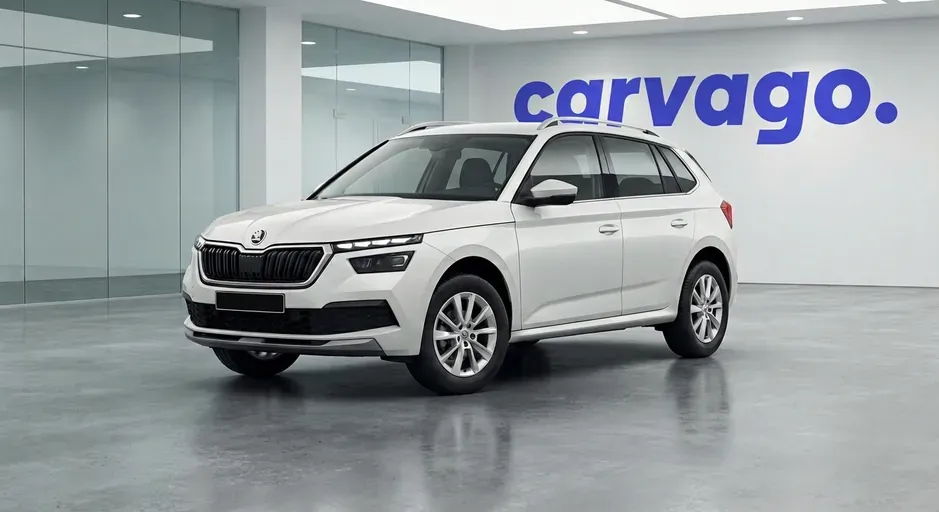
Detailed comparison of Ford Puma vs. Škoda Kamiq. Discover real-world experiences, differences in space, equipment, and engines, and choose the best city SUV!
April 23, 2026


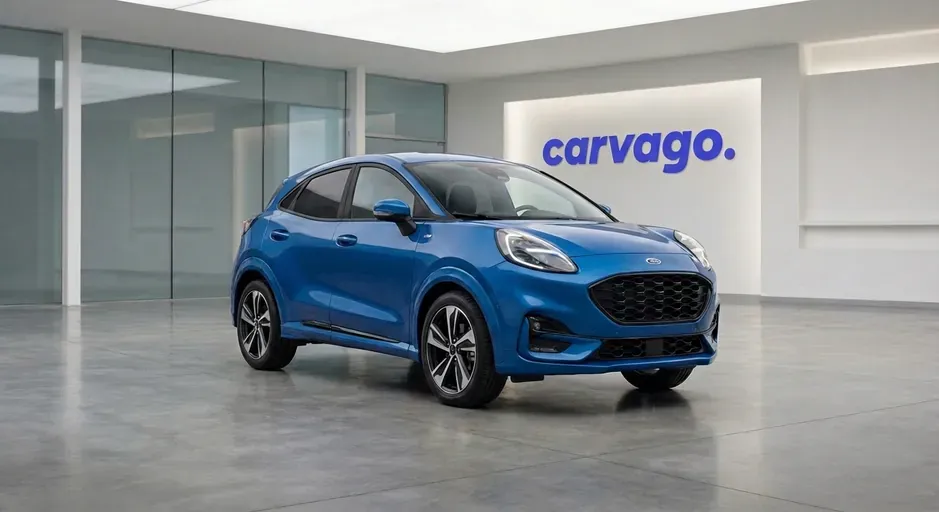
The Ford Puma catches the eye at first glance with its dynamic design and sport-tuned chassis, which makes it one of the most fun-to-drive urban crossovers on the market. Standing against it is the Škoda Kamiq, an exceptionally popular compact SUV that instead bets on unrivaled interior spaciousness, family practicality, and typical smart solutions. Let's take a detailed look together at which of these two differently conceived models represents the best choice on the used car market for your daily journeys.
When you place the Ford Puma and the Škoda Kamiq side by side, you will notice at first glance the different design approaches, which are also reflected in their exterior dimensions. The Škoda Kamiq, with its 4,241 mm in length, slightly exceeds the standard version of the Ford Puma (4,186–4,207 mm) by approximately 34 to 55 millimetres. However, the American brand counters with a slightly wider body – the Puma measures 1,805 mm compared to 1,793 mm for the Czech representative. In practice, this means that the Puma feels more muscular and planted on the road, underlining its sporting ambitions. When parking in tight city spaces, both crossovers are very similar to manoeuvre; however, the Puma's slightly wider stance may require a bit more attention in narrow underground garages, while the Kamiq's longer body protrudes slightly more from a row of parallel-parked cars.
A fundamental difference for the interior layout is hidden in the wheelbase. Here, the Škoda Kamiq clearly dominates with a value of 2,651 mm, which is a significant 63 millimetres more than the Ford Puma (2,588 mm). Conversely, the height of both cars is very comparable – the Puma ranges between 1,520 and 1,555 mm (depending on the version, with the sporty ST models sitting lower), while the Kamiq measures from 1,527 to 1,562 mm depending on the year and equipment. This striking difference in wheelbase is fully evident inside the cabin of the Škoda, where the longer distance between the axles provides significantly more knee room for rear passengers. Therefore, if you plan to regularly carry adult passengers or teenagers in the back seats, the longer wheelbase makes the Kamiq a much more rational and comfortable choice.
When making the final decision between these two models, the exterior dimensions clearly dictate who the car is intended for. If you expect an athletic look and more compact overall proportions from a city crossover, which guarantee a more fun feeling behind the wheel, the Ford Puma will surely meet your requirements. The Škoda Kamiq, on the other hand, represents a masterclass in space utilization – thanks to its longer body and generous wheelbase, it provides proportions approaching cars a class larger, making it an ideal companion for those looking for a full-fledged family car on the footprint of a small SUV.
| Parameter | Ford Puma SUV | Škoda Kamiq SUV |
|---|---|---|
| Width (mm) | 1805 | 1793 |
| Length (mm) | 4186 - 4266 | 4241 |
| Height (mm) | 1520 - 1555 | 1527 - 1562 |
| Wheelbase (mm) | 2588 | 2651 |
When choosing a used city crossover, luggage capacity often plays a key role, especially if the vehicle is to serve as a full-fledged family car. Although both cars fall into the popular compact SUV category, their approach to interior space utilization differs significantly. While one model relies on an innovative layout for daily shopping and transporting dirty items, the other offers maximum total carrying capacity for longer holidays and moving larger objects. For buyers looking for a vehicle roughly four years old from generations available since 2020, these differences represent a fundamental argument in the decision-making process.
The second-generation Ford Puma excels in its standard configuration, offering a class-leading base volume of 456 liters, which is 56 liters more than its Czech competitor. It achieves this impressive figure primarily thanks to an ingenious solution called the MegaBox – a deep 80-liter storage compartment under the floor, equipped with a washable surface and a drain plug. This makes it easy to place dirty hiking boots, wet sports equipment, or even tall indoor plants without getting the rest of the trunk dirty. It literally provides space for several extra suitcases or specific cargo. A major advantage on the used car market is that even with the highly sought-after mild-hybrid (mHEV) engines, this volume remains unchanged. However, when the rear seats are folded down, the sloping rear becomes a limiting factor, and the maximum capacity reaches 1216 liters.
The first-generation Škoda Kamiq, on the other hand, counters with a classic, practically shaped trunk with a decent base volume of 400 liters, which is easily sufficient for weekend shopping and longer holidays. But its true strength is revealed when you need to transport bulkier cargo. With the rear seats folded, the Kamiq offers a massive space of 1395 liters, surpassing the Puma by a staggering 179 liters. When choosing a used car, however, it is necessary to pay attention to the specific engine – if you opt for the eco-friendly natural gas (CNG) variant labeled G-TEC, you have to accept a significantly reduced trunk of only 278 liters due to the installation of pressure tanks.
While the Ford Puma with its unique MegaBox is an ideal choice for active individuals or families who often transport smaller but specific or dirty items, the Škoda Kamiq represents a more traditional workhorse. Thanks to its boxier body, it serves significantly better for transporting bulky items once the seats are folded.
| Parameter | Ford Puma SUV | Škoda Kamiq SUV |
|---|---|---|
| Base volume (liters) | 456 | 400 |
| Max. volume with seats folded (liters) | 1216 | 1395 |
The Ford Puma wins with its innovative and easy-to-clean MegaBox for daily transport of small items and dirty gear, while the Škoda Kamiq offers significantly more total space after folding the seats for moving and larger family loads.
The ability to tow a trailer might not be the first criterion when choosing a city crossover, but for many drivers, it represents a key element of practicality – whether for hauling garden waste, moving materials, or securely mounting heavier e-bikes. When comparing roughly four-year-old used cars, the 1st generation Škoda Kamiq comes out better in terms of towing power, offering overall more robust capacities for common needs.
While the Kamiq's standard engines can handle a braked trailer weighing 1000 to 1200 kg, the maximum for more powerful versions (1.5 TSI and 1.6 TDI) reaches an impressive 1250 kg. In contrast, the 2nd generation Ford Puma can tow a braked trailer weighing between 900 and 1100 kg, including the popular 1.0 EcoBoost Hybrid mild-hybrid variants, where capacity was fortunately not limited compared to standard combustion versions.
On the other hand, fundamental differences can be found in specific niche versions. The sporty Puma ST (1.5 EcoBoost) and the recently introduced fully electric Gen-E variant have their maximum towing capacity significantly reduced to just 750 kg. For the Kamiq, homologation data for a tow bar is completely missing for the 1.0 TGI G-TEC CNG version, so do not count on it for such purposes.
In practice, these differences mean that the maximum value of 1250 kg for the Škoda is perfectly sufficient for a smaller caravan or a heavier utility trailer for a cottage full of heavy material. With its more modest values (often only up to 1100 kg), the Ford Puma will reliably serve as space for a few extra suitcases in a small trailer, or handle a lighter weekend trip to the garden center. In conclusion, both cars are suitable for occasional and lighter use, but if you plan to tow heavier loads more regularly, the Škoda Kamiq will be a much more versatile and confident choice.
| Model and engine | Braked trailer weight (kg) | Unbraked trailer weight (kg) |
|---|---|---|
| Škoda Kamiq 1.0 TSI (70–85 kW) | 1000–1200 | 610–630 |
| Škoda Kamiq 1.5 TSI ACT (110 kW) | 1250 | 610–630 |
| Škoda Kamiq 1.6 TDI SCR (85 kW) | 1250 | 610–630 |
| Ford Puma 1.0 EcoBoost / Hybrid (70–114 kW) | 900–1100 | 640 |
| Ford Puma 1.5 EcoBlue (88 kW) | 1100 | 640 |
| Ford Puma 1.5 EcoBoost ST (147 kW) | 750 | 640 |
| Ford Puma Gen-E | 750 | 750 |
Engine options are one of the most important factors when choosing a used urban crossover, as they affect not only dynamics and fuel consumption but also future maintenance costs. While the Ford Puma relies primarily on electrification and an agile driving experience using three-cylinder 1.0 EcoBoost mild-hybrids (with output up to 114 kW), the Škoda Kamiq counters with a more conservative approach and a wider range of pure internal combustion engines, including the popular 1.0 TSI three-cylinder (standard 70 or 81/85 kW) and the more refined 1.5 TSI ACT four-cylinder with 110 kW. The Ford's strength is clearly its power delivery and the quick response of the mild-hybrids at low revs, as well as the existence of the top-tier Puma ST sports version with a 1.5 EcoBoost engine (147 kW), which the Kamiq cannot directly compete with in terms of aggressiveness. Conversely, the Puma's weakness may be the absence of a petrol four-cylinder for regular cruising. The Kamiq's main advantage is the aforementioned option of the quiet 1.5 TSI petrol four-cylinder with cylinder deactivation, while the disadvantage is the lack of any electrification. For budget-conscious drivers interested in a calm and comfortable ride, the Kamiq with the 1.0 TSI engine is the ideal choice, while for enthusiasts looking for fun behind the wheel and livelier reactions, the Puma with its mild-hybrid technology clearly leads.
The engine range for a used Ford Puma is built almost exclusively on the award-winning 1.0 EcoBoost turbocharged three-cylinder. Most available cars from around 2022 use its mild-hybrid version (mHEV) with 92 kW or 114 kW. These engines are paired with a 48V starter-generator that helps smooth out turbo lag at the lowest revs and effectively reduces overall fuel consumption. A precise six-speed manual gearbox or a seven-speed dual-clutch automatic transmission (DCT) were available. The highlight of the range is undoubtedly the hot Puma ST version with a full-blooded 1.5 EcoBoost three-cylinder producing a great 147 kW, which is an absolutely ideal choice for true sports enthusiasts. However, this unique high-performance engine was permanently removed from the range in the spring of 2024. Those interested in high motorway mileage might also have come across the economical 1.5 EcoBlue four-cylinder diesel with 88 kW in the early stages of production, though it should be noted that this diesel was discontinued at the end of 2021 and is quite a rarity on the used car market.
| Engine type | Fuel | Power (kW) | Torque (Nm) | Transmission |
|---|---|---|---|---|
| 1.0 EcoBoost | Petrol | 70/92 | 170 | 6MT / 7DCT |
| 1.0 EcoBoost mHEV | Petrol (Mild-hybrid) | 92/114 | 210/240 | 6MT / 7DCT |
| 1.5 EcoBlue | Diesel | 88 | 285 | 6MT |
| 1.5 EcoBoost ST | Petrol | 147 | 320 | 6MT |
The Škoda Kamiq, on the other hand, utilizes proven Volkswagen Group technology, the structure of which will particularly please practical and conservative motorists. The sweet spot and by far the most common engine is the 1.0 TSI petrol three-cylinder, which you will most often find on the nearly-new used market in 70 kW or 81 kW variants (a more powerful 85 kW version appeared in the first production years). If you regularly drive with a full car or frequent the motorways, the more powerful 1.5 TSI ACT four-cylinder with 110 kW will be a much better choice. It can imperceptibly deactivate two cylinders during steady driving, significantly saving fuel. Most combustion engines can be chosen with either a manual gearbox or a fast seven-speed DSG automatic. When searching through listings from 2020 and 2021, you will also come across alternative engines whose production has already been permanently ended. These include the 1.6 TDI SCR diesel engine (85 kW), which the manufacturer stopped offering in 2020, as well as the environmentally focused 1.0 TGI G-TEC compressed natural gas variant (66 kW), which left the price list during 2022.
| Engine type | Fuel | Power (kW) | Torque (Nm) | Transmission |
|---|---|---|---|---|
| 1.0 TSI | Petrol | 70 | 175 | 5MT |
| 1.0 TSI | Petrol | 81/85 | 200 | 6MT / 7DSG |
| 1.0 TGI G-TEC | CNG / Petrol | 66 | 160 | 6MT |
| 1.5 TSI ACT | Petrol | 110 | 250 | 6MT / 7DSG |
| 1.6 TDI SCR | Diesel | 85 | 250 | 6MT / 7DSG |
While the Škoda Kamiq offers solid Group reliability and an exceptionally quiet 1.5 TSI four-cylinder for calm personalities, the Ford Puma, with its electrified and aggressive three-cylinders, easily appeals to drivers who want to experience maximum driving fun behind the wheel.
While both manufacturers target the same audience, their approach to engines differs significantly. Choosing the right unit is absolutely critical for long-term satisfaction, especially regarding real-world dynamics, daily fuel consumption, long-term user feedback, and mechanical reliability. For the second-generation Puma, Ford relied almost exclusively on its 1.0 EcoBoost three-cylinder in a mild-hybrid version. Alternatives like the 1.5 EcoBlue diesel or classic non-hybrid versions only stayed in the lineup until roughly the end of 2021 and are hard to find on the used market today. In contrast, for the first-generation Kamiq, Škoda offered the classic VW Group range – from the resilient 1.0 TSI three-cylinders to the confident 1.5 TSI four-cylinder, and even a niche CNG version (1.0 TGI) or the early-retired 1.6 TDI diesel, which permanently disappeared from price lists during 2020.
This electrified three-cylinder represents the golden middle ground in Ford's lineup, and for a roughly four-year-old Puma, it is the most sensible choice in terms of residual value and reliability. The mild-hybrid system (mHEV) makes a lot of sense here – the 48V starter-generator effectively covers "turbo lag" at low revs, provides immediate thrust when pulling away, and realistically helps reduce city fuel consumption to a very pleasant 5.5 to 6 liters per 100 km. The 92 kW version offers an excellent balance between the purchase price of a used car and above-average agility.
While the smaller one-liter TSI is a great and undemanding workhorse for the city, if you are looking for a more versatile car, the 1.5 TSI four-cylinder takes the Kamiq to the next level and turns it into a mature family car. The engine stands out for its quiet, refined operation and provides complete confidence even during highway trips or when driving fully loaded. Thanks to ACT technology, which imperceptibly deactivates two cylinders under low load, the engine does not suffer from high fuel consumption. In practice, it can be driven long-term at 6 to 6.5 liters, which is fully comparable to the smaller three-cylinder, but with an incomparably larger power reserve for safe overtaking.
As is often the case with modern vehicles, the official fuel consumption figures provided by manufacturers in promotional materials often differ significantly from reality on the road. Especially with roughly four-year-old used cars (model years 2020–2022) featuring small-displacement turbocharged engines, real-world consumption is heavily dependent on driving style and daily route profiles. For an objective comparison of the actual appetite of the Ford Puma (2nd generation) and Škoda Kamiq (1st generation), we have used data from the popular portal Spritmonitor.de, where drivers share their long-term and real-world refueling records.
Data source: Spritmonitor.de
| Model and engine | Average consumption (l/100 km) |
|---|---|
| Škoda Kamiq 1.0 TSI (70/81/85 kW) | 6.0 |
| Ford Puma 1.0 EcoBoost Hybrid (92/114 kW) | 6.1 |
| Škoda Kamiq 1.5 TSI ACT (110 kW) | 6.2 |
| Ford Puma 1.0 EcoBoost (92 kW) | 6.3 |
| Ford Puma 1.5 EcoBoost ST (147 kW) | 7.8 |
| Ford Puma 1.5 EcoBlue (88 kW) | 5.0 |
| Škoda Kamiq 1.6 TDI SCR (85 kW) | 5.1 |
| Škoda Kamiq 1.0 TGI G-TEC (CNG, 66 kW)* | 4.2 kg |
* Note: The consumption of the G-TEC version is given in kilograms of compressed natural gas per 100 km.
A detailed look at the averaged data reveals several very interesting trends. Although the Ford Puma boasts sophisticated mild-hybrid technology (mHEV) in most of its 1.0-liter EcoBoost engines, in real-world driving, this electrification brings only relatively minor savings compared to the conventional 1.0 TSI engine in the Škoda Kamiq. On the contrary, the popular 1.5 TSI ACT four-cylinder in the Kamiq, featuring intelligent cylinder deactivation, may come as a real surprise. In practice, it achieves almost identical values to the smaller 1.0-liter three-cylinder, while providing the driver with incomparably better dynamics and highway comfort. The top-of-the-line sporty Ford Puma ST with the 1.5 EcoBoost engine logically requires more fuel, which perfectly matches its performance and driver-oriented focus. The diesel units (1.5 EcoBlue and 1.6 TDI), which appeared in both cars mainly at the start of production around 2020, reliably confirm their long-standing reputation as long-distance fuel-savers, with average consumption balancing right on the five-liter mark.
So, which engine is best suited for whom in practice? For regular city and suburban commuting, the 1.0-liter three-cylinders from both brands are perfectly adequate and, with a steady pace without sudden acceleration, will reward you with very favorable fuel consumption. However, drivers who frequently hit the highway or load the car for holiday trips should definitely opt for the larger 1.5 TSI engine in the Škoda. This unit doesn't have to work nearly as hard at higher speeds and won't hit your wallet with a skyrocketing increase in consumption—a typical drawback of overworked small turbo engines. For those covering long distances, the aforementioned diesels can also make sense, although they tend to be relatively rare and hard to find on the used market in the small city crossover category. For the most budget-conscious buyers, Škoda also offered a natural gas variant (1.0 TGI G-TEC) in the early years, which promises extremely low operating costs, albeit at the price of slightly weaker dynamics and a smaller trunk.
In conclusion, fuel consumption alone is unlikely to be the main and only deciding factor when choosing between the Ford Puma and the Škoda Kamiq. Both cars are remarkably evenly matched in terms of operating costs in their best-selling gasoline engine versions (1.0 EcoBoost Hybrid and 1.0 TSI). The decision will therefore depend more on the different characters of the two vehicles—while the Ford scores with its sportier suspension tuning and mild-hybrid assistance during city driving, the Škoda counters effectively with the option of a refined and genuinely efficient 1.5 TSI four-cylinder, which is perfectly suited for much more versatile and highway use.
Both compared models entered the market in 2019, which means that cars from 2021 and 2022 currently represent the ideal intersection between a favorable price and still very modern technology on the secondary market. Given the traditional dominance of the Škoda brand on the Czech market, the selection of used Kamiq models is naturally much wider. However, the Ford Puma scores with its interesting design, sophisticated chassis, and often more attractive equipment for comparable money.
As a used car, the Ford Puma holds its value quite confidently, thanks in part to its more dynamic image and successful mild-hybrid powertrains, which became standard at Ford during this period.
The supply of used Kamiqs on the market is absolutely massive. This gives buyers a major advantage: enormous freedom when choosing specific colors, optional equipment, and engines.
The table below shows typical prices for four-year-old used cars, focusing on average condition and the most common engines:
| Parameter | Ford Puma (2021–2022) | Škoda Kamiq (2021–2022) |
|---|---|---|
| Starting price (basic cars) | ~ €14,400 | ~ €13,600 |
| Average price (good condition/equipment) | €16,400 – €18,900 | €15,600 – €18,500 |
| Price for top versions/ST/Monte Carlo | €22,600 and more | €20,500 – €24,600 |
| Most common representation on the market | 1.0 EcoBoost (mHEV) | 1.0 TSI (70 kW / 81 kW) |
| Market availability | Medium (sufficient cars) | Very high (hundreds of cars) |
While the Škoda Kamiq offers a slightly lower entry price and wide variability of used cars from corporate fleets due to huge market saturation, the Ford Puma often compensates for slightly higher initial costs with visually more appealing standard equipment and interesting mild-hybrid technology. In terms of total purchase costs and percentage loss of value, both cars perform very similarly. The specific choice should therefore depend on the actual technical condition of the given unit and your preferences regarding a sportier (Puma) or rather more practical (Kamiq) focus.
While the Kamiq scores with a huge selection and a slightly lower price tag for basic used cars, the Puma can often justify its slightly higher average price with its dynamic design and modern mild-hybrid technology.
When evaluating safety, it is important to mention that both models, the Ford Puma and the Škoda Kamiq, received a five-star Euro NCAP rating upon their initial market launch. However, it is necessary to put these results into context and point out the year of testing. Euro NCAP protocols are constantly evolving and becoming significantly stricter over time. For this reason, percentage scores from different years cannot be directly compared, as newer tests place much higher demands on active assistance systems and overall occupant protection.
Ford Puma was first tested in 2019, but in 2022 it underwent a re-evaluation according to newer and much more demanding protocols. This newer test already included more complex frontal impact simulations, more advanced cyclist detection, and tricky emergency scenarios at intersections. As a result of these stricter rules, the Puma earned four stars in 2022. The adult protection score reached 75% and assistance systems were rated at 69%. These seemingly lower values actually provide a more realistic look at how the car performs in terms of modern safety requirements, which are significantly stricter than in 2019.
Škoda Kamiq was tested in 2019 and performed brilliantly by the standards of the time. It took home the maximum five-star rating, with adult occupant protection reaching an impressive 96%. The ratings for child protection (85%) and vulnerable road users (80%) were also excellent. However, given that these results come from older methodologies, its official five-star certification is already considered expired from today's perspective. If the Kamiq were subjected to the same tests in 2022 as the Puma, its percentage scores would undoubtedly drop.
In conclusion, although the Škoda Kamiq dominates the table thanks to high percentages from an older test, the Ford Puma represents a vehicle tested according to much more modern and demanding criteria. Both crossovers are undoubtedly very safe choices for families and individuals looking for a quality used car, but the Ford Puma's 2022 results give the buyer a better and more up-to-date idea of how the vehicle stands up in the context of today's active and passive safety standards.
| Parameter | Ford Puma | Škoda Kamiq |
|---|---|---|
| Year of testing | 2022 | 2019 |
| Adult occupant protection | 75 % | 96 % |
| Child occupant protection | 84 % | 85 % |
| Vulnerable road user protection | 70 % | 80 % |
| Safety assistance systems | 69 % | 76 % |
Although the Škoda Kamiq offers dazzling numbers from an older test, the Ford Puma tested in 2022 provides a more realistic and up-to-date picture of protection according to stricter modern standards. However, both cars are highly safe choices on the used car market.
In addition to standard equipment, each model offers several unique features that can be decisive for the customer, and both cars thus bring their own, very specific approach to added value.
Excellent driving characteristics and an agile chassis among the best in its class
Practical and washable "Megabox" storage space under the trunk floor (with a volume of 81 liters)
Attractive and dynamic exterior design with striking proportions
Economical and lively 1.0 EcoBoost mild-hybrid engines
Rich standard equipment of safety and assistance systems
More cramped space in the rear seats, especially in terms of legroom and headroom
Stiffer chassis tuning in the popular ST-Line versions reduces comfort on broken roads
The dashboard taken from the Fiesta model feels a bit dated compared to more modern competitors
The Ford Puma is an ideal choice for drivers looking for a stylish and fun crossover with excellent driving characteristics that won't leave them cold on winding country roads. Thanks to the unique Megabox hidden trunk solution, it surprises with its everyday practicality, although passengers in the rear seats must expect slight compromises.
Above-average interior space with excellent legroom in the rear seats
Highly comfortable and compliant chassis that handles broken city roads excellently
Ergonomic and high-quality interior with very intuitive controls
Traditional "Simply Clever" details (e.g., umbrella in the door, ice scraper, door edge protection)
Great visibility from the car and easy entry thanks to the well-thought-out body construction
More conservative and less emotive exterior design that may not appeal to everyone
More detached and rather unexciting driving performance strictly focused on a calm ride
Mild-hybrid technology is missing from the range in the pre-facelift generation
On paper, a smaller basic trunk volume (400 liters) compared to the total capacity of the Puma
The Škoda Kamiq targets pragmatic buyers and smaller families who prioritize unrivaled interior spaciousness, excellent ergonomics, and overall travel comfort. It is a very rational and user-friendly choice that bets on everyday practicality and ease of use instead of sporting emotions behind the wheel.
Based on our own statistics, long-term user experience from service reports, and findings from independent used car inspections (CarAudit), we have compiled an overview of the most common problems that buyers of roughly four-year-old used cars should watch out for.
The Ford Puma, as a modern crossover from 2020–2022, ranks among the above-average reliable used cars; however, it still requires attention in several specific areas.
The Ford Puma is considered a mechanically very durable car, whose main ailments are limited to occasional infotainment software glitches. A professional physical inspection of the vehicle should easily reveal any wear on the automatic transmission from city driving.
The Škoda Kamiq shares proven and robust group technology, but in cars from the first years of production (especially until 2021), recurring teething troubles in electronics and occasionally the chassis appear.
While the Kamiq shares the group's renowned engine durability, the unpredictable infotainment and more delicate DSG automatic transmission in city traffic can be a disappointment. A high-quality technical inspection of the car before purchase will give you the assurance that the systems and clutches are in top condition.
When buying a used car, a thorough inspection is key. Here are several specific points to focus on for these two models, while a thorough Physical inspection of a used car can save you many future worries and unexpected expenses.
Ford Puma boasts a basic volume of up to 456 liters, mainly thanks to the practical washable MegaBox hidden under the floor. Škoda Kamiq has a smaller trunk on paper with a volume of 400 liters, but it excels with a more regular shape and overall better accessibility for bulkier items.
In this regard, the Škoda Kamiq clearly wins, offering generous legroom and headroom comparable to higher-class cars thanks to its longer wheelbase. The Ford Puma has a more sportily cut sloping body, which results in a more cramped feeling and limited space for taller individuals in the back seats.
The Škoda Kamiq is tuned with an emphasis on maximum comfort, filtering out bumps excellently and making it ideal for relaxed commuting and family trips. The Ford Puma, on the other hand, has a stiffer chassis focused on a sportier and more agile ride, which can feel jumpier on broken city roads.
The Ford Puma relies on agile one-liter EcoBoost three-cylinder engines, which often use mild-hybrid technology to effectively reduce fuel consumption in the city. The Škoda Kamiq counters with proven TSI units, and the option of a more powerful 1.5 TSI four-cylinder gasoline engine is especially appreciated during frequent highway trips.
Both models are considered above-average reliable cars without serious chronic defects after approximately four years of operation. For a used Ford Puma, it's good to check the smoothness of the clutch operation on mild-hybrid versions, while Škoda Kamiq users occasionally report minor infotainment software glitches.
Choosing between a used Ford Puma and a Škoda Kamiq ultimately comes down to a choice between driving emotions and maximum family practicality. With its athletic appearance, agile mild-hybrid engines, and innovative trunk featuring the washable MegaBox space, the Ford Puma is the ideal choice for active individuals who want to enjoy every kilometer of driving on country roads. In contrast, the Škoda Kamiq bets on unrivaled rear-passenger space, an exceptionally comfortable chassis, and the option of a smooth four-cylinder gasoline engine for longer trips, making it the perfect companion for pragmatically-minded drivers and small families. Whether you prefer the sporty flair of the Ford or the traditional clever solutions and above-average spaciousness of the Czech bestseller, both roughly four-year-old used cars represent an exceptionally high-quality and safe choice in the city crossover segment.
Sources: ADAC, svetmotoru.cz, idnes.cz, techfocus.cz, smartmania.cz, autohit.cz
This article was prepared using artificial intelligence tools. The section guarantor is Petr Dušek.

Detailed comparison of used SUVs: Ford Kuga vs. Volkswagen Tiguan. We evaluated reliability, engines, practicality, and real-world driving characteristics. Which one to choose?
Apr 19, 2026

Mercedes-Benz GLB vs Volkswagen T-Roc: A detailed comparison of engines, features, and interior space. Read our verdict and find out which SUV is the better choice.
Apr 30, 2026

Deciding between the Nissan Qashqai and the Seat Ateca? Our detailed comparison of engines, equipment, and prices will help you choose the right SUV for you.
Apr 14, 2026