Car battle
Audi Q3 vs. BMW X1: A Complete 2025 Comparison
Audi Q3 vs BMW X1: Detailed comparison of design, performance, and practicality. Find out which premium SUV is the right choice for you in our verdict.
Apr 14, 2026
Articles
Car battle
Deciding between the Nissan Qashqai and the Seat Ateca? Our detailed comparison of engines, equipment, and prices will help you choose the right SUV for you.
April 14, 2026
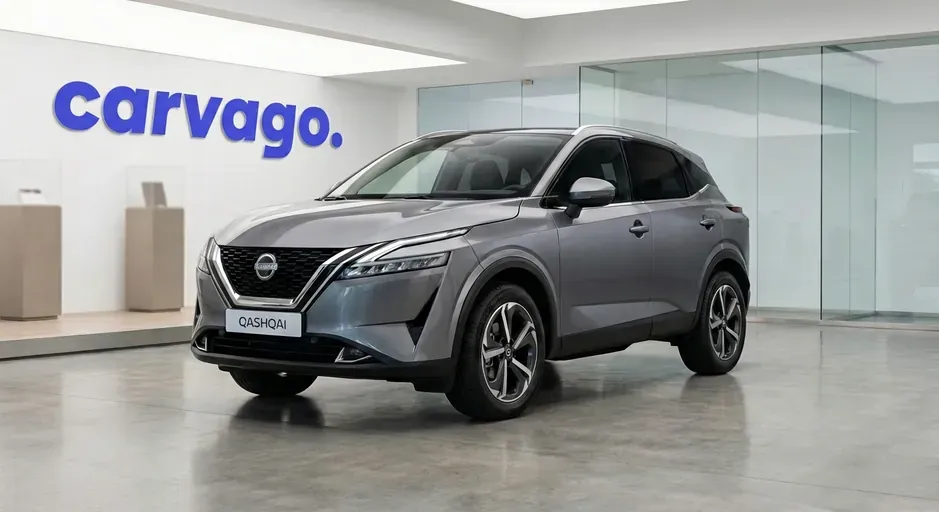
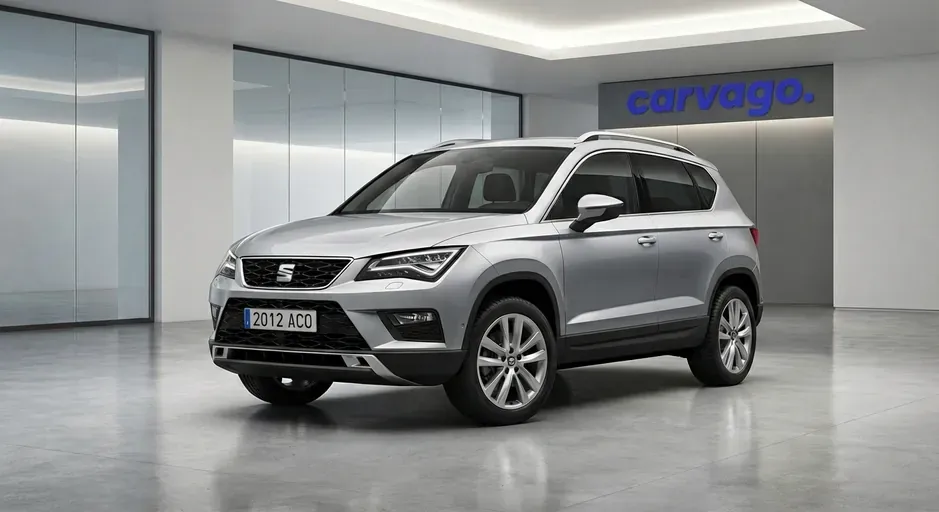
The Nissan Qashqai is a long-standing bestseller and one of the founders of the urban crossover category, attracting buyers with its comfort and proven technology. It faces the Seat Ateca, a Spanish SUV with sharper lines and a sportier character that brought a more dynamic spirit to the segment. Let's take a detailed look at how these two popular rivals stack up against each other and which one might be the right choice for you.
Although both cars fall into the popular compact SUV category, a look at their exterior dimensions reveals interesting differences. The Nissan Qashqai in its newer generation (J12, from 2021) is slightly larger overall than the facelifted Seat Ateca (from 2020). This difference is evident not only in the exterior appearance but primarily in practical aspects such as interior space and manoeuvrability in the city.
The most significant difference is in length and wheelbase. The Qashqai is over 4 centimetres longer than the Ateca and also has a wheelbase that is almost 3 centimetres longer. This translates positively into interior space, especially for rear-seat passengers, who will appreciate more legroom. A longer wheelbase also often contributes to better stability and comfort at higher speeds on the motorway. Conversely, the slightly shorter Ateca can be a slight advantage when looking for a parking spot on crowded streets.
While the Qashqai is noticeably taller, promising a more airy feel in the cabin and more headroom, the Ateca surpasses it in width by a few millimetres. This minimal difference in width is almost unnoticeable in practice, but the Nissan's taller build may give some drivers a better view of their surroundings. The choice thus depends on preferences – whether you prefer the more spacious interior and the feel of a larger car in the Qashqai, or the more agile and compact dimensions of the Seat Ateca.
| Parameter | Nissan Qashqai (J12, from 2021) | Seat Ateca (5FP, from 2020) |
|---|---|---|
| Length (mm) | 4425 | 4381 |
| Width (mm) | 1835 | 1841 |
| Height (mm) | 1625 | 1601 - 1611 |
| Wheelbase (mm) | 2665 | 2630 - 2638 |
One of the key parameters when choosing a family SUV is undoubtedly the volume of the luggage compartment. This is where one of the biggest differences between the Nissan Qashqai and the Seat Ateca becomes apparent. While both cars offer enough space for everyday needs, the Spanish model has a clear advantage in practicality and targets those for whom every extra litre is important.
The older generation of the Nissan Qashqai (J11, produced until 2021) had a basic boot volume of 430 litres. This is a value that is sufficient for a weekly shop or a holiday for two, but it can be restrictive for a family with a pram. The Seat Ateca from the same production years offered significantly more – 510 litres in the front-wheel-drive version and a still very respectable 485 litres in the 4x4 variants. This difference of almost 80 litres in favour of the Seat is noticeable in practice and means space for several extra bags or one larger piece of luggage.
With the arrival of the new generation Qashqai (J12, from 2021), Nissan tried to close this gap. The basic volume in the mild-hybrid versions grew to 504 litres, almost matching the Ateca. The e-Power hybrid version is slightly worse off with a volume of 479 litres. However, where the Ateca still dominates is in the maximum capacity with the rear seats folded down. While the Qashqai offers a maximum of 1598 litres (in the older generation) and only 1447 litres (in the new generation), the Ateca provides over 1600 litres. For transporting larger loads, the Spanish car is therefore a more practical companion.
| Parameter | Nissan Qashqai (J11, until 2021) | Seat Ateca (from 2016) | Nissan Qashqai (J12, from 2021) |
|---|---|---|---|
| Basic volume (litres) | 430 | 510 (485 for 4x4) | 479 - 504 |
| Max. volume with seats folded (litres) | 1598 | 1604 (1579 for 4x4) | 1447 |
When choosing a family SUV, the ability to tow a trailer is also a key factor for many drivers. And it is in this discipline that significant differences emerge between the two models. In general, the Seat Ateca offers higher limits for a braked trailer across its engine range, making it a more versatile and capable partner for owners of caravans, boats, or horse trailers.
While the Nissan Qashqai with the popular 1.3 DIG-T petrol engine (depending on the power output) can tow 1300 to 1500 kg, the Ateca with the 1.5 TSI engine can handle 1600 to 1800 kg with ease. The difference is even more pronounced in the diesel versions. The most powerful diesel engines in the Qashqai (1.7 dCi) can handle a trailer weighing up to 2000 kg, which is a very respectable figure. However, the Ateca with the 2.0 TDI engine goes even further, towing up to 2100 kg in its most powerful all-wheel-drive variants.
The difference is absolutely crucial in the modern hybrid variants. While the mild-hybrid Qashqai still offers solid figures (up to 1800 kg), the full-hybrid e-POWER version has a limit for a braked trailer of just 750 kg. This practically disqualifies it for towing anything larger than a light unbraked trailer. For those who plan to regularly use the towing hitch to its maximum capacity, the Seat Ateca is clearly the better choice.
| Model and Engine | Braked trailer weight (kg) | Unbraked trailer weight (kg) |
|---|---|---|
| Nissan Qashqai 1.3 DIG-T (103 kW) | 1300 | 750 |
| Nissan Qashqai 1.3 DIG-T MHEV (116 kW) | 1800 | 750 |
| Nissan Qashqai 1.7 dCi (110 kW) | 2000 | 750 |
| Nissan Qashqai 1.5 e-POWER (116 kW) | 750 | 750 |
| Seat Ateca 1.5 TSI ACT (110 kW) | 1600 - 1800 | 750 |
| Seat Ateca 2.0 TDI (110 kW) | 1800 - 2100 | 750 |
| Seat Ateca 2.0 TDI 4Drive (140 kW) | 2100 | 750 |
| Seat Ateca 2.0 TSI 4Drive (140 kW) | 1900 | 750 |
When it comes to engine selection, the paths of the Nissan Qashqai and Seat Ateca diverge significantly. While the Seat Ateca relies on proven and powerful engines from the Volkswagen Group, which include both efficient petrol units and strong diesel engines, Nissan has taken the path of modernization and electrification. In the newer Qashqai generations (J12, from 2021), you will no longer find diesel engines; mild-hybrid and, above all, the unique e-POWER hybrid system take the lead. The choice, therefore, depends on whether you prefer traditional dynamics and a wide selection, or a quiet, economical, and modern powertrain.
With the arrival of the third generation (J12), Nissan completely overhauled its engine lineup and abandoned diesel units. For the older, but still very relevant, used second-generation cars (J11, until 2021), the range was more varied. The main role was played by the successful 1.3 DIG-T petrol engine, developed in collaboration with Mercedes-Benz, which offered decent dynamics and fuel economy. It was complemented by the economical 1.5 dCi and the more powerful 1.7 dCi diesel engines.
The new generation focuses exclusively on petrol with electric assistance. The basis is the mild-hybrid version of the 1.3 DIG-T MHEV engine, which reduces consumption and emissions. But the real innovation is the e-POWER system, where the petrol engine serves only as a generator for electricity, and the wheels are driven exclusively by an electric motor. The result is a drive similar to an electric car – quiet, smooth, and with an immediate throttle response, but without the need for external charging.
| Engine Type | Fuel | Power (kW) | Torque (Nm) | Gearbox |
|---|---|---|---|---|
| Generation J11 (2018-2021) | ||||
| 1.3 DIG-T | Petrol | 103 / 117 | 240 / 270 | 6MT / 7DCT |
| 1.5 dCi | Diesel | 85 | 260 | 6MT / 7DCT |
| 1.7 dCi | Diesel | 110 | 340 | 6MT / Xtronic |
| Generation J12 (from 2021) | ||||
| 1.3 DIG-T MHEV | Mild-Hybrid | 103 / 116 | 260 / 270 | 6MT / Xtronic |
| 1.5 e-POWER | Hybrid | 140 | 330 | Automatic |
The Seat Ateca offers a classic and very wide range of engines from Volkswagen that will satisfy almost any driver. The base is the economical three-cylinder 1.0 TSI, ideal for city driving. However, the most popular choice is the four-cylinder 1.5 TSI ACT, which combines great dynamics with low fuel consumption thanks to its cylinder deactivation system. For lovers of sporty driving, there is the powerful 2.0 TSI engine, often paired with 4Drive all-wheel drive and a DSG automatic gearbox.
Unlike the Qashqai, the Ateca has also retained its powerful and economical diesel engines. Older models (until 2020) offered the basic 1.6 TDI engine, which was later replaced by the more modern 2.0 TDI unit in several power variants. The 2.0 TDI engine is the perfect choice for drivers who frequently travel long distances or need high torque, for example, for towing a trailer.
| Engine Type | Fuel | Power (kW) | Torque (Nm) | Gearbox |
|---|---|---|---|---|
| 1.0 TSI | Petrol | 81 / 85 | 200 | 6MT |
| 1.5 TSI ACT | Petrol | 110 | 250 | 6MT / 7DSG |
| 2.0 TSI 4Drive | Petrol | 140 | 320 | 7DSG |
| 1.6 TDI | Diesel | 85 | 250 | 6MT / 7DSG |
| 2.0 TDI | Diesel | 85 / 110 | 300 / 340 | 6MT / 7DSG |
| 2.0 TDI 4Drive | Diesel | 110 / 140 | 360 / 400 | 7DSG |
Summary: If you are looking for modern technology, low consumption, and a quiet ride similar to an electric car, the Nissan Qashqai with e-POWER drive is a unique choice. For drivers who prefer traditional driving characteristics, a wide selection of proven engines including powerful diesels, and the option of all-wheel drive, the Seat Ateca will be a better partner.
Choosing the right engine is absolutely crucial for long-term satisfaction with a car. In the case of two such evenly matched rivals as the Nissan Qashqai and Seat Ateca, this is doubly true. While the Qashqai after 2018 bet on a modern petrol engine developed in collaboration with Mercedes, the Ateca benefits from the proven and technically advanced Volkswagen Group technology. Our recommendations are based on a combination of driving performance, real-world fuel consumption, owner feedback, and overall mechanical reliability.
This turbocharged four-cylinder, which replaced the older and less reliable 1.2 DIG-T unit in 2018, represents a huge leap forward for the second-generation Qashqai (J11) and is clearly the best choice. The engine was created in collaboration between the Renault-Nissan alliance and the Daimler group, and you can also find it in models from Mercedes-Benz. That in itself is a guarantee of quality.
The 1.5 TSI engine, with the EVO suffix, is a technological gem of the Volkswagen Group and is the ideal powertrain for the Seat Ateca. It replaced the older 1.4 TSI unit, bringing higher efficiency and better power delivery. Its greatest weapon is the ACT (Active Cylinder Technology) system, which automatically deactivates two cylinders under low load.
The official consumption figures provided by manufacturers are one thing, but real-world driving is another. To get the most accurate picture of how much fuel both cars actually consume, we looked at data from drivers themselves. We used data from the German portal Spritmonitor.de, which collects real consumption records from thousands of owners, providing a reliable overview of actual running costs. We compared the most common engine options relevant for the used car market for vehicles around four years old.
| Model and Engine | Average Real-World Consumption (l/100 km) |
|---|---|
| Nissan Qashqai (J11/J12) | |
| 1.3 DIG-T (103/117 kW) | 6.8 |
| 1.5 dCi (85 kW) | 5.4 |
| 1.5 e-POWER (140 kW) | 5.6 |
| Seat Ateca (5FP) | |
| 1.5 TSI (110 kW) | 6.9 |
| 2.0 TDI (110 kW) | 5.9 |
Looking at the table, it is clear that conventional petrol engines are nearly identical. Both the Nissan Qashqai with the 1.3 DIG-T engine and the Seat Ateca with the 1.5 TSI unit consume, on average, just under 7 litres of petrol per 100 km in real-world driving. Therefore, neither car has a significant advantage here, and the choice between them is not influenced by fuel consumption.
However, significant differences emerge with the more economical variants. The Seat Ateca relies on the proven and popular 2.0 TDI diesel engine, which is the ideal choice for drivers who cover long distances on the motorway. Its real-world consumption is just under the six-litre mark, making it an economical partner for long journeys.
With the newer Qashqai generation (J12), Nissan has taken a completely different path and abandoned diesel engines entirely. Instead, it introduced the innovative e-POWER hybrid drive. Here, the combustion engine does not drive the wheels but only generates electricity for the electric motor. The result is a driving experience similar to an electric car and, above all, excellent consumption in the city and on country roads, where it realistically hovers around 5.6 l/100 km. On the motorway, its advantage slightly diminishes, but it remains very economical. For buyers of the older Qashqai generation (J11), the economical 1.5 dCi diesel is still available, with an even lower real-world consumption of around 5.4 l/100 km.
Ultimately, fuel consumption is not a deciding factor but rather reflects the different philosophies of the two brands. While the Ateca offers a traditional, proven, and very economical diesel option for long distances, the Qashqai counters with a modern hybrid system that excels primarily in urban and suburban traffic. The choice, therefore, depends purely on preferences and the typical use of the vehicle.
When deciding between a Nissan Qashqai and a Seat Ateca on the used car market, price plays a key role. Although both models are in the same category and target a similar customer, their price tags can differ after a few years of use. It depends on the specific year of manufacture, engine, equipment, and, of course, the mileage.
The third generation of the Nissan Qashqai (from 2021) brought a modern mild-hybrid powertrain and richer equipment to the used car market, which is also reflected in its price.
The price of older models from the end of the second generation (2020) is naturally lower, and well-preserved examples can be purchased from €15,500.
The Seat Ateca, after its 2020 facelift, offers a wide range of engines, from an economical three-cylinder to powerful two-litre engines, which is significantly reflected in the price range.
| Model | Approximate price range (2020-2022) | Key factors influencing the price |
|---|---|---|
| Nissan Qashqai | €19,000 - €27,000 | Trim level (N-Connecta, Tekna), automatic transmission, 4x4 drive |
| Seat Ateca | €17,000 - €29,000 | Engine (1.5 TSI, 2.0 TDI), 4Drive, trim (FR), DSG transmission |
In general, the Seat Ateca offers a slightly wider price range thanks to a more diverse engine lineup, including more powerful diesel variants and 4x4 drive, which hold their value better. The Nissan Qashqai, on the other hand, is more consistent in price, as it focuses primarily on petrol mild-hybrids.
When choosing, it is crucial to consider not only the purchase price but also the expected service costs and the fuel consumption of the specific engine. A thorough check of the service history and technical condition is a matter of course for both models.
Although both cars boast a five-star rating from the independent Euro NCAP organisation, the results must be seen in the context of when the tests were conducted. The methodology and difficulty of the tests are constantly becoming stricter over time, and therefore percentage results from different years cannot be directly compared. A more recent test usually means verification against stricter criteria, including more advanced assistance systems and new crash scenarios.
The third-generation Nissan Qashqai underwent Euro NCAP crash tests in 2021 and received a full five stars under the significantly stricter methodology valid for 2020–2022. This result underscores the car's modern design and its advanced safety equipment. A score of 91% for both adult and child occupant protection places it at the top of its class. The introduction of a new centre airbag between the front seats helped the Nissan to achieve the maximum number of points in the side impact test. The exceptionally high rating of 95% in the safety assist category shows that the Qashqai is equipped with the latest technologies that actively help prevent accidents.
The Seat Ateca received five stars in 2016, when its first generation was launched. At the time, this was an excellent result, especially the 93% for adult occupant protection and 84% for child protection. However, it should be stressed that these tests were carried out under considerably milder rules than in the case of the Nissan. This is most evident in the safety assist category, where the Ateca scored 60%, reflecting the standards of the time. Its safety rating was valid until January 2023, after which the certification expired because the car no longer met the newer, stricter requirements of the organisation.
While the Seat Ateca is still a structurally safe car, the Nissan Qashqai clearly offers a more modern and comprehensive protection package. Its 2021 tests were conducted under a much more demanding methodology that places huge emphasis on active safety and accident prevention assistance systems, which is reflected in its near-perfect score in this category. For the buyer for whom safety is an absolute priority, the newer Qashqai is the clear choice.
| Parameter | Nissan Qashqai | Seat Ateca |
|---|---|---|
| Year of testing | 2021 | 2016 |
| Adult Occupant | 91% | 93% |
| Child Occupant | 91% | 84% |
| Vulnerable Road Users | 70% | 71% |
| Safety Assist | 95% | 60% |
In addition to the standard equipment, each model offers several unique features that may be decisive for the customer. While the Qashqai focuses on modern technology and comfort, the Ateca counters with a sportier spirit and sophisticated ergonomics.
The third-generation Nissan Qashqai (from 2021) has focused on pushing the boundaries of technology and comfort in the compact SUV class. It brings a number of features that were previously seen more in premium cars.
The Seat Ateca, even after its 2020 facelift, is based on a dynamic character and a clear, functional interior that will please drivers looking for a combination of a family car with a sporty touch.
Advantages:
Disadvantages:
Advantages:
Disadvantages:
Based on our own CarAudit inspections, reliability statistics, and owner feedback, we have compiled an overview of the most common problems that used car buyers should watch out for. Neither model suffers from major flaws, but there are specific areas that require attention.
The third generation Nissan Qashqai has made a big leap not only in design and technology, but also in reliability. Most of the earlier problems have been eliminated, yet a few typical minor faults still appear.
The third-generation Qashqai is a reliable car whose problems are mostly minor and have often been resolved through recalls. Key components like the engine and transmission appear to be durable and do not pose a major risk.
The Seat Ateca benefits from proven Volkswagen Group technology, which brings both advantages and some known weaknesses. Problems are mainly concentrated on the DSG gearboxes and, in diesel engines, on the exhaust gas cleaning systems.
The Ateca is a mechanically durable car, but its more complex components, such as the DSG gearbox, require attention and proper maintenance. The biggest risks are cars with neglected service histories and those that have not undergone the important brake pedal recall. A careful, comprehensive inspection of the car is essential here.
When buying a used car, a thorough inspection is key, and you shouldn't underestimate it even with these reliable SUVs. Here are a few specific points to focus on for both models to ensure you make the best choice.
The Seat Ateca offers a slightly larger basic boot capacity of 510 litres compared to the 504 litres in the Nissan Qashqai. However, after folding down the rear seats, the Qashqai has the advantage of a completely flat loading area. The Ateca with all-wheel drive has a reduced boot capacity of 485 litres.
The Nissan Qashqai is more focused on comfort, with a softer suspension that better absorbs bumps. The Seat Ateca, on the other hand, offers a sportier and stiffer chassis, giving it better control over body roll in corners and at higher speeds. The choice therefore depends on the preference between comfort and more dynamic driving characteristics.
Both models have their known issues, but according to the 2020 TÜV Report statistics, the Seat Ateca shows a slightly lower failure rate (4.4%) than the Nissan Qashqai (5.1%). The Qashqai more frequently experiences problems with the CVT transmission or the turbocharger. The Ateca has had recalls for issues such as the brake pedal or airbags in older model years.
The Seat Ateca offers a wider range of traditional engines, including the 1.0 TSI and 1.5 TSI petrol engines and the 2.0 TDI diesel. The Nissan Qashqai, in its newer generations (from 2021), focuses mainly on electrification with 1.3 DIG-T mild-hybrid engines and the unique e-Power system, where the combustion engine acts as a generator for the electric motor.
Both cars are very similar in terms of space, but the Seat Ateca is often rated as slightly more spacious for rear passengers. It offers enough room even for people around 190 cm tall. The Qashqai is comfortable in the back seats for people up to 180 cm tall; taller passengers may have less knee and headroom.
The battle between Nissan Qashqai and Seat Ateca is a clash of two different philosophies, where the winner depends purely on the driver's personal priorities. Nissan Qashqai is the ideal choice for those who prioritize maximum comfort, modern technology, a quiet and smooth ride, a premium feel, and the highest active safety, with the option of the unique e-POWER drive. Conversely, the Seat Ateca will appeal to drivers seeking driving pleasure, an agile and sporty chassis, precise steering, and uncompromising practicality, including an excellent ability to tow heavy trailers. Simply put, if you want to be pampered by modern technologies and cruise through the landscape in maximum comfort, choose the Nissan Qashqai. If you prefer dynamism, versatility, and proven technology, the Seat Ateca is a better choice for you. Both cars are top in their field, but each targets a different driver.
Sources: ADAC, svetmotoru.cz, forbes.cz, elektromobil.cz, emobility.cz, autotrip.cz
This article was prepared using artificial intelligence tools. The section guarantor is Petr Dušek.
Audi Q3 vs BMW X1: Detailed comparison of design, performance, and practicality. Find out which premium SUV is the right choice for you in our verdict.
Apr 14, 2026
BMW X1 vs. Volvo XC40: Which premium SUV is better for you? Our detailed comparison and verdict will help you make the final decision.
Apr 14, 2026
Detailed comparison of used SUVs Citroën C3 Aircross and Suzuki Vitara. Find out the differences in engines, equipment, or reliability and read our final verdict.
Apr 13, 2026